Jet fuel prices are rising as the war in the Middle East disrupts global oil supplies, putting cost pressure on airlines as the busy summer travel season approaches.
Experts say it’s not a question of if airfares will go up, but when, for how long and by how much. The impact may be felt most on long-haul international routes, which burn significantly more fuel than shorter flights.
Some airlines outside of the U.S. have announced fare increases or fuel surcharges in an effort to offset the growing expense. In the U.S., United Airlines CEO Scott Kirby recently warned that airfare increases will “probably start quick” as increasing fuel costs work their way through the industry.
The war is constraining oil exports and prompting major producers like Kuwait, Saudi Arabia and Iraq to scale back output as shipments face growing obstacles.
Iran has attacked commercial ships across the Persian Gulf and targeted oil infrastructure in Gulf Arab nations following U.S. and Israeli strikes. The attacks have effectively halted traffic through the Strait of Hormuz, a narrow passage that carries about one-fifth of the world’s oil supply.
The volatile crude oil prices causing retail gasoline prices to swing up sharply have had the same effect on the price of jet fuel. The average price in the U.S. reached $3.99 per gallon on Friday, up from $2.50 the day before the war started two weeks ago, according to the Argus U.S. Jet Fuel Index. The index tracks the average price airlines pay for jet fuel across major U.S. airports.
Figures from the U.S. Department of Transportation’s Bureau of Transportation Statistics show that U.S. airlines paid about $2.36 per gallon for fuel in January, the most recent data available.
Some airlines are partially protected from sudden price spikes through fuel hedging, a strategy that allows them to lock in fuel prices months or even years in advance. But not all airlines hedge, and those that do are usually only protected for a portion of their fuel needs, meaning prolonged price surges may cause more carriers to raise fares.
“No one hedges anymore, and even if you do, hedging the crack spread is really hard to do,” Kirby said at a Harvard event last week. The crack spread is the difference between the price of crude oil and the price of products produced from it, like gasoline.
Another factor for airlines: Air space closures have required rerouting flights around parts of the Middle East, which can mean longer routes, additional fuel burn and higher operating costs.
Travelers may feel the impact in several ways.
Airlines can add or increase fuel surcharges, an extra fee common among carriers outside of the U.S. that’s added on top of the base ticket price.
Major U.S. carriers, however, don’t charge a separate fuel surcharge. Instead, they build fuel costs into the overall ticket price, meaning any increase is more likely to show up as a higher base fare for travelers, according to Tyler Hosford, security director at global risk management firm International SOS.
Airlines also may adjust what they charge for premium add-ons — such as seat upgrades, extra legroom seats, checked bags or priority boarding — as another way to offset higher operating costs. For consumers, that means even if the base fare doesn’t rise immediately, the total cost of a trip could still increase once additional fees and upgrades are factored in.
If higher fuel prices persist, airlines may also adjust schedules or reduce certain routes, said Christopher Anderson, a professor at Cornell University’s business school whose research includes operations and information management in the hospitality and airline industries.
It's difficult to predict exactly how much ticket prices could increase as a result of costlier oil and fuel. Industry analysts say the impact of higher jet fuel costs can vary based on the route, airline and travel demand.
Fuel typically accounts for 20% to 25% of an airline’s operating costs, making it the second-largest expense after labor, according to Rob Britton, an adjunct marketing professor at Georgetown University and retired American Airlines executive. A sharp rise in fuel prices therefore can have a major impact on airlines' budgets.
So far, most fare increases and fuel surcharges are coming from airlines based in the Asia-Pacific region, but experts expect more airlines — especially those without fuel hedging — to follow if high jet fuel prices persist.
Hong Kong's flag carrier, Cathay Pacific, said it would increase its fuel surcharge starting Wednesday.
“The price of jet fuel has approximately doubled since March amid the latest developments in the Middle East,” the airline said in a statement Thursday.
Other airlines with price increases or new surcharges include:
— Air France-KLM said roundtrip economy fares on long-haul flights could rise by about 50 euros (about $57).
— Air India introduced fuel surcharges Thursday on certain routes. After March 18, the carrier says the surcharge will increase by up to $50 for all tickets to Europe, North America and Australia.
— Hong Kong Airlines increased fuel surcharges across several routes as of Thursday.
— FlySafair in South Africa announced a temporary fuel surcharge
Experts say travelers planning summer trips may be able to limit the impact of rising airfares by booking earlier rather than waiting for last-minute deals.
Locking in ticket prices sooner — especially with flexible booking options that allow changes — can help secure lower prices before airlines adjust rates further.
Hosford, the security director at International SOS, suggests travelers stay flexible with travel dates, check fares at nearby airports and set alerts for price drops. He also recommends using frequent flyer miles or credit card points to book flights instead of holding out for a “perfect deal.”
“If you were going to spend cash on the flight but now you’re not, then that’s a good redemption deal," he said.
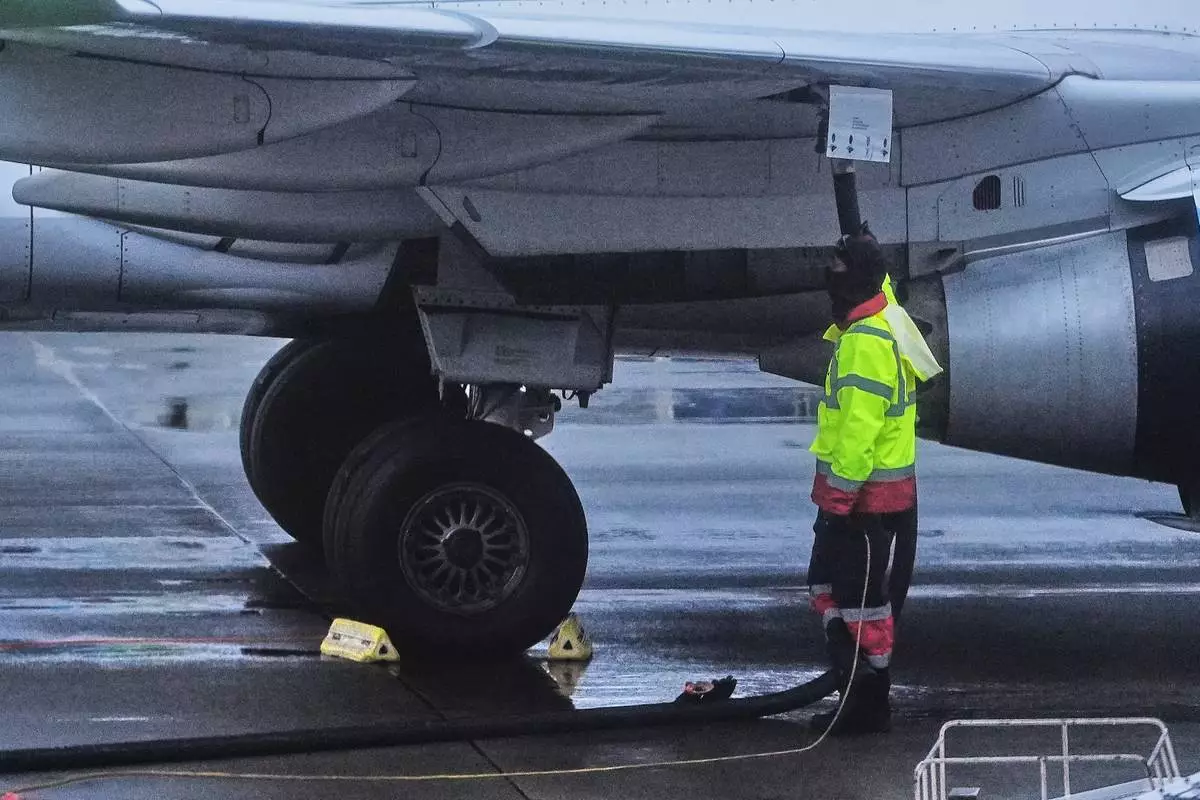
FILE - An airplane is refueled at Seattle-Tacoma International Airport in SeaTac, Wash., on Sunday, Nov. 23, 2025. (AP Photo/Lindsey Wasson, File)
LONDON (AP) — Ten years ago, the United Kingdom voted to leave the European Union in a referendum that forges political identities to this day and that shattered a half-century project to get closer to the continent.
Brexit, short for British exit, became a reality on June 23, 2016, when 52% — or more than 17 million people — voted to leave the EU. Though the margin was narrow, the vote led to the most dramatic shake-up of the U.K. economy and society since World War II.
But like any divorce, the paperwork and process of completing the breakup was not swift: It took nearly five years.
Brexit was born out of a growing sense of frustration not only with the EU but over the global financial crisis of 2008. Supporters were able to tap into that frustration, and argued that the U.K. on its own, would be revitalized and able to focus just on domestic priorities.
Opponents warned that Brexit would lead to an economic disruption and that it risked the country’s standing in the world.
A decade on, here is where Brexit stands.
Backers of Brexit — commonly known as Brexiters — held out a vision that the British economy could thrive outside the EU by harnessing the buccaneering spirit that had once made it the world’s biggest.
Though the COVID-19 pandemic and the wars in Ukraine and more recently, the U.S.-Israeli war on Iran have not helped, it’s clear that the British economy has not been revitalized.
Merchants have complained about the hurdles that they now have to clear when trading with their European neighbors — the 27-nation EU remains by far the U.K.’s biggest trading partner.
And though there are no tariffs imposed on British goods entering the EU, there is a raft of non-tariff barriers, such as cumbersome customs paperwork, border certifications, and visa restrictions. Many of the trade deals that the Brexiters touted, most notably one with the United States, have not materialized.
Experts say the British economy is between 4% and 8% smaller than it would have been had the country voted to remain in the EU. That would translate to much higher living standards and billions more pumped into public services, including the cherished National Health Service, which was promised an extra 350 million pounds ($468 million) a week by Brexit campaigners. That pledge was emblazoned on their big red campaigning bus.
“Brexit has made the U.K. economy smaller than it otherwise would have been,” said Jonathan Portes, professor at King’s College London.
“The effect has not been a sudden collapse, but a gradual and cumulative drag on trade, investment and productivity,” he wrote in an article for The UK in a Changing Europe think tank.
Brexiters argue, however, that leaving the EU is not something that can be judged in the short-term — there was always going to be a short-term economic disruption in return for greater control over an array of policy levers, including on migration.
Brexit put an end to free movement between the U.K. and EU, but securing Britain's border has had mixed outcomes. Getting a grip on immigration was a key promise of the Brexiters — their message of taking back control resonated.
Though net migration — the difference between those entering the U.K. and those leaving in any one year, from Europe — has plunged, it has soared from non-EU countries. That’s partly because of changes in visa rules that the previous Conservative government introduced to help out sectors that desperately needed migrant labor, such as workers to care for the elderly.
Overall though, there are signs the government is getting a grip on who can and cannot enter the country legally. Net migration has fallen sharply, from more than 900,000 in 2023 to 171,000 last year.
Though net migration is down, many are angered by migrants entering the country illegally — specifically the sight of people, often escaping war zones such as Afghanistan and Sudan, arriving on British shores in inflatable boats after making the dangerous journey across the English Channel.
The uproar over the number of small boat crossings, which peaked at 46,000 in 2022 and reached 41,000 last year, has become one of the main top political issues despite being a fraction of overall migration. Anger has focused on asylum seekers, often housed at public cost. Unruly mobs have protested outside and even tried to set fire to some hotels housing asylum seekers.
In the years since Brexit, Britain's political landscape has fractured, with declining support for the two long-dominant parties, Conservatives and Labour. The Conservatives were ejected in 2024 after 14 years in power, much of it dominated by wrangling over U.K.-European relations.
The Labour government hasn’t impressed either and Prime Minister Keir Starmer looks like he will be announcing his resignation very soon.
Millions of voters are being tempted by Reform U.K., led by Nigel Farage, who perhaps more than any other politician campaigned for Brexit. His party has led in almost every opinion poll for more than a year.
At the same, there’s a growing feeling in the country that Brexit has failed.
According to two polls from Ipsos, 52% of people in the U.K. would like to rejoin the EU while 33% are against it. The pollster also found that 48% think Brexit is going worse than expected against just 9% who think it’s going better. Also, Ipsos found that 48% would back another referendum today on the U.K.’s membership of the EU against 27% who oppose one.
Against this backdrop, the Labour Party has walked a tightrope since being elected in 2024. Having explicitly ruled out reversing Brexit — or even rejoining the EU’s frictionless single market — it hasn’t got a huge amount of political space to maneouver.
Starmer has sought a “reset” of ties following the distrust built over the years of the Brexit negotiations, largely centered around making trading easier. He is hoping to announce further measures at a summit with the EU next month — provided he’s still the prime minister.
His most likely successor, Andy Burnham, tempered his language on the U.K. rejoining the EU while out on the campaign trail over the past month, ahead of his victory in a special election on Thursday that saw him beat back a challenge from Reform in a seat that overwhelmingly backed Brexit.
“I am not proposing that the U.K. considers rejoining the EU,” Burnham said. “I respect the decision that was made at the referendum and it is going to undermine everything I have said about strengthening democracy if we don’t respect that vote.”
Associated Press writer Jill Lawless in London contributed to this story
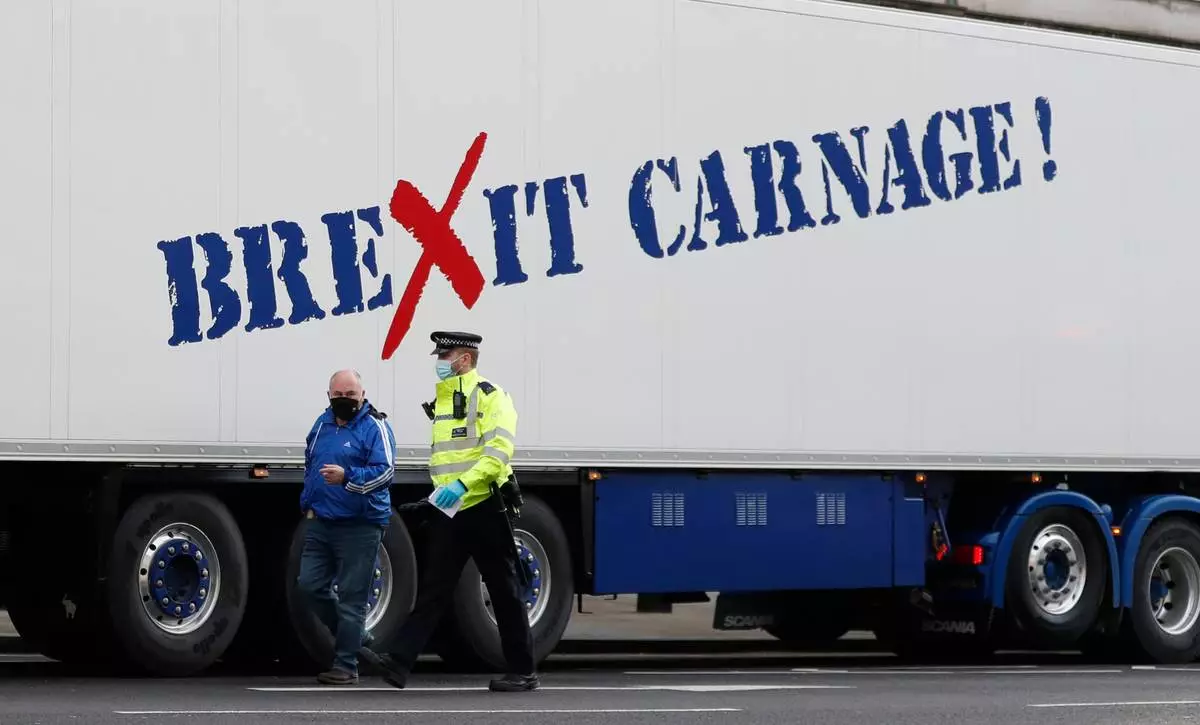
FILE - A policeman escorts the driver of a shellfish export truck as he is stopped for an unnecessary journey in London, Monday, Jan, 18, 2021. (AP Photo/Alastair Grant, File)
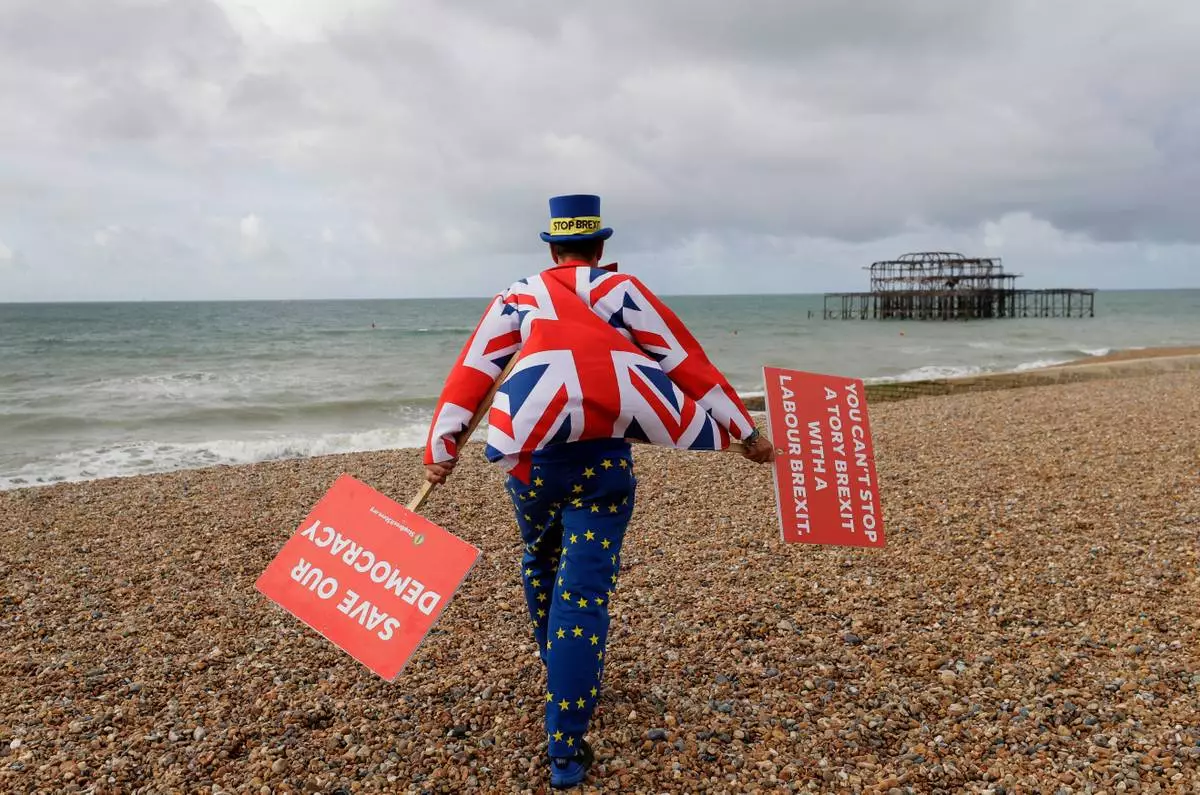
FILE- Anti Brexit campaigner Steve Bray walks on the beach to pose for a photograph during the Labour Party Conference at the Brighton Centre in Brighton, England, Monday, Sept. 23, 2019. (AP Photo/Kirsty Wigglesworth, File)
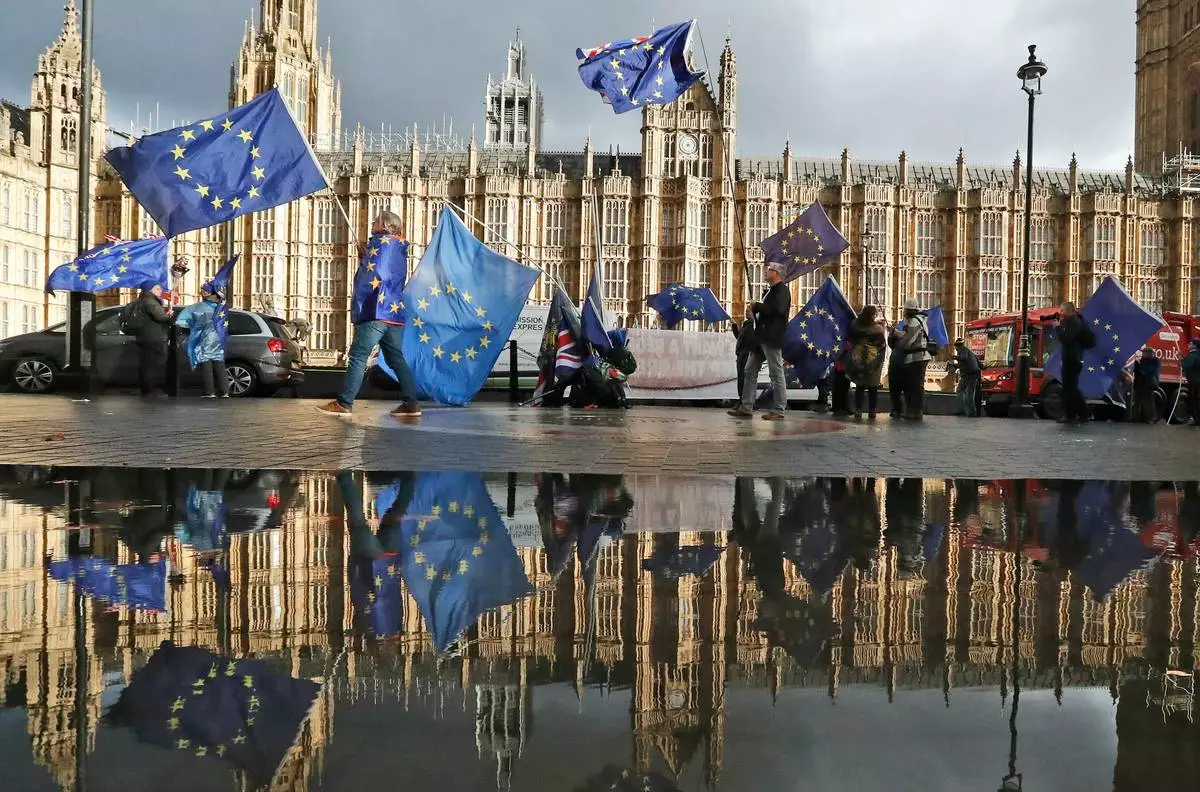
FILE - Protestors are reflected in a large puddle as they wave European flags to demonstrate against Brexit in front of the Parliament in London, Dec. 3, 2018. (AP Photo/Frank Augstein, File)
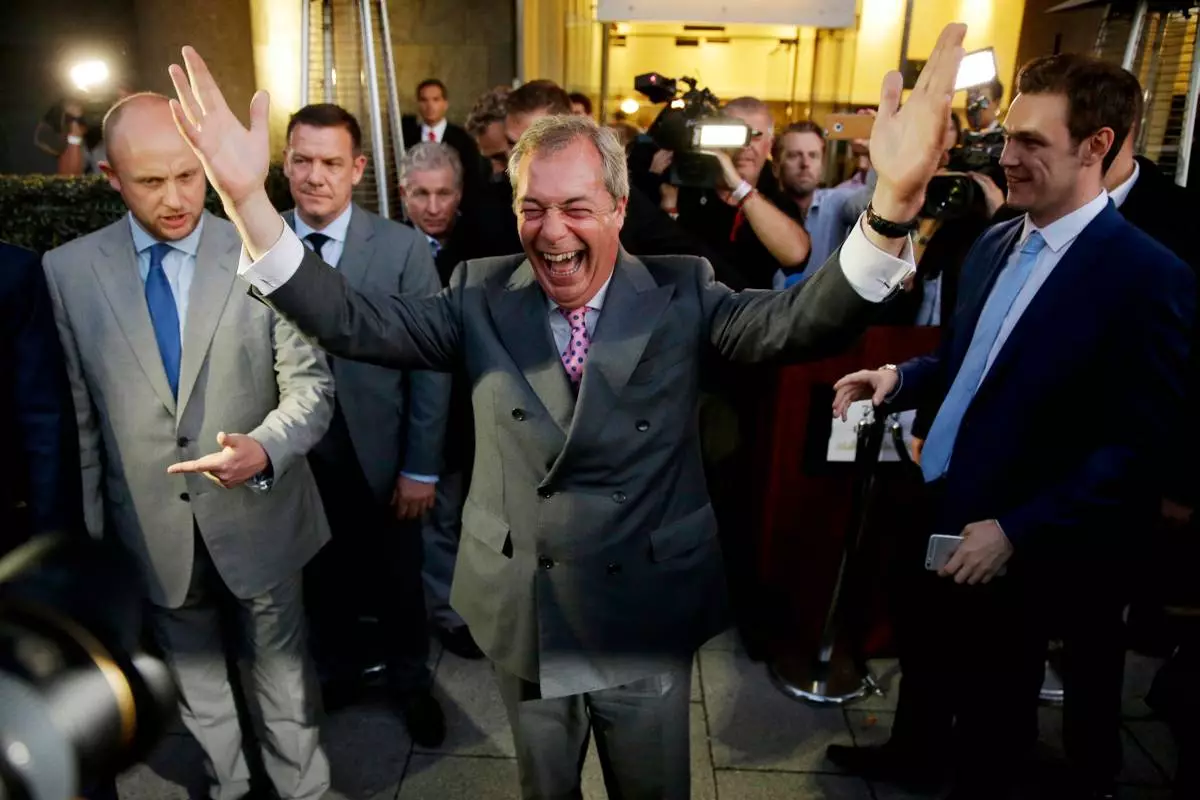
FILE - Nigel Farage, the leader of the UK Independence Party, celebrates and poses for photographers as he leaves a "Leave.EU" organization party for the British European Union membership referendum in London., June 24, 2016. (AP Photo/Matt Dunham, File)
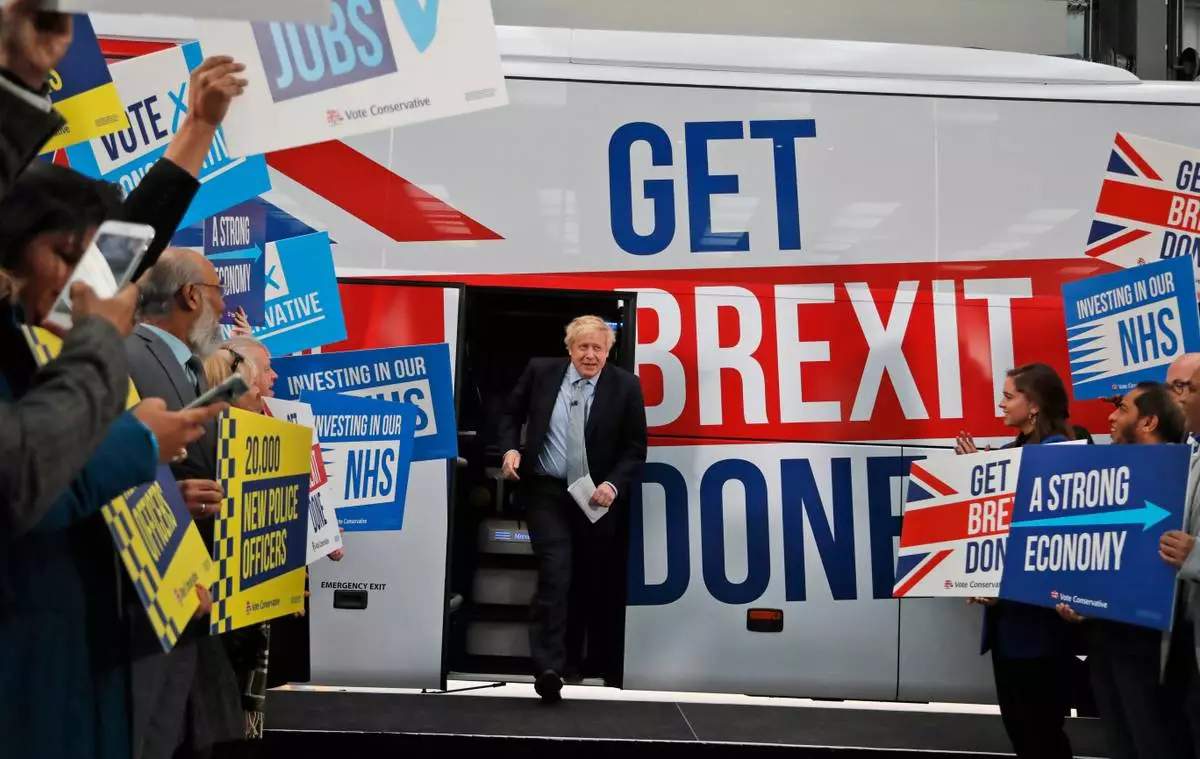
FILE - Britain's Prime Minister Boris Johnson addresses his supporters prior to boarding his General Election campaign trail bus in Manchester, England, Friday, Nov. 15, 2019. (AP Photo/Frank Augstein, Pool, File)