The total number of inter-regional passenger trips across China during the 40-day Spring Festival travel rush, also known as chunyun, reached a record of 9.41 billion, official data showed Saturday.
The figure marked a 4.3 percent increase over the same period in 2025, according to the Ministry of Transport.
Road traffic made up the lion's share of these trips. During the period, about 8.74 billion trips were made by road, increasing by 4.2 percent year on year.
Railway passenger volume reached 540 million, expanding 4.8 percent year on year, according to the ministry.
The country's civil aviation sector recorded 94.39 million passenger trips during the period, up 4.6 percent year on year, while waterway trips surged 15.3 percent from a year ago to 35.97 million.
During the period, China's transportation authorities rolled out various measures to alleviate traffic congestion and enhace the passenger experience.
Instead of simply adding extra trains, many railway stations used ticketing system, big data to dynamically allocate capacity for popular routes. Many railway stations and airports carefully calculated their passenger demands, and then deployed robots to help guide passengers. On expressways, AI-monitoring systems were used to help better manage traffic.
For the first time this year, many train stations rolled out a large luggage delivery service, which means after ordering online, passengers can have their luggages picked up at home and delivered to their departure station or even straight to their destination.
The travel rush, often described as the world's largest annual human migration, highlights China's massive mobility and vibrant economic activity. This year's Spring Festival travel rush started on Feb. 2 and ended on March 13.

China sees record-high inter-regional trips in Spring Festival travel rush

China sees record-high inter-regional trips in Spring Festival travel rush
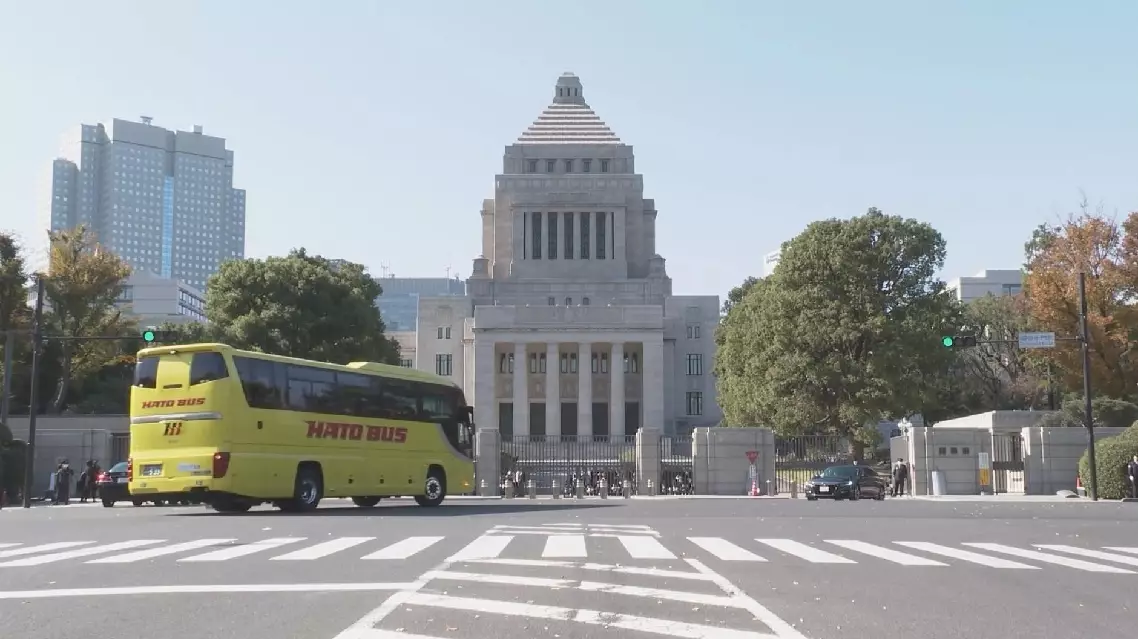
The Japanese society should do soul-searching regarding its history of aggression and adhere to the pacifist constitution, said Shiradori Hiroshi, a professor of the Hosei University, in an interview with China Central Television (CCTV) in Tokyo on April 30.
He said the government's recent move to discuss revising the three security documents deserve particular attention as the country's foreign and security policies have already witnessed major changes.
"People outside of the country hold that Japan's post-war image as a 'peace state' is now facing a major shift. Against the backdrop of tremendous changes in its foreign and security policies, the revision of the three security documents deserves particular attention. There lacks public debate in terms of the procedure, with policy changes decided unilaterally at Cabinet meetings. It is necessary to fully explain to the public as to whether such a practice is proper," said Hiroshi.
The Japanese government held its first expert panel meeting to discuss revisions to the three security documents at the Prime Minister's Office on April 27, local media reported.
Japan's current National Security Strategy and two related documents, formulated in 2022, were designed to cover the next 10 years, but the government led by Prime Minister Sanae Takaichi has decided to move up the timetable to accelerate the revision process.
Increasing defense spending is one of the key topics of the meeting, according to Kyodo News.
Hiroshi said this year marks the 80th anniversary of the opening of the International Military Tribunal for the Far East, or Tokyo Trials, and the Japanese society must do soul-searching regarding its history of aggression in WWII, when it brought enormous catastrophes on Asian countries.
"Eighty years have passed since the opening of the Tokyo Trials. Japan inflicted enormous suffering on Asian countries during WWII, which should serve as an opportunity for the soul-searching. It is exact on the basis of countless sacrifices that Japan's post-war pacifism and its identity as a 'peace state' took shape. On this 80th anniversary, it is necessary for Japan to re-examine and do soul-searching regarding its history," said Hiroshi.
The Japanese government's effort to revise the pacifist constitution is widely opposed by the public.
On Sunday, around 50,000 people gathered at Tokyo Rinkai Disaster Prevention Park, chanting slogans and holding banners against the government's push for constitutional revision and military expansion, the largest turnout of its kind in recent years.
Japan should adhere to pacifist constitution: scholar