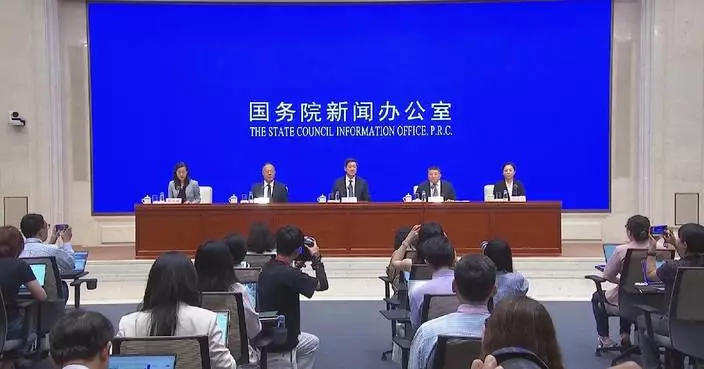
A conference on the development of the ultra HD audiovisual industry was held in Shanghai on Friday, showcasing a series of innovative initiatives poised to shape the future of entertainment and communication.
An array of technological innovations used to produce the live broadcast of the 2026 China Media Group (CMG) Spring Festival Gala was featured at the conference. These included advanced 8K systems entirely supported by domestically produced equipment, demonstrating China's rising strength in high-end broadcast technology.
At the event, a center for the promotion of AI application scenarios in Shanghai's Jing'an District was officially launched.
Envisioned as a hub integrating "business, culture, creativity, and technology," the center aims to become an experimental platform for AI scenario innovation and an accelerator for converting technological advances into practical applications, supporting Shanghai's goal of establishing a world-class AI industry cluster.
Also launched was a cloud network platform designed to ease cultural organizations and practitioners' challenges related to computational costs, technical barriers, and compliance requirements, aiming to make AI a convenient tool for content creation, smart marketing and international dissemination.
"Leveraging our strengths as a traditional industry hub as a district in downtown Shanghai, we will provide an open platform for these numerous AI technology companies, allowing them to discover their business models here," said Xie Tian, director of the Science, Technology, and Economy Commission of Jing'an District.
Named after the ancient Jing'an Temple, Jing'an District boasts a time-honored history, picturesque environment, prosperous business, innovation vitality and convenient information availability and transportation facilities, offering an important window in the exchanges between Shanghai and the outside world.
The conference also unveiled a series of major industry initiatives, spotlighting the vast potential of deep integration between AI and ultra HD audio-visual technology, energizing the industry with new opportunities for innovation and growth.
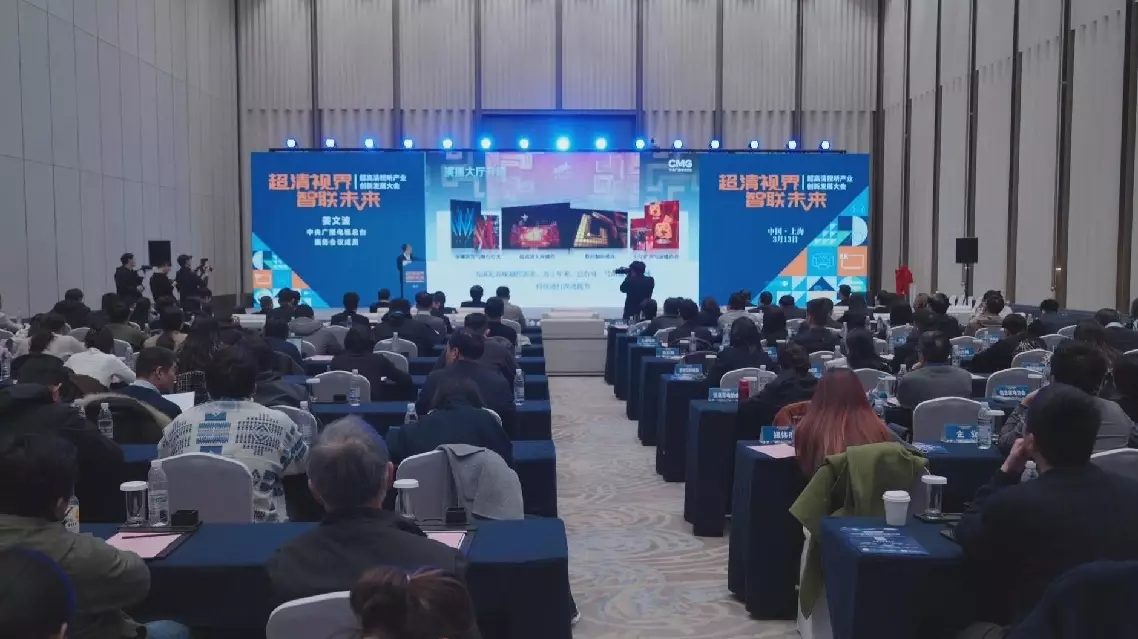
Shanghai hosts conference on ultra HD audiovisual industry development
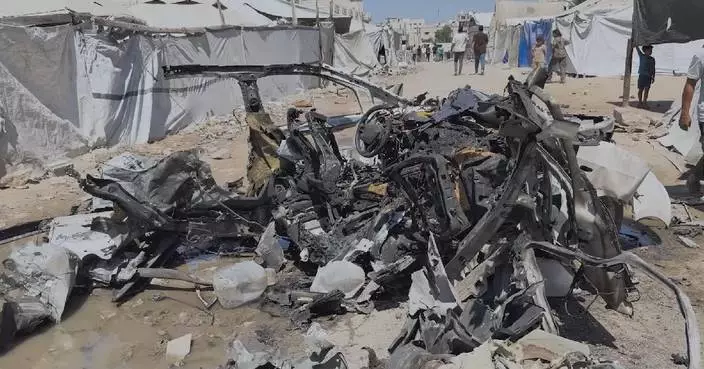
Displaced Palestinians in the Gaza Strip are manually removing rubble using basic tools, in the absence of heavy machinery and international reconstruction assistance.
Seven months into a fragile ceasefire, large-scale reconstruction remains largely stalled in Gaza, with Israeli restrictions on construction materials and unresolved political disputes deemed as key obstacles.
Many families in the enclave say they can no longer wait for rebuilding plans to begin.
Mohammad Adel, who lost his seven-story home in Khan Younis during the war, has been living with his family under difficult displacement conditions in the crowded tents of Al Mawasi for more than two years.
Unable to wait any longer, Adel decided to begin clearing the rubble of his home by hand.
"We see that there will be no reconstruction for Gaza and the closure is very strict on us. Waiting for reconstruction will take a very long time, so we started working and removing the rubble with our own hands. As you can see, this will cost us money, but we are trying to prepare the place so we can live in it," he said.
For some unemployed workers, clearing debris has become a temporary source of income amid the economic collapse caused by the war.
"Today, financial means have become nonexistent. Before the war, I had a chicken farm, but my work stopped because of the war. So I searched for another job that could provide me with an income, and I have no choice except this extremely exhausting work," said Abdullah Al Bayouk, a worker.
Palestinian officials warn that the continued delay in reconstruction is forcing thousands of displaced families to remain inside tents or unsafe damaged buildings, under worsening humanitarian conditions.
"Over 400,000 residential buildings have been either totally destroyed or rendered uninhabitable, along with more than 60 million tons of rubble. And 3,000 more housing units are at risk of collapse, yet people are still living inside them," said Mohannad Abboud, director of reconstruction of the Palestinian Ministry of Public Works.
A recent UN report showed that rebuilding Gaza and clearing the debris will require more than 71 billion U.S. dollars over the next decade. The rubble is estimated to cover around 78 percent of buildings across the strip.
Gaza residents clear rubble by hand as large-scale reconstruction stalls