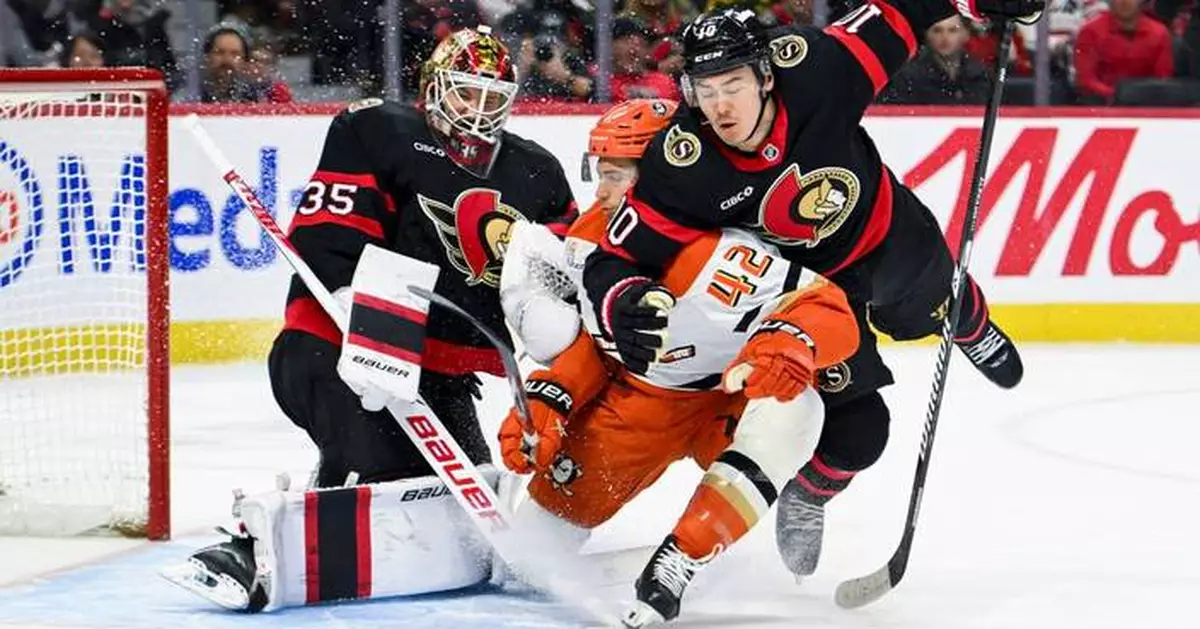
OTTAWA, Ontario (AP) — Linus Ullmark made 23 saves for his second shutout of the season and the Ottawa Senators blanked the Anaheim Ducks 2-0 on Saturday.
Michael Amadio and Thomas Chabot scored for Ottawa. Shane Pinto had two assists. It was the 14th shutout of Ullmark's career. The Senators have won four of five.
Ville Husso stopped 27 shots for Anaheim.
Nick Cousins won a battle along the boards at center which sprung Pinto down the ice. Pinto fed Amadio on a 2-on-1 and he made no mistake, beating Husso short-side 3:54 into the second period.
At the 9:21 mark of the second, the Senators capitalized on a turnover. Pinto intercepted a pass and found Chabot in the high slot for his seventh of the season and second career short-handed goal.
Anaheim challenged for goaltender interference but was unsuccessful.
Warren Foegele had a couple of chances from in close in the opening period, but just couldn’t settle a bouncing puck.
Husso then stopped Amadio on a short-handed 2-on-1.
Amadio later drew a penalty, but Husso made a big glove save on Tim Stutzle on the Senators’ power play.
Ducks: at Montreal on Sunday.
Senators: host San Jose Sharks on Sunday.
AP NHL: https://apnews.com/hub/nhl

Anaheim Ducks' Jansen Harkins (24) trips Ottawa Senators' Thomas Chabot (72) during the first period of an NHL hockey game, Saturday, March 14, 2026, in Ottawa, Ontario. (Spencer Colby/The Canadian Press via AP)
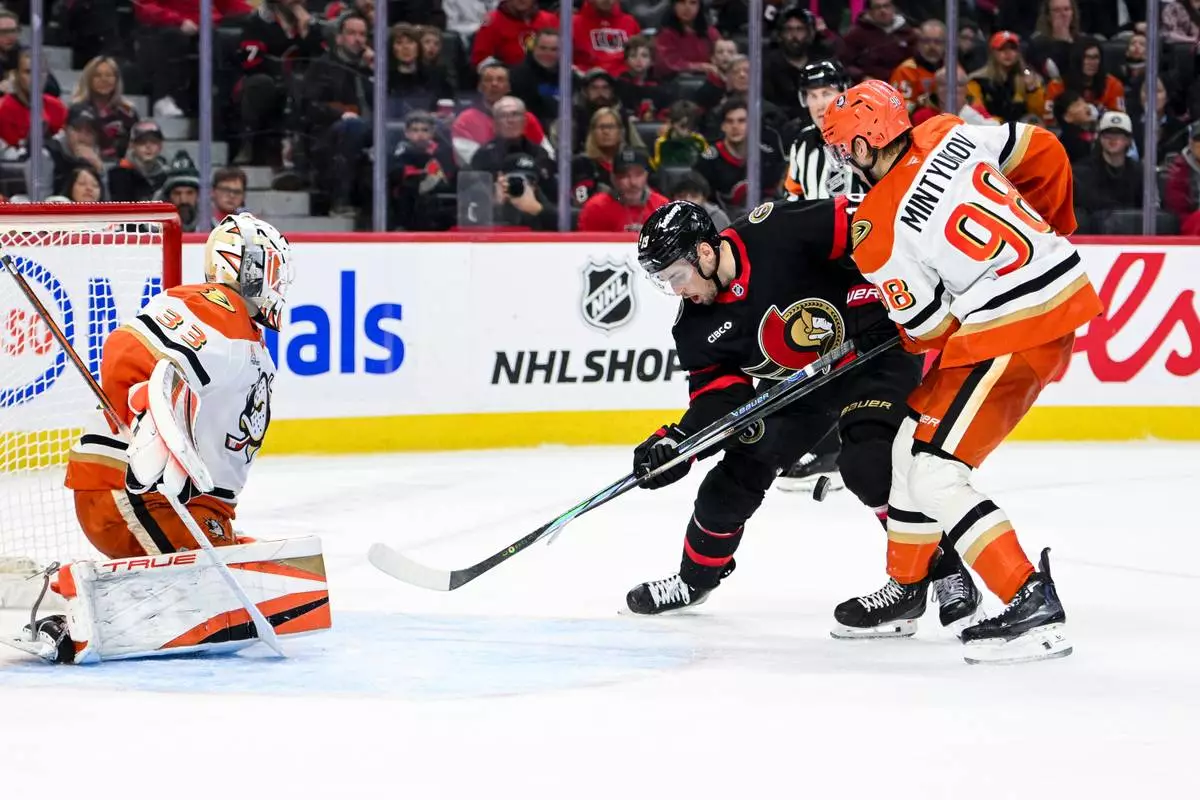
Ottawa Senators' Drake Batherson (19) looks for the puck between his legs while being pressured by Anaheim Ducks' Pavel Mintyukov (98) in front of teammate goaltender Ville Husso (33) during the second period of an NHL hockey game, Saturday, March 14, 2026, in Ottawa, Ontario. (Spencer Colby/The Canadian Press via AP)
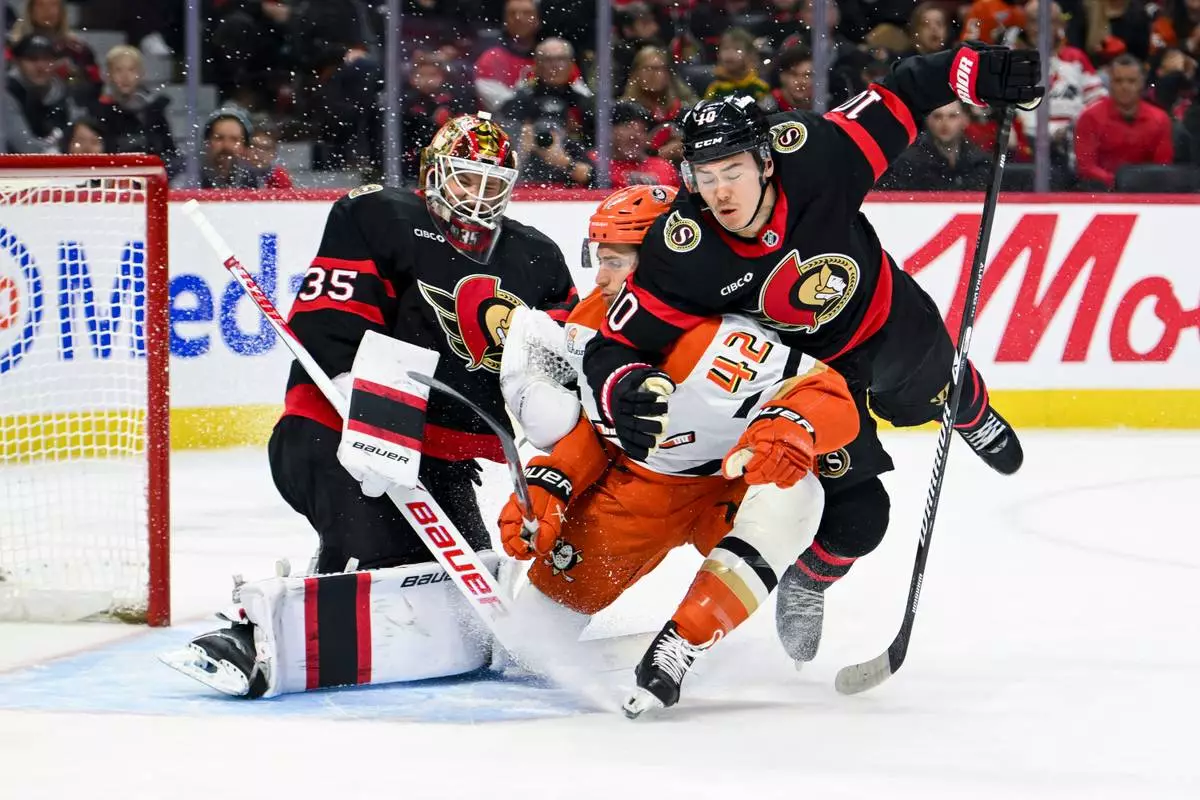
Ottawa Senators' Jordan Spence (10) crashes into Anaheim Ducks' Tim Washe (42) in front Senators' goaltender Linus Ullmark (35) during the first period of an NHL hockey game, Saturday, March 14, 2026, in Ottawa, Ontario. (Spencer Colby/The Canadian Press via AP)
ORLANDO, Fla. (AP) — Cade Cunningham scored 32 points and the top-seeded Detroit Pistons pulled off an incredible rally Friday night, erasing a 24-point deficit and beating the Orlando Magic 93-79 to force a Game 7 in their Eastern Conference first-round series.
Detroit trailed by 22 at the half and Orlando's lead went to 62-38 early in the third quarter. The Magic looked absolutely poised to become the seventh No. 8 seed to eliminate a No. 1 seed in the first round.
And then everything went wrong for Orlando. Everything.
“Detroit grit,” Cunningham said. “That's what we've been talking about all year.”
The Magic became the first team since 1996-97 — when play-by-play began getting tracked digitally — to lose at home after leading by at least 24 points with a chance to win a series.
That number, and a whole lot of others, were just baffling. The Magic missed 23 consecutive shots from the field, Detroit went on a 35-5 run and just like that, the story of the game — and quite possibly the series — changed wildly.
“We took each possession at a time, both offensively and defensively, and tried our best to execute on every single possession," Pistons coach J.B. Bickerstaff said. "Every screening action, every rebound, all the small things. We went out and focused on that. And we put ourselves in position to win.”
Tobias Harris scored 22 points for Detroit, which will host Game 7 on Sunday. Paolo Banchero and Desmond Bane each scored 17 for Orlando, which is now 0-2 in closeout opportunities in this series and was again without injured forward Franz Wagner.
The first quarter was back and forth, Detroit leading 26-25 after those opening 12 minutes.
The second quarter: Magic 35, Pistons 12.
Orlando outscored the Pistons 17-0 from 3-point range and the free-throw line in that quarter, held Detroit to 2-for-11 shooting over the first 5:48 of the period and took a 60-38 lead into the half.
The 22-point halftime lead was the fourth-largest by a No. 8 seed over a No. 1 seed in this format. And there was never an instance of a No. 8 seed — at least in the play-by-play era, which started in 1996-97 — outscoring a No. 1 seed by 23 or more points in any quarter of a playoff game, either.
It seemed over. It was not. Because the third quarter: Pistons 24, Magic 11.
“When things get sideways, people splinter. And this group does the opposite," Pistons guard Duncan Robinson said. "It finds a way to just come together. There’s a lot of pride in that locker room, not wanting to go out like that.”
The tone was set for a comeback — an epic one — and when the night ended those who remained in Orlando's Kia Center booed as they departed for possibly the final time this season.
“We've got to go do it the hard way,” Magic coach Jamahl Mosley said.
AP NBA: https://apnews.com/NBA
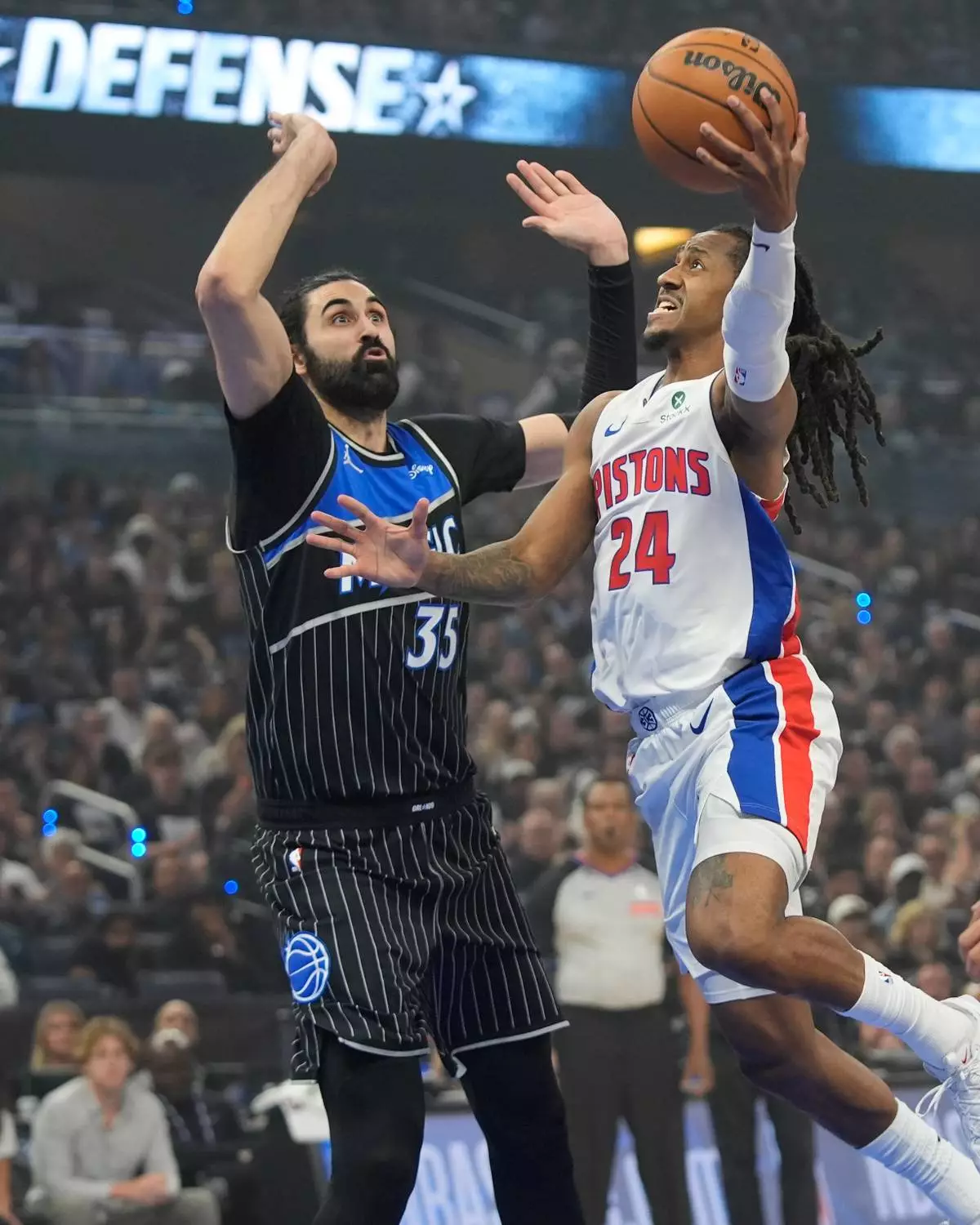
Detroit Pistons guard Daniss Jenkins (24) goes up to shoot over Orlando Magic center Goga Bitadze (35) during the first half in Game 6 of a first-round NBA basketball playoffs series, Friday, May 1, 2026, in Orlando, Fla. (AP Photo/John Raoux)
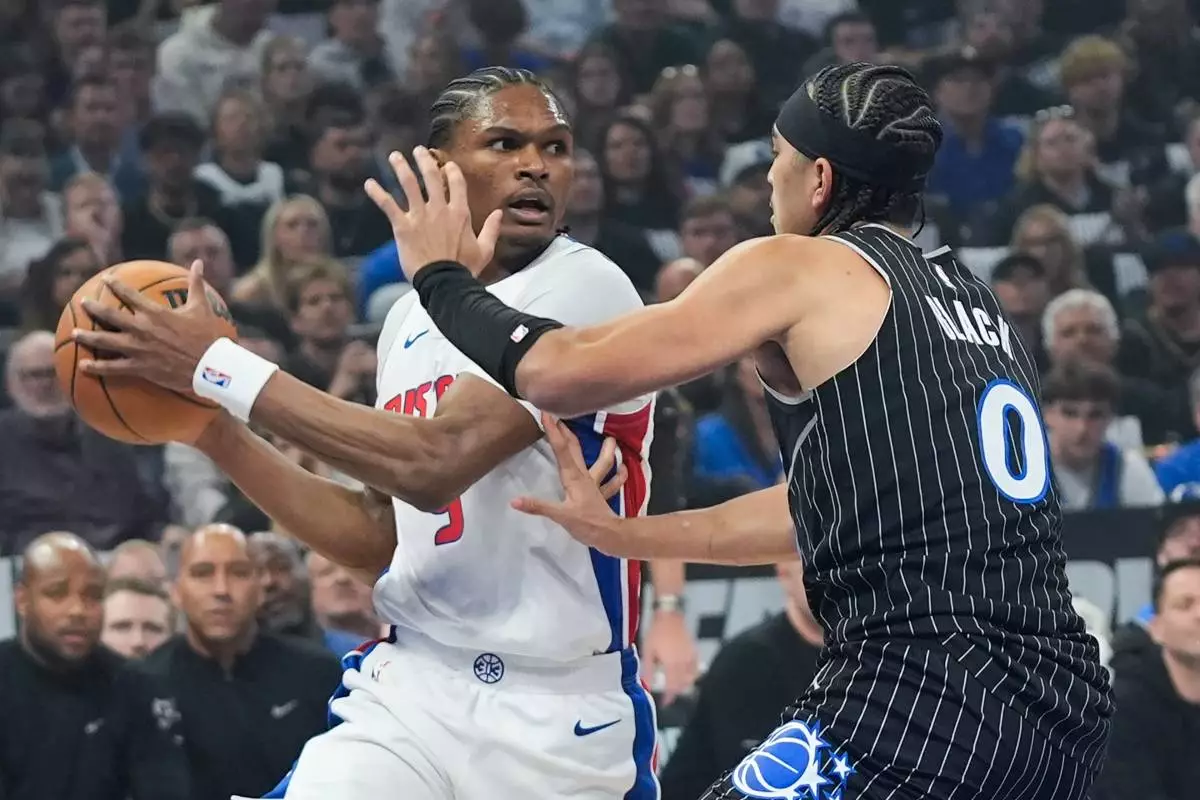
Detroit Pistons guard Ausar Thompson, left, looks to pass the ball as Orlando Magic guard Anthony Black (0) defends during the first half in Game 6 of a first-round NBA basketball playoffs series, Friday, May 1, 2026, in Orlando, Fla. (AP Photo/John Raoux)
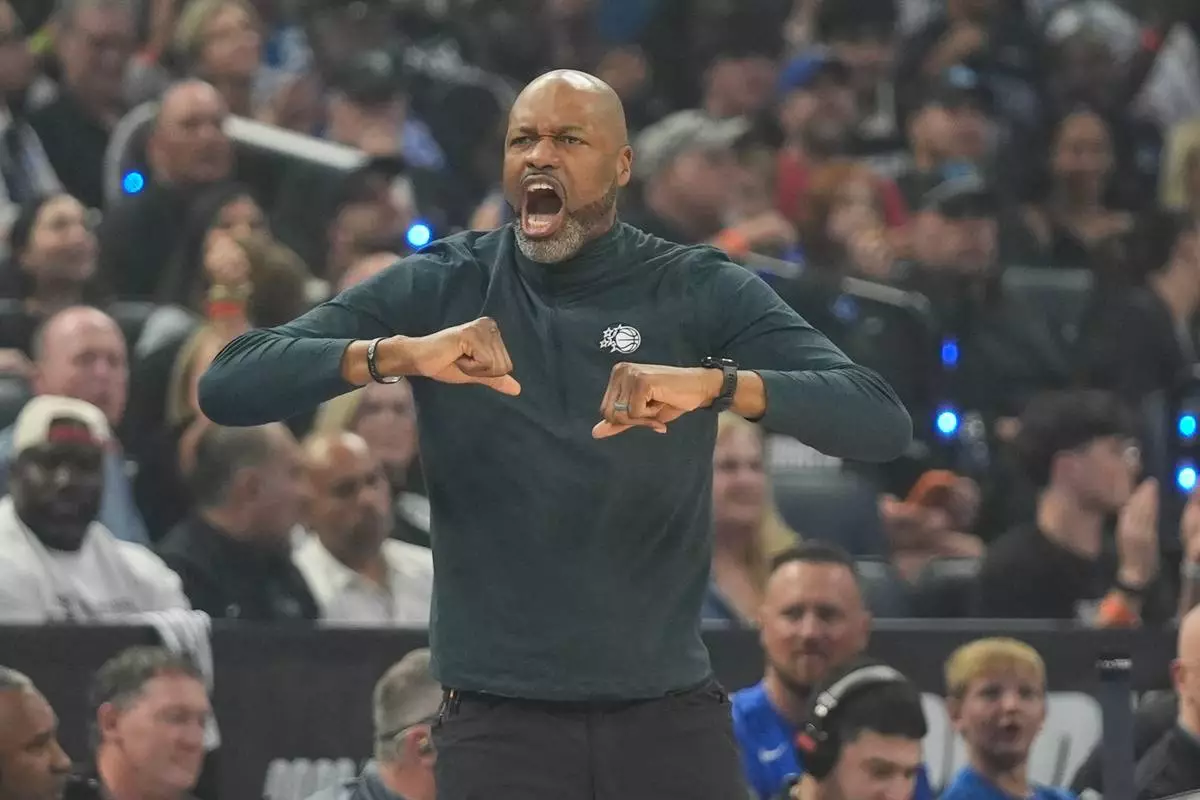
Orlando Magic head coach Jamahl Mosley directs his team against the Detroit Pistons during the first half in Game 6 of a first-round NBA basketball playoffs series, Friday, May 1, 2026, in Orlando, Fla. (AP Photo/John Raoux)
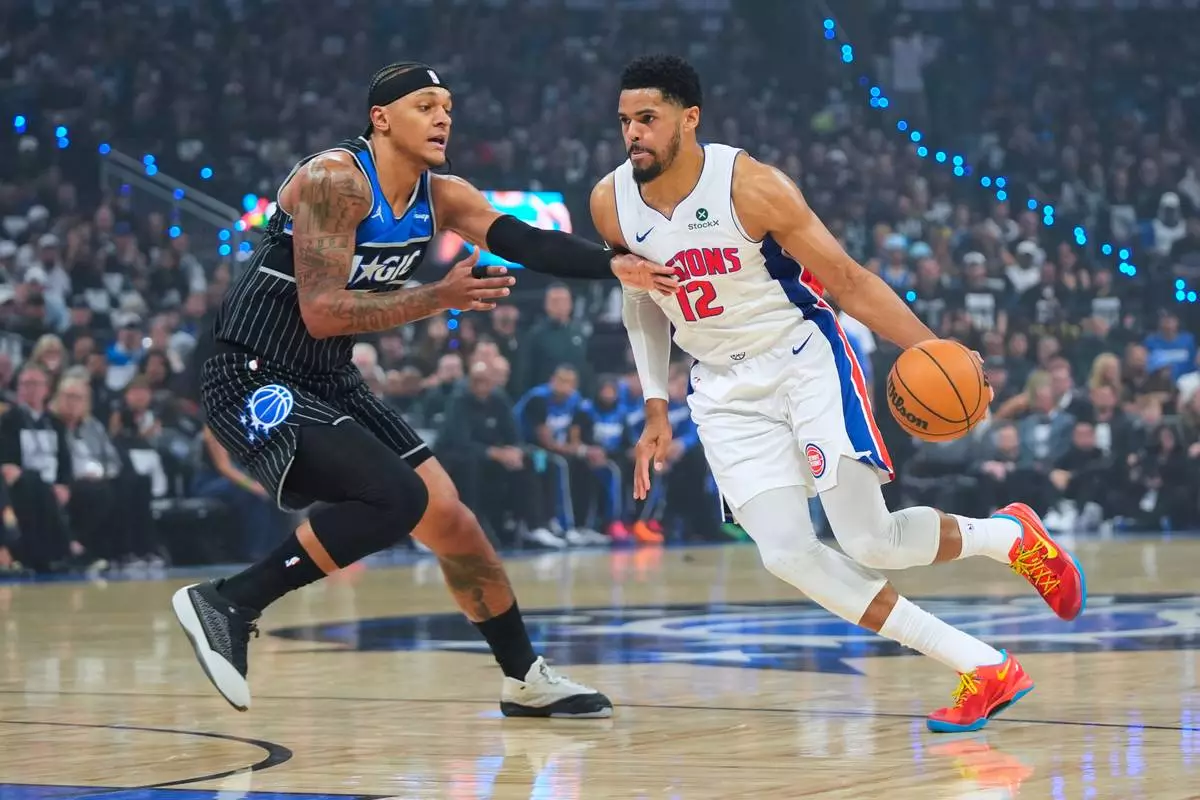
Detroit Pistons forward Tobias Harris (12) drives against Orlando Magic forward Paolo Banchero (5) during the first half in Game 6 of a first-round NBA basketball playoffs series, Friday, May 1, 2026, in Orlando, Fla. (AP Photo/John Raoux)
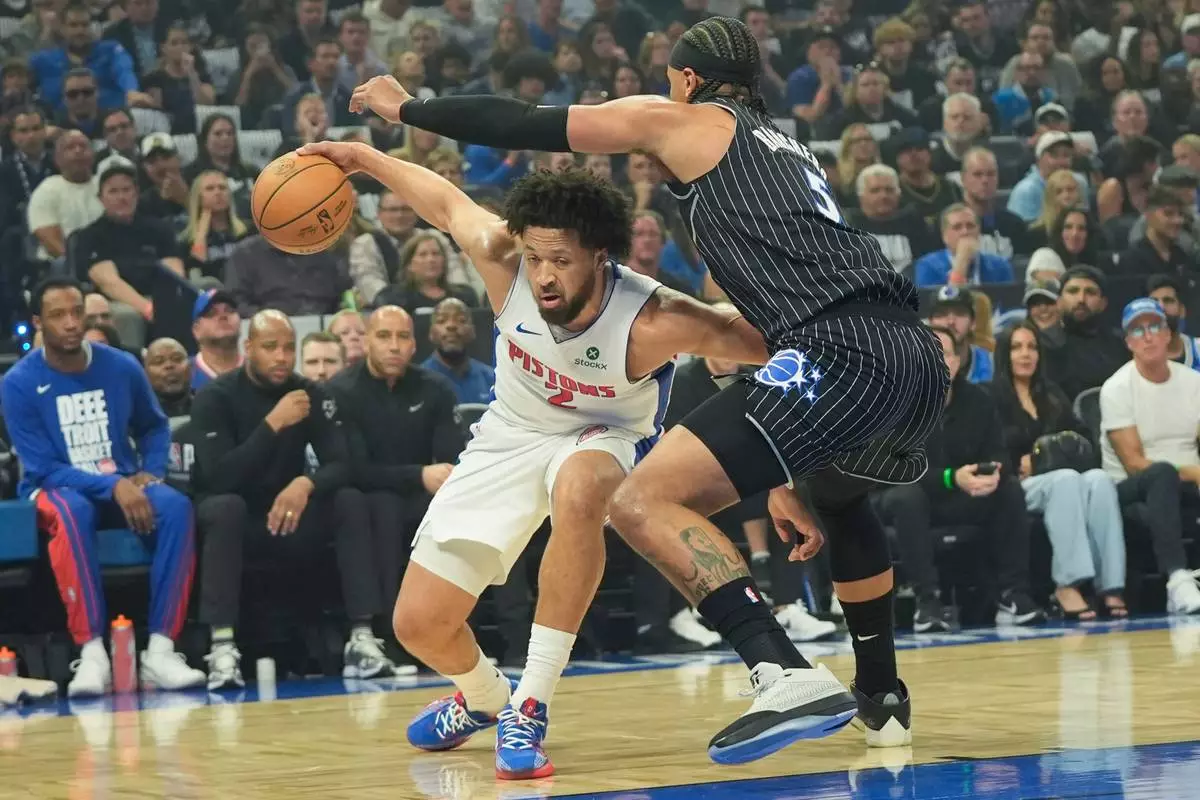
Detroit Pistons guard Cade Cunningham, left, tires to get past Orlando Magic forward Paolo Banchero, right, during the first half in Game 6 of a first-round NBA basketball playoffs series, Friday, May 1, 2026, in Orlando, Fla. (AP Photo/John Raoux)