Ghana has rejected a proposed health deal with the U.S. over provisions that would have allowed U.S. entities access to the nation’s sensitive health data without necessary safeguards, an official told The Associated Press on Friday. It was the latest African country to walk away from the deal over similar concerns.
Arnold Kavaarpuo, executive director of Ghana’s Data Protection Commission, said the scope of data access requested “went far beyond what would typically be required for the purpose for which it’s stated.”
The U.S. State Department did not immediately respond to AP’s inquiry about the Ghanaian official’s comments.
The U.S. has struck such health deals with nearly two dozen African nations under the Trump administration’s “America First” approach to global health funding. The new approach that kicked off late last year replaces a patchwork of previous health agreements under the now-dismantled United States Agency for International Development.
The deals offer hundreds of millions of dollars in U.S. funding to some of the countries worst hit by the U.S. aid cuts to support their public health systems and help fight disease outbreaks.
The agreements though have raised questions about data privacy concerns. In February, authorities in Zimbabwe said they rejected the proposed deal over issues around health data, fairness and sovereignty. Zambia is also reported to have pushed back on a section of the deal, although no decision has been made there.
Activists in Africa say the agreements often lack adequate safeguards for use of such data and are sometimes limiting, such as in Nigeria where the U.S. committed to supporting mainly Christian faith-based healthcare providers.
The Africa Centres for Disease Control and Prevention Director General Jean Kaseya had also cited “huge concerns” regarding data and pathogen sharing in comments to reporters about the deals.
Under the proposed agreement worth around $300 million, Kavaarpuo said Ghana would have received about $109 million in U.S. funding over five years with supplemental investments coming from the Ghanaian government.
Kavaarpuo, whose agency was directly involved in the talks, cited one caveat where individuals could be identified as deemed necessary for sensitive health data.
“That, in effect, was outsourcing the health data architecture of the country to a foreign body,” he said. “The proposed data sharing agreement looked at access not only to health data sets, but also to metadata, dashboards, reporting tools, data models and data dictionaries.”
The proposals would have also allowed up to 10 U.S. entities access to such data with no prior approval needed from Ghana for whatever the data is needed for, he said.
“We did not get a sense that Ghana had any real governance oversight when it came to how the data was going to be utilized. It was more or less if they undertook an exercise, they will notify the country. So it was not a prior approval arrangement,” he said.
Kavaarpuo said Ghana has communicated its decision to reject the proposal to the U.S. and sought improved conditions for a better deal.
——
For more on Africa and development: https://apnews.com/hub/africa-pulse
The Associated Press receives financial support for global health and development coverage in Africa from the Gates Foundation. The AP is solely responsible for all content. Find AP’s standards for working with philanthropies, a list of supporters and funded coverage areas at AP.org.
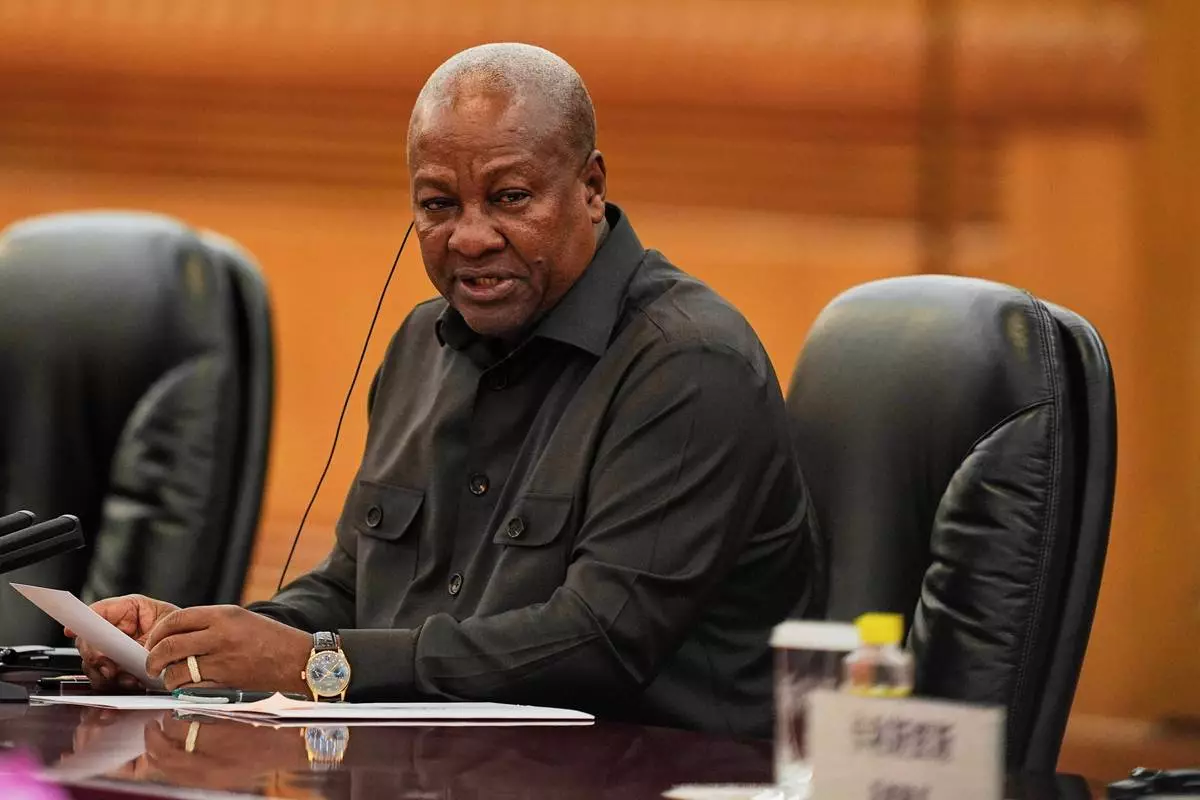
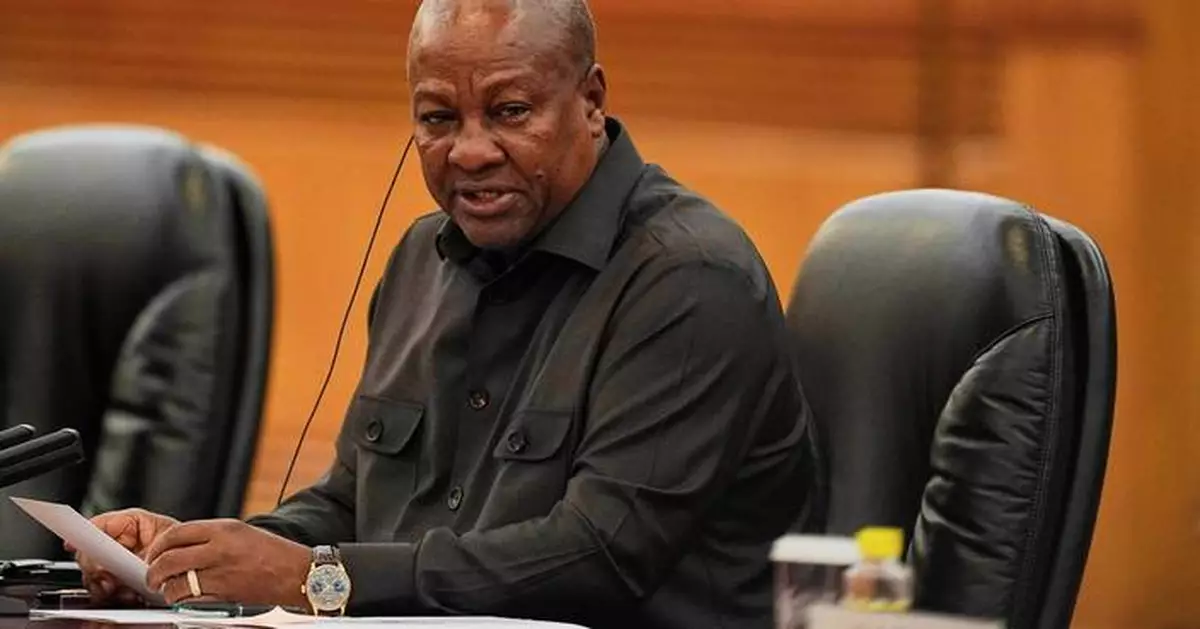
FILE - Ghana's President John Mahama speaks during a meeting with Chinese President Xi Jinping at the Great Hall of the People in Beijing, Oct. 14, 2025. (Ichiro Banno/Pool Photo via AP, FILE)
PARIS (AP) — Activists worldwide held May Day rallies and street protests on Friday, calling for peace, higher wages and better working conditions as many workers grapple with rising energy costs and shrinking purchasing power tied to the Iran war.
May 1 is a public holiday in many countries to mark International Workers’ Day, or Labor Day, when workers’ unions traditionally rally around wages, pensions, inequality and broader political issues. Demonstrations were held across Asia — from South Korea to Australia and Indonesia — to many European capitals. In the United States, activists opposing President Donald Trump’s policies also held marches and boycotts.
“Working people refuse to pay the price for Donald Trump’s war in the Middle East,” the European Trade Union Confederation, which represents 93 trade union organizations in 41 European countries, said. “Today’s rallies show working people will not stand by and see their jobs and living standards destroyed.”
What to know about May Day:
Rising living costs linked to the conflict in the Middle East was as a key theme in Friday’s rallies.
On a main avenue in Casablanca, Morocco’s largest city, taxi drivers honked their horns and bus drivers parked their vehicles to protest rising fuel costs.
“All my expenses have gone up, but my wages haven’t budged,” Akherraz Lhachimi of the Moroccan Labor Union said.
Several rallies were staged in South Africa, where the head of the Congress of South African Trade Unions, Zingiswa Losi, said workers were “suffocating” under rising costs of food, electricity, transportation and healthcare.
Turkish authorities in Istanbul detained hundreds of demonstrators for attempting to march in areas declared off-limits on security grounds, most notably central Taksim Square, the epicenter of 2013 protests. May Day rallies in Turkey are frequently marred by clashes with authorities.
A demonstration in Santiago, Chile, ended with vandalism and clashes between protesters and police, who used water cannons and tear gas to disperse the crowd.
Several thousand people gathered across Portugal as unions rallied together to protest proposed changes to labor laws that include making worker dismissals easier and reducing miscarriage bereavement leave.
“It’s the only voice we have,” public sector worker Paulo Domingues said of the protests.
May Day carries special meaning this year in France, after a heated debate about whether employees should be allowed to work on the country’s most protected public holiday — the only day when most employees have a mandatory paid day off.
Tens of thousands of people joined marches across the country, including in Paris, where brief scuffles with police broke out.
Almost all businesses, shops and malls were closed, and only essential sectors such as hospitals, transport and hotels were exempt.
A recent parliamentary proposal to expand work on the day prompted major outcry from unions and left-wing politicians.
Faced with the dispute, the government this week introduced a bill that would allow bakeries and florists to open. It is customary in France to give lily of the valley flowers on May Day as a symbol of good luck.
“May 1 is not just any day,” Small and Medium-sized Businesses Minister Serge Papin said. “It symbolizes social gains stemming from a century of building social rules that have led to the labor code we know in France.”
In the U.S., where May Day is not a federal holiday, May Day Strong, a coalition of activist groups and labor unions, urged people to protest under the banner of “workers over billionaires” and called for an economic blackout through “no school, no work, no shopping.”
New York City Mayor Zohran Mamdani addressed a largely supportive crowd at a Manhattan rally organized by unions and immigrant advocates. He reiterated his promise to raise taxes on the wealthy and “protect our neighbors from the cruelty of ICE,” or Immigration and Customs Enforcement.
At a protest outside the New York Stock Exchange, multiple people were arrested, according to police, who did not have an exact count or information on charges. Video showed some protesters tried to chain themselves to a railing. One struggled with officers.
Across the U.S., many protesters voiced opposition to Trump’s policies, including his immigration crackdown.
“We’re seeing tons and tons of attacks on working people and on oppressed communities from the Trump administration, both at home and abroad,” said Kathryn Stender, an activist with the Party for Socialism and Liberation who was among thousands at a rally in a Chicago park.
The atmosphere there was festive, with Native American dancers, mariachi bands and monarch butterfly signs, which have become a symbol of the immigrant rights movement.
While labor and immigrant rights are historically intertwined, the focus of May Day rallies in the U.S. shifted to immigration in 2006. That’s when roughly 1 million people, including nearly half a million in Chicago alone, took to the streets to protest federal legislation that would have made living in the U.S. without legal permission a felony.
May Day, or International Workers’ Day, traces back more than a century to a pivotal period in U.S. labor history.
In the 1880s, unions pushed for an eight-hour workday. A Chicago rally in May 1886 turned deadly when a bomb exploded and police responded with gunfire. Several labor activists — most of them immigrants — were convicted of conspiracy and other charges; four were executed.
Unions later designated May 1 to honor workers. A monument in Chicago’s Haymarket Square commemorates them with the inscription: “Dedicated to all workers of the world.”
Associated Press journalists from around the world contributed to this report.
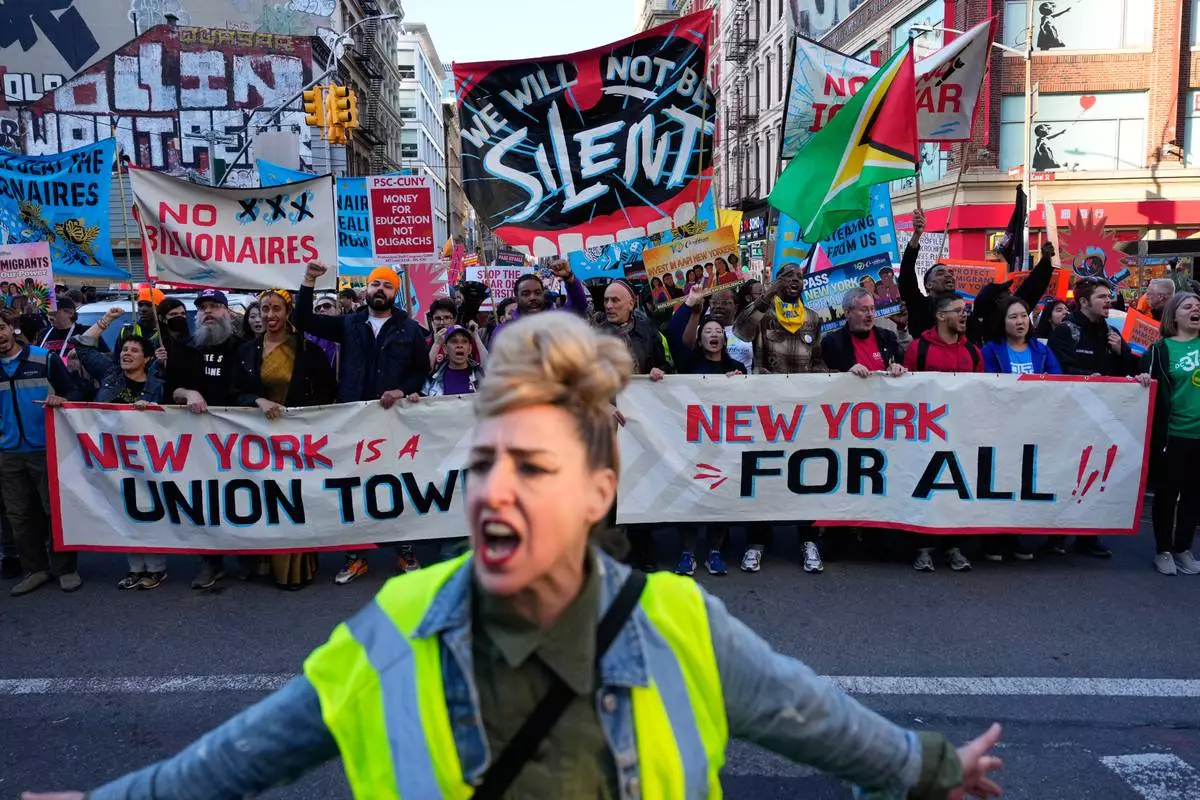
Demonstrators march during a May Day rally in New York, Friday, May 1, 2026. (AP Photo/Yuki Iwamura)
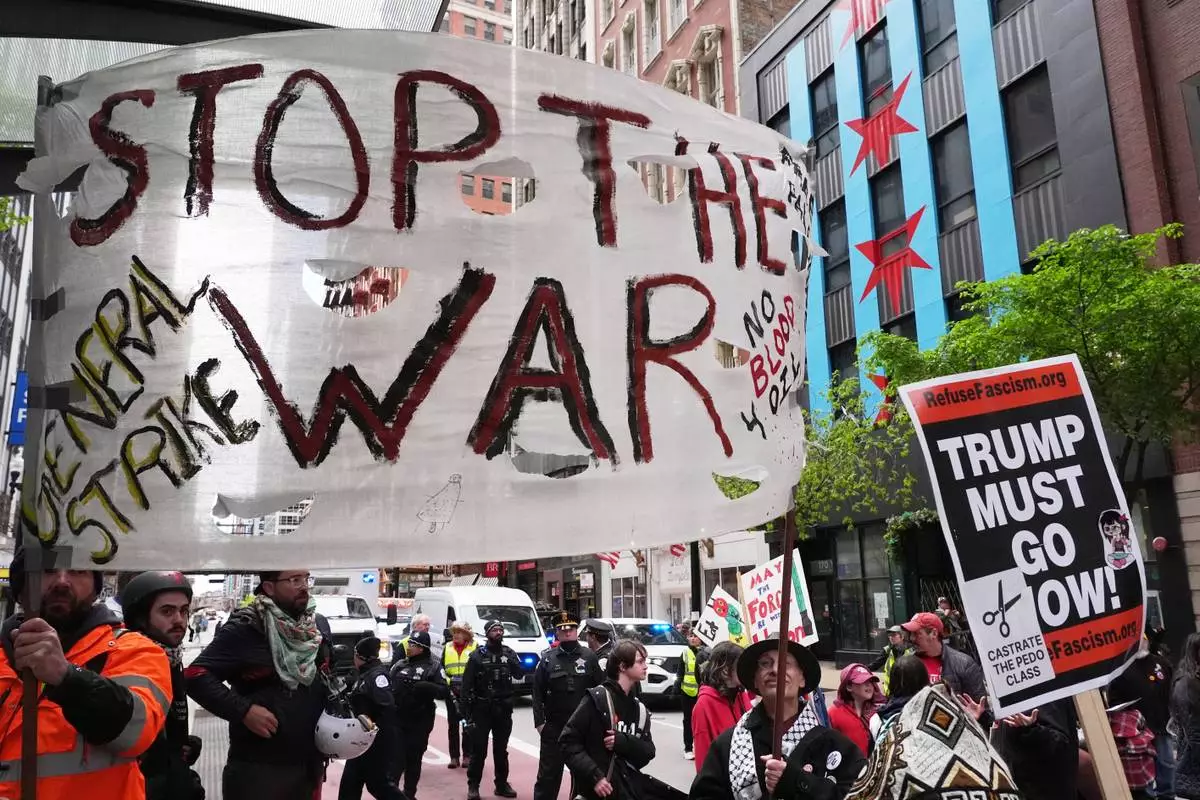
People march during a May Day rally in Chicago, Friday, May 1, 2026. (AP Photo/Nam Y. Huh)
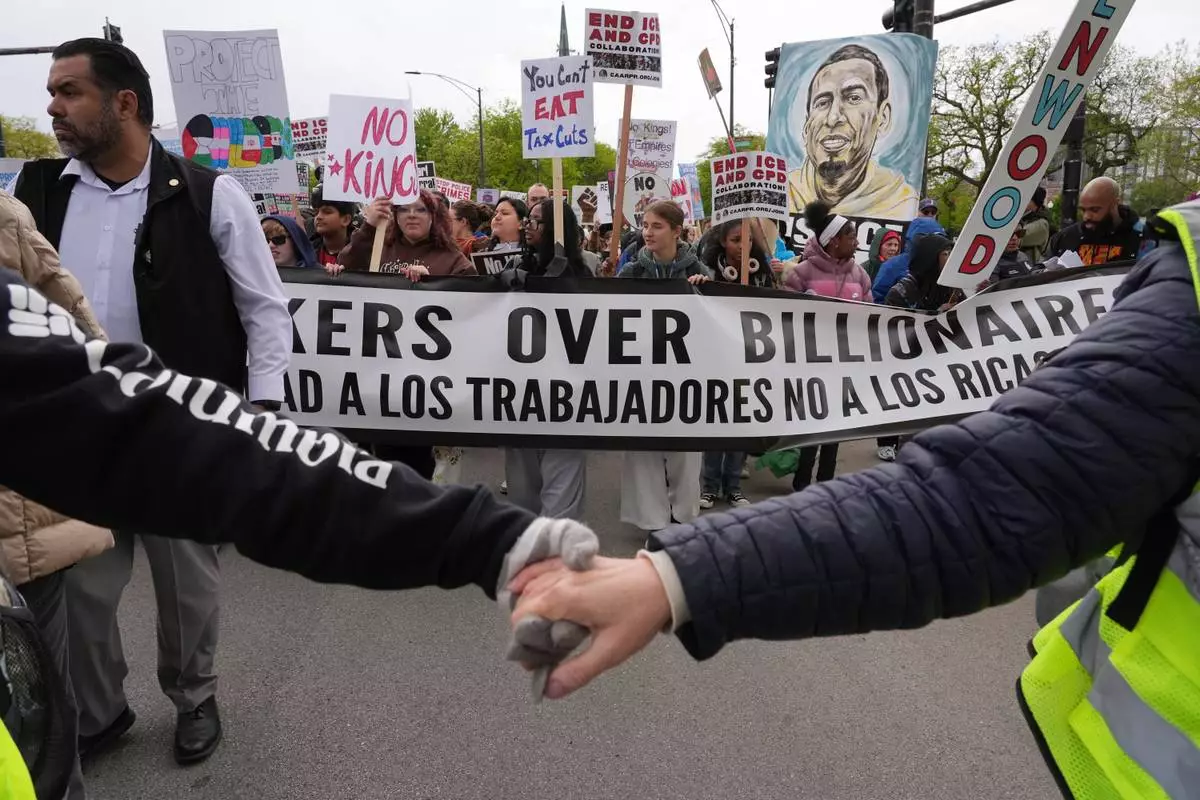
People hold hands at Union park for a May Day rally in Chicago, Friday, May 1, 2026. (AP Photo/Nam Y. Huh)
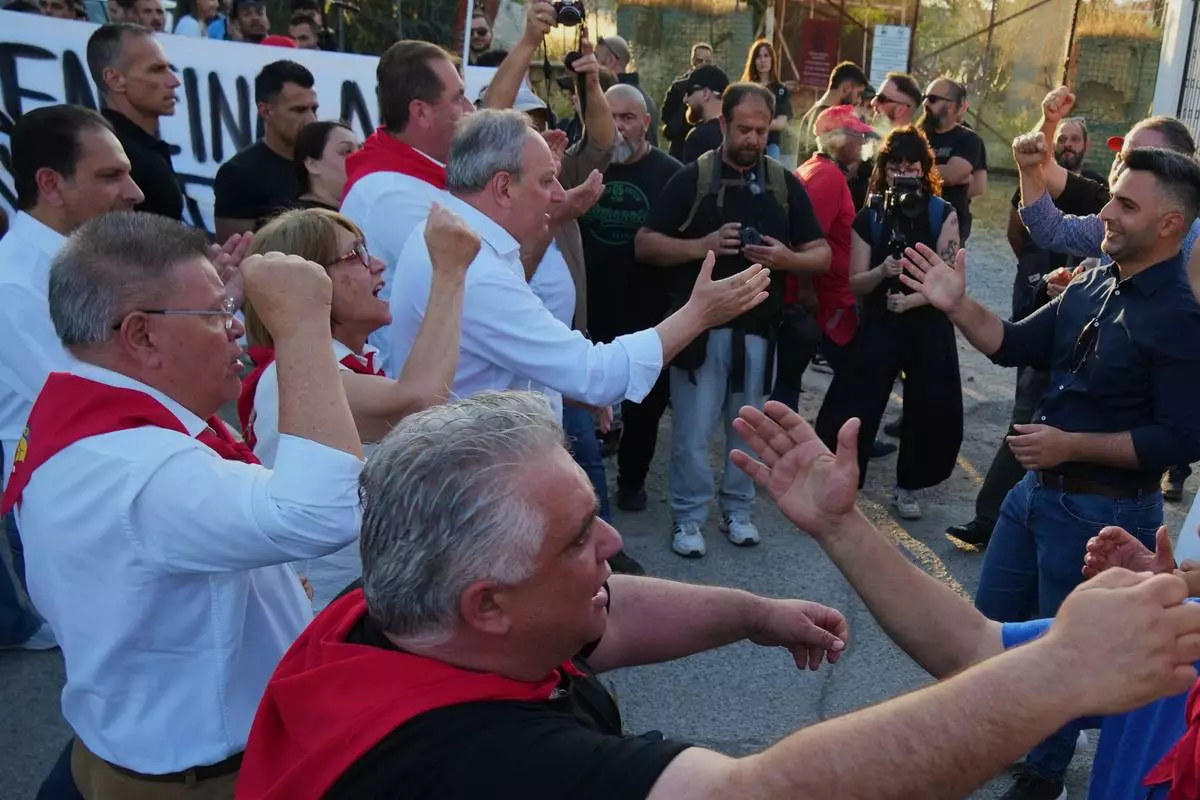
Turkish, right, and Greek Cypriots gathering s they marking May Day inside the U.N. buffer zone at Ledra Palace hotel in the divided capital of Nicosia, Friday, May 1, 2026. (AP Photo/Petros Karadjias)
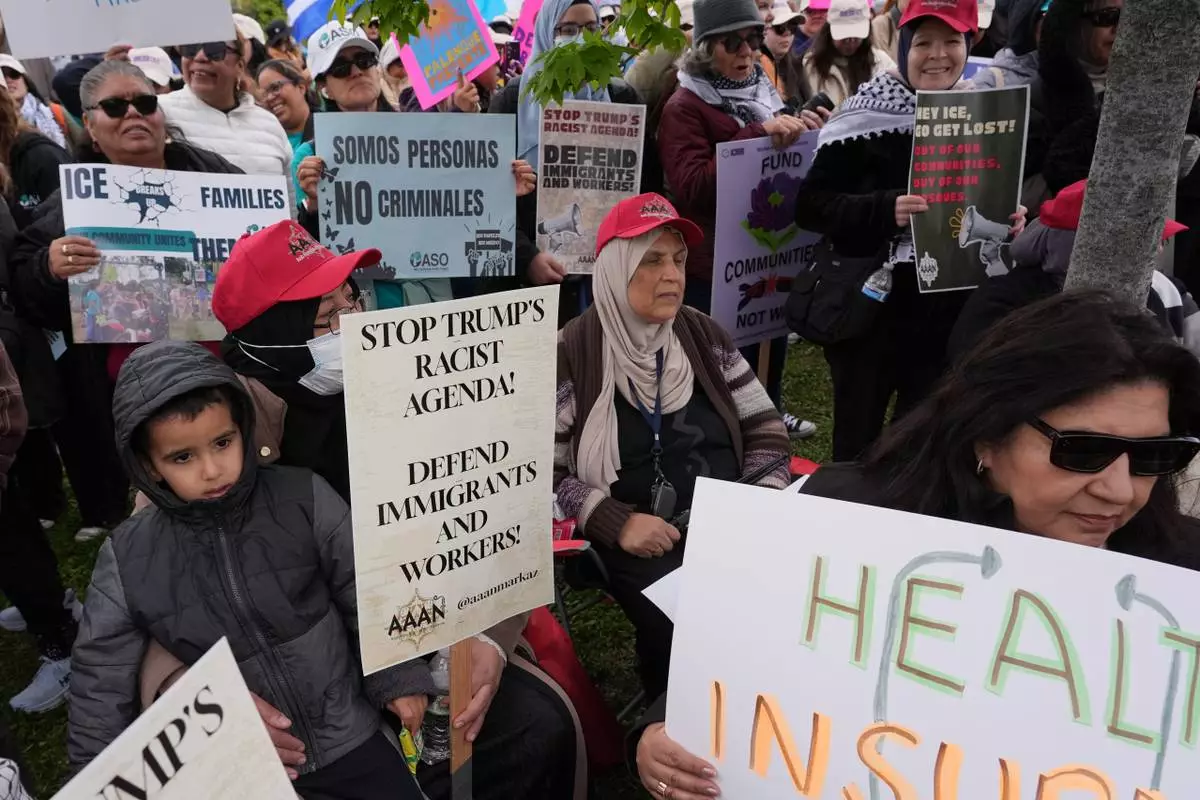
People gather before a May Day rally in Chicago, Friday, May 1, 2026. (AP Photo/Nam Y. Huh)

An effigy of U.S. President Donald Trump burns during an International Workers' Day march marking May Day in Panama City, Friday, May 1, 2026. (AP Photo/Matias Delacroix)
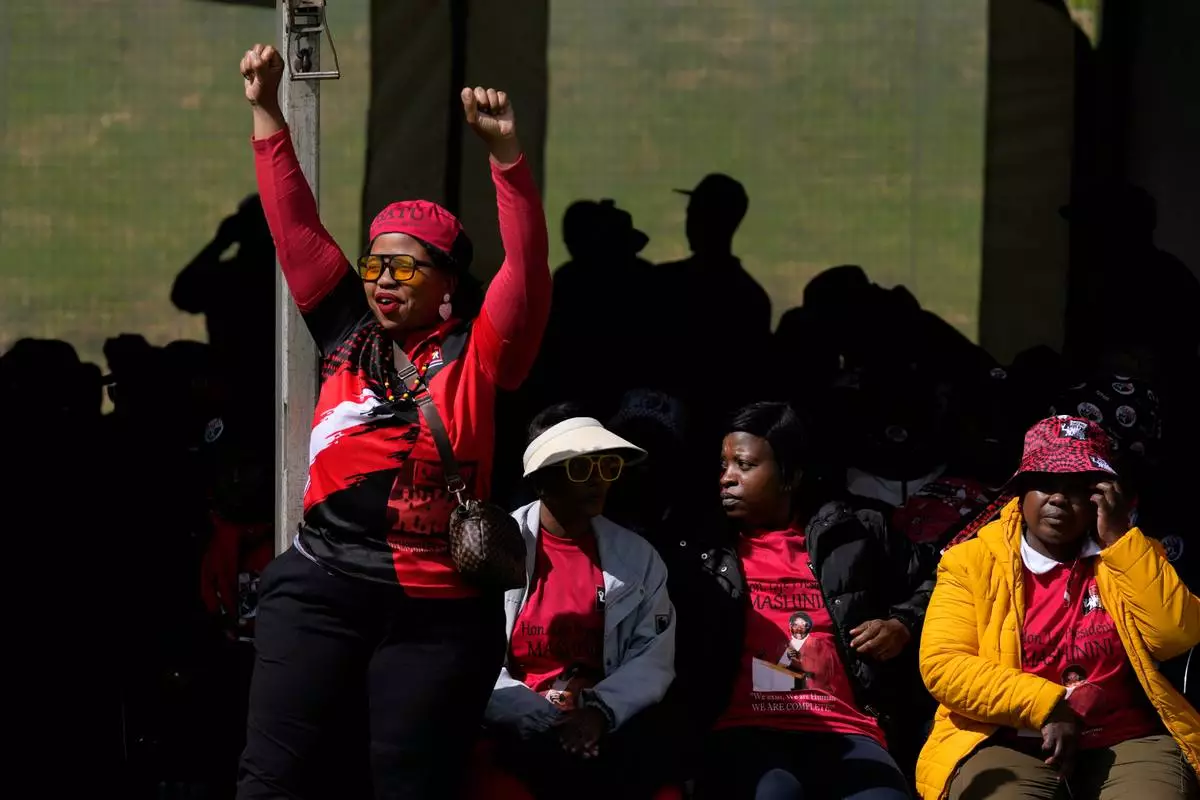
Members of trade unions take part in a May Day rally in Tsakane, east of Johannesburg, South Africa, Friday, May 1, 2026. (AP Photo/Themba Hadebe)
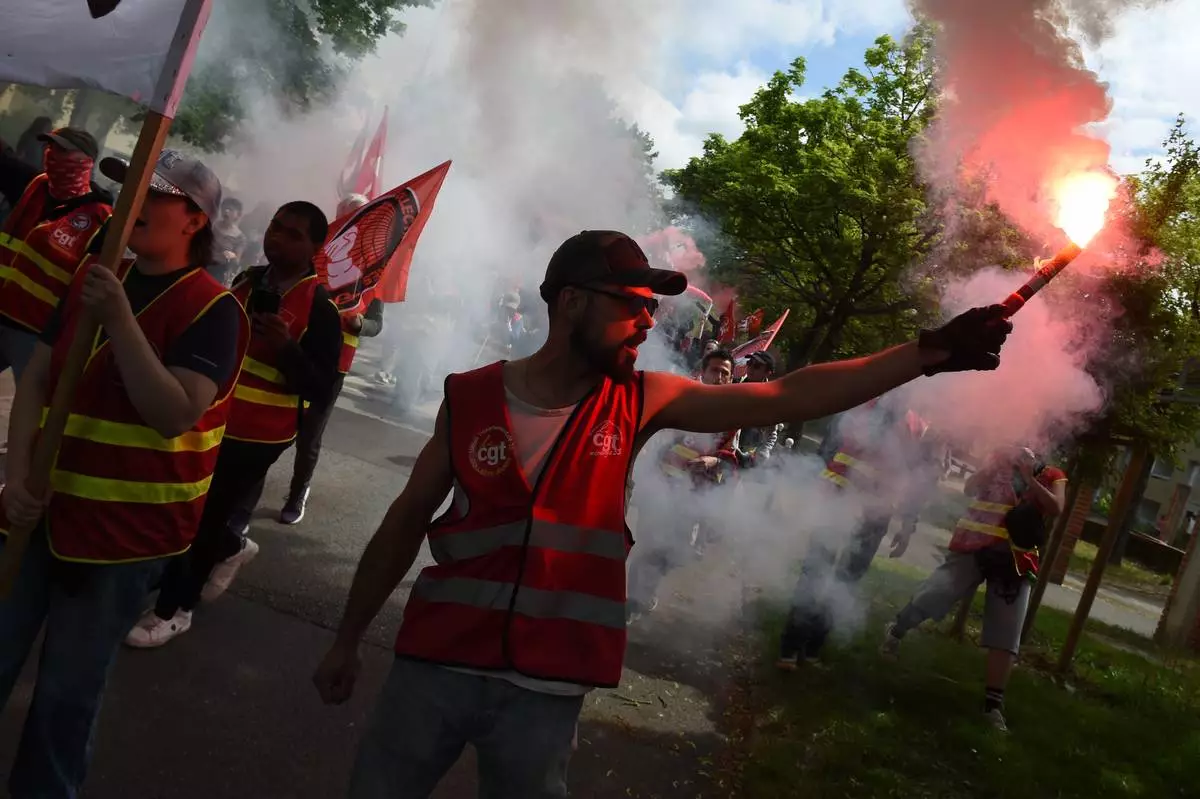
Protesters march during the May Day demonstration in Rennes, western France, Friday, May 1, 2026. (AP Photo)
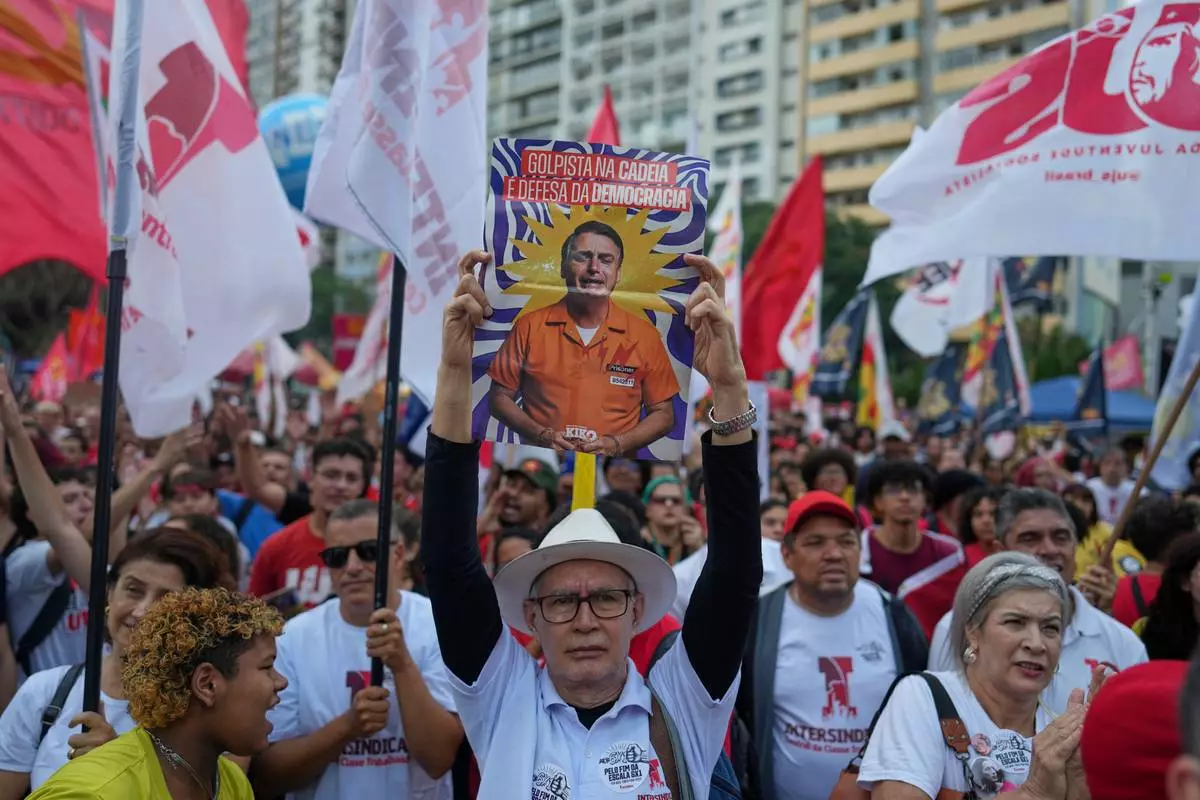
A man holds a picture or former Brazilian President Jair Bolsonaro wearing a prison uniform during a May Day rally demanding greater labor rights in Sao Paulo, Brazil, Friday, May 1, 2026. (AP Photo/Andre Penner)
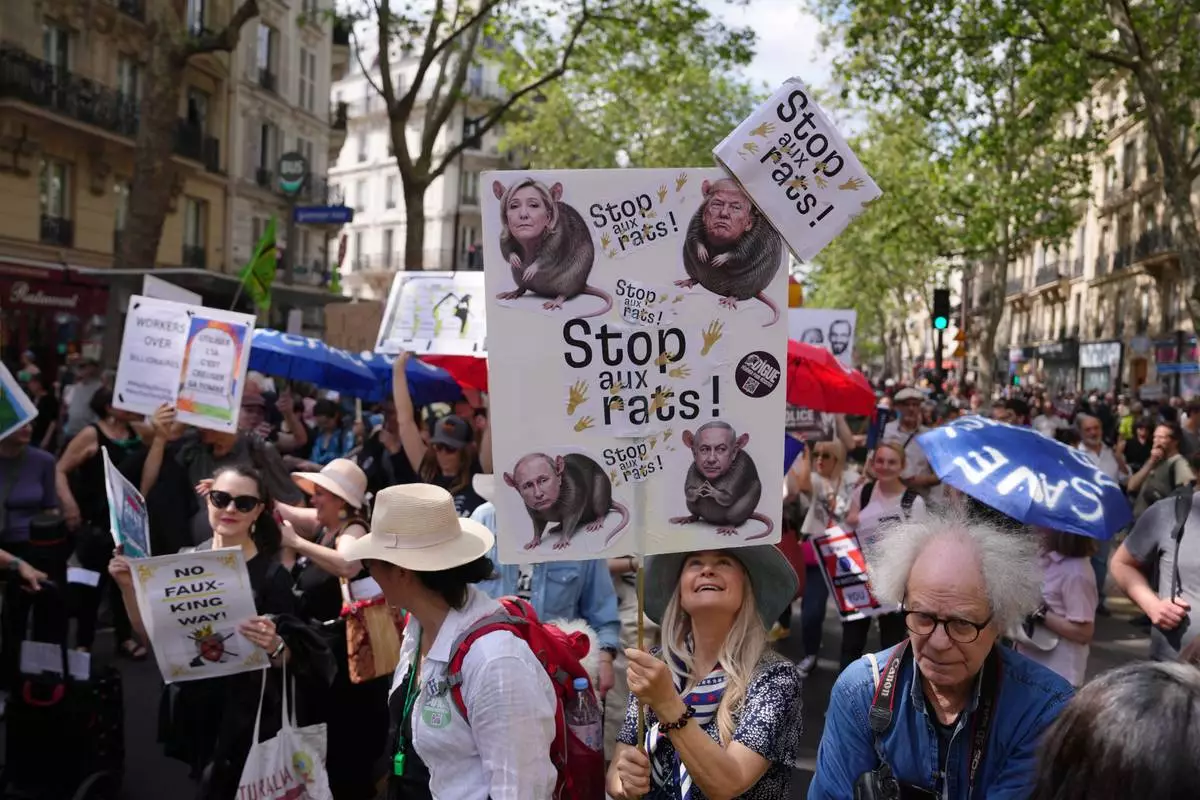
Protesters march during the May Day demonstration in Paris, Friday, May 1, 2026. (AP Photo/Aurelien Morissard)
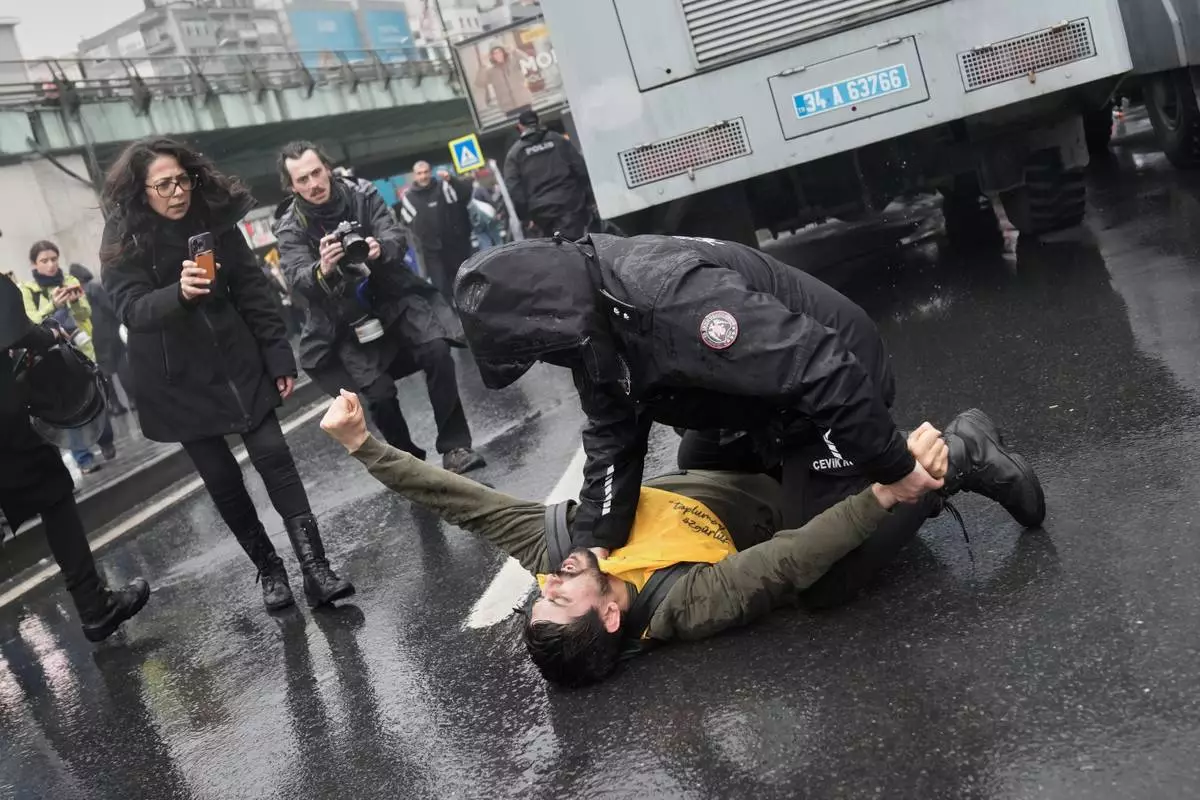
An union member is detained by a Turkish police officer as people try to march towards Taksim square in Istanbul, Turkey, Friday, May 1, 2026, during Labor Day celebrations. (AP Photo/Khalil Hamra)
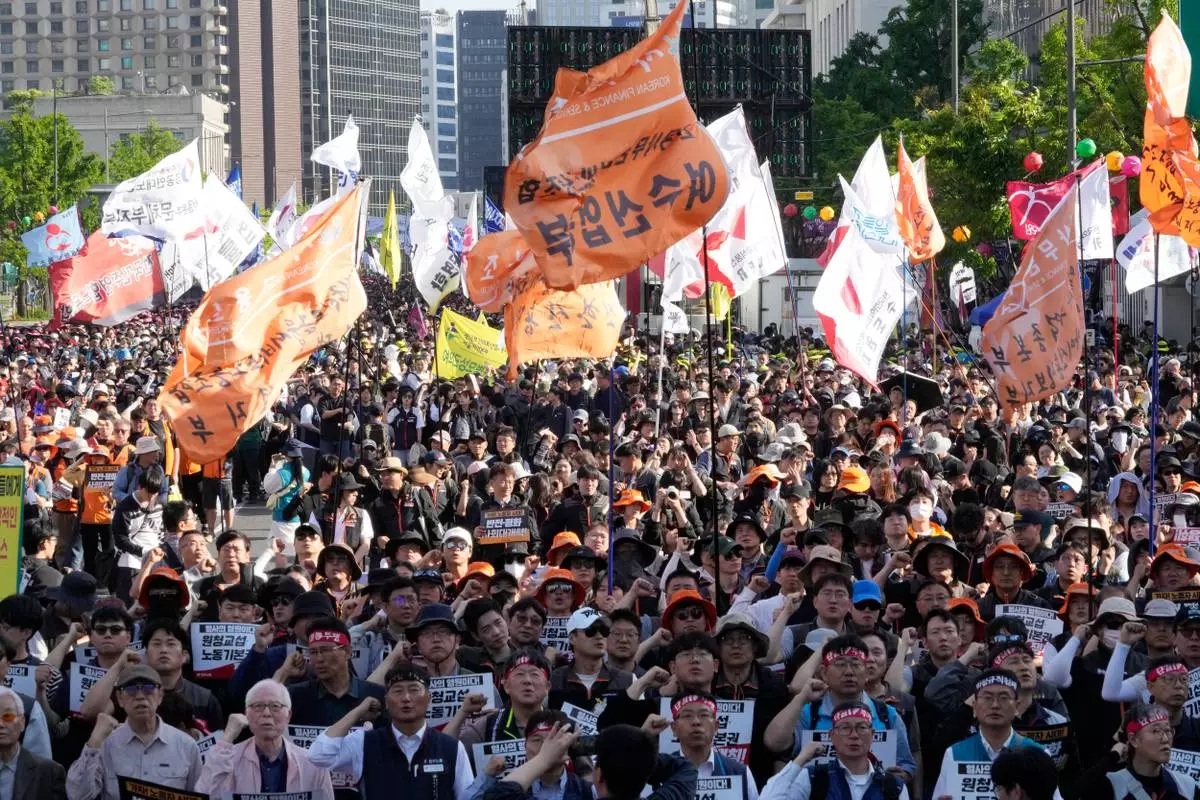
Members of the Korean Confederation of Trade Unions stage a rally on May Day in Seoul, South Korea, Friday, May 1, 2026. (AP Photo/Ahn Young-joon)
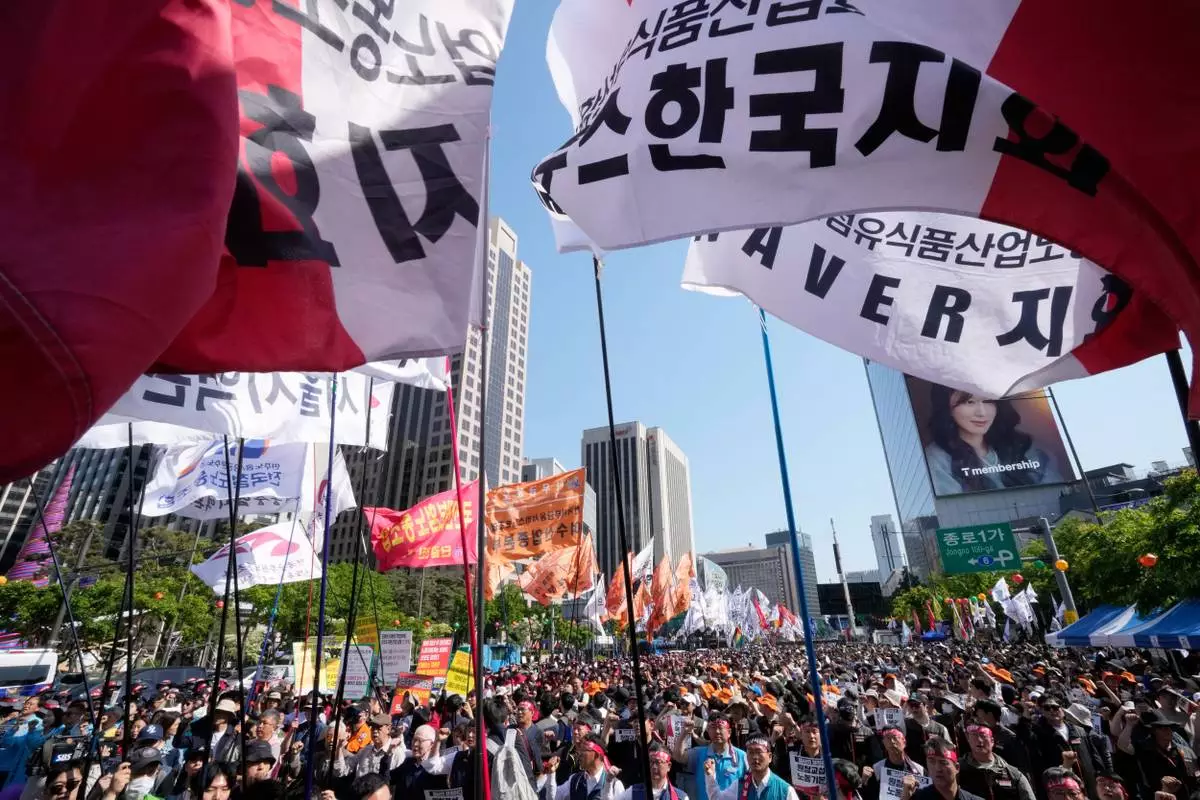
Members of the Korean Confederation of Trade Unions stage a rally on May Day in Seoul, South Korea, Friday, May 1, 2026. (AP Photo/Ahn Young-joon)
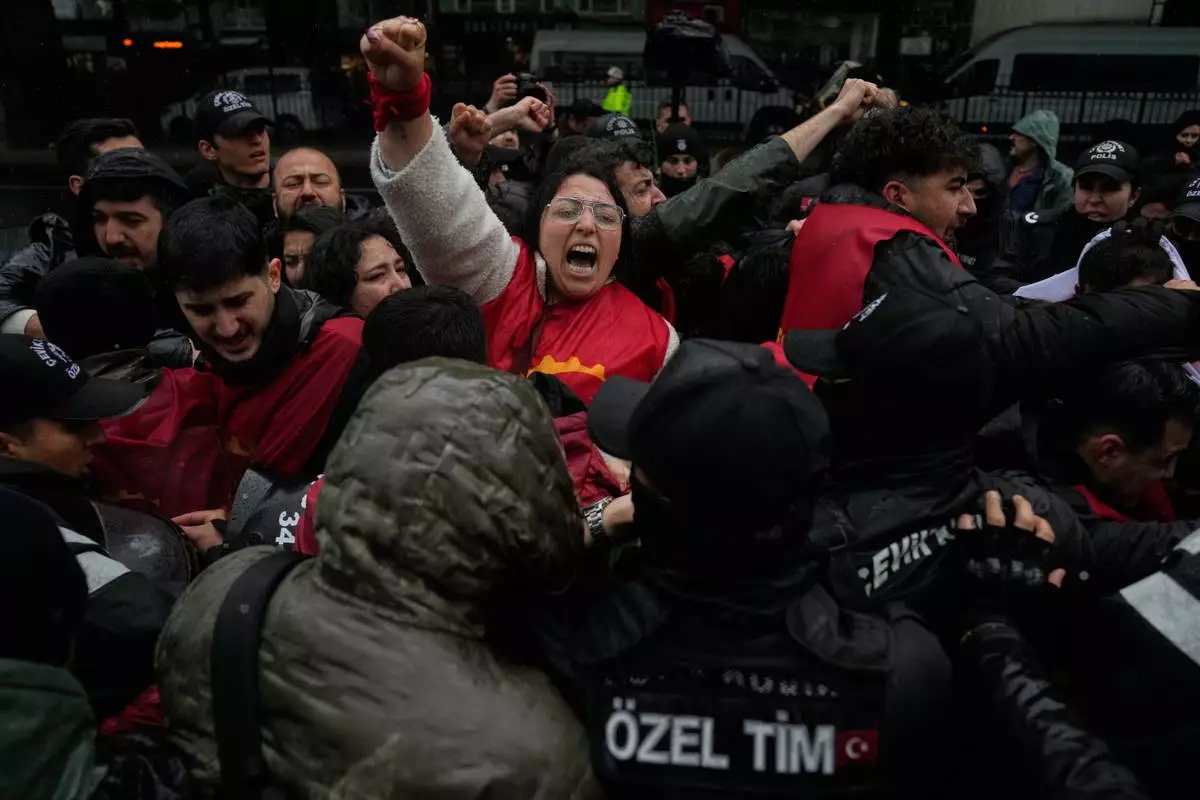
Union members scuffle with Turkish police officers as they try to march towards Taksim square in Istanbul, Turkey, Friday, May 1, 2026, during Labor Day celebrations. (AP Photo/Khalil Hamra)
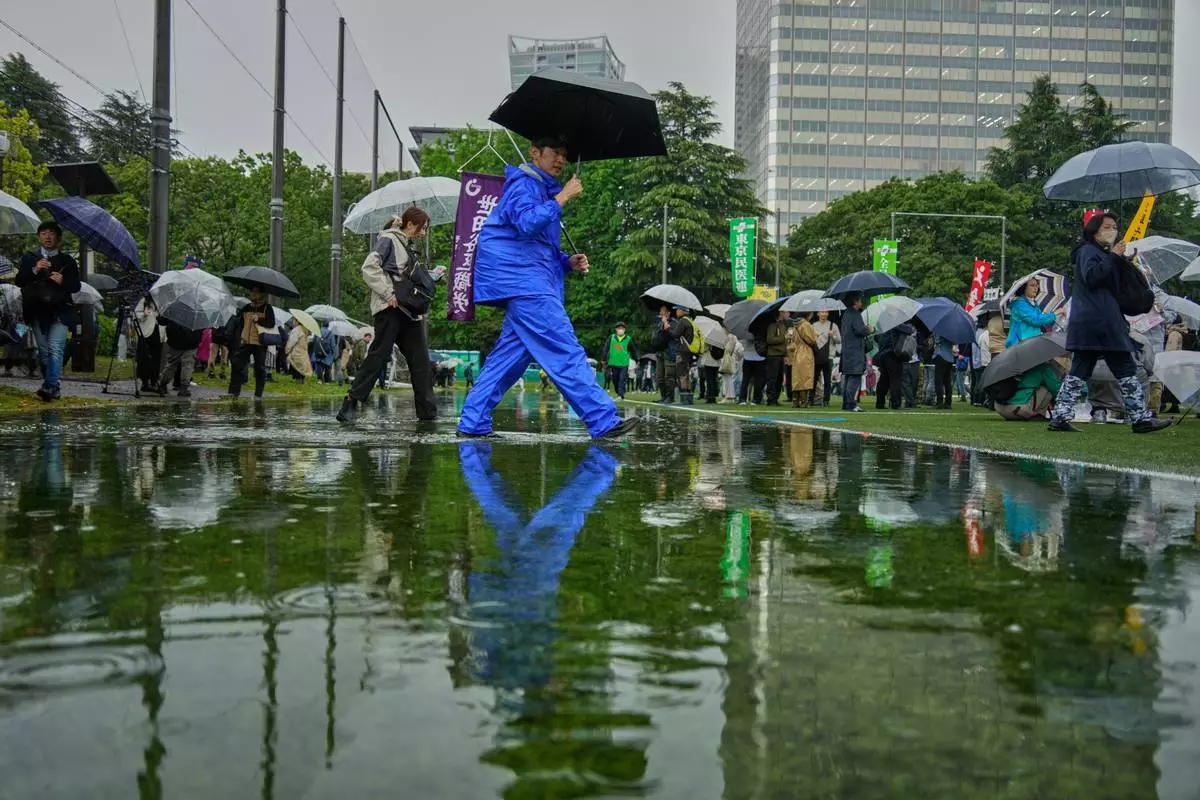
Union members carefully step through rain-formed puddles to participate in a May Day rally in the rain Friday, May 1, 2026, in Tokyo. (AP Photo/Eugene Hoshiko)
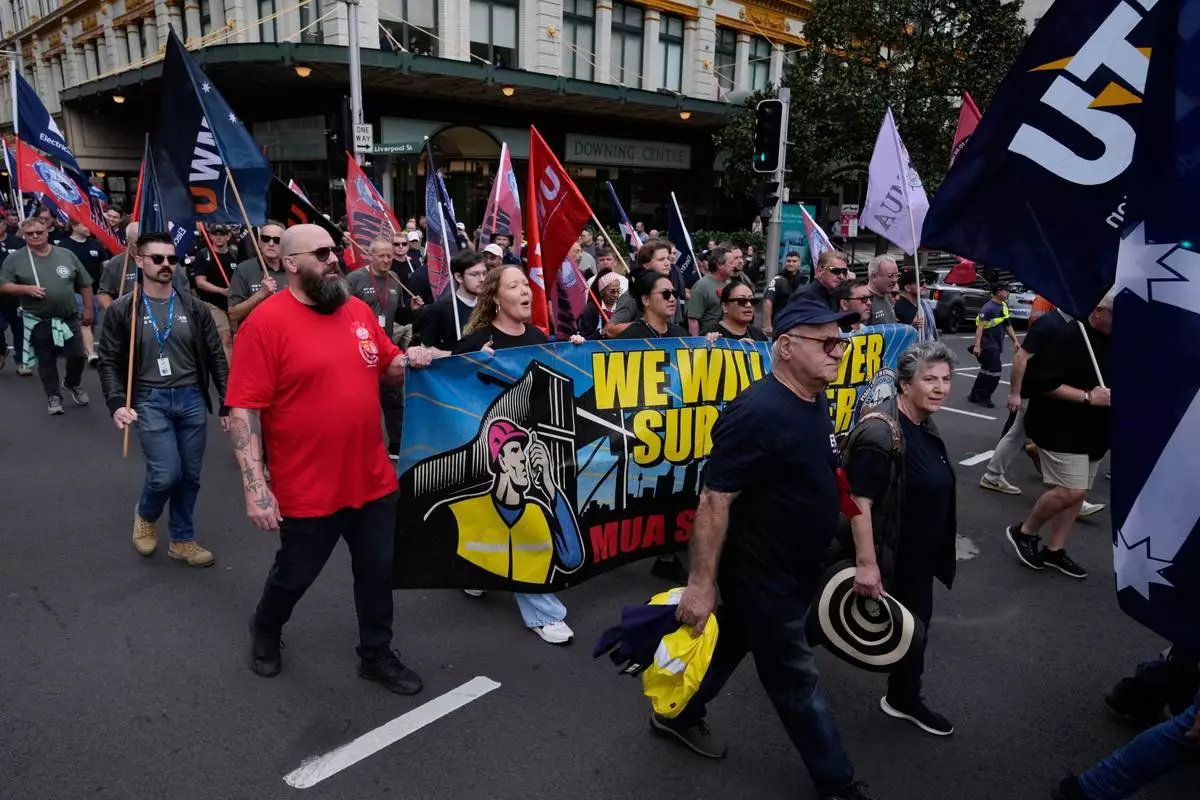
People march to mark International Workers' Day, also known as May Day, in Sydney, Friday, May 1, 2026. (AP Photo/Rick Rycroft)
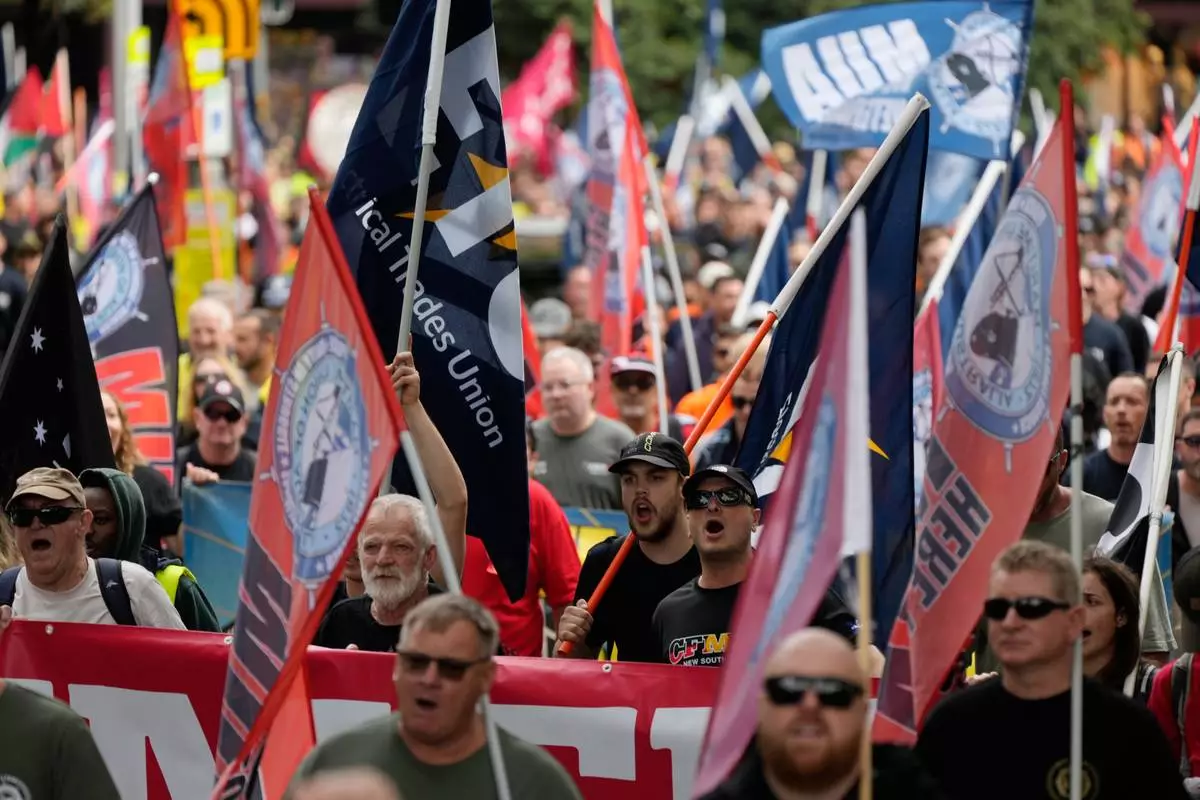
People march to mark International Workers' Day, also known as May Day, in Sydney, Friday, May 1, 2026. (AP Photo/Rick Rycroft)
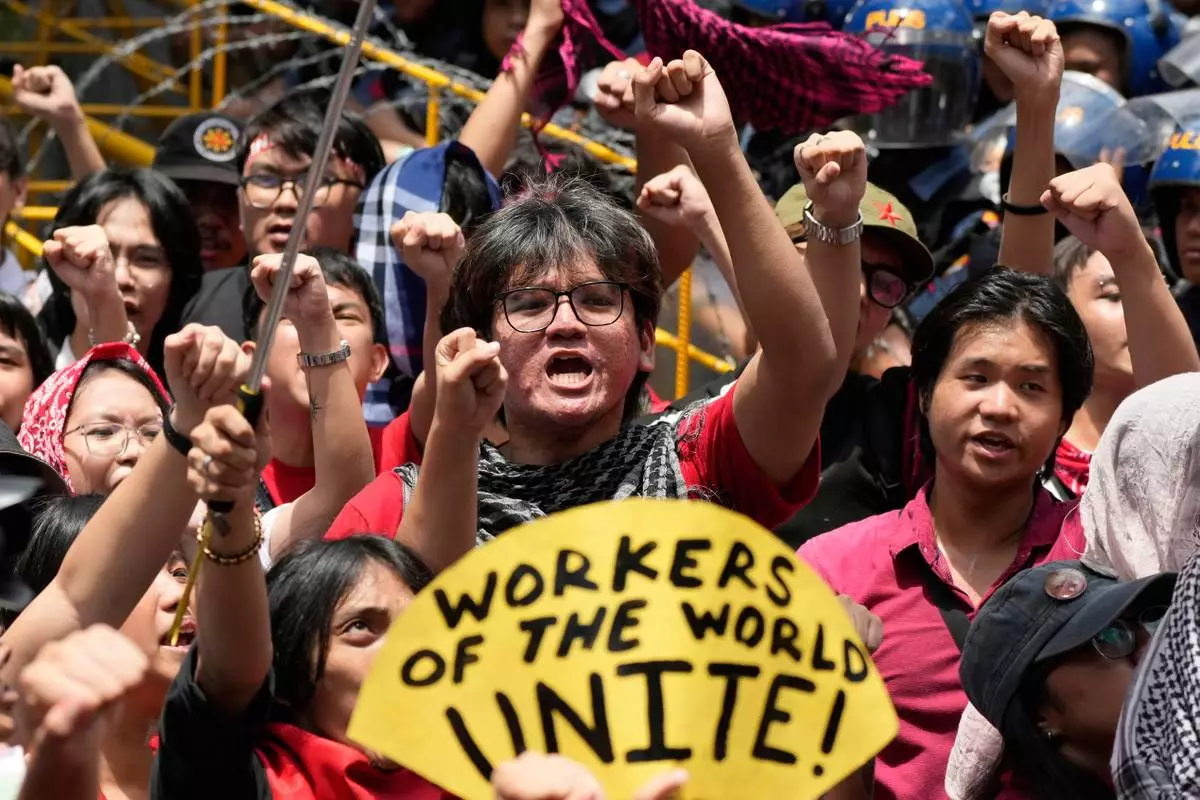
FILE - Activist and workers raise their clenched fists during a May Day rally in Manila, Philippines, May 1, 2025. (AP Photo/Aaron Favila, File)
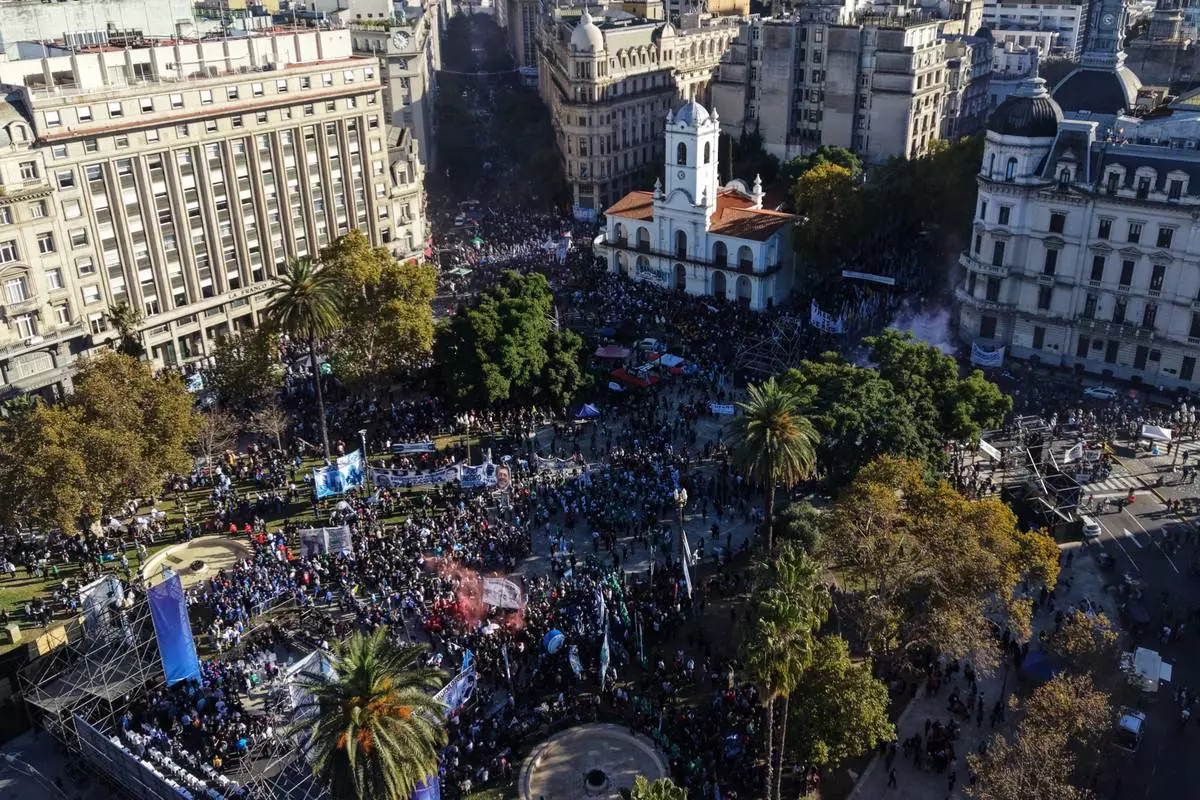
Laborers protest during a May Day demonstration in Buenos Aires, Argentina, Thursday, April 30, 2026. (AP Photo/Rodrigo Abd)
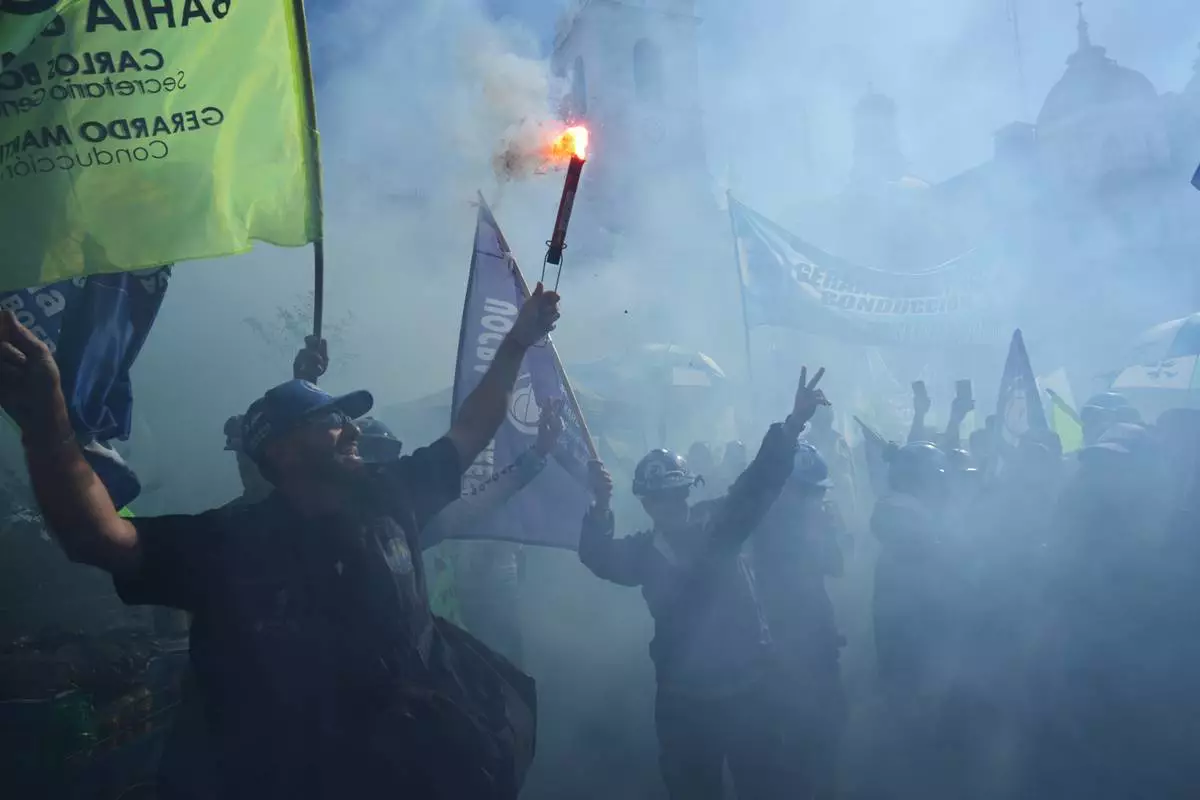
Laborers hold flares during a May Day demonstration in Buenos Aires, Argentina, Thursday, April 30, 2026. (AP Photo/Rodrigo Abd)
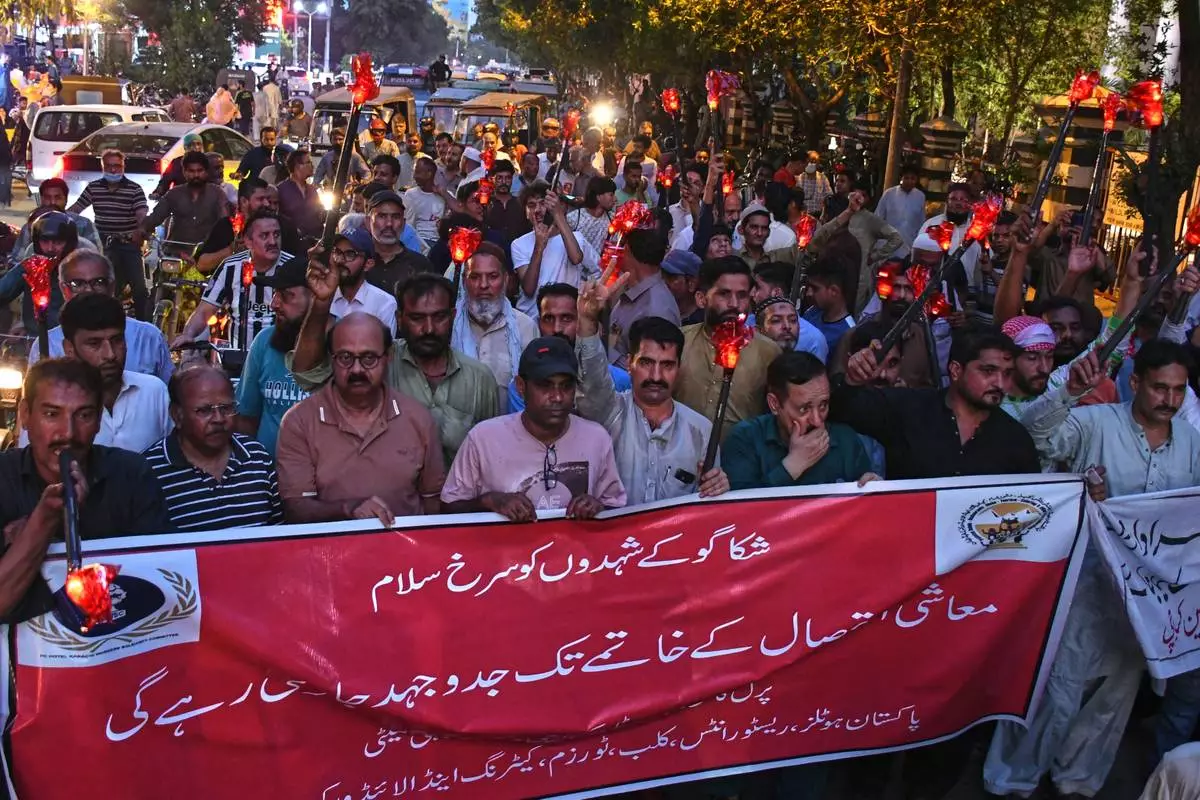
Members of trade unions take part in a rally a day ahead of the International Labor Day, in Karachi, Pakistan, Thursday, April 30, 2026. The banner in center reading as 'red salute to the martyrs of Chicago and the struggle will continue until economic exploitation is ended' (AP Photo/Ali Raza)
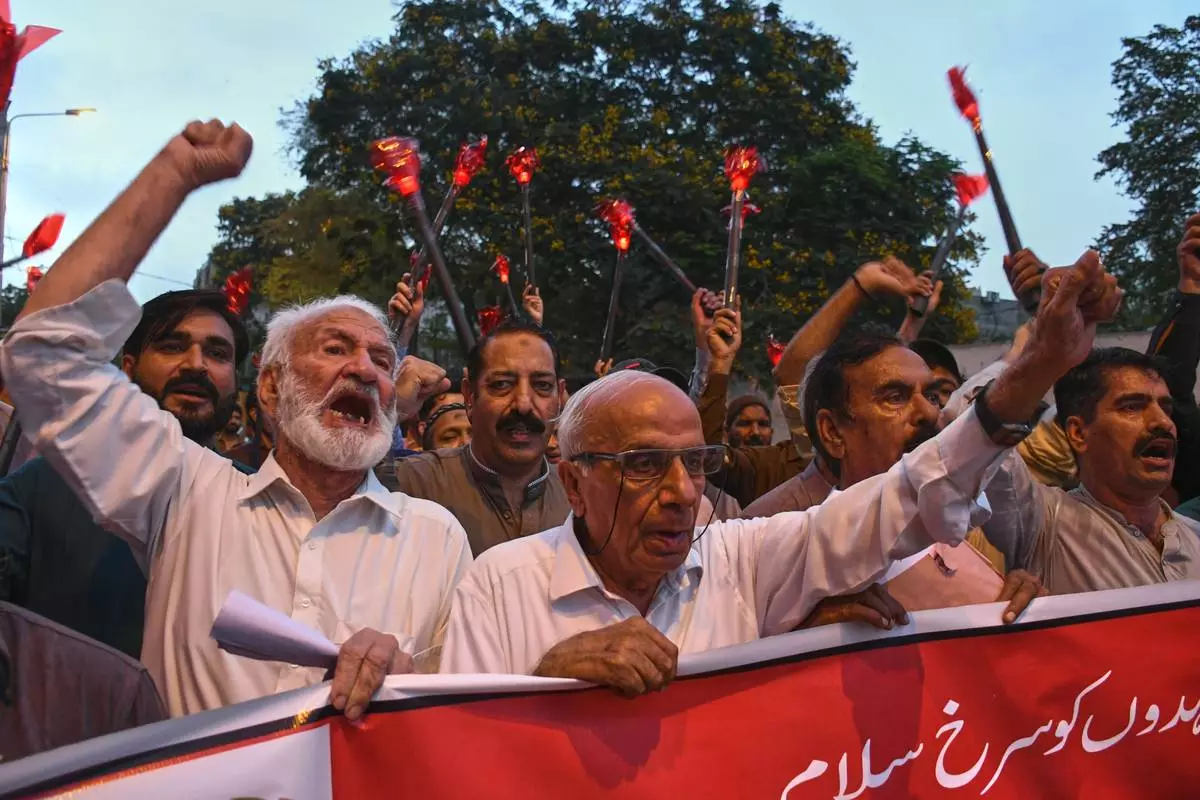
Members of trade unions take part in a rally a day ahead of the International Labor Day, in Karachi, Pakistan, Thursday, April 30, 2026. (AP Photo/Ali Raza)