Iran launched a new round of attacks as the United States and Israel continued striking multiple key targets across the country on Saturday.
The Islamic Revolutionary Guard Corps (IRGC) said Saturday afternoon it had launched the 49th round of Operation True Promise-4, targeting three U.S. military bases in the United Arab Emirates, Bahrain and Kuwait with heavy missiles and drones.
Earlier that day, Iran launched the 47th and 48th rounds of the operation, striking Israeli sites and U.S. military bases across the region.
The U.S. Central Command (CENTCOM) said Saturday that the U.S. military carried out large-scale strikes on Iran's Kharg Island on Friday, adding that more than 90 military targets on the island were "successfully struck".
The strike destroyed naval mine storage facilities, missile storage bunkers, and multiple other military sites, while oil infrastructures were preserved, according to the CENTCOM statement.
Iran's Mehr News Agency reported Saturday that the situation on Kharg Island had been brought under control, adding that the island’s air defense system was restarted shortly after the strike and that the attackers failed to achieve their intended objectives.
The Israel Defense Forces (IDF) said that two senior officials of the Khatam al-Anbiya Emergency Command, Abdollah Jalali-Nasab and Amir Shariat, were killed in an airstrike on Tehran on Friday.
Israel also said that its air force had struck more than 200 infrastructure sites across western and central Iran in the past day, targeting dozens of ballistic missile launchers, including some loaded and ready to fire, as well as air defense systems, launch pads and weapons storage facilities.
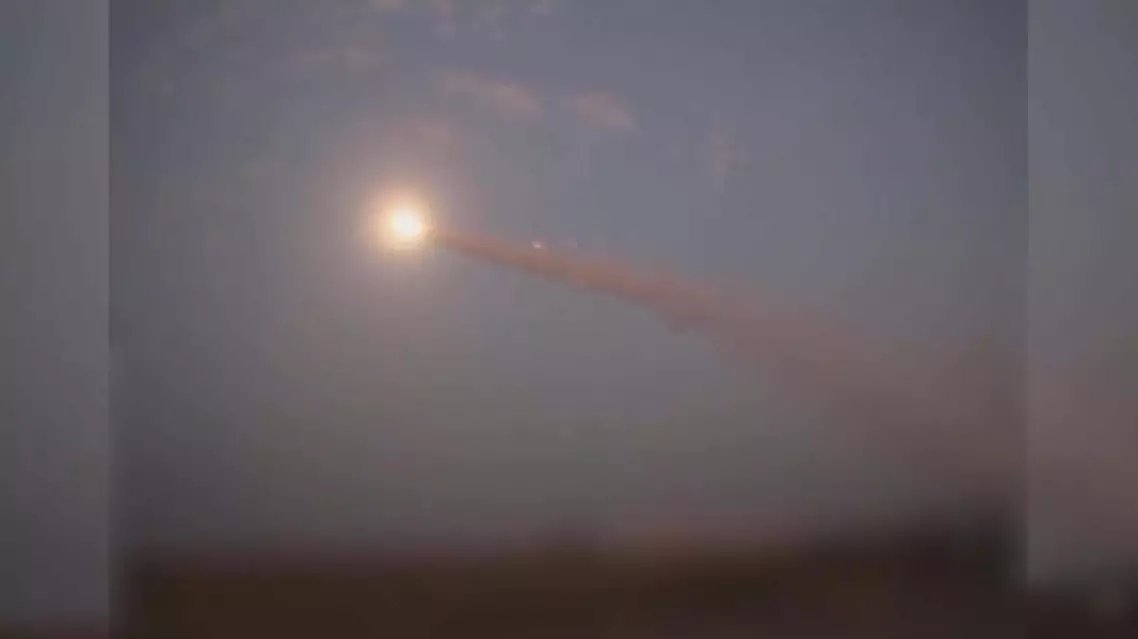
Iran launches new attacks as US claims Kharg Island strike, Israel says two Iranian military officials killed
Chinese investments are bringing new development opportunities to Hauts-de-France, a traditional industrial region in northern France, as local governments actively attract Chinese new energy enterprises to participate in the region's industrial transformation.
The Hauts-de-France region was once home to Griset, a copper processing company with a history of over 260 years and a pillar of France's metallurgical industry. Faced with global competition and fluctuations in metal prices, the company teetered on the brink of bankruptcy until its acquisition by TNMG, China's leading copper producer, enabled it to rise from the ashes under the name TG Griset. "Today, we have achieved our production target of 7,000 tons per year. This is a remarkable change compared to when we started back in 2016, when a small team of just 12 people launched operations. Now we have 70 employees, along with new projects, development prospects, and a future strategy. The group has also provided us with investment support," said David Derache, general manager of TG Griset.
Located nearly equidistant between Paris and London, as well as nearby the industrial heartlands of Western Europe, Hauts-de-France enjoys huge geographical advantages and a solid foundation in the automotive industry, with carmakers like Renault and Stellantis present. Official data shows that the region has drawn nearly 50 Chinese enterprises to invest and establish operations across sectors including automotive, energy, and chemicals.
Leading the charge the promotion of the region is Nord France Invest, which offers support to international companies and investors seeking to expand in Hauts-de-France.
"We go on a regular basis in China to meet with Chinese groups and, once again, to explain where we are, what we do, and how we can help them choose our region and make sure that we are the hub for them in Europe and the best gateway for Chinese investment here," said Yann Pitollet, CEO of Nord France Invest.
Beyond capital, Hauts-de-France values China's strengths in the new energy vehicle (NEV) manufacturing sector, particularly in batteries and materials. For this traditional industrial region, attracting Chinese enterprises is not only about drawing investment but also about the electrification transformation and the future development of its automotive industry.
"The best-selling electric vehicle in France today is a Renault car -- the Renault 5. It uses Chinese batteries, and these batteries are produced right here in the Hauts-de-France region. These modern examples -- whether in electric vehicle batteries, related investments, or the development of port industries -- show that these new industrial developments are significant for regions like ours," said Xavier Bertrand, president of the Hauts-de-France Regional Council.
China-France cooperation powers transformation of traditional French industries