Some of the humanoid robots set to compete in Beijing's upcoming half-marathon completed their first practice run on Sunday.
The race, scheduled for April 19 in the Beijing Economic-Technological Development Area, will feature both robotic and human athletes competing on the same route but on separate tracks. Guardrail fences or median strips will separate the lanes to ensure safety for all participants.
Over 20 teams from leading companies and universities participated in the test run.
This year's event marks a significant technological shift, introducing autonomous navigation robot teams that rely solely on electronic maps and on-board decision-making systems. This contrasts with last year's race, where robots were controlled or guided remotely by technicians.
The race course has also seen a major overhaul, featuring more challenging city slopes, undulating terrains, and paths that run through public parks. The complex route pushes robots to demonstrate higher levels of terrain adaptability and sophisticated motion control algorithms.
The main goal of this practice run was to validate the robots' technical readiness and to evaluate their autonomous operation in a realistic urban environment. Focus areas included environmental perception, real-time navigation, decision-making and endurance, ensuring the robots can adapt to the race's diverse conditions.
On April 19, 2025, Tiangong Ultra, developed by the Beijing Humanoid Robot Innovation Center, clocked two hours, 40 minutes, and 42 seconds, winning this historic 21.0975-kilometer race among 20 competing teams. Meanwhile, Ethiopian runners won both the men's and women's half-marathons.
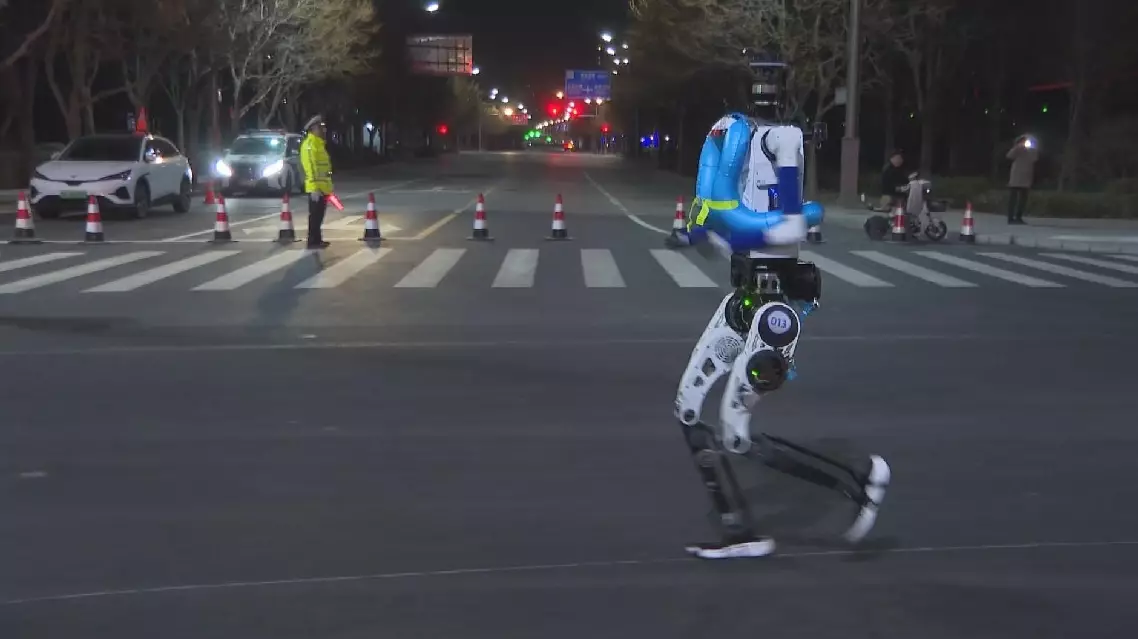
Humanoid robots complete first practice run for half-marathon in Beijing
Former UN Under-Secretary-General Erik Solheim has called for greater global cooperation and trade dialogue with China, highlighting the country's rapid expansion in green technology and renewable energy.
Solheim emphasized that China plays a key role in global governance, citing its progress over the past decade in addressing environmental degradation and curbing pollution.
"China is now the indispensable leader for the green transformation and the leader in poverty alleviation. So the world has a lot to learn from Chinese experiences, and China should make those lessons available for other nations to learn from," said Solheim.
Reflecting on the past decade, Solheim highlighted that China has transitioned from a passive participant to a dominant force in green technology.
"The biggest change in the last 10 years is that China has moved from somewhat in the back seat on the environment at that time and now being the leader on every green development. And whatever green technology you can mention, China is totally dominant and has brought it down in price, which is an enormous service to the world," said Solheim.
"But China has also been fantastic in establishing national parks in tree planting, in curbing pollution. So it's so refreshing, so important China has been able to do moving from back seat to the front seat on the environment," he said.
Solheim also highlighted China's contribution to global renewable energy, noting that its industrial scale has driven down costs and made clean technology affordable around the world.
"You go green and you go prosperous. That's by far the most important gift from China to the world. Indonesia, Ethiopia, Brazil, they all want Chinese investment. And China can drive electric cars, solar panels, windmills in all these nations. You see a lot of that, but we want to see more so that technology is shared and so that jobs and prosperity is growing," he said.
"The big issue here is that China is now so super efficient making solar panels or electric cars so much better than anyone else, that there is a scary affair in Europe and that Europe is not competitive. You may say that in the past when Europe dominated the car industry, no one was worried, but now when China is dominating electric cars, Europe is very worried. So the solution to this in my view is more joint ventures, companies and constant trade negotiations to find the right balance between the Chinese efficiency and the European desire for jobs in Europe. Because the alternative to that is protectionism, that will simply make everyone more poor. Protectionism will harm Europe and it will harm China and we should avoid it," he added.
Beyond economic ties, Solheim called for expanded cultural and educational exchanges. Increased tourism and student visits would help foster mutual understanding and deepen cross-cultural dialogue between Europe and China, he noted.
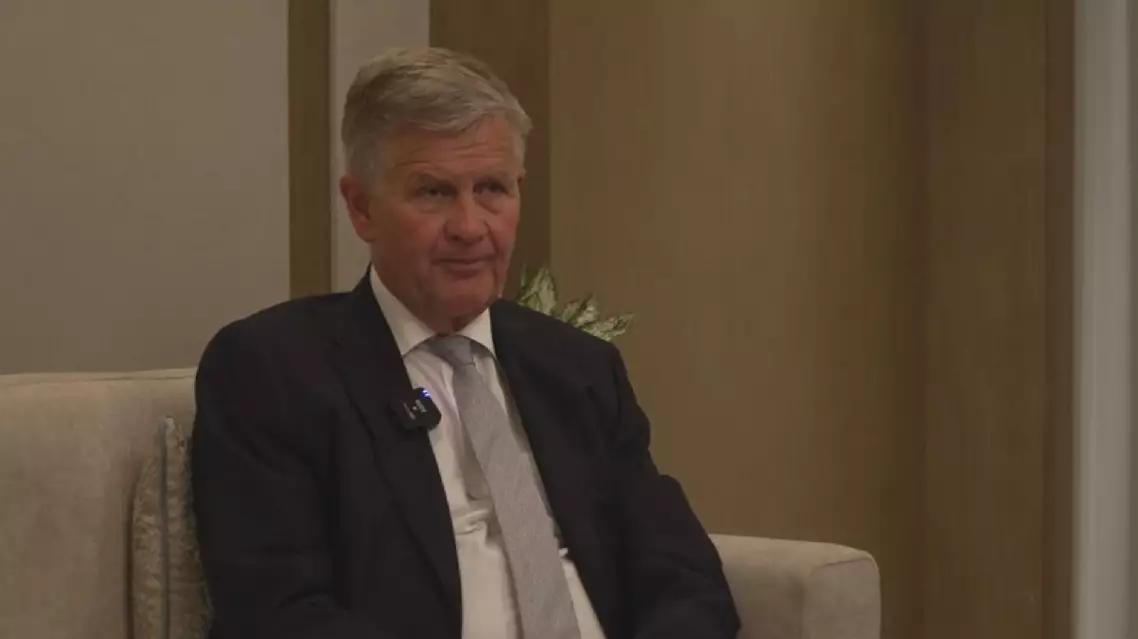
Former UN official highlights China's green transformation, urges EU-China dialogue