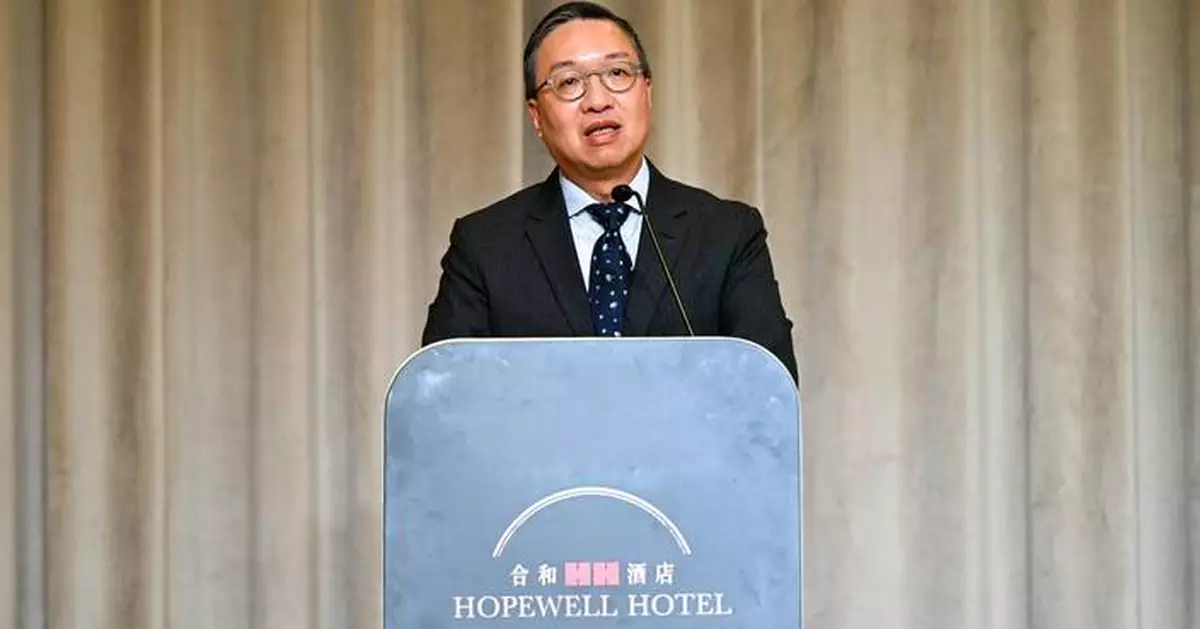
Speech by SJ at opening ceremony of 23rd Willem C Vis East International Commercial Arbitration Moot
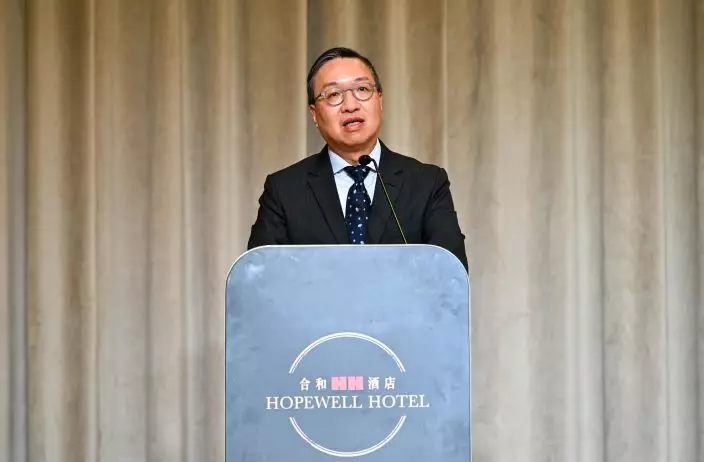
Following is the speech by the Secretary for Justice, Mr Paul Lam, SC, at the opening ceremony of 23rd Willem C Vis East International Commercial Arbitration Moot today (March 15):
Ms Barrington (Director of the Vis East Moot Foundation, Ms Louise Barrington), Ms Tung (Director and the Chief Executive Officer of the Vis East Moot Foundation, Ms Sherlin Tung), distinguished guests, ladies and gentlemen,
A very good evening. On behalf of the Department of Justice (DoJ) of Hong Kong , it is my great pleasure to welcome you all to the 23rd Willem C. Vis East International Commercial Arbitration Moot (Moot). Let me begin by expressing my sincere thanks to the Vis East Moot Foundation for once again bringing this prestigious and vibrant event to Hong Kong.
This year, the Moot has reached exciting new heights, bringing altogether over 1 300 students and coaches from 161 university teams from 37 jurisdictions worldwide, alongside more than 500 professionals. It is unfortunate that around 10 teams are unable to come here, and some arbitrators are also unable to be here because of what is happening in the Middle East. This is perhaps a very timely reminder of the importance of resolving international disputes of whatever nature by peaceful means, including arbitration. In any event, the remarkable figures that I have just mentioned reflect the growing influence of the Moot as a global platform for nurturing young legal talent and fostering the next generation of arbitration leaders.
The Moot is far more than a competition. It is a meaningful platform for learning, exchange and collaboration. Each year, the Moot problem is designed around a different set of arbitral rules, which govern the procedural aspects of the arbitration. Navigating through these diverse rules not only enhances the students' ability to tackle the procedural complexities of international arbitration but also enriches the understanding of different institutional practices, paving way for the students to become highly adaptable practitioners in a globalised legal landscape.
The Moot problem this year concerns a fictitious and somewhat "fragrant" dispute arising from an agreement to sell orchids for producing vanilla, yet the purchaser cannot obtain the import licence given prohibition under international trade convention. The seller terminates the agreement, sells the orchids at a lower price and claims damages for the price difference. The Moot engages the SIAC (Singapore International Arbitration Centre) Arbitration Rules, with procedural issues such as disclosure of thirdparty funding, and substantive questions on force majeure clause and damages under the CISG (United Nations Convention on Contracts for the International Sale of Goods). I am sure that participating teams will find this Moot problem intellectually challenging.
The Moot also provides a practical setting for students to engage with the harmonised legal texts of UNCITRAL (United Nations Commission on International Trade Law), including the CISG and the New York Convention, both of which apply to Hong Kong. These instruments embody our shared commitment to international commercial law and dispute resolution, and they highlight Hong Kong's role as a jurisdiction that proudly embraces established global standards.
As participants of the Moot are looking ahead to your future careers, I want to impress upon you that Hong Kong continues to stand out as a leading international financial and trading centre, underpinned by our strong rule of law, independent judiciary, and bilingual common law system. Under the principle of "one country, two systems", Hong Kong remains to be the only common law jurisdiction within China. This unique position allows us to serve as a trusted hub for crossborder transactions and dispute resolution, offering robust legal protections to businesses and investors alike.
Because of these foundational strengths, Hong Kong is consistently ranked among the most preferred seats of arbitration globally. This enduring appeal is powerfully validated by the HKIAC's (Hong Kong International Arbitration Centre) 2025 statistics, which recorded HK$126.2 billion in disputes which parties attempted to resolve by arbitration, drawing parties from 61 different jurisdictions. With over 84 per cent of these arbitrations being international in nature and an overwhelming 96.6 per cent seated right here in Hong Kong, the global business community continues to demonstrate unwavering support and trust in our robust legal infrastructure. Arbitral awards rendered in Hong Kong are recognised and enforceable not only in our local courts but also in the Chinese Mainland and in over 170 jurisdictions which are parties to the New York Convention. Hong Kong is also the first and the only common law jurisdiction outside the Chinese Mainland where parties to arbitral proceedings administered by designated institutions can apply directly to Mainland courts for interim measures. This arrangement provides unparalleled protection and efficiency for parties engaged in arbitration here, making it an ideal environment for top-tier legal practice.
Venturing into emerging domains, we launched the Pilot Scheme on Sports Dispute Resolution last December, with a view to extending the use of mediation and arbitration into the sports sector. The scheme aims to provide the sports sector with a fair, efficient and convenient mechanism for resolving sports disputes, and began accepting case applications from February 13 this year. If the disputes are not resolved after parties' first attempt through the mediation, they may refer the dispute to arbitration under the scheme. The DoJ will continue to collaborate with the legal and sports sectors to organise promotional and training activities to further enhance public awareness of sports dispute resolution. We also encourage professionals from different fields to actively participate in and make further contributions to the development of sports industry and dispute resolution services in Hong Kong. These initiatives reflect our commitment to developing innovative mechanisms tailored to emerging areas of dispute resolution.
In October 2025, we established a Working Group on Arbitration Law Reform to advise on the legislative framework for arbitration in Hong Kong, including reviewing and making recommendations to amend our Arbitration Ordinance. This important exercise will ensure that our arbitration regime remains modern, robust, and aligned with international best practices, further consolidating Hong Kong's position as a leading international arbitration centre that is ready for the future.
As the participants embark on this year's Moot, I encourage all of you to seize the opportunity not only to showcase your advocacy skills but also to explore the rich professional and cultural experiences Hong Kong offers. Beyond the intensity of the competition, I hope you will take the time to discover and enjoy our city's dynamic energy, vibrant traditions and diverse cuisine, perhaps starting from what the Vis East Moot Foundation has arranged here at the cocktail reception later tonight.
I wish all participants of the Moot a rewarding and fruitful mooting journey. May all of you gain invaluable insights for your professional growth, forge lasting connections with peers and mentors around the world, and along the way, create lots of great memories in Hong Kong. Let us look forward to another successful year of the Moot! Thank you.
Photo
Speech by SJ at opening ceremony of 23rd Willem C Vis East International Commercial Arbitration Moot Source: HKSAR Government Press Releases
Speech by FS at HKU Business School 25th Anniversary Gala Dinner
Following is the speech by the Financial Secretary, Mr Paul Chan, at the HKU Business School 25th Anniversary Gala Dinner today (March 15):
Professor Zhang Xiang (Vice-chancellor of the University of Hong Kong (HKU)), Professor Richard Wong (Provost and Deputy Vice-Chancellor of the University of Hong Kong), Professor Cai Hongbin (Dean and Chair of Economics, the University of Hong Kong Business School), Ms Guo Jingjing (Olympic gold medalist), distinguished guests, ladies and gentlemen,
It is my great pleasure and honour to join you this evening at the HKU Business School's 25th Anniversary Gala Dinner. First of all, allow me to extend my warmest congratulations to the School on this much-celebrated silver jubilee.
Over the past 25 years, HKU Business School has grown into a globally prominent institution in business education, earning strong recognition both internationally and locally. More importantly, you have nurtured generations of leaders, innovators and entrepreneurs – people who have gone on to shape policy, finance and commerce, and who continue to drive our city forward as an international financial, trade and business centre.
The tech-driven economy ahead
Tonight, as we celebrate the School's achievements, I would like to speak about the wider context in which the future will unfold.
AI is advancing at a breathtaking pace, faster than many of us anticipated. It is already reshaping virtually every industry and every walk of life: from personal applications to business operations and public services; from retail and financial services to logistics, healthcare and advanced manufacturing.
While we witnessed the Deep Seek Moment just a little over a year ago, a new wave is emerging: agentic AI. If earlier generations of AI focused mainly on dialogue and content, AI agents have moved from conversation to execution. They can plan, co-ordinate tasks and act across systems. They enhance productivity, expand processing capacity and enable new kinds of services.
We must admit that these developments bring new risks. Risks relating to cybersecurity, privacy, misinformation, operational resilience and, ultimately, the risk of losing human oversight and mastery over important decisions.
Yet we never stop sailing the seas simply because of storms. New technologies inevitably carry risks, but they also bring immense opportunities. The key question is not whether we should embrace technology, but whether we can manage the risks well, so that we can unlock the growth potential in a responsible and sustainable manner.
Compare this wave of AI development to the personal computer, the Internet or smart mobile devices when they first emerged. Each of those breakthroughs brought profound changes: hardware upgrades, new software applications, new management practices, and shifts in consumer behaviour and expectations. AI is similarly transformative, and possibly even faster in its diffusion.
That is why businesses, regulators, educators and citizens all need a clearer and more informed understanding of the AI trend. The pace of change will be rapid, and the winners will be those who adapt early, learn quickly and execute decisively. Hong Kong must stay ahead of the curve. That is why we have put AI+ at the core of this year's Budget, including an initiative on "AI Training for All".
Three levels of change
Against this backdrop, I would like to suggest three levels at which, in my view, AI and technological innovation are reshaping our economy.
First, the market level. Technological change reshapes market structure and market behaviour, on both the supply side and the demand side. We have seen this before. For instance, as e-commerce platforms rose and online shopping became mainstream, products and services evolved quickly. Entire industries adjusted accordingly: logistics networks expanded, digital payments flourished, last-mile delivery transformed customer expectations, and even new forms of marketing, such as livestream commerce, became major channels.
AI will likely trigger a similar dynamic. It can reduce search and transaction costs, personalise services at scale, and create entirely new categories of products and experiences. At the same time, it may also concentrate market power in certain segments, intensify competition in others, and test existing regulatory frameworks. Understanding these shifts is essential for businesses seeking opportunities, and for policymakers safeguarding fair, open and competitive markets.
Second, the enterprise level.When markets, products, and customer habits change, firms must adapt internally. Or growth will suffer. Technology adoption is not merely an IT project; it is an operating model transformation. It requires changes in workflow, talent strategy, governance, risk management and corporate culture.
In times of rapid change, a company's ability to foster exploration and innovation becomes a decisive factor for resilience, competitiveness and long-term success. That includes creating room for experimentation, learning quickly from setbacks, and scaling what works, while maintaining strong controls, ethical standards and accountability.
Third, the business model level.The effective use of technology to create new business models and new services is, quite simply, the key to value creation. Over the past decade, many fast-rising and well-performing brands succeeded not only because they had strong products, but because they built smarter models: using data, platforms and new forms of customer engagement to scale efficiently and differentiate from others successfully.
AI will open the door to a new generation of business models: more predictive, more customised, more automated and potentially global from day one. Those who succeed will combine technological capability with strategic clarity, sound governance, and a commitment to responsible innovation.
New expectations
Ladies and gentlemen, in this new era of technological progress and business innovation, I believe business schools has new roles to play. Business management education matters more than ever, because the challenge is not just about knowing what technology can do, but about leading people through change.
HKU Business School is exceptionally well placed to play this role.
You bring together outstanding talent across the business community and beyond. Your alumni and students come from business, technology, finance and public administration. The School is a place where ideas are translated into real-world impact for companies, markets and the wider community.
And you are also a good curator of Hong Kong stories. I trust you will continue to articulate Hong Kong's perspective to the world: a perspective shaped by our role as a global financial centre, a bridge between East and West, a city that values openness, free trade, the rule of law, and international connectivity. Through research, global exchange, and partnerships with institutions and industry worldwide, I trust you will continue to help ensure that Hong Kong's uniqueness is understood, and our strengths are recognised. That our views are heard in the conversations that shape the future of business and policy.
Concluding remarks
Ladies and gentlemen, anniversaries are for celebrating the achievements you have made and the dreams you are yet to build.
Hong Kong's continued success depends on our ability to navigate transformation, be it economic, technological and geopolitical. It requires us to keep moving forward: to attract and develop the best talent, to generate and apply the best ideas, and to build an economy that is innovative, competitive and resilient. Above all, it requires us to constantly rediscover ourselves and unleash our new potential.
For all these endeavours, we look to the HKU Business School for your unfailing support.
I wish the School every success in the years ahead, and all of you the best of health and business in the time to come.
Thank you very much.
Source: AI-found images
Speech by FS at HKU Business School 25th Anniversary Gala Dinner Source: HKSAR Government Press Releases
Source: AI-found images