Skip to Content Facebook Feature Image

Israeli military claims brother of man who attacked Michigan synagogue was Hezbollah commander

News

Israeli military claims brother of man who attacked Michigan synagogue was Hezbollah commander
News

News

Israeli military claims brother of man who attacked Michigan synagogue was Hezbollah commander

2026-03-15 23:47 Last Updated At:23:50

JERUSALEM (AP) — The brother of a man who attacked a Michigan synagogue last week, who was killed earlier this month in an Israeli airstrike, was a Hezbollah commander, Israel’s military claimed Sunday.

Ibrahim Ghazali was killed in Lebanon along with three other of the attacker’s relatives on March 5 — a week before authorities allege Ayman Mohamad Ghazali drove his car into a major synagogue outside Detroit and killed himself after security fired at him.

The FBI's Detroit office, which is investigating the attack, declined to comment on the claims by Israel's military about Ibrahim Ghazali.

“Out of respect for the ongoing investigation, we will continue to refrain from commenting on its substance,” FBI spokesman Jordan Hall said in an email Sunday.

The AP was not immediately able to verify the claim that Ibrahim Ghazali was a militant.

The Israeli military alleges Ibrahim Ghazali was a Hezbollah commander who managed weapons for a unit that fired rockets at Israel.

A Lebanese official, who requested anonymity because he could not publicly discuss details of the airstrike, has confirmed Ibrahim Ghazali’s death, telling the AP that Ghazali’s children, Ali and Fatima, and brother, Kassim, were also killed in the strike that hit their home just after sunset.

Authorities have said that Ayman Ghazali, 41, carried out the synagogue attack after learning that four of his family members were killed in the Israeli strike.

Israel has stepped up attacks on the Iranian-backed militant group Hezbollah in Lebanon as the war with Iran has spread violence across the Middle East.

On Thursday, Ayman Ghazali waited in his car outside Temple Israel, near Detroit, for about two hours with a rifle, commercial grade fireworks and jugs of liquid believed to be gasoline, before crashing into the building full of dozens of children, according to authorities.

He started firing his gun through the windshield, exchanging fire with an armed security guard. Ghazali fatally shot himself after he got stuck in his vehicle and the engine caught fire, said Jennifer Runyan, the special agent in charge of the FBI’s Detroit field office. No staffers or children inside the synagogue were hurt, likely due to beefed up security in recent months.

The FBI, which is leading the investigation, described the attack on one of the nation’s largest Reform synagogues as an act of violence targeting the Jewish community, but said that they didn’t have enough evidence yet to call it an act of terror.

Ghazali came to the U.S. in 2011 on an immediate relative visa as the spouse of a U.S. citizen and was granted U.S. citizenship in 2016, according to the Department of Homeland Security.

He lived in a single-story brick home in the Detroit suburb of Dearborn Heights about 38 miles (61 kilometers) south of the synagogue.

The attack on the Michigan synagogue took place on the same day as a former Army National Guard member who served years in prison for attempting to aid the Islamic State opened fire on a classroom at Old Dominion University in Virginia, killing one person and wounding two others.

Mroue reported from Beirut.
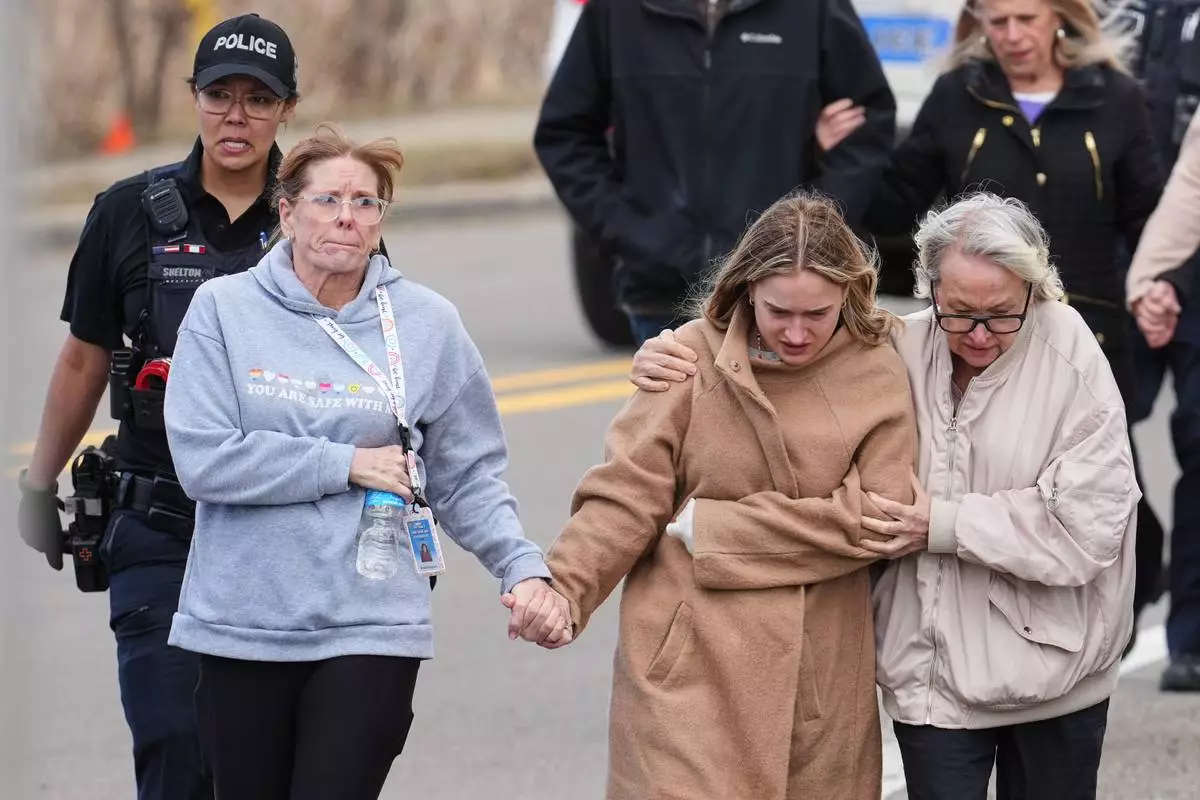
Law enforcement escort families away from the Temple Israel synagogue Thursday, March 12, 2026, in West Bloomfield Township, Mich. (AP Photo/Paul Sancya)
Law enforcement escort families away from the Temple Israel synagogue Thursday, March 12, 2026, in West Bloomfield Township, Mich. (AP Photo/Paul Sancya)

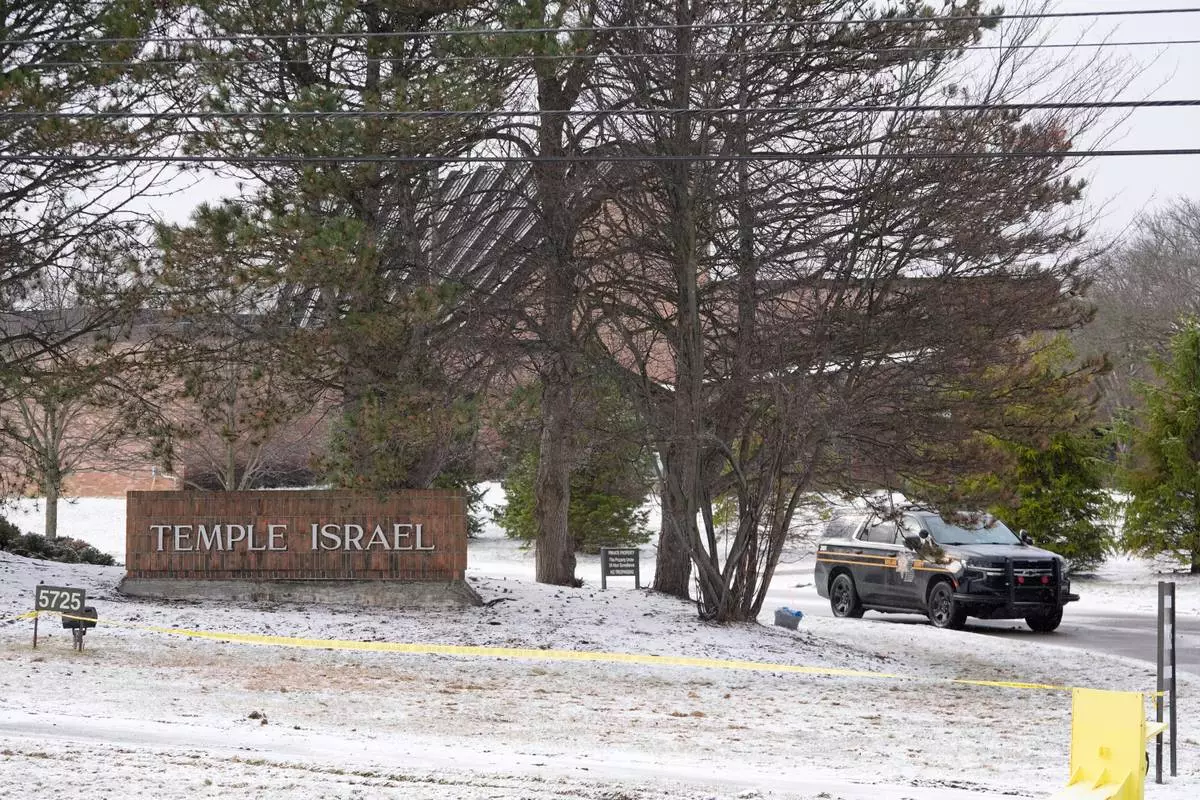
A police vehicle sits outside the Temple Israel synagogue Friday, March 13, 2026, in West Bloomfield Township, Mich. (AP Photo/Paul Sancya)
A police vehicle sits outside the Temple Israel synagogue Friday, March 13, 2026, in West Bloomfield Township, Mich. (AP Photo/Paul Sancya)


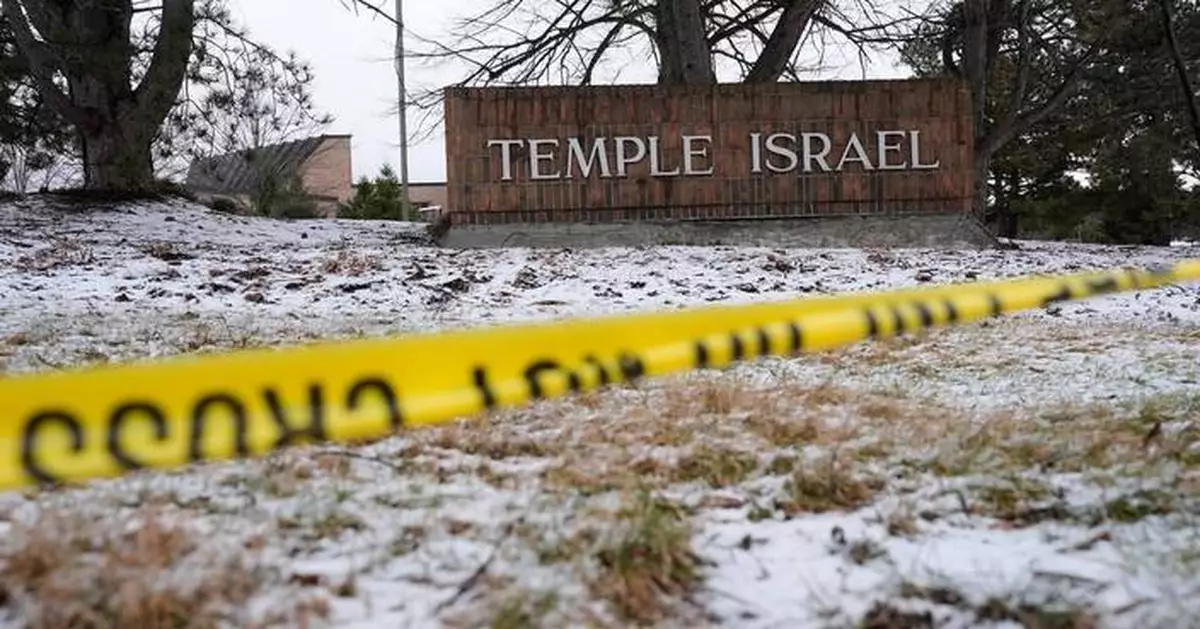
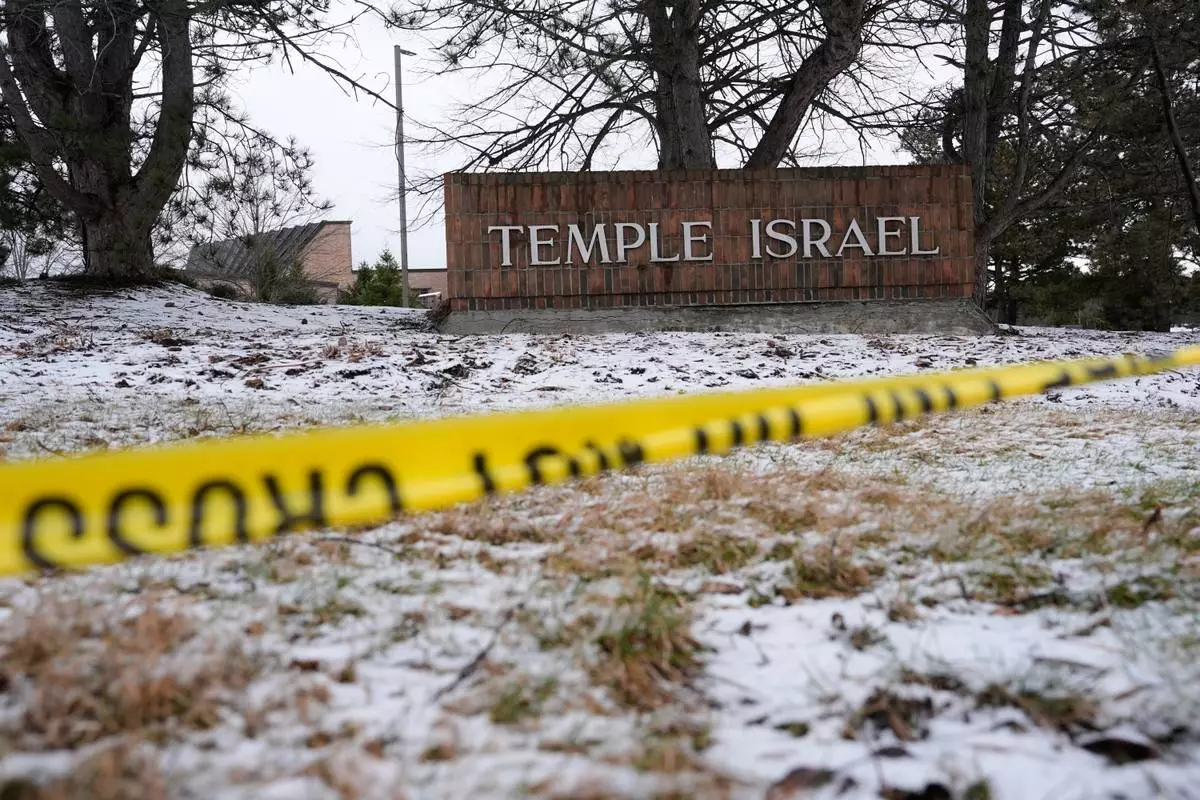
Police tape hangs outside the Temple Israel synagogue Friday, March 13, 2026, in West Bloomfield Township, Mich. (AP Photo/Paul Sancya)

Police tape hangs outside the Temple Israel synagogue Friday, March 13, 2026, in West Bloomfield Township, Mich. (AP Photo/Paul Sancya)

Gulf countries reported new attacks Sunday morning, a day after Iran called for the evacuation of three major ports in the United Arab Emirates, threatening for the first time a neighboring country’s non-U.S. assets.

Tehran accused the United States of using “ports, docks and hideouts” in the UAE to launch strikes on Kharg Island, home to the main terminal handling Iran’s oil exports, without providing evidence, as the war showed no signs of ending.

U.S. President Donald Trump said he hoped allies would send warships to help secure the vital Strait of ​Hormuz.

Meanwhile, Israeli strikes have deepened Lebanon's humanitarian crisis, with more than 800 people killed and over 850,000 displaced.

Here is the latest:

The Paris-based agency, which is helping to coordinate the international effort to lower prices, says its member countries in Asia and Oceania plan to release stocks “immediately” and that reserves from Europe and the Americas “will be made available starting from the end of March.”

“This emergency collective action, by far the largest ever, provides a significant and welcome buffer,” it says in a statement.

The IEA announced Wednesday that it will make 400 million barrels of oil available from members’ emergency reserves — more than double the 182.7 million barrels that the IEA’s 32 countries released in 2022 in response to Russia’s full-scale invasion of Ukraine.

The IEA’s update on Sunday said its members have so far committed to making available a total of nearly 412 million barrels from government, industry and other stocks — of which 72% will be crude oil and the rest as oil products.

Benjamin Netanyahu’s Facebook post came seemingly in response to viral posts claiming he had been killed — posts that were disputed as AI creations because he looked to have more than 10 digits.

In a video filmed in an Israeli cafe and posted online Sunday, Netanyahu picks up a cappuccino with showy ease and pivots to the camera.

“They are saying on the internet that the prime minister’s dead? I’m dying for coffee,” he said.

Then he spread the fingers on each hand to show he has only 10, and sipped his coffee.

An Israeli military source told The Associated Press on Sunday that the country has enough interceptors to continue defending its skies against missiles from Iran.

The source spoke on condition of anonymity in line with military protocol.

The comment appeared to be an effort to tamp down growing speculation that Israel’s vaunted air defense system is running low.

Interceptors are the missiles that Israel’s air defense system uses to destroy incoming rockets before they hit populated areas.

By JULIA FRANKEL

President Abdel Fattah el-Sissi made a series of phone calls Sunday, speaking with Qatari Emir Sheikh Tamim bin Hamad al-Thani; Jordanian King Abdullah II; and UAE President Sheikh Mohammed bin Zayed Al Nahyan.

Egypt’s foreign minister is touring the Gulf region.

El-Sissi said in a statement that Egypt is intensifying efforts seeking a de-escalation of tensions in the region.

Abbas Araghchi told CBS’ “Face the Nation” on Sunday that Iranian negotiators were in talks with U.S. envoys when the decision to attack his country was made.

Araghchi said “we don’t see any reason why we should talk with Americans” about how to end the war and that Iran has had no “good experience talking with Americans.”

Araghchi says Iran is “open to countries who want to talk to us about the safe passage of their vessels” through the Strait of Hormuz and has been approach by “a number’’ of nations about that. He didn’t name them.

Asked about the fate of his country’s nuclear material, the minister said it was under rubble from attacks on Iran’s nuclear facilities and “we have no plan to recover” it from there.

The military said it had struck Ibrahim Ghazali — the brother of Lebanese-born Ayman Ghazali, who attacked the synagogue last week — because he managed weapons for a Hezbollah unit that fired rockets at Israel.

The Associated Press was not able to verify that Ibrahim Ghazali was a militant.

A Lebanese official, who requested anonymity because he could not publicly discuss details of the airstrike, confirmed that Ibrahim Ghazali was killed.

The official told AP that Ghazali’s children, Ali and Fatima, and brother, Kassim, were also killed in the strike that hit their home just after sunset.

Authorities have said 41-year-old Ayman Ghazali attacked the Temple Israel synagogue outside Detroit after learning that four of his family members had been killed in an Israeli strike.

By Bassem Mroue

Crowds gathered Sunday for the burial of 29-year-old Huseyin Firat in Reyhanli, southern Turkey, the Demiroren News Agency reported.

He died from wounds sustained in a March 6 attack on a convoy returning from Afghanistan to Turkey, according to Turkish media reports.

Video footage taken days later showed his vehicle shredded by shrapnel and a large crater near the city of Zanjan, in northwest Iran.

U.S. Energy Secretary Chris Wright says he’s been “in dialogue” with some of the countries that Trump hopes will send warships to counter Iran’s efforts to restrict shipping in the Strait of Hormuz. He’s not saying which ones.

Asked on NBC’s “Meet the Press” whether shipping through the critical waterway is safe at the moment, Wright responded: “No, it is not.”

He noted that many other countries, especially in Asia, are more dependent than the United States on energy supplies that are shipped through the strait.

“So of course the whole world will be united on the need to open Hormuz and clearly we will have the support of other nations to achieve that objective,” he said.

Wright said he expected China to “be a constructive partner” in efforts to reopen the strait.

Egypt’s President Abdel Fattah el-Sissi promised “full support and solidarity” in a message to Qatari Emir Sheikh Tamim bin Hamad al-Thani.

Foreign minister Badr Abdelatty, who was visiting Qatar on Sunday on the first stop of a tour of the Gulf region, delivered the president’s message.

Abdelatty called for a deescalation of hostilities in the region. He said activating a Joint Defense Treaty would “safeguard the security, sovereignty, unity, and territorial integrity of Arab states.”

State media reports that four refrigerated trucks carrying medicine, medical supplies, clothing and food left the capital Ashgabat for Iran on Sunday.

The shipment, funded by a charitable foundation, was sent “to the people of the Islamic Republic of Iran, primarily children, as a sign of friendly and fraternal relations,” according to state media. It showed footage of a prayer being recited for the safe delivery of the supplies.

Officials said approximately 250 people from 16 countries have so far crossed into Turkmenistan, an isolated, gas-rich Central Asian nation, which shares a 1,148-kilometer (713-mile) border with Iran.

Turkmenistan maintains one of the strictest visa policies in the world. It provided safe passage to more than 4,000 foreign nationals from 52 countries during the Israel-Iran war last summer.

Police and city workers scoured the area of what appeared to be a cluster munition impact in Tel Aviv on Sunday, attempting to locate and clear any unexploded ordnance.

City workers used street sweepers and power washers to hose down an area where a small munition damaged two cars and spread shrapnel across a small park. Cluster bombs can be exceptionally dangerous for the public as small munitions that are released may not explode on impact and pose a serious danger for passersby.

The impact also left a hole in the pavement, next to a bomb shelter that serves as a youth center at the local swimming pool. Within 90 minutes, bulldozers and other heavy equipment arrived to clear debris and patch the hole.

Israel police said there were a number of impact sites in the greater Tel Aviv area after Sunday’s attacks that left four people injured, one moderately.

Chris Wright told NBC’s “Meet the Press” on Sunday that there’s been a “short-term disruption’ to the flow of energy and that “Americans are feeling it right now. Americans will feel it for a few more weeks.”

Asked whether the war will be over in a matter of weeks, Wright said: “I think that’s the likely time frame, yes.”

He said gas prices will start to come back down after the war is over.

“At the end, we will have removed the greatest risk to global energy supplies. We’ll go to a world more abundant in energy, more affordable energy.”

Asked about whether pump prices will fall below $3 per gallon by the summer travel season, Wright said: “there’s a very good chance that’ll be true. There’s no guarantees in war.”

The displaced struggled to keep their tents intact as pouring rain and fierce winds hammered the city’s downtown waterfront area Sunday.

An AP team on the ground witnessed one tent succumb to the winds, blowing away entirely.

Fadi Younes, one displaced man who fled to the beach from Beirut’s southern suburbs, found himself battling with his collapsed tent. He had already rebuilt it once after a storm two days ago, he said.

He gestured to new mattresses, now waterlogged, that he bought after the last ones got soaked through.

“I hope that today things in the country will be set right and everyone can return to their homes. A person only truly feels at ease in their own home,” he said.

Younes is among more than 830,000 people displaced by Israeli strikes and evacuation warnings in Lebanon. The Norwegian Refugee Council says that amounts to one in every seven people.

Waltz was asked on CNN Sunday whether the U.S. president was prepared to target oil facilities on Kharg island, which handles 90% of Iran’s crude oil exports, and if so, if he was worried that that could risk even more of an escalation in the war.

“President Trump’s not going to take any options off the table,” Waltz said. “I would certainly think he would maintain that optionality if he wants to take down their their energy infrastructure.”

U.S. Central Command posted on X Saturday that it had struck military targets on the island, but preserved the oil infrastructure.

Iranian Foreign Minister Abbas Araghchi’s comments about the reopening of the crucial Strait of Hormuz came in an interview with the London-based Al-Araby al-Jadeed published Sunday.

“The Strait of Hormuz is not generally closed, but only to the U.S. and its allies, and we will continue this policy as long as the attacks continue,” he was quoted as saying.

The world’s largest aluminum smelter outside China said Sunday it would gradually shut down nearly one-fifth of its production capacity as exports remain blocked through the Strait of Hormuz.

Aluminium Bahrain, or Alba, promised a “controlled and safe shutdown strategy.”

Smelters run at high temperatures and take time to shut down or restart without endangering equipment or damage the containers that hold molten metals.

The company told buyers last week it couldn’t meet its obligations. The timeline of a phased partial shutdown means global aluminum supplies could remain tight even if transit through the Strait of Hormuz quickly returns to normal, keeping upward pressure on prices for products such as construction materials and cars.

Aluminum and oil make up a big part of Bahrain’s economy and limits on production and export threaten to deepen woes in the Persian Gulf Island nation being hit with Iranian airstrikes.

There was no immediate word on damage or casualties.

It was one of the multiple barrages targeting Israel Sunday. It damaged an apartment building in the central Israeli ultra-Orthodox city of Bnei Brak.

The country’s Magen David Adom rescue services said that one man was injured by glass shrapnel. Photos and video showed a blackened hole in place of the apartment’s windows.

Magen David Adom also said paramedics were treating another man in the nearby city of Ramat Gan who sustained blast injuries. It comes after an earlier barrage hit 23 sites in the Tel Aviv area and injured two people.

Collapsed concrete, exposed rebar and sheets of plastic spilled onto the streets of southern Beirut Sunday morning. Smoke rose into the air and small fires burned.

That was the scene in the city’s suburb of Haret Hreik, after a night of continued Israeli airstrikes.

In just 10 days, more than 800,000 people in Lebanon have been displaced by war, just over a year since the last conflict uprooted over a million Lebanese from their homes. Israeli strikes have killed 826 people, including 106 children and 65 women, since the conflict between Hezbollah and Israel reignited on March 2, according to the Health Ministry.

Pope Leo XIV on Sunday escalated his appeal for peace by directly addressing the leaders who launched the war.

“On behalf of the Christians of the Middle East and all women and men of good will, I appeal to those responsible for this conflict,” Leo said. “Cease fire so that avenues for dialogue may be reopened. Violence can never lead to the justice, stability, and peace that the people are waiting for.”

While Leo didn’t mention the United States or Israel by name, he mentioned the bombings that targeted a school — an apparent reference to the missile strike on an elementary school in Iran in the opening days of the war that killed over 165 people, many of them children.

The Vatican has highlighted the carnage of the Minab strike, running a photo of the mass grave for the victims on the front page of its official newspaper, L’Osservatore Romano, under the headline “The Face of War.” U.S. officials have said outdated intelligence likely led to the United States launching the strike, and that an investigation is ongoing.

Norwegian Prime Minister Jonas Gahr Støre said it should be the responsibility of the countries involved to “find ways of ending the hostilities that now have great impact around the world.”

Speaking alongside the leaders of Canada and the other Nordic nations on Sunday, Støre said “it seems to us that the plan for how it will develop is pretty unclear.” He added: “That’s the danger with initiating wars, that they rarely follow a script.”

He said that “we are concerned to see that there is still an escalation.”

South Korea’s Foreign Ministry said in a statement that it “takes note” of Trump’s comments. It said that South Korea and the U.S. “will closely coordinate and carefully review” the situation.

The ministry said South Korea closely monitors developments in the Middle East and explores various options to secure safe energy supply routes and protect South Korean nationals.

The Korea International Trade Association says it gets around 70% of its crude oil and 20% of its LNG from the Middle East.

Asked whether Britain is considering sending minesweepers or mine-hunting drones to the strategic waterway to help shipping return to normal, U.K. Energy Secretary Ed Miliband told Sky News: “We are talking to our allies.”

“We are intensively looking with our allies at what can be done, because it’s so important that we get the strait reopened,” he said.

Miliband told the BBC on Sunday that “any options that can help to get the strait reopened are being looked at.” He added: “We don’t want a nuclear Iran but ending this conflict is the best and surest way to get the strait reopened.”

Expectations are high that U.S. President Donald Trump could ask Japan to send warships to the Persian Gulf when Prime Minister Sanae Takaichi meets him on Thursday at the White House.

Public opinion in Japan is divided about getting involved. Foreign Ministry sources told Japanese public broadcaster NHK that Japan makes its own decisions and won’t dispatch ships just because Trump asked. Defense Ministry sources told NHK that deploying Japan’s Self-Defense Forces would be difficult, involving the assessment of the legality of U.S. and Israeli actions. NHK did not identify the sources.

The sites include museums and bazaars, historic government buildings and mosques, Iran’s Cultural Heritage Ministry said Sunday.

Among the damaged sites are the ornate Qajar-era Golestan Palace in Tehran and the Shah Abbas Mosque and the 17th-century Chehel Sotoun palace in Isfahan.

The damage isn’t limited to Tehran and Isfahan. The ministry said sites in Kurdistan, Lorestan and Kermanshah were also affected.

Israel’s rescue service Magen David Adom said two men were lightly wounded in central Israel from an Iranian missile attack.

Video released by the service showed a large hole in a city street and shrapnel damage to an apartment building.

The Israeli rescue service United Hatzalah said it was aware of 23 damaged sites.

Israeli police said authorities were inspecting the scenes. Magen David Adom, another rescue service, posted pictures of a car partially set on fire after the barrage.

A bulldozer clears debris from the rubble of buildings destroyed in an Israeli airstrike in Dahiyeh, Beirut's southern suburbs, Lebanon, Sunday, March 15, 2026. (AP Photo/Hassan Ammar)

A bulldozer clears debris from the rubble of buildings destroyed in an Israeli airstrike in Dahiyeh, Beirut's southern suburbs, Lebanon, Sunday, March 15, 2026. (AP Photo/Hassan Ammar)

Debris litters the street as smoke rises from buildings damaged in an Israeli airstrike in Dahiyeh, Beirut's southern suburbs, Lebanon, Sunday, March 15, 2026. (AP Photo/Hassan Ammar)

Debris litters the street as smoke rises from buildings damaged in an Israeli airstrike in Dahiyeh, Beirut's southern suburbs, Lebanon, Sunday, March 15, 2026. (AP Photo/Hassan Ammar)

Policemen stand guard next to the banners showing portraits of the late Iranian Supreme Leader Ayatollah Ali Khamenei at the Enqelab-e-Eslami, or Islamic Revolution, square in downtown Tehran, Iran, Saturday, March 14, 2026. (AP Photo/Vahid Salemi)

Policemen stand guard next to the banners showing portraits of the late Iranian Supreme Leader Ayatollah Ali Khamenei at the Enqelab-e-Eslami, or Islamic Revolution, square in downtown Tehran, Iran, Saturday, March 14, 2026. (AP Photo/Vahid Salemi)

A woman displays a poster of the Iranian Supreme Leader Ayatollah Mojtaba Khamenei as she waves her country's flag during a campaign in support of the government at the Enqelab-e-Eslami, or Islamic Revolution, square in downtown Tehran, Iran, Saturday, March 14, 2026. (AP Photo/Vahid Salemi)

A woman displays a poster of the Iranian Supreme Leader Ayatollah Mojtaba Khamenei as she waves her country's flag during a campaign in support of the government at the Enqelab-e-Eslami, or Islamic Revolution, square in downtown Tehran, Iran, Saturday, March 14, 2026. (AP Photo/Vahid Salemi)

Israeli security forces inspect damage at the site of an Iranian missile strike in Holon, central Israel, Sunday, March 15, 2026. (AP Photo/Ohad Zwigenberg)

Israeli security forces inspect damage at the site of an Iranian missile strike in Holon, central Israel, Sunday, March 15, 2026. (AP Photo/Ohad Zwigenberg)

Two men ride their motorbike past a billboard of the Iranian Supreme Leader Ayatollah Mojtaba Khamenei in downtown Tehran, Iran, Saturday, March 14, 2026. (AP Photo/Vahid Salemi)

Two men ride their motorbike past a billboard of the Iranian Supreme Leader Ayatollah Mojtaba Khamenei in downtown Tehran, Iran, Saturday, March 14, 2026. (AP Photo/Vahid Salemi)

A man chants slogan while the body of Gen. Ali Shamkhani, secretary of Iran's Defense Council and a senior adviser to the Supreme Leader who was killed in a strike, is being buried at the courtyard of the Imamzadeh Saleh shrine in Tehran, Iran, Saturday, March 14, 2026. (AP Photo/Vahid Salemi)

A man chants slogan while the body of Gen. Ali Shamkhani, secretary of Iran's Defense Council and a senior adviser to the Supreme Leader who was killed in a strike, is being buried at the courtyard of the Imamzadeh Saleh shrine in Tehran, Iran, Saturday, March 14, 2026. (AP Photo/Vahid Salemi)

Rescue workers inspect an apartment damaged in an Israeli airstrike as thick smoke fills the building in the southern port city of Sidon, Lebanon, Saturday, March 14, 2026. (AP Photo/Mohammad Zaatari)

Rescue workers inspect an apartment damaged in an Israeli airstrike as thick smoke fills the building in the southern port city of Sidon, Lebanon, Saturday, March 14, 2026. (AP Photo/Mohammad Zaatari)

Fire and plumes of smoke rise from an oil facility in Fujairah, United Arab Emirates, Saturday, March 14, 2026. (AP Photo/Altaf Qadri)

Fire and plumes of smoke rise from an oil facility in Fujairah, United Arab Emirates, Saturday, March 14, 2026. (AP Photo/Altaf Qadri)

Recommended Articles