LOS ANGELES (AP) — Sean Penn has built one of the most decorated careers in contemporary acting, and he has added another Oscar to the list.
On Sunday, Penn won the Academy Award for best supporting actor for his performance in Paul Thomas Anderson’s political drama “One Battle After Another.” He delivered a commanding portrayal of a seasoned power broker navigating the shifting loyalties and ideological battles at the center of the film.
Click to Gallery
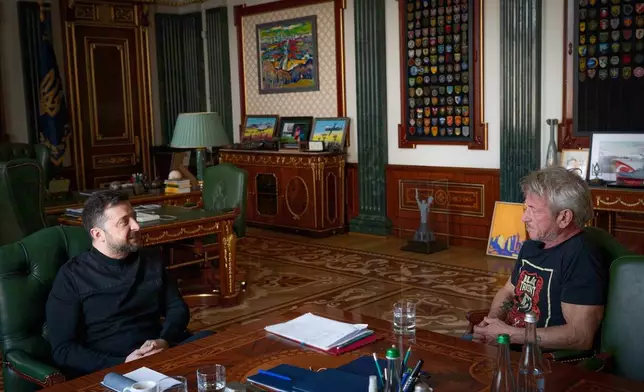
In this photo provided by the Ukrainian Presidential Press Office, Ukrainian President Volodymyr Zelenskyy, left, talks with U.S. actor and director Sean Penn in Kyiv, Ukraine, Monday, March, 2026. (Ukrainian Presidential Press Office via AP)
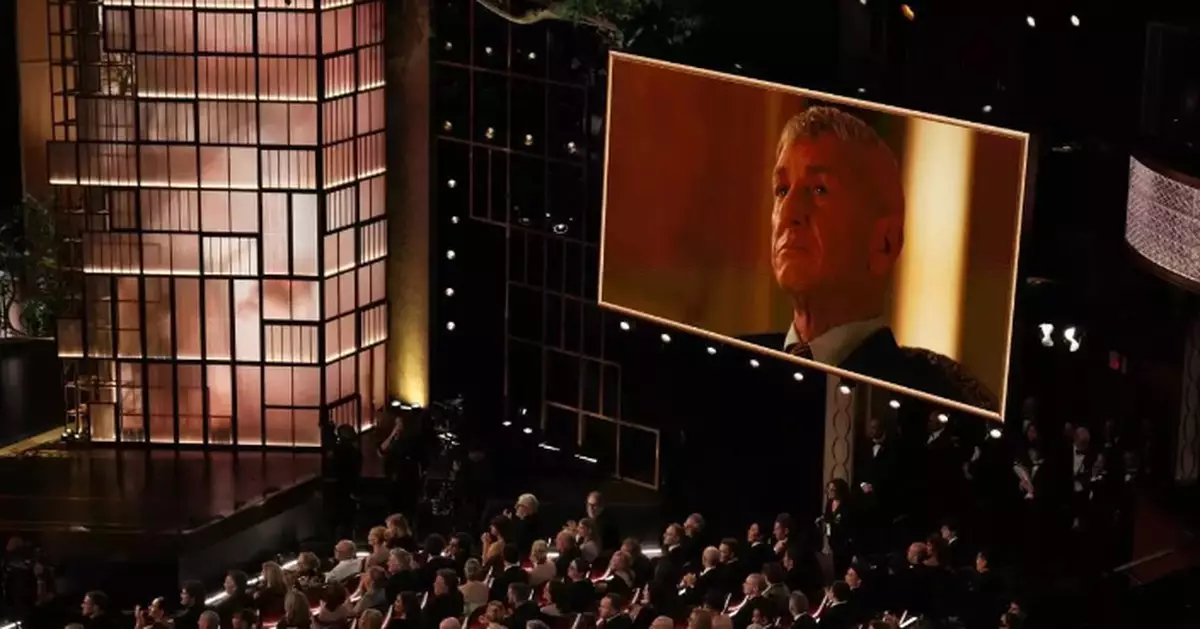
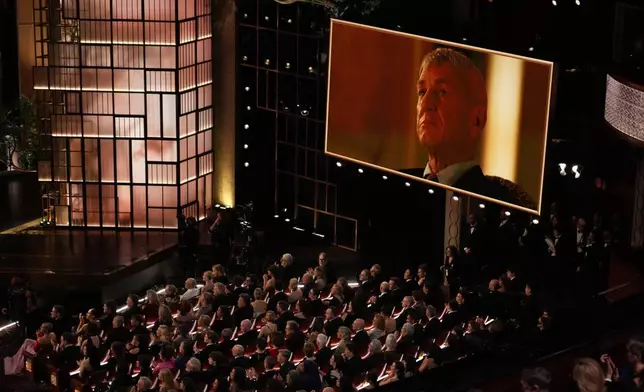
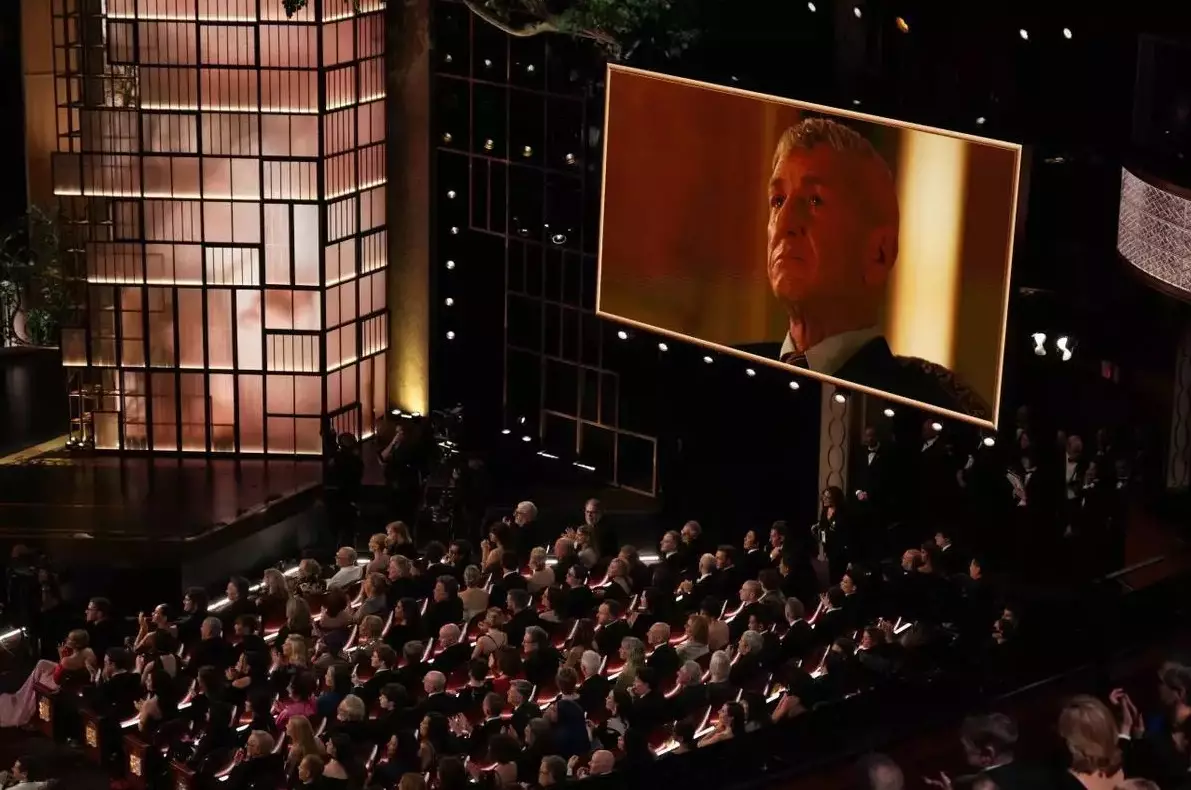
Sean Penn wins the award for best performance by an actor in a supporting role for "One Battle After Another" during the Oscars on Sunday, March 15, 2026, at the Dolby Theatre in Los Angeles. (AP Photo/Chris Pizzello)
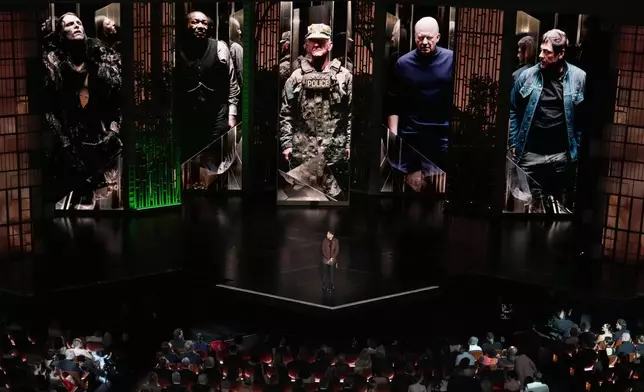
Kieran Culkin presents the award for best performance by an actor in a supporting role during the Oscars on Sunday, March 15, 2026, at the Dolby Theatre in Los Angeles. (AP Photo/Chris Pizzello)
Penn, 65, did not attend the Oscars.
“He couldn’t be here tonight, or he didn’t want to,” Kieran Culkin said after announcing Penn as the winner.
It's not the first time Penn has been an Oscars no-show. He's previously skipped the show three times when he was nominated for “Dead Man Walking” in 1996, “Sweet and Lowdown” in 2000 and “I Am Sam” in 2002.
In 2022, Penn gave one of the Oscar statuettes to Ukrainian President Volodymyr Zelenskyy.
Penn bowed out from attending the BAFTAs and Actor Awards this year.
In the movie, Penn plays a calculating strategist named Col. Steven J. Lockjaw whose decades of experience in political movements give him both influence and scars. His character carries the weight of past victories and failures, offering sharp insights while quietly pulling strings behind the scenes. The performance blends Penn’s trademark intensity with moments of restraint, delivering a standout performance among the film’s talented ensemble.
The win marks Penn’s third Academy Award.
The actor did attend when he previously won two Academy Awards for best actor for Clint Eastwood’s 2003 crime drama “Mystic River” and for portraying San Francisco politician and LGBTQ rights pioneer Harvey Milk in Gus Van Sant’s 2008 biopic “Milk.”
Penn first gained attention in the 1980s, with films including “Fast Times at Ridgemont High,” but quickly established himself as one of Hollywood’s most fearless dramatic actors. Over the decades he has delivered acclaimed performances in films such as “Dead Man Walking,” “Carlito’s Way,” “The Thin Red Line,” and “I Am Sam.”
His performance in “One Battle After Another” adds another acclaimed role to a career defined by intense and transformative performances.
Other nominees included cast member Delroy Lindo, Benicio Del Toro, Jacob Elordi and Stellan Skarsgård.
For more coverage of the 2026 Oscars, visit https://apnews.com/hub/academy-awards
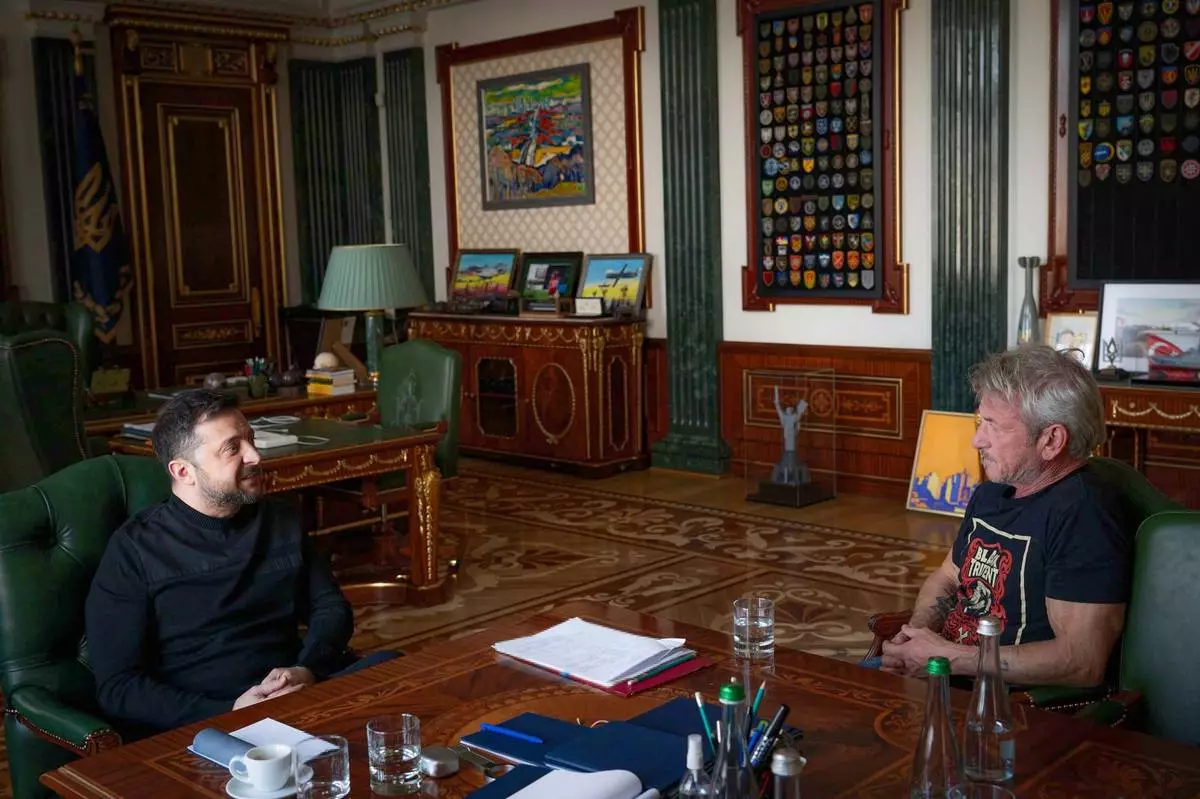
In this photo provided by the Ukrainian Presidential Press Office, Ukrainian President Volodymyr Zelenskyy, left, talks with U.S. actor and director Sean Penn in Kyiv, Ukraine, Monday, March, 2026. (Ukrainian Presidential Press Office via AP)
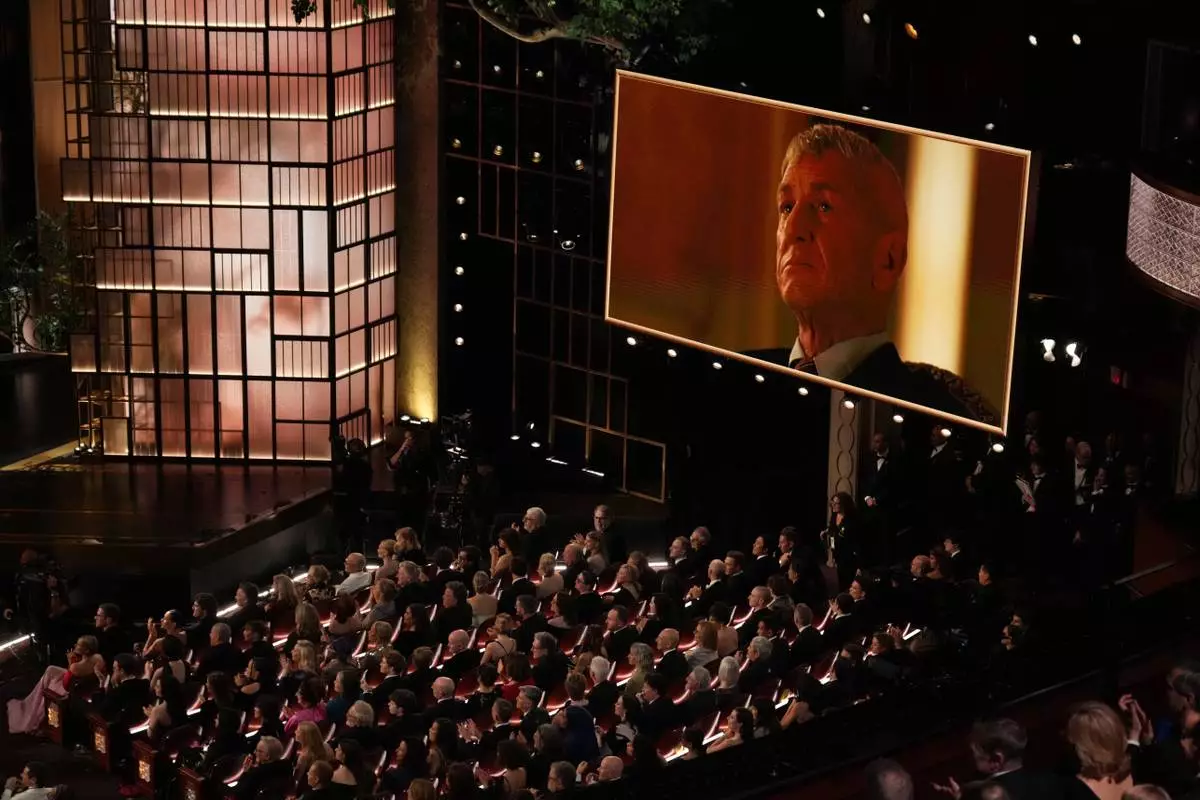
Sean Penn wins the award for best performance by an actor in a supporting role for "One Battle After Another" during the Oscars on Sunday, March 15, 2026, at the Dolby Theatre in Los Angeles. (AP Photo/Chris Pizzello)
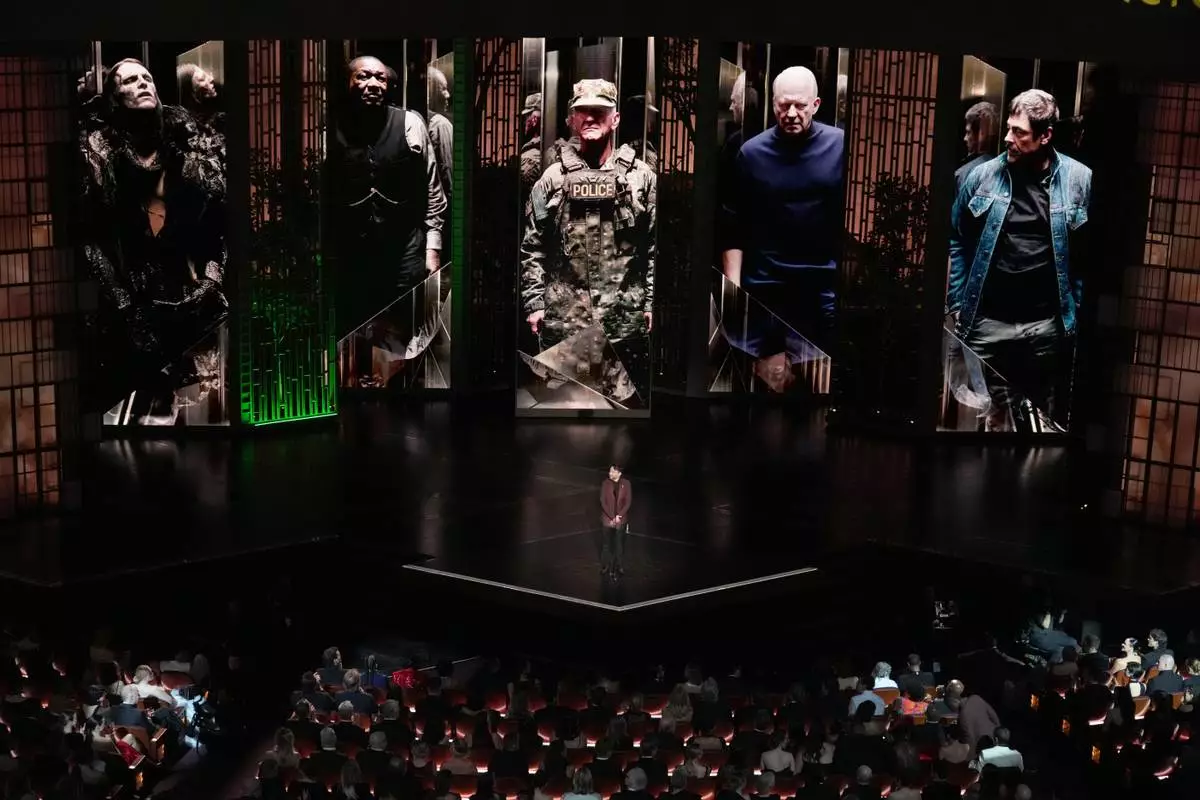
Kieran Culkin presents the award for best performance by an actor in a supporting role during the Oscars on Sunday, March 15, 2026, at the Dolby Theatre in Los Angeles. (AP Photo/Chris Pizzello)
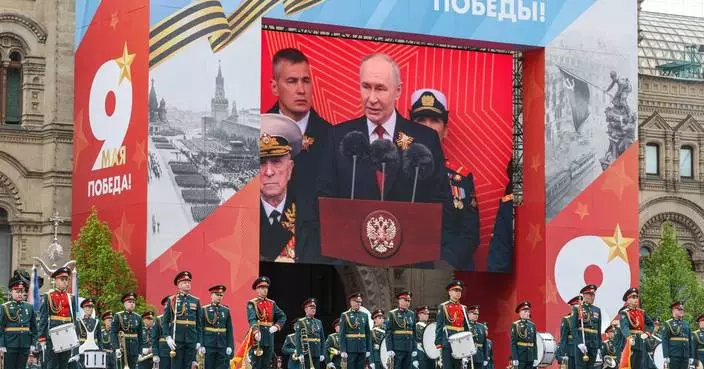
MOSCOW (AP) — Russian President Vladimir Putin on Saturday voiced confidence of victory in Ukraine as he oversaw a military parade on Red Square commemorating the defeat of Nazi Germany in World War II — a show that didn't include heavy weapons for the first time in nearly two decades.
Security was tight in Moscow as Putin and several foreign leaders attended the parade, which was scaled down even as a U.S.-brokered three-day ceasefire eased concerns about possible Ukrainian attempts to disrupt the festivities.
Putin, in power for more than a quarter-century, has used Victory Day, Russia’s most important secular holiday, to showcase the country’s military might and rally support for his military action in Ukraine, now in its fifth year.
Speaking at the parade, Putin hailed Russian troops fighting in Ukraine, declaring that they “face an aggressive force that is armed and supported by the entire bloc of NATO," and are fighting for a “just cause.”
“Victory has always been and will be ours,” Putin said, as columns of troops lined up on Red Square. “The key to success is our moral strength, courage and valor, our unity and ability to endure anything and overcome any challenge.”
But in a notable shift this year, the parade took place without tanks, missiles and other heavy equipment, aside from a traditional flyover of combat jets.
Officials explained the sudden change of format by the “current operational situation” and said that additional security measures have been taken in response to the threat of Ukrainian attacks. State television commentators said that the heavy weaponry was more needed at the battlefield in Ukraine.
For the first time, Saturday's parade featured troops from North Korea, a tribute to Pyongyang that sent its soldiers to fight alongside Moscow forces to repel a Ukrainian incursion into Russia's Kursk region.
Russia declared a unilateral ceasefire for Friday and Saturday, while Ukrainian President Volodymyr Zelenskyy announced a truce that was supposed to begin on May 6, but neither of them held as the parties traded blame for continuing attacks.
U.S. President Donald Trump announced Friday that Russia and Ukraine have bowed to his request for a ceasefire running Saturday through Monday and an exchange of prisoners, declaring that the break in fighting could be the “beginning of the end” of the war.
Zelenskyy, who said earlier this week that the Russian authorities “fear drones may buzz over Red Square” on May 9, followed up on Trump's statement by issuing a decree mockingly permitting Russia to hold its Victory Day celebrations on Saturday, declaring Red Square temporarily off-limits for Ukrainian strikes.
Kremlin spokesman Dmitry Peskov shrugged off Zelenskyy’s decree as a “silly joke.” “We don’t need anyone’s permission to be proud of our Victory Day,” Peskov told reporters.
Russia’s bigger and better-equipped military has been making slow but steady gains along the more than 1,000-kilometer (over 600-mile) front line. Ukraine has hit back with increasingly efficient long-range attacks, striking Russian energy facilities, manufacturing plants and military depots. It has developed drones capable of reaching targets over 1,000 kilometers (more than 600 miles) deep into Russia, far beyond its capabilities before 2022.
Russian authorities warned that if Ukraine attempts to disrupt Saturday’s festivities, Russia will carry out a “massive missile strike on the center of Kyiv.” The Russian Defense Ministry warned the civilian population there and employees of foreign diplomatic missions of “the need to leave the city promptly.” The EU said its diplomats wouldn’t leave the Ukrainian capital despite Russian threats.
Putin has used Victory Day celebrations to encourage national pride and underline Russia’s position as a global power. The Soviet Union lost 27 million people in 1941-45 in what it calls the Great Patriotic War, an enormous sacrifice that left a deep scar in the national psyche and remains a rare point of consensus in the nation’s divisive history under Communist rule.
“We celebrate it with feelings of pride and love for our country, with understanding of our shared duty to defend the interests and future of our Motherland,” Putin said at the parade.
“Our soldiers suffered colossal losses, made a colossal sacrifice in the name of freedom and dignity of the peoples of Europe, became the embodiment of courage and nobility, fortitude and humanity, and crowned themselves with the great glory of a grandiose victory.”
Victory Day parades on Red Square have involved a broad array of heavy weapons — from armored vehicles to nuclear-tipped intercontinental ballistic missiles — every year since 2008. Smaller parades are held elsewhere across the country, but this time many of them have also been pared down or even canceled altogether for security reasons.
The authorities on Saturday ordered restrictions on all mobile internet access and text messaging services in the Russian capital, citing the need to ensure public safety. The government has methodically tightened internet censorship and established increasingly stringent controls over online activities, causing rumblings and rare public expressions of discontent.
Malaysia’s King Sultan Ibrahim Iskandar, Laos President Thongloun Sisoulith, Kazakhstan’s President Kassym-Jomart Tokayev, Uzbekistan's President Shavkat Mirziyoyev and Belarus’ authoritarian leader Alexander Lukashenko attended the festivities in the Russian capital.
Prime Minister Robert Fico of Slovakia, a European Union member, laid flowers at the Tomb of the Unknown Soldier memorial just outside the Kremlin walls but stayed away from the Red Square parade. German Chancellor Friedrich Merz criticized Fico’s trip, saying, "I deeply regret this, and we will discuss his visit to Moscow with him.”
Speaking at a meeting with Putin in the Kremlin, Fico bemoaned what he called a new “Iron Curtain” in Europe that hampered trade, and emphasized the importance of Russia's energy supplies to Slovakia. Putin hailed the Slovak leader for conducting a “sovereign” foreign policy and honoring the memory of fallen Red Army soldiers.
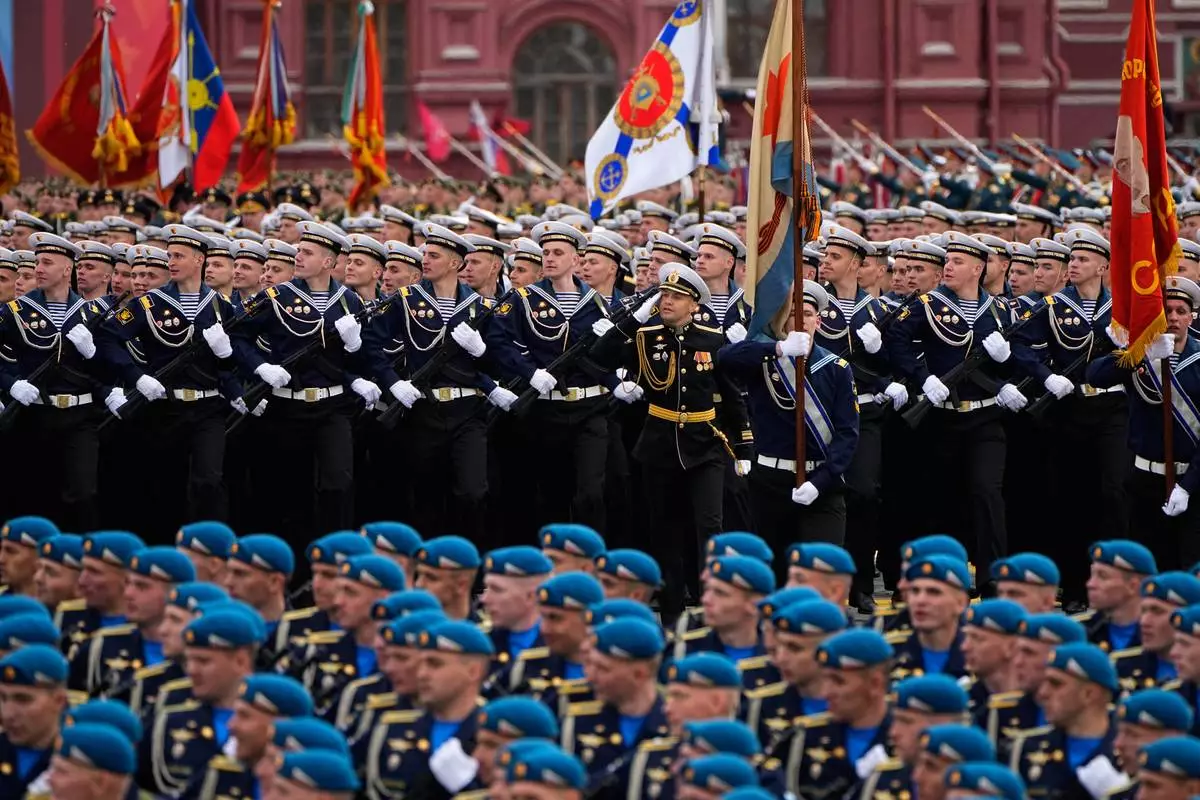
Russian servicemen attend the Victory Day military parade in Moscow, Saturday, May 9, 2026, during celebrations of the 81st anniversary of the Soviet Union's victory over Nazi Germany during World War II. (AP Photo/Alexander Zemlianichenko, Pool)
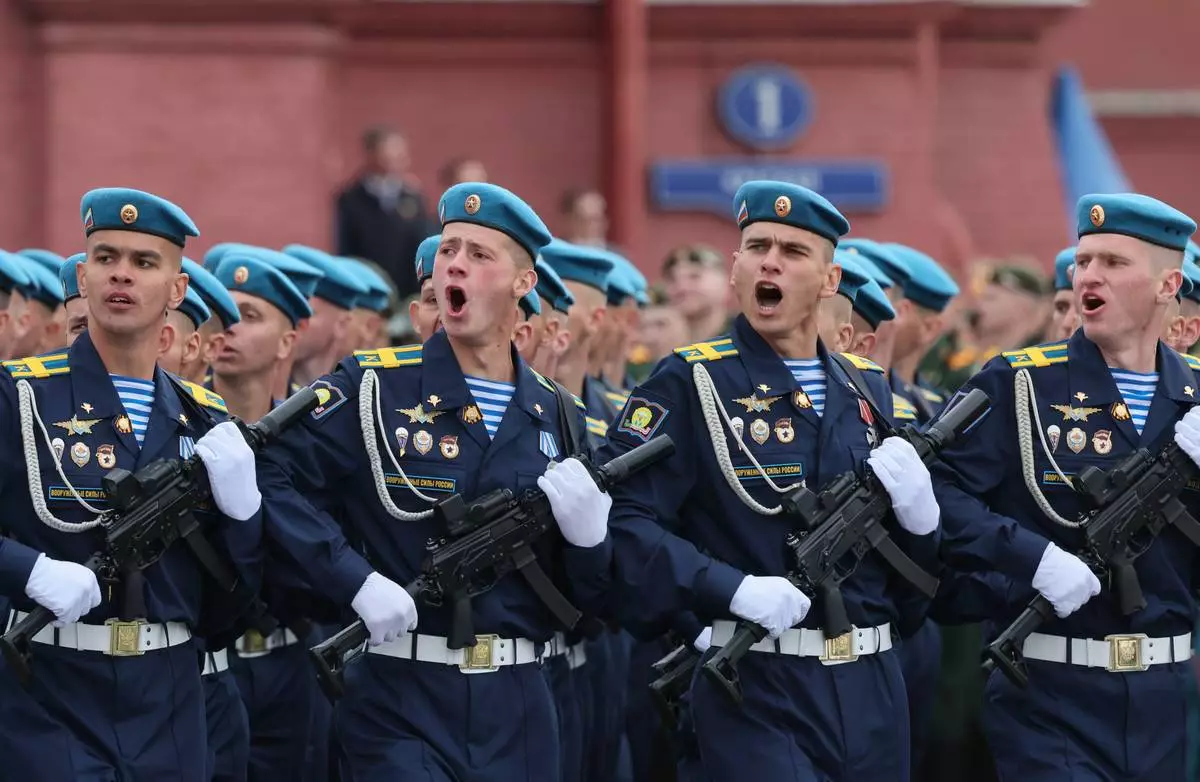
Russian servicemen attend the Victory Day military parade in Moscow, Saturday, May 9, 2026, during celebrations of the 81st anniversary of the Soviet Union's victory over Nazi Germany during the World War II. (Shamil Zhumatov/Pool Photo via AP)
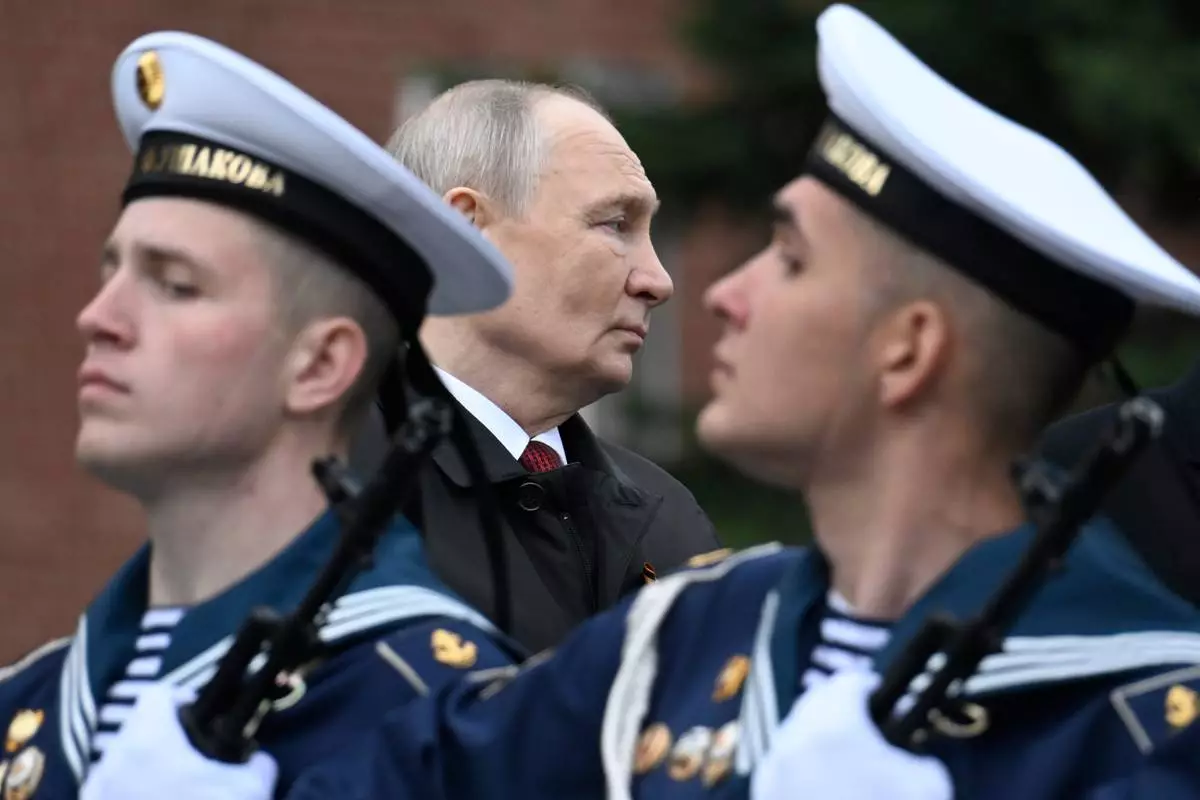
Russian President Vladimir Putin, centre foreground, attends a ceremony to lay flowers at the Tomb of the Unknown Soldier by the Kremlin wall inMoscow, Saturday, May 9, 2026, during celebrations of the 81st anniversary of the Soviet Union's victory over Nazi Germany during the World War II. (Alexander Nemenov/Pool Photo via AP)
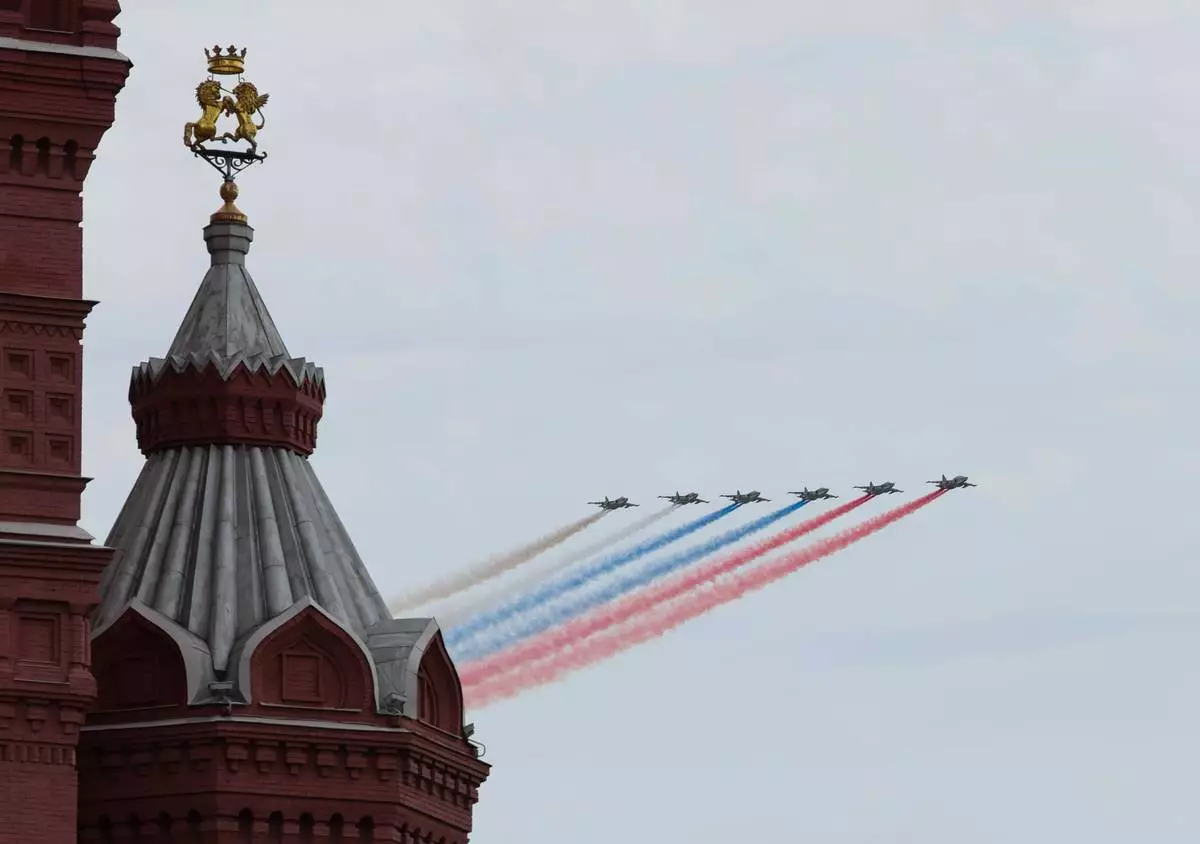
Russia's Su-25 jet aircraft release smoke in the colours of the Russian state flag during the Victory Day military parade in Moscow, Saturday, May 9, 2026, during celebrations of the 81st anniversary of the Soviet Union's victory over Nazi Germany during the World War II. (Shamil Zhumatov/Pool Photo via AP)
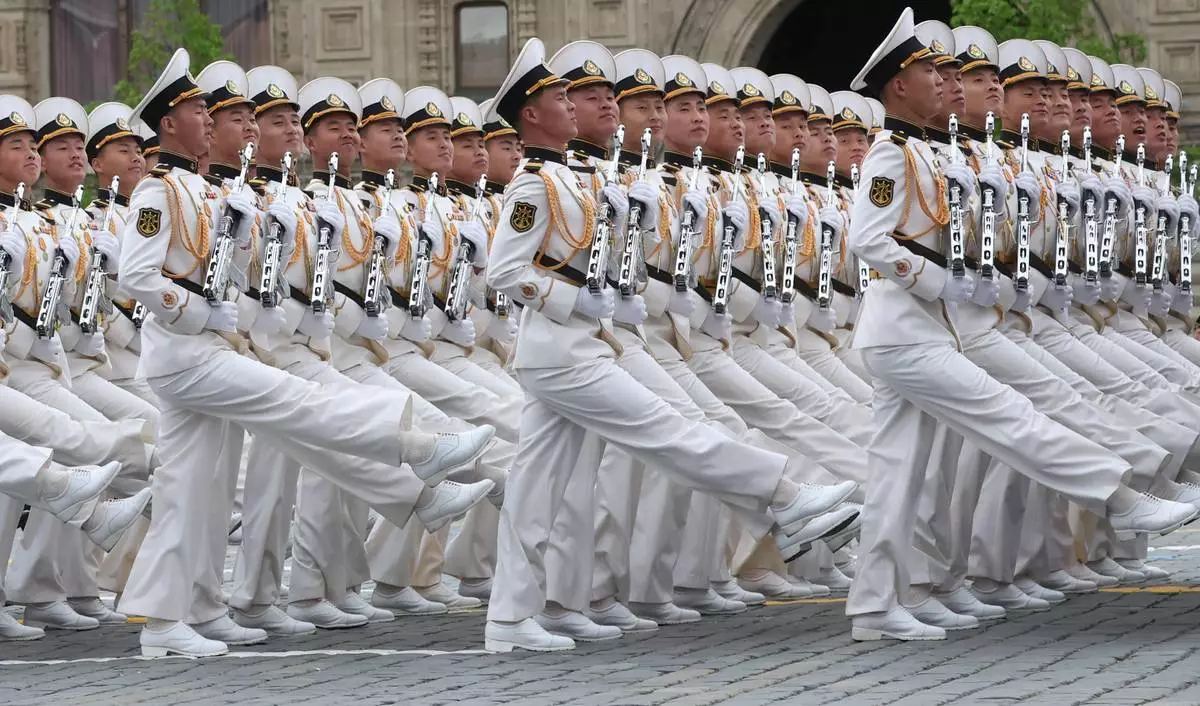
North Korea's servicemen attend the Victory Day military parade in Moscow, Saturday, May 9, 2026, during celebrations of the 81st anniversary of the Soviet Union's victory over Nazi Germany during the World War II. (Maxim Shipenkov/Pool Photo via AP)
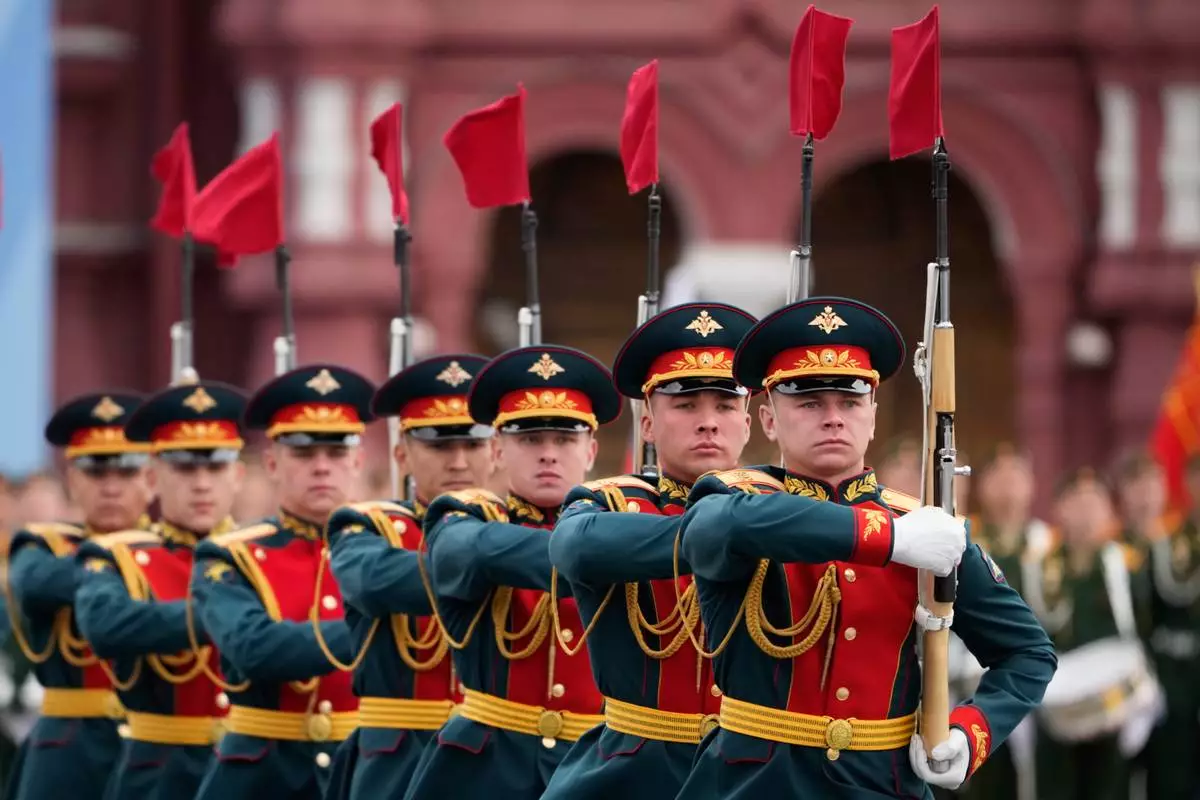
Russian servicemen march as they attend the Victory Day military parade in Moscow, Saturday, May 9, 2026, during celebrations of the 81st anniversary of the Soviet Union's victory over Nazi Germany during the World War II. (AP Photo/Pavel Bednyakov, Pool)
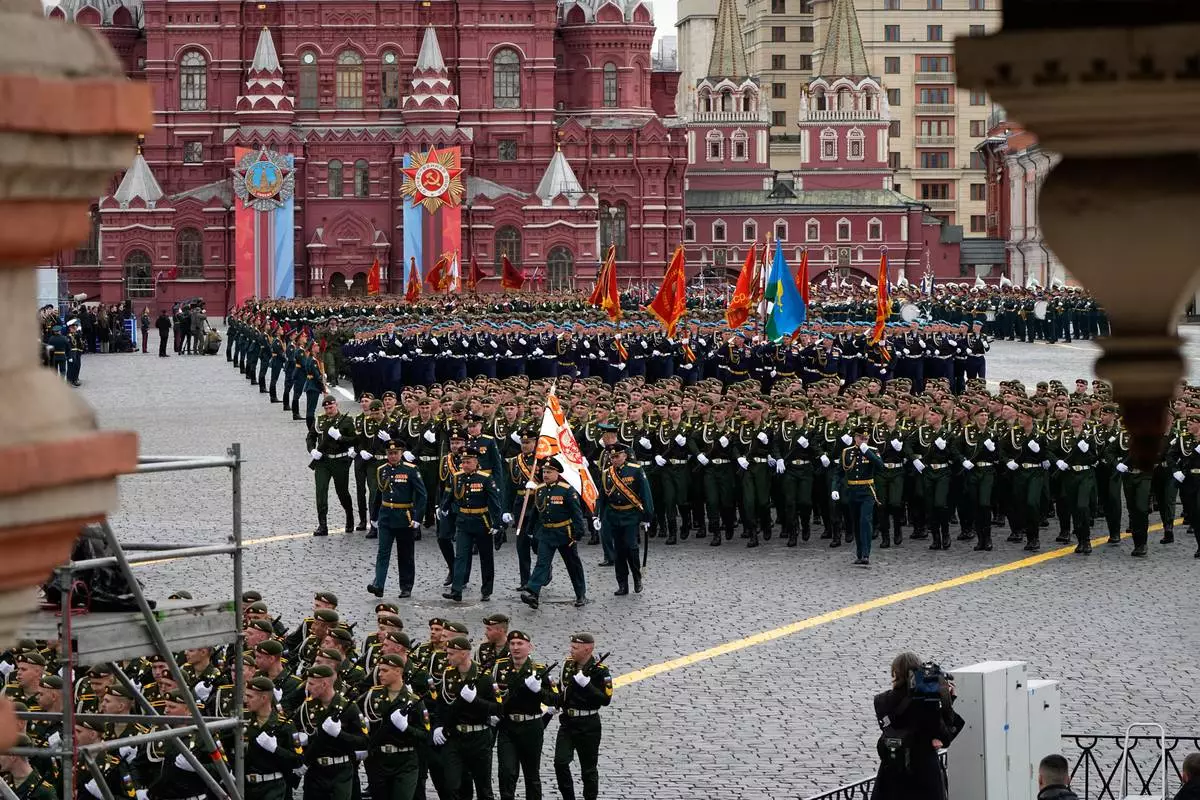
Russian servicemen attend the Victory Day military parade in Moscow, Saturday, May 9, 2026, during celebrations of the 81st anniversary of the Soviet Union's victory over Nazi Germany during World War II. (AP Photo/Alexander Zemlianichenko, Pool)
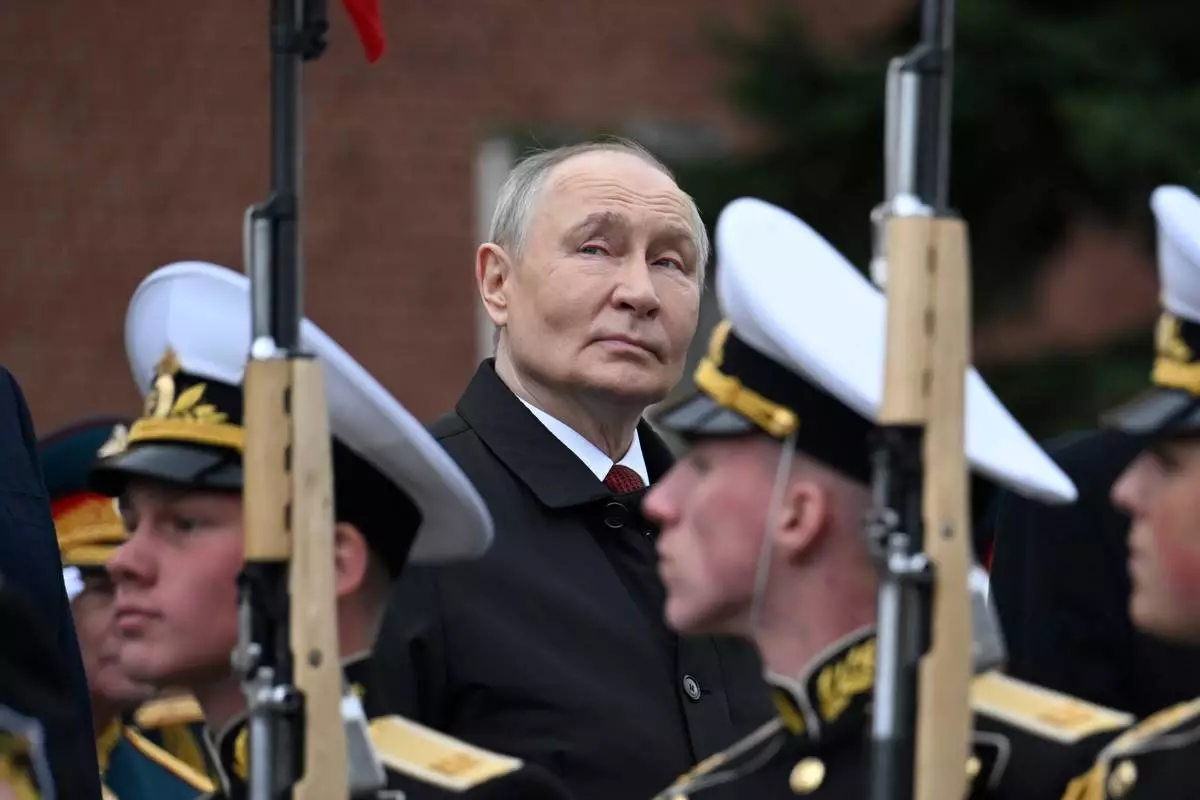
Russian President Vladimir Putin, centre foreground, attends a ceremony to lay flowers at the Tomb of the Unknown Soldier by the Kremlin wall inMoscow, Saturday, May 9, 2026, during celebrations of the 81st anniversary of the Soviet Union's victory over Nazi Germany during the World War II. (Alexander Nemenov/Pool Photo via AP)
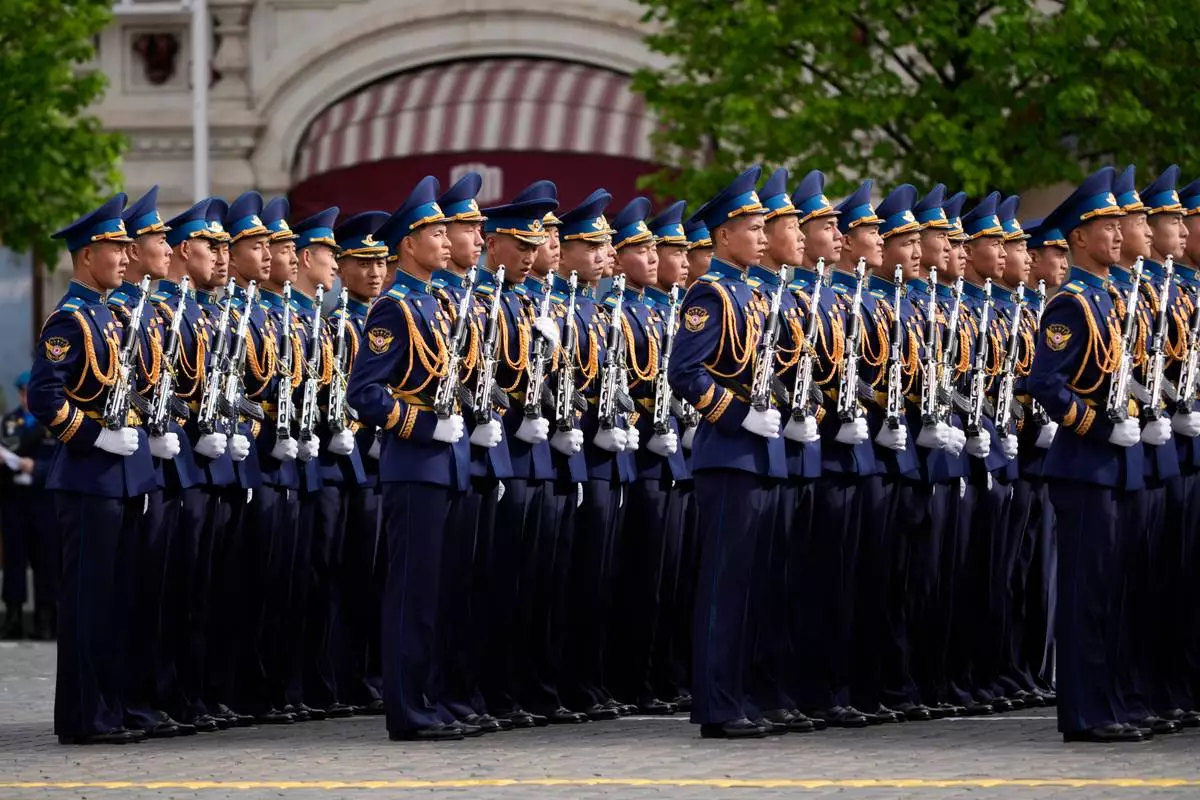
North Korea's servicemen stand in a formation before the Victory Day military parade in Moscow, Saturday, May 9, 2026, during celebrations of the 81st anniversary of the Soviet Union's victory over Nazi Germany during the World War II. (AP Photo/Pavel Bednyakov, Pool)
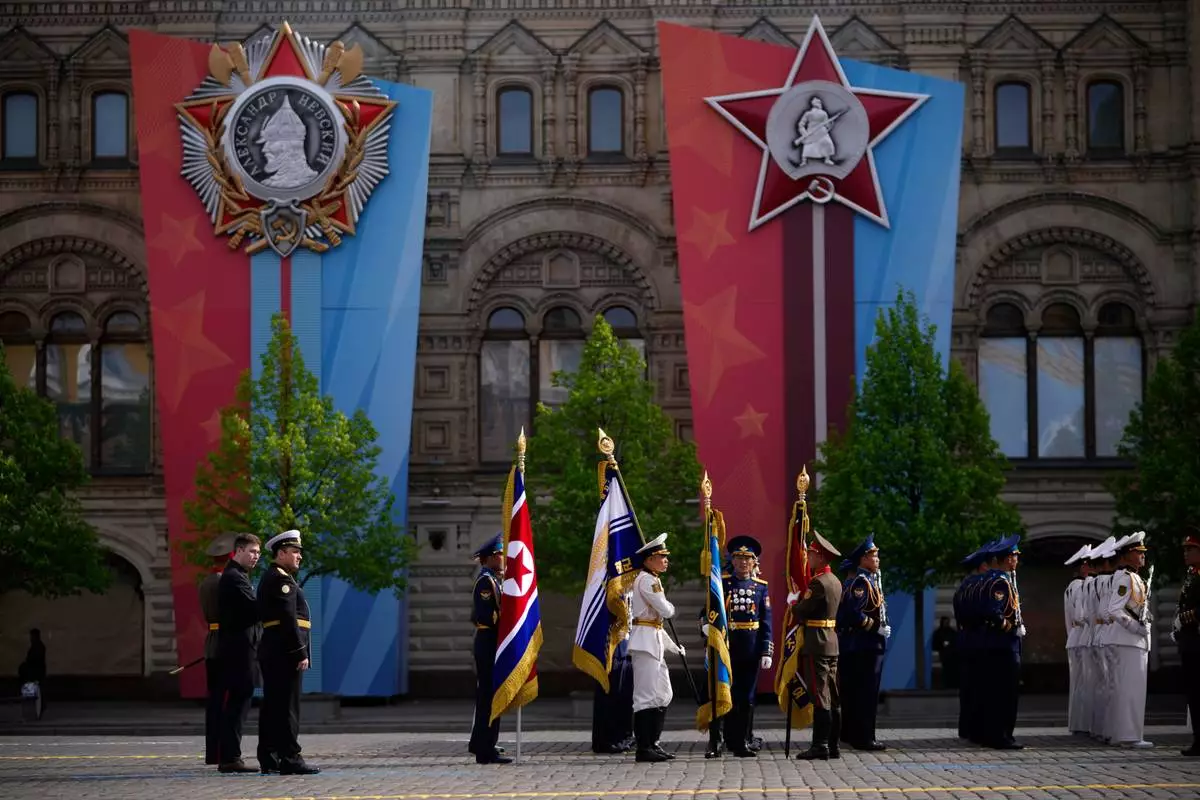
North Korea's servicemen wait for the start of the Victory Day military parade in Moscow, Saturday, May 9, 2026, during celebrations of the 81st anniversary of the Soviet Union's victory over Nazi Germany during the World War II. (AP Photo/Pavel Bednyakov, Pool)
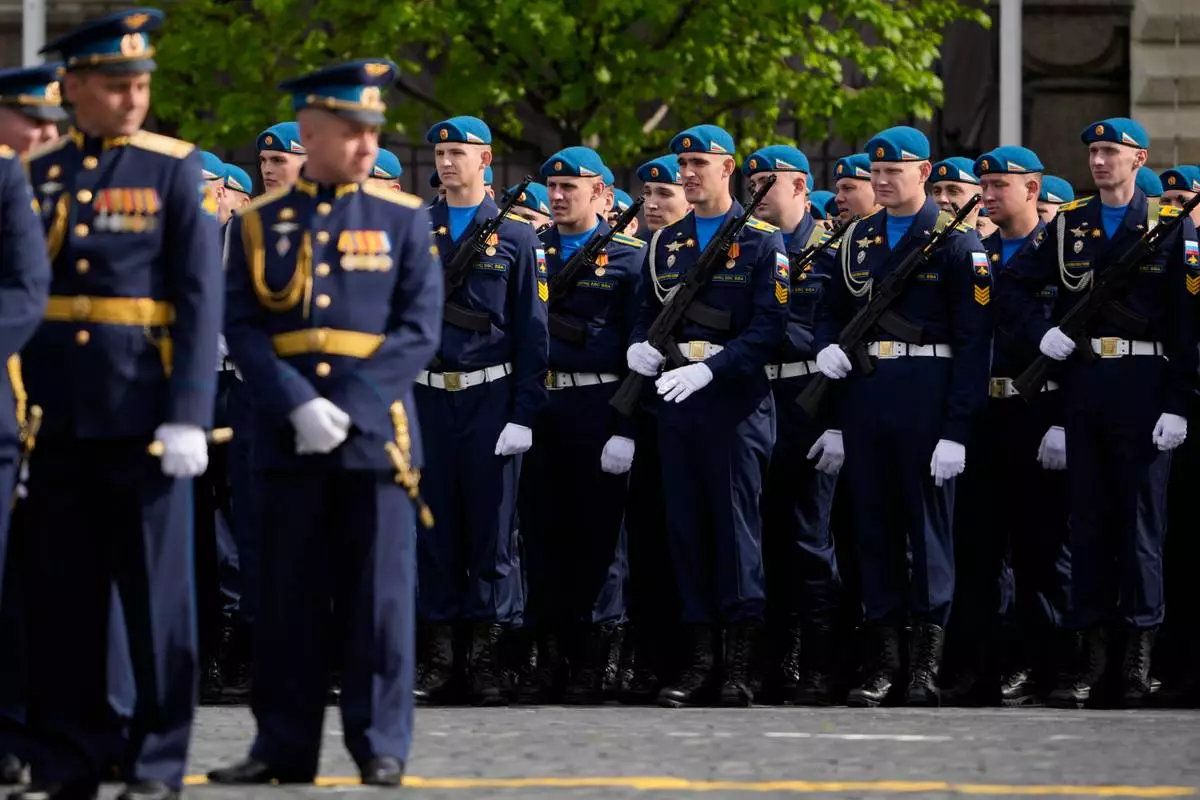
Russian servicemen stand in a formation before the Victory Day military parade in Moscow, Saturday, May 9, 2026, during celebrations of the 81st anniversary of the Soviet Union's victory over Nazi Germany during the World War II. (AP Photo/Pavel Bednyakov, Pool)
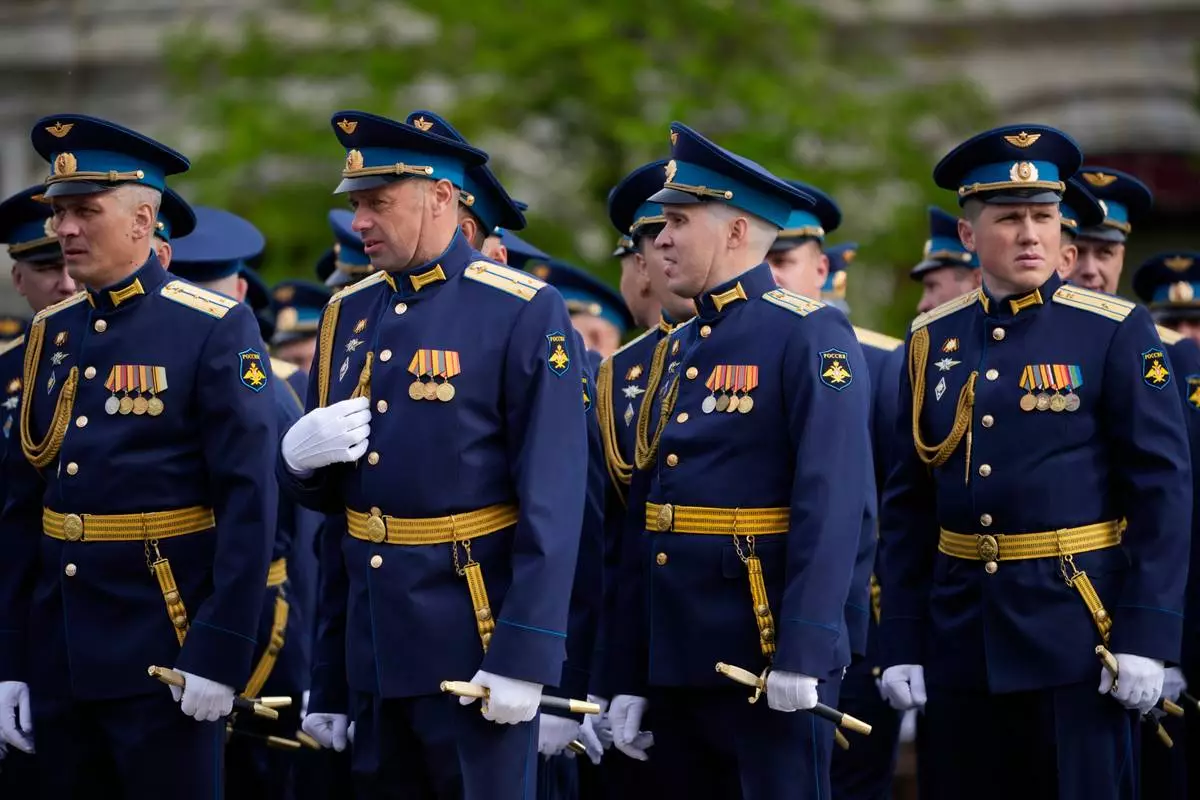
Russian servicemen stand in a formation before the Victory Day military parade in Moscow, Saturday, May 9, 2026, during celebrations of the 81st anniversary of the Soviet Union's victory over Nazi Germany during the World War II. (AP Photo/Pavel Bednyakov, Pool)
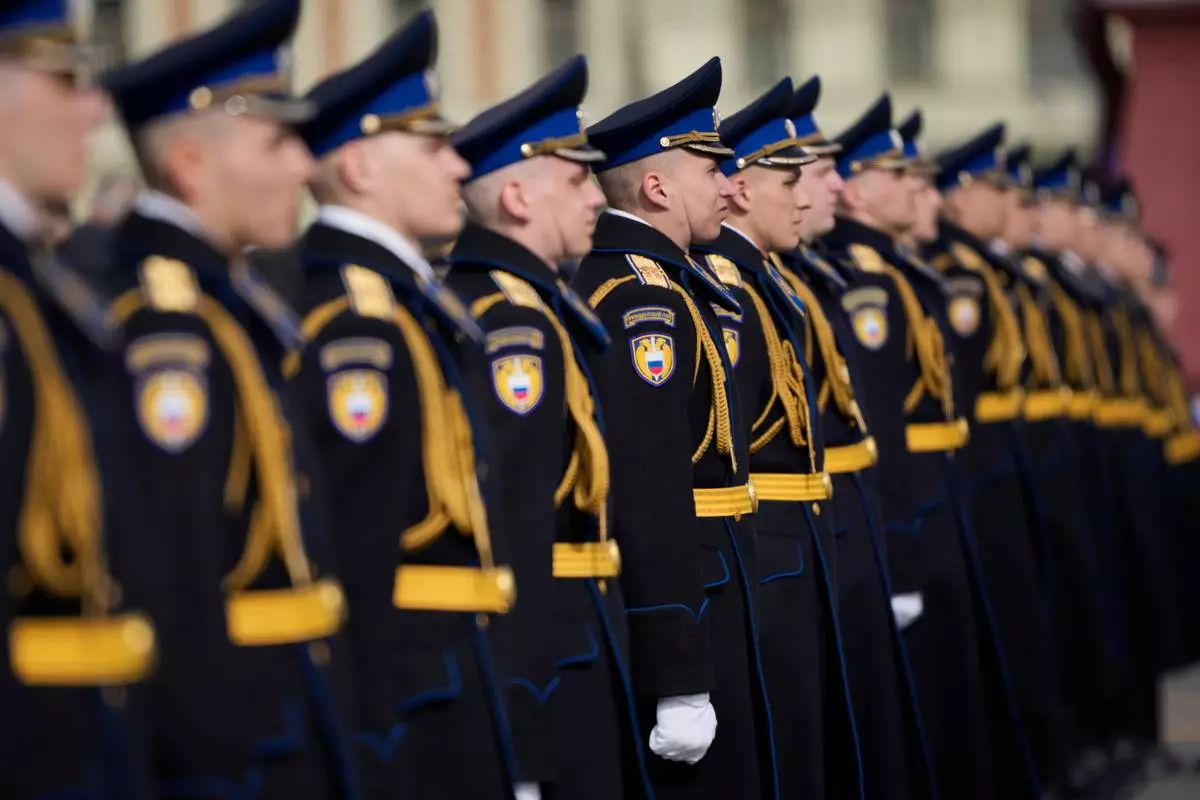
Russian servicemen stand in a formation before the Victory Day military parade in Moscow, Saturday, May 9, 2026, during celebrations of the 81st anniversary of the Soviet Union's victory over Nazi Germany during the World War II. (AP Photo/Pavel Bednyakov, Pool)
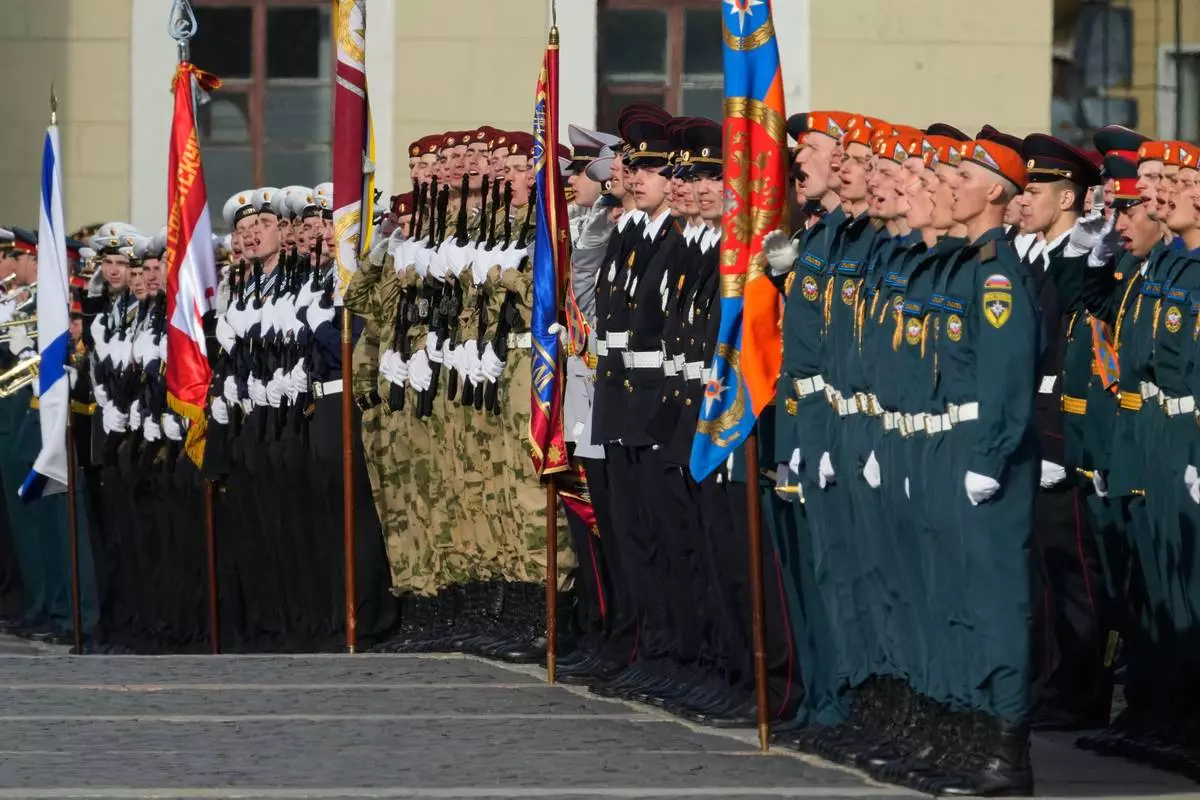
Troops attend a rehearsal for the Victory Day military parade at the Dvortsovaya (Palace) Square in St. Petersburg, Russia, Tuesday, May 5, 2026. (AP Photo/Dmitri Lovetsky)
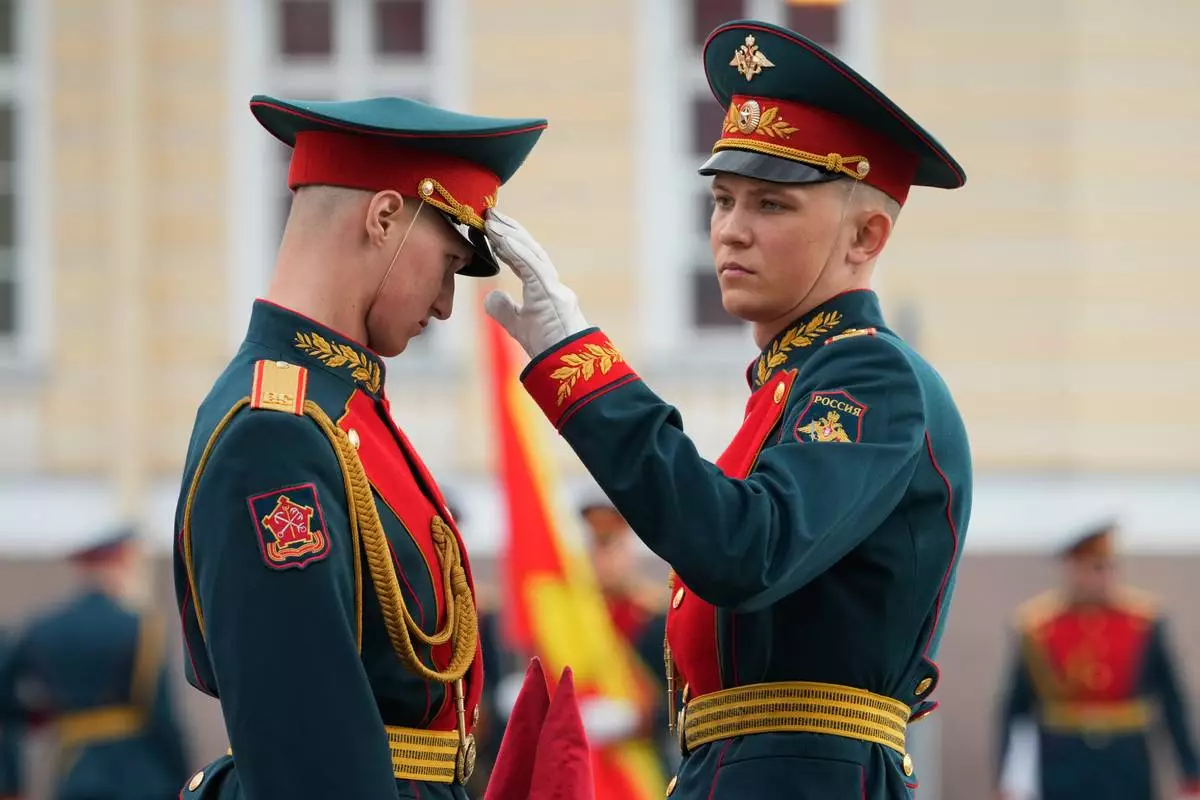
Honour guard soldiers prepare for a rehearsal for the Victory Day military parade at the Dvortsovaya (Palace) Square in St. Petersburg, Russia, Tuesday, May 5, 2026. (AP Photo/Dmitri Lovetsky)
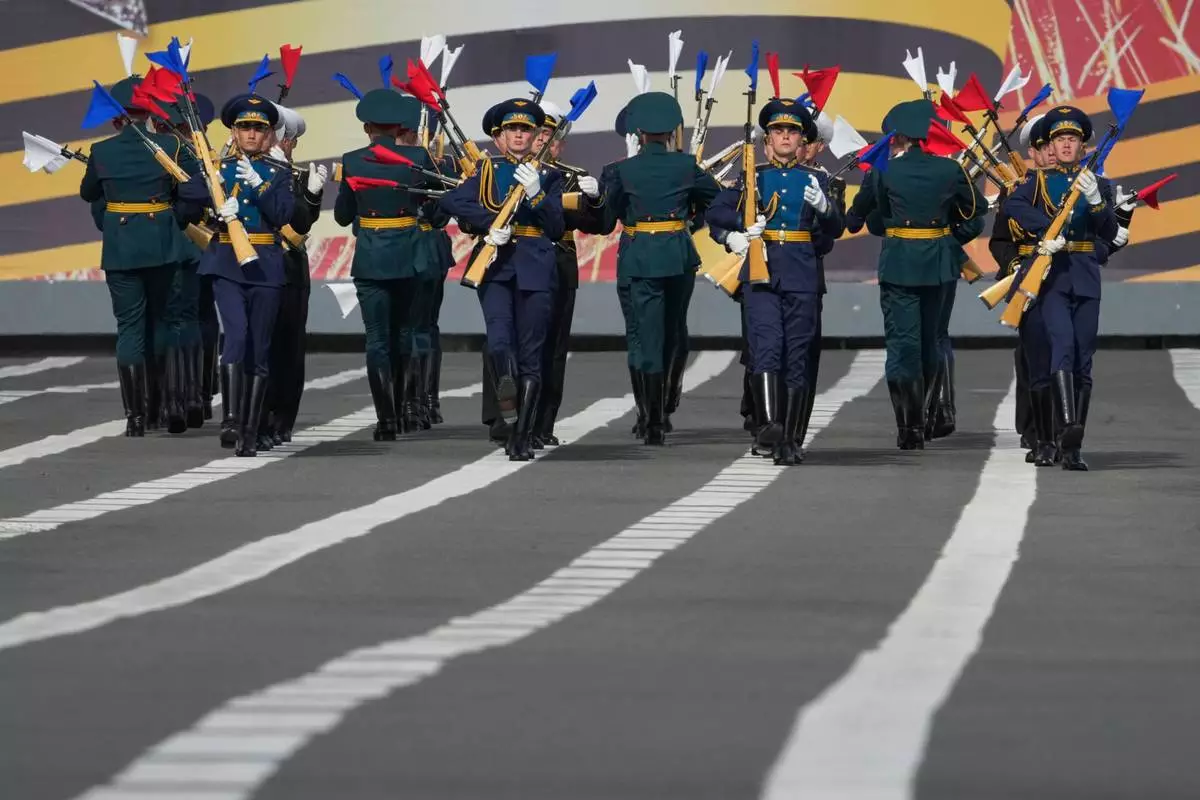
Honour guard soldiers perform with rifles during a rehearsal for the Victory Day military parade at the Dvortsovaya (Palace) Square in St. Petersburg, Russia, Tuesday, May 5, 2026. (AP Photo/Dmitri Lovetsky)
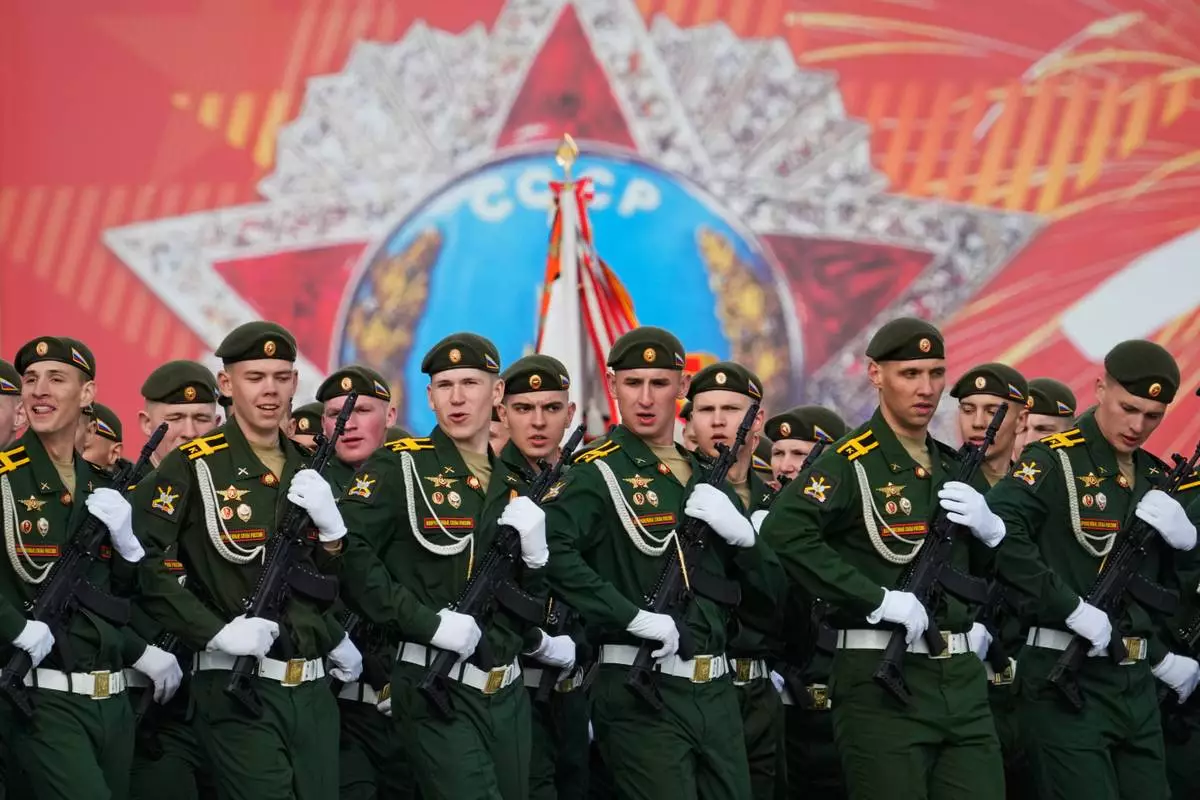
Troops march during a rehearsal for the Victory Day military parade at the Dvortsovaya (Palace) Square in St. Petersburg, Russia, Tuesday, May 5, 2026. (AP Photo/Dmitri Lovetsky)