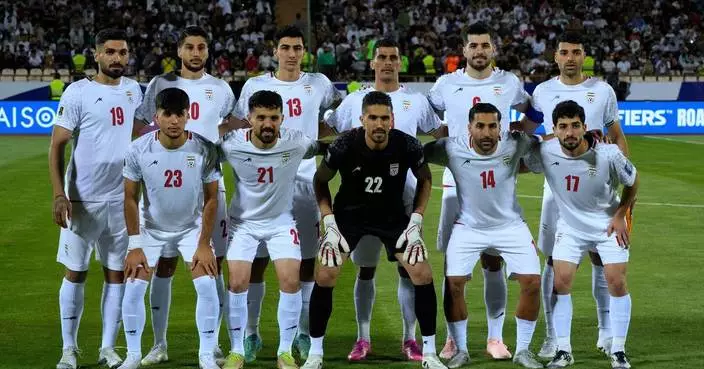
BRUSSELS (AP) — The European Union is seeking more strategic clarity about the U.S. and Israel’s plans for Iran and when the conflict might end as the bloc weighs whether to send ships to help shore up security in the Persian Gulf.
“It is in our interest to keep the Strait of Hormuz open, and that’s why we are also discussing what we can do in this regard from the European side,” Kaja Kallas, the EU’s foreign policy chief, said Monday ahead of a meeting of the 27-nation bloc’s foreign ministers in Brussels.
U.S. President Donald Trump has asked allies — including France, China, Japan, South Korea and Britain — to help secure the strait for global shipping.
Kallas said the EU could expand its Operation Aspides naval mission to protect shipping in the Red Sea up into the Persian Gulf, or it could form a “coalition of the willing” with member nations contributing military capacity on an ad hoc basis.
The war in Iran, sparked on Feb. 28 airstrikes by Israel and the U.S., has driven up energy prices worldwide, with brent crude up more than 40%. But the conflict has also disrupted the wider global supply chain beyond oil, affecting everything from pharmaceuticals from India, semiconductors from Asia and oil-derived products like fertilizers that come from the Middle East.
Cargo ships are stuck in the Gulf or making a much longer detour around the southern tip of Africa. Planes carrying air cargo out of the Middle East are grounded. And the longer the war drags on, the more likely that there will be shortages and price increases on a wide range of goods.
France has said it is working with countries — President Emmanuel Macron mentioned partners in Europe, India and Asia — on a possible international mission to escort ships through the strait but has stressed it must be when “the circumstances permit,” when fighting has subsided.
French senior officials, speaking anonymously on ongoing talks, said The Netherlands, Italy, and Greece had shown interest and that Spain might be involved in some way.
Outside the EU, the U.K. may also be part of it if they have some capabilities available, the officials said. They mentioned the Red Sea-focused Operation Aspides as a possible model for a naval mission to the Persian Gulf.
German Foreign Minister Johann Wadephul said it will be important for the U.S. and Israel to define “when they consider the military aims of their deployment to have been reached.”
He said before meeting his EU colleagues in Brussels that “we need more clarity here” from the U.S. and Israel.
At the same time, Wadephul said the Iranian government poses a significant danger to the region, the freedom of shipping and the global economy, and “this danger definitely must not continue.” He said he would back sanctions against those responsible for blocking the Strait of Hormuz, without elaborating.
Once there’s clarity on the U.S.-Israeli aims, Wadephul said it will be time to enter a phase in which “a security architecture for this whole region” is defined. He said that will also entail speaking to Iran.
Luxembourg Foreign Minister Xavier Bettel said the EU remains uncommitted to any military action.
“The fact is, for the moment, the EU is not directly part of the situation. So we need to decide if we are going to be part or not. That’s an important decision," Bettel said.
Operation Aspides was formed to thwart attacks to shipping in the Red Sea by Somali pirates and Yemen’s Iran-backed Houthi rebels, who have yet to join the current fray. Saudi Aramco manages a pipeline network that bypasses the Strait of Hormuz to deliver oil to the Red Sea port city of Yanbu.
“If we want to have security in this region, then it would be easiest to actually already use the operation that we have in the region and maybe change a bit,” Kallas she said. “There is also talk of coalition of the willing in this regard, but we also need to see what could be the fastest to provide this opening for the Strait of Hormuz, but of course, as you can see, it’s not easy.”
The EU is anxious that a potential refugee crisis in Iran will develop if the war continues.
“Although for now, the conflict has not translated into immediate migratory flows toward the EU, what the future holds remains unclear and necessitates the full mobilization of every migration diplomacy tool we have at our disposal,” said European Commission President Ursula von der Leyen in a statement Sunday.
Estonian Foreign Minister Margus Tsahkna said that his country has been a staunch supporter of the U.S., but that it needs to “know as well what are the plans...in the region.”
He said U.S. allies in Europe want to understand Trump’s “strategic goals. What will be the plan?”
-
Associated Press writers Geir Moulson in Berlin and Sylive Corbet in Paris contributed to this report.
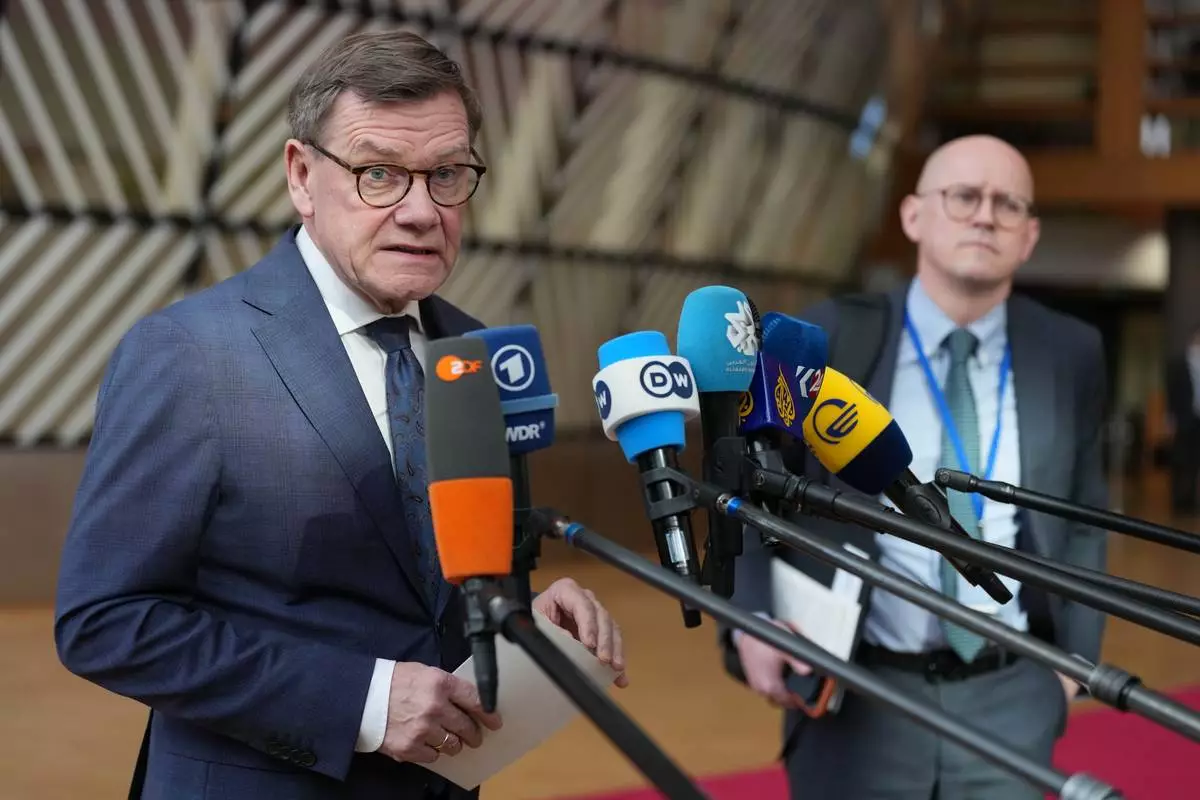
Germany's Foreign Minister Johann Wadephul speaks with the media as he arrives for a meeting of EU foreign ministers at the European Council building in Brussels, Monday, March 16, 2026. (AP Photo/Virginia Mayo)

European Union foreign policy chief Kaja Kallas speaks with the media as she arrives for a meeting of EU foreign ministers at the European Council building in Brussels, Monday, March 16, 2026. (AP Photo/Virginia Mayo)
KUALA LUMPUR, Malaysia (AP) — The Iranian women’s soccer team is set to leave Malaysia on Monday night, ending days of uncertainty after most of the seven squad members who sparked a diplomatic furor by seeking asylum in Australia reversed their decisions and rejoined the team in Kuala Lumpur.
The Asian Football Confederation general secretary Windsor John told The Associated Press that the team’s departure Monday night was arranged by the Iranian embassy. He said the AFC, which is supporting the Iranian team in Kuala Lumpur, was told they are flying to Oman but that isn’t their final destination. He said he wasn’t aware of their full travel plans.
Asked if confederation is satisfied that the women will be safe back in Iran, Windsor said that both the AFC and FIFA will check up on them regularly with the Iranian football federation "as they are our girls as well.”
The squad flew from Sydney to Kuala Lumpur on March 10 after being knocked out of the Women’s Asian Cup in Australia, initially leaving behind six players and a support staff member who had accepted protection visas.
Four players and the staffer have since rejoined the team in Kuala Lumpur, the latest flying in on Monday. No reasons have been given for the changes of heart. The Iranian diaspora in Australia blames pressure from Tehran.
Windsor said at a news conference earlier that his confederation had not received any direct complaints from players about returning home, despite media reports their families in Iran could face retaliation for the team failing to sing their national anthem before the opening match.
The silence during the anthem was variously reported as an act of resistance or a show of mourning. The team didn’t clarify, and it sang at the opening of a later match.
“We couldn’t verify anything. We asked them and they said, ‘No, it’s ok,’” he said. “They are actually in high spirits... they didn’t look afraid.”
Iranian authorities have welcomed the women's decisions to reject asylum as a victory against Australia and U.S. President Donald Trump.
Iran’s squad had arrived in Australia for the tournament shortly before the war in the Middle East began on Feb. 28, complicating travel arrangements.
Assistant Immigration Minister Matt Thistlethwaite described the women's plight in Australia as a “very complex situation.”
“These are deeply personal decisions, and the government respects the decisions of those that have chosen to return. And we continue to offer support to the two that are remaining,” Thistlethwaite said.
Those who stayed in Australia have been moved to an undisclosed safe location and are receiving assistance from the government and the Iranian diaspora community, he said.
Kylie Moore-Gilbert, a political scientist at Sydney's Macquarie University who spent more than two years in Iranian prisons on spying charges from 2018 to 2020, said “winning the propaganda war” had overshadowed the women's welfare.
“The high stakes made the Iranian regime sit up and pay attention and try to force their hand in response, in my view,” Moore-Gilbert said.
"I do think in this case, had these woman quietly sought asylum without that publicity around them, it’s possible that the Islamic Republic officials might have, as they have in the cases of other Iranian sports people in the past who’ve defected ... simply allowed that to happen," she added.
Iran’s Tasnim News Agency said the players who left Australia were “returning to the warm embrace of their family and homeland,” describing their return as a failure of what it called an American-Australian political effort.
Concerns about the team’s safety in Iran heightened when the players didn’t sing the Iranian national anthem.
The Australian government was urged to help the women by Iranian groups in Australia and by Trump.
The embassy in the national capital Canberra remains staffed, despite the Australian government expelling the ambassador last year.
Australian Prime Minister Anthony Albanese cut off diplomatic relations with Iran in August after announcing that intelligence officials had concluded that the Revolutionary Guard had directed arson attacks on a Sydney kosher food company and Melbourne’s Adass Israel Synagogue in 2024.
Australian-Iranian Society of Victoria vice president Kambiz Razmara said the women who accepted asylum had been under pressure from the Tehran regime.
“They’ve had to make decisions at the spur of the moment with very little information and they’ve had to react to the circumstance,” Razmara said. “I’m surprised that they’ve decided to go, but I’m actually not surprised because I appreciate the pressures that they’re experiencing."
McGuirk reported from Melbourne, Australia.
This story has been edited to correct that Macquarie University is in Sydney, not Melbourne.
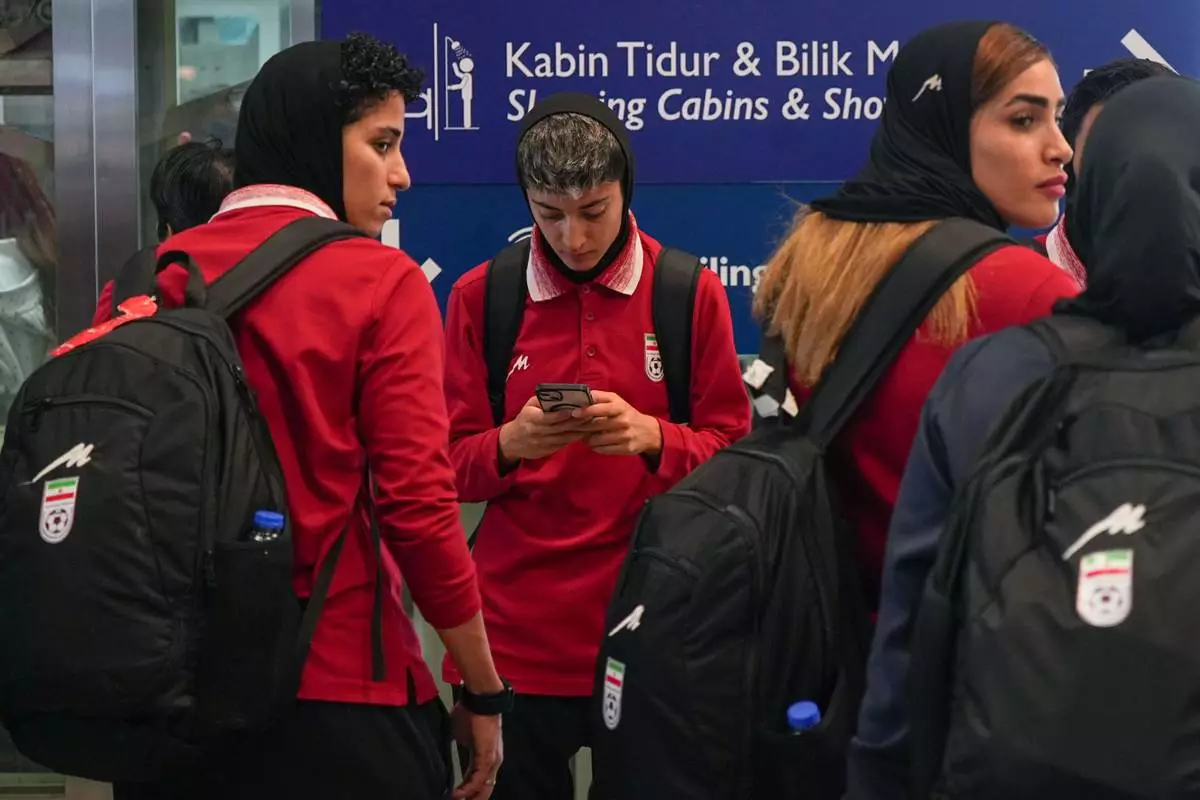
Members of Iran's women's football team arrive at the Kuala Lumpur International Airport in Sepang, Malaysia, Monday, March 16, 2026. (AP Photo/Azneal Ishak)
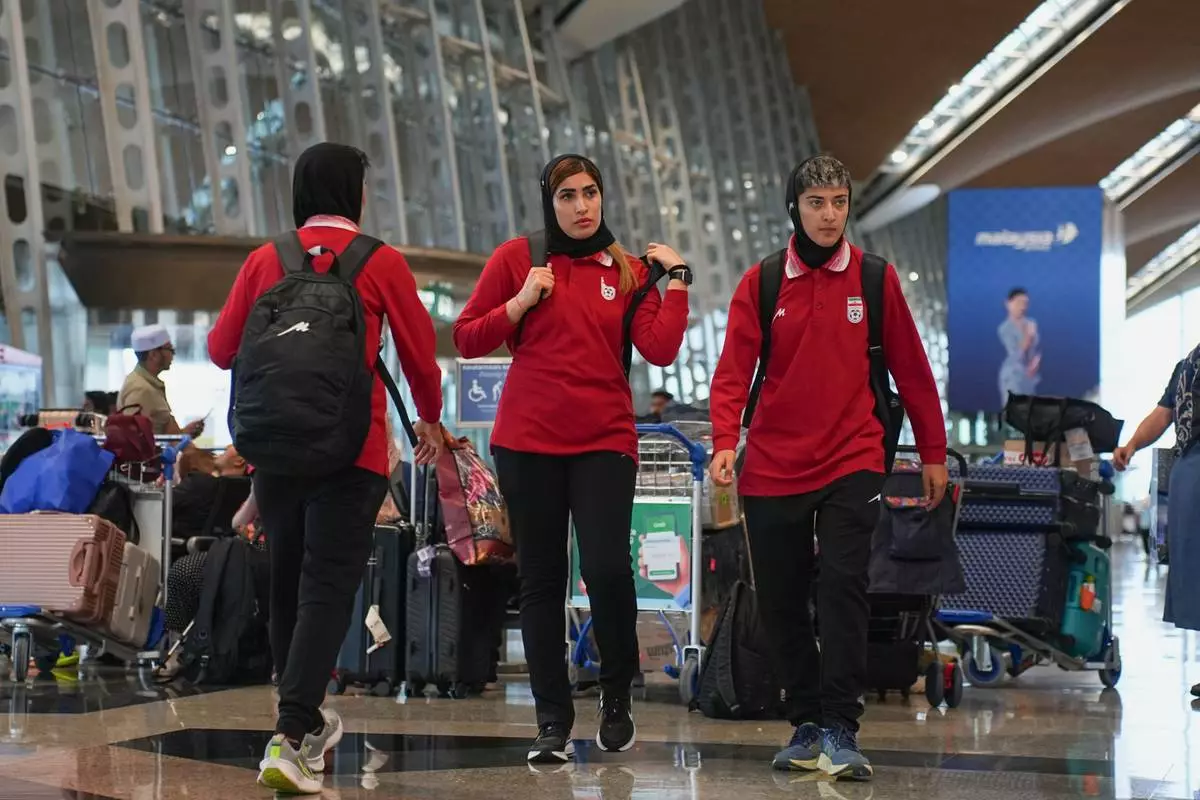
Members of Iran's women's football team arrive at the Kuala Lumpur International Airport in Sepang, Malaysia, Monday, March 16, 2026. (AP Photo/Azneal Ishak)
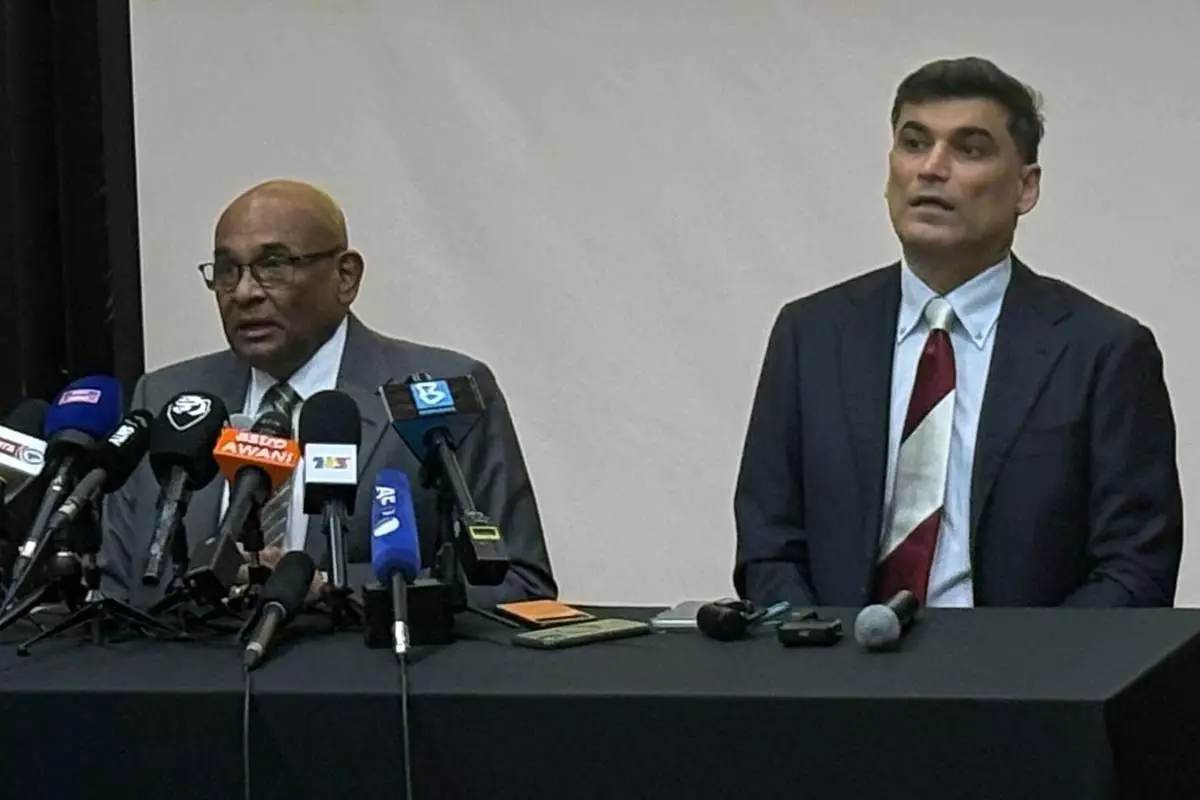
AFC General Secretary Windsor John, left, with his deputy Vahid Kardany, speaks at a news conference near Kuala Lumpur, Monday, March 16, 2026. (AP Photo/Eileen Ng)
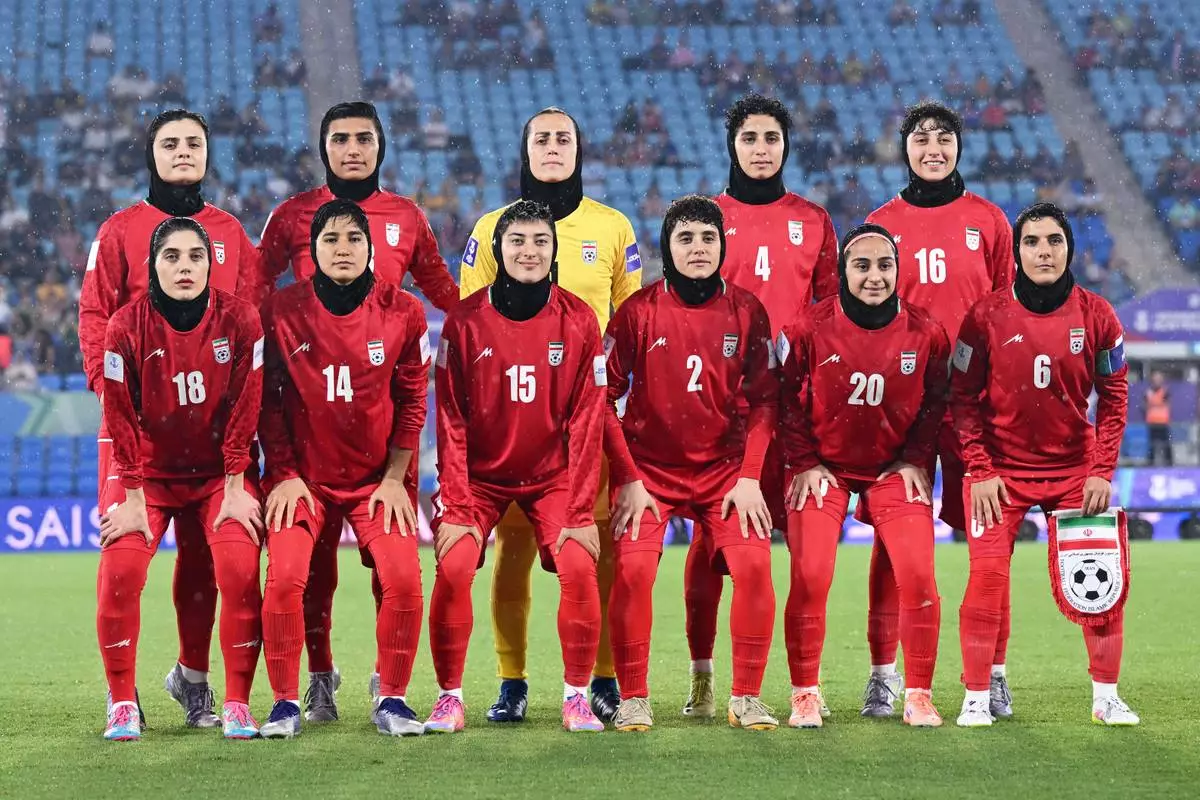
FILE - Iran players pose for a team photo ahead of the Women's Asian Cup soccer match between Iran and the Philippines in Robina, Australia, Sunday, March 8, 2026. (Dave Hunt/AAPImage via AP,File)