Drone services, accessible via a mini-program on China's popular social media platform "Weixin" (domestic version of Wechat), have changed spring field management for small-scale growers in Dangyang City, central China's Hubei Province, who can now have pesticide sprayed on their rapeseed fields with just a few clicks on their phones.
Wei Minshan, a grower at Yanhe Village of Wangdian Town, has planted 200 mu (about 13.33 hectares) of rapeseed this season. For smallholders like him, getting pesticide and fertilizer sprayed at just the right time used to be a heavy task. Now, it's fast and simple.
With just a few taps on an agricultural service mini-program developed by local governments, he said, the drone team can arrive at his village within an hour to spray his rapeseed fields.
"This mini-program works really well. If I book a service today, I can use it on the same day. It offers perfect on-demand availability," he said.
Wei recalled that during peak seasons in the past, booking a drone meant calling at least a week in advance. And it's too costly and troublesome to buy one himself.
This "drone-hailing" model solves real problems for small-scale farmers. Besides, for drone operators, it cuts down on time wasted traveling between regions, boosting both efficiency and how often their equipment is used.
"This is an order that just came in. I saw it on the platform. I checked my schedule, and since it didn't conflict with my other jobs, I grabbed it right away. I would head out this afternoon," said Zhu Zhenhua, head of a local agricultural machinery cooperative.
So far, the mini-program has connected 10 agricultural machinery cooperatives, mobilizing 156 drone pilots and 162 drones. It also provides agricultural news and information services to local farmers.

Click-to-fly drone services make farming easier, more efficient in China's Hubei Province
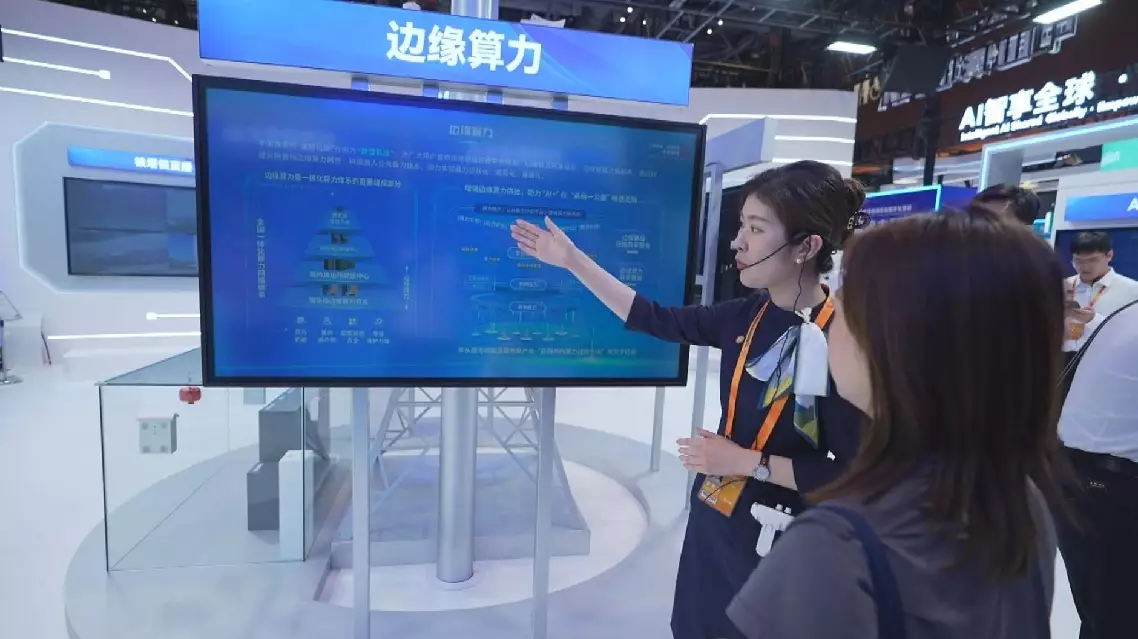
Computing power services are gaining momentum as artificial intelligence (AI) technology evolves, opening new avenues for the development of trade in services and becoming a highlight of the ongoing 2026 China International Fair for Trade in Services (CIFTIS) in Beijing.
The five-day CIFTIS opened on Wednesday, drawing participants from 90 countries, regions and international organizations, with over 1,800 companies showcasing their service products on-site.
Exhibitors at the 2026 Thematic Exhibition: Telecommunications, Computers and Information Services are shifting their focus from traditional communication offerings to integrated services combining computing power and AI.
"Currently, we operate over 2 million base stations, and each base station has a supporting communication machine room. We have integrated computing facilities into these machine rooms, upgrading them into data centers that can provide localized, distributed computing services. This enables real-time computing support for applications such as AI-powered forest fire prevention, disaster mitigation, and water quality monitoring in local areas," said Qiao Zhi, a staff member of China Tower Beijing Branch.
Beyond these application services, China's industry chain leaders are showcasing a broad array of innovative solutions at the upstream segment, including chip design, testing, verification, and technical licensing. Chinese service providers are offering tailored solutions for a diverse range of regions and markets.
"For example, European and American clients tend to prefer large-model, high-performance chips, while clients from the Middle East and Southeast Asia focus more on edge-side AI chips, mainly to assist their smart city projects and robotics initiatives. Chinese enterprises can meet the customized demands of different regions, different customers and different scenarios," said Wang Wenqian, head of research and development of the Joinsilicon, which provides customized products and solutions for the semiconductor industry.
Services that can be digitally delivered, including those related to computing power, are becoming an important engine driving the growth of services trade. According to China's Trade in Services Development Index Report 2026 released at the CIFTIS, the share of digitally deliverable services in global services exports rose to 57.9 percent in 2025.
Computing power services emerge as new growth driver for trade in services