Home sales in major Chinese cities ticked up during the recent May Day holiday, with transactions of both new and second-hand properties increasing during the holiday period, as a series of stimulus measures have boosted confidence among prospective buyers.
China has in recent months pledged to stabilize the real-estate market and has rolled out a package of measures centered on city-specific policies to reduce inventories and optimize housing supply.
During the first four days of the five-day holiday, which ended on Tuesday, Beijing saw second-hand home sales rise 72 percent year on year. It came after an encouraging April, when the capital recorded nearly 18,000 units sold, the highest number of any month in the past five years.
Over the same period, Shanghai recorded the sale of 924 second-hand homes, up 13.8 percent year on year. Last month, the number of online contract signings for second-hand homes in the city exceeded 28,700 units, marking its highest level in nearly a decade.
Many cities across south China's Guangdong Province have also rolled out a new round of real estate market optimization policies since April 30, with the provincial capital Guangzhou increasing the maximum amount of housing provident fund loans for homebuyers.
Industry insiders believe there are signs of a trend of home owners looking to upgrade their properties with a move to larger and more modern residences.
"There is also a structural transformation in transactions: the proportion of units between 90 to 120 square meters has increased for two consecutive months. This signals the beginning of a cycle of trading older homes for newer ones and upgrading from smaller units to larger ones in Guangzhou," said Li Yujia, chief researcher of the Guangdong Provincial Housing Policy Research Center.
Meanwhile, in the tech hub of Shenzhen, also in Guangdong, a raft of new housing policies aimed at easing purchase restrictions and raising the maximum amount of housing provident fund loans have been introduced, with these measures proving attractive to homebuyers.
From April 30 to May 5, the city sold 829 newly built homes, a year-on-year increase of 62.5 percent.
Elsewhere, Wuhan City of central China's Hubei Province released a set of seven specific measures to stimulate the real estate market ahead of the holiday, including relaxing the definition of first-time homebuyers, expanding housing credit support, optimizing housing provident fund loans, and increasing support for purchasing commercial buildings.
"The new measures are especially favorable for people like us who own houses in other districts of Wuhan. Under the new measures, buying a home in this district would be considered our first home purchase, cutting down payments by about 200,000 yuan (around 29,300 U.S. dollars) and lowering monthly mortgage payments by nearly 1,000 yuan," said Ms. Yue, a citizen.
During the May Day holiday, online sales of newly-built commercial buildings in Wuhan surged over 1,000 units, marking a more than 105 percent year-on-year increase.
New housing policies were also launched in Yangzhou City of east China's Jiangsu Province on May 1, featuring measures such as expanding the coverage of 'talent housing' vouchers, upgrading the home trade-in program, providing subsidies for first-time homebuyers and families with multiple children, and optimizing housing provident fund loan policies.
The policy has already produced strong results as the sales in terms of total housing area of newly built commercial homes increased by more than 246 percent year on year during the five-day holiday period, setting a record for holiday sales in recent years.
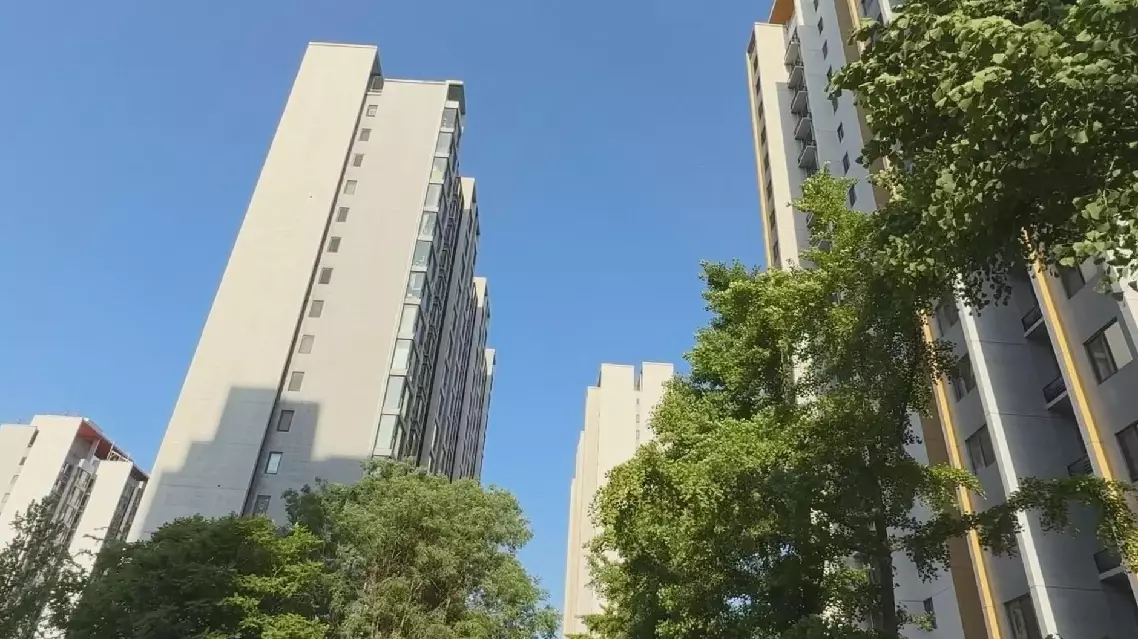
Housing market heats up as stimulus measures kick in during holiday