At least seven people in three states, including young children, have been sickened by E. coli food poisoning linked to cheddar cheese made from raw milk, federal health officials said Monday.
California-based Raw Farm made the cheese that is the “likely source” of the outbreak, according to the U.S. Food and Drug Administration, though no Raw Farm products have tested positive for E. coli during the outbreak period, the FDA noted.
Illnesses were reported between September 2025 and mid-February, the agency said. Five cases were reported in California and one each in Florida and Texas. More than half of the illnesses were in children aged 3 or younger. Two people were hospitalized.
The FDA recommended that Raw Farm voluntarily remove its raw cheese products from sale, but the company has declined.
The U.S. Centers for Disease Control and Prevention urged consumers to “consider not eating” the products.
Mark McAfee, owner of Raw Farm, said he refused to recall the products because investigators have not definitively linked them to any illnesses.
“They have found no pathogens in any of our products,” McAfee said in an interview. He disputed the FDA’s findings that the cases were genetically linked and said that the announcement of the outbreak was premature.
The FDA said interviews with three people who got sick found that all three reported eating Raw Farm brand raw milk cheddar cheese. Analysis of samples from sick patients showed that the E. coli isolates that caused their infections were closely genetically related, investigators found.
Officials are working to gather information from the additional four cases. The investigation is continuing to determine the source of contamination and whether additional products are linked to illnesses.
The Associated Press Health and Science Department receives support from the Howard Hughes Medical Institute’s Department of Science Education and the Robert Wood Johnson Foundation. The AP is solely responsible for all content.
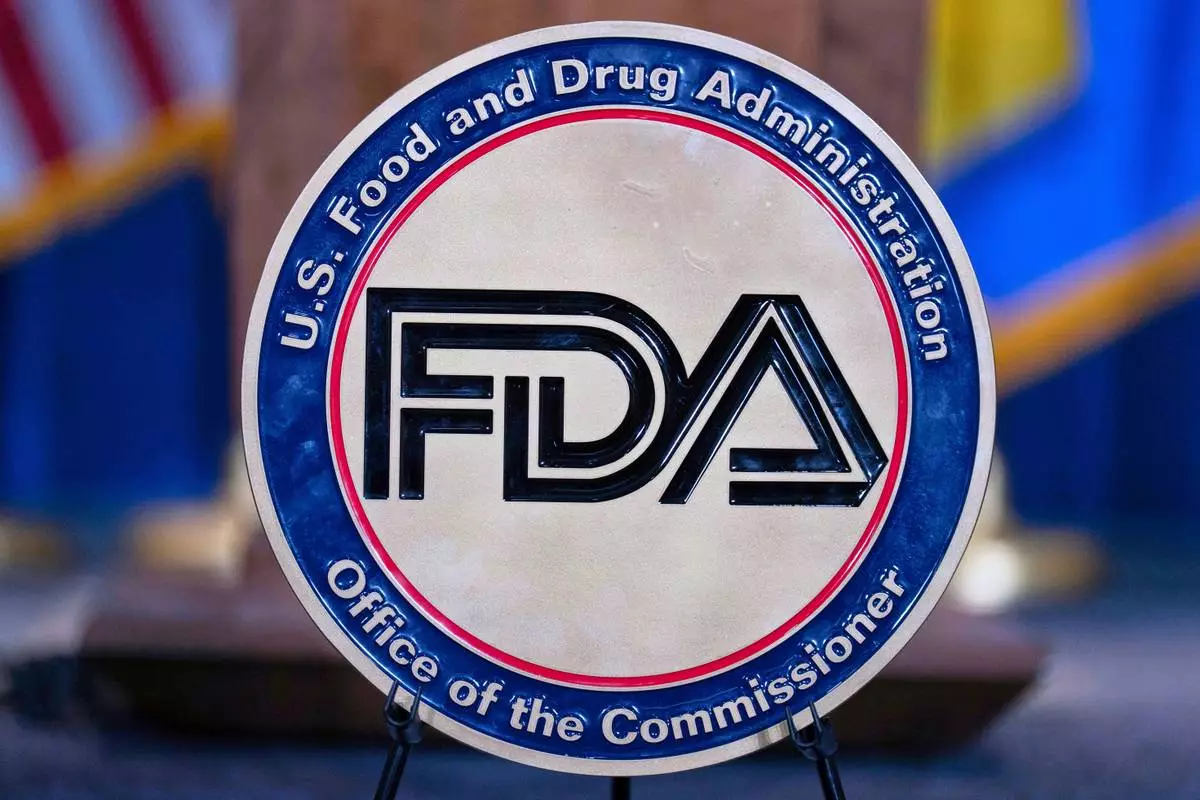
FILE - The Food and Drug Administration seal is seen at the Hubert Humphrey Building Auditorium in Washington, April 22, 2025. (AP Photo/Jose Luis Magana, File)
BRUSSELS (AP) — European countries on Monday sought more details about U.S. President Donald Trump's plans for the war on Iran and warned that NATO must not become involved in it, as they weighed whether to agree to his call to send warships to help shore up security in the Persian Gulf.
The cool response to Trump’s demand reflects wide caution about the U.S.-Israeli war among allies kept in the dark before, and largely since, it was launched on Feb. 28.
Trump has asked partners — including France, China, Japan, South Korea and Britain — to help secure the Strait of Hormuz for global shipping. He said the United States was talking to “about seven” countries, but he wouldn’t say which ones and gave no indication of when such a coalition might be formed.
U.K. Prime Minister Keir Starmer insisted Britain “will not be drawn into the wider war,” and said British troops should only be sent into action that is legal and has “a proper thought-through plan.” But his country is considering other forms of help in conjunction with allies.
In an interview with the Financial Times, Trump also warned that “if there’s no response or if it’s a negative response, I think it will be very bad for the future of NATO.”
German Chancellor Friedrich Merz said that “NATO is a defensive alliance, not an interventionist one. And that is precisely why NATO has no business being involved here.” He said he hopes that NATO allies “will treat one another with the necessary respect within the alliance.”
Merz agreed that “this Iranian regime must come to an end,” but he said that "based on all the experience we have gained in previous years and decades, bombing it into submission is, in all likelihood, not the right approach.”
Many are keen to know when the war will end.
At a meeting in Brussels, where European Union foreign ministers gathered to discuss Trump's demand, German Foreign Minister Johann Wadephul said it's important for the U.S. and Israel to define “when they consider the military aims of their deployment to have been reached.”
“We need more clarity here,” Wadephul told reporters.
Estonian Foreign Minister Margus Tsahkna also said that U.S. allies in Europe want to understand Trump’s “strategic goals. What will be the plan?”
Polish Foreign Minister Radek Sikorski invited the Trump administration to go through the proper channels.
“If there is a request via NATO, we will of course out of respect and sympathy for our American allies consider it very carefully,” he said. Sikorski made a reference to Article 4 of NATO's founding treaty, which allies can invoke if they believe their territory or security is under threat.
Still, EU foreign policy chief Kaja Kallas said that “it is in our interest to keep the Strait of Hormuz open."
Kallas had urged the 27 member countries to expand the EU's Operation Aspides naval mission to protect shipping in the Red Sea up into the Persian Gulf. But after chairing the meeting, she said there had been “no appetite” to boost its mandate.
But Kallas said the EU would closely monitor threats to maritime security also in the Red Sea, where Aspides operates with three warships. “The risk that the Houthis get involved is real. So we must remain vigilant,” she said.
Yemen’s Iran-backed Houthi rebels have so far remained on the sidelines of the war even as it has spread across the Middle East, raising questions about why, and perhaps when, the battle-hardened group might join the fight.
It was not immediately clear whether some European countries might go it alone and form a “coalition of the willing” to provide military support on an ad hoc basis.
The war in Iran has driven up energy prices worldwide, with Brent crude up more than 40%. The conflict has also disrupted the wider global supply chain beyond oil, affecting things like pharmaceuticals from India, semiconductors from Asia and oil-derived products like fertilizers that come from the Middle East.
Cargo ships are stuck in the Gulf or making a much longer detour around the southern tip of Africa. Planes carrying air cargo out of the Middle East are grounded. And the longer the war drags on, the more likely that there will be shortages and price increases on a wide range of goods.
France has said it is working with countries — French President Emmanuel Macron mentioned partners in Europe, India and Asia — on a possible mission to escort ships through the strait but has stressed it must be when “the circumstances permit,” when fighting has subsided.
French senior officials, speaking anonymously on ongoing talks, said the Netherlands, Italy and Greece had shown interest and that Spain might be involved in some way.
Starmer said Britain is discussing with the U.S. and allies in Europe and the Gulf the possibility of using its mine-hunting drones already in the region.
—-
Associated Press writers Geir Moulson and Kirsten Grieshaber in Berlin, Jill Lawless in London, and Sylvie Corbet in Paris contributed to this report.
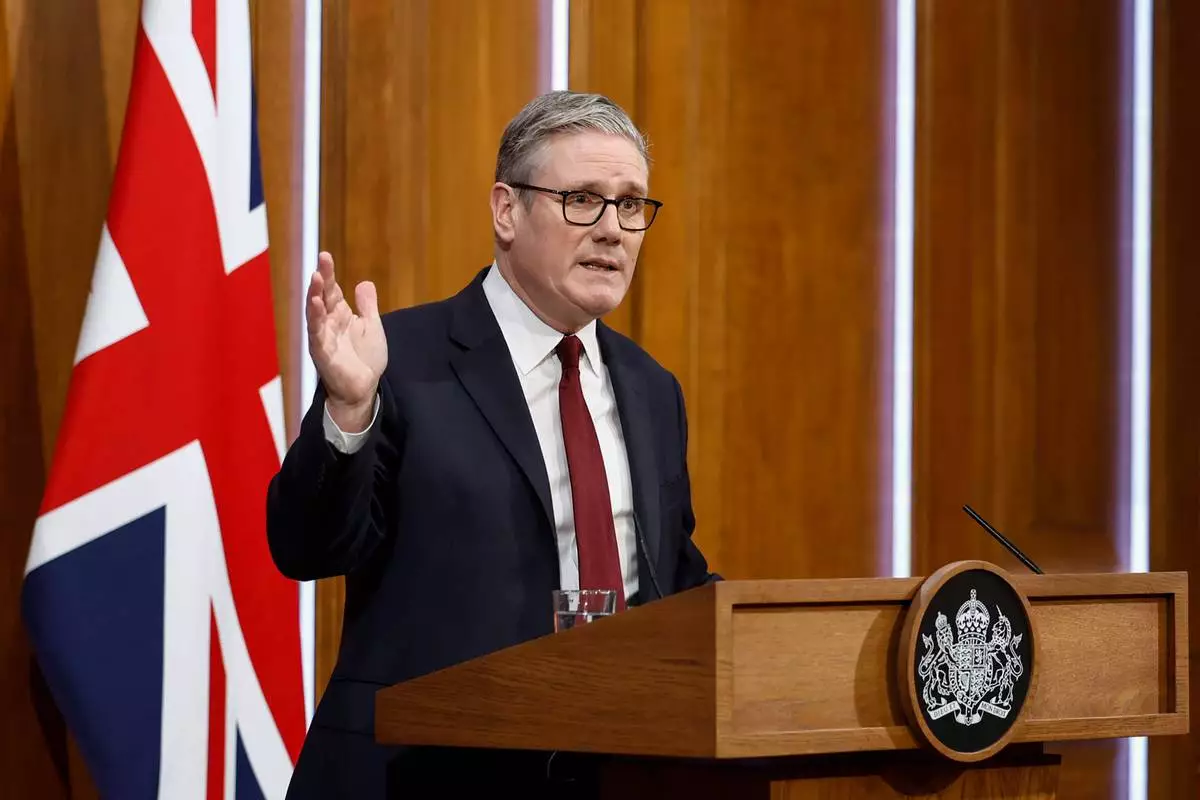
Britain's Prime Minister Keir Starmer speaks to the media at Downing Street, in London, March 16, 2026. (Brook Mitchell/Pool Photo via AP)

Poland's Foreign Minister Radoslaw Sikorski speaks with the media as he arrives for a meeting of EU foreign ministers at the European Council building in Brussels, Monday, March 16, 2026. (AP Photo/Virginia Mayo)
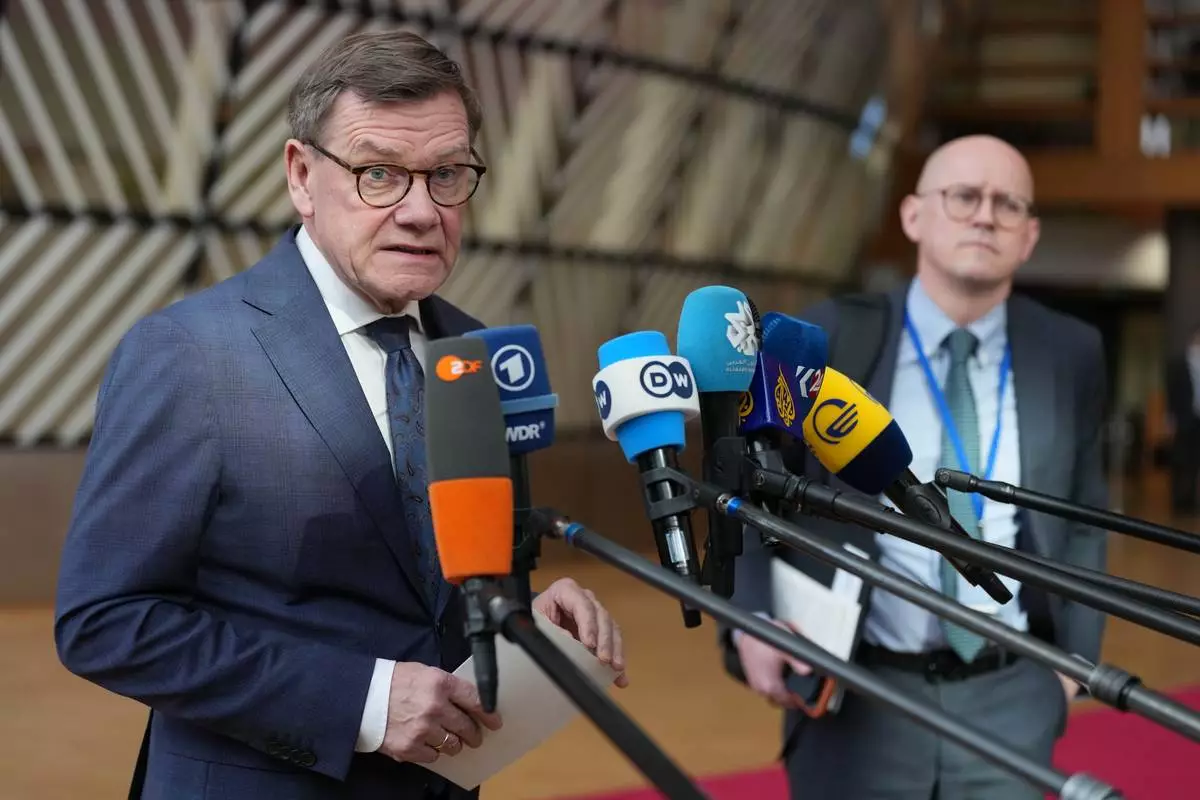
Germany's Foreign Minister Johann Wadephul speaks with the media as he arrives for a meeting of EU foreign ministers at the European Council building in Brussels, Monday, March 16, 2026. (AP Photo/Virginia Mayo)

European Union foreign policy chief Kaja Kallas speaks with the media as she arrives for a meeting of EU foreign ministers at the European Council building in Brussels, Monday, March 16, 2026. (AP Photo/Virginia Mayo)