U.S. Treasury Secretary Scott Bessent and U.S. Trade Representative Jamieson Greer met the press after the latest round of economic and trade talks with China in Paris on Monday.
The talks were constructive and showed the stability in the relationship, Bessent said after meeting with the Chinese delegation led by Vice Premier He Lifeng.
"There were very detailed discussions in terms of the new tariff authorities we will be implementing, it's the 122. We discussed the USTR and Ambassador Greer's investigation. But in terms of retaliation, as I said, there's great stability in the relationship and the purpose of these meetings is to prevent any retaliation as we saw this time last year," said Bessent, in response to a reporter’s question about China's reaction to Section 301 investigations.
The U.S. Supreme Court ruled last month that the tariffs imposed by the Trump administration under the International Emergency Economic Powers Act were unlawful. The U.S. government subsequently levied an additional 10 percent import surcharge on all trading partners under Section 122 of the Trade Act of 1974, and also introduced a series of restrictive trade measures on China, including Section 301 investigations, corporate sanctions and market access restrictions.
Li Chenggang, China international trade representative with the Ministry of Commerce and vice minister of commerce, said China's position on Section 301 investigations by the U.S. has been consistent, reiterating China's opposition to such unilateral probes.
China will follow the development of these investigations very closely, and take timely measures to safeguard China's legitimate rights and interests, Li said at a press briefing following the trade talks.
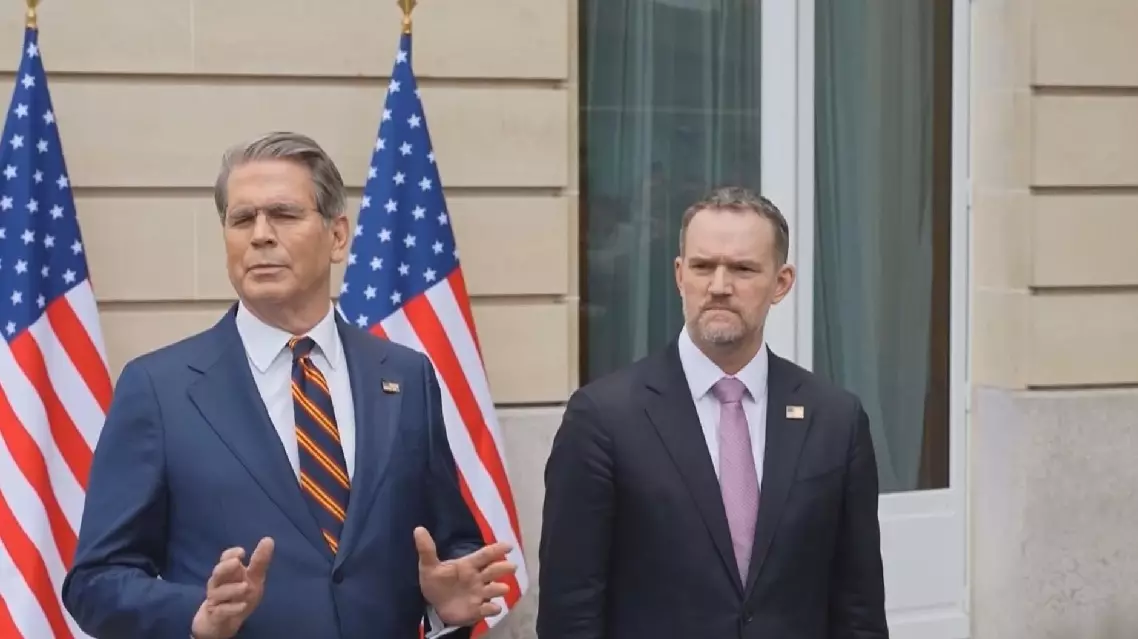
US trade officials brief media after Paris talks with China
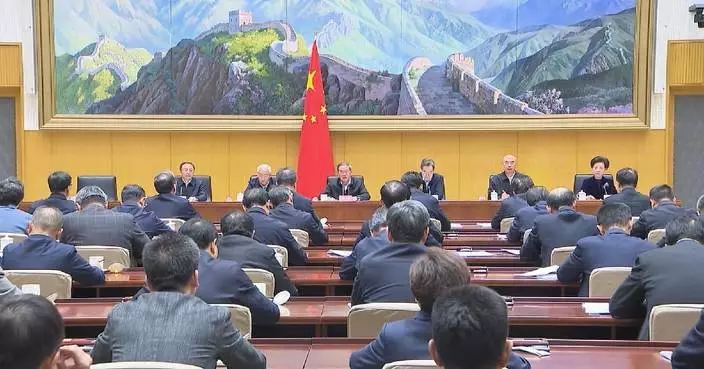
China will establish a dynamic maintenance mechanism for territorial spatial planning, according to a circular on enhancing the guarantee of natural resource elements.
The circular, issued by the Ministry of Natural Resources and the National Forestry and Grassland Administration earlier this month, introduced 13 policy measures focusing on optimizing territorial spatial layout, improving resource allocation efficiency, safeguarding mineral exploitation, balancing existing and newly added resources, and coordinating land and sea use.
According to the notice, China will enhance the guarantee of natural resource elements to facilitate the implementation of 109 major projects outlined in the country's 15th Five-Year Plan period (2026-2030).
"With regard to national and provincial projects designated on the planning map, which are eligible for special site selection, if a provincial natural resources administration conducted a review and granted permission that complies with the territorial spatial planning, the land use pre-review and site selection procedures can be omitted. With permission, land can be used. The approval procedures are significantly streamlined to ensure that major projects can be launched, built and put into service as quickly as possible," said Xie Haixia, director of the National Land Spatial Planning Bureau at the Ministry of Natural Resources.
The circular also urged a coordinated approval mechanism for land use, forest use, grassland use and sea use.
"Through information technology, we transition from step-by-step approval to parallel approval. At the provincial level, we will achieve full-system connectivity across all levels, reducing the need to re-enter applications and the step-by-step review of matters. By mobilizing data, we will reduce the legwork for enterprises and the public," said Liu Yan, director of the ministry's Department of Territorial Spatial Use Control.

China to establish dynamic mechanism for maintaining territorial spatial layout