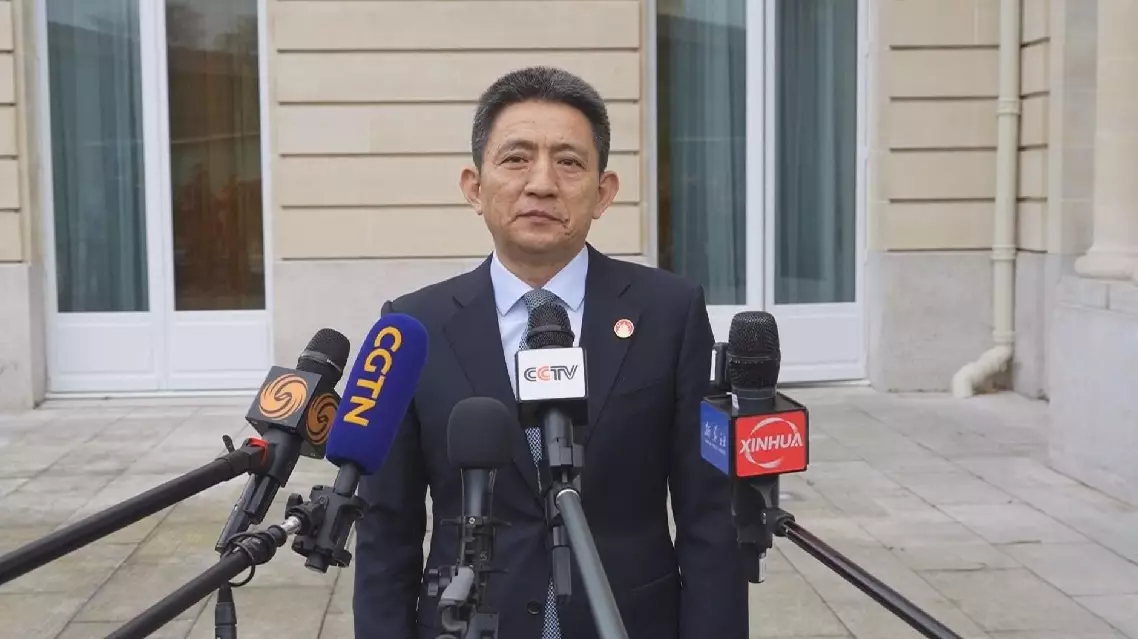
The Chinese and U.S. teams held candid, in-depth and constructive consultations from Sunday to Monday, reached preliminary consensus on some issues, and agreed to continue the consultation process, a senior Chinese official said in Paris on Monday.
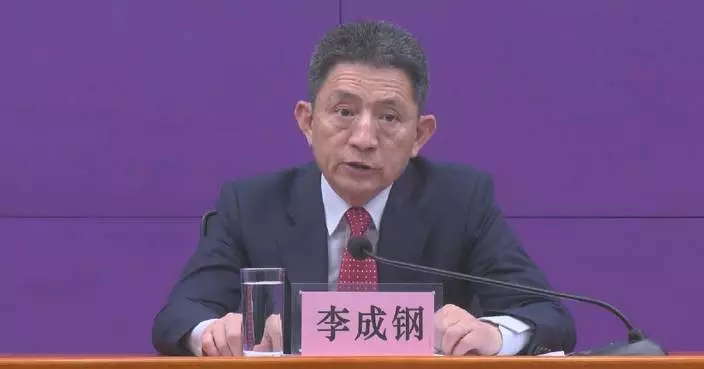
Li Chenggang, China international trade representative with the Ministry of Commerce and vice minister of commerce, met the press following the latest round of China-U.S. economic and trade talks held over the previous one and a half days.
"The topics that we talked about include tariff levels bilaterally under the new circumstances, and the possible extension of the bilateral tariff and non-tariff measures, and the promotion of bilateral trade and investment cooperation, as well as the both sides, or each side's concern over the other side's trade and economic issues," he said.
Li said that the U.S. side had provided information about their recent tariff measures, while the Chinese side shared its concerns over the uncertainties that have been created by U.S. trade policy.
"Both sides agreed to continue to commit to maintaining the stability of the bilateral tariff levels," said Li.
Regarding the promotion of bilateral trade and investment, Li said that both sides discussed the idea of establishing a working group on studying the promotion of cooperation mechanisms for promoting bilateral trade and investment.
In the consultations, both sides have also had in-depth discussions of each other's trade and economic concerns, he said.
"Together, the two sides reviewed the implementation of the outcomes of the past five rounds of consultations last year. We gave positive recognition of the implementation," Li said.
Regarding the restrictive measures introduced by the U.S. side on China's trade and investment, particularly the two recent Section 301 investigations involving China, Li said China's position on Section 301 investigations has been consistent and it opposes such unilateral probes, and that China made serious representations and expressed serious concern during the consultations.
"We are concerned about the possible interference and damage that the result of such investigations might have on the hard-won stable China and U.S. economic and trade relations. And we will follow very closely the development of these investigations, take timely measures to safeguard China's legitimate rights and interests," Li said.
In this round of consultations, China and the United States further recognized that stable bilateral economic and trade relations are beneficial to both countries and the world, Li said, calling on the U.S. side to honor its commitments and work with China in the same direction to promote the steady and sustained development of bilateral economic and trade ties.
"Through this consultation, the two sides have already achieved some preliminary consensus on some of the topics and the two sides will continue to engage in consultations going forward," said Li.
China, U.S. reach preliminary consensus on some issues: China international trade representative