Skip to Content Facebook Feature Image

Nicaraguan FM warns of militarism revival

China

China

China

Nicaraguan FM warns of militarism revival

2026-05-09 21:33 Last Updated At:22:07

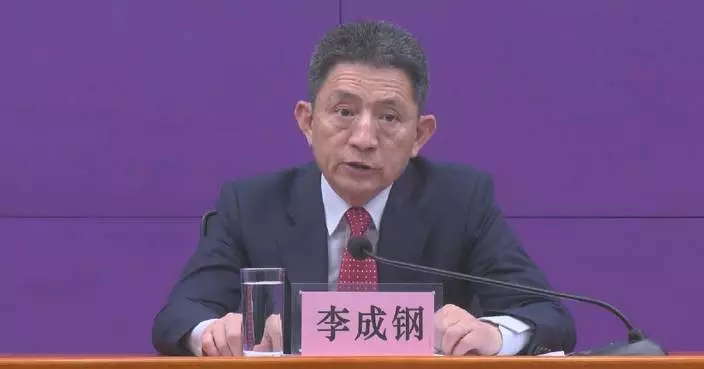
Nicaragua's co-foreign minister Valdrack Jaentschke has warned that militarism must never be allowed to rise again, as Japan's recent moves to lift its arms export ban and revise the pacifist Constitution continue to draw international concern.

This year marks the 80th anniversary of the opening of the Tokyo Trials, where Japan's Class-A war criminals from World War II were brought to justice.

In an interview with China Global Television Network (CGTN), Valdrack Jaentschke voiced his concern that today's world order is being undermined by interventionism and other challenges.

"It is necessary for us to remember that after the end of World War II, countries worked hard to build a new international order based on international law. However, regrettably, more than 80 years later, we are seeing that this once explored and attempted order is being challenged by interventionism, a confrontational mindset, and tendencies like 'might makes right.' These are precisely the conditions that gave rise to fascism and militarism in the past, which ultimately led to the tragedy of World War II," he said.

He said the international community has a responsibility to pursue a new international order -- one fundamentally grounded in peace.

"Looking back at the history more than eight decades ago and comparing it with today's reality, it is our responsibility to recognize that the world should, and must, build a new international order that is more just, fairer, rooted in international law, based on a logic of mutual benefit and shared success, and fundamentally grounded in peace," said the minister.

"Today, as we revisit the Tokyo Trials, it is meant to remind the world that such a tragedy must never be repeated -- and that we must do everything in our power to prevent it from happening again. We must stop that dark world -- born from militarism, interventionism, and fascism -- from ever returning," he said.

Nicaraguan FM warns of militarism revival

Nicaraguan FM warns of militarism revival

Geopolitical tensions and energy supply disruptions have risen to become the top concerns for U.S. financial stability, a Federal Reserve report said on Friday.

The Fed's latest semi-annual Financial Stability Report revealed a dramatic shift in how professionals view risks to the U.S. financial system, as the U.S.-Israeli war against Iran has sent shock waves through the global economy.

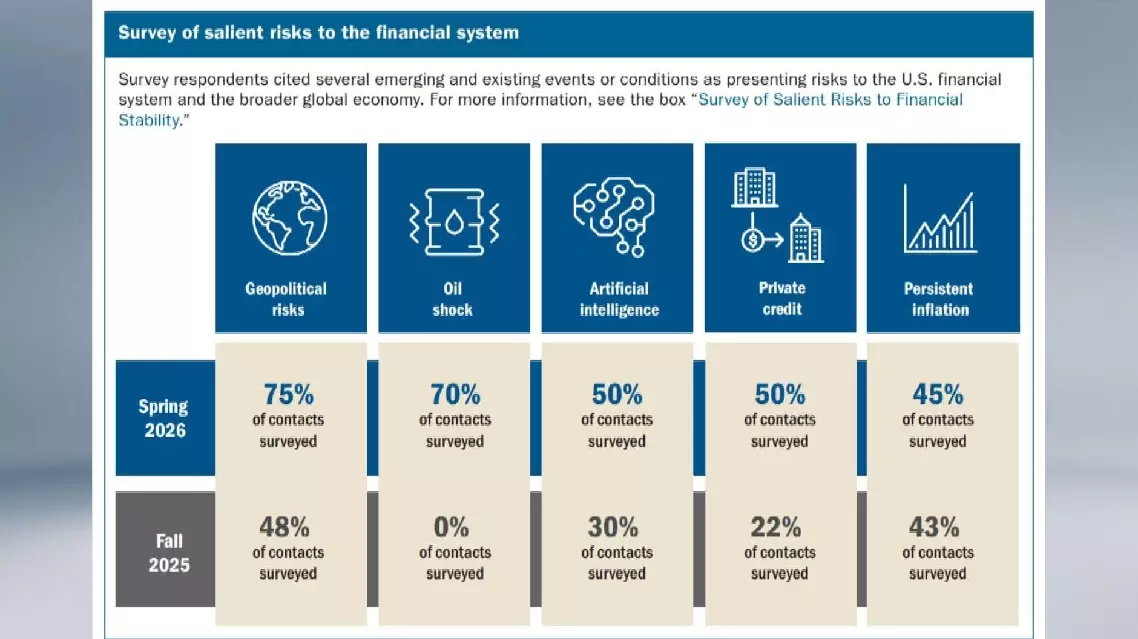
According to a survey conducted by the Federal Reserve Bank of New York between March and April, 75 percent of respondents cited geopolitical tensions as a major risk, a sharp jump from 48 percent just six months earlier. Even more striking, 70 percent now see oil supply shocks as a threat, a concern that was not mentioned at all in the survey from last fall. Respondents widely pointed to the war with Iran as a potential trigger for prolonged energy market disruptions, which could also keep inflation higher for longer.

Half of those surveyed raised concerns about artificial intelligence. They pointed to equity valuations, rising leverage in the financial system as capital spending becomes increasingly reliant on debt, and potential job losses from widespread AI adoption.

Private credit was also flagged as a threat by 50 percent of respondents. The market faces mounting pressure from investor redemptions and worsening market sentiment, they warned. In addition, fast-evolving AI could weaken the credit quality of some borrowers, which, in turn, might tighten credit conditions and spill over into broader markets.

Meanwhile, 45 percent of respondents identified persistently high inflation as a salient risk, with many worrying that prolonged energy supply shocks from the U.S.-Israeli war against Iran could force the Fed to adopt tighter monetary policy.

Geopolitical tensions, oil supply shocks pose primary risks to US financial system: Fed report

Geopolitical tensions, oil supply shocks pose primary risks to US financial system: Fed report

Recommended Articles