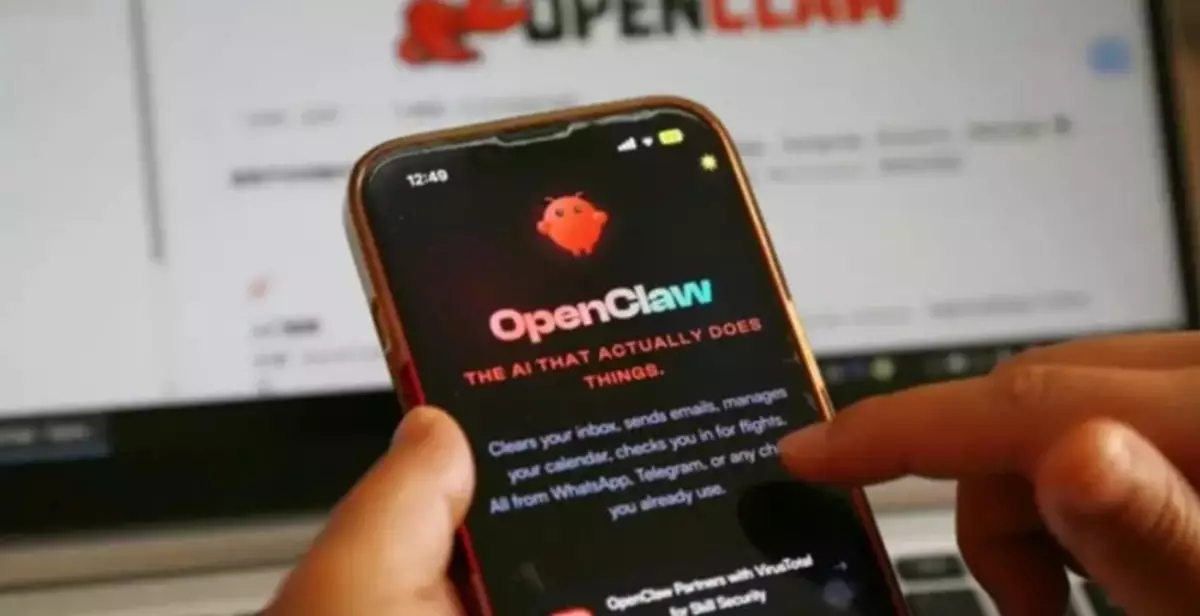
An open-source AI agent framework, OpenClaw, has taken the Chinese Mainland by storm. Recognizable by its iconic red lobster logo, it's been dubbed "Lobster" by users, who jokingly refer to the entire setup process as "raising lobsters". Since its debut in November 2025, OpenClaw has amassed millions of users in just a few months. Its explosive growth has caught the attention of Mainland tech titans like Tencent (00700), Alibaba (09988), and Baidu (09888), all of which have quickly followed suit with their own "OpenClaw"-style offerings in a heated race to vie for a share of the AI agent market.
OpenClaw: Takes AI from Thought to Action
Click to Gallery
An open-source AI agent framework, OpenClaw, has taken the Chinese Mainland by storm. Photo source: the official website of OpenClaw

On March 6th, Tencent led the charge by hosting a free OpenClaw installation event at its Shenzhen headquarters. Photo source: Weibo

A new industry chain has rapidly emerged from paid on-site installation services for OpenClaw. Photo source: Idle Fish

The OpenClaw installation craze has unexpectedly given a boost to sales of Apple's Mac mini. Photo source: the official website of Apple

WorkBuddy, a complete Tencent version of OpenClaw that can seamlessly integrate with QQ, Lark, and DingTalk. Photo source: the official website of Tecent

Baidu AI Cloud launched the world's first mobile OpenClaw application, "Red Finger Operator". Photo source: the official website of Baidu AI Cloud
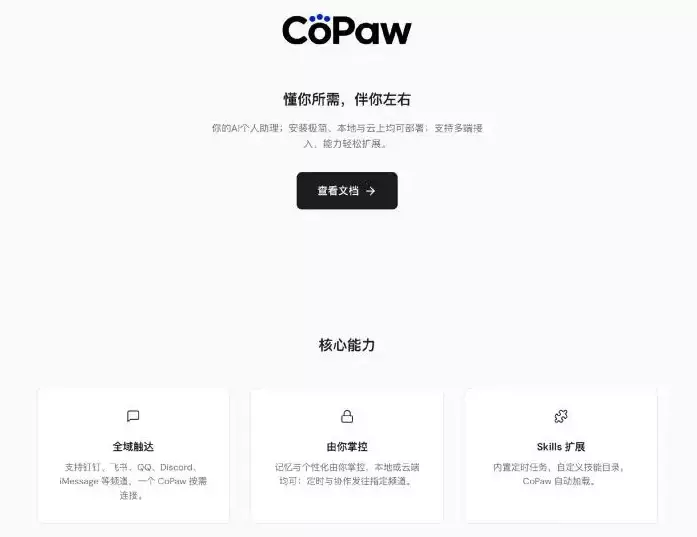
The personal workbench "CoPaw" released by Alibaba, Photo source: Screenshot of CoPaw
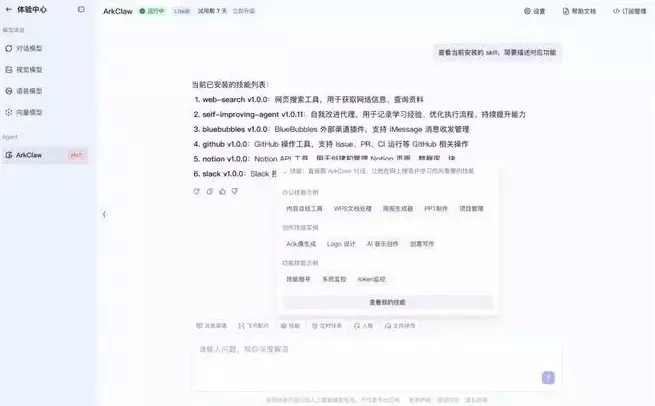
Volcano Engine simultaneously launched the cloud-based SaaS version "ArkClaw". Photo source: Screenshot of ArkClaw
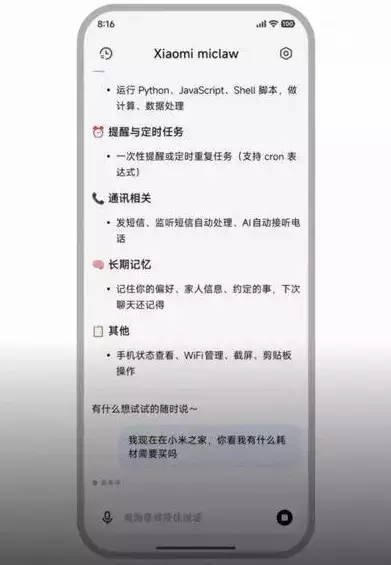
Xiaomi launched a small-scale closed test of its OpenClaw-like mobile system-level intelligent agent, "Xiaomi miclaw". Photo source: Demo image of Xiaomi miclaw
The tech sensation—OpenClaw, dubbed "Lobster" by users for its red lobster logo—was created in November 2025 by Peter Steinberger, a retired Austrian programmer. Initially named Clawdbot, it underwent several name changes before finally settling on OpenClaw. Its core breakthrough lies in enabling AI to move from conversation to execution.
An open-source AI agent framework, OpenClaw, has taken the Chinese Mainland by storm. Photo source: the official website of OpenClaw
Unlike conventional AI platforms, OpenClaw functions as an AI agent framework with direct access to a device's operating system. In practical terms, it doesn't just conduct conversations with users, but takes control of their personal computers to carry out tasks across multiple applications. From scheduling meetings and writing code to organizing files, OpenClaw can transform itself into a tireless "AI workforce". Since its debut on GitHub in November 2025, OpenClaw has racked up over 250,000 stars in just a few months—surpassing open-source legends like Linux and React to become one of the fastest-growing projects in the platform's history.
Nationwide Craze for Free/Paid OpenClaw Installation
As the OpenClaw craze spreads from tech circles to the general public, the high technical barrier has become the biggest hurdle for ordinary users to get started. To address this pain point, tech enterprises and grassroots communities have stepped in, igniting a nationwide OpenClaw installation craze, with both free and paid services.
On March 6th, Tencent led the charge by hosting a free OpenClaw installation event at its Shenzhen headquarters. Photo source: Weibo
On March 6th, Tencent led the charge by hosting a free OpenClaw installation event at its Shenzhen headquarters. Tencent Cloud engineers set up booths, offering citizens a one-stop service—from installation and deployment to model configuration—completely free of charge. The event, initially planned for 800 attendees, ended up drawing thousands. People of all ages—from the elderly to young children—queued up, far exceeding all expectations. Soon after, the city of Hangzhou followed suit.
A new industry chain has rapidly emerged from paid on-site installation services for OpenClaw. Photo source: Idle Fish
Meanwhile, a new industry chain has rapidly emerged from paid on-site installation services for OpenClaw. Due to the extremely high barrier to entry for native OpenClaw deployment—whether it's renting a cloud server for hundreds of RMB per month or manually configuring a complex local environment—many ordinary users give up as soon as they get started, which directly gives rise to paid services of OpenClaw installations. On platforms like Taobao, Idle Fish, and rednote, numerous sellers offering remote deployment and on-site installation have appeared, charging from tens to thousands of RMB. Some practitioners have even received dozens of orders within a few days, indicating extremely strong market demand.
OpenClaw Installations Boost Mac mini Sales
The OpenClaw installation craze has unexpectedly given a boost to sales of Apple's Mac mini. According to Securities Times, security concerns have led many users to avoid installing OpenClaw on their personal or work computers. Instead, they are turning to the Mac mini, which offers strong OpenClaw compatibility with its native macOS system, thus leading to widespread shortages of Mac minis in both online and offline stores, with prices driven up. Several vendors noted that the once-plentiful mini PC has become increasingly hard to find due to the explosive popularity of OpenClaw these days. "People are buying them in bulk, even with a markup of 300, 500, or 600 RMB. No matter how high the price would hike, they would still buy one," one vendor said.
The OpenClaw installation craze has unexpectedly given a boost to sales of Apple's Mac mini. Photo source: the official website of Apple
At one stall, only a Mac mini M1 prototype remains, now priced at 4,200 RMB—up from the previous 3,600 RMB. The more popular M4 model has already sold out. Nearby, an Apple-authorized dealer said the Mac mini M4 (16+256GB) now sells for 4,999 RMB, 500 RMB above Apple's official price. Meanwhile, orders placed on Apple's website face an estimated wait of 4 to 5 weeks.
Industry insiders point out that OpenClaw offers the best experience on Macs, with the most complete native support and tight system integration. Additionally, as a screenless desktop, Mac mini's low power consumption makes it ideal for always-on operation, keeping running costs relatively low. Even with recent price hikes, Mac mini remains more cost-effective than comparable devices—at least until the next wave of premiums hits.
Tech Giants Race to Launch OpenClaw's Local Versions
Faced with the OpenClaw craze, Mainland tech giants have jumped into the fray. Since late January 2026, Tencent (00700), Alibaba (09888), Baidu (09988), ByteDance, Xiaomi (01810), and others have launched localized versions based on OpenClaw. By leveraging their cloud platforms to lower barriers for users and deeply integrating with ecosystem tools like WeChat, Lark, DingTalk, and Mi Home, etc., they are racing to secure a foothold in the AI agent sphere.
Within just a few days, Tencent launched several products, including QClaw, launched by Tencent PC Manager, which supports both Mac and Windows and features zero-configuration integration with WeChat; the Enterprise WeChat OpenClaw intelligent robot for enterprise collaboration; and WorkBuddy, a complete Tencent version of OpenClaw that can seamlessly integrate with QQ, Lark, and DingTalk.
WorkBuddy, a complete Tencent version of OpenClaw that can seamlessly integrate with QQ, Lark, and DingTalk. Photo source: the official website of Tecent
Baidu AI Cloud launched the world's first mobile OpenClaw application, "Red Finger Operator", which is now officially available on Android. The application combines the native mobile experience of OpenClaw with Baidu's self-developed mobile AI Agent capabilities, enabling cross-app operations such as ride-hailing, food delivery, and social media interaction, etc. After installation and registration, users can directly command their phones to perform tasks via chat. Simultaneously, Baidu AI Cloud also released DuClaw, claimed to be a streamlined "zero-deployment" system, eliminating the need for users to select images or configure API keys, truly achieving zero-barrier for installing and operating OpenClaw.
Baidu AI Cloud launched the world's first mobile OpenClaw application, "Red Finger Operator". Photo source: the official website of Baidu AI Cloud
Alibaba has adopted a multi-layered product strategy. Beyond launching a one-click deployment service for lightweight application servers (starting at just 38 RMB per year), the open-source team edition "HiClaw" and the personal workbench "CoPaw", the enterprise has now moved into mobile. Alibaba Cloud's mobile OpenClaw version, "JVS Claw," is now available on the App Store and other platforms, and users can also access it through the Alibaba Cloud website. The product integrates the AI assistant "Clawbot" with a standalone cloud environment "ClawSpace", focusing squarely on execution. Users can command Clawbot in natural language to operate apps, process files, and complete complex tasks entirely in the cloud. During beta, each user gets one free bot and 8,000 Credits for 14 days, further lowering the barrier to entry for users. Besides, DingTalk and Alibaba Cloud's Bailian platform have also released deployment guides, while the official website offers a limited number of daily subscriptions for just 9.9 RMB, attracting users at an extremely low cost.
The personal workbench "CoPaw" released by Alibaba, Photo source: Screenshot of CoPaw
ByteDance's strategy focuses on community and application ecosystem. Its Kouzi platform launched the Chinese version of the Agent community "InStreet Forum" in March, allowing AI Agents to post autonomously, learn and evolve. Its Volcano Engine simultaneously launched the cloud-based SaaS version "ArkClaw", supporting various instant messaging apps and adapting to Lark plugins. Moreover, Lark has increased its free API quota to 1 million times per month and launched official plugins and five consecutive "Play Shrimp Conferences," actively cultivating the developer ecosystem.
Volcano Engine simultaneously launched the cloud-based SaaS version "ArkClaw". Photo source: Screenshot of ArkClaw
Major smartphone enterprises also acted swiftly. Xiaomi launched a small-scale closed test of its OpenClaw-like mobile system-level intelligent agent, "Xiaomi miclaw", on February 6th. The product is built on Xiaomi's MiMo large model and aims to deploy large model execution capabilities at the mobile phone system level. Once authorized, it can call upon mobile tools, applications, and Xiaomi ecosystem devices, and automatically break down and execute tasks based on fuzzy user commands. Huawei's Xiaoyi Open Platform was updated on February 9th to provide an OpenClaw mode, allowing developers to access OpenClaw tools and quickly create personalized intelligent agents suitable for diverse needs, such as personalized assistants and automated services. Honor also revealed at its MWC 2026 global launch event on March 1st that users can deploy OpenClaw on the Honor MagicPad 4, further expanding the application scenarios of OpenClaw on tablet devices.
Xiaomi launched a small-scale closed test of its OpenClaw-like mobile system-level intelligent agent, "Xiaomi miclaw". Photo source: Demo image of Xiaomi miclaw
MIIT: "Six Dos and Six Don'ts" Guidelines for OpenClaw Usage
Despite its high openness and practicality, OpenClaw's security concerns cannot be ignored. Since OpenClaw requires low-level system privileges, improper use can easily lead to data leaks, malicious attacks, or erroneous operations due to AI "illusions". In response to the risk, China's Network Security Threat and Vulnerability Information Sharing Platform of the Ministry of Industry and Information Technology (MIIT) has issued "Six Dos and Six Don'ts" Guidelines, emphasizing the usage of the latest official version, strict control over internet exposure, adherence to the principle of least privilege, and prevention of social engineering attacks, reminding users to prioritize cybersecurity when embracing new technologies.
Bloomberg and several Mainland media outlets previously reported that the National Computer Network Emergency Response Technical Team/Coordination Center of China (CNCERT) issued a warning about significant vulnerabilities and risks in the OpenClaw system. Several large banks, state-owned enterprises, and securities firms have issued internal "OpenClaw bans", strictly prohibiting employees from installing OpenClaw on office computers and mobile phones connected to the company's network. Those who have already installed it must immediately cease use and report the issue. Therefore, for ordinary users, if they want to try "raising lobsters" (a metaphor for using OpenClaw in China), they must first take appropriate security measures to mitigate the risks.