Skip to Content Facebook Feature Image

Every Brick Here Witnesses 40 Years of Neighborly Bond: Wang Fuk Residents Bid Tearful Farewell to Former Homes

HK

Every Brick Here Witnesses 40 Years of Neighborly Bond: Wang Fuk Residents Bid Tearful Farewell to Former Homes
HK

HK

Every Brick Here Witnesses 40 Years of Neighborly Bond: Wang Fuk Residents Bid Tearful Farewell to Former Homes

2026-05-02 15:32 Last Updated At:15:41

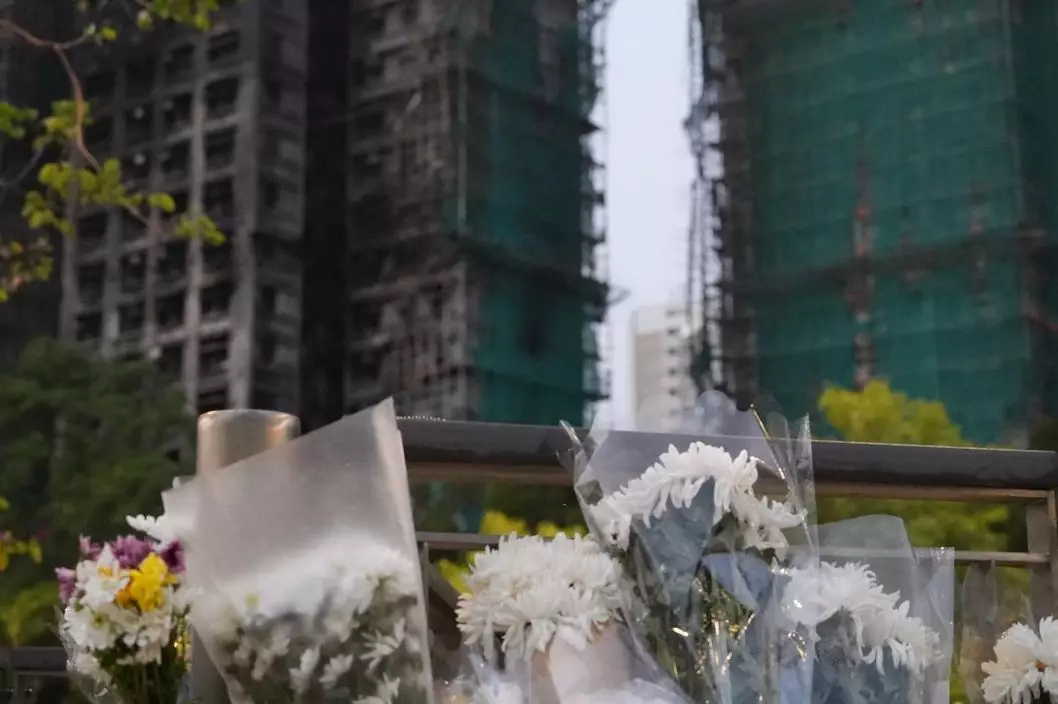
The phased return of Wang Fuk residents to retrieve their belongings came to its 13th day today (May 2), as residents from Wang Shing House and some floors of Wang Tai House were allowed back into their units.

Photo by Bastille Post

Photo by Bastille Post

Photo by Bastille Post

Photo by Bastille Post

Some residents, who have lived in Wang Fuk Court for over 40 years, and even some multi-generational families who have lived for decades, likened their connection to the place as feeling like "living here for over 200 years" with "every brick witnessing neighborly bond", emphasizing that this return is not simply "seeing their homes", but rather "taking everything possible, treating it like moving house".

More Images
Photo by Bastille Post

Photo by Bastille Post

Photo by Bastille Post

Photo by Bastille Post

Photo by Bastille Post

Photo by Bastille Post

Photo by Bastille Post

Photo by Bastille Post

Mrs. Lee, Photo by Bastille Post

Mrs. Lee, Photo by Bastille Post

Mrs. Lee brought flowers grown by a friend into her unit during retrieval. Photo by Bastille Post

Mrs. Lee brought flowers grown by a friend into her unit during retrieval. Photo by Bastille Post

Mr. Leung, Photo by Bastille Post

Mr. Leung, Photo by Bastille Post

The phased return of Wang Fuk residents to retrieve their belongings came to its 13th day today (May 2), as residents from Wang Shing House and some floors of Wang Tai House were allowed back into their units. Photo by Bastille Post

The phased return of Wang Fuk residents to retrieve their belongings came to its 13th day today (May 2), as residents from Wang Shing House and some floors of Wang Tai House were allowed back into their units. Photo by Bastille Post

Photo by Bastille Post

Photo by Bastille Post

Photo by Bastille Post

Photo by Bastille Post

Wang Fuk Court, Photo by Bastille Post

Wang Fuk Court, Photo by Bastille Post

Photo by Bastille Post

Photo by Bastille Post

Photo by Bastille Post

Photo by Bastille Post

Mrs. Lee, a mid-floor resident of Wang Tai House, brought flowers grown by a friend into her unit during retrieval. She described her emotional state as "opening a blind box" and reiterated the deep bond among neighbors who have supported each other for over 40 years. "I'm treating this move like a house removal," she said.

Mrs. Lee, Photo by Bastille Post

Mrs. Lee, Photo by Bastille Post

Mrs. Lee brought flowers grown by a friend into her unit during retrieval. Photo by Bastille Post

Mrs. Lee brought flowers grown by a friend into her unit during retrieval. Photo by Bastille Post

Mr. Leung, a resident on the third floor of Wang Shing House, said his priority was retrieving valuables and daily necessities, including his personal laptop, long-stored but frequently used documents, and clothing. He noted that large furniture and electrical appliances might not be moved out today. Having lived in Wang Fuk Court for more than 20 years, Mr. Leung admitted he has a strong emotional attachment to the place and hopes to return one day. Though he currently lives outside Tai Po after the fire, he said he would prefer to remain in the district in the future, or at the very least, oppose the complete demolition of all blocks of Wang Fuk Court.

Mr. Leung, Photo by Bastille Post

Mr. Leung, Photo by Bastille Post

Regarding the government's resettlement arrangements, Mr. Leung said that acquisition is the easiest management approach for the authorities, as it avoids subsequent disputes and safety liabilities. However, he pointed out that since damage levels vary across blocks and units of Wang Fuk Court, treating all cases equally would effectively amount to writing off repairable assets as waste. If the government intends to proceed with acquisition, Mr. Leung said it should first explain "why restoration is not feasible, why costs are uncontrollable, and why the risks are unacceptable."

The phased return of Wang Fuk residents to retrieve their belongings came to its 13th day today (May 2), as residents from Wang Shing House and some floors of Wang Tai House were allowed back into their units. Photo by Bastille Post

The phased return of Wang Fuk residents to retrieve their belongings came to its 13th day today (May 2), as residents from Wang Shing House and some floors of Wang Tai House were allowed back into their units. Photo by Bastille Post

Photo by Bastille Post

Photo by Bastille Post

Photo by Bastille Post

Photo by Bastille Post

Wang Fuk Court, Photo by Bastille Post

Wang Fuk Court, Photo by Bastille Post

In its report, the Independent Committee on the Wang Fuk Court fire has put forward a series of immediate recommendations within the terms of reference of the various government departments. After analysis, the committee determined that the rapid spread of the fire at Wang Fuk Court was critically due to the use of combustible materials in temporary works, which created a continuous vertical fuel source. Evidence also showed that highly flammable foam boards were a key factor enabling the fire to spread between different units.

The committee suggested that the use of combustible materials, such as foam boards, on windows and external walls must be immediately prohibited. Photo source: reference image

The committee suggested that the use of combustible materials, such as foam boards, on windows and external walls must be immediately prohibited. Photo source: reference image

In view of this, the committee has made multiple immediate recommendations. First, the use of combustible temporary materials, including foam boards, non-fire-retardant safety nets and plastic canvasses, must be immediately prohibited in light wells or related adjacent areas. Second, the storage of flammable temporary materials, wooden boards, or construction scaffolding materials above ground-floor exits must be immediately prohibited. In addition, the use of combustible materials, such as foam boards, on windows and external walls must be immediately prohibited.

The report also recommends an immediate prohibition on the creation of access openings in staircases and lift lobbies. If such openings cannot be avoided, then in accordance with the Buildings Department's circular letter of March this year, any opening in an escape staircase must be protected by a temporary fire barrier, and that barrier must have fire resistance performance equivalent to that of the original fire barrier. Meanwhile, all windows along escape routes must be fitted with fire-rated glass or fire-resistant glass meeting specified standards.

Wang Fuk Court. Photo source: reference image

Wang Fuk Court. Photo source: reference image

The committee also noted that some older buildings retain staircase windows with upper sections that can be opened for ventilation, while lift lobbies also have openable windows. The committee recommends that, where the Government identifies similar designs, temporary warnings should be issued to ensure that these windows are kept closed; in the longer term, a review should be conducted to determine whether such designs should be replaced by sealed fire-rated windows.

In addition, the report recommends that, for large-scale maintenance involving more than one building, all external wall repairs must be carried out in phases.

Recommended Articles