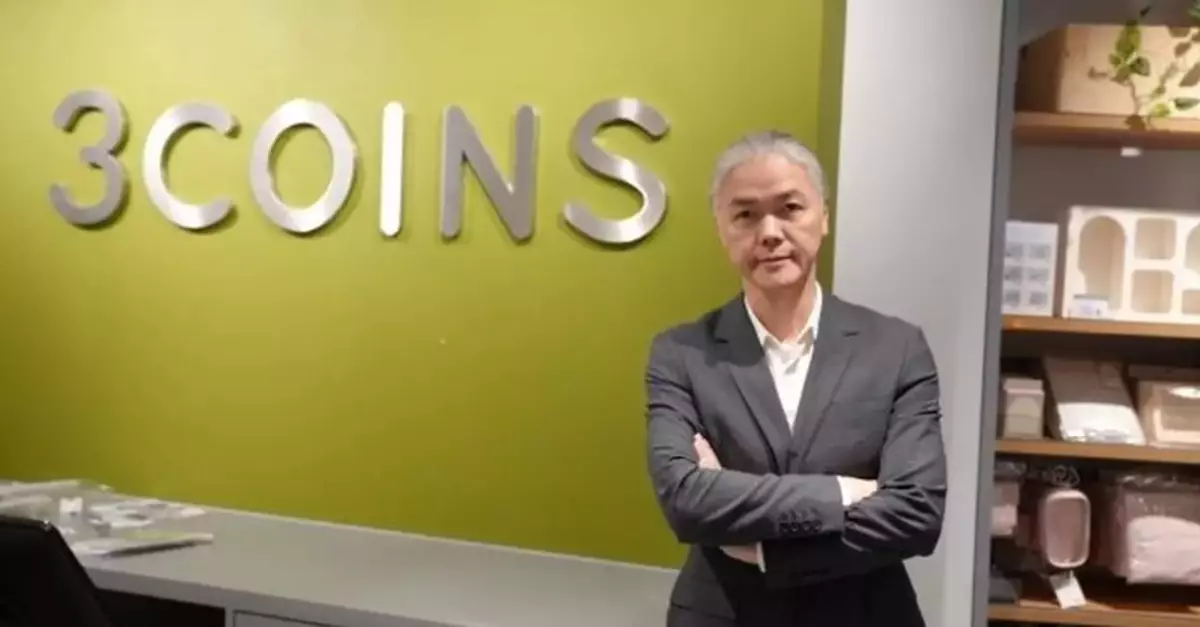
3 COINS, a popular Japanese general merchandise store known for its signature 300-yen price point (hence the name, derived from three 100-yen coins), has made its entrance into the Hong Kong market. In just seven months, it has opened two branches and is planning to open a store in AIRSIDE, Kai Tak, in the second quarter. Mr. Elmas Lou, the founder of YAICHI, the Hong Kong operator of 3 COINS, which brings in more than 100 Japanese brands, has a deep understanding of both local consumer preferences and Japanese brands' features, and has positioned the store as a gateway for Hong Kong customers to access authentic Japanese products—without having to "visit Japan".
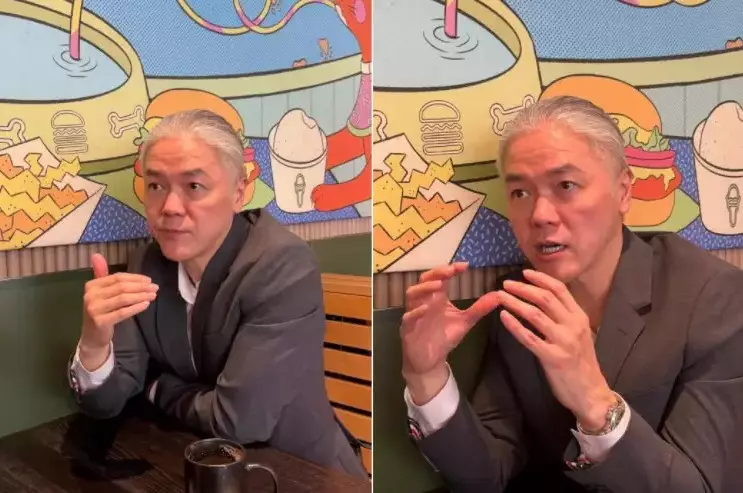
Mr. Elmas Lou, the founder of YAICHI, Photo by Bastille Post
YAICHI operates multiple businesses in Hong Kong, with its subsidiary Group 81 holding distribution rights for over a hundred Japanese brands, including Tokyo Banana, Osaka Ohsho, and Shiroi Koibito, etc. Mr. Elmas Lou, the founder of YAICHI, stated that since many Hong Kong residents would engage in "shopping sprees" while traveling in Japan, he thus came up with an idea of establishing a cross-border retail platform to allow consumers in Hong Kong and other overseas locations to purchase goods at prices close to those in Japan.
Click to Gallery
Mr. Elmas Lou, the founder of YAICHI, Photo by Bastille Post
Three decades of hands-on experience in trade, wholesale, and retail have given Elmas a rare vantage point: he understands the anxieties of Japanese artisan brands eyeing overseas expansion, while reading the tastes of Hong Kong consumers with precision.
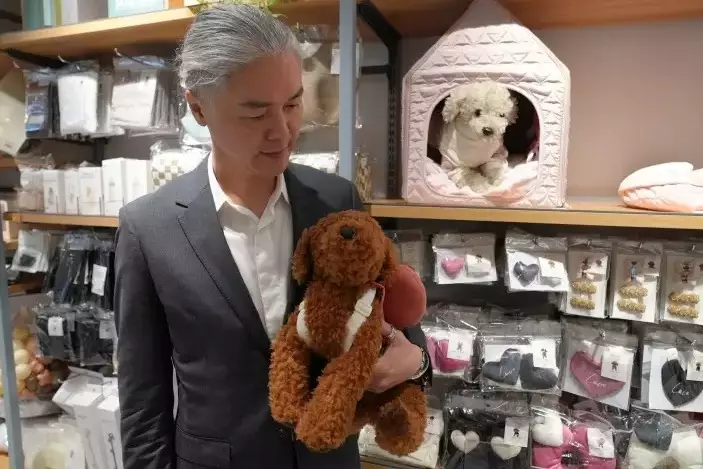
Elmas pointed out that YAICHI's positioning is not merely as a single retail brand, but rather to build a cross-border ecosystem that allows Japanese merchants to access overseas markets at a lower cost, while providing overseas consumers with Japan-like pricing and supply. Photo by Bastille Post
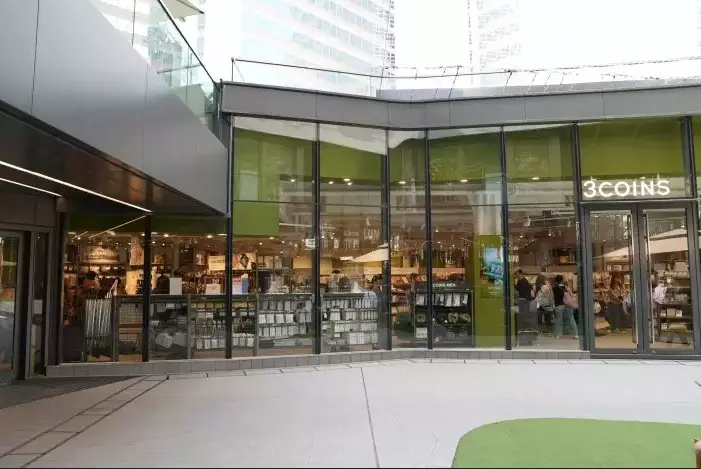
3 COINS's new store in Metroplaza, Kwai Fong, Photo by Bastille Post
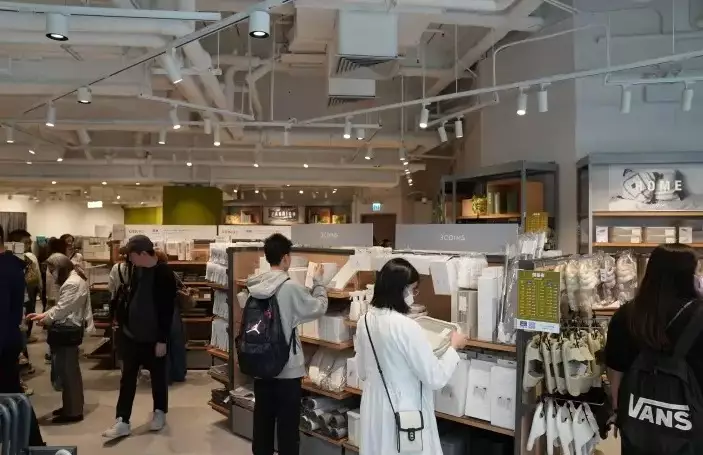
Located on the 3rd floor of the mall, the store covers approximately 2,981 square feet and displays over 2,500 products, including home storage, kitchenware, travel goods, and parent-child products, etc. Photo by Bastille Post
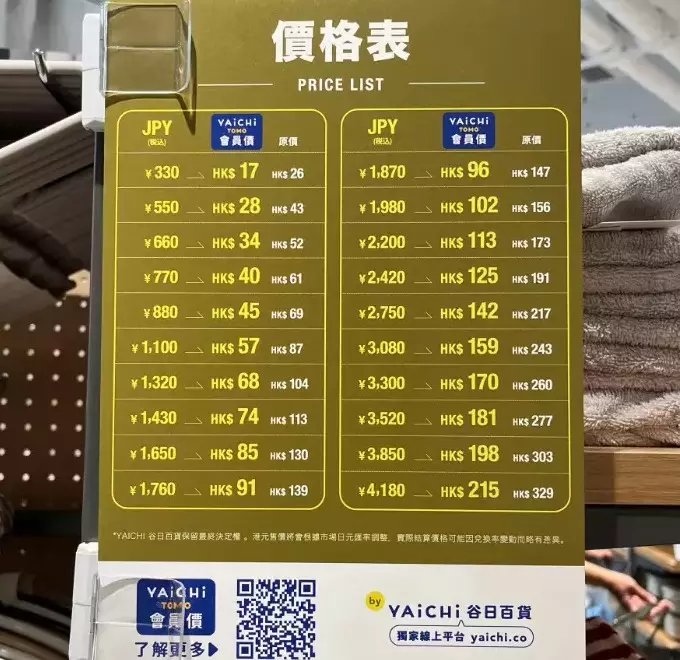
Elmas stated that while the paid membership model is a bold attempt in local retail, the market response has exceeded expectations.
From Dorm Room to Tokyo IPO: Elmas Lou's Entrepreneurial Journey in Japan
Elmas went to Japan alone at the age of 17 to study, majoring in international business at the university. He admitted that he was influenced by his father's business acumen from a young age and had a strong interest in business. As early as his junior year, he and a Japanese friend started a business together.
At that time, the iPhone was gaining popularity, making him and his friend collaborate to design phone straps and launch them in trendy areas like Shibuya 109, attracting queues of customers and achieving considerable profit margins. The company later successfully listed on the Japanese stock exchange in 2015, proving his business acumen as well as establishing his credibility and network within the Japanese business community.
Subsequently, he founded Group 81, a company involved in Japanese trade. "81 is Japan's area code," he said. Group 81 holds distribution rights for over a hundred well-known Japanese brands, including Tokyo Banana, Osaka Ohsho, and Shiroi Koibito. He also founded the Luna Cake cheesecake chain and operates a supply chain business supplying fresh seafood to over 180 Japanese restaurants across Hong Kong.
Three decades of hands-on experience in trade, wholesale, and retail have given Elmas a rare vantage point: he understands the anxieties of Japanese artisan brands eyeing overseas expansion, while reading the tastes of Hong Kong consumers with precision.
Three decades of hands-on experience in trade, wholesale, and retail have given Elmas a rare vantage point: he understands the anxieties of Japanese artisan brands eyeing overseas expansion, while reading the tastes of Hong Kong consumers with precision. In 2022, he officially co-founded the YAICHI Group with partners. The group not only received private investment from senior executives of EGL Tours, but also secured substantial investments from two Japanese listed enterprises, providing capital for its cross-border retail ambitions.
Elmas pointed out that YAICHI's positioning is not merely as a single retail brand, but rather to build a cross-border ecosystem that allows Japanese merchants to access overseas markets at a lower cost, while providing overseas consumers with Japan-like pricing and supply. Photo by Bastille Post
Building a Cross-Border Ecosystem: Helping Japanese Brands Go Global
Currently, YAICHI's businesses include YAICHI Department Store (Hong Kong's largest Japanese online shopping platform), YAICHI Travel, 3COINS, and Group 81. Elmas pointed out that YAICHI's positioning is not merely as a single retail brand, but rather to build a cross-border ecosystem that allows Japanese merchants to access overseas markets at a lower cost, while providing overseas consumers with Japan-like pricing and supply. He described that if the model proves successful in Hong Kong, the future expansion will not be limited to single stores, but rather multiple brands expanding into other markets together, enhancing overall economies of scale.
He stated that the key to cross-border retail competition lies not in the transportation of goods, but in the ability to integrate logistics, payment, fulfillment, and customer operations into a complete service. Since Hong Kong has always possessed advantages in trade, logistics, and international systems, it is well-positioned to become a crucial business hub for Japanese brands going global.
3 COINS's new store in Metroplaza, Kwai Fong, Photo by Bastille Post
3 COINS, a business introduced to Hong Kong by YAICHI last year, is responsible for operating the group's business in Hong Kong. Following its first store in Causeway Bay, it officially opened in Metroplaza, Kwai Fong, on February 6th. Located on the 3rd floor of the mall, the store covers approximately 2,981 square feet and displays over 2,500 products, including home storage, kitchenware, travel goods, and parent-child products, etc.
Elmas stated that the location selection strategy of the stores is not solely focused on tourist areas with high foot traffic, but rather aims to extend the "shopping" experience to everyday community settings for the broadening of customer reach. He pointed out that physical stores, in addition to on-site sales, serve as entry points for building trust and hands-on experience, while online channels cater to repeat purchases and broader customers' needs.
Elmas further revealed that the group is actively preparing for a third store, expected to open as early as the second quarter of this year in AIRSIDE, Kai Tak, further expanding its retail network.
Located on the 3rd floor of the mall, the store covers approximately 2,981 square feet and displays over 2,500 products, including home storage, kitchenware, travel goods, and parent-child products, etc. Photo by Bastille Post
Pricing in Line with Japan: How YAICHI Sold 10,000 Memberships in Two Weeks
"Pricing in Line with Japan" is the core concept of YAICHI when introducing Japanese brands. By hedging exchange rates through banking instruments, prices in Hong Kong and Japan can be aligned. Elmas stated that the group will only recalculate and adjust prices if exchange rate fluctuations approach 10%, to ensure stable and predictable pricing.
In the Hong Kong retail environment, Elmas chose to institutionalize cost sharing through a membership system. The group launched the annual membership plan "YAICHI TOMO," with an annual fee of HKD$99. For example, for a 330 yen item, the member price is HKD$17, while the non-member price is HKD$26.
Elmas stated that while the paid membership model is a bold attempt in local retail, the market response has exceeded expectations.
He added that while the paid membership model is a bold attempt in local retail, the market response has exceeded expectations: the initial limited run of 10,000 membership cards (including early bird slots) sold out in just about half a month, reflecting consumers' willingness to exchange institutionalized methods for long-term price advantages and assisting the group in establishing predictable demand, thereby gradually reducing supply chain costs.
Future Goals: OEM in Mainland and Southeast Asia
Currently, many Japanese brands have their products manufactured in Chinese Mainland or Southeast Asia. Would it be more cost-effective to ship these products directly to Hong Kong without going through Japan? Elmas stated that this is precisely the group's future goal.
He pointed out that due to the limited number of stores and the insufficient scale of procurement at present, some products, even those manufactured in other parts of Asia (such as Chinese Mainland), still need to be shipped to Japan for consolidation before being transshipped to Hong Kong. "When sales and scale accumulate to a certain level, the supply chain can be restructured, switching to direct shipping from the place of origin to Hong Kong, which can significantly reduce logistics costs and shorten delivery time."
He stated that the demand forecasting capabilities established through the membership system are one of the key strategies driving this "direct shipping from the place of origin" supply chain optimization.
When asked, "Why don't Japanese brands expand their market in Hong Kong themselves?" Elmas explained that if Japanese enterprises (such as PAL Group, the parent company of 3COINS) directly export with local standards, the costs may be higher, with difficulty for quick localization. Conversely, YAICHI possesses the ability to simultaneously coordinate the supply side of Japan and the demand of the Hong Kong market, allowing Japanese merchants to "test the waters" in overseas markets at a lower cost, improving their onboarding efficiency and reducing trial-and-error costs.
Besides the Hong Kong market, YAICHI's business has expanded to the UK market, with its early customer base primarily consisting of local Chinese consumers, resulting in an ideal word-of-mouth effect. Elmas describes "pricing in line with Japan" as a model requiring institutionalized operation: establishing stable demand through membership, stabilizing expectations through exchange rate hedging, and lowering costs through supply chain restructuring. In his eyes, the real competitive advantage lies in Hong Kong's ability to integrate the above capabilities into node values and replicate them to broader global markets.