Skip to Content Facebook Feature Image

Aeva Reveals CityOS, an AI-Powered Platform for Real-Time Traffic Intelligence with NVIDIA AGX

News

Aeva Reveals CityOS, an AI-Powered Platform for Real-Time Traffic Intelligence with NVIDIA AGX
News

News

Aeva Reveals CityOS, an AI-Powered Platform for Real-Time Traffic Intelligence with NVIDIA AGX

2026-03-17 19:00 Last Updated At:19:30

MOUNTAIN VIEW, Calif.--(BUSINESS WIRE)--Mar 17, 2026--

Aeva ® (Nasdaq: AEVA), a leader in next-generation sensing and perception systems, today announced the introduction of Aeva CityOS™, an AI-powered Intelligent Transportation Systems (ITS) platform for real-time traffic intelligence built on NVIDIA’s AGX Orin. The platform digitizes intersections and roadways to improve safety, efficiency, and data-driven transportation planning in cities worldwide.

This press release features multimedia. View the full release here: https://www.businesswire.com/news/home/20260317082915/en/

CityOS represents a fundamental shift in how cities perceive and manage mobility by combining automotive-grade 4D LiDAR sensors with edge AI processing and market-leading perception and analytics software in collaboration with industry leaders including NVIDIA. It transforms static infrastructure into intelligent, continuously aware systems capable of understanding not just where objects are but how they move and interact.

With CityOS, transportation agencies can now deploy intelligent infrastructure that delivers continuous, high-resolution perception of vehicles, pedestrians, cyclists, and other road users—enabling safer streets, smarter signal timing, and data-driven urban planning.

“As cities confront rising congestion, Vision Zero goals, and increasing multimodal complexity, the need for precise, real-time infrastructure intelligence has never been greater,” said Eric Gannaway, Director of Business Development for ITS at Aeva. “By combining 4D LiDAR sensors with edge AI, CityOS enables cities to understand movement with precision, detect and remove risk before accidents occur, and optimize traffic flow in real time.”

From Passive Sensors to Comprehensive Intelligent Transportation Systems

Traditional intelligent transportation systems rely on cameras, radar, or inductive loop sensors that depend on ambient lighting, provide limited spatial detail, or detect only an object’s presence within fixed zones. CityOS introduces a new intelligent architecture built on Aeva’s 4D LiDAR technology, equipping each intersection with Aeva Atlas™ Orion sensors together with perception and analytics for full coverage and comprehensive situational awareness.

Rather than replacing existing infrastructure, CityOS enhances it with high-resolution 4D perception that:

Real-Time Intelligence at the Edge

CityOS performs local edge processing of 4D LiDAR data using the NVIDIA AGX Orin platform, delivering low-latency AI inference without dependence on cloud connectivity. AI-powered perception software continuously detects and classifies road users, while advanced analytics software powers dashboards, alerts, and reporting tools for traffic engineers and operators. The result is a scalable intelligence layer that turns raw perception data into actionable operational insight.

CityOS enables applications including:

CityOS is available today for deployment across urban corridors, intersections, and transportation networks worldwide. For more information about CityOS, visit aeva.com/cityos.

About Aeva Technologies, Inc. (Nasdaq: AEVA)

Aeva’s mission is to bring the next wave of perception to a broad range of applications from automated driving, manufacturing automation and smart infrastructure, to robotics and consumer devices. Aeva is accelerating autonomy with its groundbreaking perception platform that integrates lidar-on-chip technology, system-on-chip processing, and perception algorithms onto silicon leveraging silicon photonics. Aeva 4D LiDAR sensors uniquely detect velocity and position simultaneously, allowing automated devices like vehicles and robots to make more intelligent and safe decisions. For more information, visit www.aeva.com, or connect with us on X or LinkedIn.

Aeva, the Aeva logo, Aeva 4D LiDAR, Aeva Atlas, Aeries, Aeva Eve, Aeva Omni, Aeva CityOS, Aeva Ultra Resolution, Aeva CoreVision, and Aeva X1 are trademarks/registered trademarks of Aeva, Inc. All rights reserved. Third-party trademarks are the property of their respective owners.

Forward-looking statements

This press release contains certain forward-looking statements within the meaning of the federal securities laws. Forward-looking statements generally are identified by the words “believe,” “project,” “expect,” “anticipate,” “estimate,” “intend,” “strategy,” “future,” “opportunity,” “plan,” “may,” “should,” “will,” “would,” “will be,” “will continue,” “will likely result,” and similar expressions. These forward-looking statements include, but are not limited to expectations about our product features, performance, potential applications, and market adoption. Forward-looking statements are predictions, projections and other statements about future events that are based on current expectations and assumptions and, as a result, are subject to risks and uncertainties. Many factors could cause actual future events to differ materially from the forward-looking statements in this press release, including, but not limited to:(i) the fact that Aeva is an early stage company with a history of operating losses and may never achieve profitability, (ii) Aeva’s limited operating history, (iii) the ability to implement business plans, forecasts, and other expectations and to identify and realize additional opportunities, (iv) the level of market acceptance and actual purchases of the new product, (v) unforeseen manufacturing issues or defects, (vi) Aeva’s ability to scale production if the product achieves commercial success, (vii) market acceptance of LiDAR technology and autonomous driving and other applications, (viii) general economic conditions and other material risks and other important factors that could affect our financial results. Please refer to our filings with the SEC, including our most recent Form 10-Q and Form 10-K. These filings identify and address other important risks and uncertainties that could cause actual events and results to differ materially from those contained in the forward-looking statements. Forward-looking statements speak only as of the date they are made. Readers are cautioned not to put undue reliance on forward-looking statements, and Aeva assumes no obligation and does not intend to update or revise these forward-looking statements, whether as a result of new information, future events, or otherwise. Aeva does not give any assurance that it will achieve its expectations.

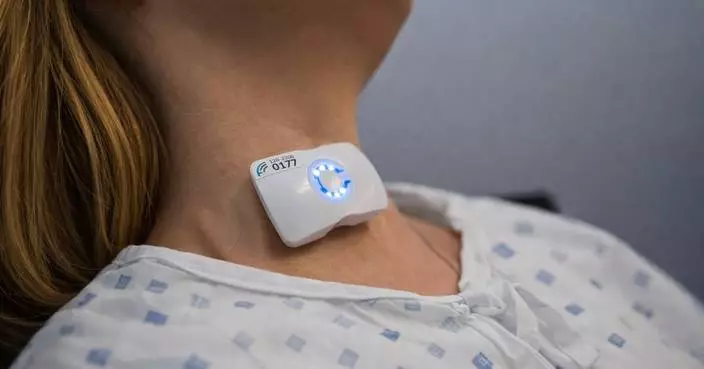
Aeva announced CityOS, an AI-powered Intelligent Transportation Systems (ITS) platform for real-time traffic intelligence.

Aeva announced CityOS, an AI-powered Intelligent Transportation Systems (ITS) platform for real-time traffic intelligence.

WASHINGTON (AP) — Legislation that would require proof of U.S. citizenship for new voters has become a rallying cry for President Donald Trump, who claims that passage of the bill will “guarantee the midterms” for his Republican Party in November.

The bill, which the Senate will take up as early as Tuesday, would require voters to provide proof of citizenship when they register and to present approved identification when they go to the polls, among other new rules that Trump and his most loyal supporters are pushing as part of an effort to assert more federal control over elections.

Federal law already requires that voters in national elections be U.S. citizens. But the legislation would lay out strict new requirements for voters to prove their status.

Democrats are uniformly opposed to the legislation and expected to block its passage through the Senate. They say the legislation would disenfranchise millions of American voters who don’t have birth certificates or other documents readily available — both Republicans and Democrats who would be newly registering to vote.

Despite the long odds of success, Trump has been pushing Senate Majority Leader John Thune to move ahead with the bill and suggested Republicans eliminate the filibuster or find another workaround to pass it. Thune has repeatedly said there isn’t enough support in the Senate to do that.

Instead, Republicans plan to hold an extended debate on the bill for a week or more, an effort to try and appease Trump and make Democrats defend their position.

The bill would “require Americans to demonstrate that they’re eligible to vote,” Thune said last week. “And that they are who they say they are.”

The Safeguard American Voter Eligibility Act, or the SAVE America Act, would force Americans to prove they are citizens when they register to vote, mostly through a valid U.S. passport or birth certificate.

Driver's licenses in many states would not be enough. The legislation says that the identification must be compliant with new REAL ID rules and also indicate that the applicant is a citizen of the United States — which few state licenses do.

A person registering to vote could also present a passport or a birth certificate. U.S. military members could present a military ID along with a record of service that shows where they were born.

Most people registering to vote would have to present the documents in person at an elections office, including people who vote by mail. Advocacy groups that oppose the legislation say that the bill would crush voter registration efforts ahead of this year's elections.

The bill would create new penalties for election officials who register applicants who have not presented documentary proof of citizenship. Opponents say that provision could potentially scare workers into turning away valid applicants while also discouraging people from working or volunteering at polling locations. It would also allow private individuals to sue election officials in some circumstances.

While federal law requires that voters are U.S. citizens, there is not currently a nationwide requirement that voters must show identification when they go to vote. Currently, 36 states have voter identification laws in place, some stricter than others, according to the National Conference of State Legislatures.

The bill would require voters in all states to present valid identification, and those voting by mail would have to send a photocopy. Overseas military and some qualified disabled individuals would be exempt from those rules.

Republican supporters most frequently highlight this section of the bill when pushing for its passage. Thune said last week that if you have to show an ID to get a library card, “it’s not too much to ask voters to show ID to vote in federal elections.”

The legislation would require states to share voters' information with the Department of Homeland Security as a way to verify the citizenship of the names on the voter rolls — giving the federal government unprecedented access to state voter data. Many states are already embroiled in legal fights with the Trump administration over demands that they provide voter information.

Supporters of the state-federal sharing say that it would enable DHS to compare the state information with their own databases that are used to verify immigration status.

But Senate Democratic leader Chuck Schumer predicted that handing over names to the federal government would allow DHS to ”purge tens of millions of people from the voter rolls.”

Senate Republicans are expected to offer amendments on the floor as part of their talkathon in support of the bill. Trump has said he wants more provisions added, including a ban on mail-in ballots, which are used by many states.

Trump has long criticized mail-in ballots and used it as a central argument in his false claims of fraud in the 2020 election he lost to Democrat Joe Biden. But voting groups — and many lawmakers in both parties — have long championed the practice as helping to make it easier for Americans to vote.

The president also wants to add two unrelated provisions around transgender rights issues — one that would ban those born as men from playing in women’s sports and another to block sex reassignment surgeries on some minors.

If the SAVE America Act were enacted, the new rules for voter registration and voter identification at the polls would take effect immediately. Trump says it’s necessary for Republicans to win in the midterm elections — even though they won both chambers of Congress and the White House without the law in 2024.

With primary elections getting underway next month, critics say it would be difficult and costly for state election officials to implement, and could confuse voters.

Marc Elias, a Democratic elections attorney, said he isn’t ”aware of any state that currently requires what this would require.”

“If it’s passed tomorrow, the day after states would need to implement this,” Elias said.

Associated Press writer Lisa Mascaro contributed to this report.

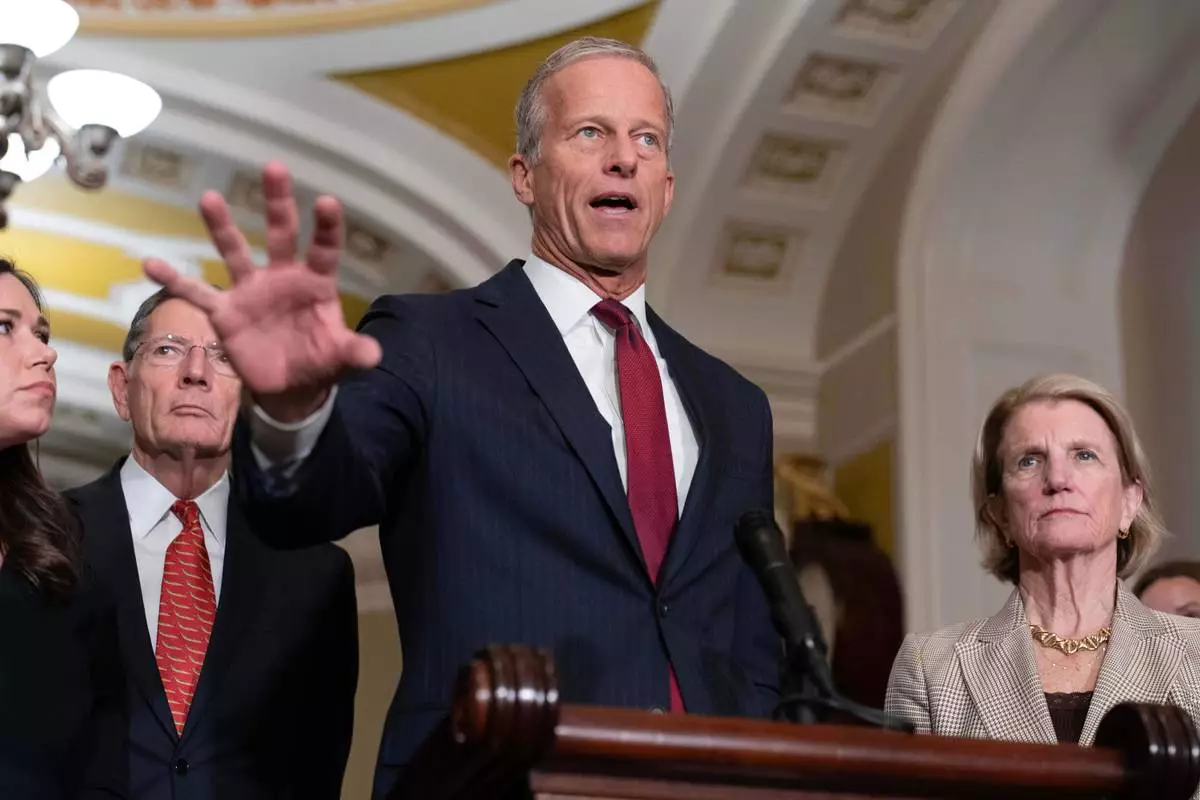
Senate Majority Leader John Thune, R-S.D., speaks to reporters after a weekly Republican policy luncheon, at the Capitol in Washington, Tuesday, March 10, 2026. (AP Photo/Jose Luis Magana)

Senate Majority Leader John Thune, R-S.D., speaks to reporters after a weekly Republican policy luncheon, at the Capitol in Washington, Tuesday, March 10, 2026. (AP Photo/Jose Luis Magana)

Recommended Articles