LONDON (AP) — Lawmakers in the Scottish Parliament on Tuesday rejected legislation that would have made Scotland the first part of the United Kingdom to allow terminally ill adults to end their lives.
Members of the Edinburgh-based legislature voted 69 to 57 against a bill that would have let people in Scotland with six months or less to live seek help to end their life. There was one abstention.
It came after an emotional debate that lasted around three hours and saw lawmakers tear up and applaud as they took turns to express their views on the issue.
They had been given a free vote on the assisted dying bill, which meant they could decide according to their consciences, rather than along party lines.
Scotland is part of the U.K. — alongside England, Wales and Northern Ireland — and has a semi-autonomous government that has authority over many areas of policy, including health.
Liberal Democrat lawmaker Liam McArthur, who drew up the Scottish bill, had urged colleagues to back it.
“If you believe that dying people should not have to suffer against their will and you have heard, like I have, of the many instances where they have been simply failed by the lack of compassion and safety in our current law, you now have to back this bill,” he said. “It is time to look terminally ill Scots in the eye and make this change.”
But opponents of assisted dying argued that vulnerable, elderly, ill and depressed people could be pressured to end their lives so they’re not a burden on others.
Deputy First Minister Kate Forbes of the governing Scottish National Party said she would vote against the bill. Some medical organizations, including the Royal College of Psychiatrists and the Royal Pharmaceutical Society, are also opposed.
“Doctors, psychiatrists, pharmacists and palliative care specialists — the people who would be tasked with implementing this — are asking us not to do it,” Forbes said. “They think this bill is unsafe.”
Some also expressed concerns over how such legislation could impact disabled people, putting them at further risk. Lawmaker Pam Duncan-Glancy insisted that “disabled people don't have real choices in life,” adding that it was “inconceivable to suggest the introduction of assisted dying is about choice.”
The defeat is a setback for efforts by supporters of assisted dying to change Britain’s laws. A similar bill that would legalize assisted dying in England and Wales is currently bogged down in the British Parliament in London.
The House of Commons approved The Terminally Ill Adults (End of Life) Bill in June, but it has been held up by more than 1,000 amendments in the House of Lords. Supporters of the bill say that is a stalling tactic by opponents. Some members of the chamber, however, say they are providing necessary scrutiny to strengthen the legislation.
It looks likely that the bill will not be passed by both houses of Parliament before the end of the current parliamentary session, expected in May. If that happens the bill will die and any new attempt to legalize assisted dying would have to start from scratch.
The islands of Jersey and the Isle of Man, which are British Crown possessions but not part of the U.K., have passed similar laws that are waiting for the formality of approval by King Charles III. Both small islands are self-governing but reliant on the U.K. for defense and some foreign affairs.
Assisted suicide — where patients take a lethal drink prescribed by a doctor — is legal in countries including Australia, Belgium, Canada, Luxembourg, the Netherlands, New Zealand, Portugal, Spain, Switzerland and parts of the U.S., with regulations on qualifying criteria varying by jurisdiction.

Liberal Democrat lawmaker Liam McArthur joins a rally of supporters ahead of MSPs debating his Assisted Dying for Terminally Ill Adults (Scotland) Bill, in the Scottish Parliament in Edinburgh, Scotland, Tuesday, March 17, 2026. (Neil Pooran/PA via AP)
DUBAI, United Arab Emirates (AP) — Israel killed two senior Iranian security officials in a major blow to the Islamic Republic’s leadership as it faces its greatest test in decades, and Iran responded Wednesday with renewed missile and drone attacks on its Gulf Arab neighbors and Israel.
Ali Larijani, secretary of Iran’s Supreme National Security Council, was considered one of the most powerful figures in the country since Supreme Leader Ayatollah Ali Khamenei was killed in an airstrike on the first day of the war. Gen. Gholam Reza Soleimani was the head of the Revolutionary Guard’s all-volunteer Basij.
Iran confirmed the killings of both men, who were key to Iran’s violent crackdown on protests in January that challenged the theocracy’s 47-year rule.
Israel’s military said Iran launched another round of missiles toward Israel on Wednesday. Sirens sounded across central Israel and loud booms were heard in Tel Aviv as the war showed no signs of abating.
With concerns growing about a global energy crisis, an Iranian official said Tehran had no intention of relinquishing its tight grip on shipping through the Strait of Hormuz, a crucial waterway for oil.
President Donald Trump said NATO and most other allies have rejected his calls to help secure the strait.
The Israeli military said it had begun a “wide-scale wave of strikes” across Iran’s capital and was stepping up strikes on Iran-backed Hezbollah militants in Lebanon.
Israeli Defense Minister Israel Katz said Larijani and Soleimani “were eliminated” in strikes overnight Tuesday. The Israeli military said it also struck more than 10 Basij posts across Tehran.
Israeli Prime Minister Benjamin Netanyahu said the killings were aimed at “undermining this regime to give the Iranian people the opportunity to remove it.” There have been no signs of anti-government protests since the war began, as many Iranians are sheltering from the American and Israeli strikes.
The Iranian judiciary’s news agency, Mizan, quoted the Revolutionary Guard as confirming the killing of Soleimani. Other Iranian state media confirmed Larijani’s death.
Larijani, a former parliamentary speaker, was a senior policy adviser to the late Khamenei on strategy in nuclear talks with the Trump administration. He was sanctioned by the U.S. Treasury in January for his role “coordinating” Iran’s violent suppression of nationwide protests.
Soleimani was also sanctioned by the U.S., the European Union and other nations, over his role in suppressing dissent for years through the Basij.
The killings of the top officials came on the eve of “Chaharshanbe Souri," or the Festival of Fire, shortly before the Persian new year. Authorities have sent threatening text messages telling the public not to turn out for the festival, warning the celebrations could be used by “rioters.”
State media aired footage Tuesday of pro-government demonstrations, including images of men in plainclothes brandishing assault rifles and shotguns on the back of motorcycles.
State television showed crowds of women wrapped in black and older men waving flags and portraits of the late Khamenei.
In Iraq, two drones were shot down by the U.S. Embassy's defense system in Baghdad, while a third drone crashed inside the compound, according to two Iraqi security officials who spoke on condition of anonymity because they were not authorized to comment.
An Associated Press journalist saw a massive fire that appeared to be engulfing a structure in the compound. There was no immediate comment from the embassy.
In the United Arab Emirates, explosions rang out early Wednesday morning in Dubai, followed by a missile alert. The government’s Dubai Media Office said “the sounds heard across parts of the city” were the successful interceptions by air defense operations.
Earlier Dubai, a major transit hub for international travel, briefly shut its airspace, the second disruption to flights in the city in as many days. Also an oil facility in Fujairah was hit, and a man was killed in Abu Dhabi by debris from an intercepted missile — the eighth person to die in the UAE since the start of the war, authorities said.
Saudi Arabia said it intercepted drones, while air defenses could be heard targeting incoming fire over Qatar’s capital, Doha.
Iran’s grip on the Strait of Hormuz, through which a fifth of the world’s oil is transported, is sparking concerns about tightening energy supplies — unnerving the world economy.
A handful of ships have crossed through the strait, and Iran has said the waterway technically remains open — just not for the United States, Israel and their allies. About 20 vessels have been struck.
With oil prices rising, Trump said he had demanded that roughly a half-dozen countries send warships to ensure ships can pass through the strait.
Trump fumed Tuesday that the U.S. is not getting support “despite the fact that almost every country strongly agreed with what we are doing, and that Iran cannot” be allowed to secure a nuclear weapon.
The European Union’s top diplomat says the 27-nation bloc does not want to be dragged into the conflict with Iran. “This is not Europe’s war,” Kaja Kallas told EU lawmakers. “We were not consulted.”
French President Emmanuel Macron earlier reaffirmed that France is ready to help secure the strait, but only after heavy bombing has stopped.
The Israeli military said it hit Iran command centers, missile launch sites and air defense systems. There was no immediate confirmation from Iran, where little information has been coming out due to internet outages, round-the-clock airstrikes and tight restrictions on journalists.
More than 1,300 people have been killed in Iran since the conflict started Feb. 28, according to the Iranian Red Crescent.
The Lebanese army said that three soldiers were killed in Israeli strikes. The Lebanese Health Ministry said that an airstrike near Beirut’s international airport killed one person and wounded nine, according to the Lebanese Health Ministry.
Israel’s strikes have displaced more than 1 million Lebanese — roughly 20% of the population — according to the Lebanese government, which says 912 people have been killed. In Israel, 12 people have been killed by Iranian missile fire. At least 13 U.S. military members have been killed.
A top U.S. counterterrorism official resigned Tuesday, citing concerns about the justification for military strikes in Iran. Joe Kent, the director of the National Counterterrorism Center, said he “cannot in good conscience” back the Trump administration’s war.
His resignation reflects unease about the war within Trump’s political base just as midterm election races start to heat up. Trump’s MAGA coalition is splintering over what it sees as the president’s failure to keep his “America First” campaign promise by leading the U.S. into a war that is driving up gas prices.
Speaking to reporters, Trump said that he always thought Kent — the president’s pick to lead the counterterrorism center — was “weak on security” and that if someone in his government did not believe Iran was a threat, “we don’t want those people.”
Rising reported from Bangkok, Corder from The Hague, Netherlands, and Magdy from Cairo. Associated Press writers Qassim Abdul-Zahra in Baghdad; Koral Saeed in Herzliya, Israel; and Bassem Mroue in Beirut contributed to this report.
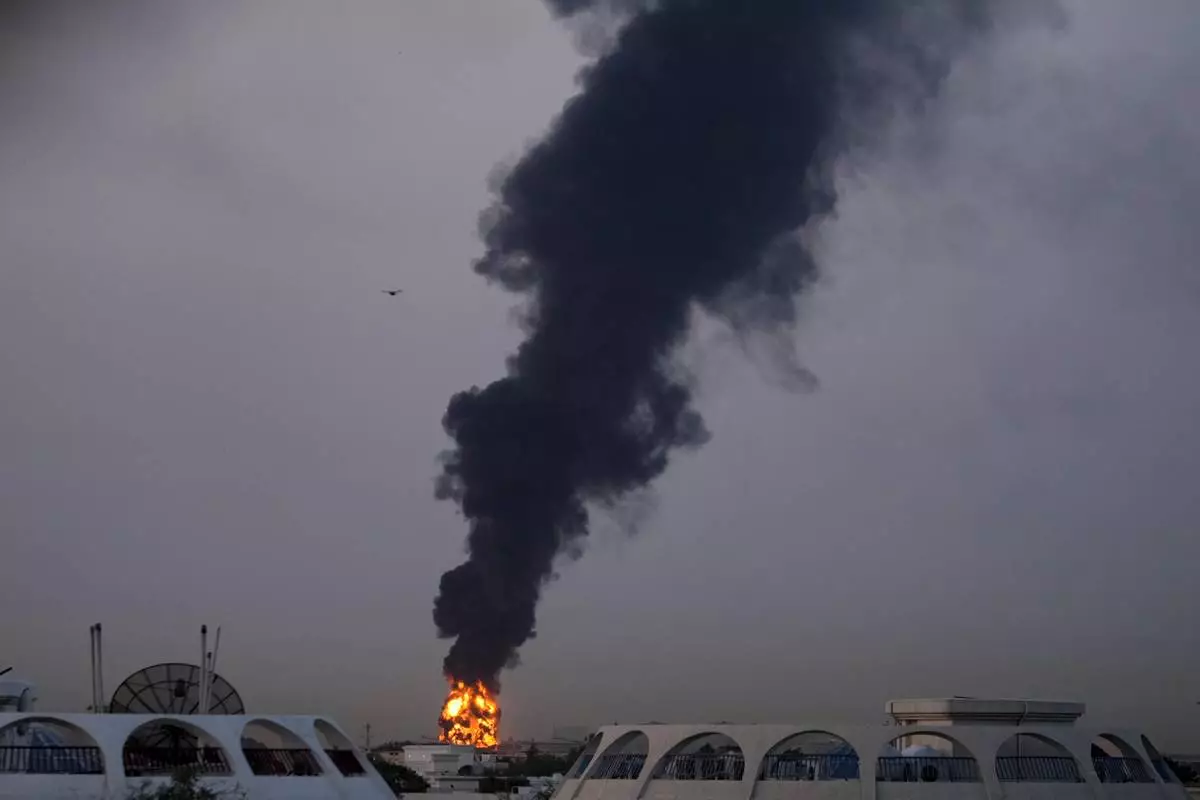
Fire and plumes of smoke rise after a drone struck a fuel tank forcing the temporary suspension of flights. near Dubai International Airport, in United Arab Emirates, early Monday, March 16, 2026. (AP Photo)
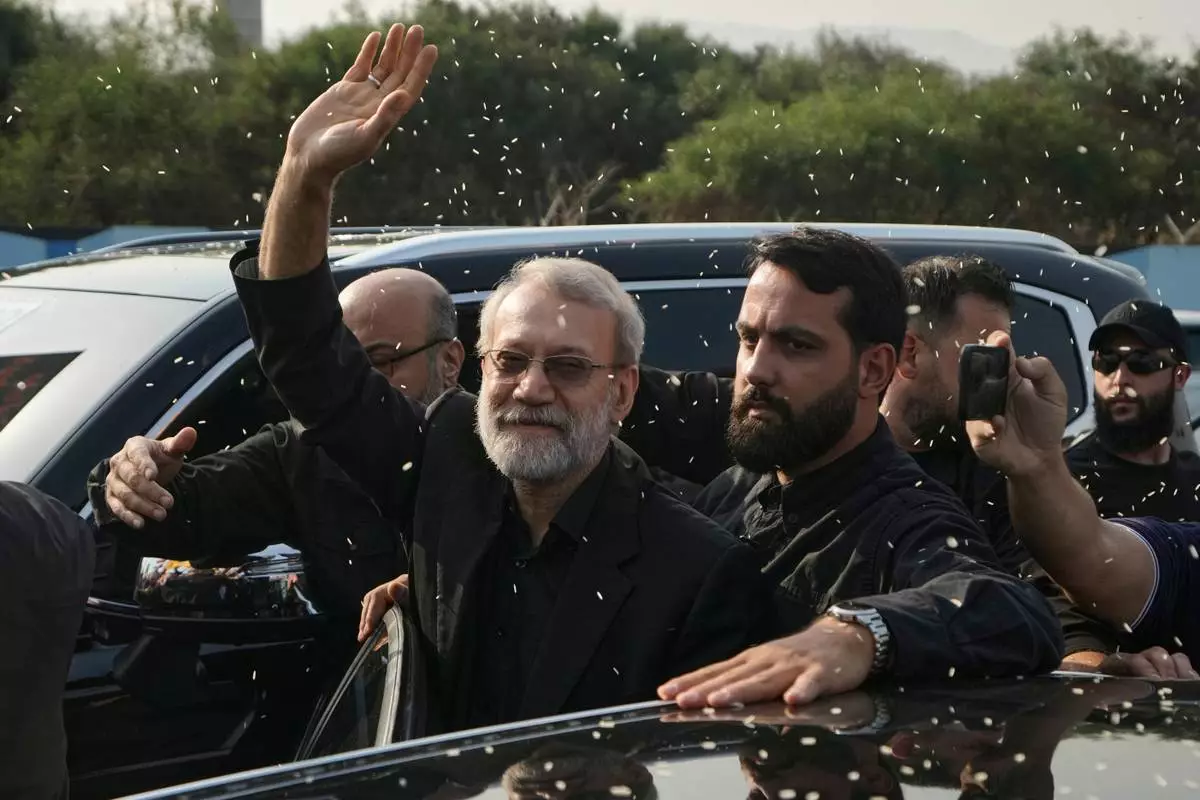
FILE - Ali Larijani, center, head of Iran's National Security Council, gestures as Hezbollah supporters throw rice to welcome him outside Rafik Hariri International Airport in Beirut, Lebanon, Wednesday, Aug. 13, 2025. (AP Photo/Bilal Hussein, File)
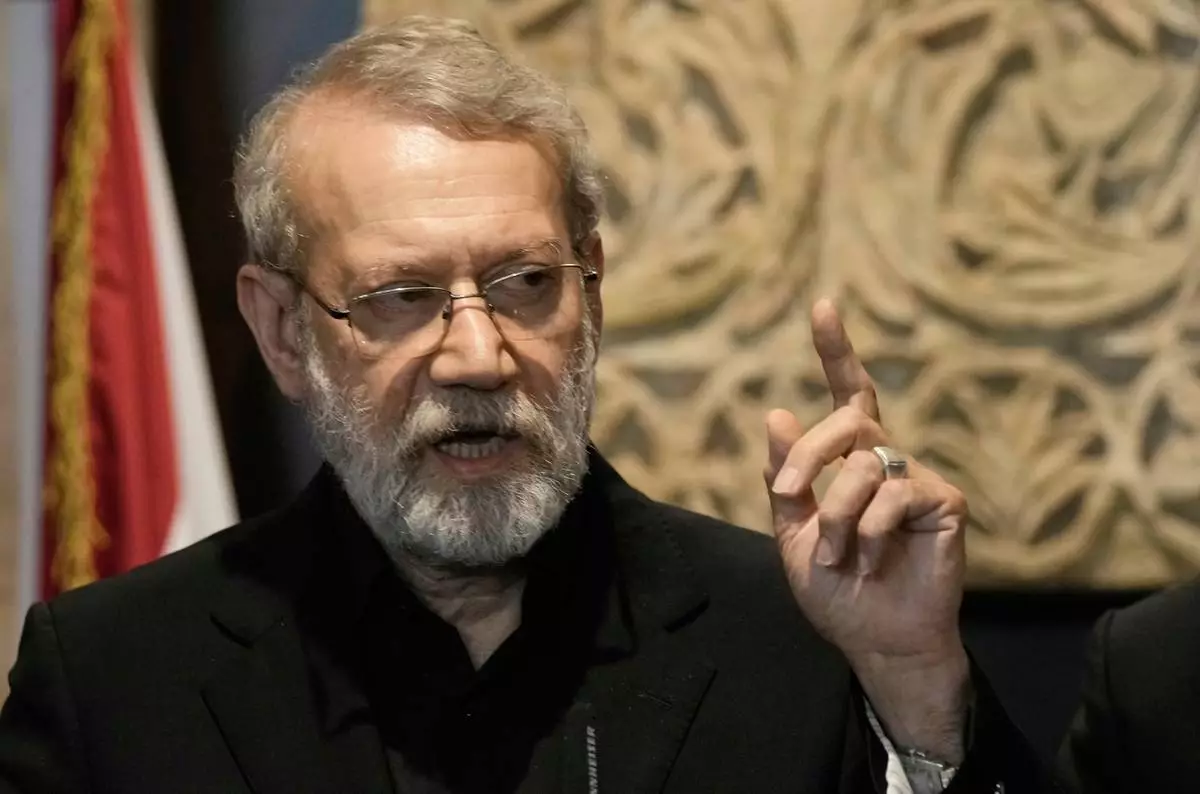
FILE -Iranian Secretary of Supreme National Security Council Ali Larijani, speaks during a press conference after his meeting with the Lebanese parliament speaker Nabih Berri, in Beirut, Lebanon, Aug. 13, 2025. (AP Photo/Bilal Hussein, File)
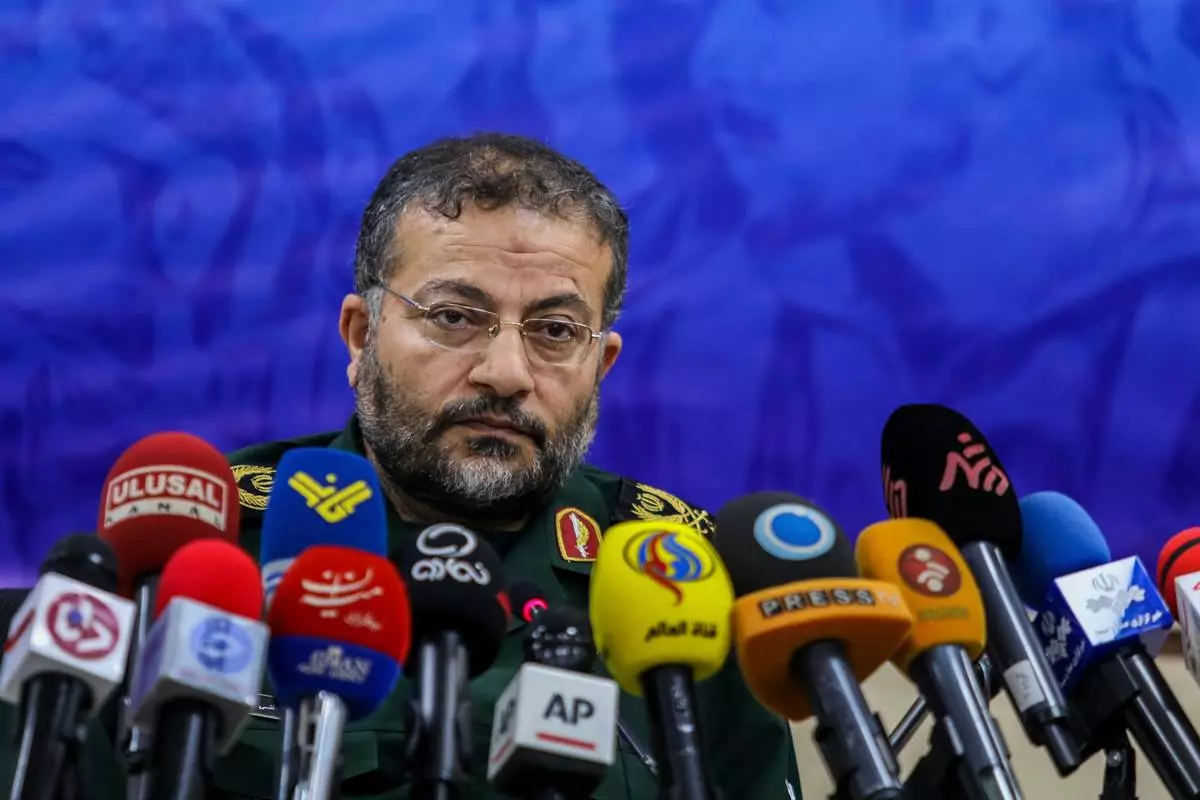
FILE - Commander of Iran's Basij paramilitary force, Gen. Gholam Reza Soleimani, gives a press conference in Tehran, Iran, Nov. 18, 2019. (AP Photo/Ebrahim Noroozi, File)
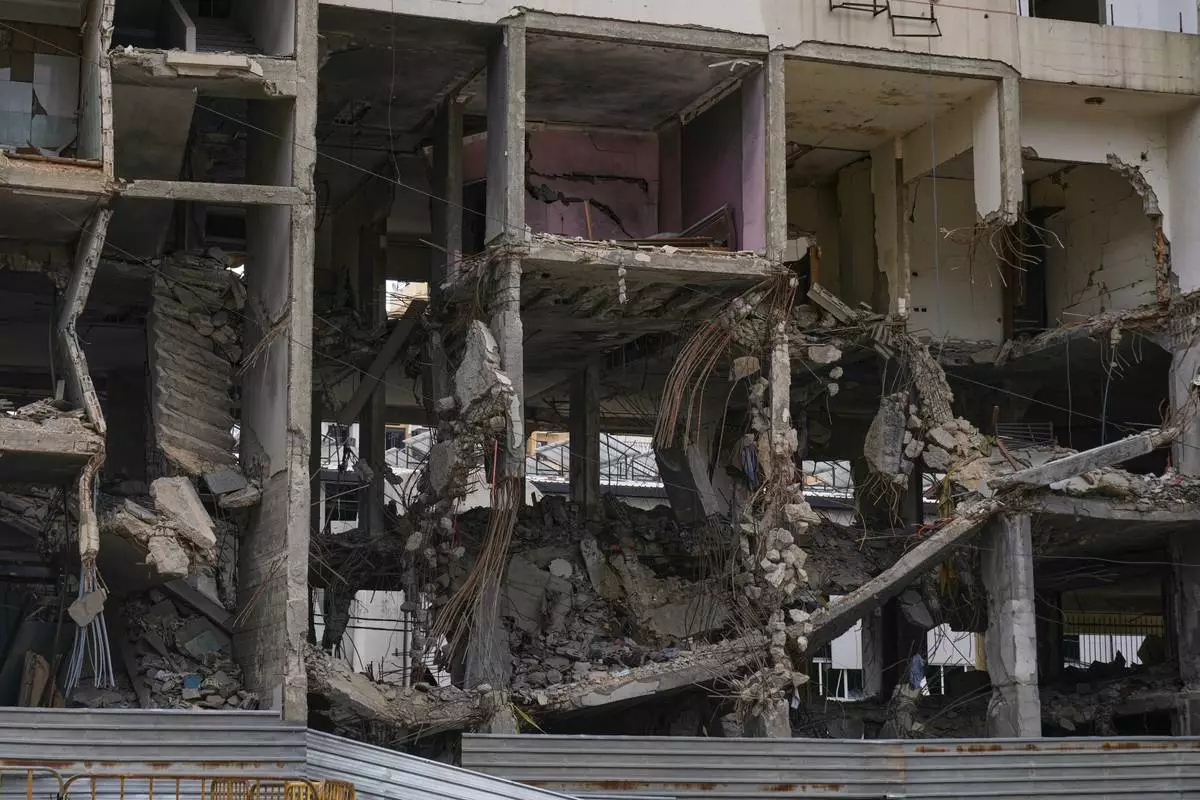
A view of a building damaged in an Israeli airstrike, in Dahiyeh, Beirut's southern suburbs, Beirut's southern suburbs, Lebanon, Monday, March 16, 2026. (AP Photo/Bilal Hussein)
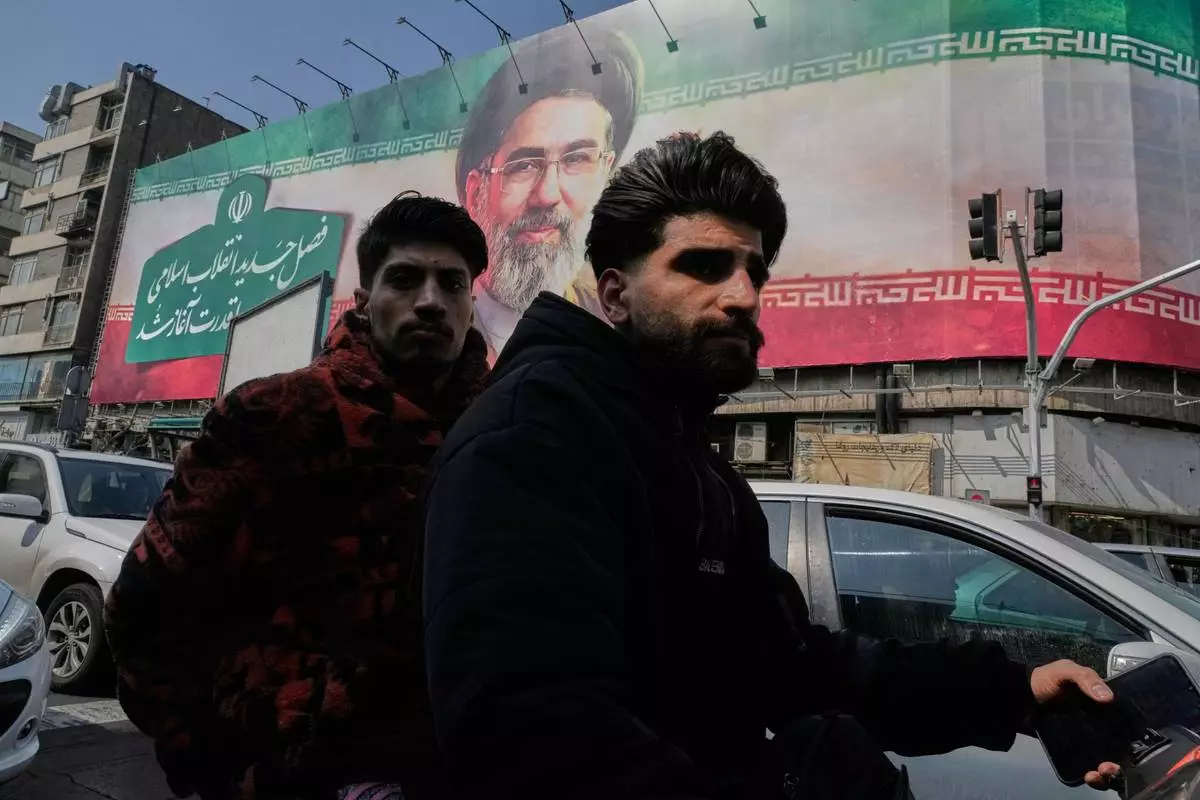
Two men ride their motorbike past a billboard of the Iranian Supreme Leader Ayatollah Mojtaba Khamenei in downtown Tehran, Iran, Saturday, March 14, 2026. (AP Photo/Vahid Salemi)
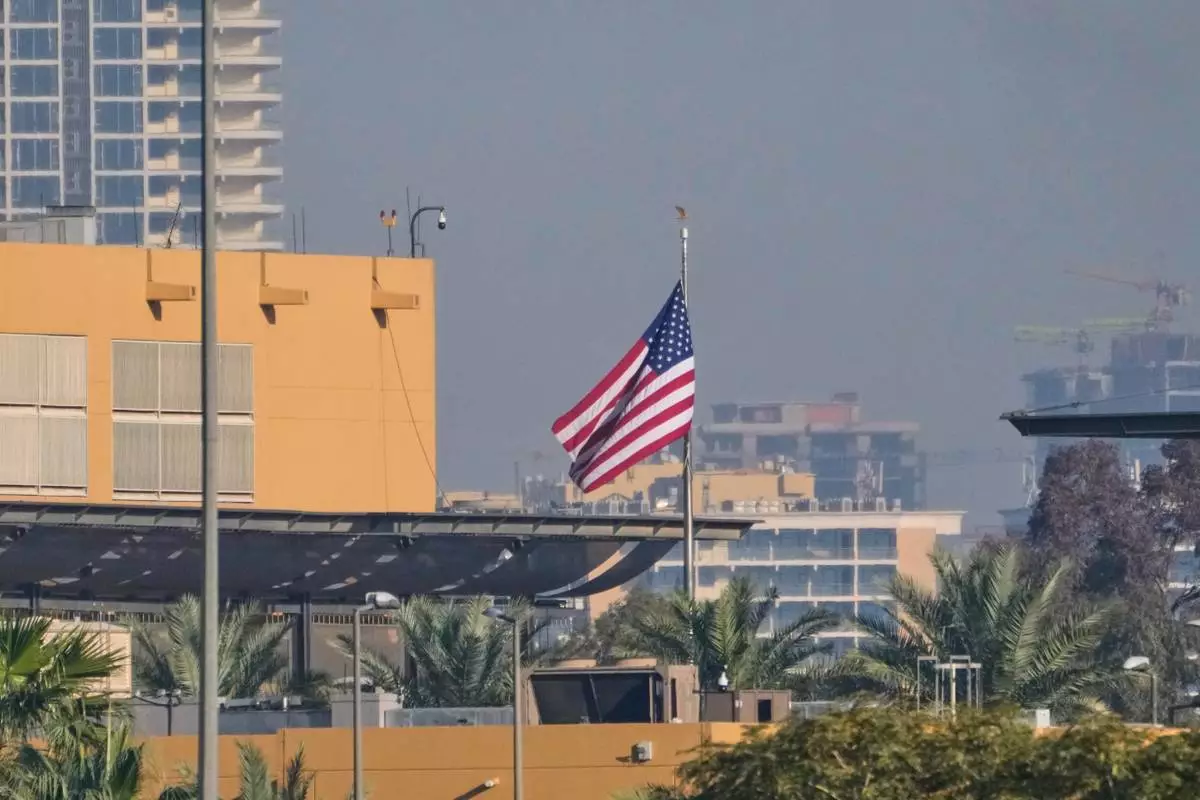
U.S. Embassy is seen across the Tigris River in Baghdad, Tuesday, March 17, 2026. (AP Photo/Hadi Mizban)
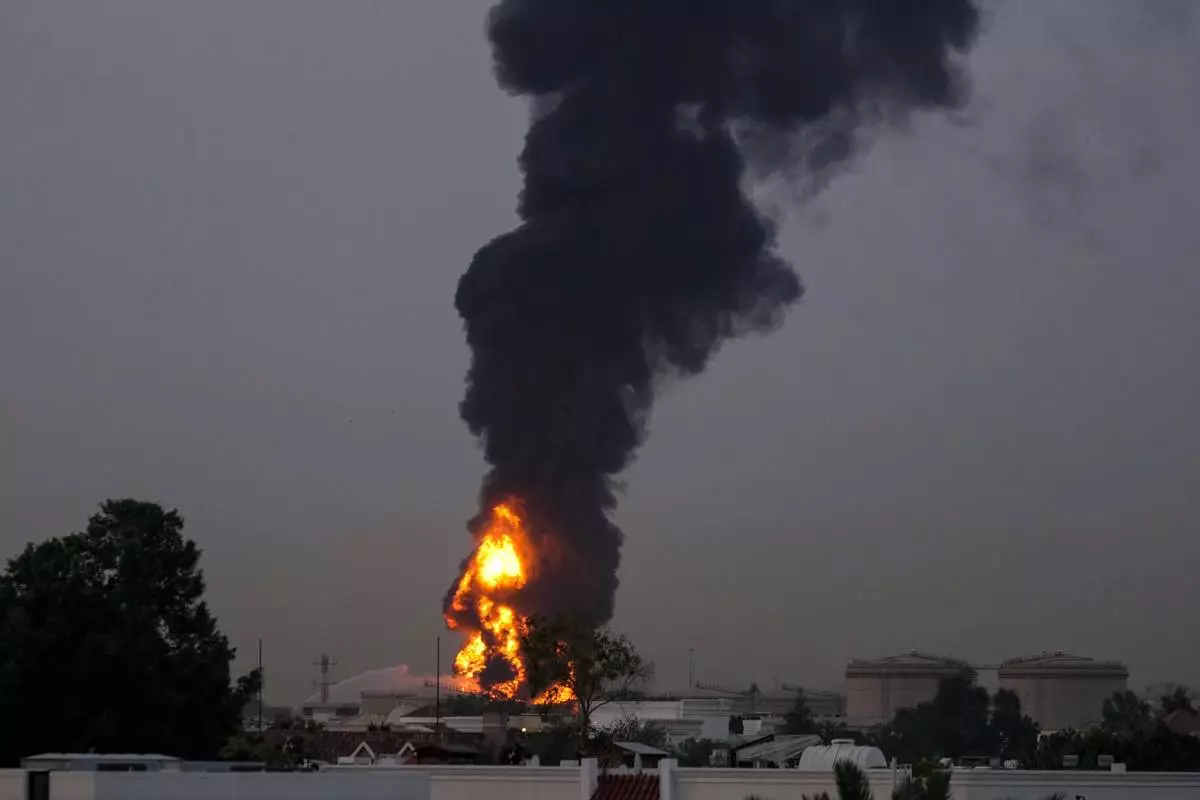
Fire and plumes of smoke rises after a drone struck a fuel tank forcing the temporary suspension of flights. near Dubai International Airport, in United Arab Emirates, early Monday, March 16, 2026. (AP Photo)
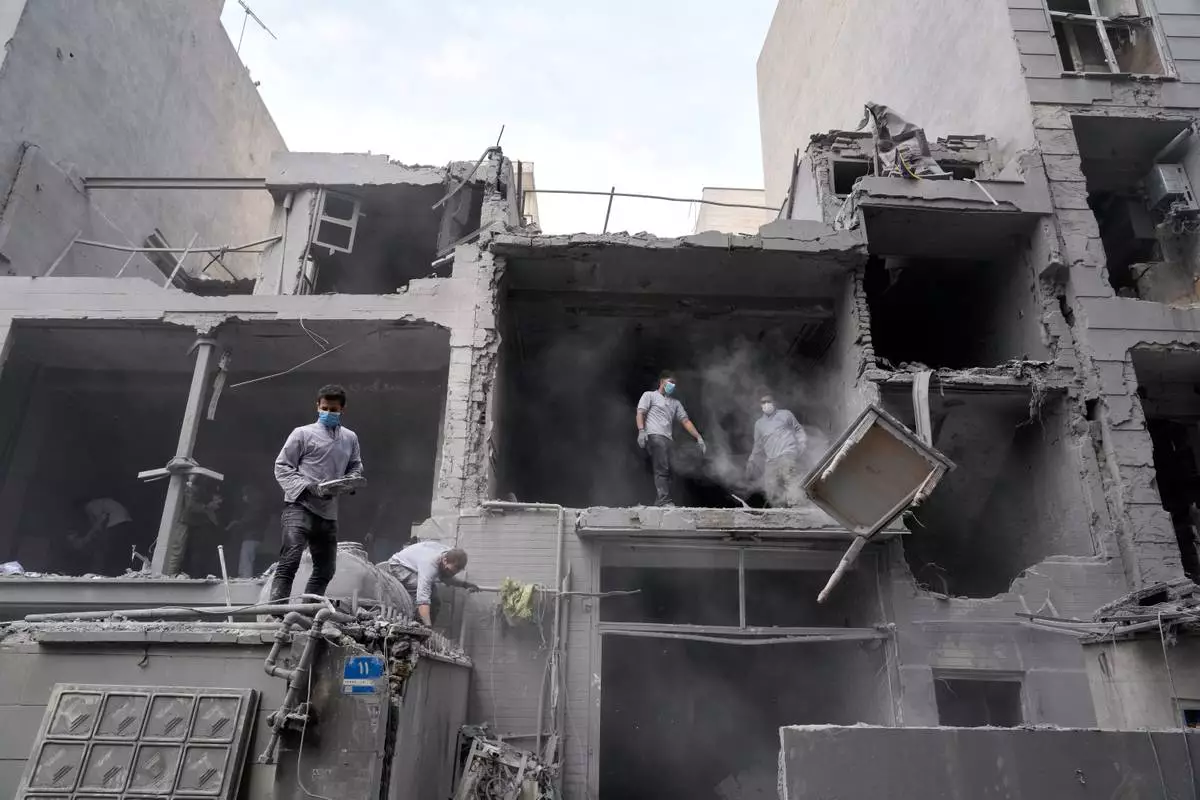
Volunteers clean debris from a residential building damaged when a nearby police station was hit Friday in a U.S.-Israeli strike in Tehran, Iran, Sunday, March 15, 2026. (AP Photo/Vahid Salemi)