MADISON, Wis. (AP) — The Wisconsin Legislature sent a $133 million plan to combat contamination from so-called forever chemicals to Gov. Tony Evers for his approval Tuesday, promising an end to years of squabbling between the Democratic governor and Republican lawmakers over the issue.
Evers said immediately after the Senate approved the bills Tuesday afternoon that he would sign them into law. The rare bipartisan compromise offers at least some hope for the scores of Wisconsin villages, towns and cities grappling with PFAS pollution in their groundwater.
“Beautiful. This has been a long time coming,” Campbell Town Supervisor Lee Donahue said of the Senate votes. Residents of the town of 4,300 have been drinking bottled water since state health officials warned them in 2021 that more than 500 wells were contaminated. Donahue said state dollars would help the town transition from private wells to a municipal water system treated for PFAS.
“This is definitely a day for celebration,” she said.
PFAS — short for per- and polyfluoroalkyl substances — are manmade chemicals that don’t easily break down in nature. They're found in a wide range of products, including cookware and stain-resistant clothing, and previously were often used in aviation fire-suppression foam. The chemicals have been linked to health problems including low birth weight, cancer and liver disease, and have been shown to make vaccines less effective.
Communities located near industrial sites and military bases nationwide are grappling with PFAS contamination. Government estimates suggest as much as half of U.S. households have some level of PFAS in their water — whether it comes from a private well or a tap. While federal officials have put strict limits on water provided by utilities, those rules don’t apply to the roughly 40 million people in the U.S. who rely on private drinking water wells.
Municipalities across Wisconsin are struggling with PFAS contamination in groundwater, including Marinette, Madison, Peshtigo, Wausau, the town of Stella and Campbell. The waters of Green Bay also are contaminated.
In Stella, for example, private wells were badly contaminated by PFAS-laden fertilizer spread on farm fields. The state has had limited resources to help, struggling to provide widespread free testing, and officials have offered only a limited grant program for well replacements.
Tom LaDue, a Stella resident, lives on the shores of a highly contaminated lake. He said the Senate signing off on the bills was a rare bit of good news for his town of 670 people. Testing has shown very little PFAS in his private well, but LaDue sits on a town committee that tracks PFAS developments and he knows dozens of people are living on bottled water. He said he hopes the town will get enough money to at least test private wells for pollution.
“We've been waiting for it for a long time,” he said of releasing the money. “We'll be letting everyone in the town know this has passed and we'll finally see, hopefully, some forward movement in our small town.”
Evers and Republicans have been at odds for years over how best to address the pollution. The 2023-25 state budget created a $125 million trust fund to combat PFAS contamination, but the two camps haven't been able to agree on how to spend it.
The governor vetoed a GOP bill two years ago that would have spent the money on grants for municipalities, landowners and waste disposal facilities to test for PFAS in water treatment plants and wells. But Evers said the bill limited state regulators' authority to hold polluters liable and environmental groups urged him to kill the proposal.
The fund has grown to $133.4 million during the stalemate, according to the Legislative Fiscal Bureau.
The chief sponsors of that original bill, Republican Sen. Eric Wimberger and Rep. Jeff Mursau, released two new proposals in January after discussions with the state Department of Natural Resources, an Evers cabinet agency.
The first bill would spend $132.2 million from the PFAS trust fund for community grants, well replacements, airports and industrial properties and $1.3 million from the state's general fund to cover 10 new state Department of Natural Resources positions to administer the spending.
The second proposal establishes a list of entities that would be exempt from liability for contamination, similar to the bill Evers vetoed in 2024. Included on the list are people who spread PFAS while in compliance with permits that did not address PFAS; landowners whose property was contaminated pursuant to a permit; owners of contaminated industrial property who didn't cause the pollution; and fire departments that used PFAS in their foam. Businesses that own or operate facilities that currently or have used PFAS or have ever spread industrial waste could be held liable, however.
The Assembly passed both pieces of legislation unanimously on the last day of its regular two-year session in February. The Senate passed the bills overwhelmingly, approving one bill 33-0 and the other on a voice vote with almost no discussion.
“I’m incredibly proud we were able to work across the aisle to get this done — and get it done right,” Evers said in a statement.
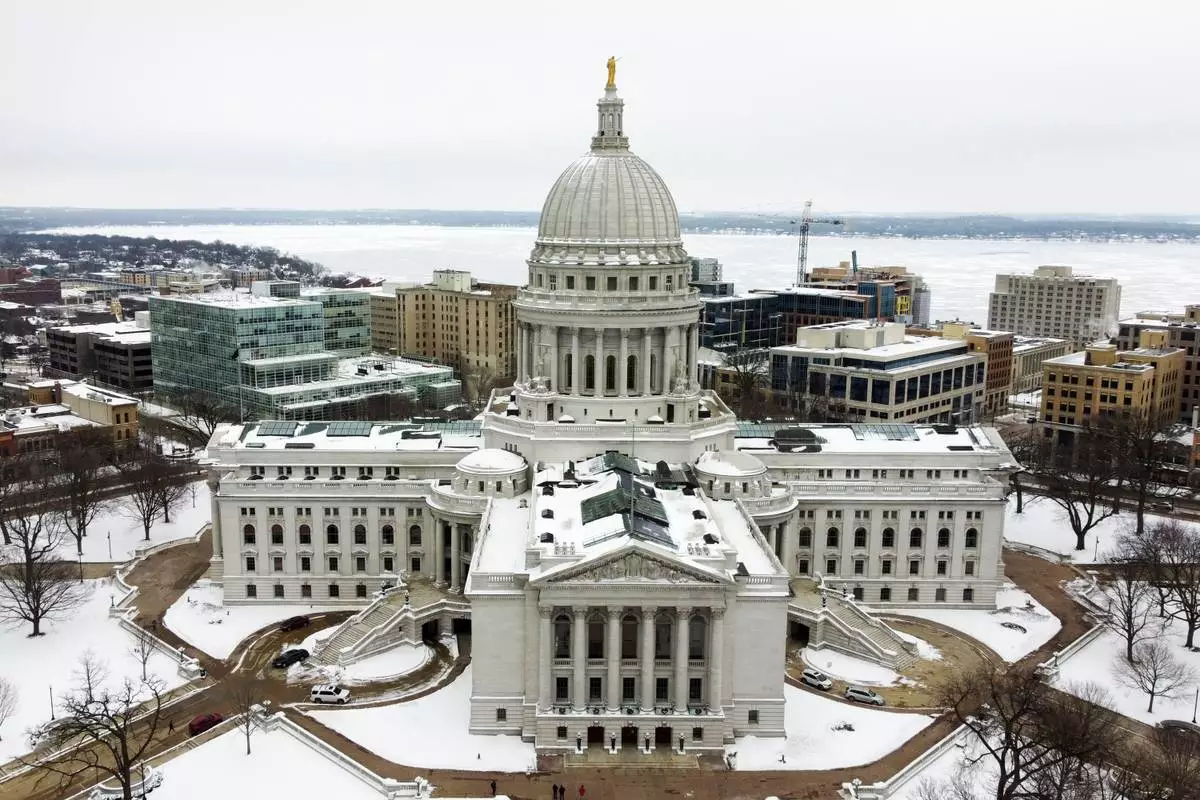
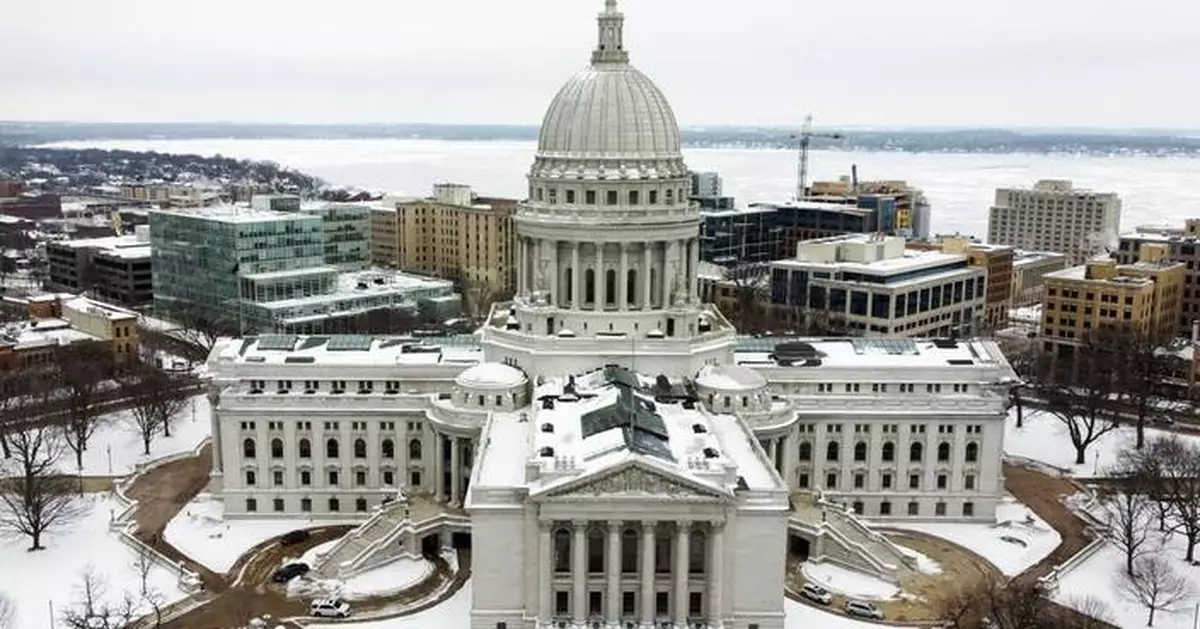
FILE - This Wisconsin State Capitol is seen on Dec. 31, 2020, in Madison, Wis. (AP Photo/Morry Gash, File)
NEW YORK (AP) — Oil prices resumed their rise on Tuesday because of the war with Iran, but U.S. stocks held steadier this time around.
The S&P 500 rose 0.2% to add to its gain from the day before, which was its biggest since the war began. The Dow Jones Industrial Average climbed 46 points, or 0.1%, and the Nasdaq composite rose 0.5%.
It’s a break, for now at least, from the usual playbook since the start of the war, where stock prices have tended to go in the opposite direction of oil prices. The fear in financial markets has been that a long-term disruption to the global flow of oil could send prices so high for so long that it damages the global economy. Not only would higher gasoline prices sap households’ budgets, it could also push companies to pass on their own higher transportation costs to customers.
On Tuesday, the price for a barrel of benchmark U.S. crude rose 2.9% to settle at $96.21. Brent crude, the international standard, climbed 3.2% to $103.42. But they pared even bigger gains from earlier in the morning, and they’re either roughly where they were at the end of last week or below.
Delta Air Lines offered an encouraging signal about the strength of the economy after raising its forecast for revenue for the first three months of 2026. It said it’s seen demand to fly accelerate into March from both businesses and households.
And that looks to be enough to offset higher prices for jet fuel because of the spike in oil prices. Delta said it still expects to report a profit for the start of 2026 that’s in line with its earlier forecast.
Delta’s stock flew 6.6% higher, and it helped other airline stocks trim their own sharp losses for the year so far. United Airlines climbed 3.2%, and Southwest Airlines rose 2.2%.
American Airlines gained 3.5% after saying it’s also likely to report stronger revenue growth for the start of this year than it had forecast earlier.
Another big winner was Uber Technologies, which drove 4.2% higher after announcing an expansion of its partnership with Nvidia. They plan to launch a fleet of autonomous vehicles using Nvidia’s technology, beginning with Los Angeles and San Francisco in the first half of next year.
Some beaten-down stocks in the financial industry, meanwhile, recovered losses from earlier in the year. That includes several that got swept up in worries about whether software businesses and others potentially under threat by AI-powered competitors will pay back all their loans. Blue Owl Capital gained 4.5%, and Ares Management rose 6.6%.
They helped offset a 3.2% drop for Cencora after the pharmaceutical sourcing and distribution services company said it’s looking for a new chief financial officer. Its current CFO, James Cleary, will retire at the end of June.
All told, the S&P 500 rose 16.71 points to 6,716.09. The Dow Jones Industrial Average added 46.85 to 46,993.26, and the Nasdaq composite gained 105.35 to 22,479.53.
The U.S. stock market has a track record of bouncing back relatively quickly from military conflicts in the Middle East and elsewhere, as long as oil prices don’t stay too high for too long. Many professional investors are expecting that to be the case again, which has helped keep U.S. stock prices near their record levels.
For all its dramatic swings over the last couple weeks, including several that struck hour to hour, the S&P 500 is less than 4% below its all-time high.
That’s even as Treasury yields have climbed on expectations that higher oil prices will prevent the Federal Reserve from cutting interest rates for a while. Higher yields push downward on prices for stocks and all kinds of investments.
The yield on the 10-year Treasury eased to 4.20% from 4.23% late Monday, but it remains well above the 3.97% level it was at before the war with Iran began.
The Fed will make its next announcement on interest rates Wednesday afternoon, and traders see virtually no chance of a cut, according to data from CME Group.
Cuts to interest rates by the Fed would give the economy and job market a boost, and President Donald Trump has angrily been calling for them. But reductions would also worsen inflation.
In Australia, the central bank is actually raising interest rates. Citing higher fuel prices, the Reserve Bank of Australia made its first hike since November 2023.
In stock markets abroad, European indexes rose following a mixed finish in Asia. Indexes climbed 0.8% in London and fell 0.9% in Shanghai for two of the world’s bigger moves.
AP Writers Matt Ott, Elaine Kurtenbach and Rod McGuirk contributed.
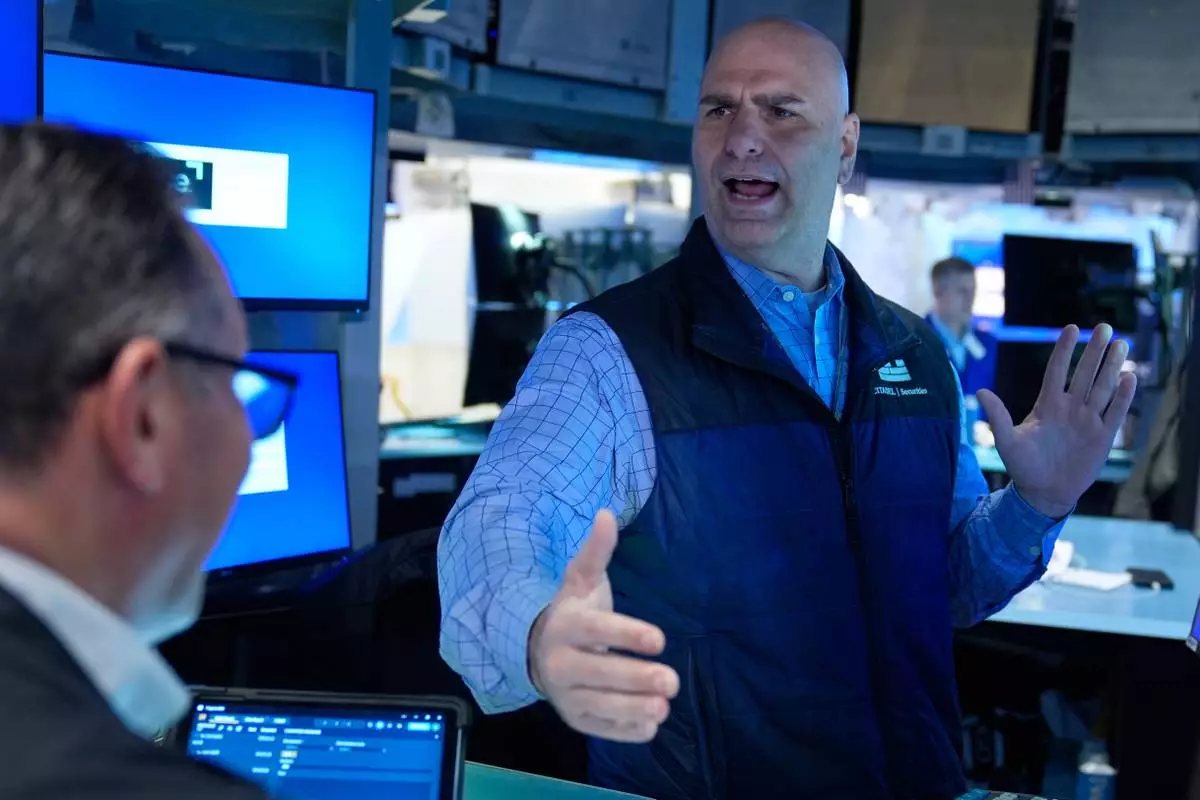
Philip Finale works on the floor at the New York Stock Exchange in New York, Tuesday, March 10, 2026. (AP Photo/Seth Wenig)
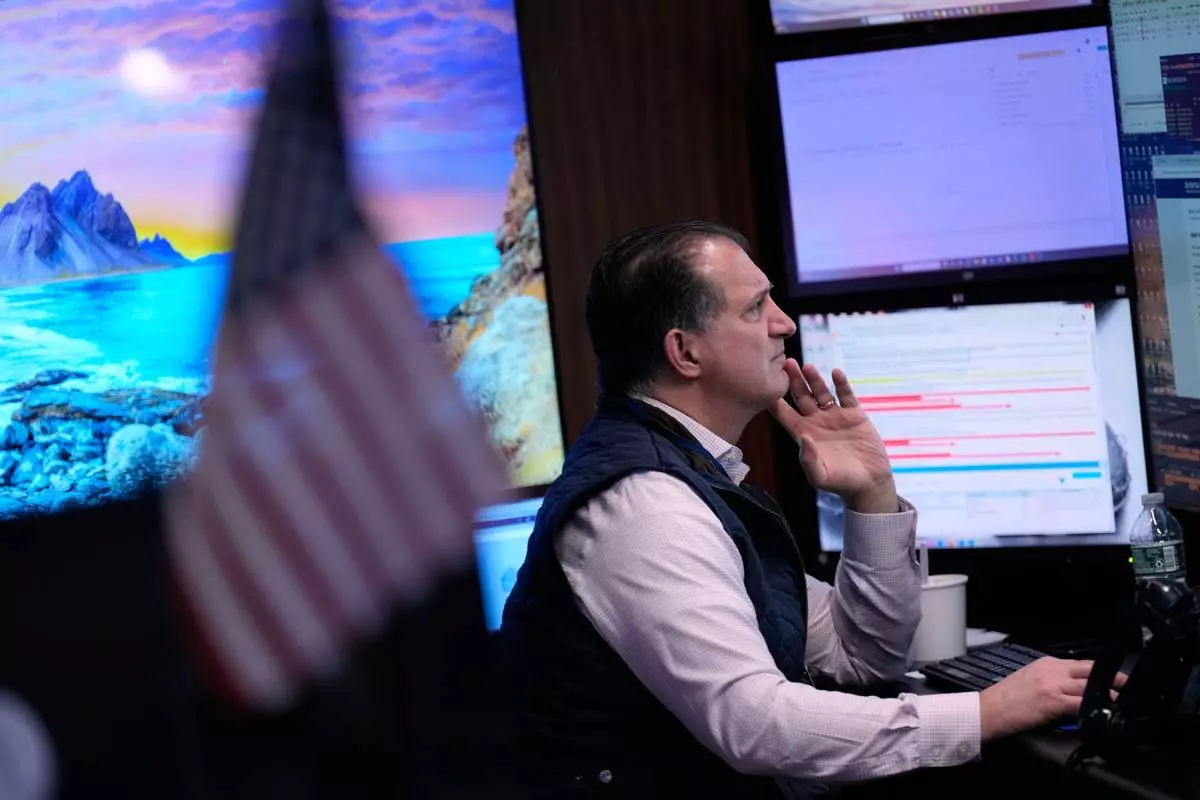
Traders work on the floor at the New York Stock Exchange in New York, Tuesday, March 10, 2026. (AP Photo/Seth Wenig)
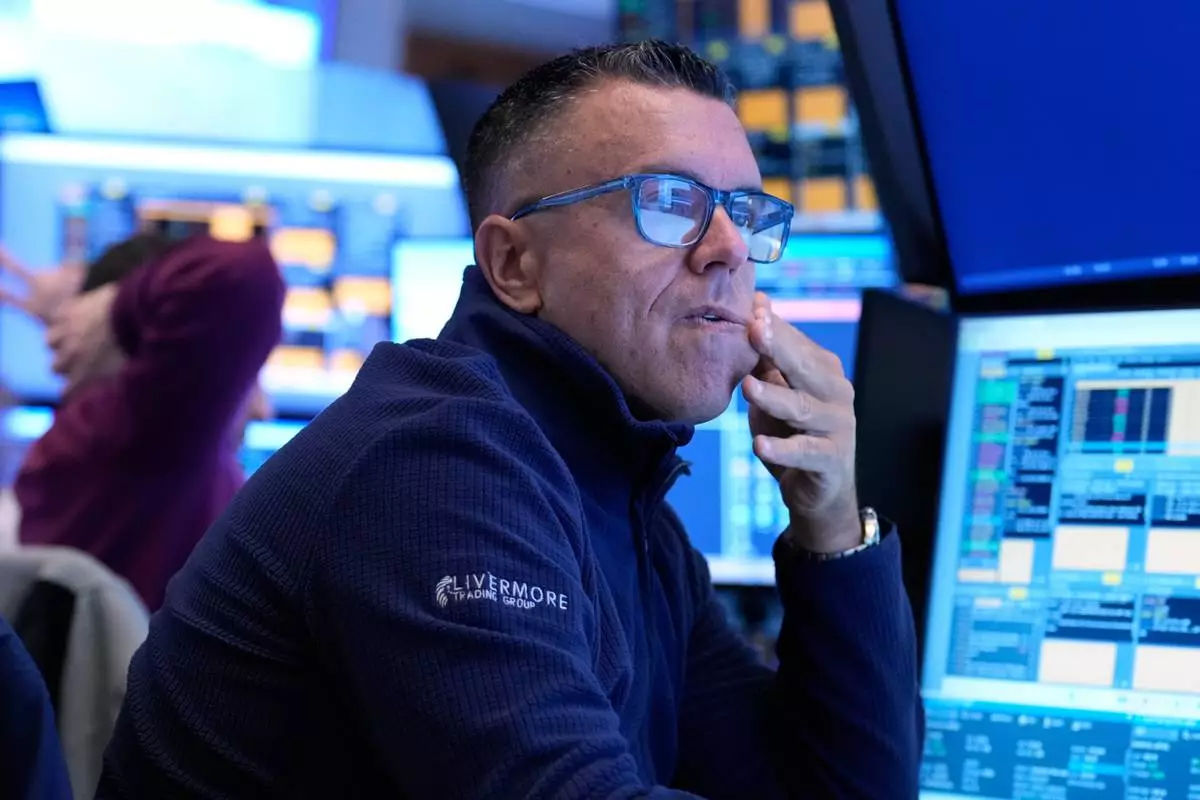
Traders work on the floor at the New York Stock Exchange in New York, Tuesday, March 10, 2026. (AP Photo/Seth Wenig)

Screens display financial information on the floor at the New York Stock Exchange in New York, Tuesday, March 10, 2026. (AP Photo/Seth Wenig)
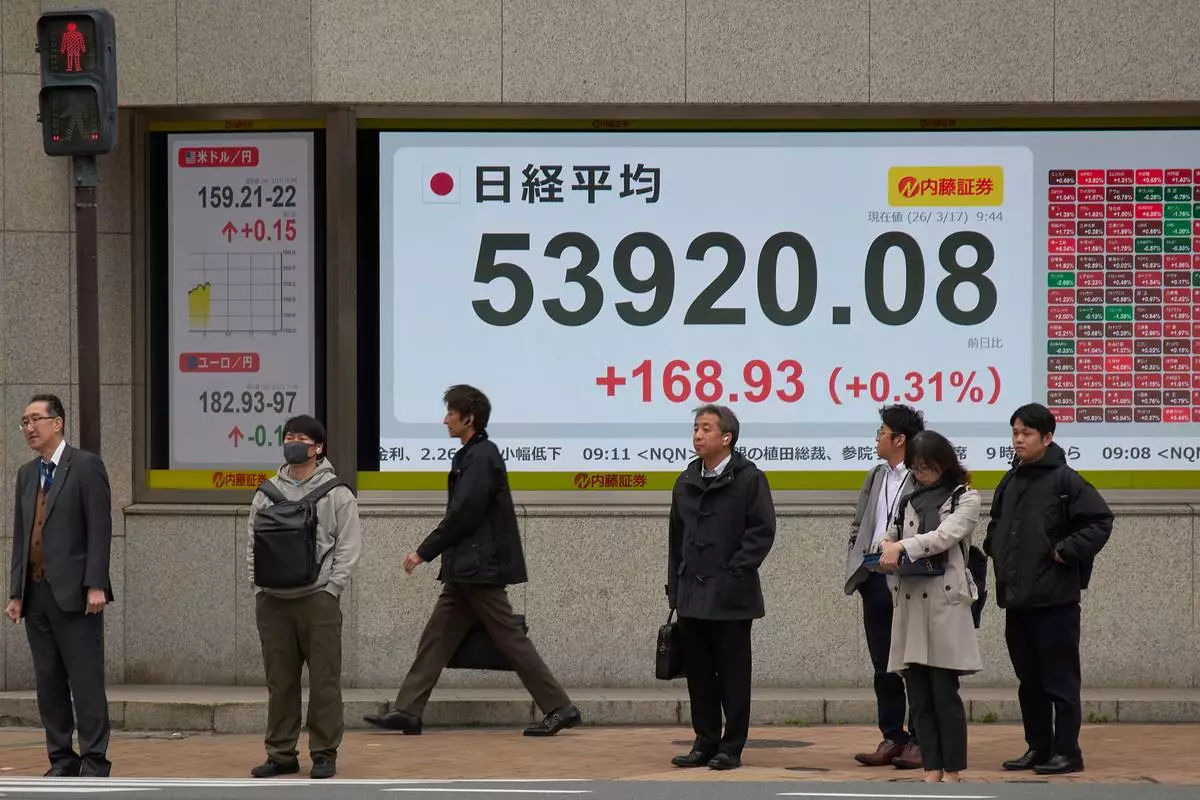
People stand in front of a stock price monitor showing Nikkei index at a security company Tuesday, March 17, 2026, in Tokyo. (AP Photo/Eugene Hoshiko)
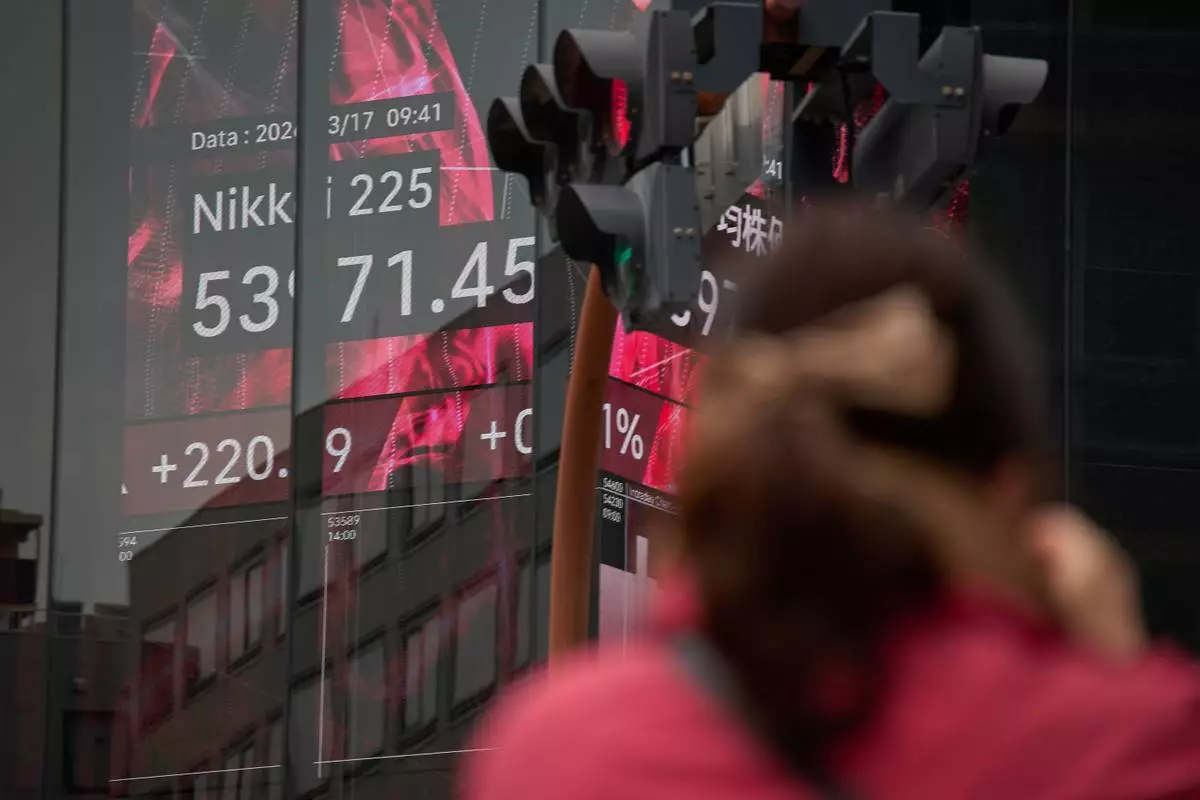
A person stands near a stock price monitor showing Nikkei 225 index at a security company Tuesday, March 17, 2026, in Tokyo. (AP Photo/Eugene Hoshiko)
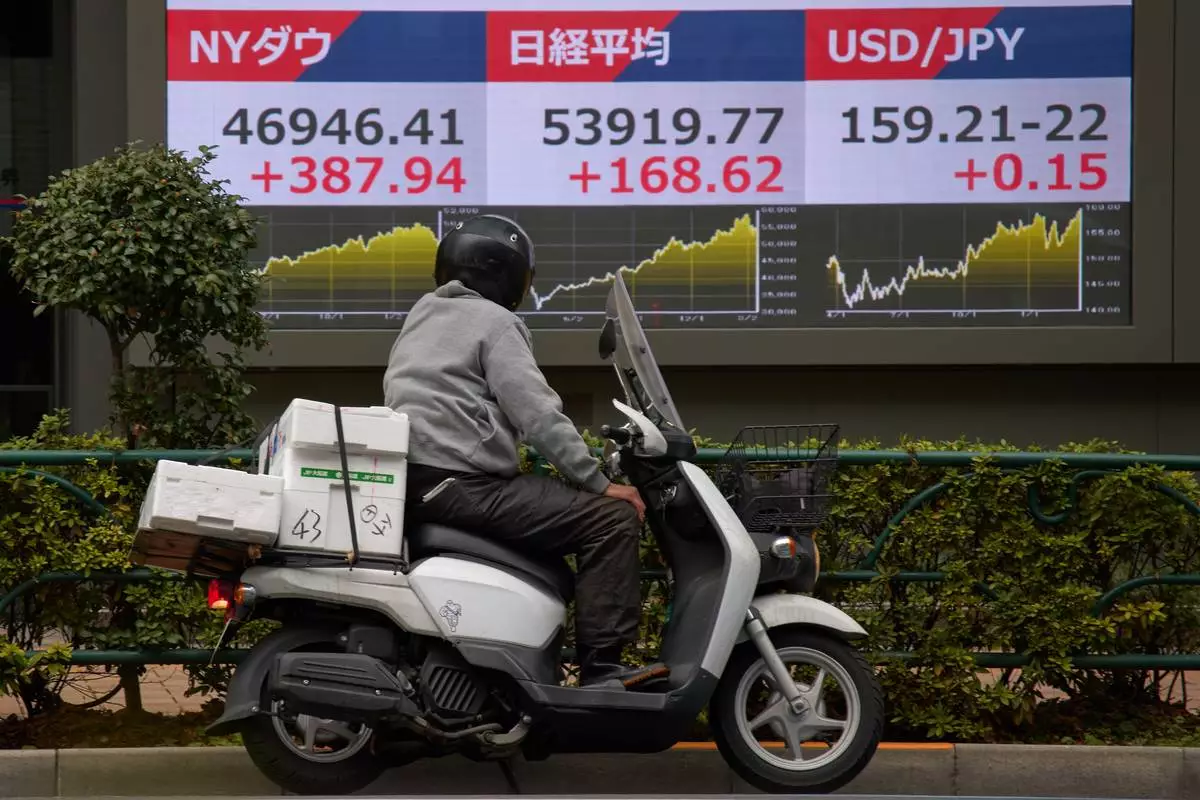
A person looks at a stock price monitor showing New York Dow and Nikkei indexes also US dollar Japanese yen exchange rate at a security company Tuesday, March 17, 2026, in Tokyo. (AP Photo/Eugene Hoshiko)
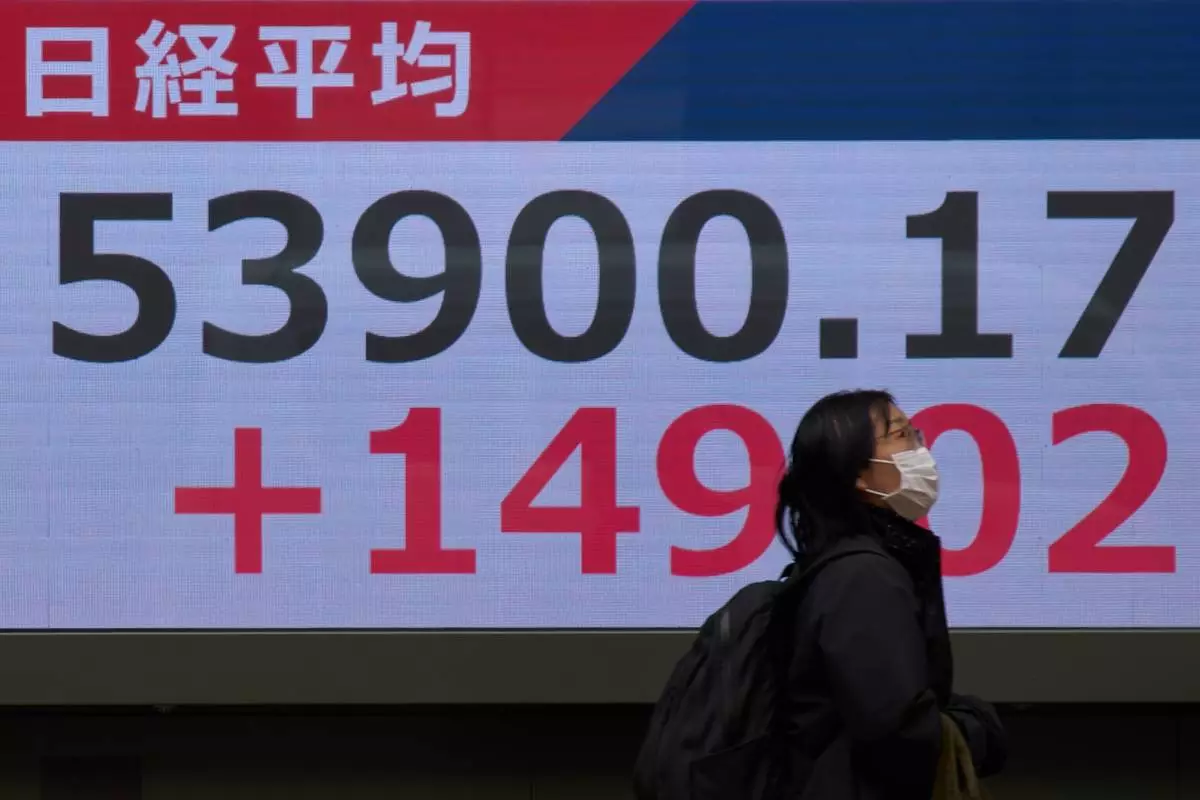
A person walks near a stock price monitor showing Nikkei index at a security company Tuesday, March 17, 2026, in Tokyo. (AP Photo/Eugene Hoshiko)