Herders in the northwest China provinces of Qinaghai and Gansu are returning from leased winter grazing lands to their mountain pastures as spring arrives in the Qilian Mountains.
For centuries, herders have embraced seasonal changes to connect with nature, practicing rotational grazing to allow the recovery and regrowth of pasture plants and meanwhile allow their livestock to have enough to eat.
In recent years, a new winter strategy has emerged in the region: Herders move their herds to agricultural areas in the Hexi Corridor, where animals feed on post-harvest crop stalks. After five months of grazing on leased farmland, they return to mountain pastures each spring, giving natural grasslands a recovery period.
Farmland leasing has been a win-win for both herders and farmers. For herders, abundant crop stalks provide sufficient winter fodder, improving breeding efficiency. For farmers, leasing fields generates income and eliminates stalk-clearing costs, while animal manure fertilizes soil.
The strategy boosts herder income, agricultural efficiency, and grassland restoration, strengthening the northwest's ecological security barrier. An increasing number of herders are adopting this strategy.
In the countryside of Gansu's Zhangye City, Gamancao, a herder of Tibetan ethnicity, recently returned home in the mountains after five months on a rented farm. She was glad to find the grasslands in good shape.
"If we didn't go down to rent farmland for grazing, the sheep would have eaten all this grass. Then the moisture in the soil will be gone and the ground would be dry," Gamancao told the reporter.
Through leased land grazing, the grassland coverage in Qilian Mountains has risen from 72.4 percent to 78.2 percent, with average grass height increasing from 16.8cm to 19cm. The improved ecology has attracted more and more tourists to visit the mountains, sparking new hope for cultural tourism development among local herders.
For camels in northwest China's Xinjiang, spring also means beginning of life. In Fuhai County of Altay Prefecture, 13,000 female camels have begun calving. To ensure newborn survival in low temperatures, herders have fitted calves with insulated jackets.
"We put cotton-padded jackets on the calves to prevent cold and cope with temperature drops due to changing seasons. We've built a special nursing area and given mother camels nutritious fodder so the calves can get enough milk," explained a herder Halamati Yeerbolati.
Fuhai County currently holds 39,000 camels, with the calving season continues through early May. To further improve survival rates, veterinary technicians have been deployed to conduct monthly health checks for the newborns.
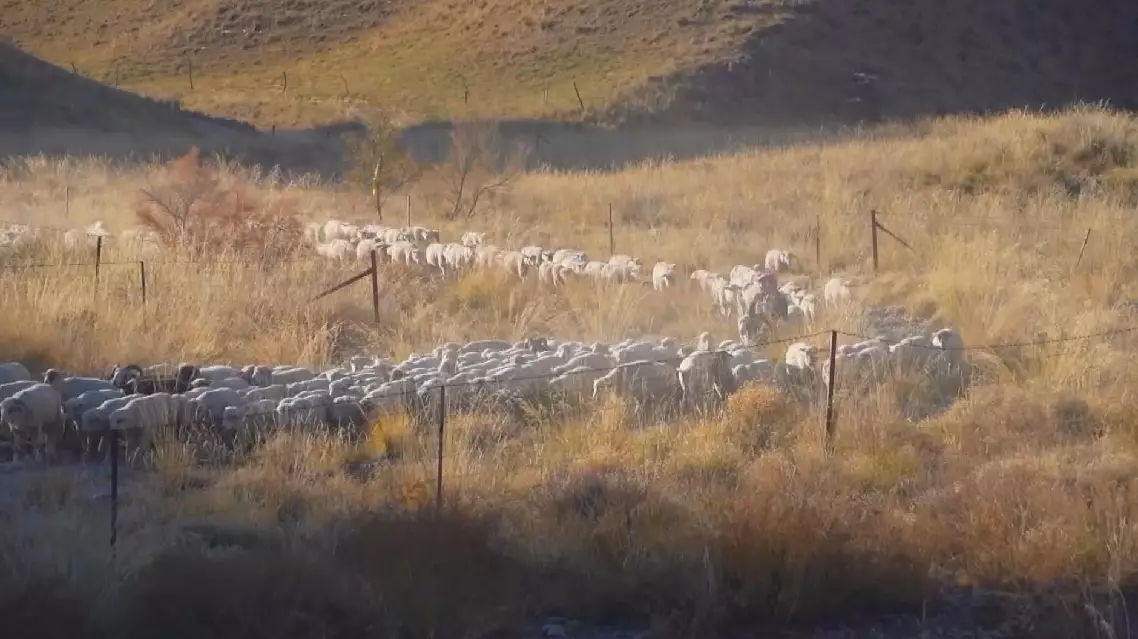
Herders return to grasslands as spring arrives in Qilian Mountains