CHICAGO--(BUSINESS WIRE)--Mar 18, 2026--
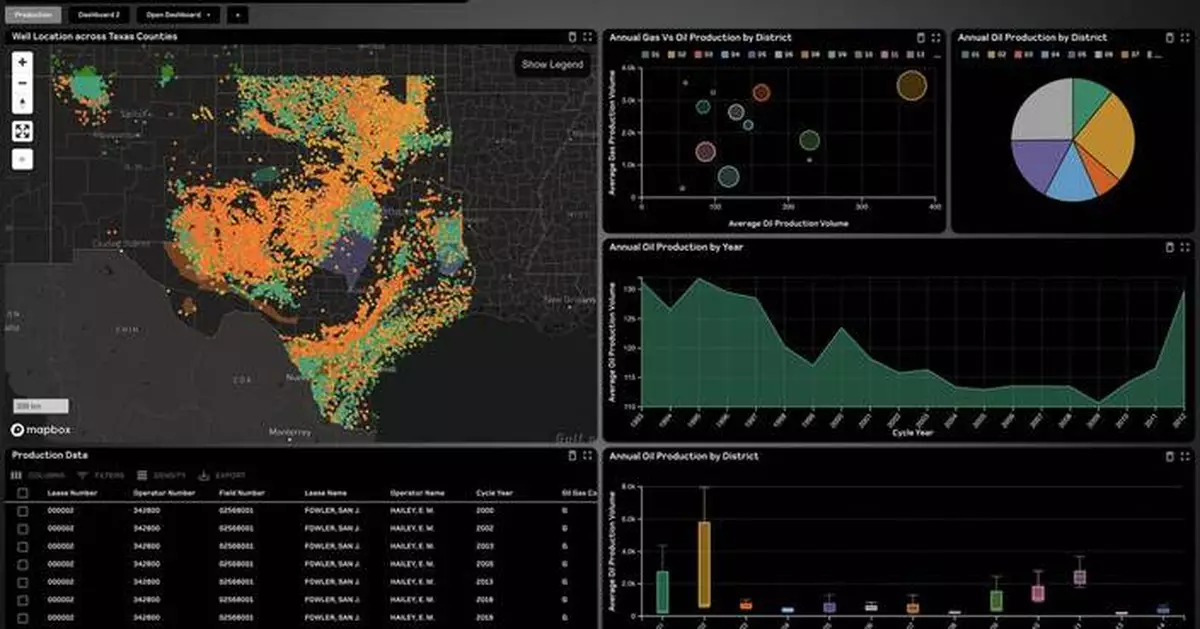
TerraNavitas, Inc. today announced the launch of ODIS Explore, the first generally available module of ODIS (Oilfield Data Intelligence & Simulation), an AI-native oilfield intelligence workspace built for North American upstream and natural-resources decision makers. ODIS Explore maps and filters basin-scale wells, permits, and production in seconds—turning fragmented oilfield data into lease-ready acreage intelligence for faster A&D screening and capital allocation.
This press release features multimedia. View the full release here: https://www.businesswire.com/news/home/20260318528970/en/
ODIS Explore arrives as operators continue to prioritize capital discipline and “flight-to-quality” inventory. Built to eliminate slow, error-prone manual joins and spreadsheet-driven workflows, ODIS Explore unifies 4.6M+ wells and permits with production histories covering ~99% of U.S. output, plus leasing, raster logs, and geospatial/satellite layers—delivered in a modern cloud web experience with weekly refreshes and trusted data lineage.
ODIS is built as a single AI-native stack—data backbone, analytics workspace, and model/agent layer—so teams don’t have to bolt tools together. Role-aware projects, dashboards, and collaboration keep land, subsurface, and finance aligned, while domain copilots support production forecasting, spacing analysis, and economics screening alongside an in-context AI copilot.
“ODIS Explore is the product we wanted when screening acreage and benchmarking operators—fast, auditable, and built around real workflows,” said Dr. Babajide Kolade, Founder and CEO of TerraNavitas. “Teams can go from a basin map to a defensible shortlist in minutes, share the same decision-ready views across stakeholders, and scale into AI-assisted forecasting and valuation as workflows mature.”
ODIS Explore supports:
• Acreage screening and operator benchmarking
• Permit watch, activity tracking, and competitive intelligence
• Deal comps and underwriting pack preparation
Key capabilities include:
• Map-first analytics with live filters, saved views, and multi-dashboard projects
• Unified data backbone spanning wells, permits, production, logs, and geospatial layers
• In-context AI features, including natural-language-to-SQL and retrieval over ODIS context and public filings
• Optional connectors to BI tools and data platforms for downstream reporting workflows
Pricing and availability: ODIS Explore is available now for $600 per user per month (billed monthly per seat) with a 30-day free trial and a 50% annual commitment discount. Verified .edu domains receive an additional 50% discount. Volume and enterprise pricing are available upon request.
Start a free trial or request a walkthrough at https://terranavitas.ai/odis.
About TerraNavitas
TerraNavitas builds AI × physics software for faster energy decisions—oilfield data intelligence, subsurface simulation, and critical-minerals targeting—so abundance is responsibly unlocked.
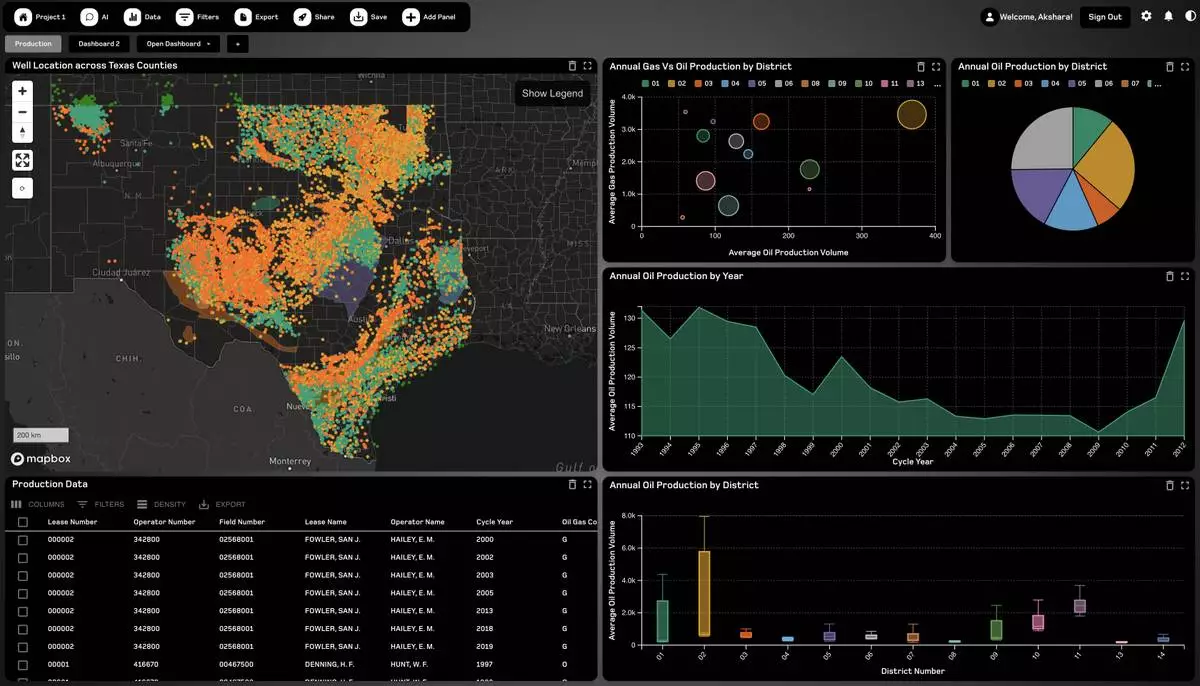
ODIS Explore dashboard showing map-first well intelligence across Texas with interactive production analytics and drill-down tables—built to accelerate acreage screening and capital decisions.
WASHINGTON (AP) — Democratic senators pressed the U.S. government’s top intelligence official at annual worldwide threats hearings Wednesday about the war with Iran, including whether she had advised President Donald Trump that Tehran was likely to block the Strait of Hormuz, a crucial passageway for oil and gas from the Persian Gulf, if attacked.
Tulsi Gabbard, the director of national intelligence, repeatedly deflected questions about the intelligence she had offered the Republican president. That exasperated Democrats who tried to use a rare public forum to extract answers about the widening conflict in the Middle East.
She sidestepped when asked by Virginia Sen. Mark Warner, the top Democrat on the Senate Intelligence Committee, whether she had advised Trump that Iran would attack Gulf nations and shut down the strait if the country was targeted by U.S. strikes.
“I have not and won’t divulge internal conversations. I will say that those of us within the intelligence community continue to provide the president with all of the best objective intelligence available to inform his decisions,” she said.
Trump has urged allies to help safeguard the waterway and ease a chokepoint on the region’s oil exports. He complained on Tuesday that NATO and most other American allies have rejected his calls.
The annual congressional hearings involving the most senior intelligence officials are taking place at a time of scrutiny over the U.S. military campaign in the Middle East and heightened concerns about terrorism at home after recent attacks at a Michigan synagogue and Virginia university.
The focus was on the war, and among the issues expected to be raised was reporting that outdated intelligence likely led to the U.S. firing a missile that hit an elementary school in Iran and killed more than 165 people. The outdated targeting data was reported to have come from the Defense Intelligence Agency, whose director, Lt. Gen. James H. Adams, was to testify. The White House says the strike is under investigation.
The hearings, which continue in Thursday in the House, are also likely to delve into the administration's internal debate over the war, given the resignation this week of Joe Kent as director of the National Counterterrorism Center. Kent said Tuesday he could not “in good conscience” back the war and did not agree that Iran posed an imminent threat to the United States.
Hours later, Gabbard, whose office oversaw Kent’s work, wrote on social media that it was up to Trump to decide whether Iran posed a threat. She did not mention her own views of the strikes and asserted at the outset of the hearing that she intended to deliver the perspectives of the intelligence agencies, as opposed to her own viewpoints.
Trump has sought to distance himself from Kent. CIA Director John Ratcliffe tried to do the same Wednesday when he was asked whether intelligence supported Kent's assessment that Iran was not an imminent threat.
"“The intelligence reflects the contrary,” Ratcliffe said.
Apart from Iran, Gabbard was pressed on her presence at an FBI search in January of an election hub in Fulton County, Georgia, where agents seized voter data from the 2020 presidential election. Her appearance at a domestic law enforcement operation raised eyebrows given that Gabbard's office is meant to focus squarely on foreign threats.
Warner said it was “an organized effort to misuse her national security powers to interfere in domestic politics and potentially provide a pretext for the president’s unconstitutional efforts to seize control of the upcoming elections.”
Gabbard responded that she was present for the search at the request of the president but did not participate. But she continued to tangle with Warner, who at one point told her: “If you want to ask the questions, you should have stayed in Congress."
Also under scrutiny is Kash Patel's leadership of the FBI. He was making his first public appearance on Capitol Hill since video surfaced last month showing him partying with members of the U.S. men's hockey team after their gold medal win at the Winter Olympics.
Patel has fired dozens of agents in his first year on the job, raising concerns about an exodus of national security experience at a time when the United States is confronting an elevated terrorism threat.
This month alone, a gunman wearing clothes with an Iranian flag design and the words “Property of Allah” killed two people at a Texas bar; two men who authorities say were inspired by the Islamic State group were arrested on charges of bringing homemade powerful explosives to a protest outside the New York City mayoral mansion; a man with a past terrorism conviction opened fire inside an Old Dominion University classroom in Virginia; and a Lebanese-born man in Michigan drove his car into a synagogue.
The FBI has said that it is working continuously to protect the country.
Associated Press writers Mike Catalini and Ben Finley contributed to this report.
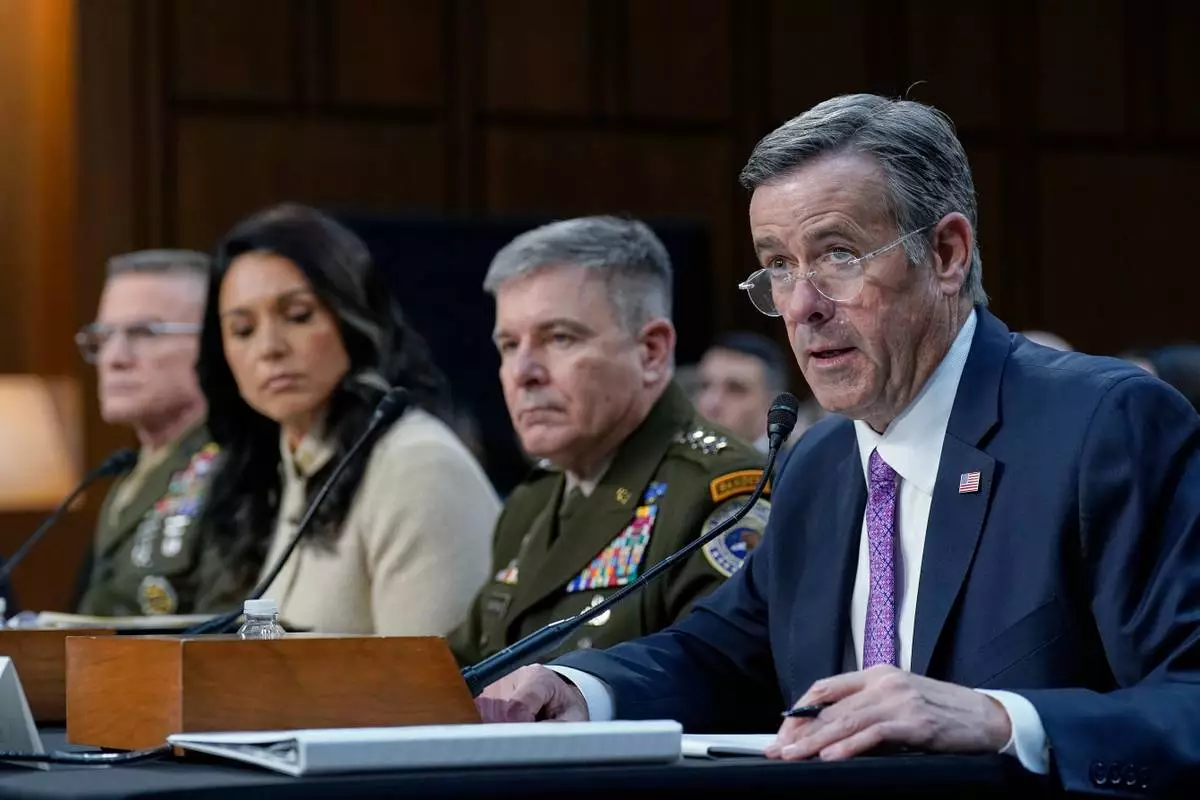
CIA Director John Ratcliffe testifies during the Senate Committee on Intelligence hearings on Capitol Hill Wednesday, March 18, 2026, in Washington. (AP Photo/Jose Luis Magana)
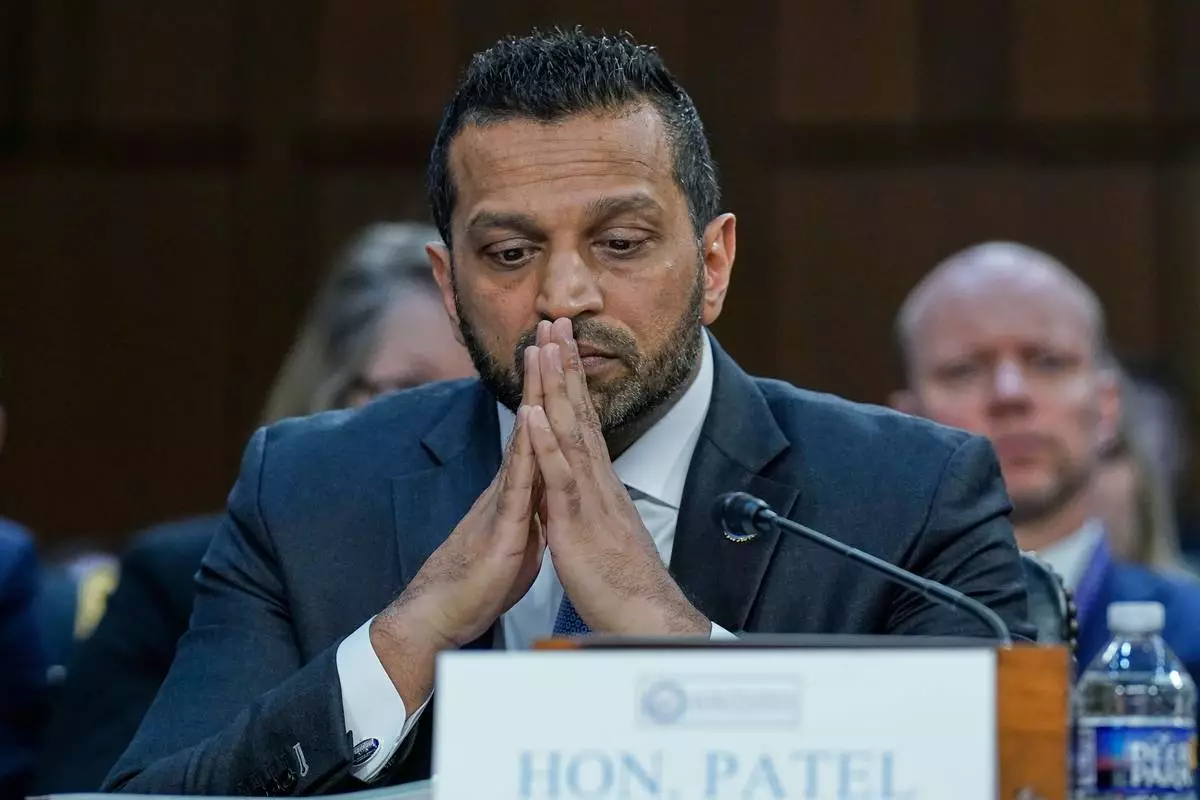
FBI Director Kash Patel listens during the Senate Committee on Intelligence hearings on Capitol Hill Wednesday, March 18, 2026, in Washington. (AP Photo/Jose Luis Magana)
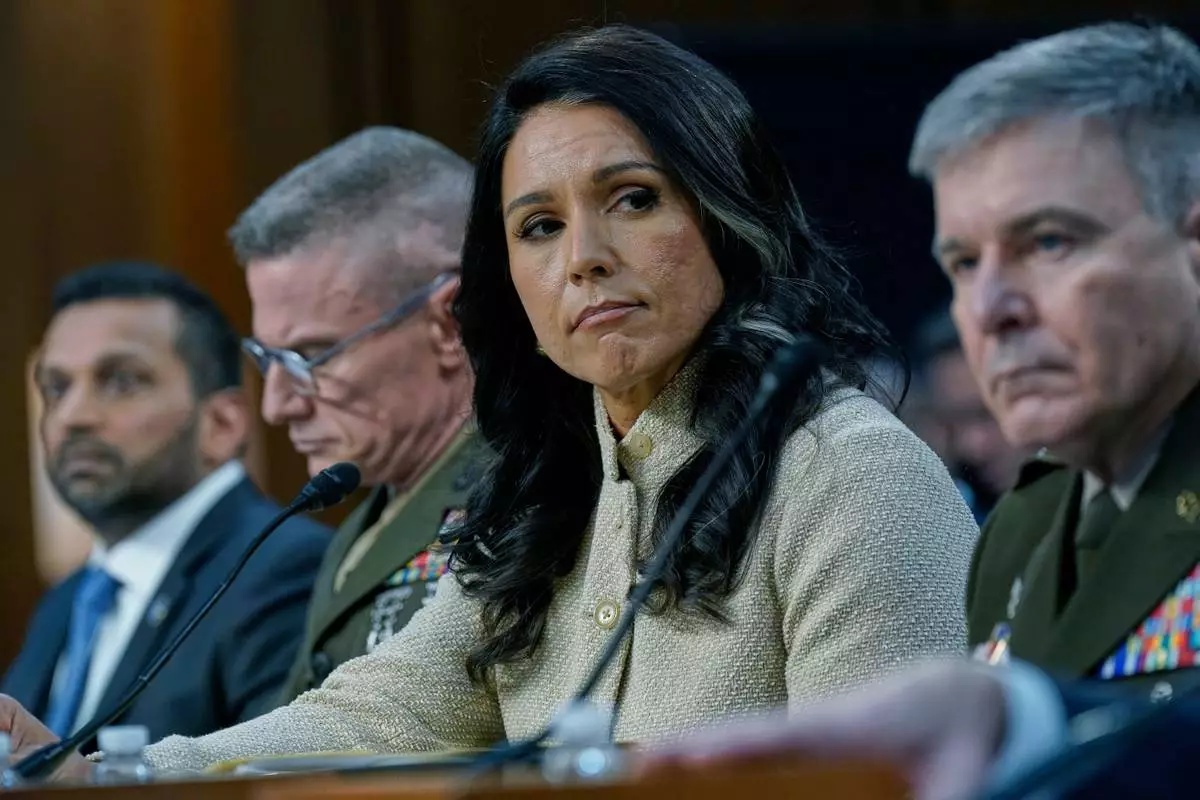
From left, FBI Director Kash Patel, Defense Intelligence Agency Director James Adams III, Director of National Intelligence Tulsi Gabbard, and Acting Commander of the U.S. Cyber Command William Hartman, listen during the Senate Committee on Intelligence hearings to examine worldwide threats on Capitol Hill Wednesday, March 18, 2026, in Washington. (AP Photo/Jose Luis Magana)
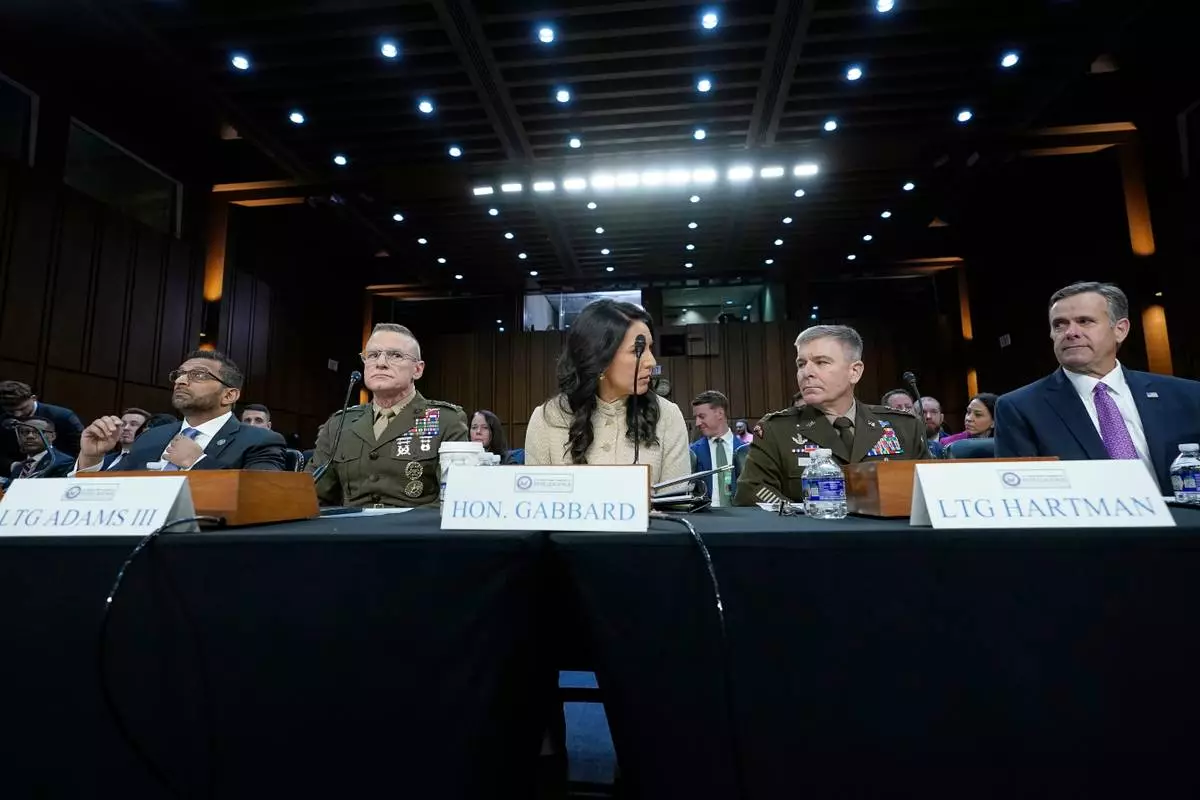
From left, FBI Director Kash Patel, Defense Intelligence Agency Director James Adams, Director of National Intelligence Tulsi Gabbard, Acting Commander of the U.S. Cyber Command William Hartman, and CIA Director John Ratcliffe are seated before the Senate Committee on Intelligence hearings to examine worldwide threats on Capitol Hill Wednesday, March 18, 2026, in Washington. (AP Photo/Jose Luis Magana)
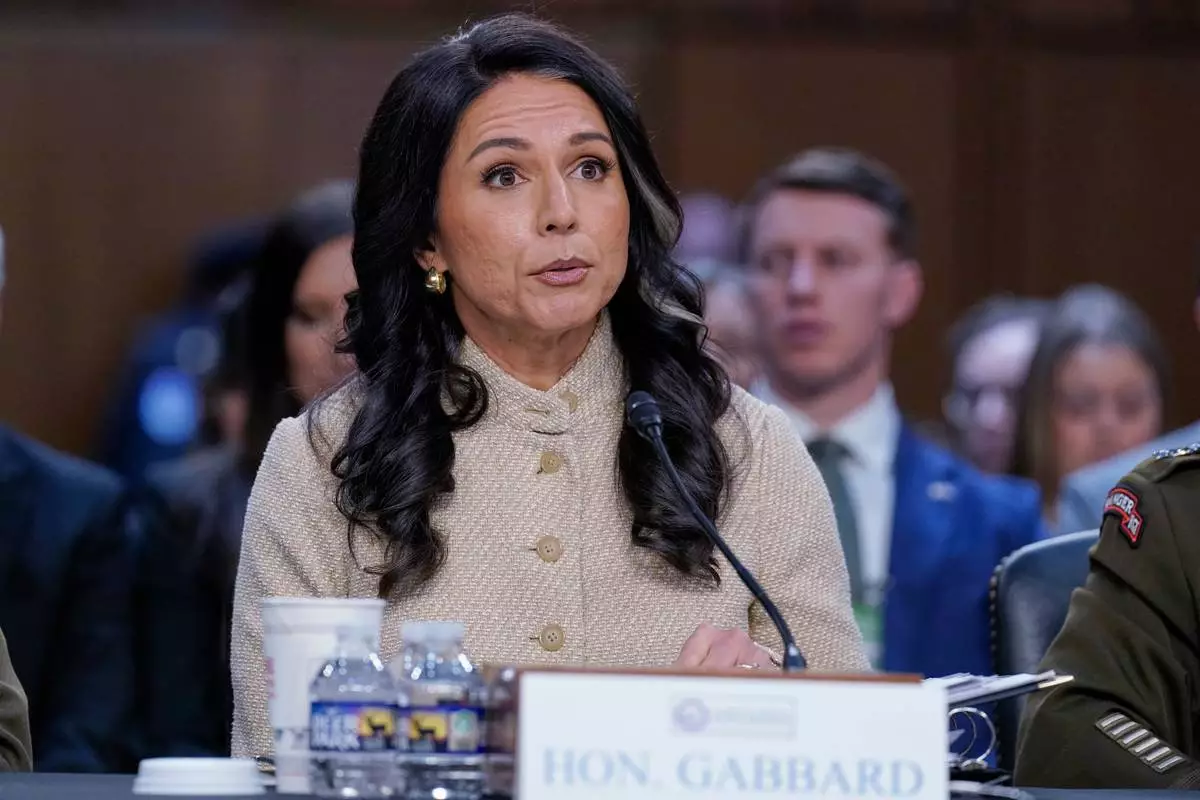
Director of National Intelligence Tulsi Gabbard testifies before the Senate Committee on Intelligence hearings to examine worldwide threats on Capitol Hill Wednesday, March 18, 2026, in Washington. (AP Photo/Jose Luis Magana)
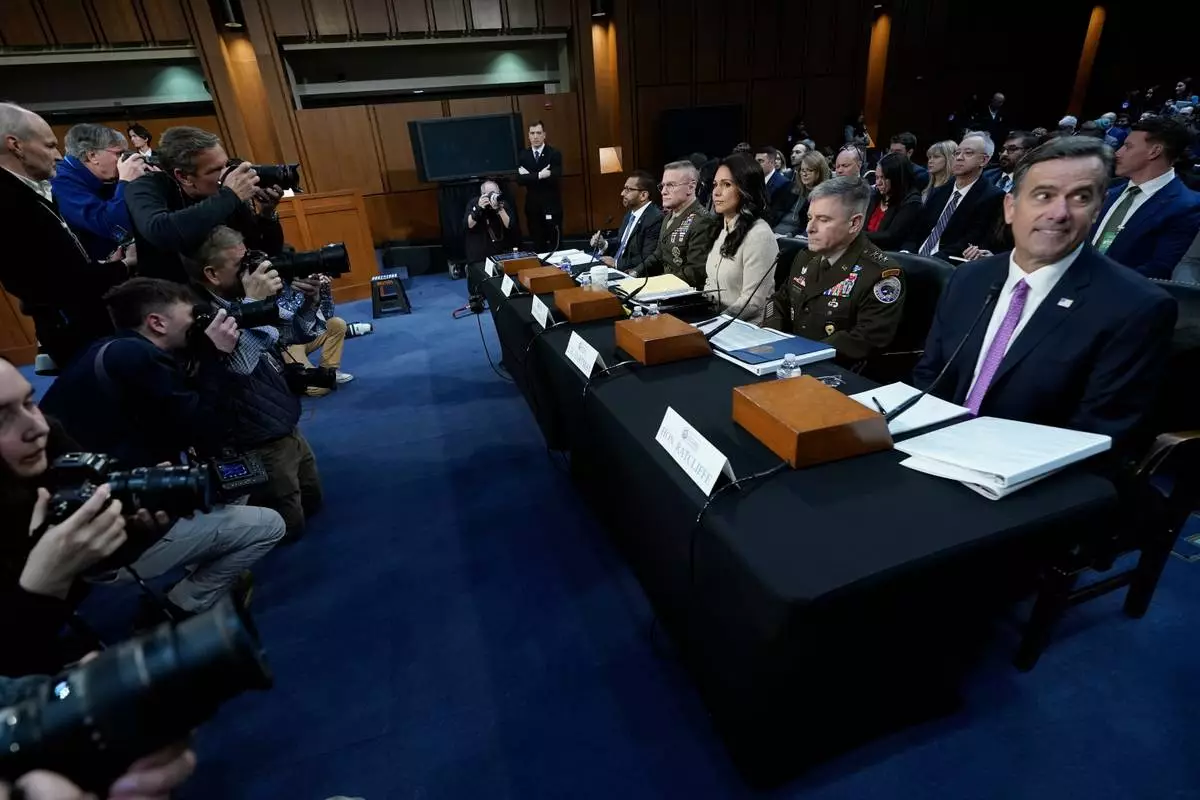
FBI Director Kash Patel, Defense Intelligence Agency Director James Adams, Director of National Intelligence Tulsi Gabbard, Acting Commander of the U.S. Cyber Command William Hartman, and CIA Director John Ratcliffe are seated before the Senate Committee on Intelligence hearings to examine worldwide threats on Capitol Hill Wednesday, March 18, 2026, in Washington. (AP Photo/Jose Luis Magana)
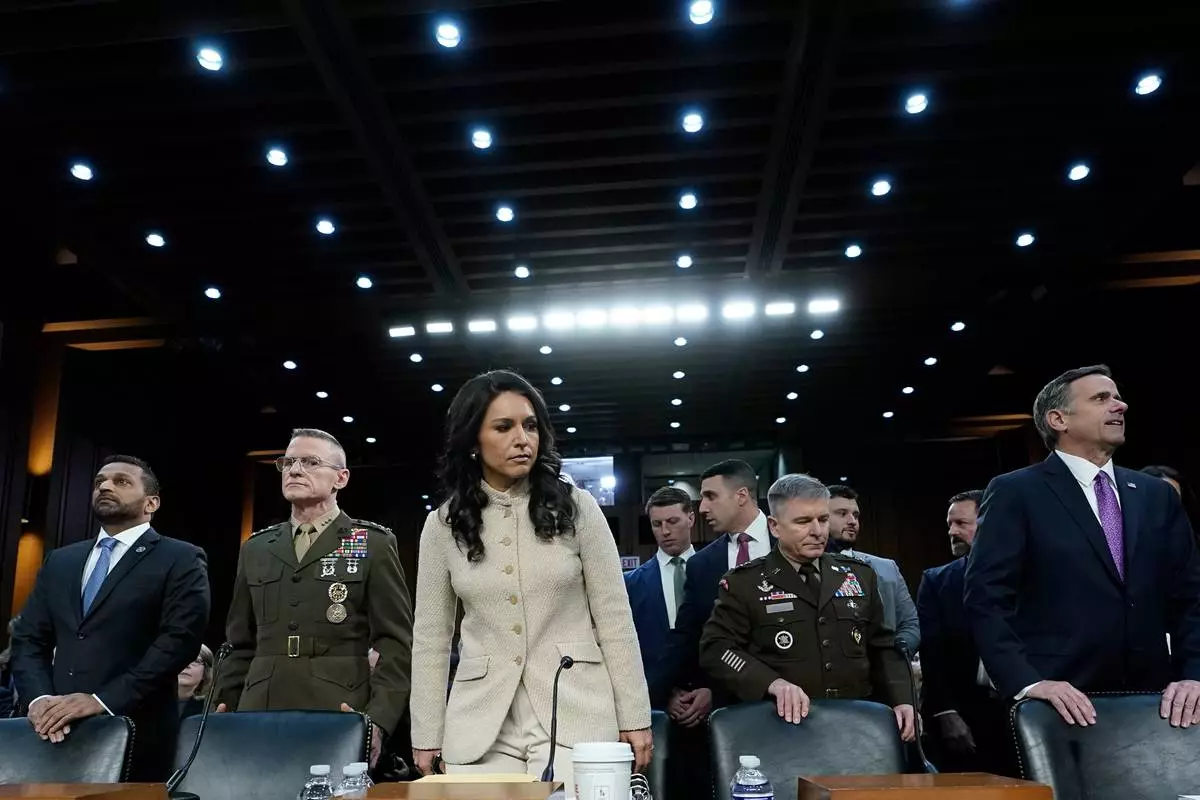
From left, FBI Director Kash Patel, Defense Intelligence Agency Director James Adams, Director of National Intelligence Tulsi Gabbard, Acting Commander of the U.S. Cyber Command William Hartman, and CIA Director John Ratcliffe stand before the Senate Committee on Intelligence hearings to examine worldwide threats on Capitol Hill Wednesday, March 18, 2026, in Washington. (AP Photo/Jose Luis Magana)
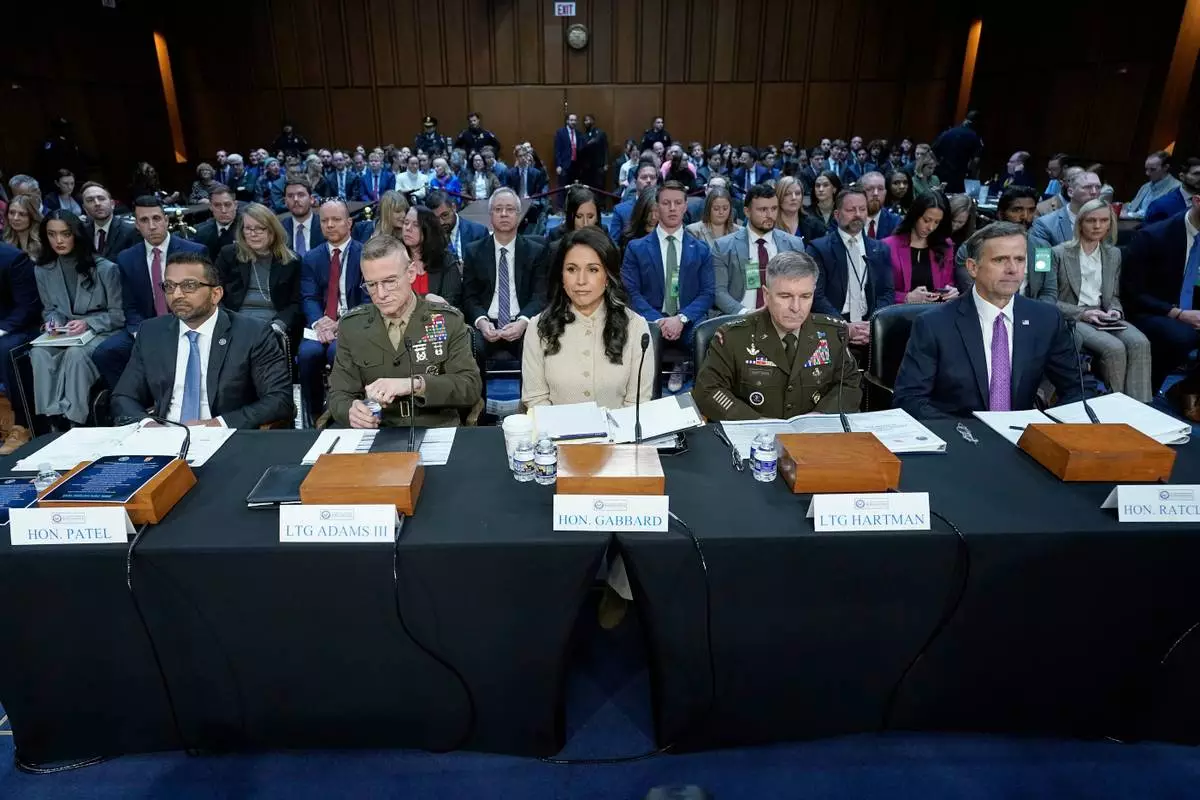
From left, FBI Director Kash Patel, Defense Intelligence Agency Director James Adams, Director of National Intelligence Tulsi Gabbard, Acting Commander of the U.S. Cyber Command William Hartman, and CIA Director John Ratcliffe are seated before the Senate Committee on Intelligence hearings to examine worldwide threats on Capitol Hill Wednesday, March 18, 2026, in Washington. (AP Photo/Jose Luis Magana)
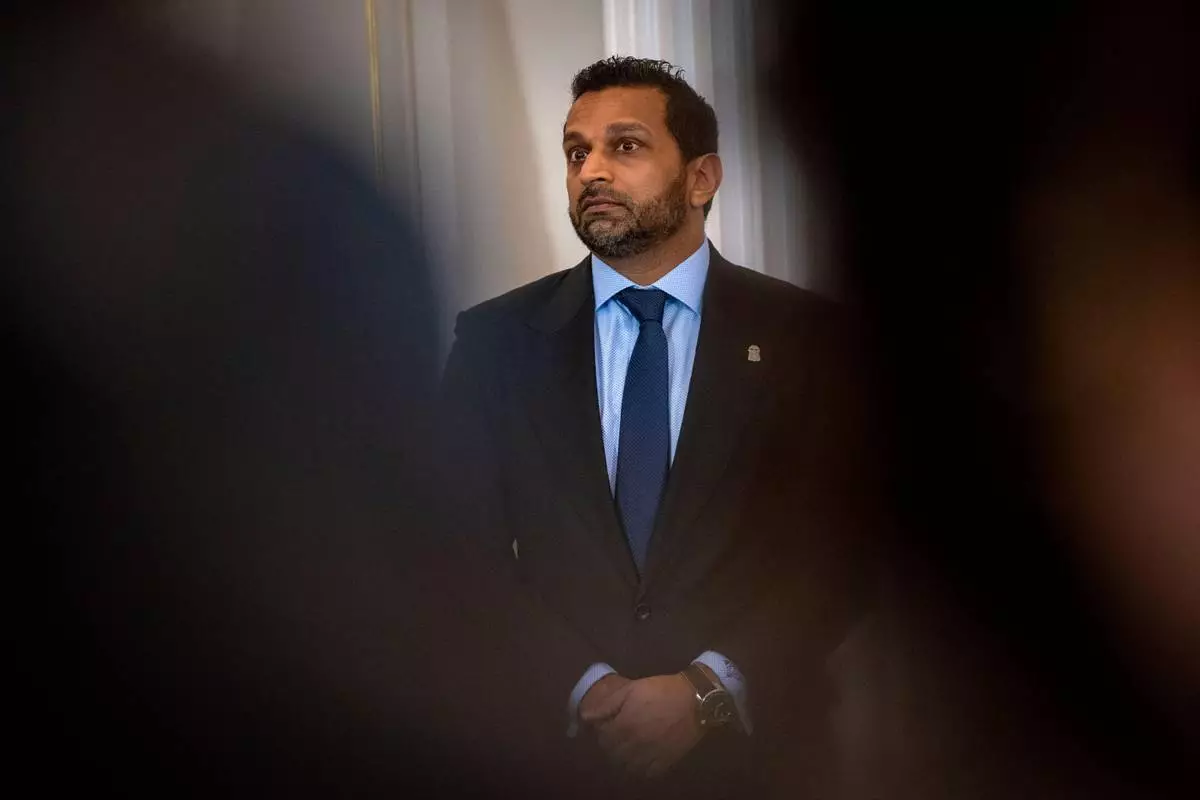
FBI Director Kash Patel takes part in a U.S. Hostage and Wrongful Detainee Flag Raising ceremony at the State Department, Monday, March 9, 2026 in Washington. (AP Photo/Kevin Wolf)