HAVANA (AP) — Cuban President Miguel Díaz-Canel has lashed out after U.S. President Donald Trump said that he can do “whatever he wants” with the Caribbean island and that Washington could take “imminent action” against it.
Díaz-Canel said on X late Tuesday that the Trump administration “publicly threatens” Cuba’s government almost daily with overthrowing it, and any act of aggression “will clash with an impregnable resistance.”
The comments came after the new threats by Trump and U.S. Secretary of State Marco Rubio, who said that the Cuban government's socialist economic model needs to “change dramatically.”
While the Cuban government places heavy restrictions on the country's private sector, decades of U.S. sanctions have crippled Cuba's economy.
The Trump administration is looking for Díaz-Canel to leave as the U.S. continues negotiating with the Cuban government, according to a U.S. official and a source with knowledge of talks between Washington and Havana. They spoke on condition of anonymity because they weren't authorized to discuss sensitive talks.
No details have been offered about who the administration might like to see in power.
Trump’s comments on Cuba came more than two months after his administration’s military raid that captured then Venezuelan President Nicolás Maduro in January, and a few weeks after the launch of joint U.S.-Israeli military strikes against Iran on Feb. 28.
The administration has effectively halted vital oil exports to Cuba, pushing the Caribbean nation to the brink.
The Cuban people that Trump and Rubio say they want to help have been left reeling.
Overnight, activist groups from various countries delivered five tons of medical equipment, solar panels and other aid, according to Cuban state television, while crippling blackouts plague the island.
Rigoberto Zarza, European director for the Cuban Institute of Friendship with the Peoples, said that the aid, especially solar panels, will be crucial to assist health institutions.
“The support provided by this aid is of great importance, not only for what it represents materially and from a medical standpoint," he said.
Seung Min Kim, Aamer Madhani and Will Weissert contributed to this report from Washington.
Follow AP’s coverage of Latin America and the Caribbean at https://apnews.com/hub/latin-america
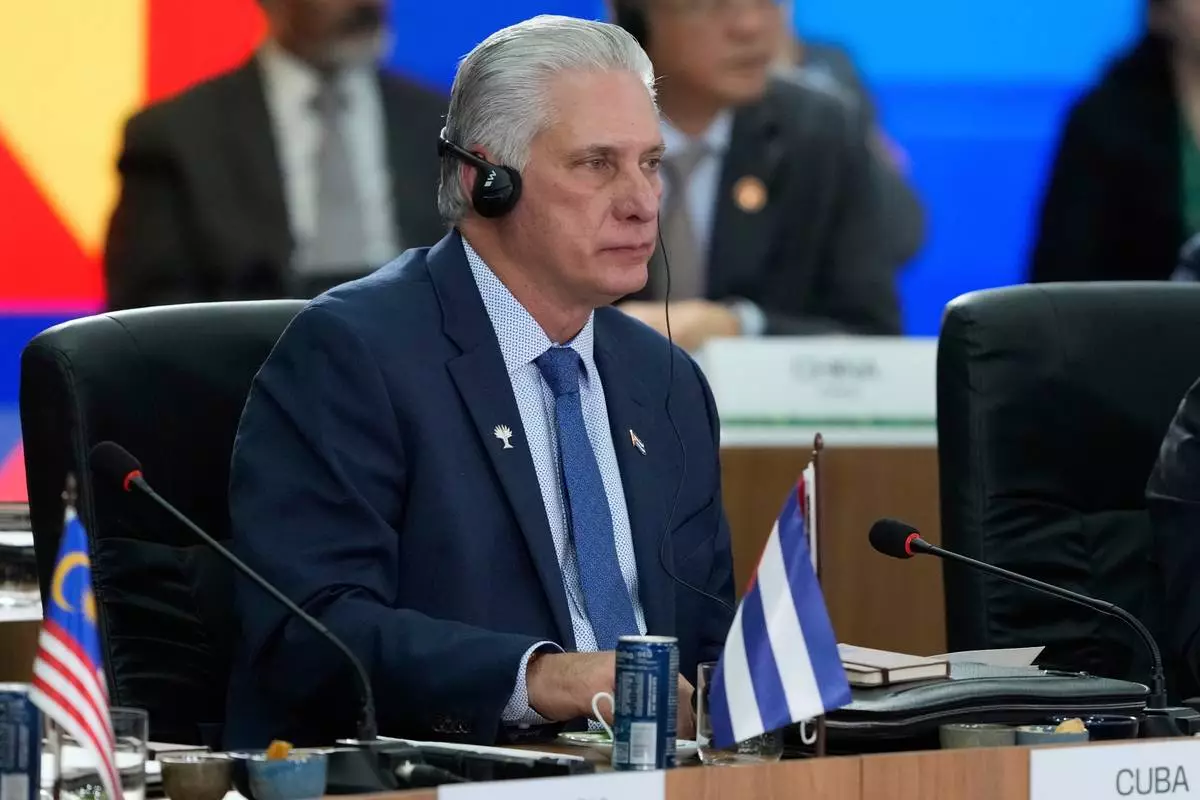
FILE - Cuba's President Miguel Diaz-Canel attends the 17th annual BRICS summit in Rio de Janeiro, July 6, 2025. (AP Photo/Eraldo Peres, File)

A woman dances as she waits with a group to enter a charity center to eat a meal, during a blackout in Havana, Tuesday, March 17, 2026. (AP Photo/Ramon Espinosa)

A man charges his phone and his fan with a solar panel during a blackout in Havana, Tuesday, March 17, 2026. (AP Photo/Ramon Espinosa)
Senegal isn't giving up its Africa Cup of Nations title without a legal fight, with the country's soccer federation saying it will appeal the “unfair, unprecedented, and unacceptable decision” to strip the team of its victory in a chaotic final against host Morocco.
The country’s government went further as it said it will “pursue all appropriate legal avenues” to overturn the decision and called for an international investigation "into suspected corruption” within African soccer's governing body.
The Confederation of African Football's appeals board on Tuesday ruled Senegal forfeited the final in January by walking off the field and turned its 1-0 win in extra time into a 3-0 default win for Morocco.
“This unprecedented and exceptionally serious decision directly contradicts the fundamental principles of sporting ethics, foremost among which are fairness, loyalty, and respect for the truth of the game,” the Senegalese government said in a statement Wednesday.
“It stems from a manifestly erroneous interpretation of the regulations, leading to a grossly illegal and deeply unjust decision. By calling into question a result achieved at the end of a match that was properly played and won in accordance with the rules of the game, CAF seriously undermines its own credibility and the legitimate trust that the African people place in continental sporting institutions.”
The Senegalese Football Federation (FSF) said the decision “discredits African football,” and that it will appeal “as soon as possible” to the Court of Arbitration for Sport in Lausanne, Switzerland, a process that would typically take a year to deliver a verdict.
“The FSF reaffirms its unwavering commitment to the values of integrity and sporting justice and will keep the public informed of developments in this matter,” the federation said.
The Jan. 18 final descended into chaos when Senegal’s players left the field in stoppage time after having a late goal ruled out before Morocco was awarded a potentially game-deciding penalty. There were scuffles between rival players while furious Senegal fans tried to storm the field where they were battling with stewards, before Senegal coach Pape Thiaw led most of his players off. It was unclear if the game could continue.
But they returned after around 10 minutes and play resumed with Morocco star Brahim Díaz having his “Panenka”-style penalty saved by Édouard Mendy. Senegal’s Pape Gueye scored the only goal in extra time.
CAF in its decision referred to Articles 82 and 84 of its Africa Cup regulations. Article 82 says if a team “refuses to play or leaves the ground before the regular end of the match without the authorization of the referee” it loses the game and is eliminated from the competition. Article 84 awards the opposing team a 3-0 win.
However, Law 5 of the International Football Association Board (IFAB), which sets the rules for the game globally, gives “full authority” to referees to determine what happens in a match.
“The decisions of the referee regarding facts connected with play, including whether or not a goal is scored and the result of the match, are final. The decisions of the referee, and all other match officials, must always be respected,” according to Law 5.2.
The Royal Moroccan Football Federation said in a statement it wished to reiterate that its appeal to CAF was “never aimed at contesting the sporting merit or performance of the teams involved in this tournament, but solely to ensure the proper enforcement of competition regulations.”
It commended “all the nations that participated” in the Africa Cup and said it would issue a more comprehensive statement after a scheduled meeting of its governing bodies.
The Senegal government’s allegation of “suspected corruption” at CAF is the culmination of its growing anger at perceived favoritism toward Morocco, which is a 2030 World Cup co-host and has invested heavily to become a soccer superpower.
Even before the final, the FSF called on CAF to ensure “fair play, equal treatment, and security” after complaining about how the Senegal team was being treated upon its arrival in Rabat. Morocco coach Walid Regragui had already rejected suggestions his team was benefiting from favorable refereeing decisions to advance to the final.
Last month, 19 Senegal fans who were arrested at the final were given prison terms of up to a year by a Moroccan court. The government on Wednesday expressed solidarity with the Senegalese supporters.
Morocco was supposed to host the Women’s Africa Cup from March 17-April 3, but the tournament was postponed less than two weeks before it was due to start because of what CAF described as “unforeseen circumstances.” South Africa offered to step in as host while reports persisted that Morocco wanted to pull out of hosting it for the third time straight.
CAF has still not confirmed the host for the rescheduled July 25-Aug. 16 tournament. The governing body did not respond to questions submitted by The Associated Press.
CAF in January imposed fines of more than $1 million against the Senegalese and Moroccan federations together. It banned Thiaw for five Africa Cup games for bringing the game into disrepute. But it did not interfere with the outcome of the final.
On Tuesday, it reduced Morocco player Ismaël Saibari’s three-game ban to one match and scrapped his $100,000 fine for unsporting behavior, while it also reduced fines that were imposed against the Moroccan federation for the conduct of its ball boys from $200,000 to $50,000. Another fine was also reduced.
Moroccans took to the streets of Rabat and other cities to celebrate their team's belated success, as residents waved flags and motorists honked their horns to compete with the sound of vuvuzelas. In Casablanca, some revelers lit smoke bombs and chanted “Always Morocco” to the din from honking cars.
The response appeared more subdued to the celebrations that followed the Under-20 team’s World Cup win, which saw thousands celebrate on the streets as skies were illuminated by fireworks.
“The joy isn’t the same as winning the match and lifting the trophy on the field, then celebrating in the moment with everyone,” Casablanca taxi driver Mohcin Rayan told the AP. “This feels more like an injustice that has been corrected.”
CAF's decision was met with disbelief and dismay in Senegal.
“To take back a trophy two months after the final was played is just ridiculous,” Souleymane Ba, a university student, told AP in the capital, Dakar. “The Senegalese players won medals, millions of francs (hundreds of thousands of dollars) in bonuses for winning the cup, and paraded the trophy through the country. And now CAF wants to take all that away? How do they even expect to do that?”
Shop owner Pape Sarr said he was shocked by the ruling but confident the appeal to CAS will be successful.
“The referee did not forfeit the match after the players left, and validated the result, so that should be the end of the story,” Sarr said.
Taxi driver Abdoulaye Diouf had a similar view: “The whole world saw that we won legitimately. Senegal are the champions on the field. Morocco can be the champions in the courthouse if they want.”
Both Senegal and Morocco have qualified for the World Cup. None of the sanctions following their Africa Cup final will impact them at the tournament, though both will claim to be African champion.
Associated Press reporter Mark Banchereau contributed from Dakar, Senegal.
AP soccer: https://apnews.com/hub/soccer
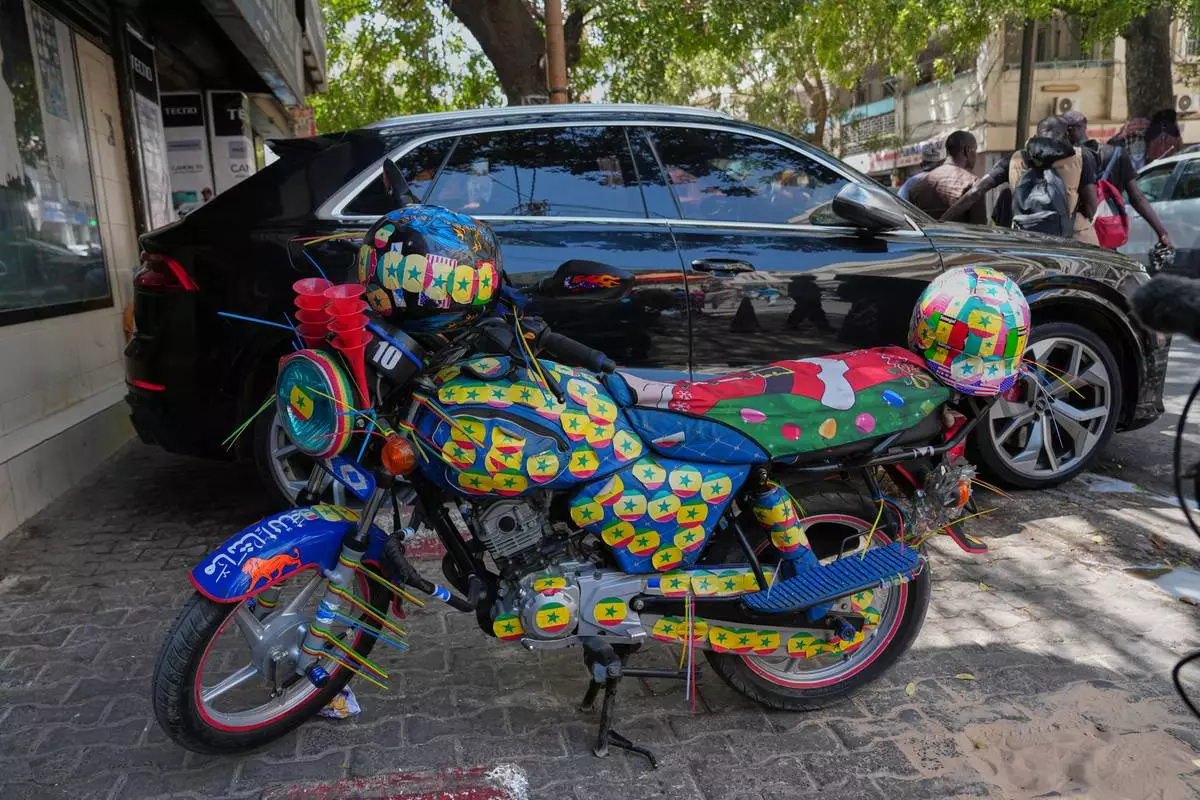
A motorcycle decorated with Senegalese colorful stickers is parked along a street in Dakar, Senegal, Wednesday, March 18, 2026. (AP Photo/Misper Apawu)
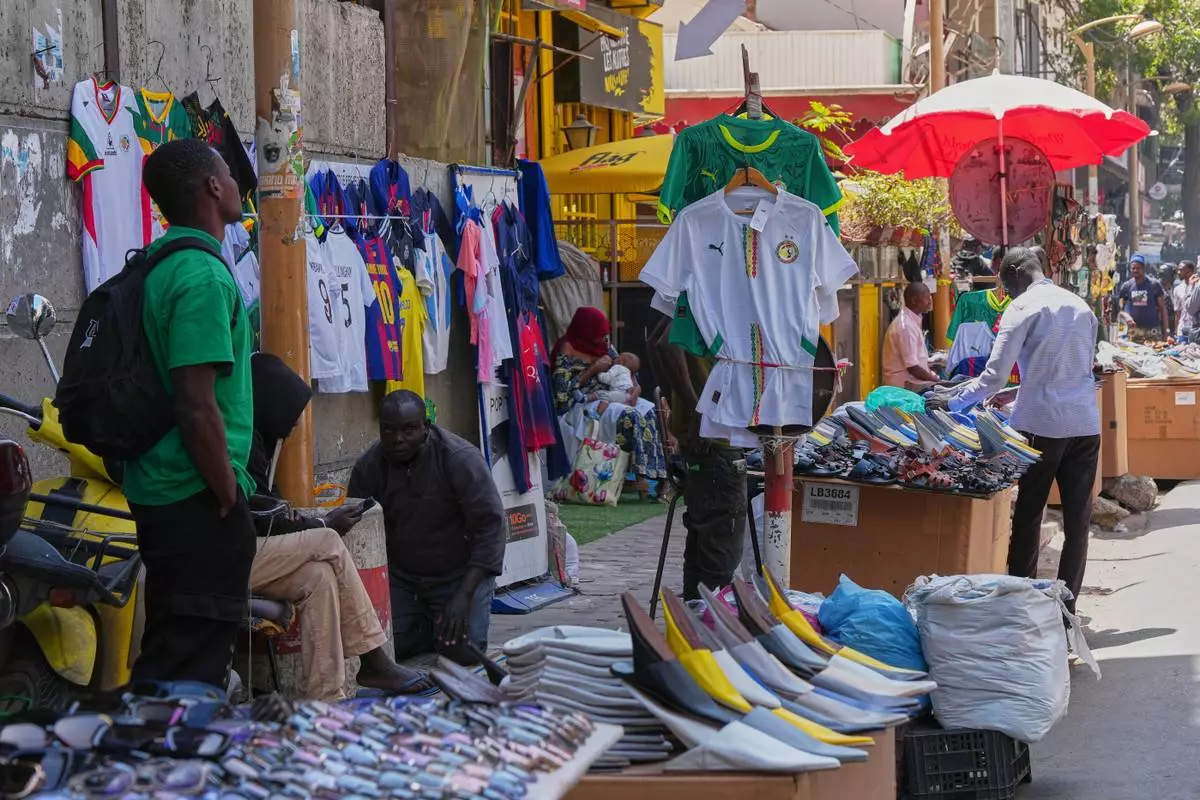
A roadside shop displays Senegal national team shirts in Dakar, Senegal, Wednesday, March 18, 2026. (AP Photo/Misper Apawu)
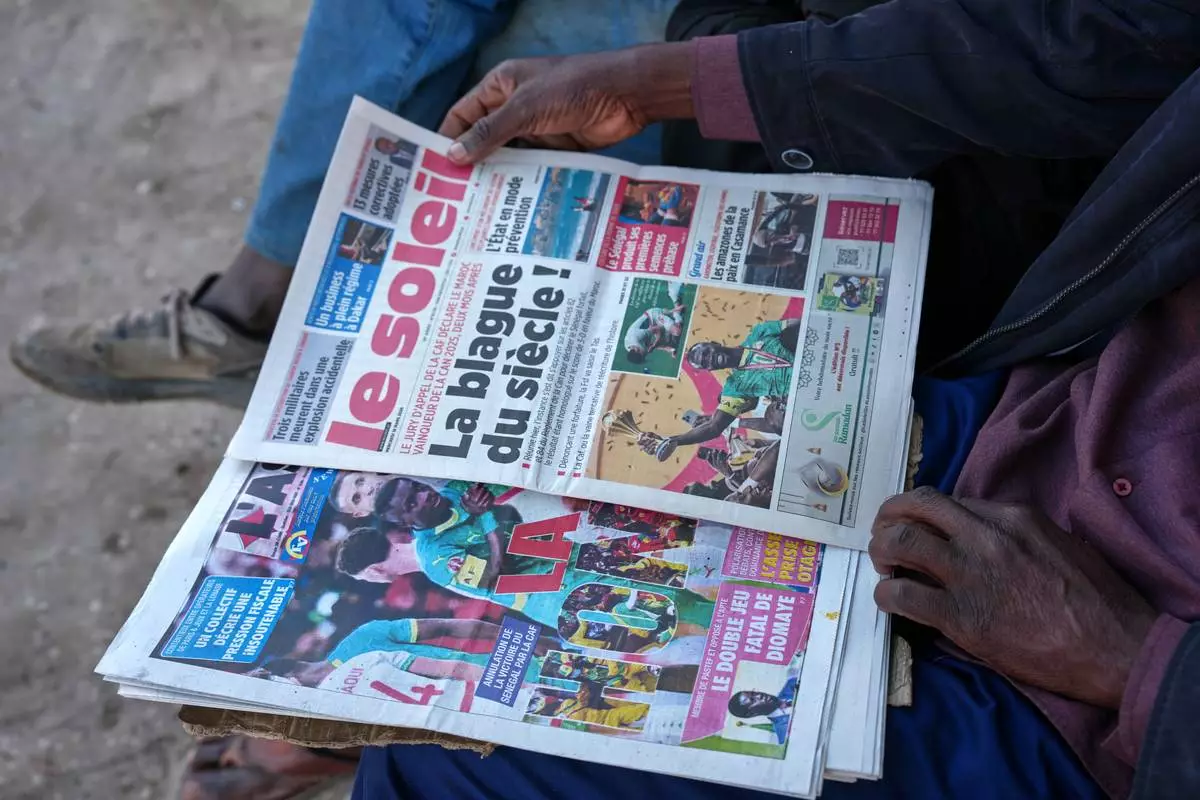
People read newspapers reporting on the Confederation of African Football decision stripping the Senegal national football team of their Africa Cup of Nations title and awarding it to Morocco national football team in Dakar, Senegal, Wednesday, March 18, 2026. (AP Photo/Misper Apawu)
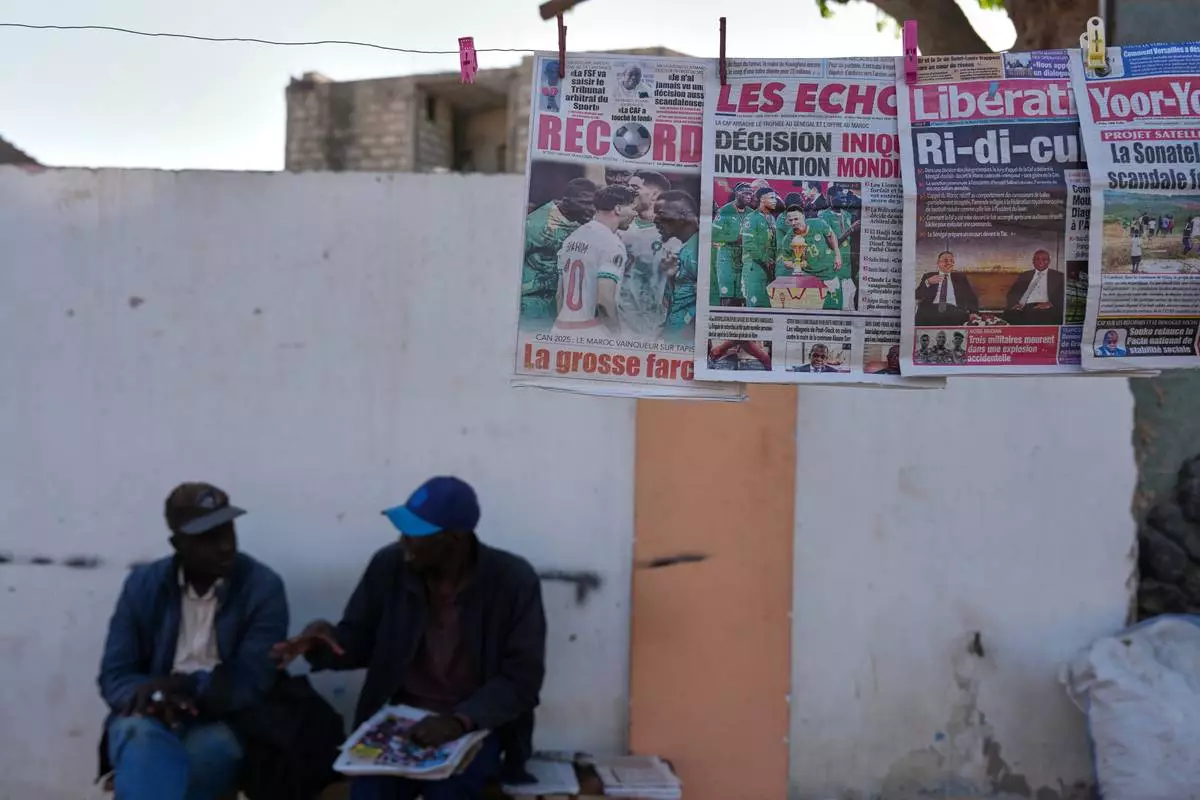
Front pages of newspapers reporting on the Confederation of African Football decision stripping the Senegal national football team of their Africa Cup of Nations title and awarding it to the Morocco national football team in Dakar, Senegal, Wednesday, March 18, 2026. (AP Photo/Misper Apawu)
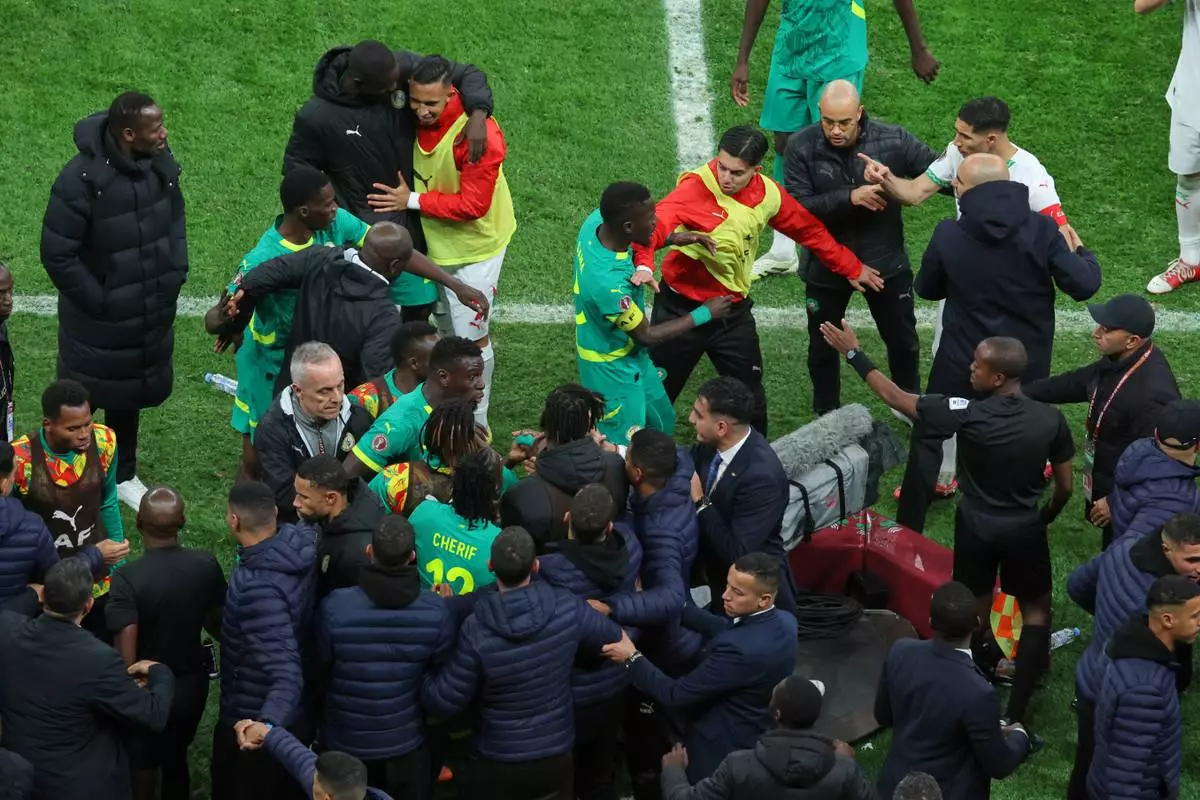
FILE - Players from both sides clash after a controversial penalty was awarded to Morocco late on during the Africa Cup of Nations final soccer match between Senegal and Morocco in Rabat, Morocco, Sunday, Jan. 18, 2026. (AP Photo/Youssef Loulidi, File)
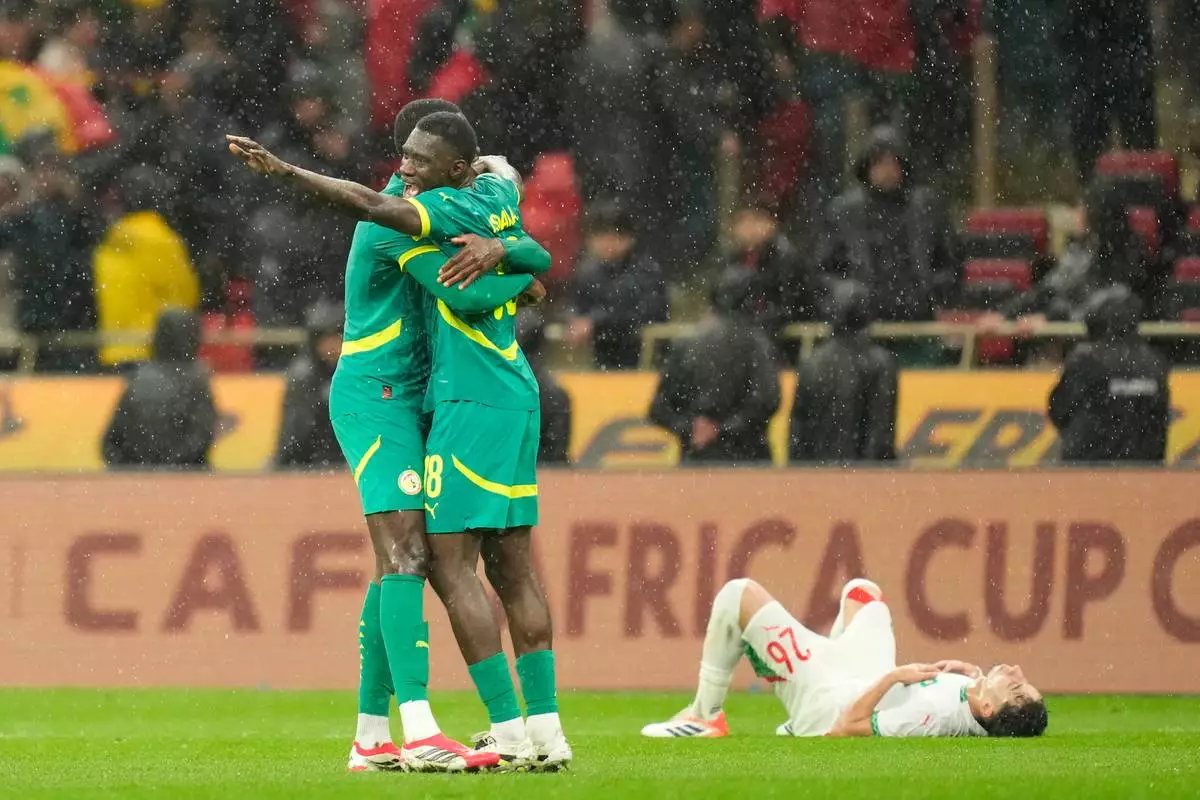
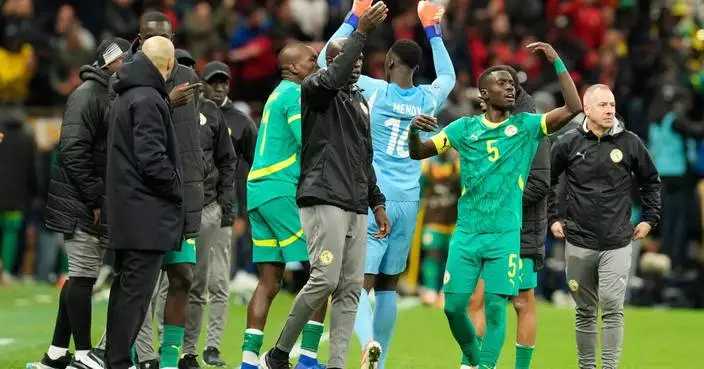
FILE - Sebegalese players celebrate after winning the Africa Cup of Nations final soccer match between Senegal and Morocco, in Rabat, Morocco, Sunday, Jan. 18, 2026. (AP Photo/Mosa'ab Elshamy, File)
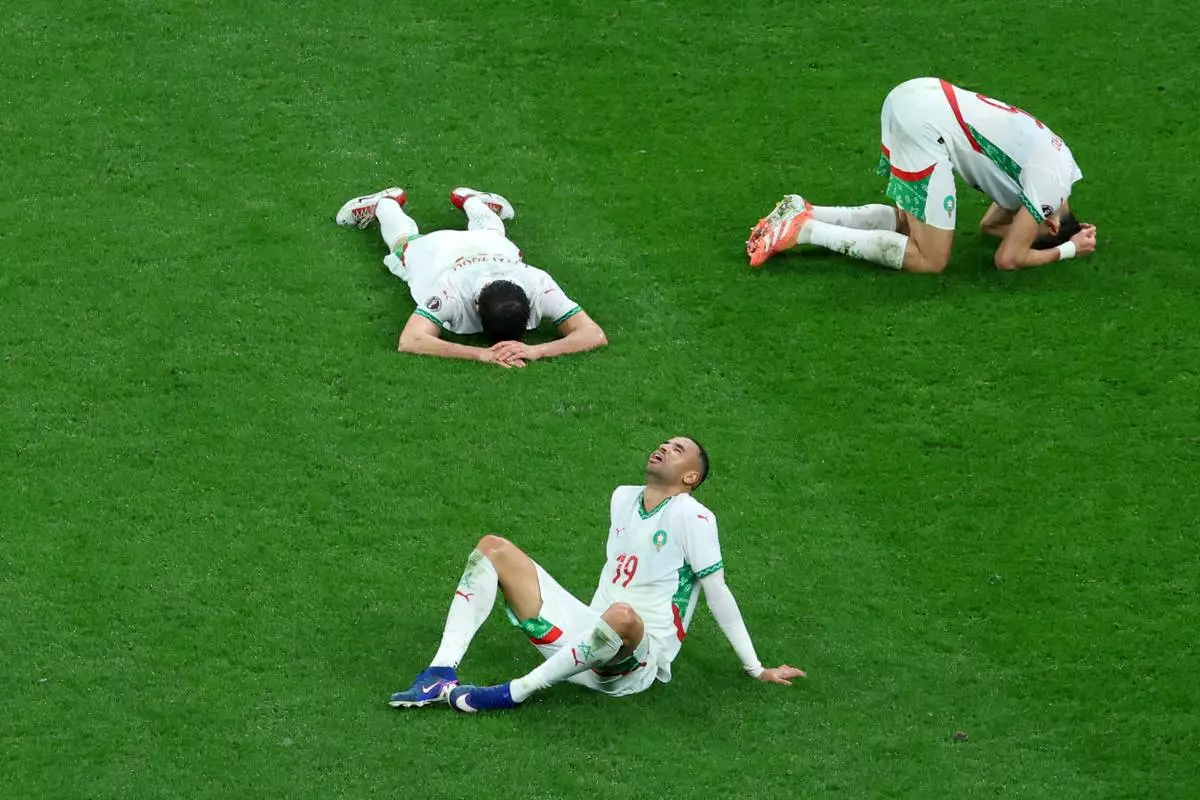
FILE - Morocco players react after losing the Africa Cup of Nations final soccer match between Senegal and Morocco in Rabat, Morocco, Sunday, Jan. 18, 2026. (AP Photo/Youssef Loulidi, File)
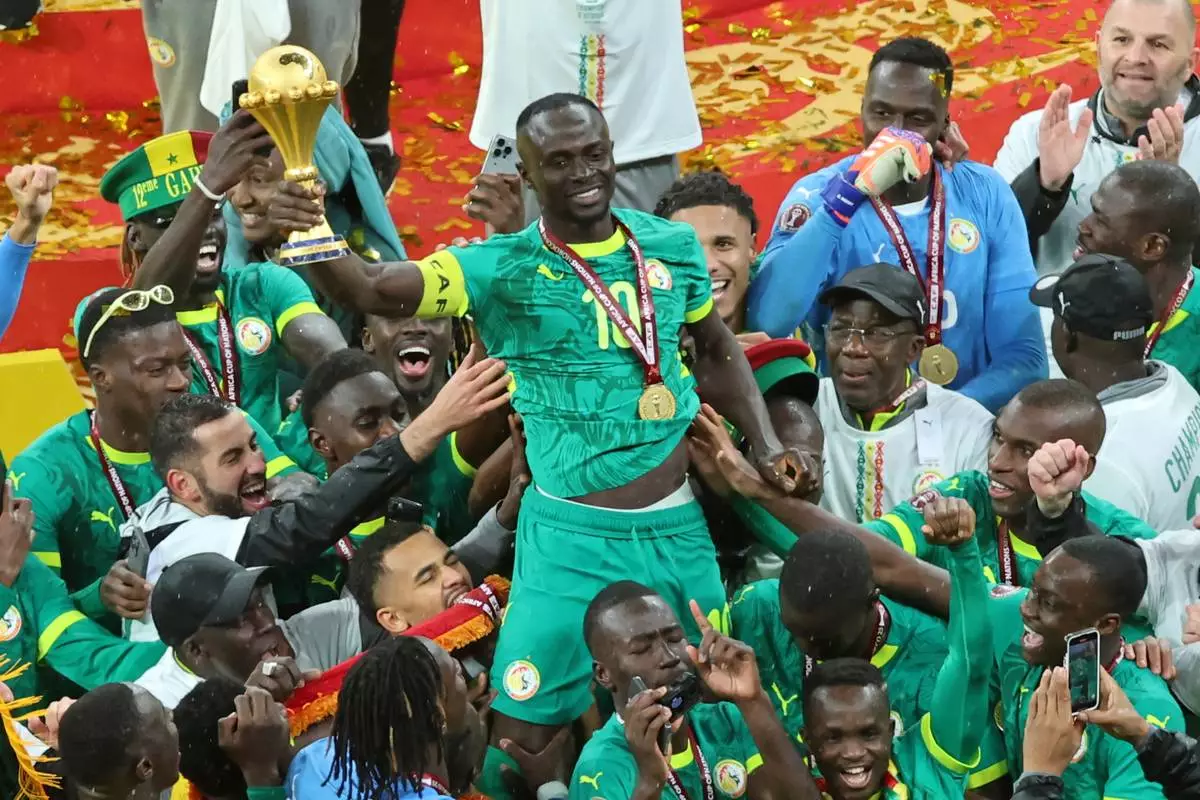
FILE - Senegal's Sadio Mane holds the trophy aloft as he celebrates with teammates after winning the Africa Cup of Nations final soccer match between Senegal and Morocco in Rabat, Morocco, Sunday, Jan. 18, 2026. (AP Photo/Youssef Loulidi, File)