Skip to Content Facebook Feature Image

Senegal slams 'illegal and deeply unjust' decision to strip Africa Cup title and pledges to appeal

News

Senegal slams 'illegal and deeply unjust' decision to strip Africa Cup title and pledges to appeal
News

News

Senegal slams 'illegal and deeply unjust' decision to strip Africa Cup title and pledges to appeal

2026-03-19 03:36 Last Updated At:03:41

Senegal isn't giving up its Africa Cup of Nations title without a legal fight, with the country's soccer federation saying it will appeal the “unfair, unprecedented, and unacceptable decision” to strip the team of its victory in a chaotic final against host Morocco.

The country’s government went further as it said it will “pursue all appropriate legal avenues” to overturn the decision and called for an international investigation "into suspected corruption” within African soccer's governing body.

More Images
A motorcycle decorated with Senegalese colorful stickers is parked along a street in Dakar, Senegal, Wednesday, March 18, 2026. (AP Photo/Misper Apawu)
A motorcycle decorated with Senegalese colorful stickers is parked along a street in Dakar, Senegal, Wednesday, March 18, 2026. (AP Photo/Misper Apawu)

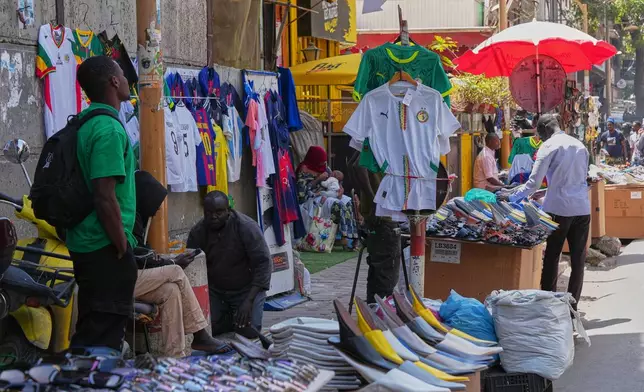
A roadside shop displays Senegal national team shirts in Dakar, Senegal, Wednesday, March 18, 2026. (AP Photo/Misper Apawu)
A roadside shop displays Senegal national team shirts in Dakar, Senegal, Wednesday, March 18, 2026. (AP Photo/Misper Apawu)

People read newspapers reporting on the Confederation of African Football decision stripping the Senegal national football team of their Africa Cup of Nations title and awarding it to Morocco national football team in Dakar, Senegal, Wednesday, March 18, 2026. (AP Photo/Misper Apawu)

People read newspapers reporting on the Confederation of African Football decision stripping the Senegal national football team of their Africa Cup of Nations title and awarding it to Morocco national football team in Dakar, Senegal, Wednesday, March 18, 2026. (AP Photo/Misper Apawu)
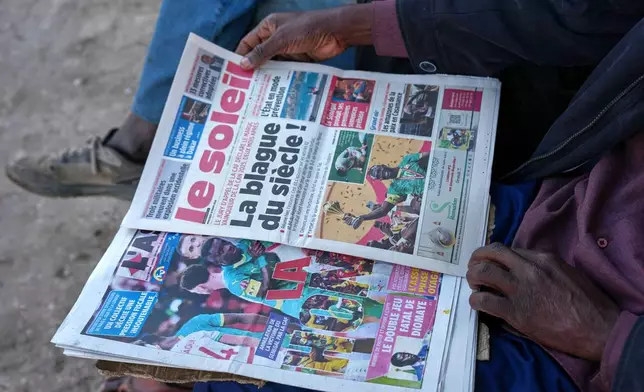
Front pages of newspapers reporting on the Confederation of African Football decision stripping the Senegal national football team of their Africa Cup of Nations title and awarding it to the Morocco national football team in Dakar, Senegal, Wednesday, March 18, 2026. (AP Photo/Misper Apawu)

Front pages of newspapers reporting on the Confederation of African Football decision stripping the Senegal national football team of their Africa Cup of Nations title and awarding it to the Morocco national football team in Dakar, Senegal, Wednesday, March 18, 2026. (AP Photo/Misper Apawu)

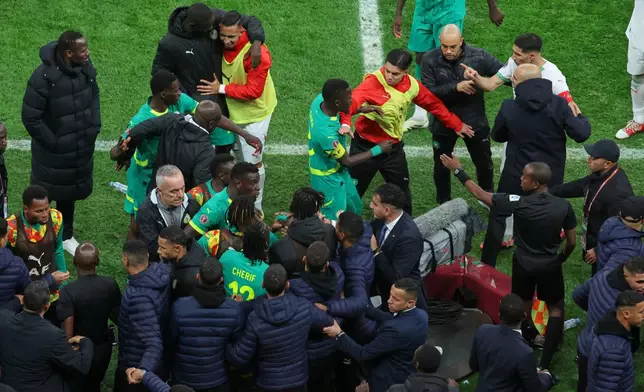
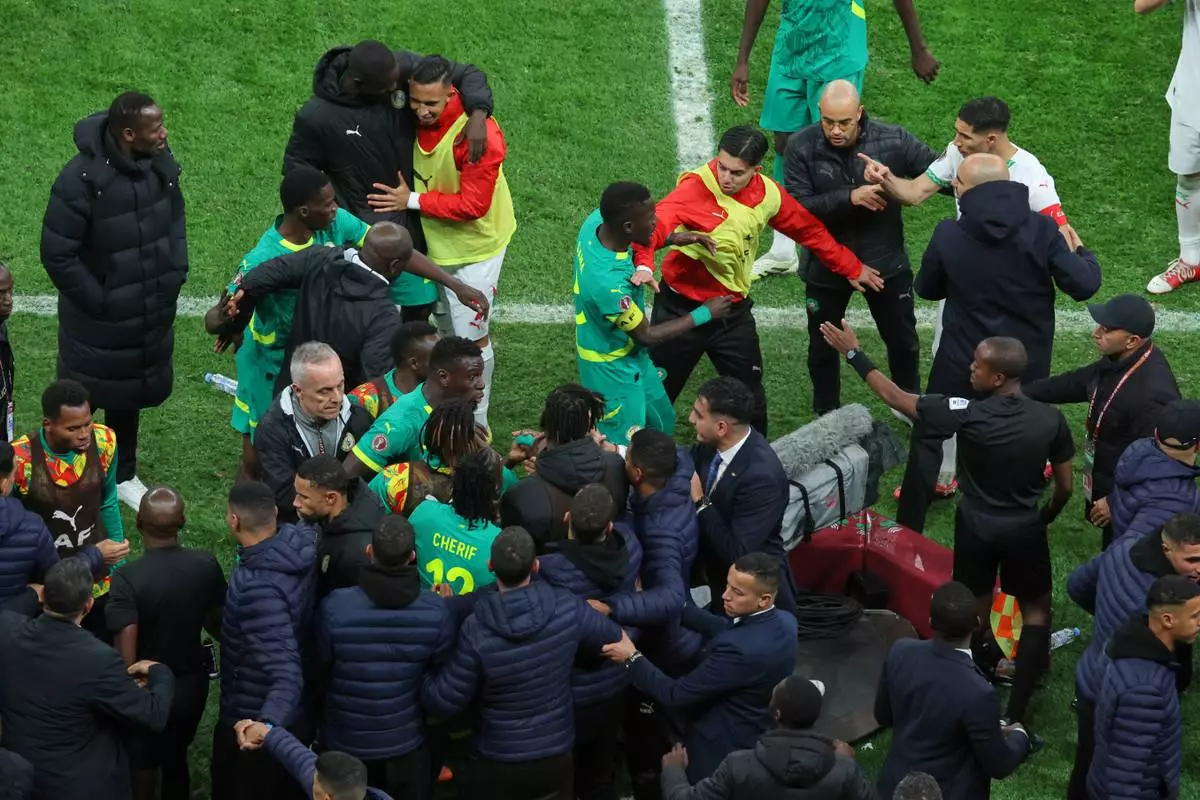
FILE - Players from both sides clash after a controversial penalty was awarded to Morocco late on during the Africa Cup of Nations final soccer match between Senegal and Morocco in Rabat, Morocco, Sunday, Jan. 18, 2026. (AP Photo/Youssef Loulidi, File)
FILE - Players from both sides clash after a controversial penalty was awarded to Morocco late on during the Africa Cup of Nations final soccer match between Senegal and Morocco in Rabat, Morocco, Sunday, Jan. 18, 2026. (AP Photo/Youssef Loulidi, File)

FILE - Sebegalese players celebrate after winning the Africa Cup of Nations final soccer match between Senegal and Morocco, in Rabat, Morocco, Sunday, Jan. 18, 2026. (AP Photo/Mosa'ab Elshamy, File)

FILE - Sebegalese players celebrate after winning the Africa Cup of Nations final soccer match between Senegal and Morocco, in Rabat, Morocco, Sunday, Jan. 18, 2026. (AP Photo/Mosa'ab Elshamy, File)

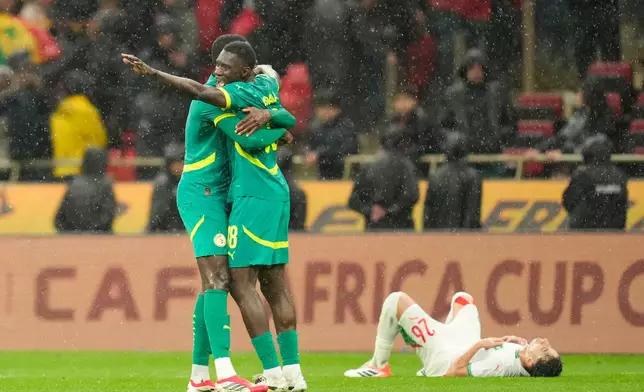
FILE - Morocco players react after losing the Africa Cup of Nations final soccer match between Senegal and Morocco in Rabat, Morocco, Sunday, Jan. 18, 2026. (AP Photo/Youssef Loulidi, File)
FILE - Morocco players react after losing the Africa Cup of Nations final soccer match between Senegal and Morocco in Rabat, Morocco, Sunday, Jan. 18, 2026. (AP Photo/Youssef Loulidi, File)

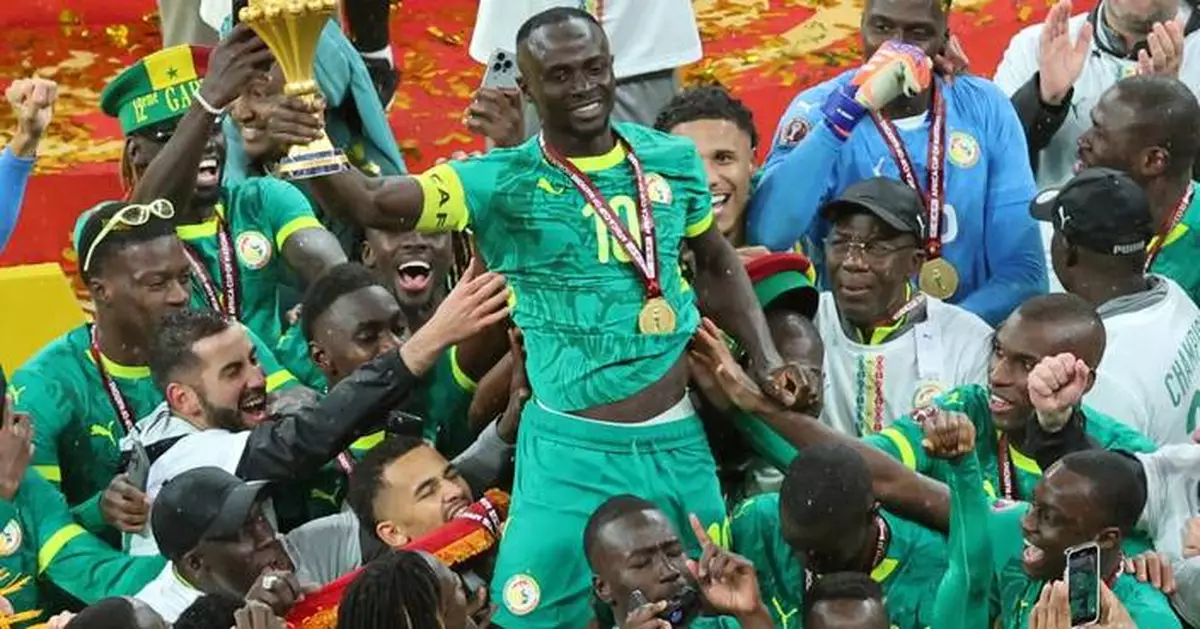
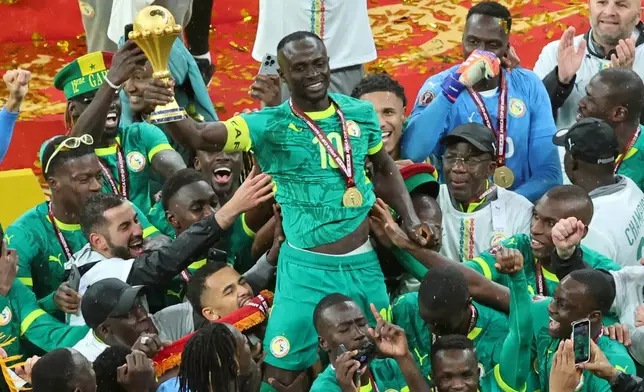
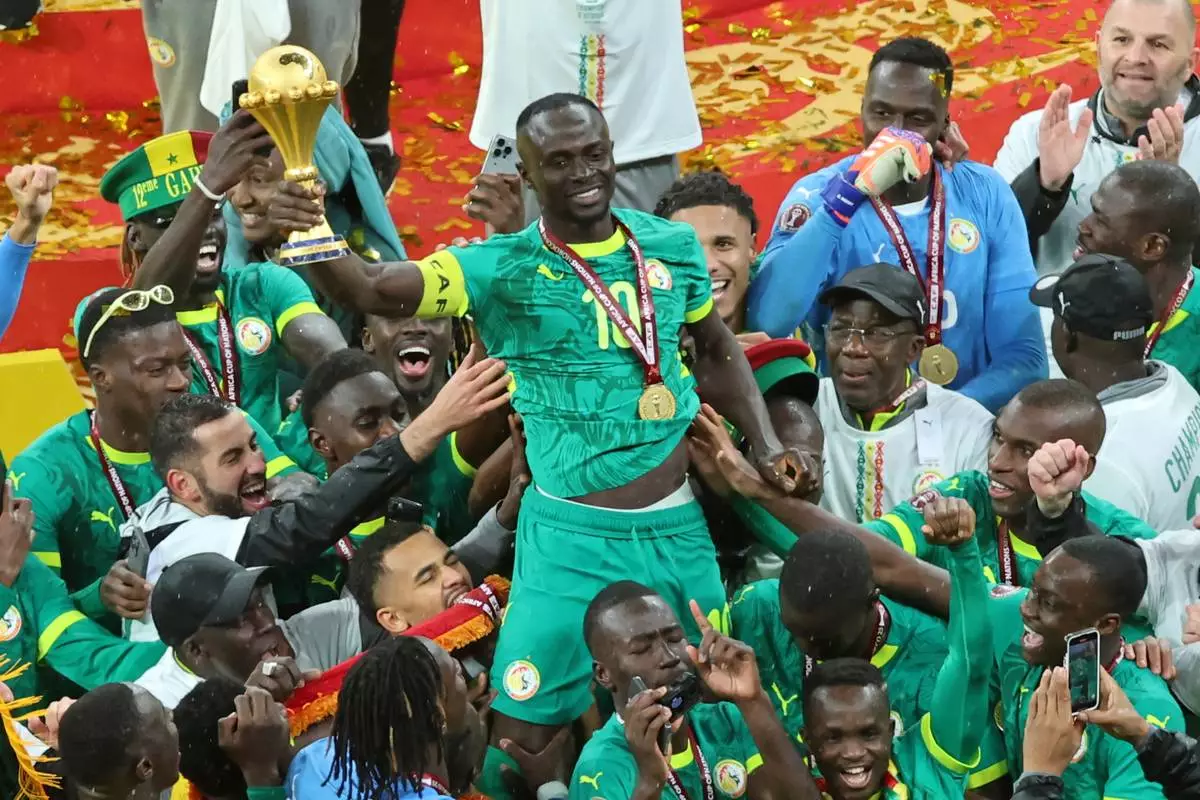
FILE - Senegal's Sadio Mane holds the trophy aloft as he celebrates with teammates after winning the Africa Cup of Nations final soccer match between Senegal and Morocco in Rabat, Morocco, Sunday, Jan. 18, 2026. (AP Photo/Youssef Loulidi, File)

FILE - Senegal's Sadio Mane holds the trophy aloft as he celebrates with teammates after winning the Africa Cup of Nations final soccer match between Senegal and Morocco in Rabat, Morocco, Sunday, Jan. 18, 2026. (AP Photo/Youssef Loulidi, File)

The Confederation of African Football's appeals board on Tuesday ruled Senegal forfeited the final in January by walking off the field and turned its 1-0 win in extra time into a 3-0 default win for Morocco.

“This unprecedented and exceptionally serious decision directly contradicts the fundamental principles of sporting ethics, foremost among which are fairness, loyalty, and respect for the truth of the game,” the Senegalese government said in a statement Wednesday.

“It stems from a manifestly erroneous interpretation of the regulations, leading to a grossly illegal and deeply unjust decision. By calling into question a result achieved at the end of a match that was properly played and won in accordance with the rules of the game, CAF seriously undermines its own credibility and the legitimate trust that the African people place in continental sporting institutions.”

The Senegalese Football Federation (FSF) said the decision “discredits African football,” and that it will appeal “as soon as possible” to the Court of Arbitration for Sport in Lausanne, Switzerland, a process that would typically take a year to deliver a verdict.

“The FSF reaffirms its unwavering commitment to the values of integrity and sporting justice and will keep the public informed of developments in this matter,” the federation said.

The Jan. 18 final descended into chaos when Senegal’s players left the field in stoppage time after having a late goal ruled out before Morocco was awarded a potentially game-deciding penalty. There were scuffles between rival players while furious Senegal fans tried to storm the field where they were battling with stewards, before Senegal coach Pape Thiaw led most of his players off. It was unclear if the game could continue.

But they returned after around 10 minutes and play resumed with Morocco star Brahim Díaz having his “Panenka”-style penalty saved by Édouard Mendy. Senegal’s Pape Gueye scored the only goal in extra time.

CAF in its decision referred to Articles 82 and 84 of its Africa Cup regulations. Article 82 says if a team “refuses to play or leaves the ground before the regular end of the match without the authorization of the referee” it loses the game and is eliminated from the competition. Article 84 awards the opposing team a 3-0 win.

However, Law 5 of the International Football Association Board (IFAB), which sets the rules for the game globally, gives “full authority” to referees to determine what happens in a match.

“The decisions of the referee regarding facts connected with play, including whether or not a goal is scored and the result of the match, are final. The decisions of the referee, and all other match officials, must always be respected,” according to Law 5.2.

The Royal Moroccan Football Federation said in a statement it wished to reiterate that its appeal to CAF was “never aimed at contesting the sporting merit or performance of the teams involved in this tournament, but solely to ensure the proper enforcement of competition regulations.”

It commended “all the nations that participated” in the Africa Cup and said it would issue a more comprehensive statement after a scheduled meeting of its governing bodies.

The Senegal government’s allegation of “suspected corruption” at CAF is the culmination of its growing anger at perceived favoritism toward Morocco, which is a 2030 World Cup co-host and has invested heavily to become a soccer superpower.

Even before the final, the FSF called on CAF to ensure “fair play, equal treatment, and security” after complaining about how the Senegal team was being treated upon its arrival in Rabat. Morocco coach Walid Regragui had already rejected suggestions his team was benefiting from favorable refereeing decisions to advance to the final.

Last month, 19 Senegal fans who were arrested at the final were given prison terms of up to a year by a Moroccan court. The government on Wednesday expressed solidarity with the Senegalese supporters.

Morocco was supposed to host the Women’s Africa Cup from March 17-April 3, but the tournament was postponed less than two weeks before it was due to start because of what CAF described as “unforeseen circumstances.” South Africa offered to step in as host while reports persisted that Morocco wanted to pull out of hosting it for the third time straight.

CAF has still not confirmed the host for the rescheduled July 25-Aug. 16 tournament. The governing body did not respond to questions submitted by The Associated Press.

CAF in January imposed fines of more than $1 million against the Senegalese and Moroccan federations together. It banned Thiaw for five Africa Cup games for bringing the game into disrepute. But it did not interfere with the outcome of the final.

On Tuesday, it reduced Morocco player Ismaël Saibari’s three-game ban to one match and scrapped his $100,000 fine for unsporting behavior, while it also reduced fines that were imposed against the Moroccan federation for the conduct of its ball boys from $200,000 to $50,000. Another fine was also reduced.

Moroccans took to the streets of Rabat and other cities to celebrate their team's belated success, as residents waved flags and motorists honked their horns to compete with the sound of vuvuzelas. In Casablanca, some revelers lit smoke bombs and chanted “Always Morocco” to the din from honking cars.

The response appeared more subdued to the celebrations that followed the Under-20 team’s World Cup win, which saw thousands celebrate on the streets as skies were illuminated by fireworks.

“The joy isn’t the same as winning the match and lifting the trophy on the field, then celebrating in the moment with everyone,” Casablanca taxi driver Mohcin Rayan told the AP. “This feels more like an injustice that has been corrected.”

CAF's decision was met with disbelief and dismay in Senegal.

“To take back a trophy two months after the final was played is just ridiculous,” Souleymane Ba, a university student, told AP in the capital, Dakar. “The Senegalese players won medals, millions of francs (hundreds of thousands of dollars) in bonuses for winning the cup, and paraded the trophy through the country. And now CAF wants to take all that away? How do they even expect to do that?”

Shop owner Pape Sarr said he was shocked by the ruling but confident the appeal to CAS will be successful.

“The referee did not forfeit the match after the players left, and validated the result, so that should be the end of the story,” Sarr said.

Taxi driver Abdoulaye Diouf had a similar view: “The whole world saw that we won legitimately. Senegal are the champions on the field. Morocco can be the champions in the courthouse if they want.”

Both Senegal and Morocco have qualified for the World Cup. None of the sanctions following their Africa Cup final will impact them at the tournament, though both will claim to be African champion.

Associated Press reporter Mark Banchereau contributed from Dakar, Senegal.

AP soccer: https://apnews.com/hub/soccer

A motorcycle decorated with Senegalese colorful stickers is parked along a street in Dakar, Senegal, Wednesday, March 18, 2026. (AP Photo/Misper Apawu)
A motorcycle decorated with Senegalese colorful stickers is parked along a street in Dakar, Senegal, Wednesday, March 18, 2026. (AP Photo/Misper Apawu)

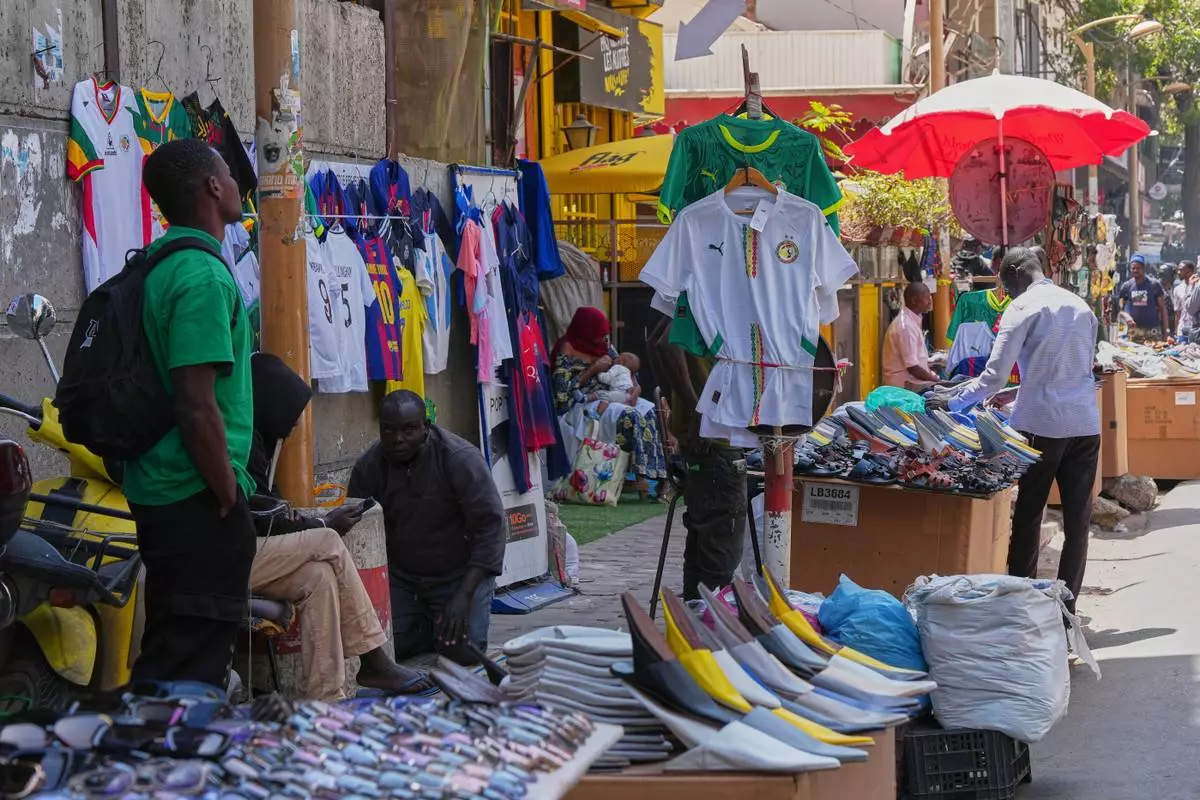
A roadside shop displays Senegal national team shirts in Dakar, Senegal, Wednesday, March 18, 2026. (AP Photo/Misper Apawu)
A roadside shop displays Senegal national team shirts in Dakar, Senegal, Wednesday, March 18, 2026. (AP Photo/Misper Apawu)

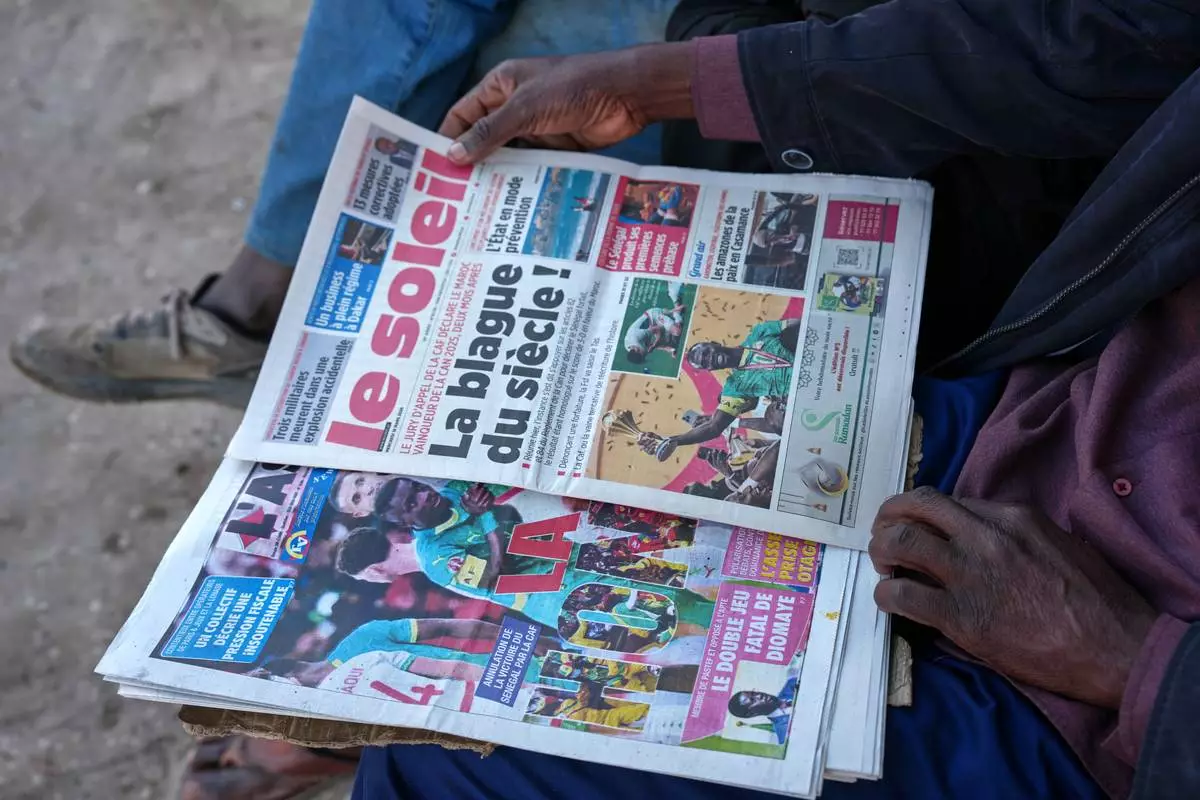
People read newspapers reporting on the Confederation of African Football decision stripping the Senegal national football team of their Africa Cup of Nations title and awarding it to Morocco national football team in Dakar, Senegal, Wednesday, March 18, 2026. (AP Photo/Misper Apawu)
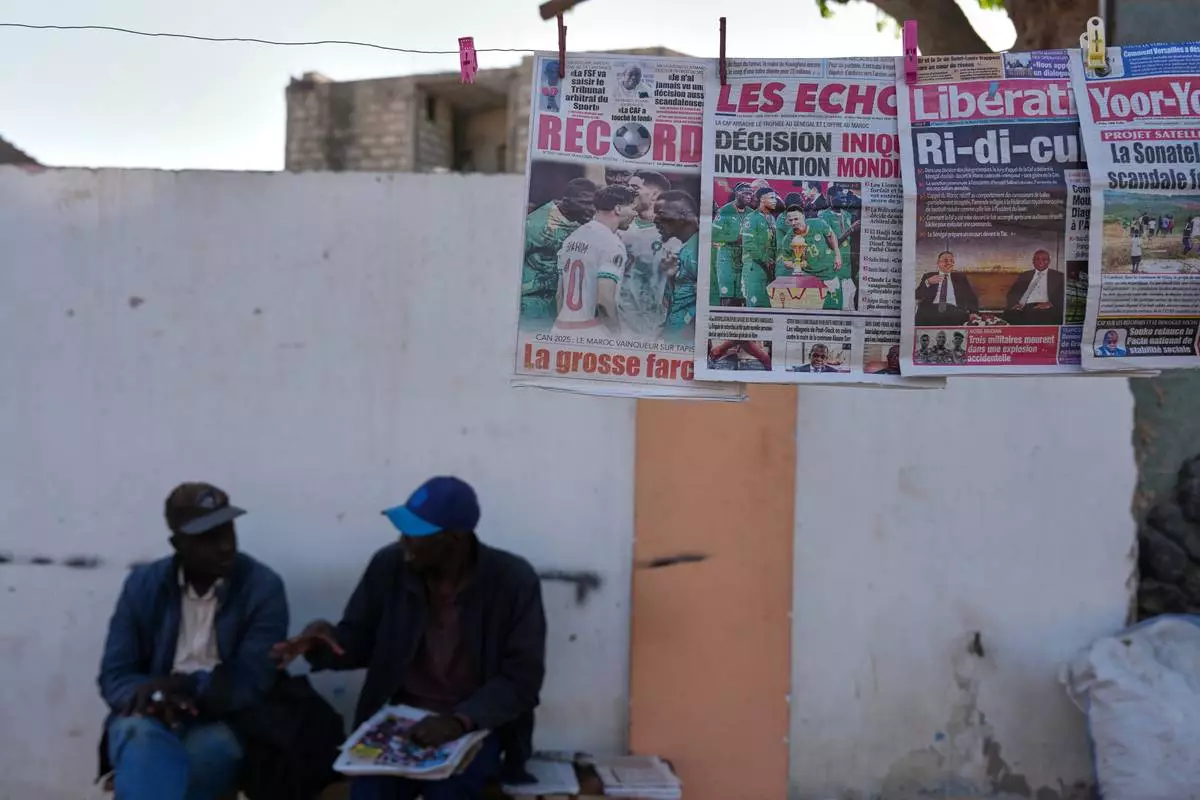
People read newspapers reporting on the Confederation of African Football decision stripping the Senegal national football team of their Africa Cup of Nations title and awarding it to Morocco national football team in Dakar, Senegal, Wednesday, March 18, 2026. (AP Photo/Misper Apawu)
Front pages of newspapers reporting on the Confederation of African Football decision stripping the Senegal national football team of their Africa Cup of Nations title and awarding it to the Morocco national football team in Dakar, Senegal, Wednesday, March 18, 2026. (AP Photo/Misper Apawu)

Front pages of newspapers reporting on the Confederation of African Football decision stripping the Senegal national football team of their Africa Cup of Nations title and awarding it to the Morocco national football team in Dakar, Senegal, Wednesday, March 18, 2026. (AP Photo/Misper Apawu)

FILE - Players from both sides clash after a controversial penalty was awarded to Morocco late on during the Africa Cup of Nations final soccer match between Senegal and Morocco in Rabat, Morocco, Sunday, Jan. 18, 2026. (AP Photo/Youssef Loulidi, File)

FILE - Players from both sides clash after a controversial penalty was awarded to Morocco late on during the Africa Cup of Nations final soccer match between Senegal and Morocco in Rabat, Morocco, Sunday, Jan. 18, 2026. (AP Photo/Youssef Loulidi, File)

FILE - Sebegalese players celebrate after winning the Africa Cup of Nations final soccer match between Senegal and Morocco, in Rabat, Morocco, Sunday, Jan. 18, 2026. (AP Photo/Mosa'ab Elshamy, File)

FILE - Sebegalese players celebrate after winning the Africa Cup of Nations final soccer match between Senegal and Morocco, in Rabat, Morocco, Sunday, Jan. 18, 2026. (AP Photo/Mosa'ab Elshamy, File)

FILE - Morocco players react after losing the Africa Cup of Nations final soccer match between Senegal and Morocco in Rabat, Morocco, Sunday, Jan. 18, 2026. (AP Photo/Youssef Loulidi, File)
FILE - Morocco players react after losing the Africa Cup of Nations final soccer match between Senegal and Morocco in Rabat, Morocco, Sunday, Jan. 18, 2026. (AP Photo/Youssef Loulidi, File)

FILE - Senegal's Sadio Mane holds the trophy aloft as he celebrates with teammates after winning the Africa Cup of Nations final soccer match between Senegal and Morocco in Rabat, Morocco, Sunday, Jan. 18, 2026. (AP Photo/Youssef Loulidi, File)
FILE - Senegal's Sadio Mane holds the trophy aloft as he celebrates with teammates after winning the Africa Cup of Nations final soccer match between Senegal and Morocco in Rabat, Morocco, Sunday, Jan. 18, 2026. (AP Photo/Youssef Loulidi, File)

Labor rights leader Dolores Huerta says she was sexually abused by César Chavez amid reported allegations of abuse by others during his tenure as president of The United Farm Workers union.

In a statement released Wednesday, Huerta said she stayed silent for 60 years out of concern that her words would hurt the farmworker movement.

Huerta described two sexual encounters with Chavez, one where she was “manipulated and pressured” and another where she was “forced against my will.”

“I carried this secret for as long as I did because building the movement and securing farmworker rights was life’s work. The formation of a union was the only vehicle to accomplish and secure those rights and I wasn’t going to let Cesar or anyone else get in the way.”

Earlier Wednesday, an investigation by the New York Times found that Chavez, groomed and sexually abused young girls who worked in the movement, including Huerta.

Huerta said she did not know that Chavez hurt other women and condemned his actions but reminded readers that the farmworker movement is bigger than one person.

“César’s actions do not reflect the values of our community and our movement,” Huerta said in her statement. “The farmworker movement has always been bigger and far more important than any one individual. César’s actions do not diminish the permanent improvements achieved for farmworkers with the help of thousands of people. We must continue to engage and support our community, which needs advocacy and activism now more than ever.

Latino leaders and community groups are now weighing the impact of his actions on the labor rights movement.

In their reactions to the news, Latino civil rights advocates emphasized that the farmworker movement was not just Chavez but thousands of other individuals who came together to fight for justice.

Voto Latino leaders said in a statement that no matter his legacy or historical framing Chavez’ actions are inexcusable. Similarly, LULAC released a statement condemning any form of sexual violence stating that “no individual, regardless of statue or legacy is above accountability.”

While the news of these allegations are devastating to the Latino community, Voto Latino said it does not erase the work done by the thousands women and men who built the farmworker movement.

“The women who organized, marched, and sacrificed alongside farmworkers carried this movement on their backs,” Voto Latino said. “Dolores Huerta — a fighter, a giant of the labor movement, and someone who is among the survivors of this abuse — helped build everything this movement stands for.”

U.S. Congresswoman Teresa Leger Fernández, chair of the Democratic Women’s Caucus, issued a statement Wednesday saying she was heartbroken and deeply disturbed by the stories of women who say they were abused as girls by Chavez and what she described as a painful account of what Huerta endured.

Leger Fernández said the farmworker and civil rights movement was built by countless people, including women and families who sacrificed for a better future.

“Honoring that legacy means facing painful truths and continuing the work for justice with honesty and humanity,” the New Mexico congresswoman said. “A movement rooted in justice must address all injustice.”

Leger Fernández said the women’s caucus will stand with survivors and continue fighting for “a future where all women and girls are safe in their communities, homes, and at work.”

The United Farm Workers union has already distanced itself from annual celebrations of its founder, calling the allegations troubling.

In a statement Tuesday, the union said allegations of “abuse of young women or minors” were concerning enough to urge people around the country to participate in immigration justice events or acts of service instead of the typical events in March to commemorate Chavez’s legacy.

Days before the allegations were detailed, several César Chavez celebrations in San Francisco, Texas and Chavez’s home state of Arizona were canceled at the request of the foundation. Organizers of canceled events did not immediately respond to the AP’s requests for comment.

Both groups said they’d be working to establish ways for anyone who might have been harmed by Chavez to share experiences confidentially.

California became the first state to establish March 31, Chavez’s birthday, as a day commemorating the labor leader. Others followed. In 2014, then-President Barack Obama proclaimed March 31 as national César Chavez Day, urging Americans to honor his legacy.

California Gov. Gavin Newsom on Wednesday said he’s still “processing” the news and urged for more reflection. The Democratic governor wouldn’t commit to making any changes to the state holiday at the end of the month.

The farmworker movement “was much bigger than one man,” Newsom said at an unrelated news conference. “It’s about labor. It’s about social justice, economic justice, racial justice,” he said.

Following the news, Arizona Gov. Katie Hobbs has declined to recognize March 31 as César Chávez Day as she has in the two prior years, said spokeswoman Liliana Sota.

“The Governor’s Office is deeply concerned by the troubling allegations against César Chávez. As a social worker who worked with homeless youth and victims of domestic violence, Gov. Hobbs takes allegations of inappropriate sexual behavior against women and minors very seriously.”

César Chávez Day isn’t a state holiday in Arizona.

Calls are already happening to rename landmarks that honor Chavez. El Concilio, a coalition of Mexican American neighborhood associations rooted Austin, Texas is proposing the decision to name César Chavez, made a few months after Chavez’s death, be reversed to its original name First Street.

U.S. Sen. Ben Ray Luján, a New Mexico Democrat, issued a statement Wednesday saying abuse of any kind, especially against children, is indefensible and a betrayal of the values that Latino leaders have championed for generations.

“His name should be removed from landmarks, institutions and honors,” Luján said of Chavez. “We cannot celebrate someone who carried out such disturbing harm.”

Born in Yuma, Arizona, Chavez grew up in a Mexican American family that traveled around California picking lettuce, grapes, cotton and other seasonal crops. He died in California in 1993 at age 66.

Chavez is known nationally for his early organizing in the fields, a hunger strike, a grape boycott and eventual victory in getting growers to negotiate with farmworkers for better wages and working conditions.

In 1962, Chavez and Huerta co-founded the National Farm Workers Association, which became the United Farm Workers of America.

Associated Press writers Susan Montoya Bryan in Albuquerque, New Mexico; Trân Nguyễn in Sacramento, Calif.; Dorany Pindea in Los Angeles; Felicia Fonseca and Jacques Billeaud in Arizona contributed to this report.

FILE - Cesar Chavez, a farm worker, labor organizer and leader of the California grape strike, is seen in a California works office in 1965. (AP Photo, George Brich, File)

FILE - Cesar Chavez, a farm worker, labor organizer and leader of the California grape strike, is seen in a California works office in 1965. (AP Photo, George Brich, File)

Recommended Articles