Washington (AP) — It turns out it takes about $125 million to reshape a congressional delegation.
On Tuesday night, Illinois Democrats ushered in a new generation of lawmakers, picking five new nominees for Congress in open seats that are favored to remain in Democratic hands this fall.
But it came at the end of a messy, expensive primary season, with around $70 million in spending from outside groups and $54 million in campaign spending across five competitive races for open U.S. Senate and House seats.
That kind of crowded, high-stakes action isn’t typical for Illinois, a state better known for its machine politics than wide-open contests. But this year was different: An unusually high number of retirements created opportunities for new representation up and down the ballot. U.S. Sen. Dick Durbin announced last year he wouldn’t seek a sixth term, prompting two House members to run for his seat. The cascading effect of Durbin’s retirement, plus those of three other Chicago-area Democratic representatives, meant that for the first time in at least seven decades, more than one-quarter of the state’s U.S. House seats were open.
All of that brought in a flood of candidates — and money.
The Senate primary alone racked up more than $34 million in independent expenditures. For context, only nine Senate general election campaigns in 2024 saw more outside spending, according to OpenSecrets, a nonpartisan group that tracks political spending.
And in a state with a pricey media market like Chicago, that kind of money is easy to spend. Ten PACs each reported at least $1 million in independent expenditures across the five competitive races. Two of them — Illinois Future PAC, which got at least $5 million from Gov. JB Pritzker, and the cryptocurrency-backed Fairshake — spent more than $10 million.
Crypto- and artificial intelligence-backed PACs, in particular, spent big in four Illinois races. The American Israel Public Affairs Committee, an advocacy organization that lobbies for U.S. support for Israel, also spent millions.
In four of the five contested primaries for open House seats, outside groups spent more money than all the candidates combined. That in and of itself is unusual: According to OpenSecrets, in the 2024 general election there were only 49 federal races, out of close to 470, where outside groups spent more than the candidates.
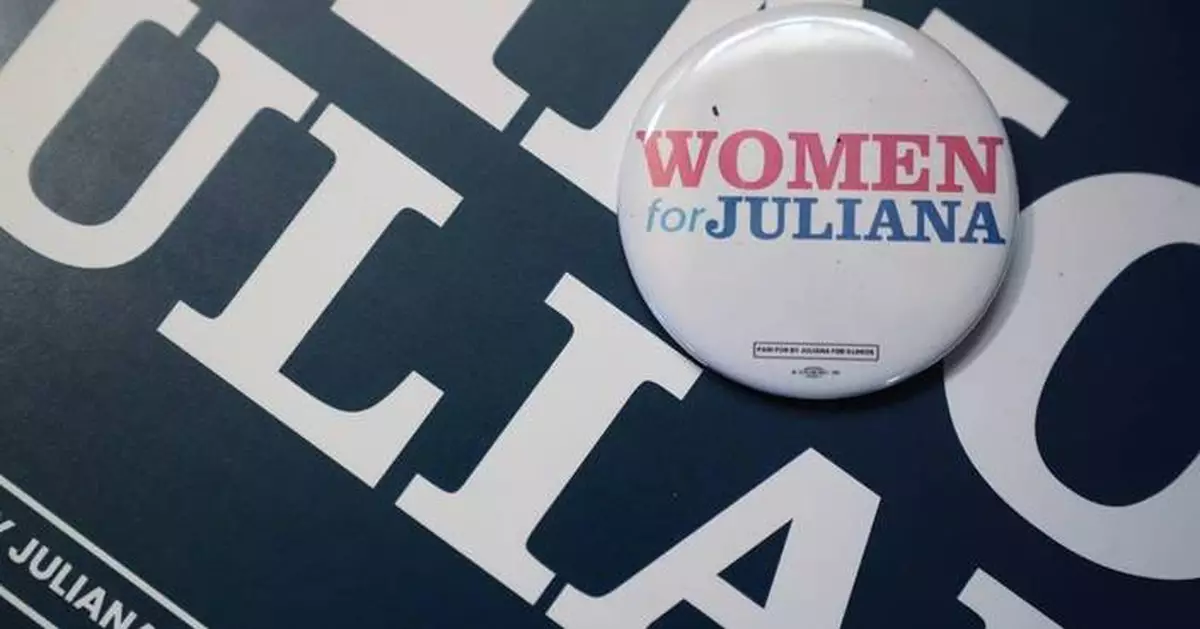
In the Senate Democratic primary, that outside spending was tilted strongly in favor of the eventual winner, Lt. Gov. Juliana Stratton. She was both the biggest beneficiary and the biggest target. Outside groups spent more than $16 million in support of her campaign, compared to about $11 million spent in opposition. She reported just shy of $2.8 million in campaign spending to the FEC.
Meanwhile, Rep. Raja Krishnamoorthi, who was trailing Stratton by about 7 percentage points as of Wednesday morning with nearly all of the vote counted, spent nearly $24 million from his own campaign coffers. Outside groups spent more than $4 million opposing his candidacy.
These outside spending totals come from 24- and 48-hour reports filed with the Federal Election Commission as of Tuesday night, while campaign spending reflects the latest FEC filings, covering campaign expenditures through Feb. 25.
The only other race where outside spending topped $10 million was Illinois’ 9th District, covering Chicago’s North Shore suburbs. That contest started with more than a dozen candidates, but three — a mayor, a state senator, and a former journalist with a big online following — ended up drawing most of the outside attention.
Kat Abughazaleh, the former journalist who would have been the first Gen Z woman elected to Congress, was the only one who faced outside spending entirely in opposition. State Sen. Laura Fine benefited from more than $4.3 million in support from Elect Chicago Women, a new super PAC. The winner of the primary, Evanston Mayor Daniel Biss, got more than half a million each from 314 Action Fund and the Congressional Progressive Caucus PAC.
Elect Chicago Women also spent more than $1.4 million opposing Biss.
The three other open House races with large candidate fields each saw between $8 and $9 million in total spending. The 2nd District led the way: The winner, Cook County Commissioner Donna Miller, was boosted by more than $4.3 million from an outside group called Affordable Chicago Now, which has yet to disclose its donors.
While some groups have clear ties to industries like cryptocurrency and AI, exactly who is behind some of the other big spenders remains a mystery. In addition to Affordable Chicago, Elect Chicago Women and Chicago Progressive Partnership haven't yet disclosed their donors, meaning the source of all of this money will be unclear until the PACs filing deadlines pass later this month.
Leah Askarinam and Pablo Barria Urenda contributed to this report.
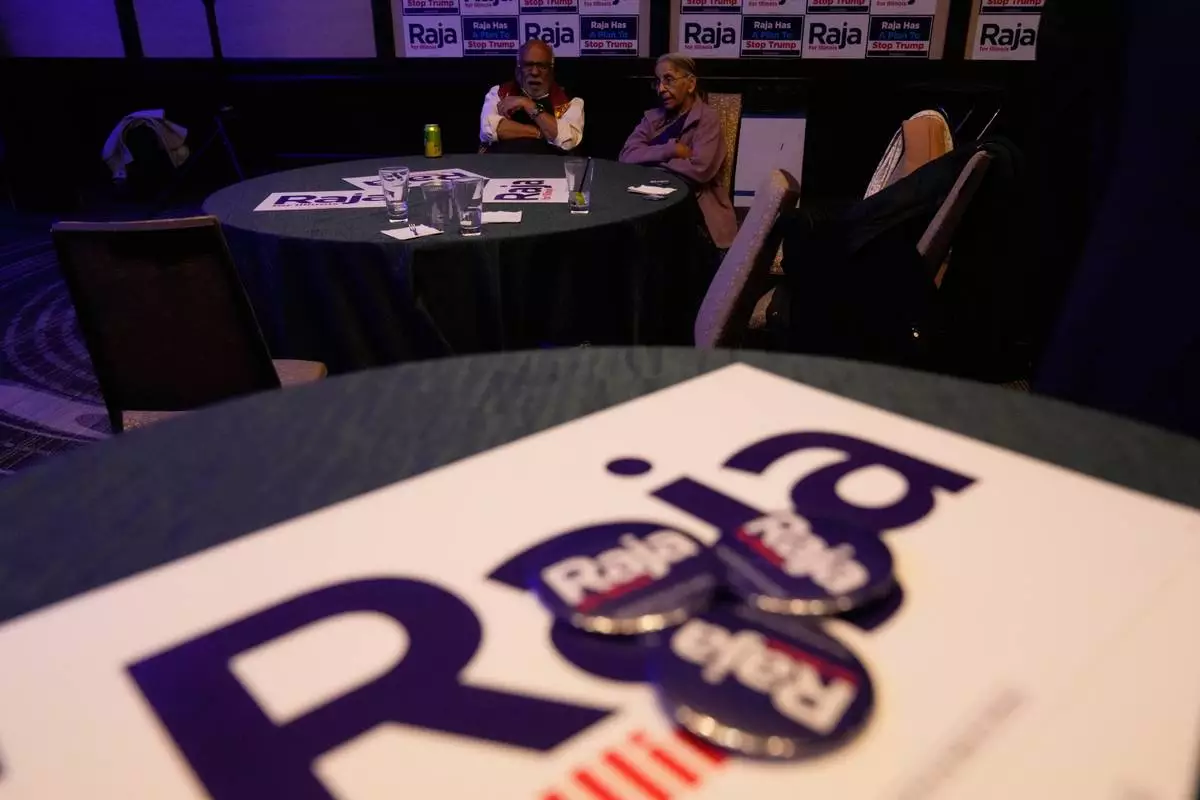
Supporters of U.S. Rep. Raja Krishnamoorthi, D-Ill, react during an election night watch party after he lost the Democratic primary for U.S. Senate Tuesday, March 17, 2026, in Chicago. (AP Photo/Nam Y. Huh)
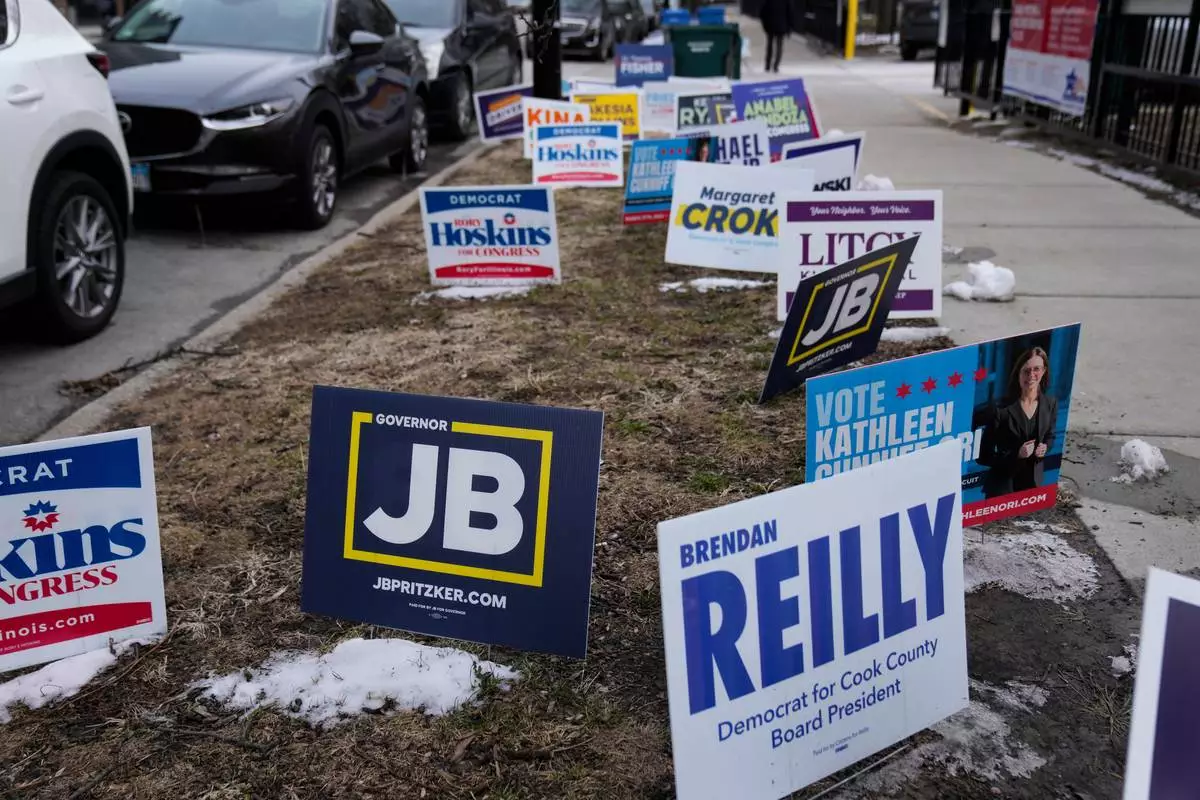
Signs are displayed outside of a polling location at Union Park during the Illinois primary election Tuesday, March 17, 2026, in Chicago. (AP Photo/Erin Hooley)
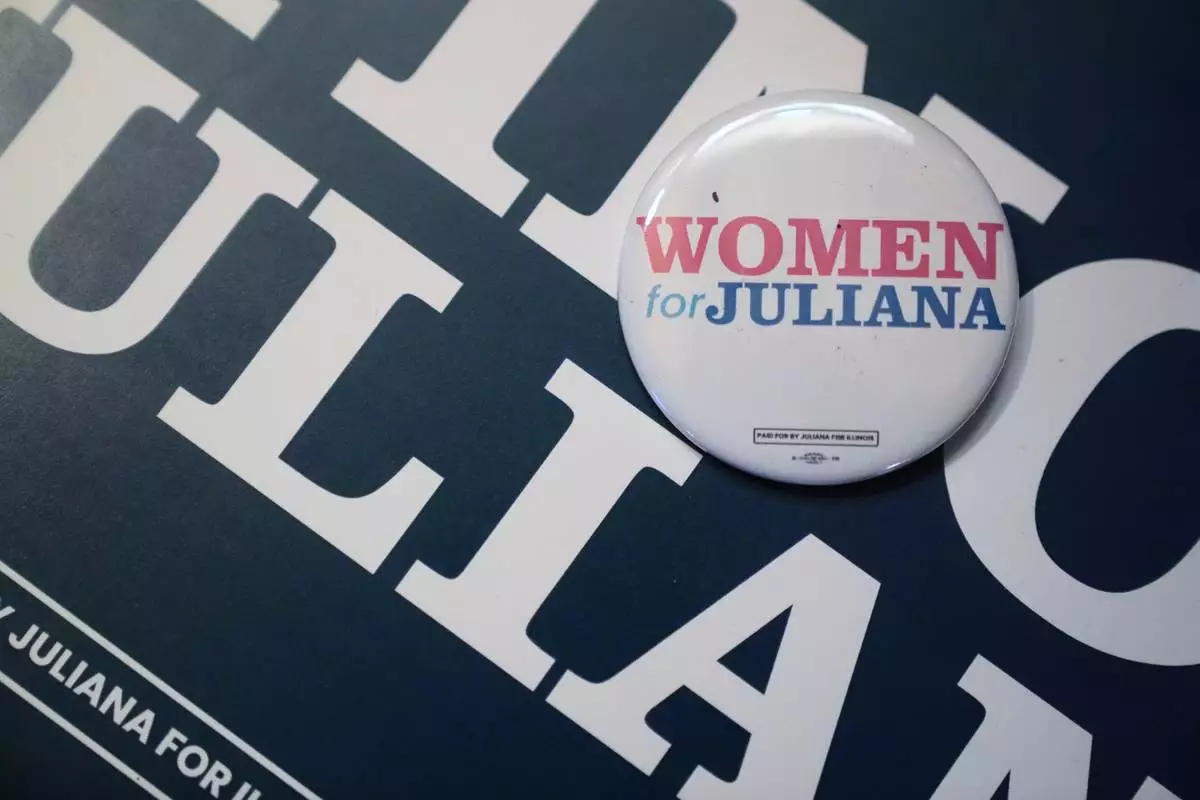
A pin reading "women for Juliana" is displayed during a primary election night watch party for Illinois Lt. Gov. Juliana Stratton, a Democratic candidate for U.S. Senate, Tuesday, March 17, 2026, in Chicago. (AP Photo/Erin Hooley)
Labor rights leader Dolores Huerta says she was sexually abused by César Chavez amid reported allegations of abuse by others during his tenure as president of The United Farm Workers union.
In a statement released Wednesday, Huerta said she stayed silent for 60 years out of concern that her words would hurt the farmworker movement.
Huerta described two sexual encounters with Chavez, one where she was “manipulated and pressured” and another where she was “forced against my will.”
“I carried this secret for as long as I did because building the movement and securing farmworker rights was life’s work. The formation of a union was the only vehicle to accomplish and secure those rights and I wasn’t going to let Cesar or anyone else get in the way.”
Earlier Wednesday, an investigation by the New York Times found that Chavez, groomed and sexually abused young girls who worked in the movement, including Huerta.
Huerta said she did not know that Chavez hurt other women and condemned his actions but reminded readers that the farmworker movement is bigger than one person.
“César’s actions do not reflect the values of our community and our movement,” Huerta said in her statement. “The farmworker movement has always been bigger and far more important than any one individual. César’s actions do not diminish the permanent improvements achieved for farmworkers with the help of thousands of people. We must continue to engage and support our community, which needs advocacy and activism now more than ever.
Latino leaders and community groups are now weighing the impact of his actions on the labor rights movement.
In their reactions to the news, Latino civil rights advocates emphasized that the farmworker movement was not just Chavez but thousands of other individuals who came together to fight for justice.
Voto Latino leaders said in a statement that no matter his legacy or historical framing Chavez’ actions are inexcusable. Similarly, LULAC released a statement condemning any form of sexual violence stating that “no individual, regardless of statue or legacy is above accountability.”
While the news of these allegations are devastating to the Latino community, Voto Latino said it does not erase the work done by the thousands women and men who built the farmworker movement.
“The women who organized, marched, and sacrificed alongside farmworkers carried this movement on their backs,” Voto Latino said. “Dolores Huerta — a fighter, a giant of the labor movement, and someone who is among the survivors of this abuse — helped build everything this movement stands for.”
U.S. Congresswoman Teresa Leger Fernández, chair of the Democratic Women’s Caucus, issued a statement Wednesday saying she was heartbroken and deeply disturbed by the stories of women who say they were abused as girls by Chavez and what she described as a painful account of what Huerta endured.
Leger Fernández said the farmworker and civil rights movement was built by countless people, including women and families who sacrificed for a better future.
“Honoring that legacy means facing painful truths and continuing the work for justice with honesty and humanity,” the New Mexico congresswoman said. “A movement rooted in justice must address all injustice.”
Leger Fernández said the women’s caucus will stand with survivors and continue fighting for “a future where all women and girls are safe in their communities, homes, and at work.”
The United Farm Workers union has already distanced itself from annual celebrations of its founder, calling the allegations troubling.
In a statement Tuesday, the union said allegations of “abuse of young women or minors” were concerning enough to urge people around the country to participate in immigration justice events or acts of service instead of the typical events in March to commemorate Chavez’s legacy.
Days before the allegations were detailed, several César Chavez celebrations in San Francisco, Texas and Chavez’s home state of Arizona were canceled at the request of the foundation. Organizers of canceled events did not immediately respond to the AP’s requests for comment.
Both groups said they’d be working to establish ways for anyone who might have been harmed by Chavez to share experiences confidentially.
California became the first state to establish March 31, Chavez’s birthday, as a day commemorating the labor leader. Others followed. In 2014, then-President Barack Obama proclaimed March 31 as national César Chavez Day, urging Americans to honor his legacy.
Following the news, Arizona Gov. Katie Hobbs has declined to recognize March 31 as César Chávez Day as she has in the two prior years, said Liliana Sota, spokeswoman for Arizona Gov. Katie Hobbs.
“The Governor’s Office is deeply concerned by the troubling allegations against César Chávez. As a social worker who worked with homeless youth and victims of domestic violence, Gov. Hobbs takes allegations of inappropriate sexual behavior against women and minors very seriously.”
César Chávez Day isn’t a state holiday in Arizona.
Calls are already happening to rename streets and schools that honor Chavez. El Concilio, a coalition of Mexican American neighborhood associations rooted Austin, Texas is proposing the decision to name César Chavez, made a few months after Chavez’s death, be reversed to its original name First Street.
Streets, schools and parks bear Chavez’s name. Born in Yuma, Arizona, Chavez grew up in a Mexican American family that traveled around California picking lettuce, grapes, cotton and other seasonal crops. He died in California in 1993 at age 66.
Chavez is known nationally for his early organizing in the fields, a hunger strike, a grape boycott and eventual victory in getting growers to negotiate with farmworkers for better wages and working conditions.
In 1962, Chavez and Huerta co-founded the National Farm Workers Association, which became the United Farm Workers of America.
Associated Press writers Susan Montoya Bryan in Albuquerque, New Mexico; Trân Nguyễn in Sacramento, Calif.; Dorany Pindea in Los Angeles; Felicia Fonseca and Jacques Billeaud in Arizona contributed to this report.
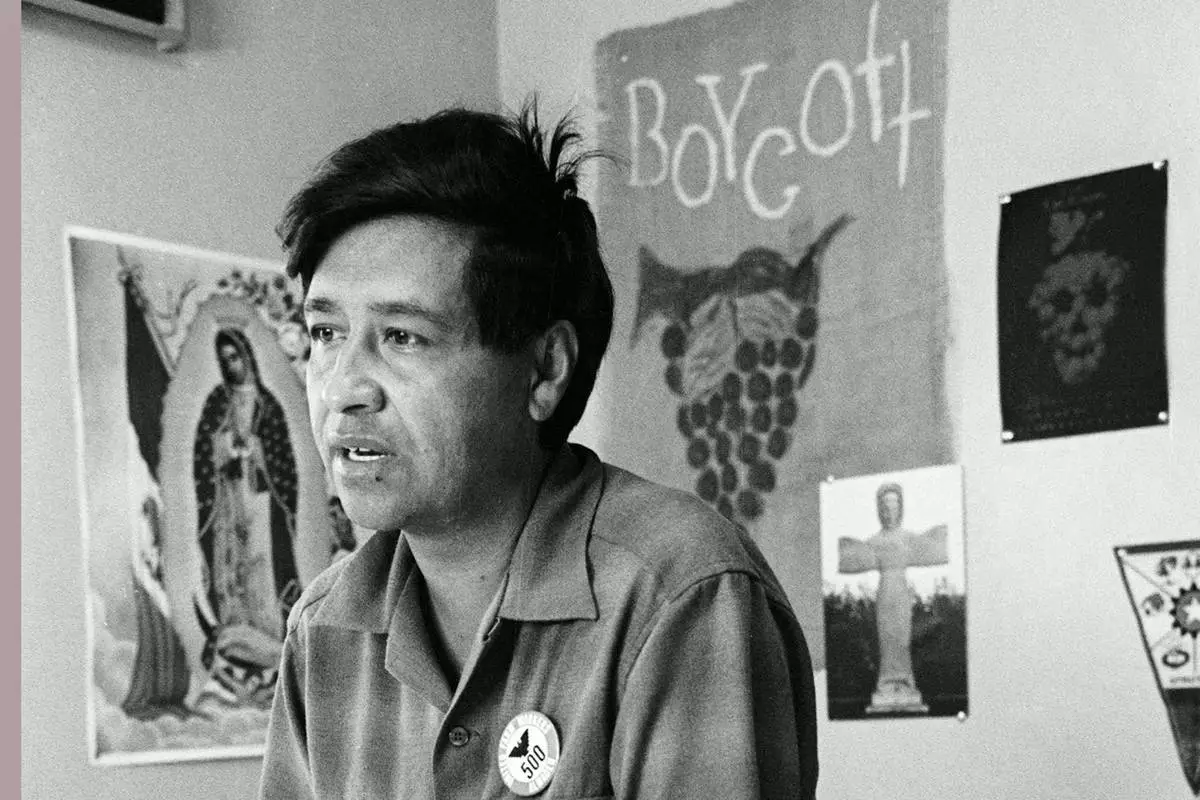
FILE - Cesar Chavez, a farm worker, labor organizer and leader of the California grape strike, is seen in a California works office in 1965. (AP Photo, George Brich, File)