LUSAKA, Zambia (AP) — Politicians and women's rights activists in Zambia warned Wednesday of a trend of female election candidates being asked for sexual favors by senior male party officials in exchange for an endorsement.
The issue came under public scrutiny after a top official in a government gender equality department said this week that she had received 10 complaints of sexual harassment from women hoping for party backing to stand as candidates in Zambia's national elections in August.
Mainga Kabika, the permanent secretary of the government's Gender Division, said Monday that the complaints she received alleged “various political party officials, including chairpersons, youth leaders and those holding senior positions, are asking for sexual favours" in exchange for endorsing women and supporting their campaigns.
“I appeal to all female aspiring candidates to secure evidence against suspects," Kabika said. She did not name any of the parties or officials implicated.
Saboi Imboela, the president of the National Democratic Congress opposition party, told The Associated Press on Wednesday that the problem arises every election cycle and capable candidates have often been sidelined because they refused to comply.
"As a result, the wrong candidates are selected while deserving individuals are left out. This must be fought at all costs,” she said.
Imboela, a former singer, said some female politicians and nongovernmental organizations like the Zambia National Women's Lobby have formed a committee to address what she called the “sextortion” of female political candidates. It has a toll-free helpline, she said.
Zambia’s elections on Aug. 13 will choose the president, but also lawmakers and local councilors. The southern African nation already has a problem with the underrepresentation of women in politics, where only about 15% of lawmakers in Parliament are women, according to the Inter-Parliamentary Union, an international organization of national parliaments.
Golden Nachibinga, the executive director of the Zambia National Women’s Lobby, said previous allegations of officials demanding sexual favors in the run-up to elections had discouraged women from joining politics.
Venna Banda, a woman hoping to run in a mayoral race for the ruling United Party for National Development, said she had previously encountered sexual harassment while trying to build a political career and urged female politicians to "refuse," though she noted inexperienced or less-established candidates were vulnerable.
Zambia is a stable democracy but has a largely conservative and patriarchal society, women’s groups say.
Zambia passed a law last year reserving at least 20 seats in Parliament for women, while also aiming to increase the representation of young and disabled people. President Hakainde Hichilema has acknowledged gender disparities in Zambian politics, though his vice president, Mutale Nalumango, is a woman.
AP Africa news: https://apnews.com/hub/africa
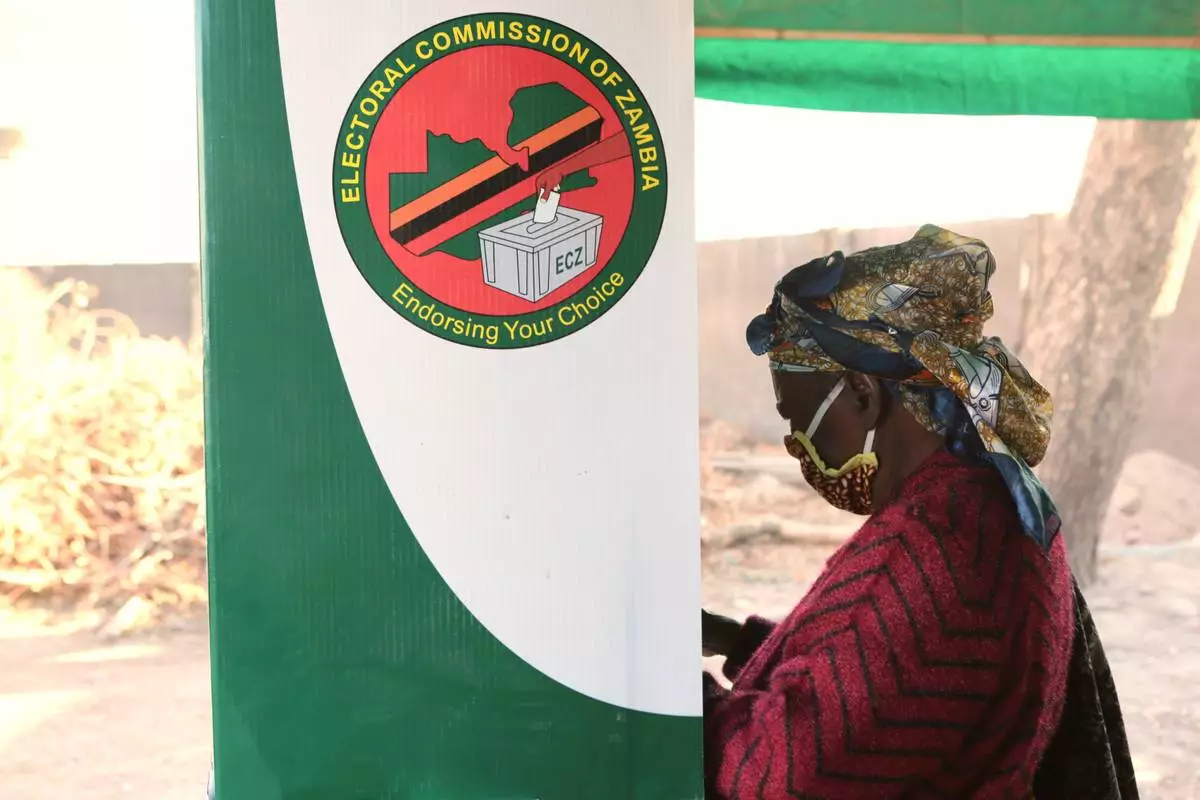
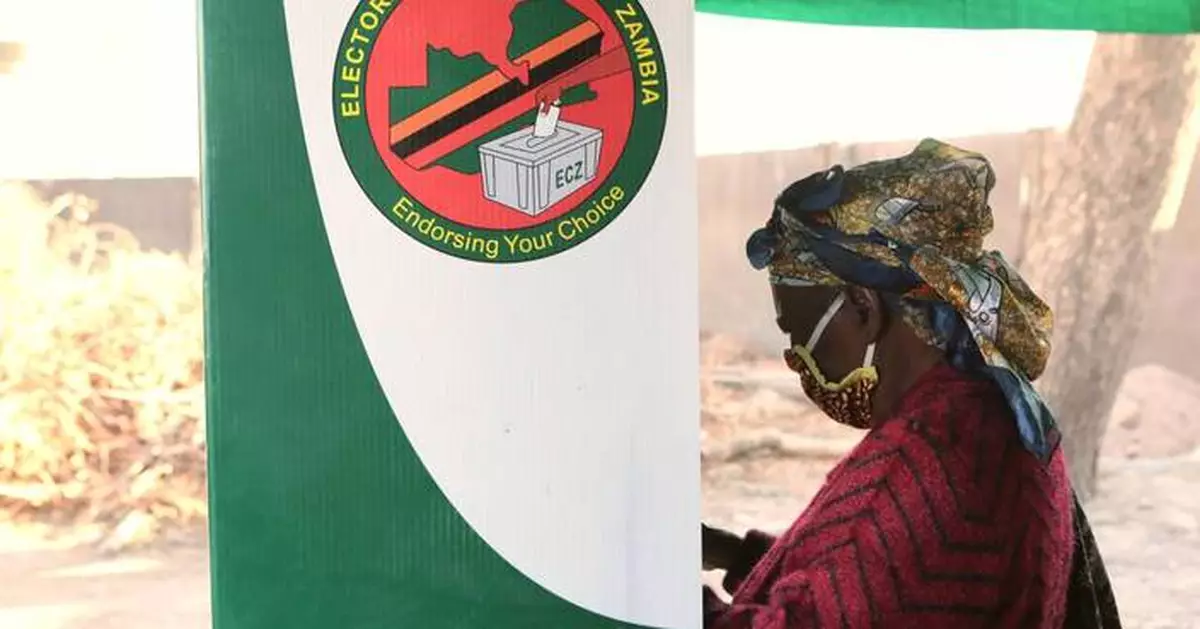
FILE - A woman is seen in a voting booth at a polling station in Lusaka, Zambia, Aug, 12, 2021. (AP Photo/Tsvangirayi Mukwazhi, File)
Labor rights leader Dolores Huerta says she was sexually abused by César Chavez amid reported allegations of abuse by others during his tenure as president of The United Farm Workers union.
In a statement released Wednesday, Huerta said she stayed silent for 60 years out of concern that her words would hurt the farmworker movement.
Huerta described two sexual encounters with Chavez, one where she was “manipulated and pressured” and another where she was “forced against my will.”
“I carried this secret for as long as I did because building the movement and securing farmworker rights was life’s work. The formation of a union was the only vehicle to accomplish and secure those rights and I wasn’t going to let Cesar or anyone else get in the way.”
Earlier Wednesday, an investigation by the New York Times found that Chavez, groomed and sexually abused young girls who worked in the movement, including Huerta.
Huerta said she did not know that Chavez hurt other women and condemned his actions but reminded readers that the farmworker movement is bigger than one person.
“César’s actions do not reflect the values of our community and our movement,” Huerta said in her statement. “The farmworker movement has always been bigger and far more important than any one individual. César’s actions do not diminish the permanent improvements achieved for farmworkers with the help of thousands of people. We must continue to engage and support our community, which needs advocacy and activism now more than ever.
Latino leaders and community groups are now weighing the impact of his actions on the labor rights movement.
In their reactions to the news, Latino civil rights advocates emphasized that the farmworker movement was not just Chavez but thousands of other individuals who came together to fight for justice.
Voto Latino leaders said in a statement that no matter his legacy or historical framing Chavez’ actions are inexcusable. Similarly, LULAC released a statement condemning any form of sexual violence stating that “no individual, regardless of statue or legacy is above accountability.”
While the news of these allegations are devastating to the Latino community, Voto Latino said it does not erase the work done by the thousands women and men who built the farmworker movement.
“The women who organized, marched, and sacrificed alongside farmworkers carried this movement on their backs,” Voto Latino said. “Dolores Huerta — a fighter, a giant of the labor movement, and someone who is among the survivors of this abuse — helped build everything this movement stands for.”
U.S. Congresswoman Teresa Leger Fernández, chair of the Democratic Women’s Caucus, issued a statement Wednesday saying she was heartbroken and deeply disturbed by the stories of women who say they were abused as girls by Chavez and what she described as a painful account of what Huerta endured.
Leger Fernández said the farmworker and civil rights movement was built by countless people, including women and families who sacrificed for a better future.
“Honoring that legacy means facing painful truths and continuing the work for justice with honesty and humanity,” the New Mexico congresswoman said. “A movement rooted in justice must address all injustice.”
Leger Fernández said the women’s caucus will stand with survivors and continue fighting for “a future where all women and girls are safe in their communities, homes, and at work.”
The United Farm Workers union has already distanced itself from annual celebrations of its founder, calling the allegations troubling.
In a statement Tuesday, the union said allegations of “abuse of young women or minors” were concerning enough to urge people around the country to participate in immigration justice events or acts of service instead of the typical events in March to commemorate Chavez’s legacy.
Days before the allegations were detailed, several César Chavez celebrations in San Francisco, Texas and Chavez’s home state of Arizona were canceled at the request of the foundation. Organizers of canceled events did not immediately respond to the AP’s requests for comment.
Both groups said they’d be working to establish ways for anyone who might have been harmed by Chavez to share experiences confidentially.
California became the first state to establish March 31, Chavez’s birthday, as a day commemorating the labor leader. Others followed. In 2014, then-President Barack Obama proclaimed March 31 as national César Chavez Day, urging Americans to honor his legacy.
Following the news, Arizona Gov. Katie Hobbs has declined to recognize March 31 as César Chávez Day as she has in the two prior years, said Liliana Sota, spokeswoman for Arizona Gov. Katie Hobbs.
“The Governor’s Office is deeply concerned by the troubling allegations against César Chávez. As a social worker who worked with homeless youth and victims of domestic violence, Gov. Hobbs takes allegations of inappropriate sexual behavior against women and minors very seriously.”
César Chávez Day isn’t a state holiday in Arizona.
Calls are already happening to rename streets and schools that honor Chavez. El Concilio, a coalition of Mexican American neighborhood associations rooted Austin, Texas is proposing the decision to name César Chavez, made a few months after Chavez’s death, be reversed to its original name First Street.
Streets, schools and parks bear Chavez’s name. Born in Yuma, Arizona, Chavez grew up in a Mexican American family that traveled around California picking lettuce, grapes, cotton and other seasonal crops. He died in California in 1993 at age 66.
Chavez is known nationally for his early organizing in the fields, a hunger strike, a grape boycott and eventual victory in getting growers to negotiate with farmworkers for better wages and working conditions.
In 1962, Chavez and Huerta co-founded the National Farm Workers Association, which became the United Farm Workers of America.
Associated Press writers Susan Montoya Bryan in Albuquerque, New Mexico; Trân Nguyễn in Sacramento, Calif.; Dorany Pindea in Los Angeles; Felicia Fonseca and Jacques Billeaud in Arizona contributed to this report.
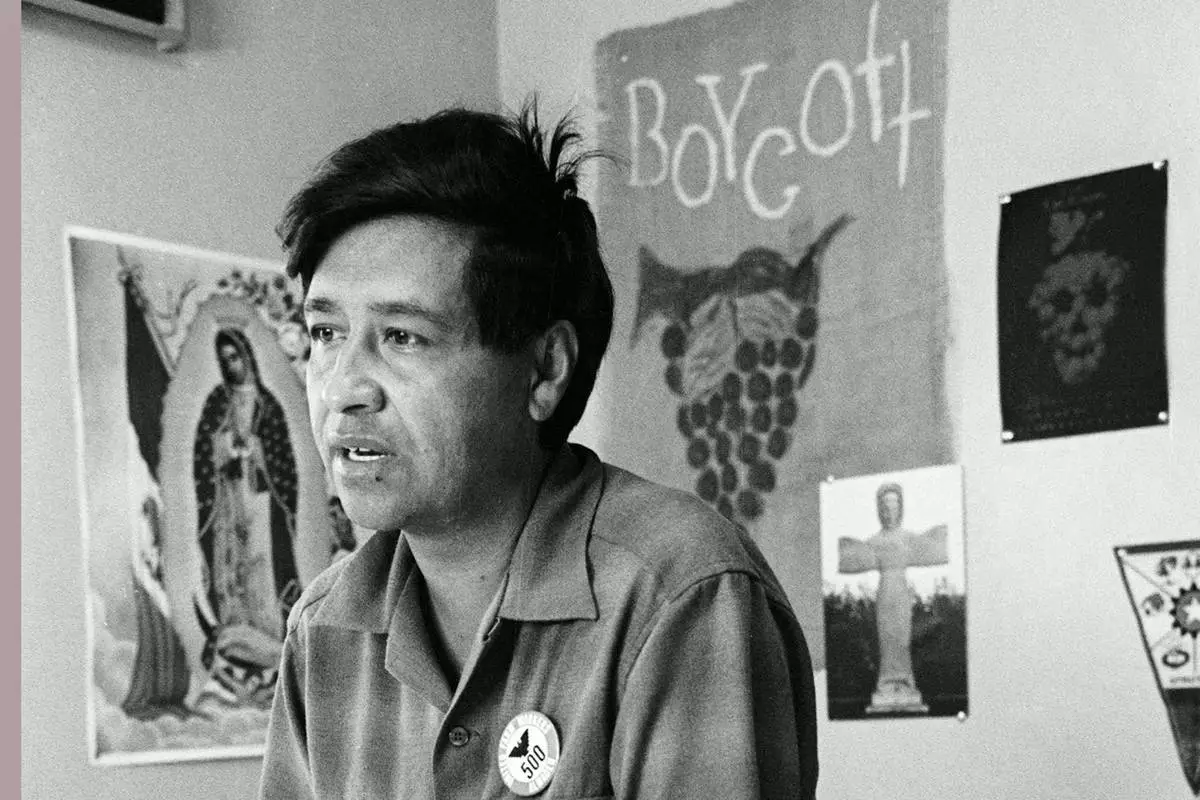
FILE - Cesar Chavez, a farm worker, labor organizer and leader of the California grape strike, is seen in a California works office in 1965. (AP Photo, George Brich, File)