JUNEAU, Alaska (AP) — The first oil and gas lease sale held in years in the National Petroleum Reserve-Alaska was touted by officials Wednesday as the strongest to date, drawing hundreds of bids and interest from major oil companies despite pending legal challenges from environmentalists and some Indigenous groups.
It was the first sale in the reserve since 2019 and the first under a law passed by Congress last year calling for at least five lease sales there over a 10-year period, amid a renewed push by the Trump administration to expand oil and gas development in Alaska. The U.S. Department of Interior said 11 companies submitted bids on 187 tracts covering 1.3 million acres (526,000 hectares). The sale offered 625 tracts over about 5.5 million acres (2.2 million hectares).
State political leaders cheered the result, with Republican Gov. Mike Dunleavy calling it a “major win for our state and our country.” Business, oil and gas and resource development groups issued a joint statement that said the “strong participation and unprecedented results underscore renewed investor confidence in Alaska’s North Slope and the state’s long-term resource potential.” Voice of the Arctic Iñupiat, an advocacy group whose members include North Slope leaders, called the sale an important milestone.
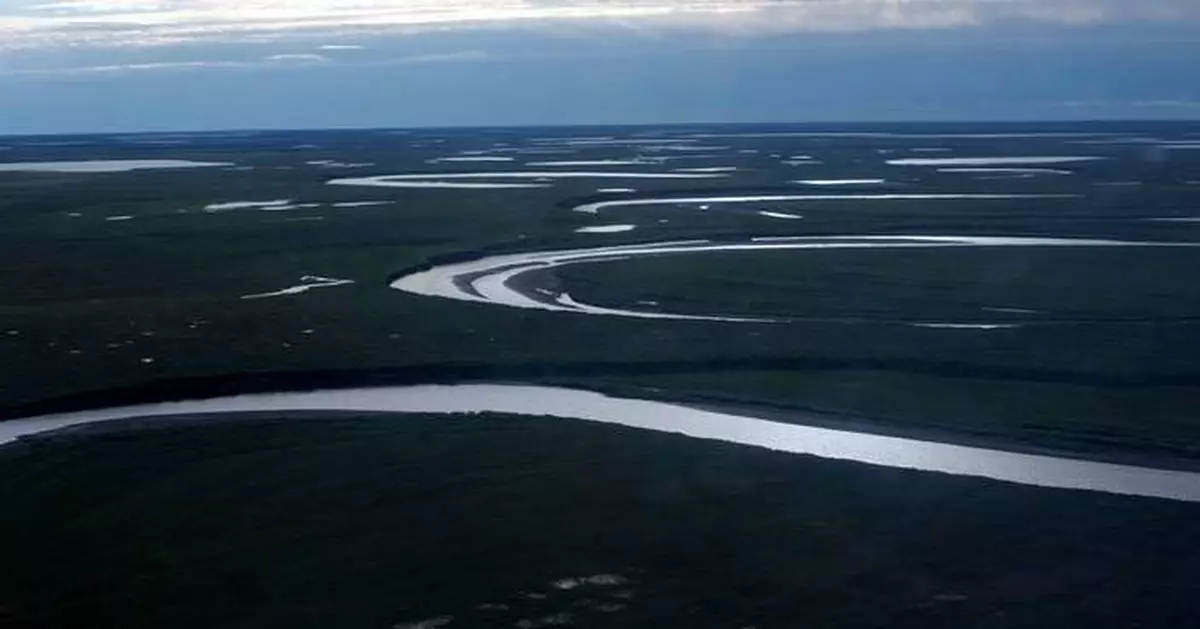
The petroleum reserve is home to the large Willow oil project, authorized in 2023 by the Biden administration and currently under development by ConocoPhillips Alaska. The reserve, roughly the size of Indiana on Alaska's North Slope, provides habitat for an array of wildlife, including caribou, bears, wolves and millions of migratory birds.
Critics of the drilling push have raised concerns about the potential impacts on parts of the reserve previously designated as special for their wildlife, subsistence or other values, including around Teshekpuk Lake. The lake is the largest in Alaska’s arctic region.
Kristen Miller, executive director of Alaska Wilderness League, in a statement called the region “one of the last truly wild places on Earth, home to millions of migrating birds, vast caribou herds and Indigenous communities whose lives are woven into this land."
“We will spend every ounce of our energy making sure those leases never become drill pads,” she said.
Several lawsuits challenging the lease sale, the management plan underpinning it or related actions are pending.
Jeremy Lieb, an attorney with Earthjustice, which is representing conservation groups in one of the cases, in statement said amid climate change and high energy prices, "it’s clear that the best way forward is switching to low-cost, clean energy sources – not attempting to produce more expensive, ecologically destructive Arctic oil.”
In another case, U.S. District Court Judge Sharon Gleason this week stayed the Trump administration's cancellation of a right of way issued to Nuiqsut Trilateral, Inc., an organization formed by the Native Village of Nuiqsut, Kuukpik Corporation and the City of Nuiqsut, until the group's lawsuit challenging the cancellation is resolved.
The right of way, issued late in the Biden administration, allowed for restricting oil and gas development and was aimed at protecting the Teshekpuk caribou herd and habitat across roughly 1 million acres (405,000 hectares).
In the cancellation, a deputy Interior secretary cited “serious and fundamental legal deficiencies” in the issuance of the right of way.
Kevin Pendergast, Alaska state director for the Bureau of Land Management, did not mention Gleason's decision during the livestreamed bid openings. The agency, in response to questions from The Associated Press, confirmed in a statement that lease offerings within the right of way were included in the sale.
“Any lease issuance for tracts within the right of way will be consistent with the court’s order,” the statement said.
Travis Annatoyn, an attorney for Nuiqsut Trilateral, said in a statement that the Interior Department told the group it “will not authorize activities prohibited by the Right-of-Way, absent Nuiqsut Trilateral’s waiver," as long as the stay is in effect.
“The issuance of leases in the subject acreage is prohibited by the Right-of-Way, so we expect that leases will not be awarded in that acreage absent further action from NTI and appropriate discussions between NTI and Interior," the statement said.
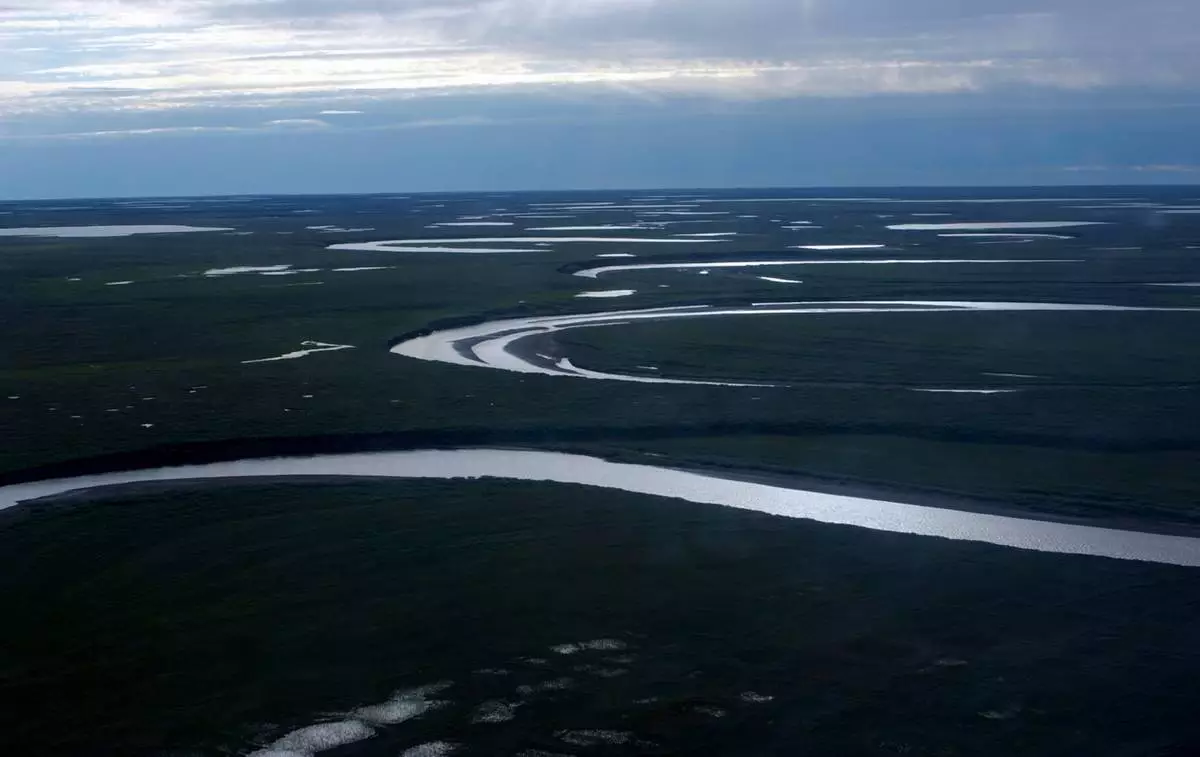
FILE - This photo provided by the United States Geological Survey shows Fish Creek through the National Petroleum Reserve-Alaska, managed by the Bureau of Land Management, on Alaska's North Slope on July 8, 2004. (David W. Houseknecht/United States Geological Survey via AP, File)
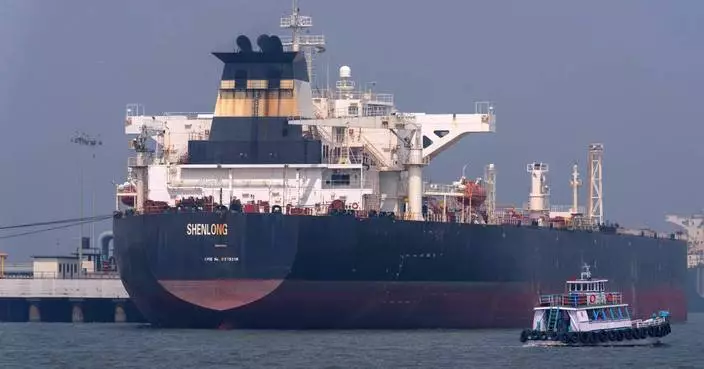
DUBAI, United Arab Emirates (AP) — Iran intensified its attacks on its Gulf Arab neighbors' energy infrastructure Thursday, setting Qatari liquefied natural gas facilities and a Kuwaiti oil refinery ablaze as it hit back following an Israeli attack on its main natural gas field, a major escalation in the Mideast war that has sent global fuel prices soaring.
A ship burned off the coast of the United Arab Emirates and another was damaged off of Qatar, underscoring the ever-present danger facing vessels due to Iran's stranglehold on the Strait of Hormuz.
Qatar, a key source of natural gas for world markets, said firefighters put out a blaze at a major LNG facility after it was hit by Iranian missile attacks. Production had already been halted there after earlier attacks but it said the latest wave of missiles caused “sizeable fires and extensive further damage.”
Damage to the facility could delay Qatar in getting its supplies to the market even after the Iran war ends.
A drone attack on Kuwait's Mina Al-Ahmadi refinery sparked a fire but caused no injuries, the state-run KUNA news agency reported. The refinery is one of the biggest in the Middle East, with a petroleum production capacity of 730,000 barrels per day.
Authorities in Abu Dhabi said they were forced to shut down operations at its Habshan gas facility and Bab field, calling Iranian overnight attacks on the sites a “dangerous escalation.”
Missile alert sirens sounded in multiple other areas around the Gulf, and Israel warned of incoming Iranian fire.
Qatar, Saudi Arabia and the United Arab Emirates all denounced the Iranian attacks, with Saudi Arabia’s top diplomat saying assaults on the kingdom meant “what little trust there was before has completely been shattered.”
In morning trading, Brent crude oil, the international standard, was above $110 a barrel, up more than 50% since Israel and the United States started the war Feb. 28 with strikes on Iran.
The wave of Iranian attacks came after Israel hit South Pars, the world's largest gas field located offshore in the Persian Gulf and owned jointly by Iran and Qatar.
With some 80% of all power generated in Iran coming from natural gas, according to the Paris-based International Energy Agency, the attack directly threatens the country's electricity supplies. Natural gas is also used to supply household heating and cooking across the Islamic Republic.
Hitting the gas field is a “clear expansion of the conflict,” the New York-based Soufan Center said in a research note.
“Israel’s target selection in this war has heavily focused on the institutions, leaders and infrastructure ..." the think tank said. "It now seeks to inflict additional pressure on the regime by making the living conditions for civilians intolerable.”
Iran condemned the strike on South Pars, with Iranian President Masoud Pezeshkian warning of “uncontrollable consequences" that "could engulf the entire world.”
In Washington, President Donald Trump said that Israel would not attack South Pars again, but warned on social media that if Iran continued striking Qatar’s energy infrastructure, the U.S. would retaliate and “massively blow up the entirety” of the field.
“I do not want to authorize this level of violence and destruction because of the long term implications that it will have on the future of Iran,” Trump said on social media.
Qatar Energy said on X that a missile hit on its massive Ras Laffan LNG facility caused the blaze early Thursday.
A ship was also hit off the country's coast, according to the British military’s United Kingdom Maritime Trade Operations center. It was not clear whether it was deliberately targeted of was struck by falling debris as Qatar fired off missile interceptors at incoming Iranian barrages.
Saudi Arabia also reported downing Iranian drones targeting its natural gas facilities overnight, and authorities in Abu Dhabi shut down the Habshan gas facility and Bab field after interceptions over the sites.
Another ship was set ablaze early Thursday off the UAE coast. It was also unclear whether it was targeted or hit with debris, the UKMTO said. It said the vessel was just off the coast of Khor Fakkan, near the mouth of the Strait of Hormuz, through which a fifth of the world's oil is normally shipped.
More than 20 vessels have been attacked during the Iran war so far as Tehran has kept a tight grip on shipping traffic through the waterway, which leads from the Persian Gulf to the open ocean.
Iran insists the waterway is open, just not to the U.S. or its allies, and while some vessels have sailed through, it has only been a trickle.
Iran announced the execution of three men detained in January’s nationwide protests, the first such sentences known to have been carried out, the judiciary's Mizan news agency reported.
The men were accused of stabbing two police officers to death in Qom, some 130 kilometers (80 miles) south of the capital, Tehran, during the protests.
Iran put down the demonstrations with intense violence that killed thousands of people and saw tens of thousands others detained, and activists have warned that authorities might carry out mass executions of those detained.
Iran long has been accused by rights campaigners of extracting coerced confessions from detainees and not allowing them to fully defend themselves in court.
More than 1,300 people in Iran have been killed during the war. Israeli strikes have displaced more than 1 million Lebanese — roughly 20% of the population — according to the Lebanese government, which says 968 people have been killed.
In Israel, 15 people have been killed by Iranian missile fire, including a Thai agricultural worker who died overnight after getting hit with shrapnel. Three people were also killed in the occupied West Bank overnight by an Iranian missile strike, the Palestinian Red Crescent said.
At least 13 U.S. military members have been killed.
Metz reported from Ramallah, West Bank, and Rising from Bangkok. Associated Press writers Natalie Melzer in Tzukim, Israel, Julie Watson in San Diego and Sally Abou AlJoud in Beirut contributed to this report.

FILE - Iranian Intelligence Minister Esmail Khatib attends the inauguration ceremony of the 6th term of the Assembly of Experts in Tehran, Iran, May 21, 2024. (AP Photo/Vahid Salemi, File)
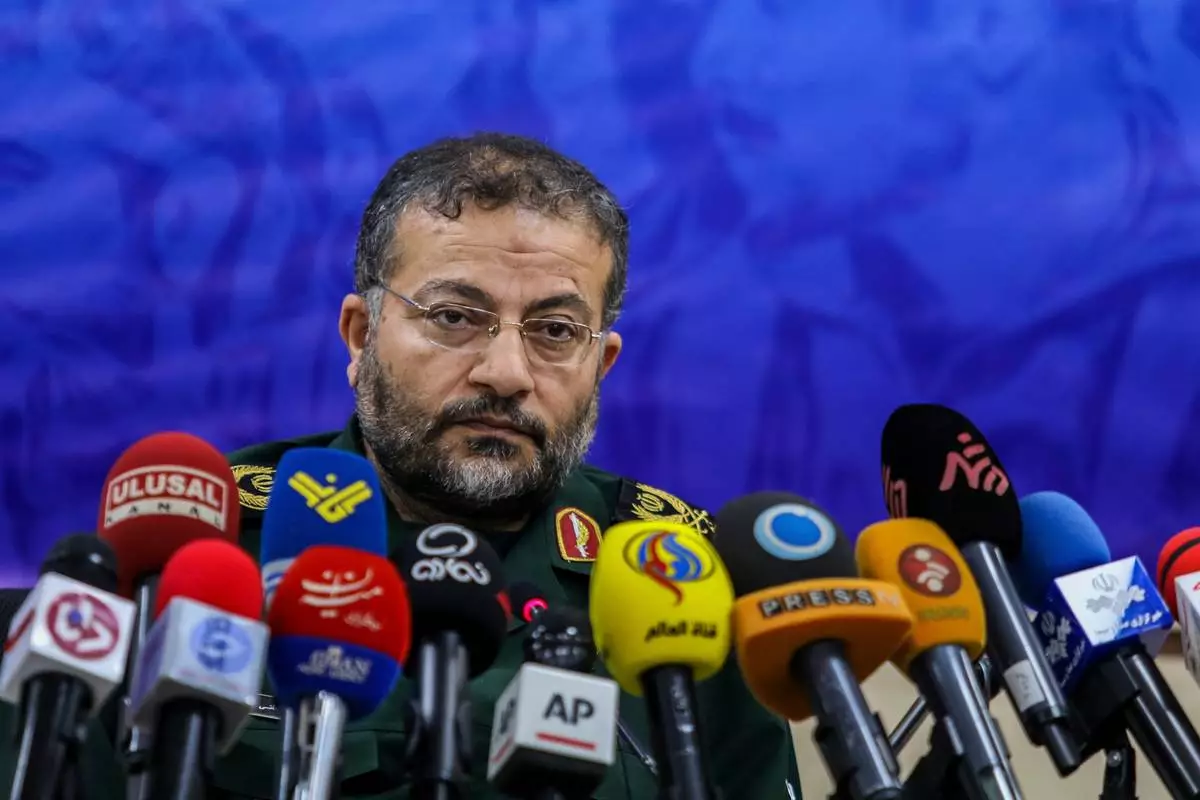
FILE - Commander of Iran's Basij paramilitary force, Gen. Gholam Reza Soleimani, gives a press conference in Tehran, Iran, Nov. 18, 2019. (AP Photo/Ebrahim Noroozi, File)

FILE - Ali Larijani, center, head of Iran's National Security Council, gestures as Hezbollah supporters throw rice to welcome him outside Rafik Hariri International Airport in Beirut, Lebanon, Wednesday, Aug. 13, 2025. (AP Photo/Bilal Hussein, File)
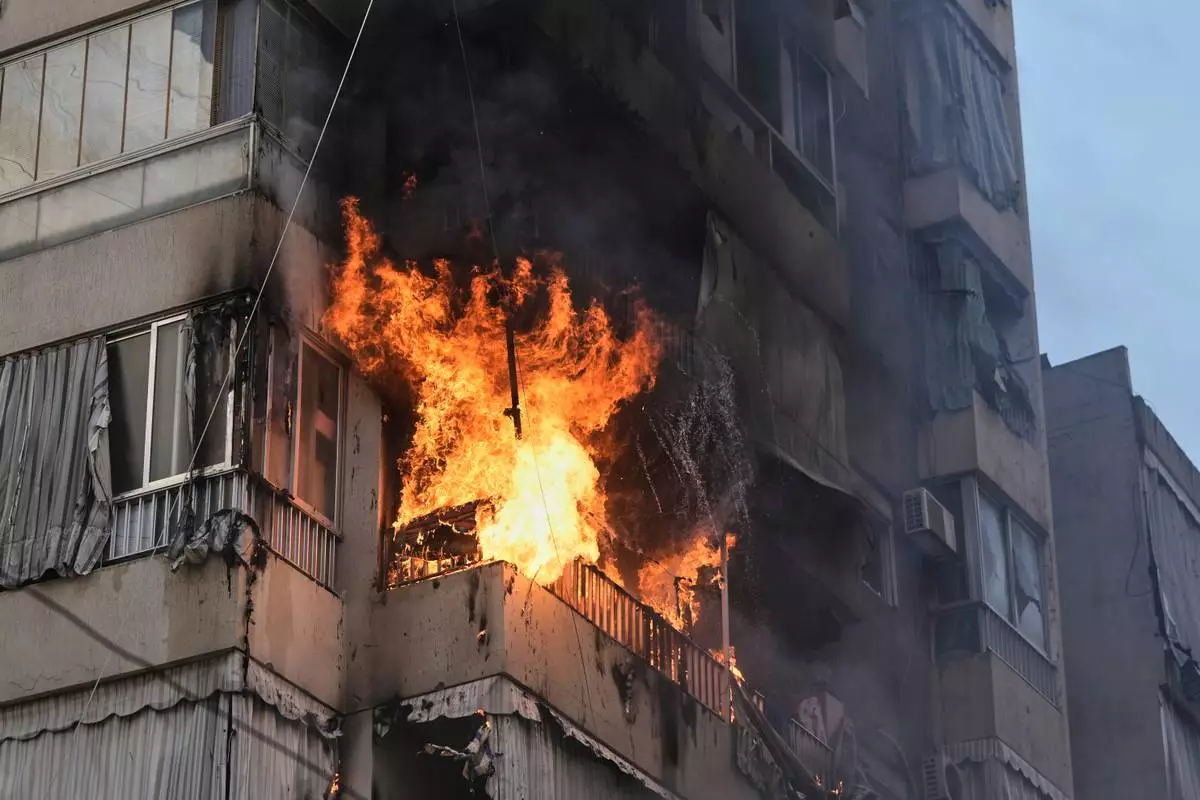
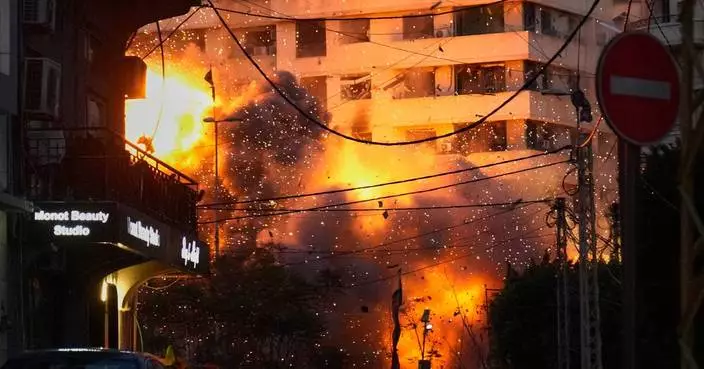
Smoke and flame rise from a residential building following an Israeli airstrike in central Beirut, Lebanon, Wednesday, March 18, 2026. (AP Photo/Bilal Hussein)
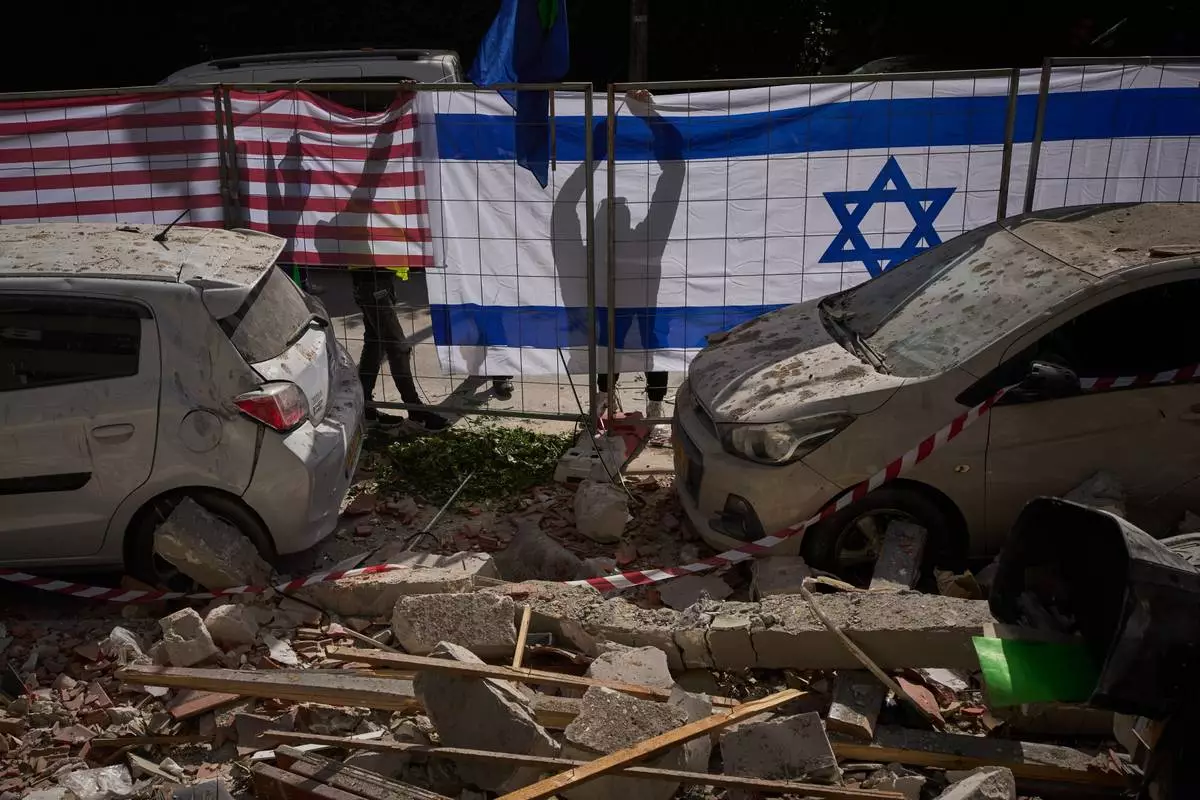
Israeli authorities hang Israeli and U.S. flags at the site struck by an Iranian missile that killed two people, in Ramat Gan, Israel, Wednesday, March 18, 2026. (AP Photo/Oded Balilty)