Mari Younger cherished her life in West Maui. She worked hard at her career in the restaurant industry and was proudly self-sufficient, happily living in the same condo for 11 years, lovingly doting on her cat, Stella.
Then came a health emergency that forced her to leave her physically demanding work. Shortly after, fire destroyed Lahaina and the existence she knew.
Click to Gallery
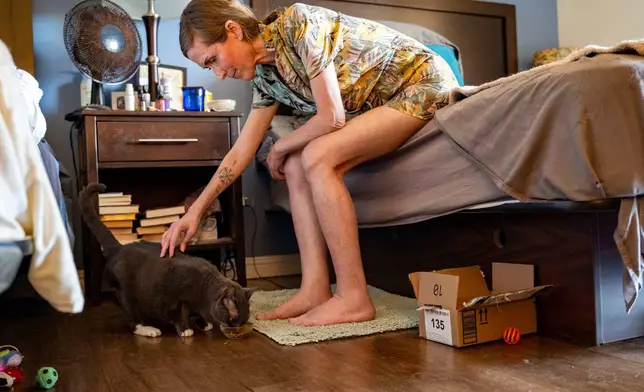
Mari Younger pets her cat Stella inside her converted hotel room where she lives after being displaced two years prior by the Maui fires, in Kihei, Hawaii, Wednesday, March 4, 2026. (AP Photo/Mengshin Lin)
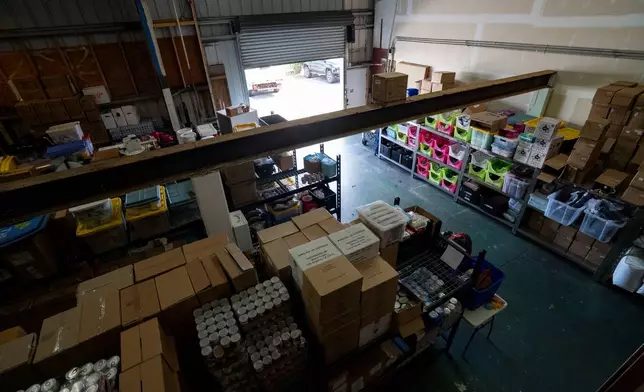
Supplies are stored inside the warehouse of Maui Rapid Response, a nonprofit supporting Maui fire survivors with cash assistance, in Kahului, Hawaii, Wednesday, March 4, 2026. (AP Photo/Mengshin Lin)
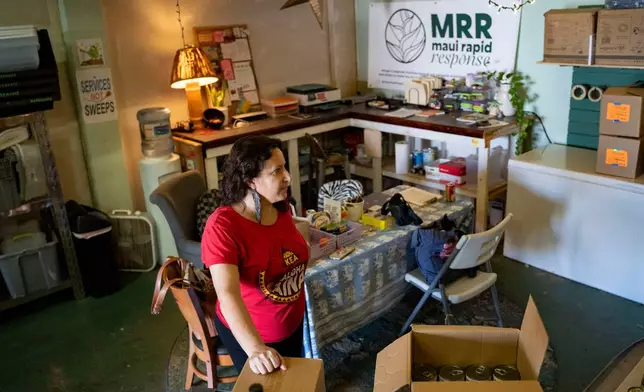
Nicole Huguenin, executive director of Maui Rapid Response, a nonprofit supporting Maui fire survivors with cash assistance, organizes canned food at the organization's warehouse in Kahului, Hawaii, Wednesday, March 4, 2026. (AP Photo/Mengshin Lin)

Dry goods purchased with support from a monthly cash assistance program sit in the converted hotel room where Mari Younger lives after being displaced by the Maui fires two years prior, in Kihei, Hawaii, Wednesday, March 4, 2026. (AP Photo/Mengshin Lin)
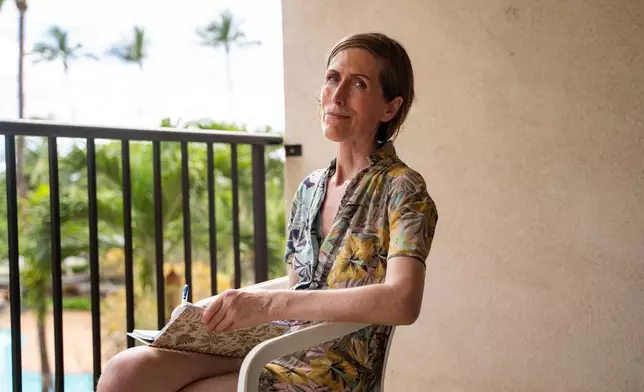
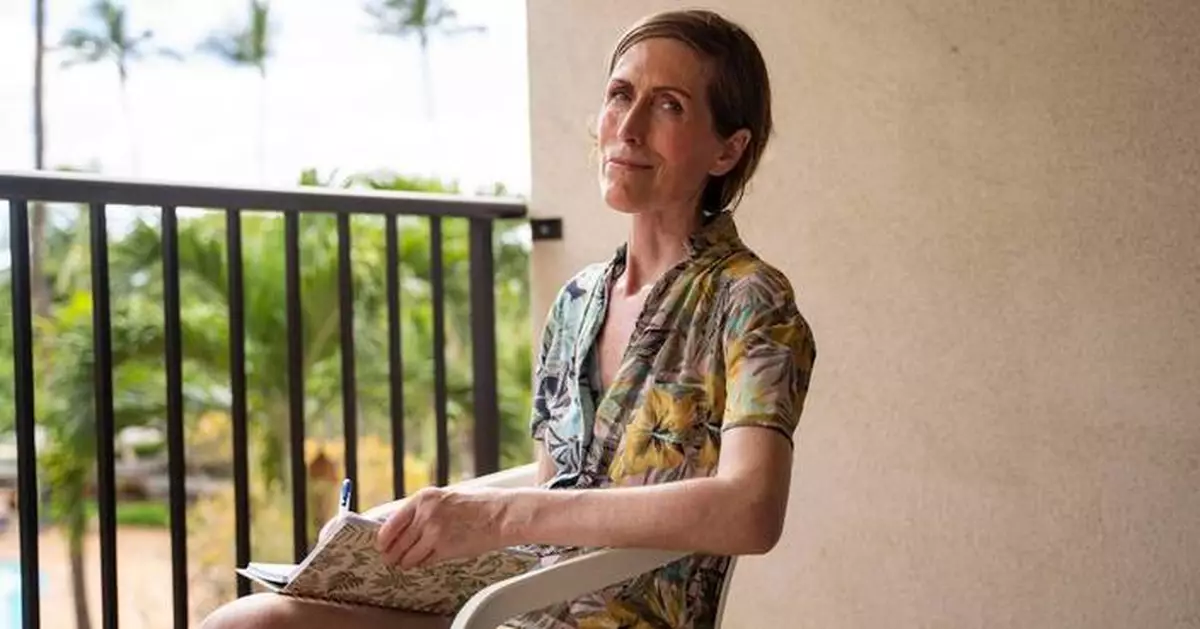
Mari Younger poses for a portrait on the balcony of her converted hotel room where she lives after being displaced by the Maui fires two years prior, in Kihei, Hawaii, Wednesday, March 4, 2026. (AP Photo/Mengshin Lin)
Two years later, Younger found herself 30 miles away in a converted hotel room, wondering how she would afford groceries. At 5 feet, 6 inches, she dwindled to 89 pounds after the fires, a result of stress, worsening health, and poor access to nutritious food.
Her disability payments couldn’t cover health insurance, car payments and the food she badly needed to gain weight.
“I really needed help,” said Younger, 49. She wasn’t sure how she’d support herself and Stella, adding, “I’d rather starve and have her eat.”
Then a case manager suggested Younger apply for a new cash assistance program for people impacted by the Maui fires. She began receiving $700 monthly on a special Mastercard last December.
The support has been transformative, Younger said. “It’s like the calvary has shown up. The war is not over, but at least there’s more help coming.”
Younger is among 69 households enrolled in an experimental program sending Lahaina fire survivors cash for one year, an effort to stabilize some of the most at-risk during the island’s protracted recovery.
Proponents of cash assistance for disasters say it gives people agency over their recovery and flexibility to meet their specific needs. “When we let them choose, it unwinds the trauma and gets them out of survival mode faster,” said Nicole Huguenin, executive director of Maui Rapid Response, the mutual aid nonprofit behind the program.
Younger is in the second of three cohorts of enrollees. High demand underscores a longstanding challenge in disaster recovery: Some survivors still have urgent unmet needs years after attention and funding has waned.
“The need for longterm recovery is there in every disaster, but very seldom is that funded,” said Kirsten Trusko, co-founder of Payments as a Lifeline, a financial technology nonprofit that promotes disaster cash assistance.
Tools to catalyze recovery can be even more important as more frequent extreme weather means multiple emergencies can impact survivors at once: Just this week, Hawaii experienced heavy flooding from a subtropical cyclone that knocked out power for thousands on Maui and damaged homes and businesses.
"It's creating even greater need,” said Huguenin.
Maui Rapid Response launched the Kahua Card program last year as a six-month pilot to see if cash could boost those still struggling to recover from the August 2023 tragedy that killed at least 102 people, destroyed 2,200 structures and displaced 12,000 residents.
While the pace of rebuilding Lahaina is accelerating, Maui's recovery has been hampered by a longstanding housing shortage, the blow to its tourism-propelled economy and its remote location which makes construction slower and more expensive.
Meanwhile, survivors who were homeless, unbanked, or too burdened by compounding challenges like disabilities or caregiving roles to apply for multiple types of assistance were falling through the cracks of public and private disaster programs, Huguenin said.
That was the case for Younger, who didn’t qualify for certain grants because her home didn't burn, but was displaced nonetheless after the devastation drove her landlords to sell the condo she rented just north of Lahaina town. Rents doubled after the fires, leading her to move into a hotel the state bought to house survivors.
Harnessing donations from thousands of supporters after the fires, Maui Rapid Response sent 18 pilot households up to $1,100 per month, depending on family size.
Spending data showed participants mainly used the money for food, transportation, utilities and personal items.
By the pilot's end, 80% of recipients reported feeling less anxious or stressed, attributing their improvement to an increased sense of control, being able to help others or spend more time with family. For one-third, the financial boost gave them breathing room to seek out better jobs.
“The agency provided a level of mental health that none of us expected,” said Huguenin, adding it enabled survivors to then address other recovery essentials, like moving or finding work.
Cash was not a cure-all — more than half of participants said they still had unmet housing needs at the program's end and less than 20% were able to use the extra income to pay rent. One-third felt anxious about the payments ending.
Those results reflect broader research findings on hundreds of non-disaster cash assistance programs across the U.S., said Dr. Stacia West, co-founder and director of the University of Pennsylvania’s Center for Guaranteed Income Research and an associate professor at the University of Tennessee.
“Largely, what you’re going to see are reductions in food insecurity, and that people are shoring up their finances," said West. "They’re making sure that they have a little bit to fall back on.”
The broader data is less conclusive on mental health benefits, said West, perhaps because participants get anxious about the programs ending, coupled with the rising cost of living. Cash assistance also hasn’t shown a strong ability to help with rent burden because of rising housing costs.
Younger has gained 10 pounds since getting the Kahua card. She mostly buys food and supplements, along with Stella's cat supplies, and tries to buy a little extra food for others in need. The cash lets her put other income toward health insurance and paying down debt she accrued before finding help.
Money is still tight, but nothing like when she could barely feed herself. “It brings down the pressure," she said. It also lessened her anxiety around possibly having to replace spoiled groceries after this week’s power outage.
Sustained cash assistance after disasters is still rare. Dolly Parton’s foundation gave $1,000 payments for six months in 2016 to Tennessee fire survivors. Oprah Winfrey and Dwayne Johnson spearheaded an effort in 2023 that paid 8,100 Maui survivors $1,200 for six months.
Huguenin hopes this program can be a blueprint for larger organizations. “We want to show it can be done, so those who have more resources than us can take it and really run with it,” she said.
Last year, the Maui County Council approved a $12 million cash assistance program for working households living above the poverty line but still unable to make ends meet.
The demographic is different, but with a similar objective, said Jeeyun Lee, CEO of United Way Maui, which will administer that program.
“If we’re able to alleviate that stress for a year, and provide some space for breathing and strategizing, what are the longterm possibilities of benefits?” asked Lee.
Designing the programs to complement one another and getting systems in place before a disaster will help prepare for the next one, said Lee. “We’re working toward creating a really extensive safety net, that we can toggle on and off.”
Meanwhile, Younger may need to find new housing for her and Stella by August. But she says she has more mental space now to plan the move. “I feel like I'm able to get a little more traction.”
———
Associated Press coverage of philanthropy and nonprofits receives support through the AP’s collaboration with The Conversation US, with funding from Lilly Endowment Inc. The AP is solely responsible for this content. For all of AP’s philanthropy coverage, visit https://apnews.com/hub/philanthropy.
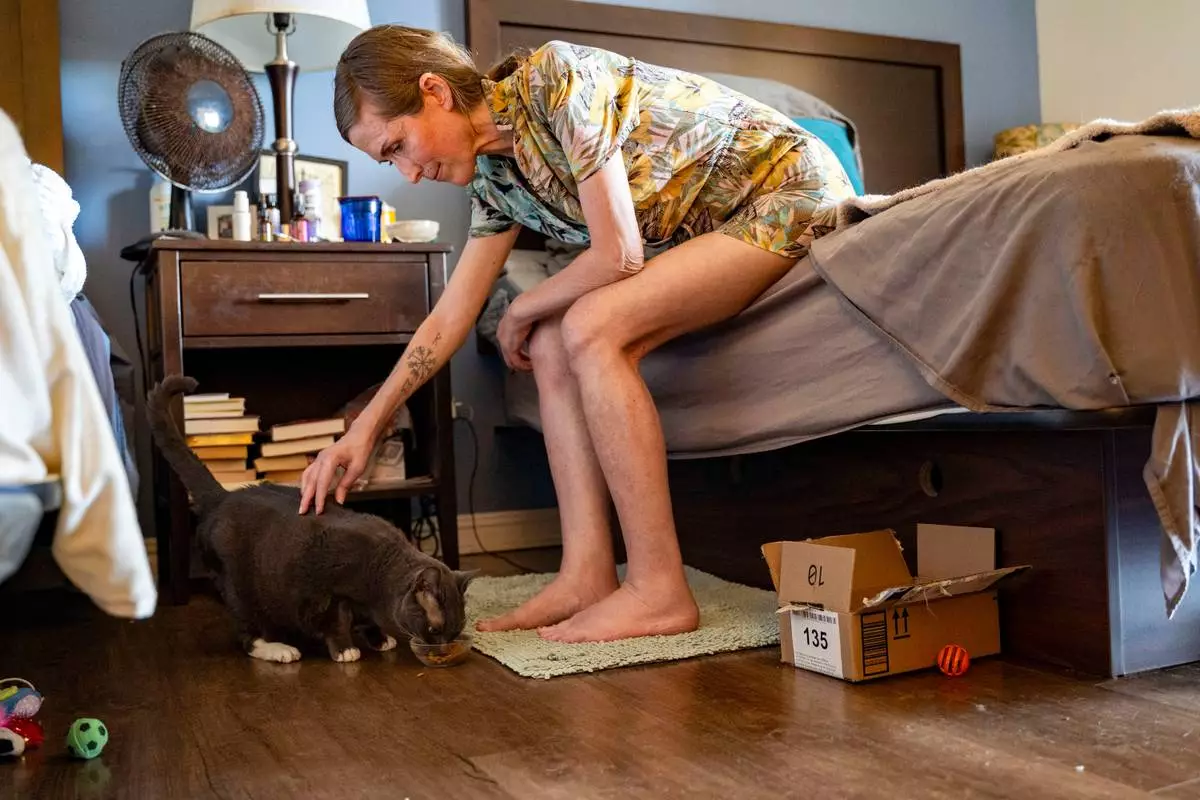
Mari Younger pets her cat Stella inside her converted hotel room where she lives after being displaced two years prior by the Maui fires, in Kihei, Hawaii, Wednesday, March 4, 2026. (AP Photo/Mengshin Lin)
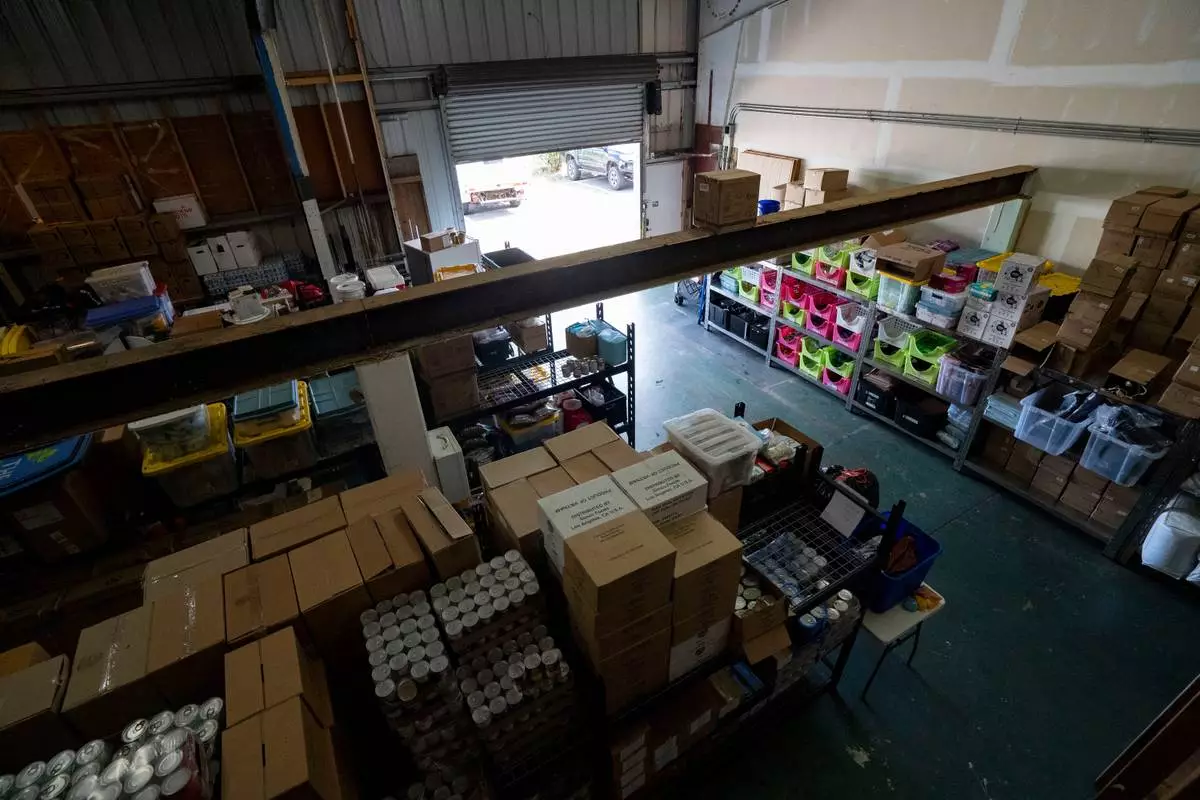
Supplies are stored inside the warehouse of Maui Rapid Response, a nonprofit supporting Maui fire survivors with cash assistance, in Kahului, Hawaii, Wednesday, March 4, 2026. (AP Photo/Mengshin Lin)
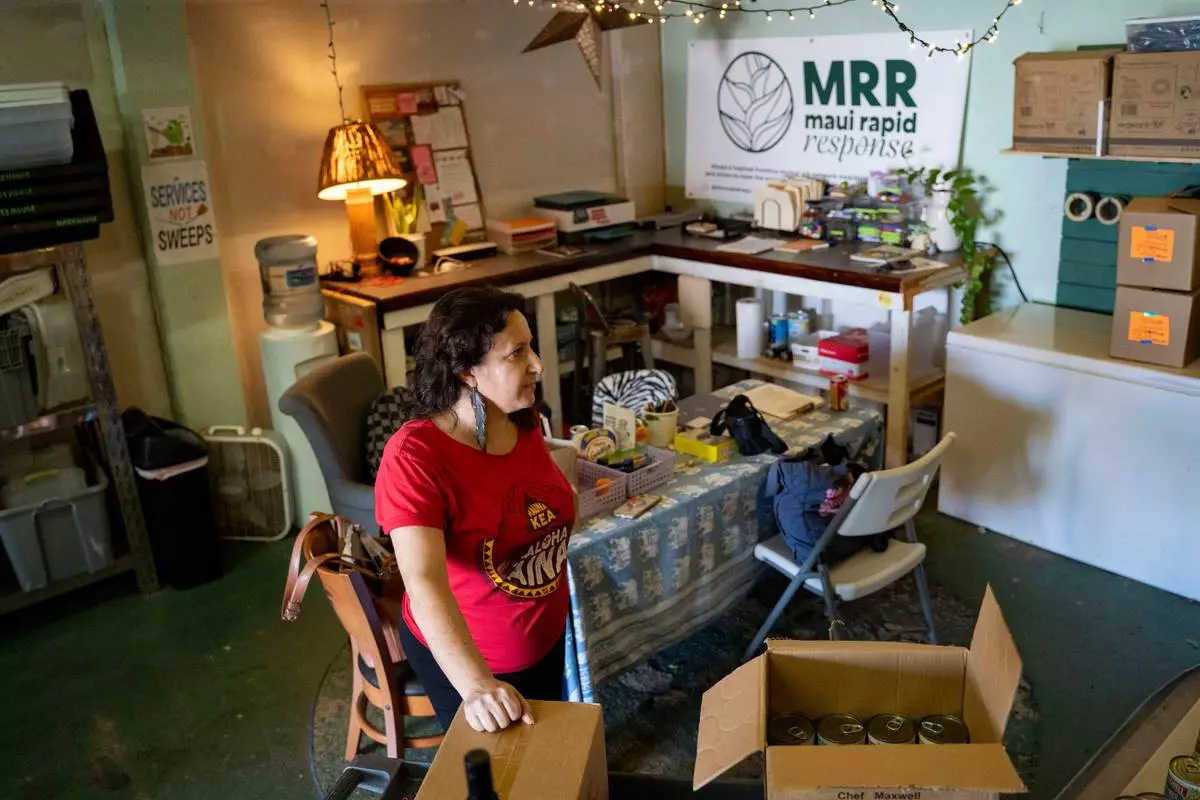
Nicole Huguenin, executive director of Maui Rapid Response, a nonprofit supporting Maui fire survivors with cash assistance, organizes canned food at the organization's warehouse in Kahului, Hawaii, Wednesday, March 4, 2026. (AP Photo/Mengshin Lin)

Dry goods purchased with support from a monthly cash assistance program sit in the converted hotel room where Mari Younger lives after being displaced by the Maui fires two years prior, in Kihei, Hawaii, Wednesday, March 4, 2026. (AP Photo/Mengshin Lin)

Mari Younger poses for a portrait on the balcony of her converted hotel room where she lives after being displaced by the Maui fires two years prior, in Kihei, Hawaii, Wednesday, March 4, 2026. (AP Photo/Mengshin Lin)