Skip to Content Facebook Feature Image

Many work to reconcile César Chavez's labor rights activist legacy with sexual abuse allegations

News

Many work to reconcile César Chavez's labor rights activist legacy with sexual abuse allegations
News

News

Many work to reconcile César Chavez's labor rights activist legacy with sexual abuse allegations

2026-03-19 13:54 Last Updated At:14:10

PHOENIX (AP) — Mary Rose Wilcox and her husband marched and fasted alongside César Chavez. They helped him open a radio station in Phoenix and plastered their Mexican restaurant with photos and a mural of the widely admired Latino icon.

So when Wilcox's daughter called this week to inform them of sexual abuse allegations that were leveled against Chavez, she said it felt like a punch to the gut.

More Images
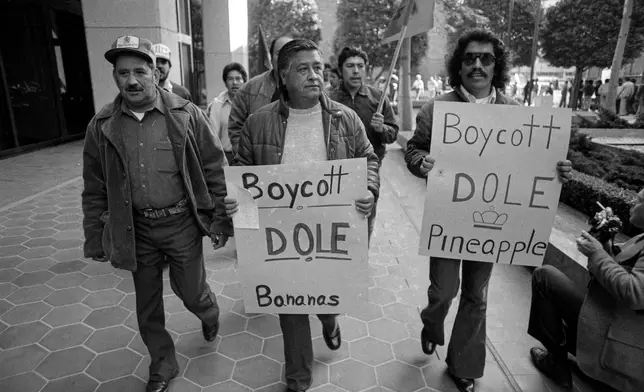
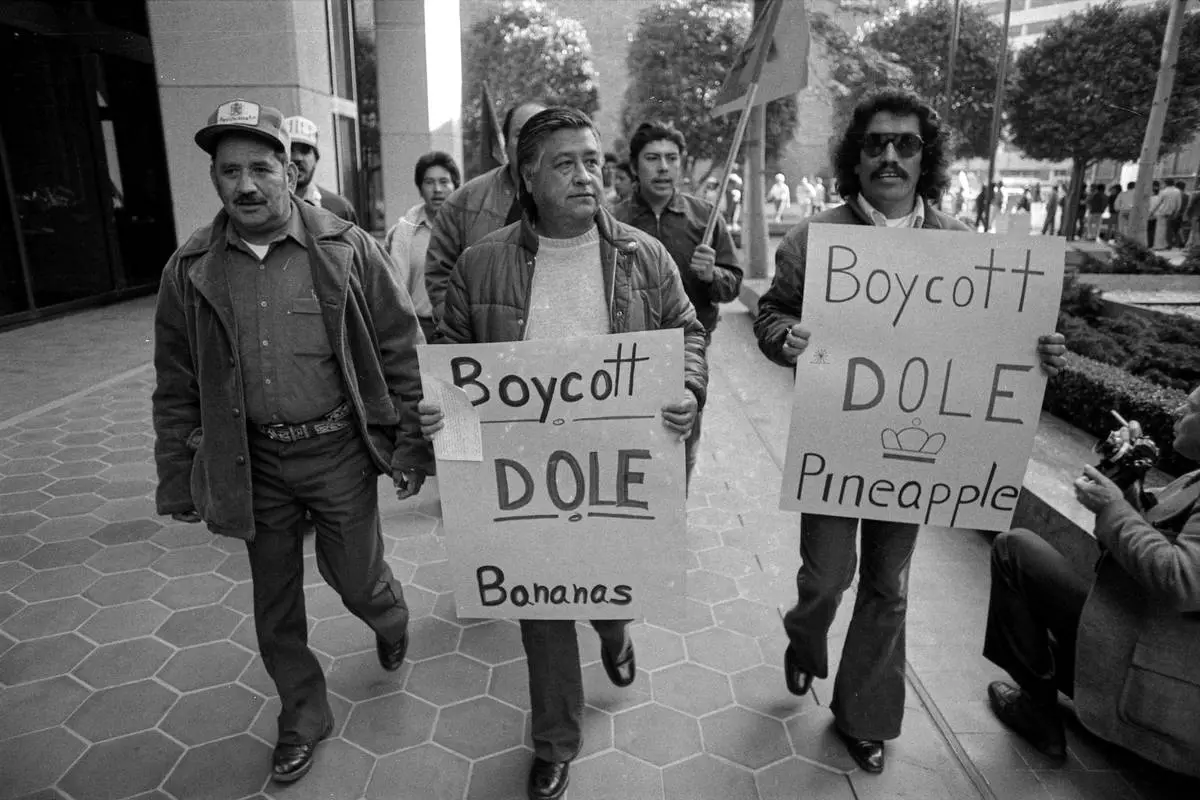
Civil rights leader Cesar Chavez leads a picket against Dole in front of the offices of Castle & Cooke, its parent company, at 50 California St. in San Francisco on Feb. 3, 1982. The United Farm Workers are sponsoring a consumer boycott on Dole products where 300 union members from Ventura, Calif., have been on strike since November. (Steve Ringman/San Francisco Chronicle via AP)
Civil rights leader Cesar Chavez leads a picket against Dole in front of the offices of Castle & Cooke, its parent company, at 50 California St. in San Francisco on Feb. 3, 1982. The United Farm Workers are sponsoring a consumer boycott on Dole products where 300 union members from Ventura, Calif., have been on strike since November. (Steve Ringman/San Francisco Chronicle via AP)

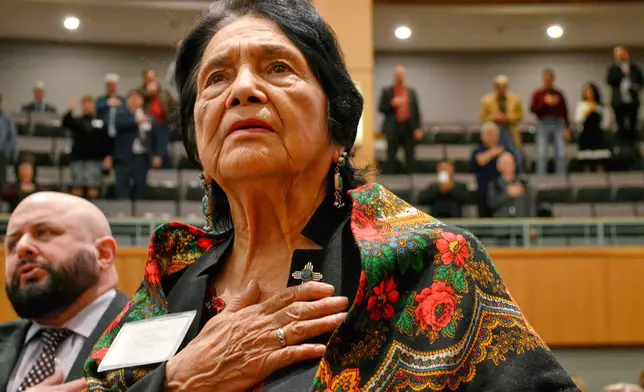
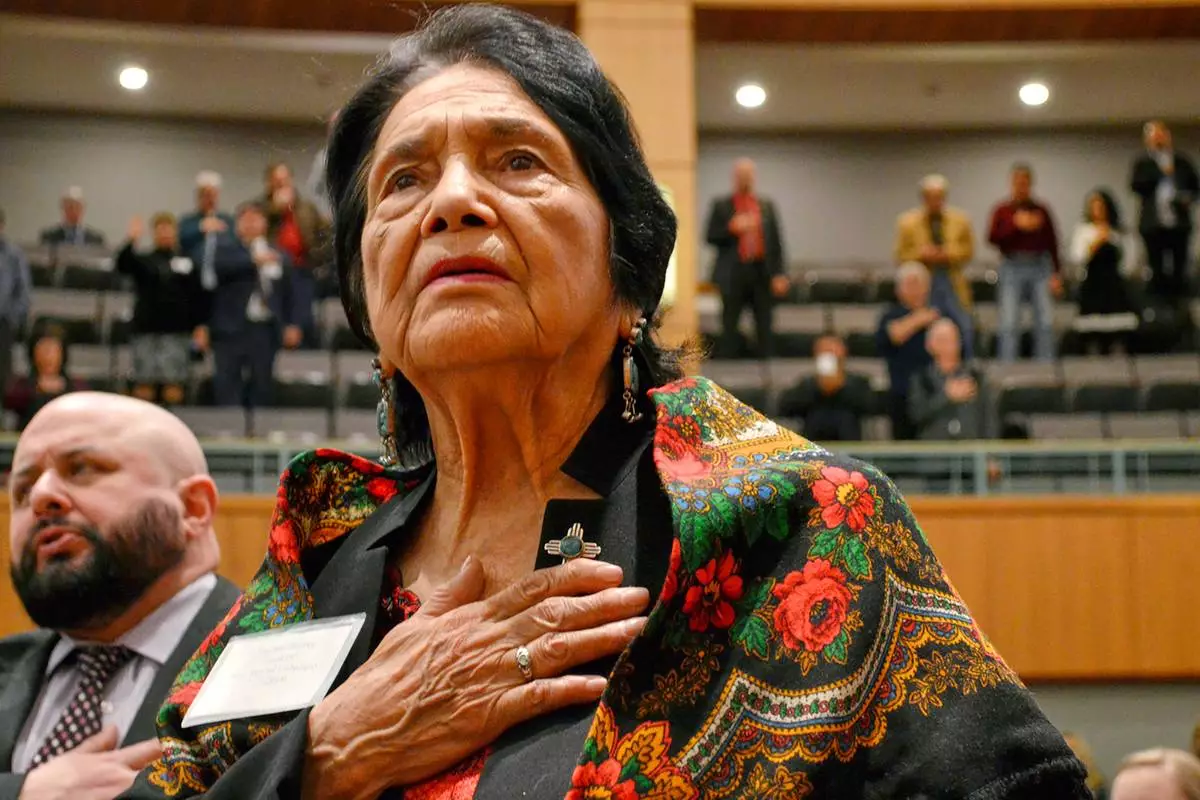
FILE - Dolores Huerta, the Mexican-American social activist who formed a farm workers union with Cesar Chavez, stands for the Pledge of Allegiance in Spanish while visiting the New Mexico Statehouse in Santa Fe. N.M., on Feb. 27, 2019. (AP Photo/Russell Contreras, File)
FILE - Dolores Huerta, the Mexican-American social activist who formed a farm workers union with Cesar Chavez, stands for the Pledge of Allegiance in Spanish while visiting the New Mexico Statehouse in Santa Fe. N.M., on Feb. 27, 2019. (AP Photo/Russell Contreras, File)

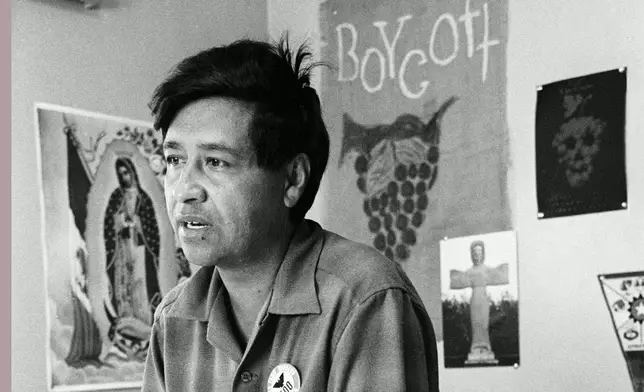
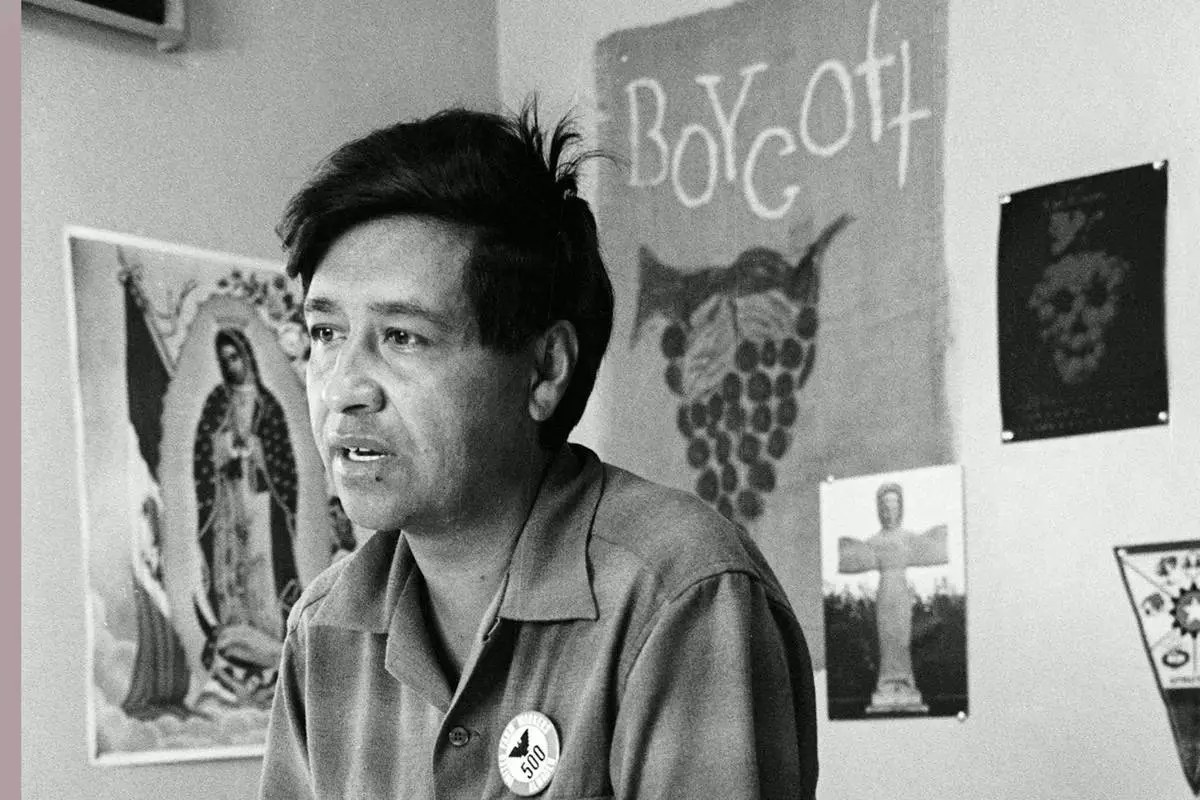
FILE - Cesar Chavez, a farm worker, labor organizer and leader of the California grape strike, is seen in a California works office in 1965. (AP Photo, George Brich, File)
FILE - Cesar Chavez, a farm worker, labor organizer and leader of the California grape strike, is seen in a California works office in 1965. (AP Photo, George Brich, File)

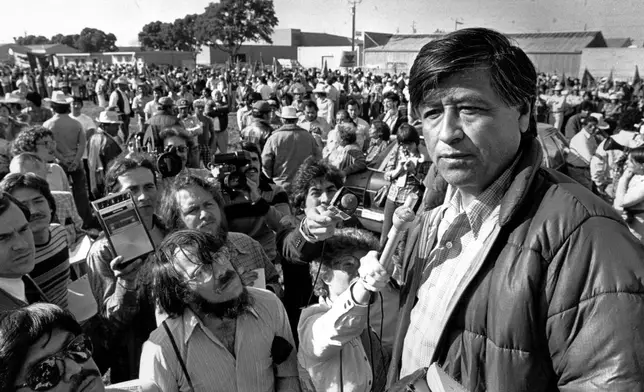
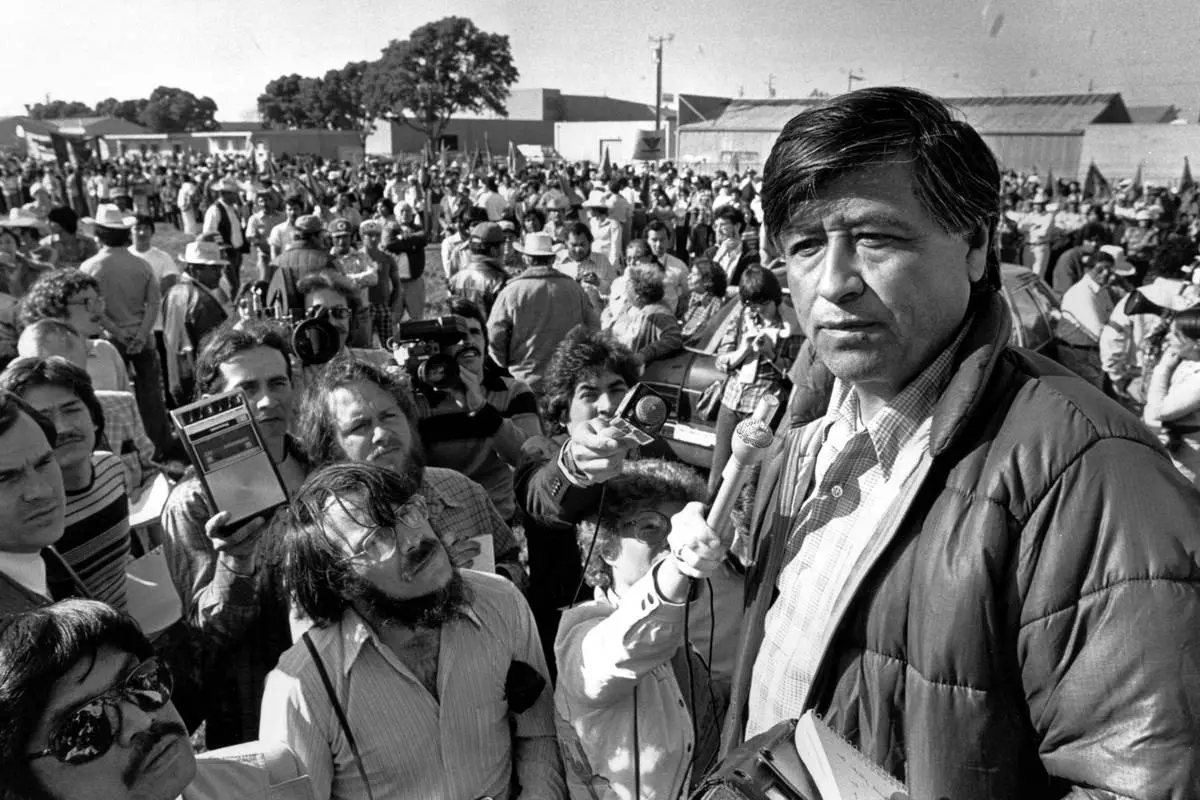
FILE - United Farm Workers President Cesar Chavez talks to striking Salinas Valley farmworkers during a large rally in Salinas, Calif., on March 7, 1979. (AP Photo/Paul Sakuma, File)
FILE - United Farm Workers President Cesar Chavez talks to striking Salinas Valley farmworkers during a large rally in Salinas, Calif., on March 7, 1979. (AP Photo/Paul Sakuma, File)

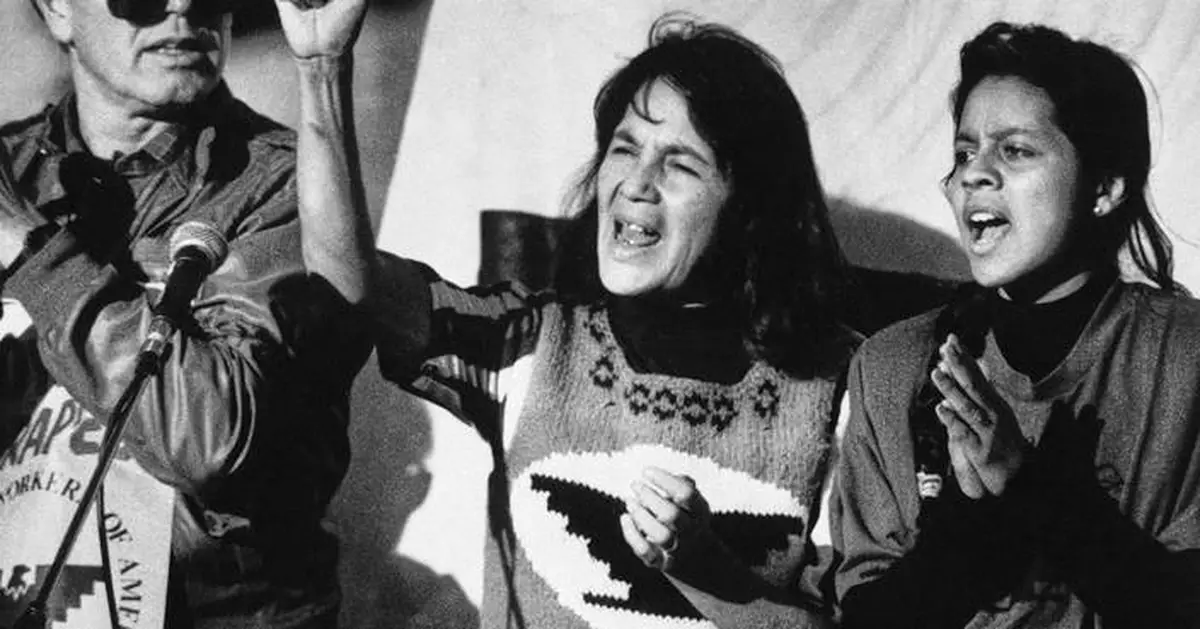
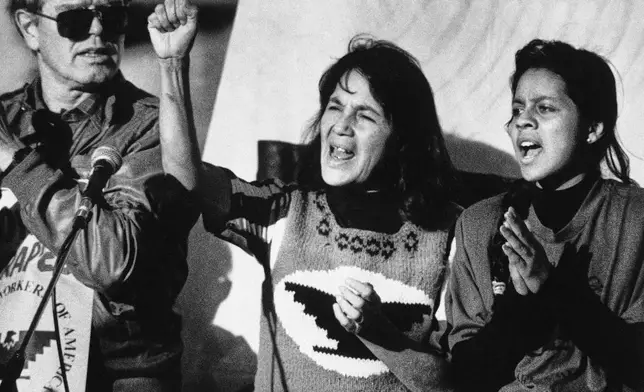
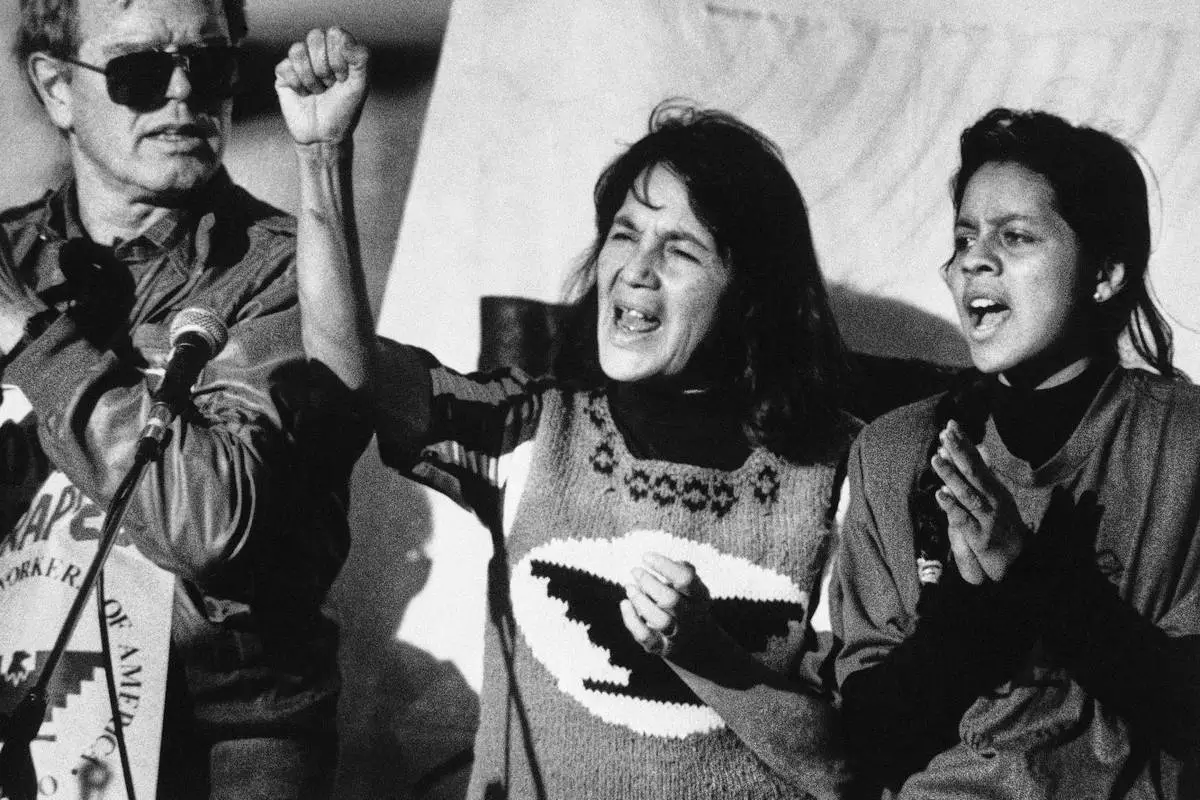
FILE - United Farm Workers leader Dolores Huerta, center, leads a rally in San Francisco's Mission District on Nov. 19, 1988, along with Howard Wallace, president of the San Francisco chapter of the UFW, left, and Maria Elena Chavez, 16, the daughter of Cesar Chavez, right, as part of a national boycott of what the UFW claims is the dangerous use of pesticides on table grapes. (AP Photo/Court Mast, File)

FILE - United Farm Workers leader Dolores Huerta, center, leads a rally in San Francisco's Mission District on Nov. 19, 1988, along with Howard Wallace, president of the San Francisco chapter of the UFW, left, and Maria Elena Chavez, 16, the daughter of Cesar Chavez, right, as part of a national boycott of what the UFW claims is the dangerous use of pesticides on table grapes. (AP Photo/Court Mast, File)

By Wednesday morning, the couple had taken down Chavez's photos from their restaurant walls and plan to cover the mural.

“We love César Chavez. But we cannot honor him and we cannot even love him anymore,” said the former Phoenix City Council member.

Many like Wilcox are working to reconcile the legacy of a man who fought tirelessly for the rights of farmworkers with stunning allegations that he sexually abused girls and the co-founder of the United Farm Workers of America union, Dolores Huerta.

Latino leaders and community groups quickly called the alleged abuse by Chavez inexcusable, but they emphasized that the farmworker movement was never just about a single man. Chavez died in California in 1993 at age 66.

There were calls to alter memorials honoring the man who in the 1960s helped secure better wages and working conditions for farmworkers and has been long revered by many Democratic leaders in the U.S. The California Museum said it will be removing Chavez from the state's Hall of Fame - something it's never done with anyone before.

Some local and state leaders in both parties urged their communities not to observe Chavez's birthday on March 31 with the typical activities, and to rename buildings and city streets. Celebrations for Chavez in San Francisco, Texas and in his home state of Arizona already were canceled at the request of the Cesar Chavez Foundation.

Huerta, who is a labor rights legend in her own right, said in a statement released Wednesday, that she stayed silent for 60 years out of concern that her words would hurt the farmworker movement. She said she did not know that Chavez had hurt other women.

Huerta described two sexual encounters with Chavez, one where she was “manipulated and pressured” and another where she was “forced against my will.” She said both led to pregnancies, which she kept secret, and that she arranged for the children to be raised by other families.

She joined Chavez in 1962 to co-found the National Farm Workers Association, which became the United Farm Workers of America. For many, they were akin to Martin Luther King. Jr. and Rosa Parks because of their work advocating for racial equality and civil rights.

The New York Times first reported Wednesday that it found Chavez groomed and sexually abused young girls who worked in the movement. Huerta, too, revealed to the newspaper that she was a victim of the abuse in her 30s.

Chavez is known nationally for his early organizing in the fields, a hunger strike, a grape boycott and eventual victory in getting growers to negotiate with farmworkers for better wages and working conditions.

Streets, schools and parks across the Southwest bear Chavez’s name. California became the first state to commemorate his birthday, and in 2014, then-President Barack Obama proclaimed March 31 as national César Chavez Day. President Joe Biden had a bronze bust of Chavez installed in the Oval Office when he moved into the White House.

Biden and Obama have not yet commented on the allegations, while California Gov. Gavin Newsom said he was still processing the news.

Chavez was full of contradictions even when he was the union leader, said Miriam Pawel, a veteran California journalist who wrote a biography of him. There was abusive behaviors within the union, but people didn’t speak out because they believed the union was the best way to protect farmworkers, she said.

“For many, many years, for most of those people, even when they saw things that they found disturbing, they did not wanna talk about it,” Pawel said.

Born in Yuma, Arizona, Chavez grew up in a Mexican American family that traveled around California picking lettuce, grapes, cotton and other seasonal crops.

Chavez’s family said in a statement that they are devastated by news of the allegations.

“We wish peace and healing to the survivors and commend their courage to come forward. As a family steeped in the values of equity and justice, we honor the voices of those who feel unheard and who report sexual abuse,” the family said.

The Cesar Chavez Foundation pledged unequivocal support for the labor leader’s victims Wednesday and said — with the Chavez family’s support -- the organization will figure out its identity going forward.

The United Farm Workers union quickly distanced itself from annual celebrations of its founder, calling the allegations troubling.

Wilcox said Chavez helped people understand that workers at all levels matter by organizing marches and helping enact laws and get contracts for workers.

She said it was heartbreaking to have to take down the pictures that visitors to their restaurant loved to take photos in front of.

“There’s two things: Chavez the man and Chavez the man who we didn’t know," she said. "And the one we knew, we knew the good things he did and the things we saw put in place. ... And the one we did not know is like a monster.”

Golden reported from Seattle. Figueroa reported from Austin, Texas. Associated Press writers Susan Montoya Bryan in Albuquerque, New Mexico; Trân Nguyễn in Sacramento, California; and Dorany Pineda in Los Angeles contributed to this report.
Civil rights leader Cesar Chavez leads a picket against Dole in front of the offices of Castle & Cooke, its parent company, at 50 California St. in San Francisco on Feb. 3, 1982. The United Farm Workers are sponsoring a consumer boycott on Dole products where 300 union members from Ventura, Calif., have been on strike since November. (Steve Ringman/San Francisco Chronicle via AP)
Civil rights leader Cesar Chavez leads a picket against Dole in front of the offices of Castle & Cooke, its parent company, at 50 California St. in San Francisco on Feb. 3, 1982. The United Farm Workers are sponsoring a consumer boycott on Dole products where 300 union members from Ventura, Calif., have been on strike since November. (Steve Ringman/San Francisco Chronicle via AP)

FILE - Dolores Huerta, the Mexican-American social activist who formed a farm workers union with Cesar Chavez, stands for the Pledge of Allegiance in Spanish while visiting the New Mexico Statehouse in Santa Fe. N.M., on Feb. 27, 2019. (AP Photo/Russell Contreras, File)
FILE - Dolores Huerta, the Mexican-American social activist who formed a farm workers union with Cesar Chavez, stands for the Pledge of Allegiance in Spanish while visiting the New Mexico Statehouse in Santa Fe. N.M., on Feb. 27, 2019. (AP Photo/Russell Contreras, File)

FILE - Cesar Chavez, a farm worker, labor organizer and leader of the California grape strike, is seen in a California works office in 1965. (AP Photo, George Brich, File)
FILE - Cesar Chavez, a farm worker, labor organizer and leader of the California grape strike, is seen in a California works office in 1965. (AP Photo, George Brich, File)

FILE - United Farm Workers President Cesar Chavez talks to striking Salinas Valley farmworkers during a large rally in Salinas, Calif., on March 7, 1979. (AP Photo/Paul Sakuma, File)
FILE - United Farm Workers President Cesar Chavez talks to striking Salinas Valley farmworkers during a large rally in Salinas, Calif., on March 7, 1979. (AP Photo/Paul Sakuma, File)

FILE - United Farm Workers leader Dolores Huerta, center, leads a rally in San Francisco's Mission District on Nov. 19, 1988, along with Howard Wallace, president of the San Francisco chapter of the UFW, left, and Maria Elena Chavez, 16, the daughter of Cesar Chavez, right, as part of a national boycott of what the UFW claims is the dangerous use of pesticides on table grapes. (AP Photo/Court Mast, File)
FILE - United Farm Workers leader Dolores Huerta, center, leads a rally in San Francisco's Mission District on Nov. 19, 1988, along with Howard Wallace, president of the San Francisco chapter of the UFW, left, and Maria Elena Chavez, 16, the daughter of Cesar Chavez, right, as part of a national boycott of what the UFW claims is the dangerous use of pesticides on table grapes. (AP Photo/Court Mast, File)
DAKAR, Senegal (AP) — Sitting at an upscale hotel in Senegal 's capital, the young man seemed nervous, rarely making eye contact and keeping his back against a wall, facing the entrance. He said he had been in hiding for being gay after being disowned by his family, and after police took in a friend for questioning.

Born in the city of Touba, central to Senegal's Sufi Muslim faith, he said he has been living with another friend who doesn't know his secret. It's an increasingly common story in the country where homosexuality is illegal, and the government is a step away from putting in place longer prison terms for it.

“There's a lot of fear,” the young man said.

The Associated Press could not independently verify his account or those of others who spoke on condition of anonymity for fear of retaliation.

Senegal is the latest country in Africa, where over half its states have laws against homosexuality, to pursue harsher penalties for it. Uganda in recent years introduced the death penalty for “aggravated homosexuality," to an international outcry.

Earlier this year, Prime Minister Ousmane Sonko proposed increasing the punishment for “unnatural acts,” a euphemism used in Senegalese law to refer to homosexuality, from a maximum of five years in prison and a fine to a maximum of 10 years.

The law was ratified on March 11 and needs presidential assent to become law, with President Bassirou Diomaye Faye expected to sign it.

Consensual same-sex conduct is criminalized under Article 319 of the Penal Code, which prohibits “acts against nature.” Senegal, a conservative majority-Muslim country, inherited the colonial French penal code and its provisions against homosexuality, but the law was previously sporadically enforced.

Senegal's justice ministry and office of the president did not respond to questions about the push for tougher prison terms. Several local analysts refused to speak about the issue, citing fears of retaliation.

Local media have reported dozens of arrests since early February, including that of prominent local journalist Pape Biram Bigué Ndiaye, who was later released. Dakar police said they have several cases under investigation.

After a dozen gay men were arrested in Dakar, Human Rights Watch described how anti-LGBTQ+ rhetoric has intensified, noting that the Senegalese parliament tried unsuccessfully in 2022 and 2024 to increase penalties for homosexuality.

The rights group said public opposition to homosexuality in rare occasions has been graphic: In October 2023, in the town of Kaolack, “a mob exhumed the body of a man they believed to be gay, dragged it through the streets, and burned it in the town square.” The incident went viral.

At a protest against what they called the “intentional transmission of HIV” in Dakar in February, people chanted anti-gay slogans. “Intentional transmission of HIV” is a common accusation in Senegal for any sexual act that involves an HIV-positive person.

The group And Samm Djiko Yi, or “Together for the Preservation of Values,” has organized the recent protests and led the campaign to increase prison time.

Its founder, Serigne Ababacar Mboup, framed his fight against “the homosexual agenda” as essential, alleging that an LGBTQ+ agenda has been forced onto Senegal as the United Nations and Western countries show increasing acceptance of gay rights.

“Homosexuality is contrary to our customs, our values, and our beliefs,” Mboup told the AP. “We are not trying to impose anything on you, so in turn, learn to respect people and their positions, especially on societal issues."

Free Senegal, a group that helps to relocate LGBTQ+ people who have faced prosecution, said the situation has deteriorated. It operated a safe house in Dakar until 2025, then closed it due to fears that neighbors would tell authorities.

A spokesperson for the group said the rise of homophobic organizations and the “freedom to express hatred towards the LGBT community” is supported by politicians seeking support in elections.

Free Senegal is among groups working to protect the LGBTQ+ community in Senegal. The spokesperson said other challenges include a lack of funding.

Some people flee the country. A man who fled to France in 2000 after his appearance in a documentary about gay rights brought retaliation now helps run Free Senegal remotely.

His voice broke as he spoke to the AP about the moment that neighbors confronted him, and the long-term opposition to LGBTQ+ people back home.

"I cannot return to Senegal," he said.

For more on Africa and development: https://apnews.com/hub/africa-pulse

The Associated Press receives financial support for global health and development coverage in Africa from the Gates Foundation. The AP is solely responsible for all content. Find AP’s standards for working with philanthropies, a list of supporters and funded coverage areas at AP.org.

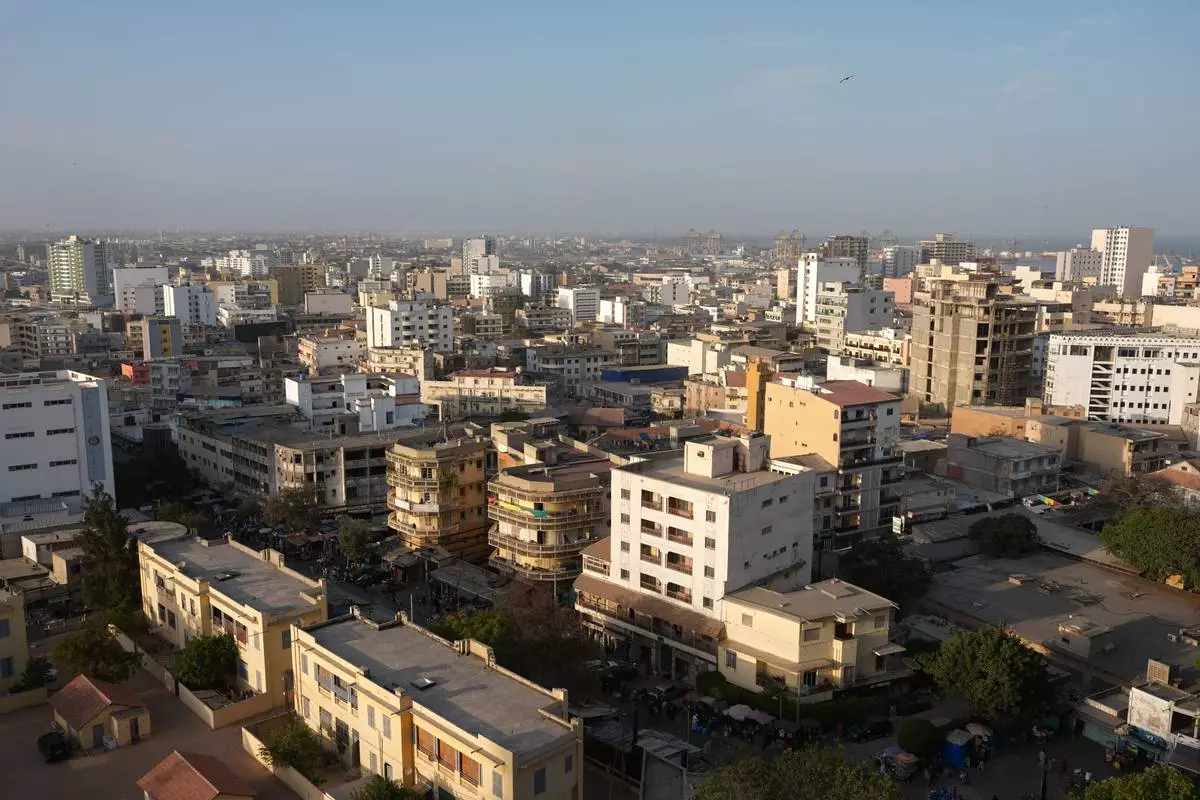
A general view of downtown in Dakar, Senegal, Wednesday, March 18, 2026. (AP Photo/Misper Apawu)

A general view of downtown in Dakar, Senegal, Wednesday, March 18, 2026. (AP Photo/Misper Apawu)

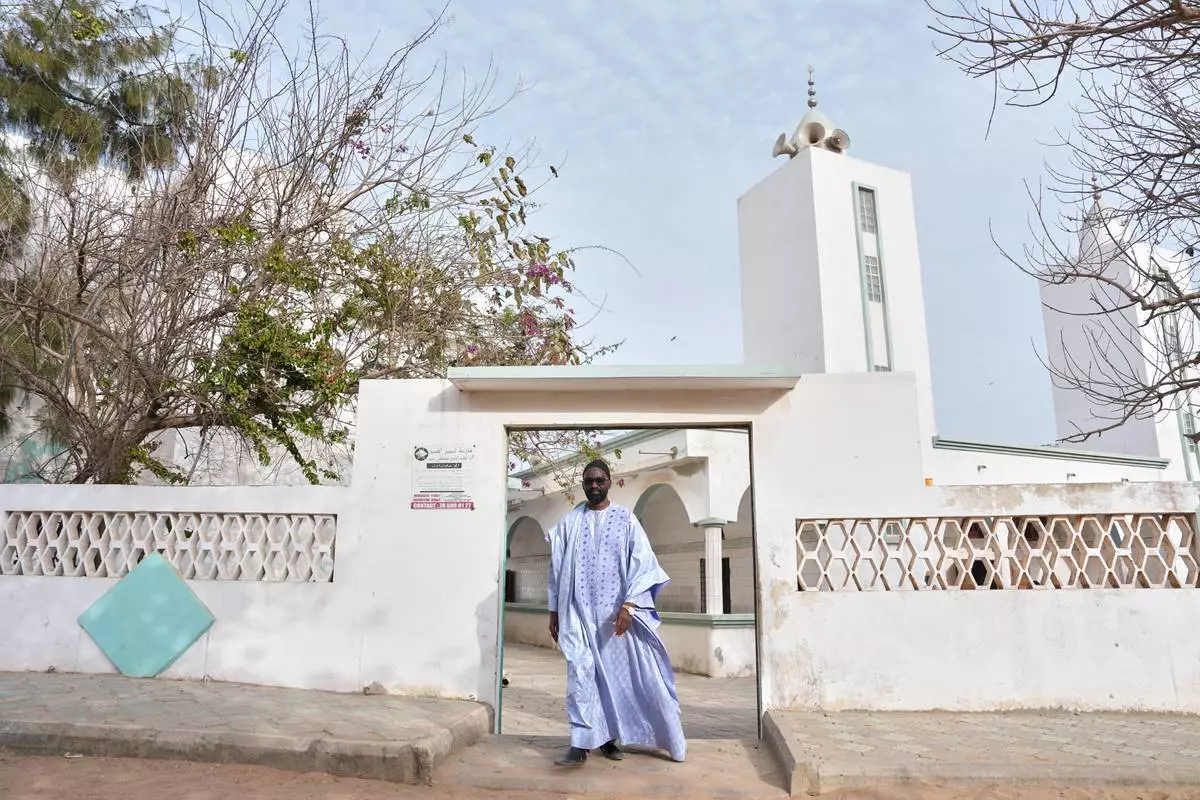
Ababacar Mboup, an activist against homosexuality and founder of And Samm Jikko Yi or "Together for the Preservation of Values," walks out of a mosque in Guediawaye, Senegal, Sunday, March 8, 2026. (AP Photo/Misper Apawu)

Ababacar Mboup, an activist against homosexuality and founder of And Samm Jikko Yi or "Together for the Preservation of Values," walks out of a mosque in Guediawaye, Senegal, Sunday, March 8, 2026. (AP Photo/Misper Apawu)

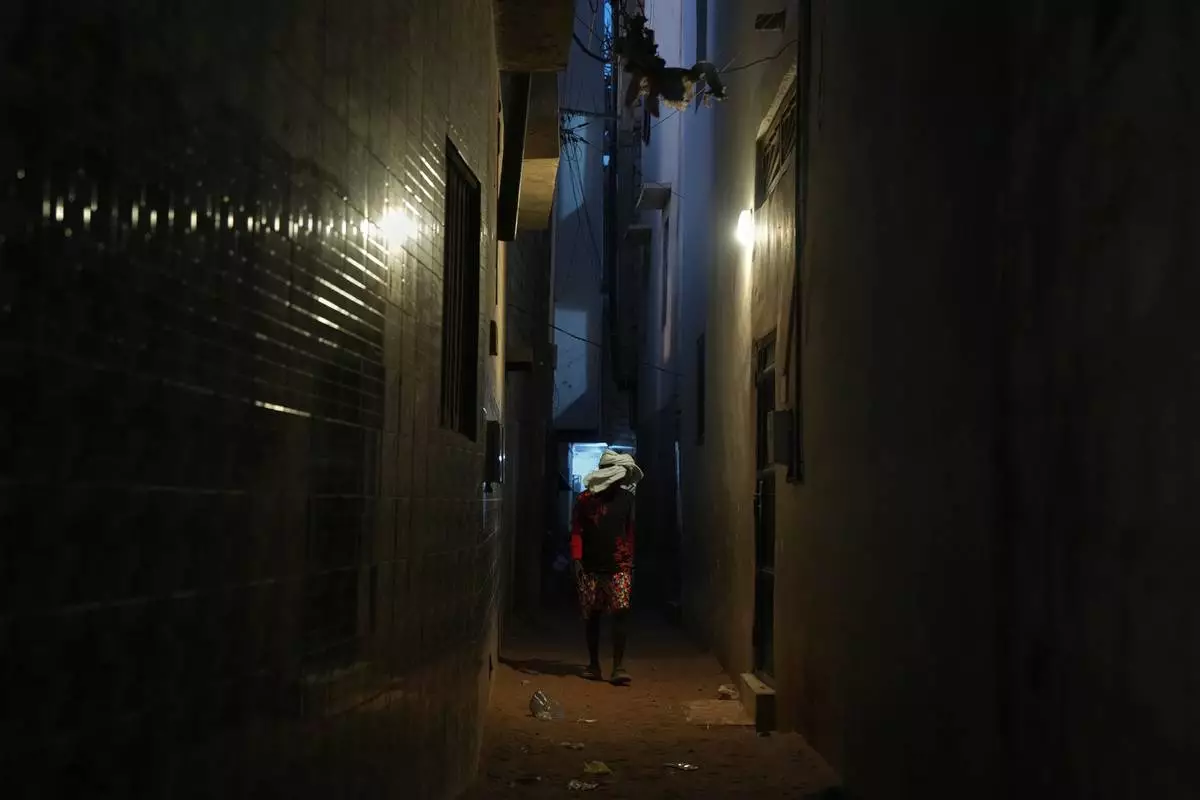
A young man disguises himself and walks through a neighbourhood in Dakar, Senegal, Thursday, March 12, 2026. (AP Photo/Misper Apawu)

A young man disguises himself and walks through a neighbourhood in Dakar, Senegal, Thursday, March 12, 2026. (AP Photo/Misper Apawu)

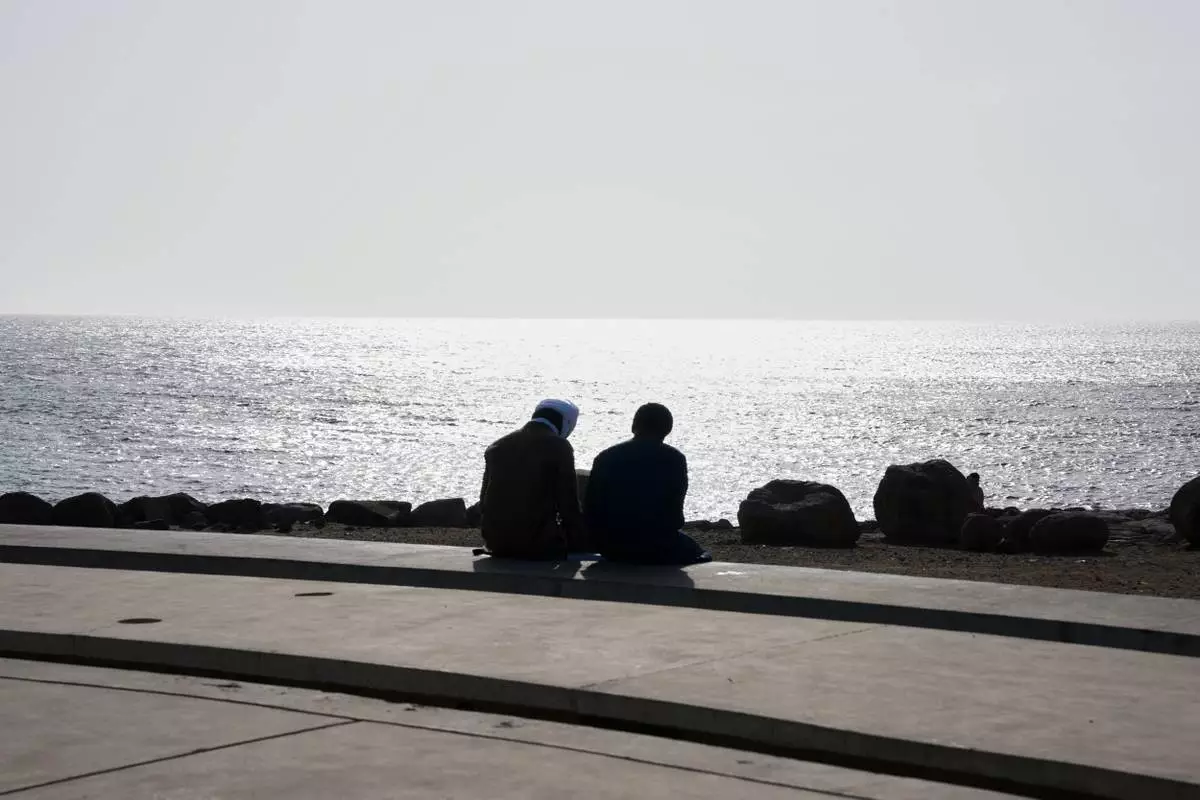
Young men sit at a beach in Dakar, Senegal, Wednesday, March 18, 2026. (AP Photo/Misper Apawu)

Young men sit at a beach in Dakar, Senegal, Wednesday, March 18, 2026. (AP Photo/Misper Apawu)

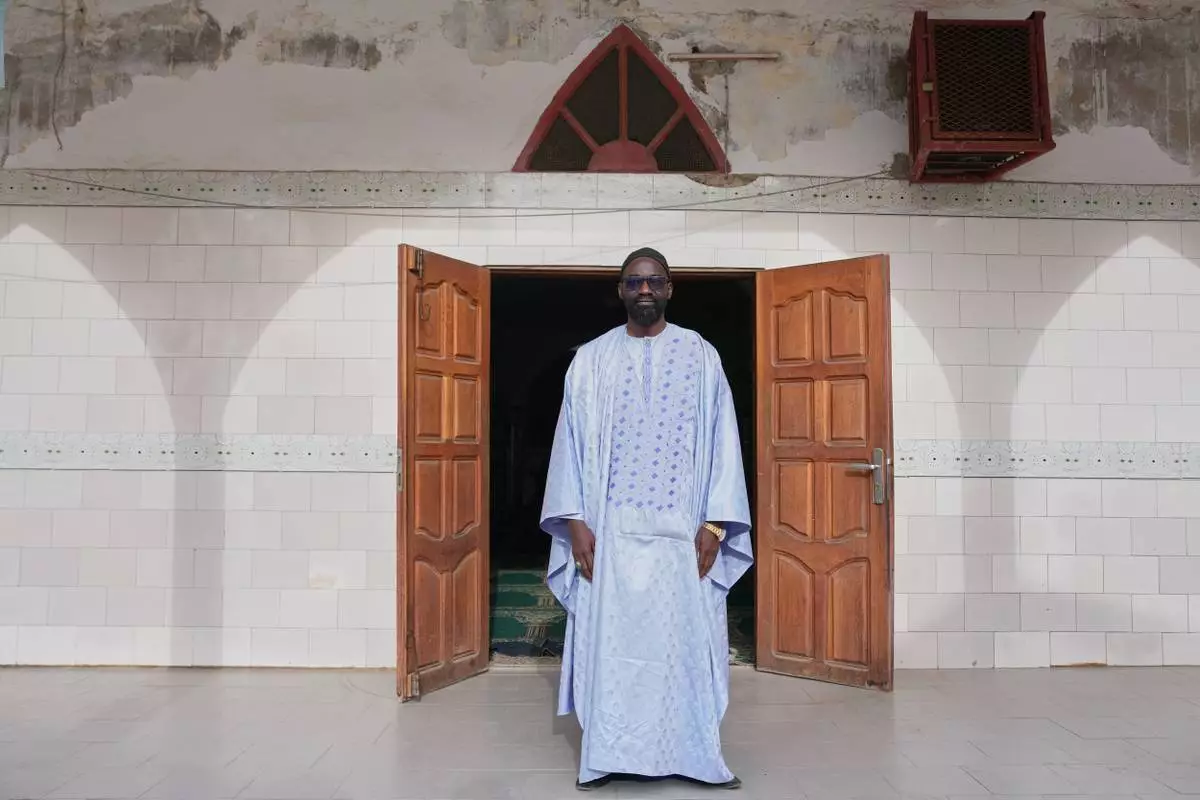
Ababacar Mboup, an activist against homosexuality and founder of And Samm Jikko Yi or "Together for the Preservation of Values," poses for a portrait in front of a mosque in Guediawaye, Senegal, Sunday, March 8, 2026. (AP Photo/Misper Apawu)

Ababacar Mboup, an activist against homosexuality and founder of And Samm Jikko Yi or "Together for the Preservation of Values," poses for a portrait in front of a mosque in Guediawaye, Senegal, Sunday, March 8, 2026. (AP Photo/Misper Apawu)

Recommended Articles