Skip to Content Facebook Feature Image

The Freshwater Trust Announces 2030 Goal to Enable $1 Billion in Verified Freshwater Conservation Investments Each Year

News

The Freshwater Trust Announces 2030 Goal to Enable $1 Billion in Verified Freshwater Conservation Investments Each Year
News

News

The Freshwater Trust Announces 2030 Goal to Enable $1 Billion in Verified Freshwater Conservation Investments Each Year

2026-03-19 21:23 Last Updated At:21:40

PORTLAND, Ore.--(BUSINESS WIRE)--Mar 19, 2026--

Despite $2 trillion in conservation spending since the launch of the modern environmental movement more than 50 years ago, environmental degradation continues to grow. Pesticide use has tripled; ocean dead zones increased from a few dozen to more than 500 worldwide, and freshwater species have declined by half. Unfortunately, fragmented conservation funding is inefficiently allocated to projects without accountability for outcomes and impact. In short, the system is broken. Today, The Freshwater Trust (TFT) announced a bold new goal to enable $1 billion in verified, data-driven freshwater conservation annually by 2030.

This press release features multimedia. View the full release here: https://www.businesswire.com/news/home/20260319561993/en/

The announcement calls out the need for a transformative shift in the scale and economics of water system solutions in the United States, showing that strategic, measurable conservation can achieve the greatest results. TFT is a trusted systems integrator that navigates among landowners, utilities, agencies, and community partners, aligning diverse interests and moving complex, multi-party projects from concept to implementation in ways few organizations are equipped to do.

“Water is a solvable systems challenge, and The Freshwater Trust’s goal is to cross a systems threshold to reach a tipping point, showing that coordinated, data-driven conservation can reach critical mass and succeed where decades of fragmented conservation efforts have fallen short,” says Joe Whitworth, president and CEO of The Freshwater Trust and author of “Quantified Conservation.” “For too long, conservation has been treated as a series of isolated actions. Our 2030 goal is to scale what works, using data to direct every dollar toward the greatest possible environmental return. The mechanics of water management can and must be fixed, and this is how we do it.”

Challenging the Status Quo

TFT’s model leverages advanced data analytics, decision-support tools, and collaborative partnerships to deliver measurable ecological outcomes across major U.S. watersheds. TFT’s proprietary watershed analytics tools such as BasinScout® and the Watershed Outcomes Bank provide the foundation for this scalable framework, enabling its partners to quantify the impact of every conservation dollar.

Whitworth adds, “Our $1 billion goal isn’t about spending more money on water conservation; it’s about redefining how that money is put to work. By applying data to conservation investments, we can build a future where restoring rivers and managing our nation’s water supply is efficient, transparent, and transformational.”

The Freshwater Trust’s innovative approach leverages its analytics to identify:

Paired with the Watershed Outcomes Bank, an innovative financing model that aggregates capital, aligns timelines, and deploys funds when and where they are needed, TFT makes water recovery measurable, investable, and scalable.

Building on decades of proven project success in river basins across Colorado, Oregon, Idaho, and California, these regional models provide a tested blueprint for scaling nationally. The organization’s success in major river systems like the Snake River (ID), Sacramento River (CA), and Upper Colorado Basin (CO) demonstrates how coordinated, data-guided action can restore ecosystems while meeting economic and community needs.

Early Success in the Snake River

Across the Snake River Basin in Idaho, The Freshwater Trust is implementing an innovative conservation finance program that brings together public and private funds to help farmers and irrigation equipment suppliers. Farmers can receive advance payments and other incentives to pay for more efficient irrigation methods that measurably reduce the amount of sediment, phosphorus, and nitrogen entering the system. TFT’s approach streamlines paperwork, processing, and verification, resulting in 23 high-efficiency projects in Year 1 (2025) that reduce phosphorus runoff by 8,000 pounds. In 2026 (Year 2), the program is poised to grow with greater benefit to regional water resources.

“Improving water quality in a system as big as the Snake River requires watershed-scale efforts across a broad range of stakeholders. The Snake River is the cornerstone of southern Idaho’s culture, communities, and incredible natural resources. Working together with groups like TFT that share a common vision for sustainable, holistic solutions will ensure the Snake River remains a valuable resource for future generations.” Fred Noland, Environmental Affairs Director, Idaho Power

Water Quantity and Quality Improvements in California

TFT partnered with Sacramento Area Sewer District (SacSewer) on its Harvest Water regional water reuse initiative that will pipe highly treated recycled water from a wastewater treatment facility to agricultural and natural lands south of Sacramento. This program reduces reliance on groundwater pumping and helps stabilize declining groundwater levels, with the long-term goal of delivering 50,000 acre-feet of irrigation water per year to farmland, enhancing 5,000 acres of important groundwater-dependent habitat, and restoring groundwater levels by up to 35 feet over 15 years. Harvest Water helps ensure there’s enough water for people, farms, and ecosystems, especially during drought while reducing future water crises.

In California, TFT partnered with the Eldorado National Forest on the “Sierra to Sea” watershed initiative using its Watershed Outcomes Bank model to integrate multiple restoration strategies across large landscapes, including forest thinning and fuels reduction, managed aquifer recharge, and riparian restoration. The initiative replaces fragmented funding from more than 30 agencies, directing private and public funds to the highest impact action across the entire watershed to achieve regional resilience. The initiative is designed to increase water volume, lower wildfire risk, improve water quality by removing 3,000 metric tons of sediment, and reduce flood risk.

“The Eldorado National Forest (ENF) is excited to launch the Watershed Outcomes Bank,” said Michelle Wolfgang, Partnership Coordinator for the ENF. “The Watershed Outcomes Bank approach helps us formalize partnerships, more efficiently leverage each other’s efforts, secure more funding, and ultimately, get a lot more work done for the health of our forests and the connected ecosystem.”

The Freshwater Trust’s 2030 initiative aligns with a growing national focus on resilient resource management and systems-level water reform. By uniting science, data, and capital, TFT aims to create a scalable model for measurable environmental solutions that others can replicate nationwide.

About The Freshwater Trust

The Freshwater Trust (TFT) is a fast-growing nonprofit organization and national leader in data-driven watershed restoration and freshwater resource management. With offices throughout the West, TFT pioneered analytics-driven conservation, implementing scalable solutions that deliver measurable environmental and economic benefits. TFT’s approach combines cutting-edge analytics with deep ecological expertise to identify and fund the most impactful projects, maximizing the return on every conservation dollar invested. For more information, visit www.thefreshwatertrust.org. Stay connected with The Freshwater Trust on Facebook, LinkedIn, Instagram, and Vimeo.
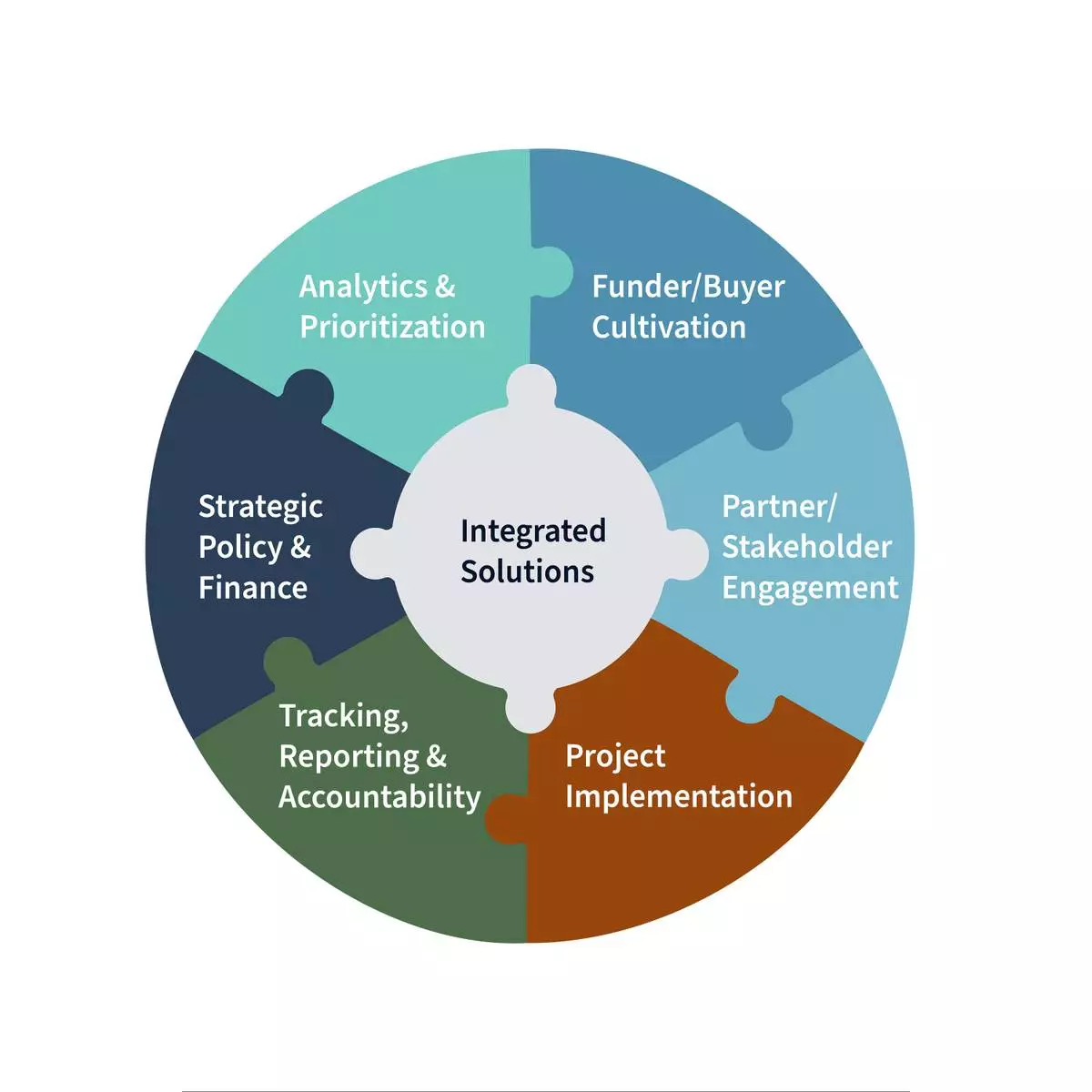
The Freshwater Trust's work is driven by quantified conservation and a unified framework connecting essential functions to address complex, multifaceted challenges.
The Freshwater Trust's work is driven by quantified conservation and a unified framework connecting essential functions to address complex, multifaceted challenges.
BRUSSELS (AP) — European Union leaders are holding a summit in Brussels on Thursday for talks on the Iran war, energy prices, migration and an enormous loan for war-ravaged Ukraine being held up by Hungary.

Many of those leaders have deflected entreaties by U.S. President Donald Trump to send military assets to secure the Strait of Hormuz, a key waterway for the global flow of oil, gas and fertilizer. Rising energy prices because of the war and fears in Europe of a new refugee crisis have pushed leaders to make the Middle East one of the top priorities at the summit.

The European Commission, the EU's executive branch, has floated the idea of a “toolbox” of measures to lower energy prices for leaders to discuss because no single policy will work across the myriad markets in the 27-nation bloc to blunt economic shocks from the war, according to a senior European diplomat who wasn't authorized to be publicly named so spoke on condition of anonymity.

The summit will also focus on a long-brewing standoff between Hungarian Prime Minister Viktor Orbán and most other EU nations.

The last EU summit was held in December at a Belgian castle, where the leaders including Orbán agreed to a 90 billion-euro ($104 billion) loan for Ukraine for help overcoming a budget shortfall in the country as it grapples with a grinding war with Russia.

But a month later, Orbán backtracked after the Druzhba oil pipeline was disabled in January after what Ukrainian officials said was a Russian drone attack. The pro-Russia leader, who has held office in Hungary since 2010, is running an aggressive media campaign villainizing both Brussels and Kyiv as he seeks reelection next month.

“If there is no oil, there is no money,” Orbán said in a social media post on Tuesday.

To get Ukraine the much-needed loan, EU leaders and diplomats will lobby Orbán and Slovakia's prime minister, Robert Fico, whose government has also taken pro-Russia stances.

On Tuesday, European Commission President Ursula von der Leyen offered for the EU to pay to repair the Druzhba pipeline and the development of alternative fuel lines for Hungary and Slovakia.

Ukrainian President Volodymyr Zelenskyy said that any obstruction to the loan is “absolutely unfair” and that there is “no alternative” for the embattled nation than those funds as it faces a severe budget crisis because of the war, which began on Feb. 24, 2022.

“There may be alternatives in terms of financing mechanisms, but there is simply no alternative to strengthening our army,” Zelenksyy said on Wednesday.

German Chancellor Friedrich Merz told lawmakers in Berlin on Wednesday that the EU must swiftly reach an agreement on the 20th package of sanctions against Russia and the loan.

He said that he would “advocate for that emphatically” in Brussels and that “we must not take into consideration a single country in the European Union that is currently setting up this blockade in Europe now for domestic political reasons and because of an election campaign that is being conducted there.”

Merz said, in urging for more sanctions, that “the needs of the moment call for us to increase the pressure on Moscow together – the U.S. and the European partners together."

Karel Janicek in Prague, Geir Moulson in Berlin, and Illia Novikov in Kyiv, Ukraine, contributed to this report.

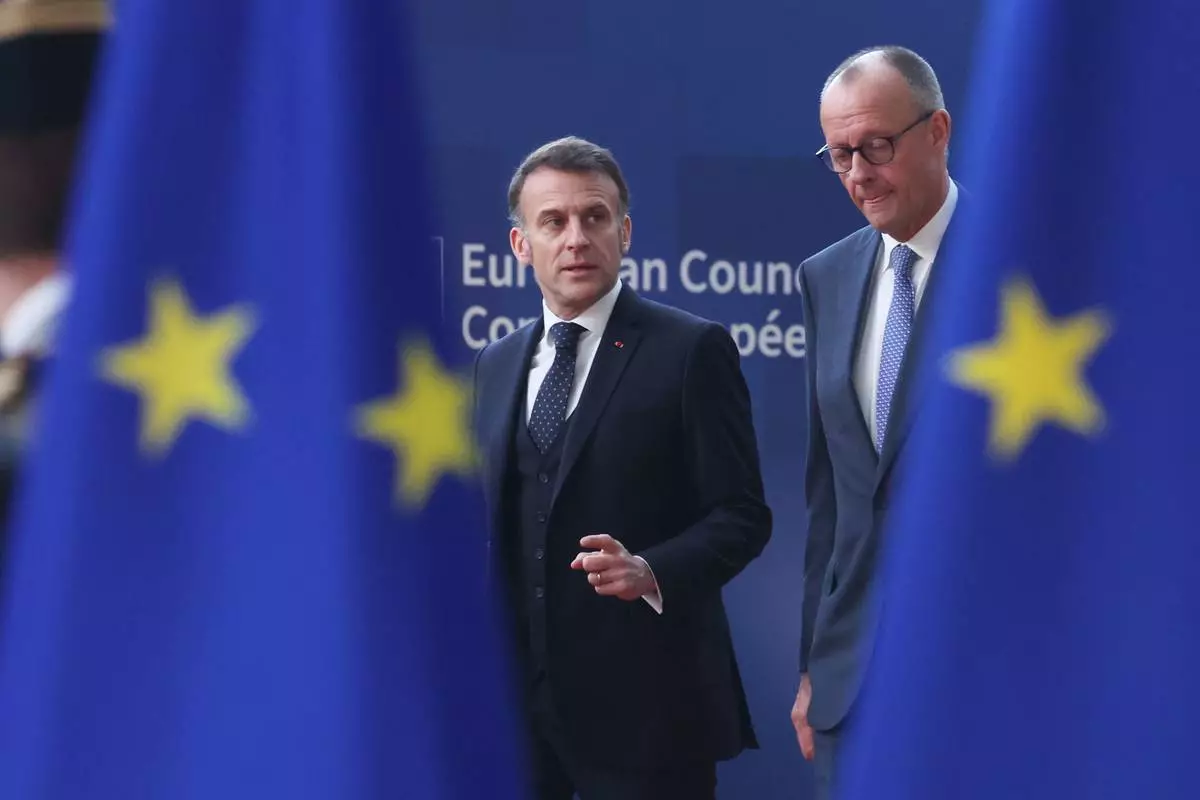
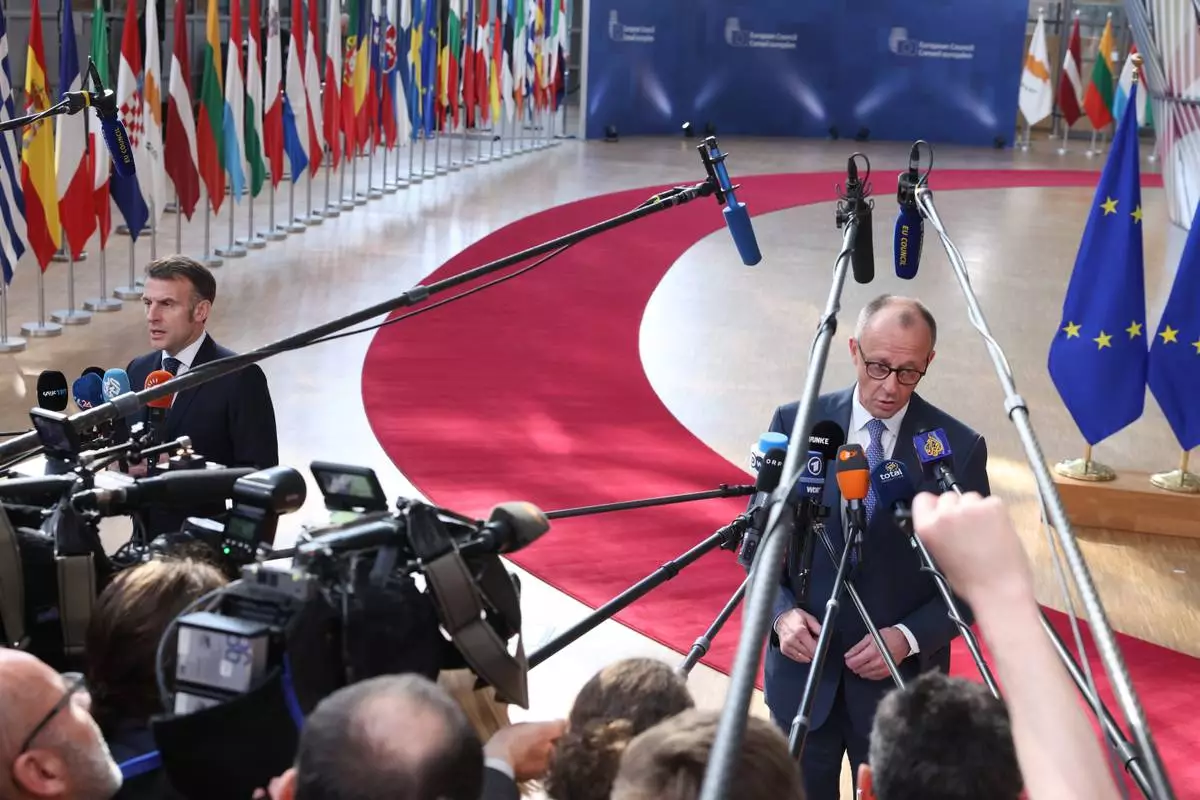
Germany's Chancellor Friedrich Merz, right, and French President Emmanuel Macron, left, speak with the media as they arrive for the EU summit at the European Council building in Brussels, Thursday, March 19, 2026. (AP Photo/Omar Havana)

Germany's Chancellor Friedrich Merz, right, and French President Emmanuel Macron, left, speak with the media as they arrive for the EU summit at the European Council building in Brussels, Thursday, March 19, 2026. (AP Photo/Omar Havana)

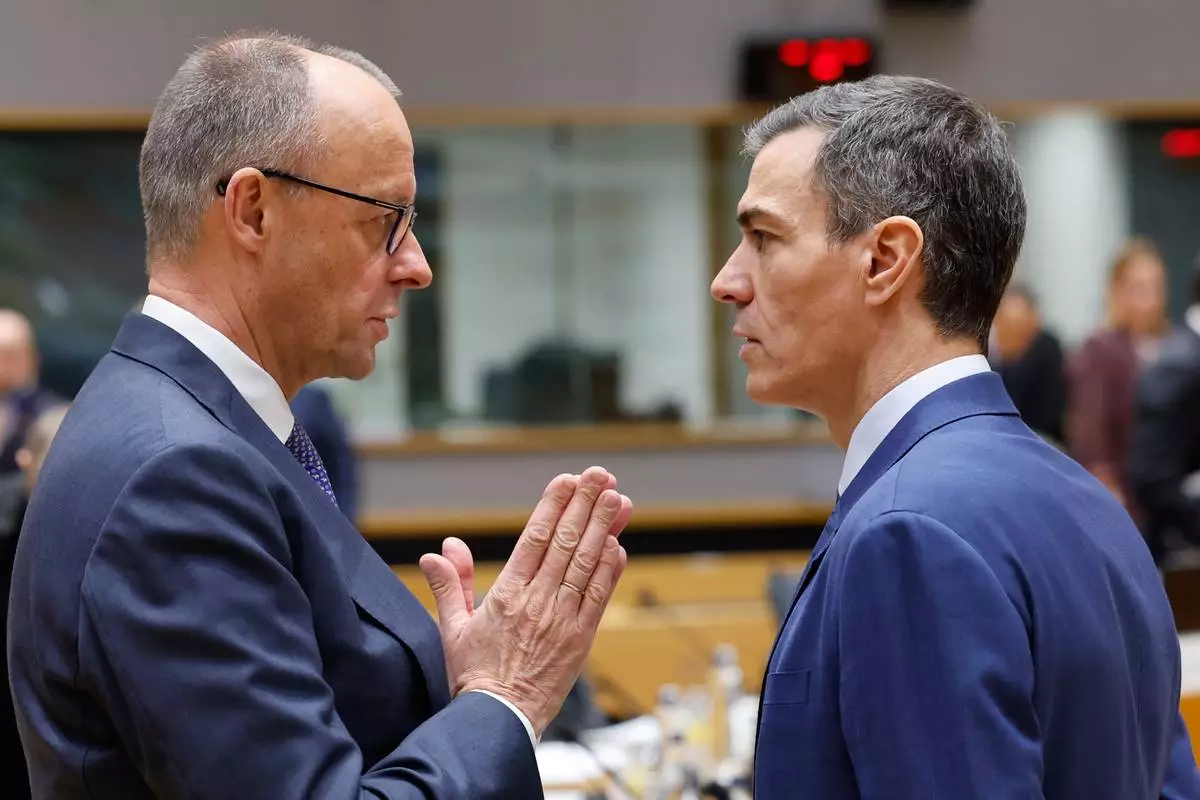
Germany's Chancellor Friedrich Merz, left, speaks with Spain's Prime Minister Pedro Sanchez during a round table meeting at the EU summit in Brussels, Thursday, March 19, 2026. (AP Photo/Geert Vanden Wijngaert)

Germany's Chancellor Friedrich Merz, left, speaks with Spain's Prime Minister Pedro Sanchez during a round table meeting at the EU summit in Brussels, Thursday, March 19, 2026. (AP Photo/Geert Vanden Wijngaert)

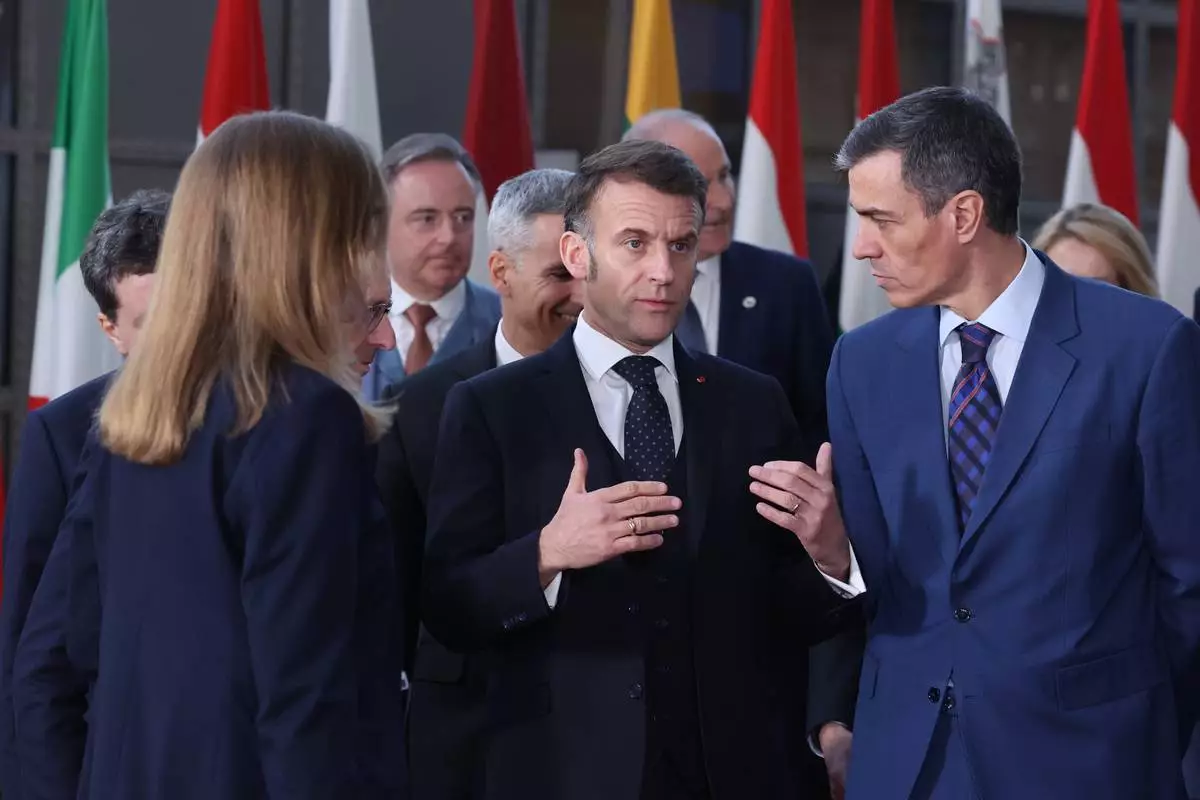
French President Emmanuel Macron, center, speaks with Spain's Prime Minister Pedro Sanchez, right, prior to a group photo at the EU summit in Brussels, Thursday, March 19, 2026. (AP Photo/Omar Havana)

French President Emmanuel Macron, center, speaks with Spain's Prime Minister Pedro Sanchez, right, prior to a group photo at the EU summit in Brussels, Thursday, March 19, 2026. (AP Photo/Omar Havana)

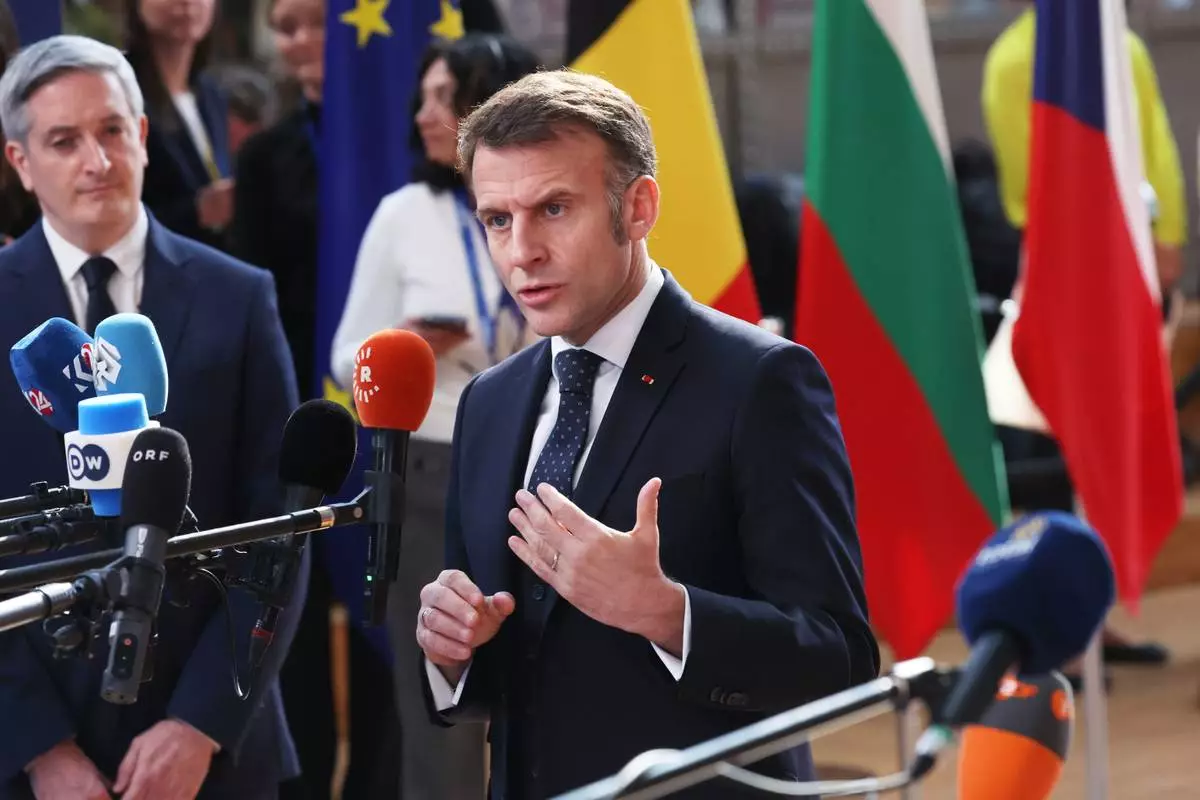
French President Emmanuel Macron speaks with the media as he arrives for the EU summit at the European Council building in Brussels, Thursday, March 19, 2026. (AP Photo/Omar Havana)

French President Emmanuel Macron speaks with the media as he arrives for the EU summit at the European Council building in Brussels, Thursday, March 19, 2026. (AP Photo/Omar Havana)

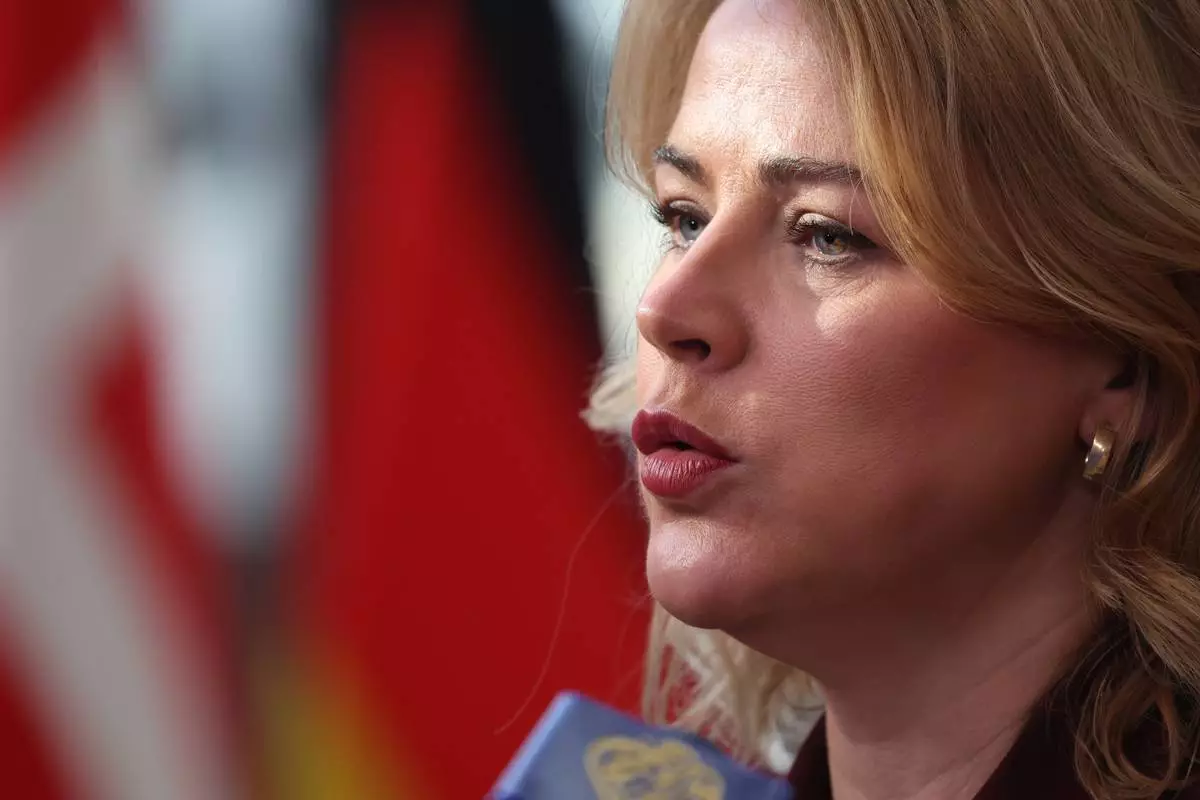
Latvia's Prime Minister Evika Silina speaks with the media as she arrives for the EU summit at the European Council building in Brussels, Thursday, March 19, 2026. (AP Photo/Omar Havana)

Latvia's Prime Minister Evika Silina speaks with the media as she arrives for the EU summit at the European Council building in Brussels, Thursday, March 19, 2026. (AP Photo/Omar Havana)

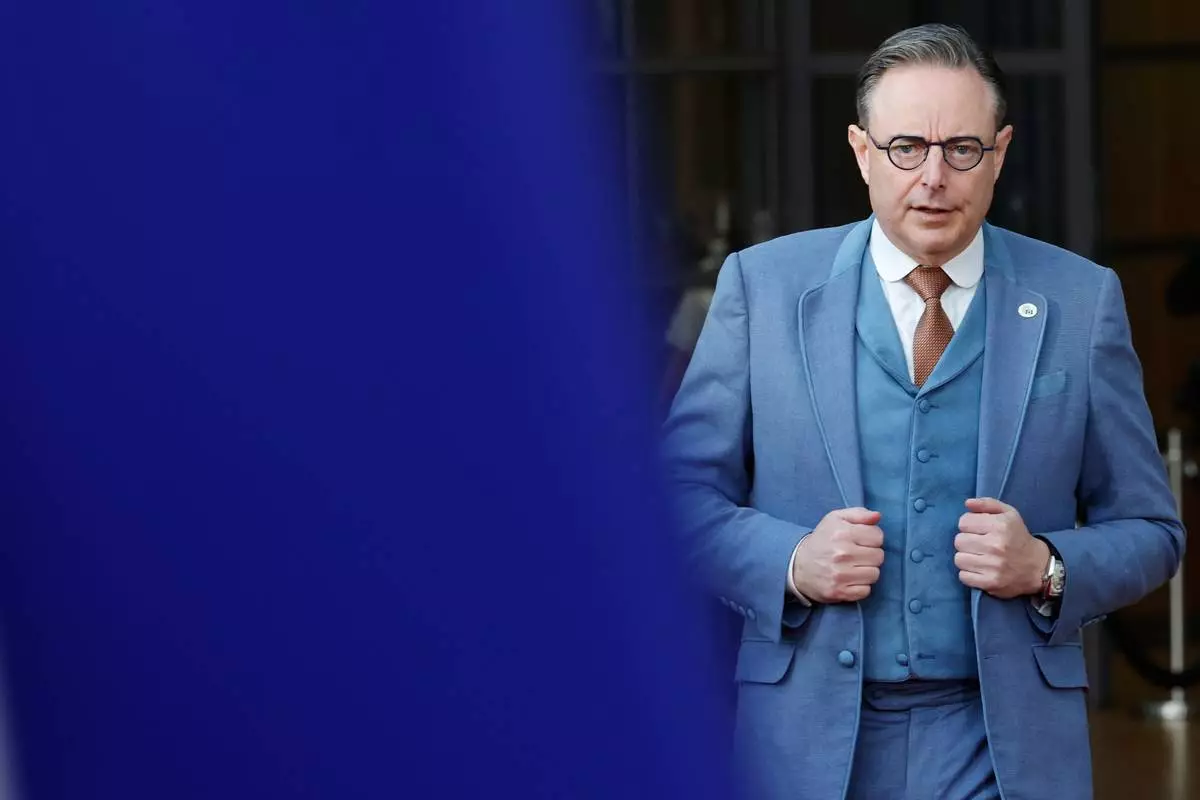
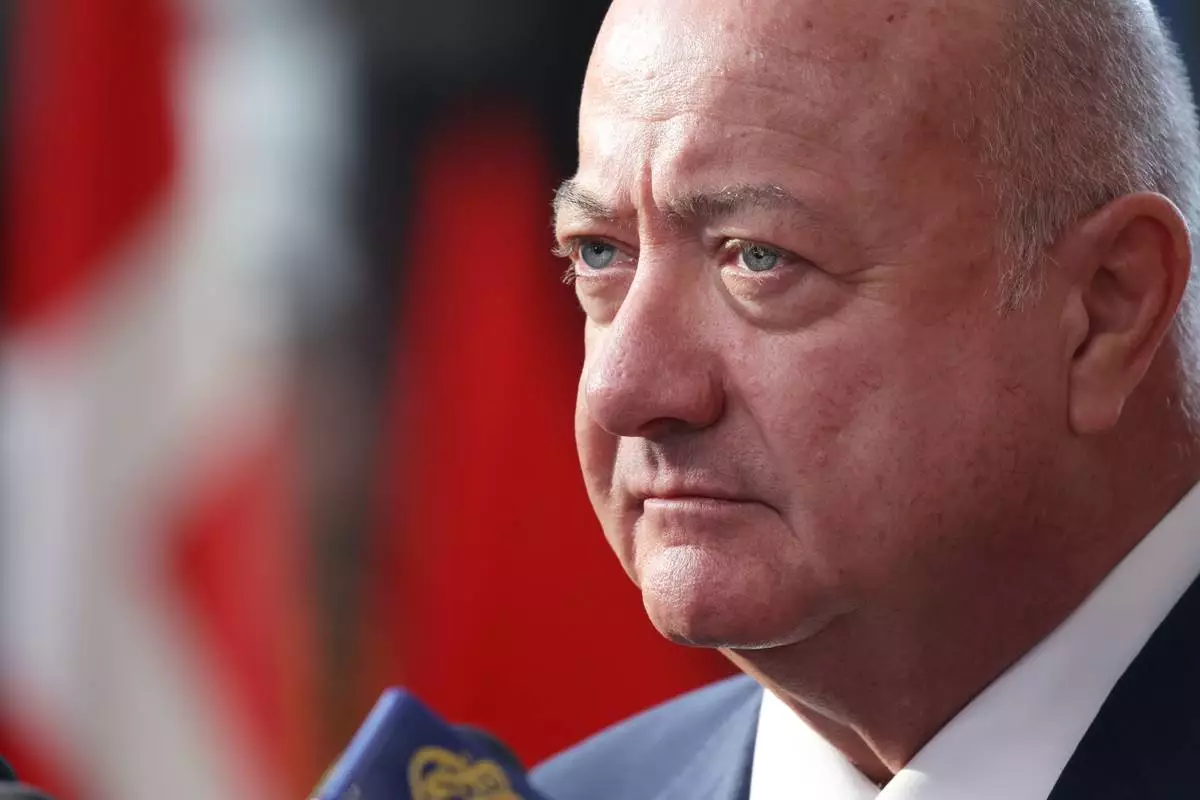
Belgium's Prime Minister Bart De Wever arrives for the EU summit at the European Council building in Brussels, Thursday, March 19, 2026. (AP Photo/Geert Vanden Wijngaert)

Belgium's Prime Minister Bart De Wever arrives for the EU summit at the European Council building in Brussels, Thursday, March 19, 2026. (AP Photo/Geert Vanden Wijngaert)

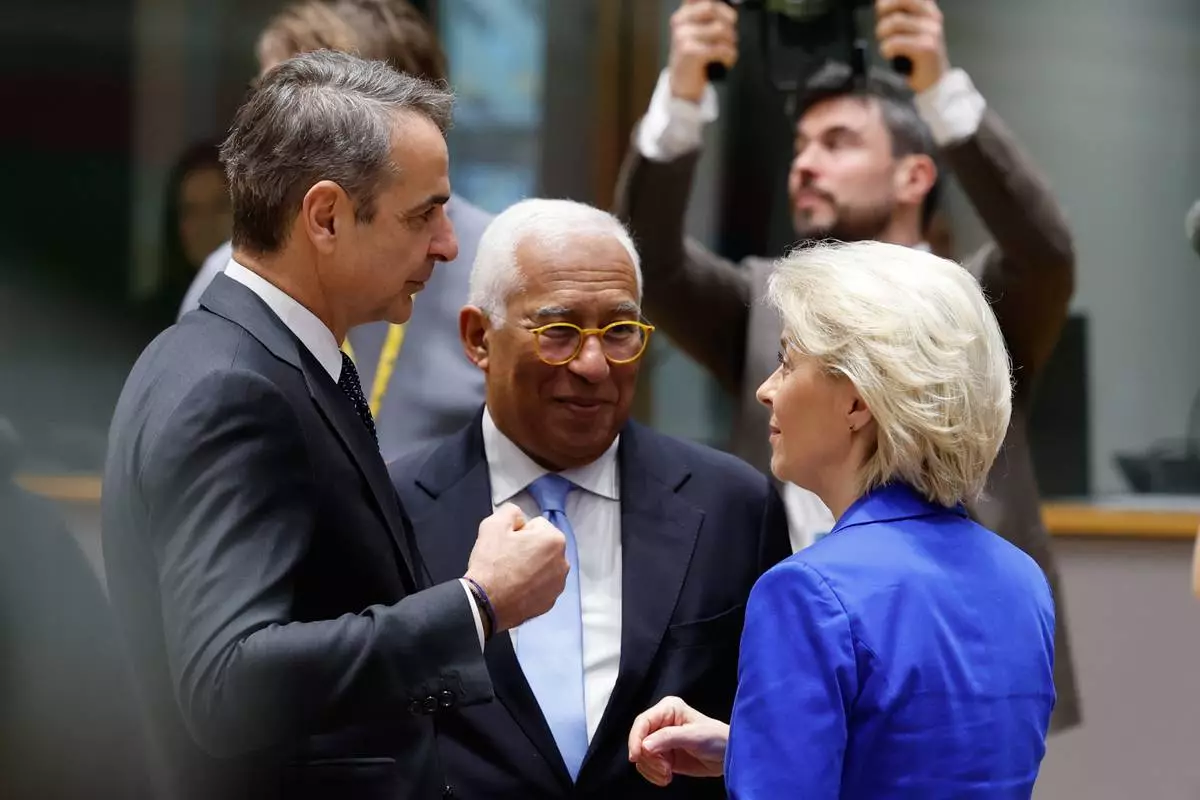
From left, Greece's Prime Minister Kyriakos Mitsotakis, European Council President Antonio Costa and European Commission President Ursula von der Leyen speak during a round table meeting at the EU summit in Brussels, Thursday, March 19, 2026. (AP Photo/Geert Vanden Wijngaert)

From left, Greece's Prime Minister Kyriakos Mitsotakis, European Council President Antonio Costa and European Commission President Ursula von der Leyen speak during a round table meeting at the EU summit in Brussels, Thursday, March 19, 2026. (AP Photo/Geert Vanden Wijngaert)

Austria's Chancellor Christian Stocker speaks with the media as he arrives for the EU summit at the European Council building in Brussels, Thursday, March 19, 2026. (AP Photo/Omar Havana)

Austria's Chancellor Christian Stocker speaks with the media as he arrives for the EU summit at the European Council building in Brussels, Thursday, March 19, 2026. (AP Photo/Omar Havana)

Germany's Chancellor Friedrich Merz, right, and French President Emmanuel Macron walk together as they arrive for the EU summit at the European Council building in Brussels, Thursday, March 19, 2026. (AP Photo/Omar Havana)

Germany's Chancellor Friedrich Merz, right, and French President Emmanuel Macron walk together as they arrive for the EU summit at the European Council building in Brussels, Thursday, March 19, 2026. (AP Photo/Omar Havana)

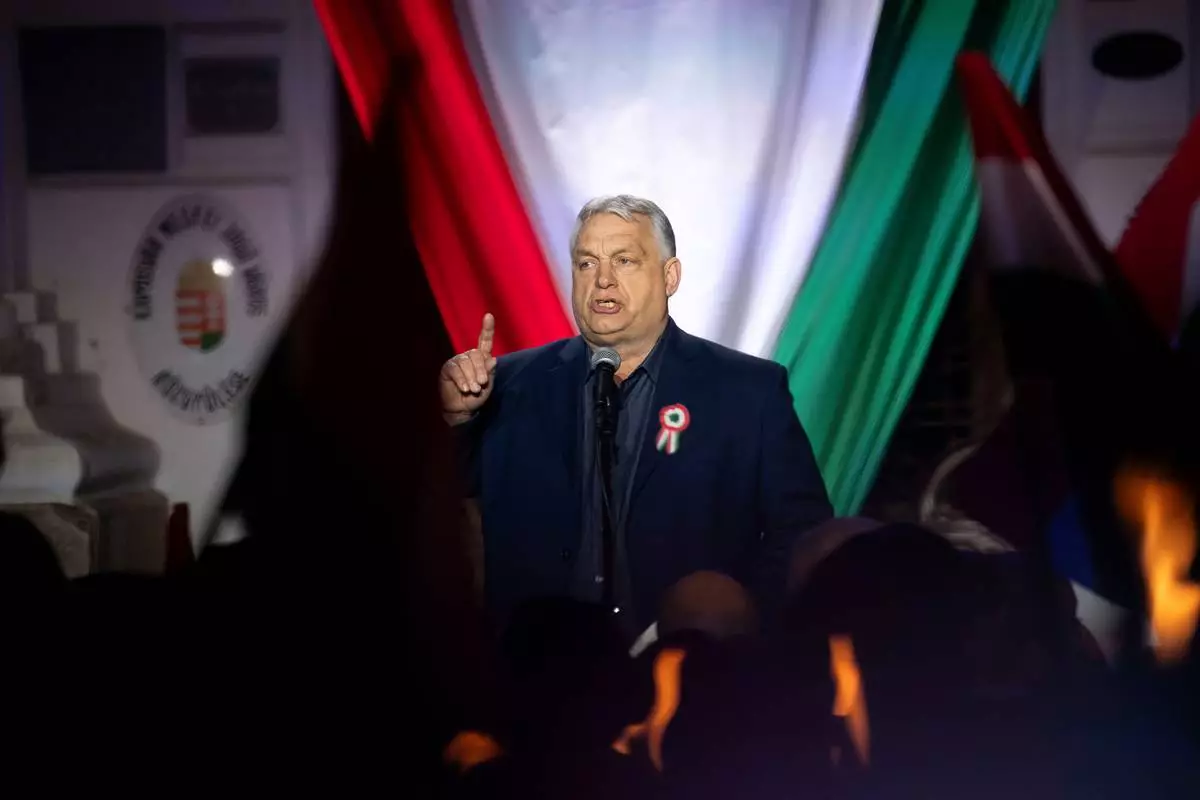
Prime minister of Hungary, Viktor Orbán speaks during a countryside campaign tour in Kaposvár, Hungary, Monday, March 16, 2026 ahead of April 12 parliamentary election. (AP Photo/Denes Erdos)

Prime minister of Hungary, Viktor Orbán speaks during a countryside campaign tour in Kaposvár, Hungary, Monday, March 16, 2026 ahead of April 12 parliamentary election. (AP Photo/Denes Erdos)

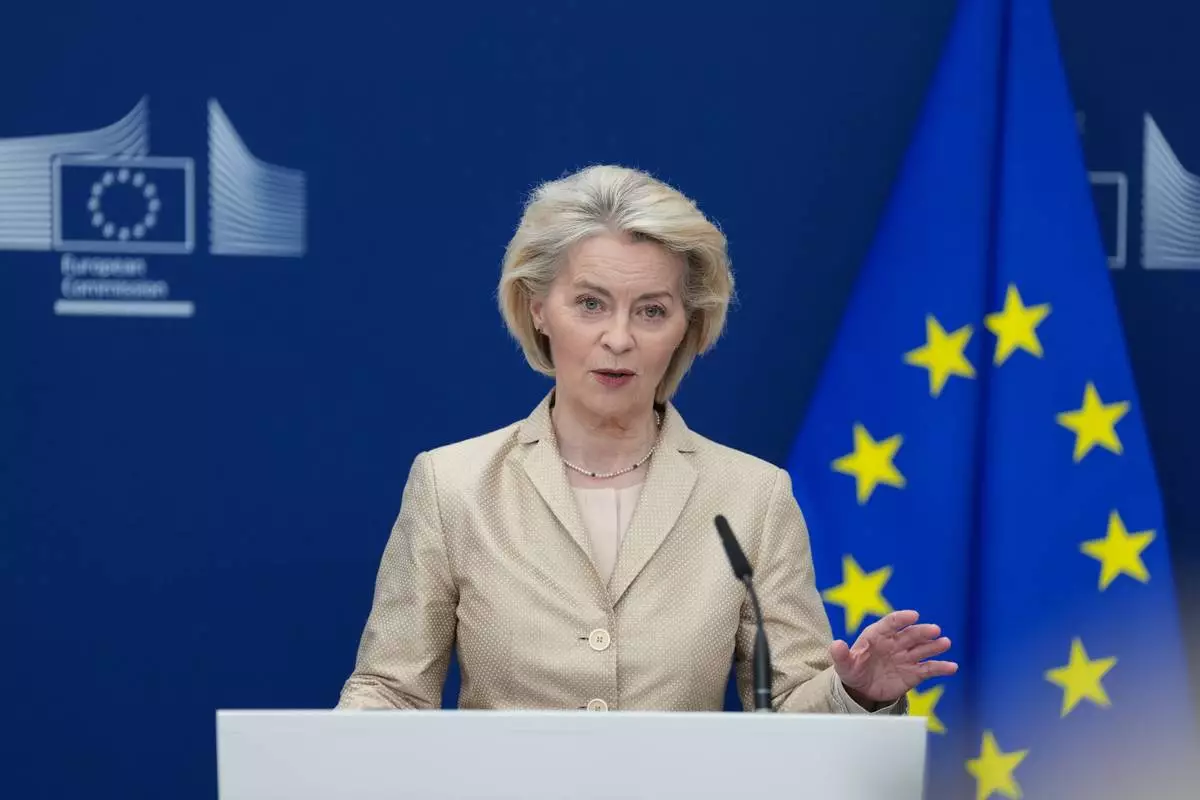
European Commission President Ursula von der Leyen delivers a statement during a media conference at EU headquarters in Brussels, Wednesday, March 18, 2026. (AP Photo/Virginia Mayo)

European Commission President Ursula von der Leyen delivers a statement during a media conference at EU headquarters in Brussels, Wednesday, March 18, 2026. (AP Photo/Virginia Mayo)

Recommended Articles