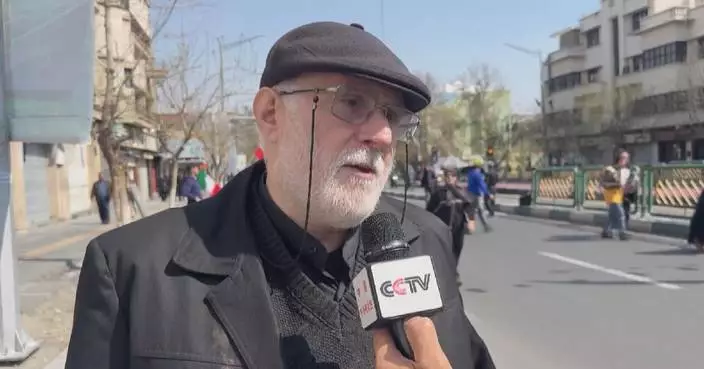
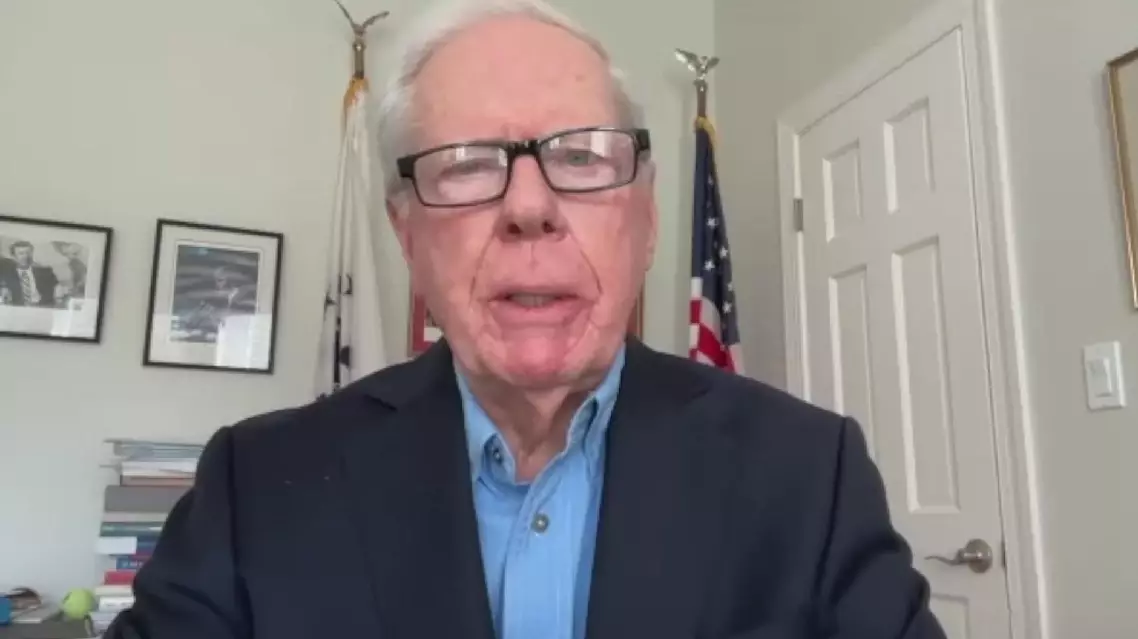
The Chinese approach to trade negotiations, grounded in mutual benefit, starkly contrasts the "militaristic" and constraining approach of the United States, said Paul Craig Roberts, former U.S. assistant secretary of the Treasury for Economic Policy.
Trade talks between the two countries have been held in Paris in recent days.
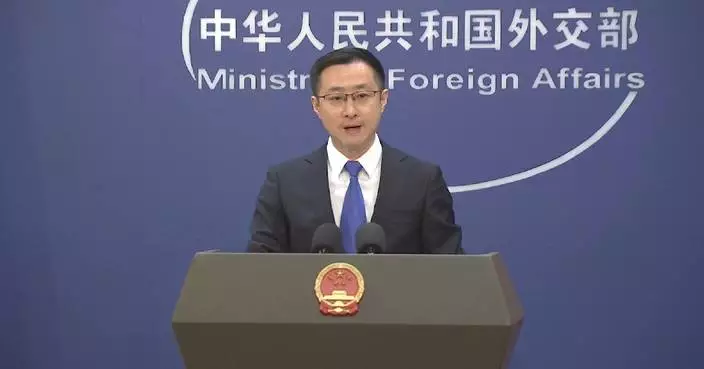
China continues to maintain communication with the U.S. side regarding President Donald Trump's China visit, a Chinese foreign ministry spokesperson said on Tuesday and Wednesday at daily press briefing.
Speaking on his expectations for the talks, Roberts emphasized the dissimilarities in the two countries' general approaches to bilateral negotiations.
"For the United States, trade negotiations are part of U.S. geopolitical policy. So the negotiations with China, if they take place, will be used by the United States to achieve a geopolitical goal such as to delay or sideline some unwelcome Chinese decision or action and to constrain China from acting in its own best interest. What China might think is some sort of bilateral negotiation over mutually beneficial trade with the United States, the United States will be seeking to achieve a geopolitical goal. That is the main function of American trade policy," he said during an interview with China Global Television Network (CGTN) via video link.
"China approaches other countries differently than the United States. The United States has a militaristic approach and China says, hey, let's go into business together; let us build a port for you, let us show you how to organize this or that sector of your economy. This type of thing is a mutually beneficial policy with that country, and it gives China an edge. And it should focus on where its opportunities are. The United States says we want an air base, we want a naval base. We want you to be part of our group against this other group. I think that the Chinese approach is let us make you rich, and the United States' approach, I'm afraid, is we've come to plunder you," Roberts said.
China seeks mutual benefit as US seeks "plunder" in divergent negotiation postures: former US official
The assassination of Ali Larijani, secretary of Iran's Supreme National Security Council, further destabilizes Iran's political system and complicates prospects for a diplomatic solution to the ongoing conflict, said experts on Wednesday in Xi'an City, Shaanxi Province, northwest China.
Iran's Supreme National Security Council confirmed on Tuesday that Ali Larijani had been killed. He was the target of an Israeli airstrike, which also killed his son and others.
Iranian President Masoud Pezeshkian said the killing of Larijani is a major loss to the country.
According to experts on the region, Larijani was a key figure who might have brought about a political resolution to the war.
"The system is going to lose a figure that was able to be pragmatic, diplomatically experienced, and capable also of making the internal case for engagement when needed," said Matteo Capasso, professor of Middle East Studies at China's Northwest University.
Larijani served as Iran's nuclear negotiator, parliamentary speaker, and secretary of the Supreme National Security Council, all the while bridging moderates and hardliners.
Israel's Prime Minister Benjamin Netanyahu said the killing of Larijani was an effort to weaken Iran's leadership.
Experts, however, said it is a tactic to disrupt the internal order of Iran.
"This would lead to a very (significant) political power vacuum inside Iran. This would endanger the political stability inside the country. So, that's why I don't think it would be an easy task for Iran to overcome the difficulties, although we hope that the political instability could be overcome. But I think it would be a political challenge for Iranian people that they need to face in the future," said Wang Jin, director of the Center of Strategic Studies at Northwest University.
Iran said it has identified three to seven backup candidates for key government and military positions, but the continued attacks targeting Iranian senior officials have pushed the war further from reaching a deal.
"With every assassination and every agreement being broken and every bomb, this puts the U.S. in a situation where it really needs to decide how far they are willing to go in order to allow Israel to impose its vision on the region," said Capasso.

Killing of Larijani dims prospects for diplomatic solution to Iran conflict: experts