Skip to Content Facebook Feature Image

Palestinians were bystanders to the Iran war. Now they're victims too

News

Palestinians were bystanders to the Iran war. Now they're victims too
News

News

Palestinians were bystanders to the Iran war. Now they're victims too

2026-03-20 04:53 Last Updated At:05:00

BEIT AWA, West Bank (AP) — For nearly three weeks, Palestinians in the occupied West Bank have mostly been bystanders as Israel and Iran exchange airstrikes. But on Wednesday night, four women became victims of the war.

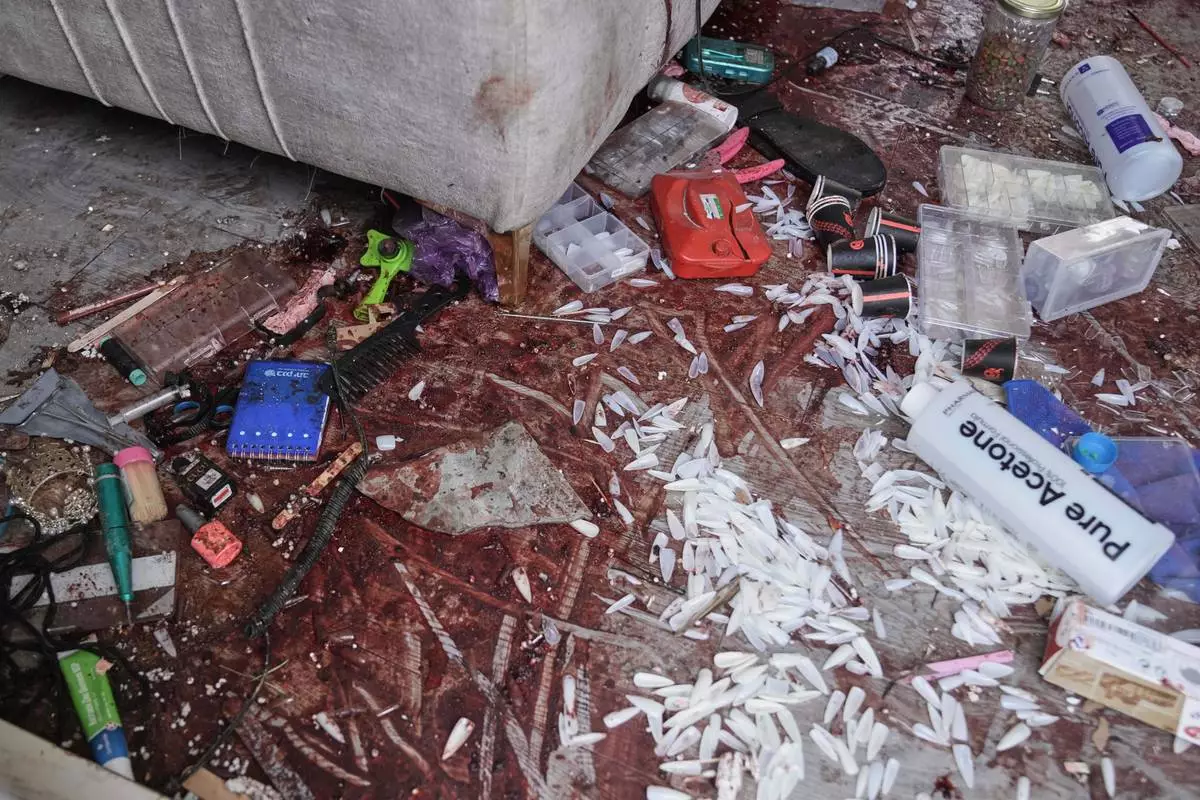
Along with more than a dozen of their friends and daughters, they were inside a beauty salon when a missile struck only steps away. It sent shrapnel tearing through walls lined with shelves stacked with acrylic nails and bottles of turquoise and scarlet polish.

More Images
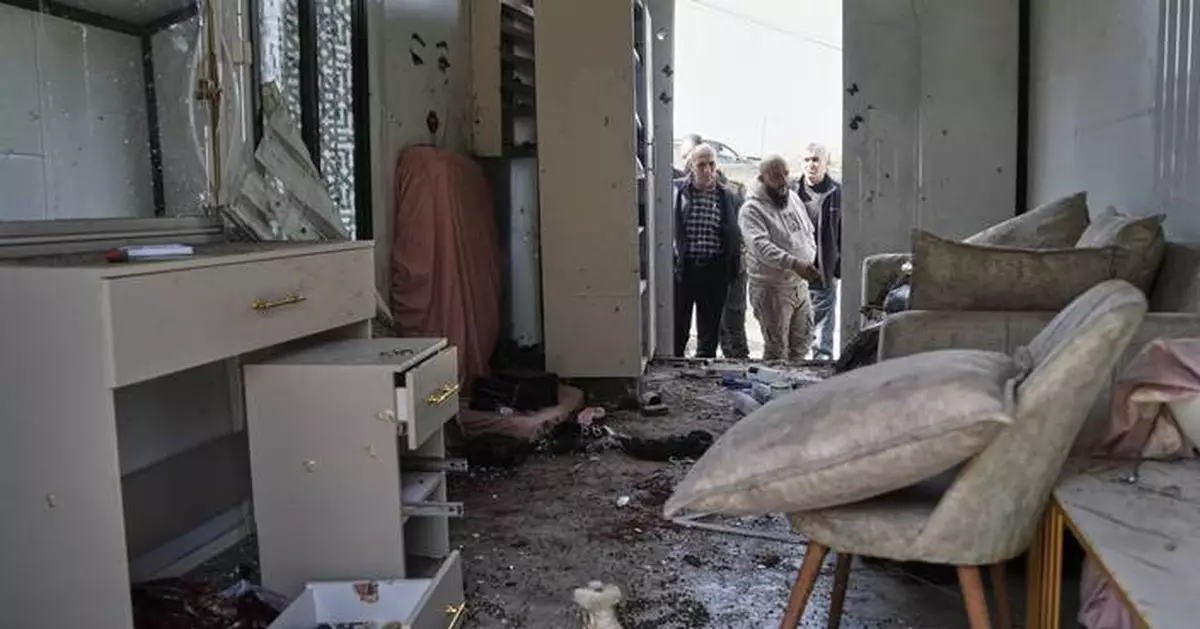
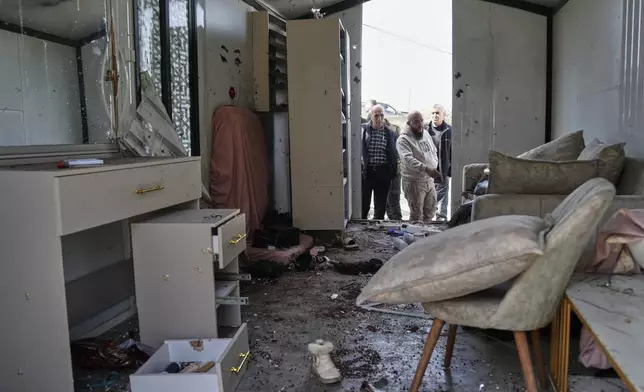
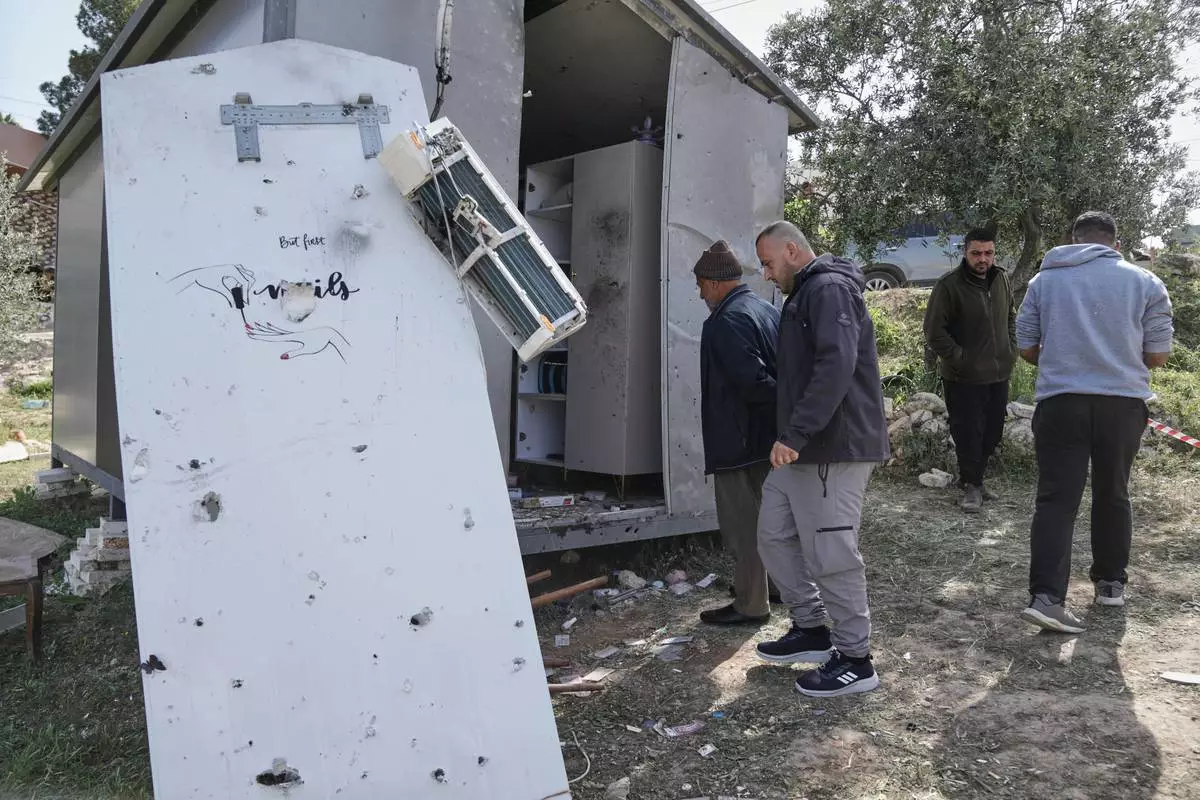
Palestinians inspect the damage at a beauty salon after a deadly Iranian strike in the West Bank village of Beit Awa, near Hebron, Thursday, March 19, 2026. (AP Photo/Mahmoud Illean)
Palestinians inspect the damage at a beauty salon after a deadly Iranian strike in the West Bank village of Beit Awa, near Hebron, Thursday, March 19, 2026. (AP Photo/Mahmoud Illean)
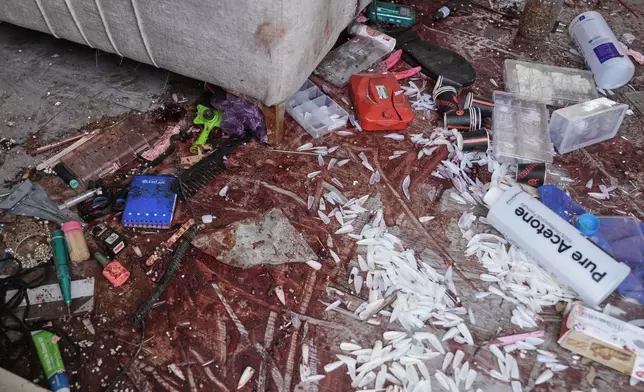
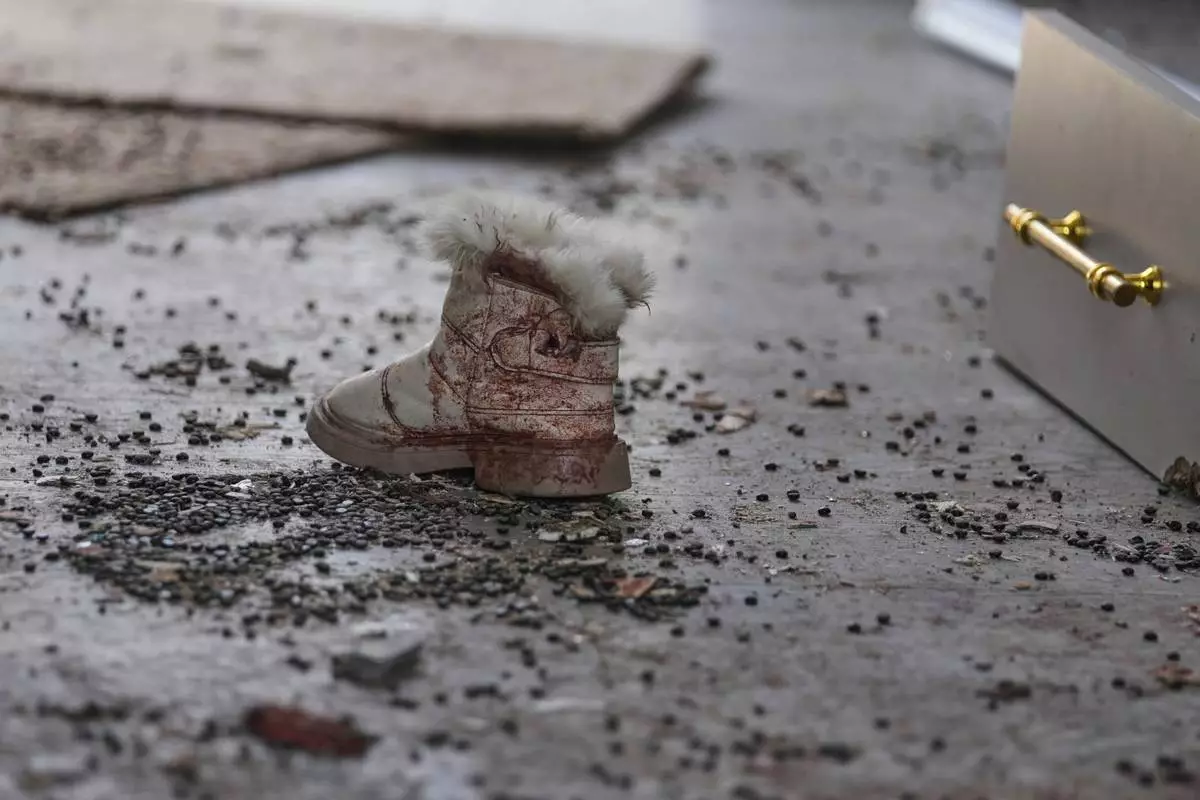
Blood is seen on the floor of a beauty salon damaged in a deadly Iranian strike in the West Bank village of Beit Awa, near Hebron, Thursday, March 19, 2026. (AP Photo/Mahmoud Illean)
Blood is seen on the floor of a beauty salon damaged in a deadly Iranian strike in the West Bank village of Beit Awa, near Hebron, Thursday, March 19, 2026. (AP Photo/Mahmoud Illean)
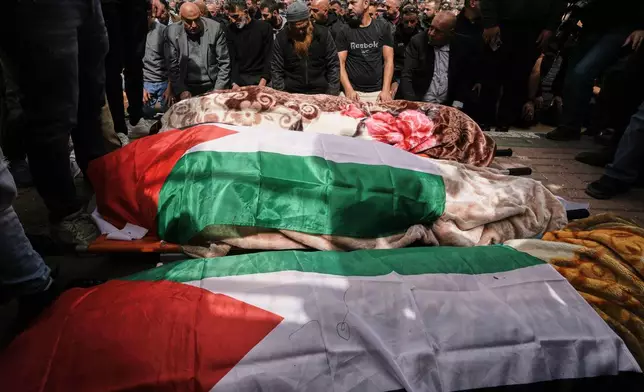
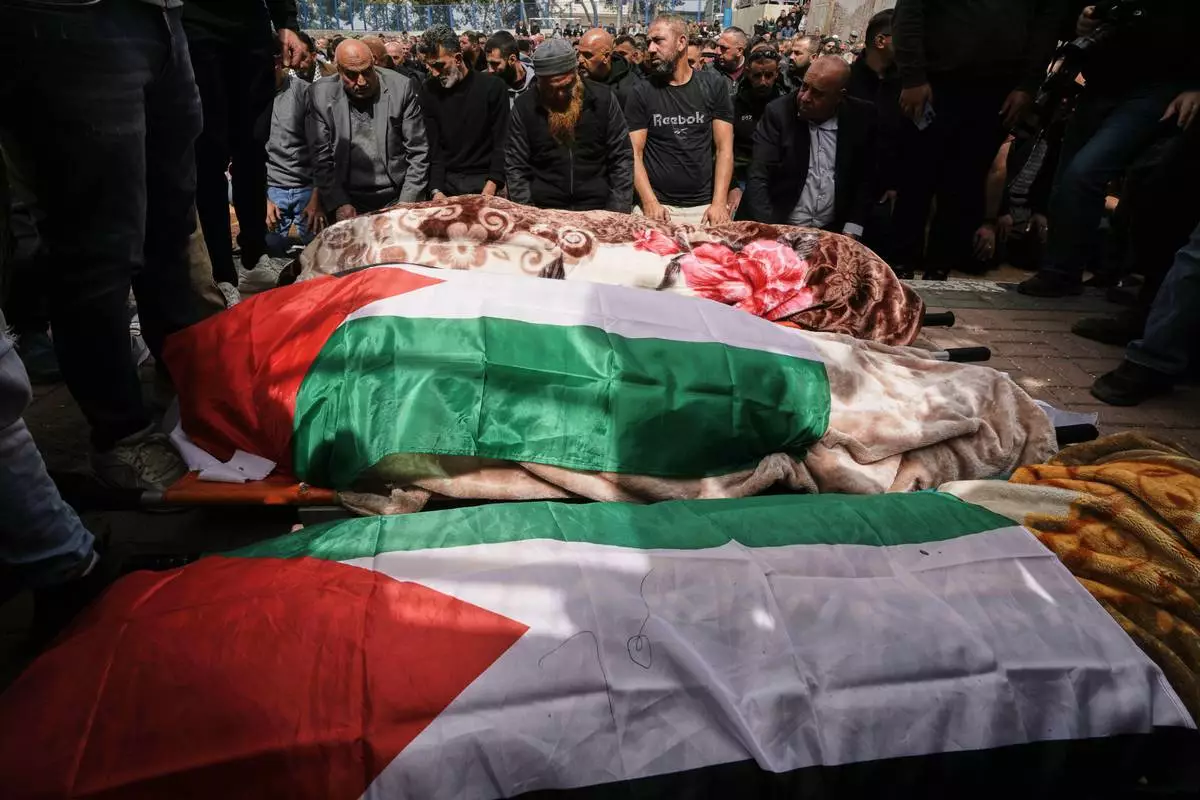
Palestinian men pray during the funeral of three Palestinian women who were killed in an Iranian strike in the West Bank village of Beit Awa, near Hebron, Thursday, March 19, 2026. (AP Photo/Mahmoud Illean)
Palestinian men pray during the funeral of three Palestinian women who were killed in an Iranian strike in the West Bank village of Beit Awa, near Hebron, Thursday, March 19, 2026. (AP Photo/Mahmoud Illean)
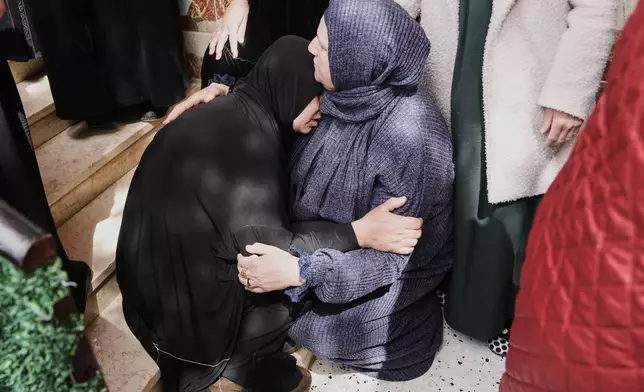
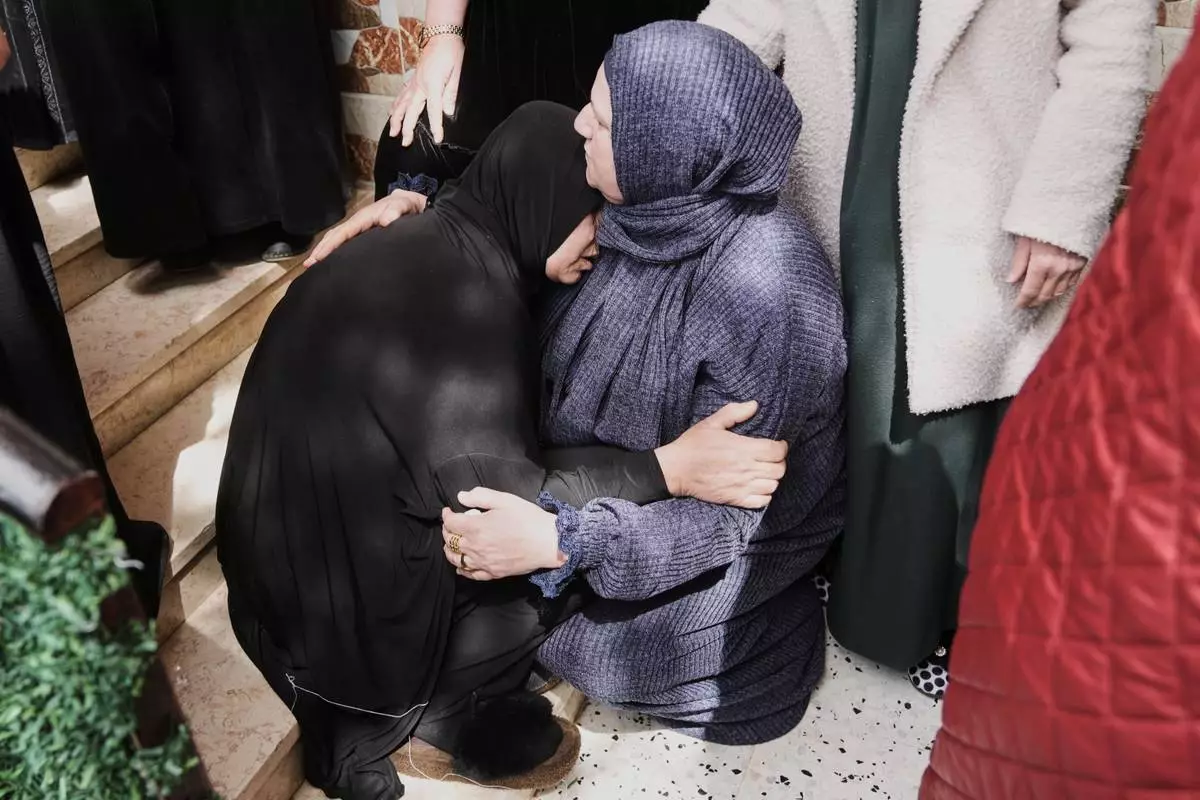
Palestinian women mourn during the funeral of three Palestinian women who were killed in an Iranian strike in the West Bank village of Beit Awa, near Hebron, Thursday, March 19, 2026. (AP Photo/Mahmoud Illean)
Palestinian women mourn during the funeral of three Palestinian women who were killed in an Iranian strike in the West Bank village of Beit Awa, near Hebron, Thursday, March 19, 2026. (AP Photo/Mahmoud Illean)

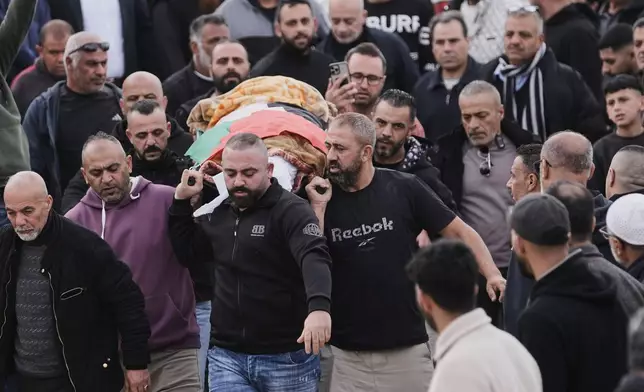
Palestinians carry the body of Palestinian woman who killed in an Iranian strike, in the West Bank village of Beit Awa, near Hebron, Thursday, March 19, 2026. (AP Photo/Mahmoud Illean)

Palestinians carry the body of Palestinian woman who killed in an Iranian strike, in the West Bank village of Beit Awa, near Hebron, Thursday, March 19, 2026. (AP Photo/Mahmoud Illean)

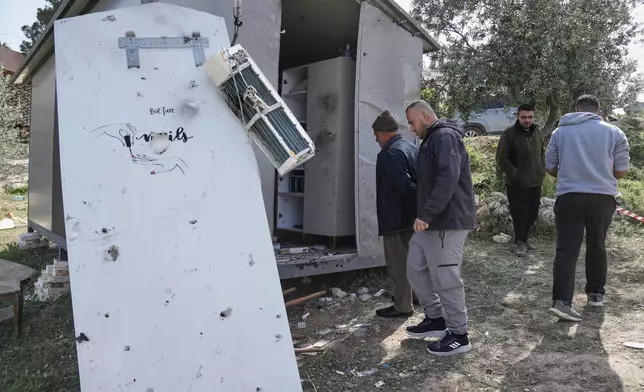
Palestinians inspect the damage at a beauty salon after a deadly Iranian strike in the West Bank village of Beit Awa, near Hebron, Thursday, March 19, 2026. (AP Photo/Mahmoud Illean)

Palestinians inspect the damage at a beauty salon after a deadly Iranian strike in the West Bank village of Beit Awa, near Hebron, Thursday, March 19, 2026. (AP Photo/Mahmoud Illean)

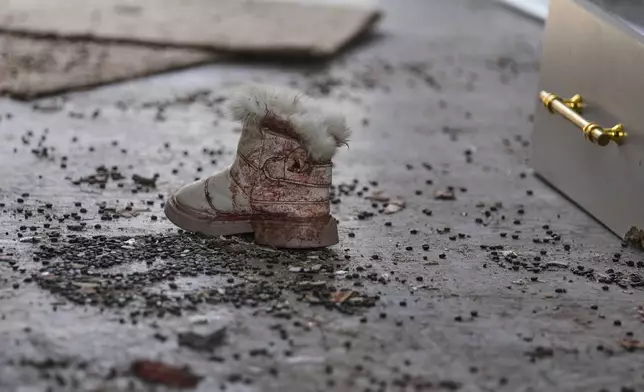
A bloodied shoe is seen among rubble at a beauty salon damaged in a deadly Iranian strike in the West Bank village of Beit Awa, near Hebron, Thursday, March 19, 2026. (AP Photo/Mahmoud Illean)

A bloodied shoe is seen among rubble at a beauty salon damaged in a deadly Iranian strike in the West Bank village of Beit Awa, near Hebron, Thursday, March 19, 2026. (AP Photo/Mahmoud Illean)

Palestinians inspect the damage at a beauty salon after a deadly Iranian strike in the West Bank village of Beit Awa, near Hebron, Thursday, March 19, 2026. (AP Photo/Mahmoud Illean)

Palestinians inspect the damage at a beauty salon after a deadly Iranian strike in the West Bank village of Beit Awa, near Hebron, Thursday, March 19, 2026. (AP Photo/Mahmoud Illean)

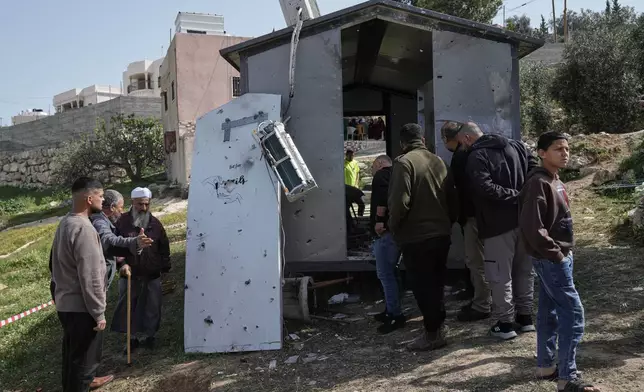
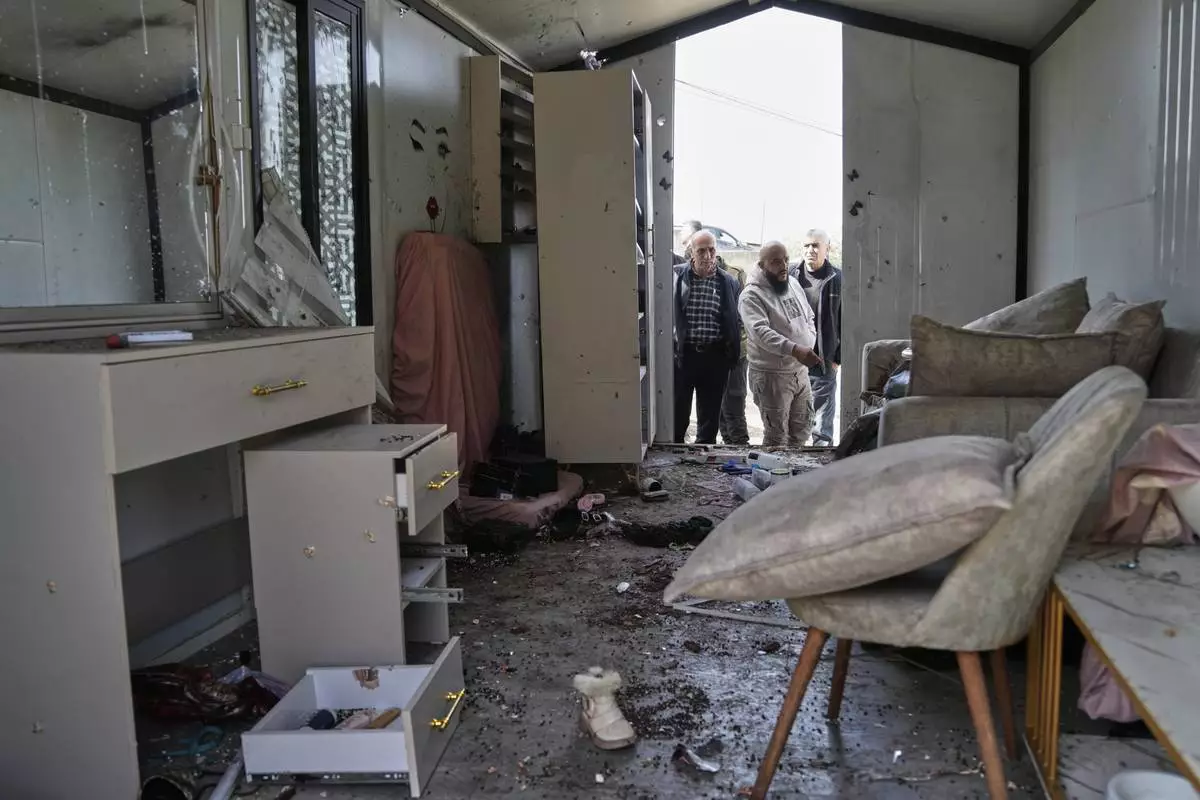
Mourning friends and relatives on Thursday gathered near the trailer that offered manicures, pedicures and eyebrow services. Hundreds of coffee cups and acrylic nails lay scattered across the salon's floor, stained red with dried blood. Holes dotted the metal walls and a small crater marked where the strike hit.

Hadeel Masalmeh, the salon's co-owner, returned with bandages covering shrapnel wounds on her face and body.

“I wasn’t supposed to leave the hospital but I wanted to say goodbye to Sahera,” she said of her business partner and sister-in-law.

The strike killed Sahera along with three other women from the extended Masalmeh family in Beit Awa — Maes, Aseel and Amal, who was six months pregnant and at the salon with her three year-old daughter. The toddler was one of more than a dozen women and children that Palestinian Health Ministry reported as injured in the strike. The Palestinian Red Crescent Society said some were undergoing surgery or amputations.

In Israel, much of life has revolved around sirens and alerts since the war started, sending people running to shelters, often several times a day. Palestinians have gone about business as usual, barely pausing when distant sirens blare or interceptions boom overhead.

That was the case Wednesday night when sirens sounded from the nearby settlement of Negohot 2 miles (3 kilometers) away. Few reacted until a customer spotted red flares in the sky and Hadeel rushed everyone inside.

“We heard the sound of sirens. But we didn’t pay much attention and didn’t expect any shrapnel or anything like that to fall on us,” she said.

The reaction to the alarm was the same Thursday. Mourners gathered at the family home next to the salon to pay final respects. As women sobbed, few looked up while alerts beeped from the handful of phones with Israeli SIM cards.

The fatalities underscored the lack of protections in the occupied West Bank. Palestinians there don't have the kind of shelters found in most of Israel, where building codes have required them since the first Gulf War. Even in parts of Israel without home shelters — including many Arab-majority and Bedouin towns — public shelters are often available nearby.

Though not a target, Palestinians have watched missiles streak overhead each night and Israeli interceptors explode them above. Fragments have hit buildings, including last week outside the West Bank city Nablus, where they punched through a three-story house while its owner was at evening prayers.

Abedullraziq Almasalmeh, a neighbor and relative of the four women killed, heard missiles whoosh and then boom, his house shaking as he reached to dial for ambulances after 10 p.m. Wednesday.

Their drive should've been less than 10 minutes but took 25, he said, leaving victims waiting during critical early moments.

The Palestinian Red Crescent blamed an Israeli gate near Negohot that diverted ambulances. “This forced closure caused significant delays, compelling ambulances to take long, rugged alternative routes, which critically impacted the ‘golden hour’ essential for life-saving interventions,” it said in a statement.

Before the beauty salon strike, the group had warned that gates were increasingly preventing them from reaching emergencies.

Qusai Jabr, the manager of the group’s disaster risk management department, told The Associated Press that in the first week of the war alone, delays affected response calls to women in labor, seniors suffering strokes and victims of settler attacks.

Israeli authorities have not imposed the kind of full lockdown seen during last year’s 12-day war with Iran. But the proliferation of hundreds more gates has made travel just as, if not more, difficult. Jabr said there were about 800 gates during last year’s war and now there are roughly 1,100, both manned and unmanned.

The nature of the strike Wednesday was unclear. Israel’s military called it a direct hit by an Iranian missile, rather than fallen intercepted debris. It said it was a cluster munition, which explodes midair and disperses smaller bomblets across wide areas, trading precision for coverage. The Palestinian Authority's Interior Ministry called it a fallen interceptor, referring to Israel's air defenses that shoot down Iranian missiles. Iran’s government has not commented.

Regardless, in Beit Awa, it was merely the latest trauma. The town overlooking the concrete barrier separating Palestinian towns from Israel has struggled economically since Israel revoked tens of thousands of Palestinian work permits after Hamas’ Oct. 7, 2023 attack and the ensuing war in Gaza.

The surrounding Hebron Hills have long been a hot spot for settler violence and rights groups say settlers have taken advantage of the uncertainty of the war to ramp up attacks.

The Israeli rights group Yesh Din said last week it had documented more than 100 incidents across West Bank communities throughout the Iran war.

The United Nations Office for the Coordination of Humanitarian Affairs has reported 18 Palestinians killed by Israeli settlers and soldiers in the West Bank since the start of 2026, including a 27-year-old man killed by a settler in nearby Masafer Yatta less than two weeks ago.

For many in the area, including funeralgoers in Beit Awa, the feeling of being geographically between Israel and Iran has been inescapable.

“We’re between two fires,” Mahmoud Sweity said.
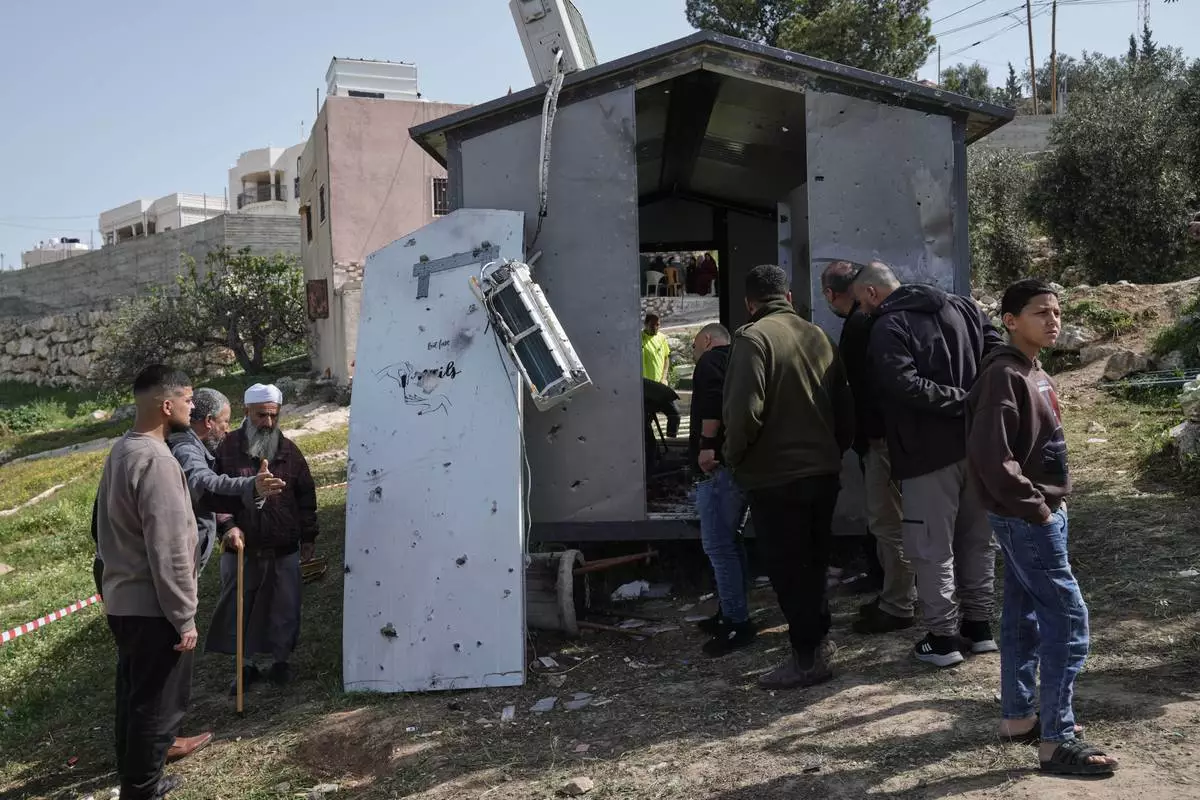
Palestinians inspect the damage at a beauty salon after a deadly Iranian strike in the West Bank village of Beit Awa, near Hebron, Thursday, March 19, 2026. (AP Photo/Mahmoud Illean)
Palestinians inspect the damage at a beauty salon after a deadly Iranian strike in the West Bank village of Beit Awa, near Hebron, Thursday, March 19, 2026. (AP Photo/Mahmoud Illean)
Blood is seen on the floor of a beauty salon damaged in a deadly Iranian strike in the West Bank village of Beit Awa, near Hebron, Thursday, March 19, 2026. (AP Photo/Mahmoud Illean)
Blood is seen on the floor of a beauty salon damaged in a deadly Iranian strike in the West Bank village of Beit Awa, near Hebron, Thursday, March 19, 2026. (AP Photo/Mahmoud Illean)
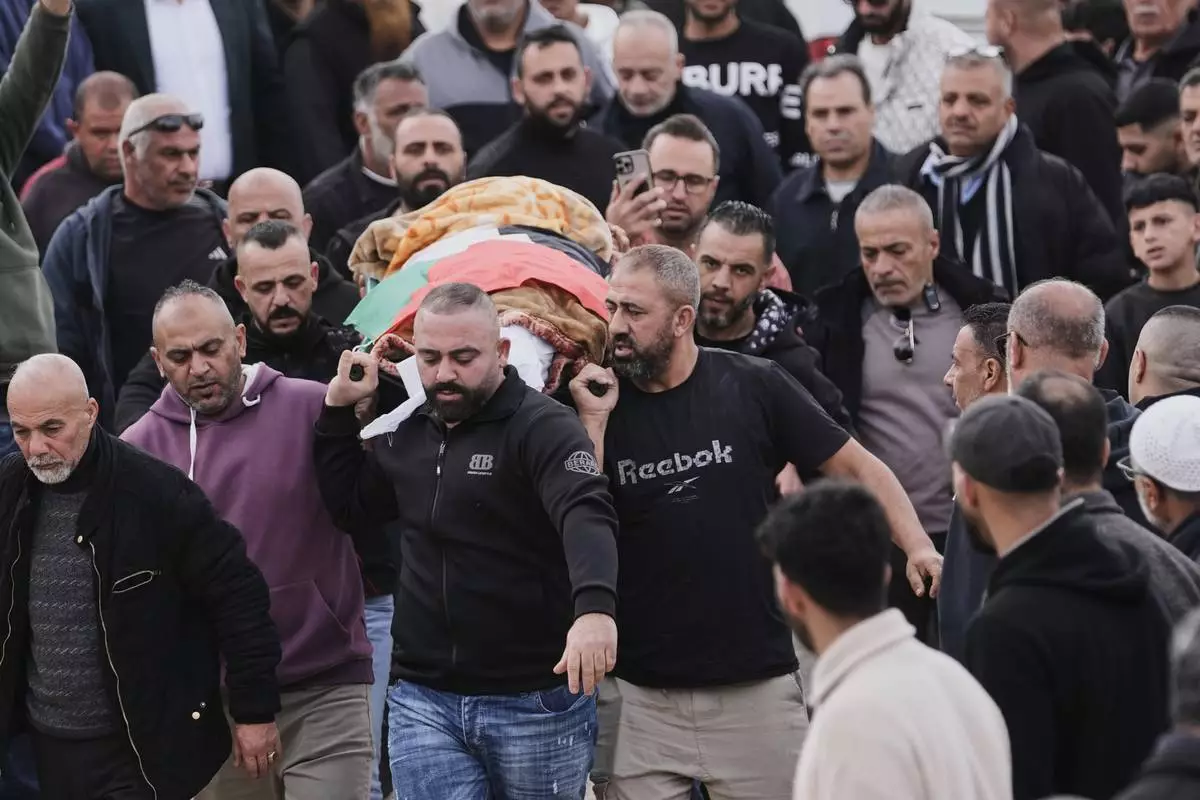
Palestinian men pray during the funeral of three Palestinian women who were killed in an Iranian strike in the West Bank village of Beit Awa, near Hebron, Thursday, March 19, 2026. (AP Photo/Mahmoud Illean)
Palestinian men pray during the funeral of three Palestinian women who were killed in an Iranian strike in the West Bank village of Beit Awa, near Hebron, Thursday, March 19, 2026. (AP Photo/Mahmoud Illean)
Palestinian women mourn during the funeral of three Palestinian women who were killed in an Iranian strike in the West Bank village of Beit Awa, near Hebron, Thursday, March 19, 2026. (AP Photo/Mahmoud Illean)
Palestinian women mourn during the funeral of three Palestinian women who were killed in an Iranian strike in the West Bank village of Beit Awa, near Hebron, Thursday, March 19, 2026. (AP Photo/Mahmoud Illean)
Palestinians carry the body of Palestinian woman who killed in an Iranian strike, in the West Bank village of Beit Awa, near Hebron, Thursday, March 19, 2026. (AP Photo/Mahmoud Illean)

Palestinians carry the body of Palestinian woman who killed in an Iranian strike, in the West Bank village of Beit Awa, near Hebron, Thursday, March 19, 2026. (AP Photo/Mahmoud Illean)

Palestinians inspect the damage at a beauty salon after a deadly Iranian strike in the West Bank village of Beit Awa, near Hebron, Thursday, March 19, 2026. (AP Photo/Mahmoud Illean)
Palestinians inspect the damage at a beauty salon after a deadly Iranian strike in the West Bank village of Beit Awa, near Hebron, Thursday, March 19, 2026. (AP Photo/Mahmoud Illean)

A bloodied shoe is seen among rubble at a beauty salon damaged in a deadly Iranian strike in the West Bank village of Beit Awa, near Hebron, Thursday, March 19, 2026. (AP Photo/Mahmoud Illean)

A bloodied shoe is seen among rubble at a beauty salon damaged in a deadly Iranian strike in the West Bank village of Beit Awa, near Hebron, Thursday, March 19, 2026. (AP Photo/Mahmoud Illean)

Palestinians inspect the damage at a beauty salon after a deadly Iranian strike in the West Bank village of Beit Awa, near Hebron, Thursday, March 19, 2026. (AP Photo/Mahmoud Illean)

Palestinians inspect the damage at a beauty salon after a deadly Iranian strike in the West Bank village of Beit Awa, near Hebron, Thursday, March 19, 2026. (AP Photo/Mahmoud Illean)

DUBAI, United Arab Emirates (AP) — A tenuous ceasefire appeared to be holding Saturday after the United States struck two Iranian oil tankers, while the country that hosts the U.S. Navy’s regional headquarters said it arrested dozens of people it alleged were linked to Iran’s Revolutionary Guard.

Attacks Friday cast doubt on the month-old ceasefire that the United States has insisted is still in effect. Washington is awaiting an Iranian response to its latest proposal for a deal to end the war, reopen the Strait of Hormuz and roll back Tehran’s disputed nuclear program.

The U.S. military said Friday that its forces had disabled two Iranian tankers that were trying to breach an American blockade of Iran’s ports. Hours earlier, the military said it thwarted attacks on three Navy ships and struck Iranian military facilities in the strait.

Meanwhile, in the small Gulf island of Bahrain, the nation's Ministry of Interior said Saturday it had arrested 41 people it alleges are part of a group affiliated with Iran’s Revolutionary Guard. It said investigations are ongoing to take further action against anyone affiliated with the group but did not provide further details.

Bahrain is led by a Sunni Muslim monarchy but, like Iran, its population is majority Shiite. Rights groups have said that the kingdom has used the war between Iran and the U.S., which bases its Fifth Fleet in the country, as an excuse to crack down on dissent at home.

Iran has mostly blocked the critical waterway for global energy since the U.S. and Israel launched the war on Feb. 28, causing a global spike in fuel prices and rattling world markets. The U.S. has imposed its own blockade of Iran’s ports.

The U.S. military posted video of the two Iranian tankers as their smokestacks were struck by an American fighter jet on Friday. Earlier in the week, an American military jet shot out the rudder of a tanker the U.S. military said was attempting to breach its blockade.

A U.S. strike overnight killed at least one sailor and injured 10 others aboard a cargo vessel that caught fire, a news agency affiliated with Iran's judiciary reported. It was not clear if the ship was one of the two tankers the U.S. acknowledged striking.

Despite the attacks, U.S. President Donald Trump has insisted the ceasefire is holding. He also has reiterated threats to resume full-scale bombing if Iran doesn’t accept an agreement to reopen the strait and roll back its nuclear program.

On Friday, Iranian foreign ministry spokesperson Esmail Baghaei said the country was not paying attention to “deadlines” and Tehran continues reviewing a U.S. proposal related to ongoing negotiations, according to state-run IRNA.

A top Iranian official also said Friday that the country's Supreme Leader Mojtaba Khamenei was in “complete health" and that he would eventually appear in public.

The comments were made by Mazaher Hosseini, who is affiliated with the office of Iran’s former Supreme Leader, at a pro-government gathering. Hosseini said Mojtaba had suffered knee and back injuries but that they’ve largely healed and he’s now in good condition.

Khamenei hasn't been seen in public since the war began and the continued absence of verified images, audio, or video of him has fueled speculation about his status. Remarks such as Hosseini's are seen by some as attempts to counter doubts that he may no longer be alive.

Britain’s defense ministry said it was deploying a warship to the Middle East to join a potential mission to protect commercial ships in the Strait of Hormuz.

The ministry said the destroyer HMS Dragon will “pre-position” in the region, ready to join a U.K.- and French-led security plan once hostilities end. France also announced this week it was moving its aircraft carrier strike group into the Red Sea in preparation for a potential mission in the strait.

Britain and France have led planning meetings involving several dozen countries on a coalition to reestablish freedom of navigation in the strait. But they stress it won’t start until there is a sustainable ceasefire and the maritime industry is reassured ships can go through the strait safely.

Satellite images reviewed by The Associated Press show what appears to be an oil slick in the Persian Gulf emanating from the western side of Kharg Island, Iran’s main crude export terminal.

Images taken Friday show the slick covering about 71 square kilometers (27 square miles) and appear to show oil still leaking from the terminal, said Ami Daniel, CEO of maritime intelligence firm Windward AI.

Daniel estimated that the equivalent of roughly 80,000 oil barrels has spilled from Kharg Island since the slick was first detected by satellite images Tuesday. It’s unknown whether the spill was caused by a malfunction, an airstrike or something else.

He said the spill appears to be spreading southwest and within the next two weeks could potentially reach the shores of the UAE, Qatar or Saudi Arabia.

The Pentagon declined to comment on whether the U.S. military was tracking the spill or whether there had been recent strikes on the Iranian island. Based on the imagery taken earlier this week, the spill occurred before the most recent round of U.S. strikes.

As tensions escalate there's been a flurry of diplomacy across the globe.

Russia’s foreign ministry said Saturday that it, as well as Saudi Arabia, is calling for continued diplomatic efforts to reach a “sustainable, long-term agreement” to end the war, according to Russia's foreign ministry.

Egyptian and Qatari top diplomats have also have reiterated that diplomacy is the sole path to finding a solution, according to a readout of a Saturday phone call between Egyptian Foreign Minister Badr Abdelatty and his Qatari counterpart Sheikh Mohammed bin Abdulrahman Al Thani.

Pakistani Prime Minister Shehbaz Sharif said his country has been in contact with the U.S. and Iran “day and night” in an effort to extend the ceasefire and reach a peace deal.

——

Magdy reported from Cairo, Egypt. Associated Press reporter Jill Lawless contributed from London.

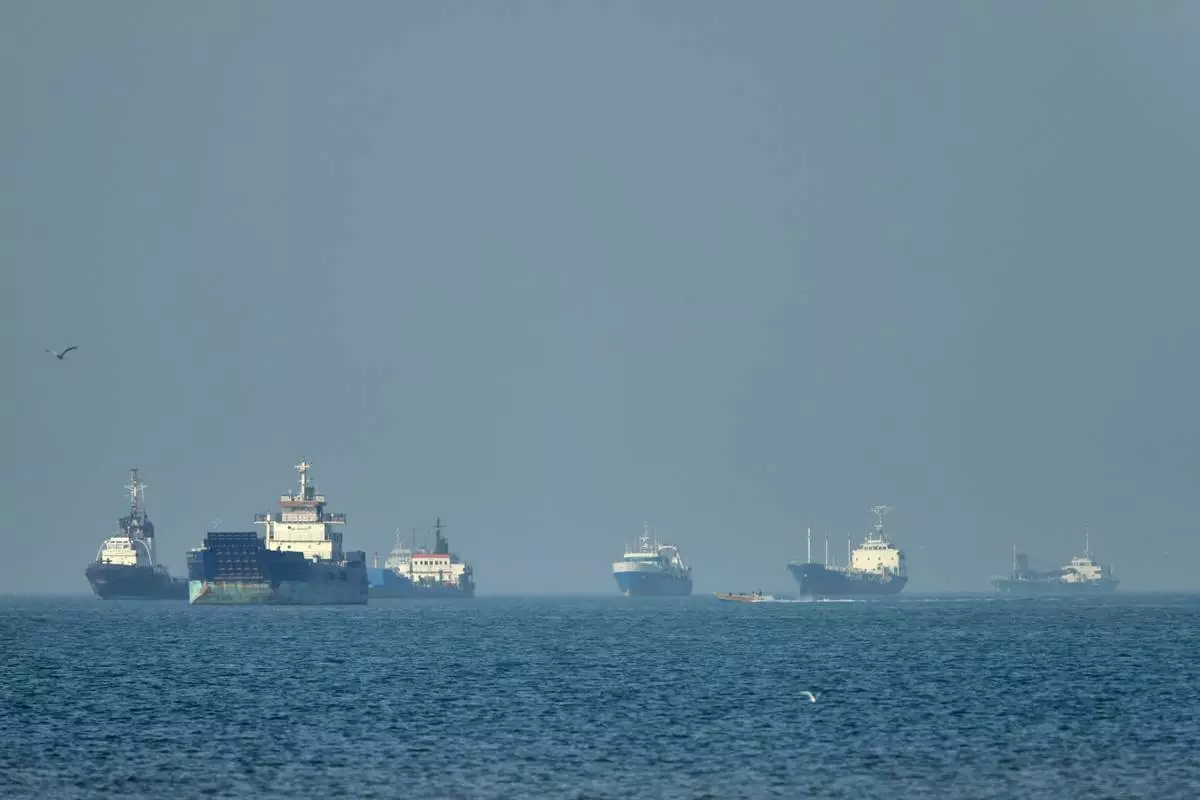
Cargo ships, including bulk carriers and general cargo vessels, sit at anchor offshore as a small motorboat passes in the foreground, in the Strait of Hormuz off Bandar Abbas, Iran, Monday, May 4 , 2026.(Amirhosein Khorgooi/ISNA via AP)

Cargo ships, including bulk carriers and general cargo vessels, sit at anchor offshore as a small motorboat passes in the foreground, in the Strait of Hormuz off Bandar Abbas, Iran, Monday, May 4 , 2026.(Amirhosein Khorgooi/ISNA via AP)

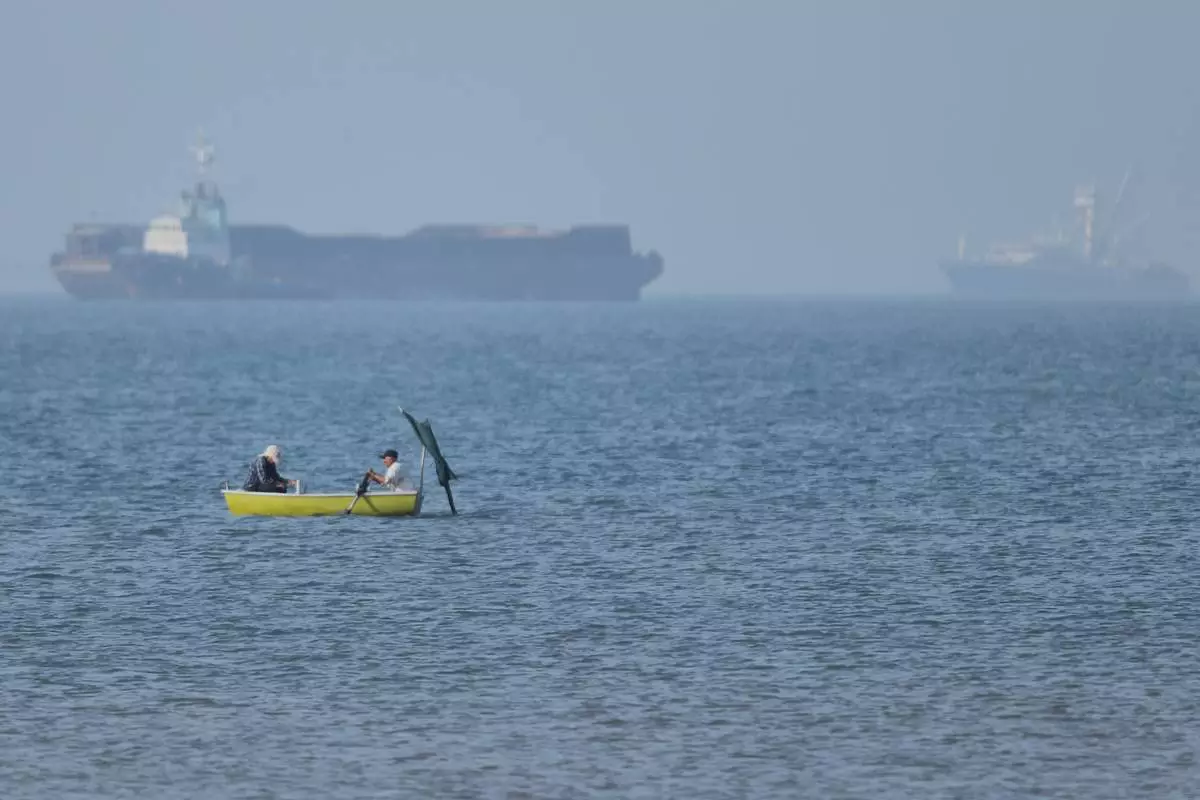
Two men sit in a small boat on the water as cargo ships are anchored in the background in the Strait of Hormuz off Bandar Abbas, Iran, Monday, May 4, 2026. (Amirhosein Khorgooi/ISNA via AP)

Two men sit in a small boat on the water as cargo ships are anchored in the background in the Strait of Hormuz off Bandar Abbas, Iran, Monday, May 4, 2026. (Amirhosein Khorgooi/ISNA via AP)

Recommended Articles