Skip to Content Facebook Feature Image

Democrats say they don't oppose voter ID, but argue that GOP voting bill is too strict

News

Democrats say they don't oppose voter ID, but argue that GOP voting bill is too strict
News

News

Democrats say they don't oppose voter ID, but argue that GOP voting bill is too strict

2026-03-20 06:29 Last Updated At:06:51

WASHINGTON (AP) — Republicans who are pushing a strict proof-of-citizenship legislation have tried to frame the debate in simple terms — if you have to show your photo identification to get on a plane or check out a book at the library, shouldn’t you have to show one to vote?

As Republicans hold the Senate floor to debate the bill, touted by President Donald Trump as essential to winning the midterm elections, they argue that Democrats completely oppose the idea.

“It kind of feels like the only Americans not to support voter ID requirements are Democrats here in Congress,” said Majority Leader John Thune, who said that they either oppose it because it’s a Republican proposal, or “Democrats believe that there are in fact people out there voting illegally and that it’s benefiting Democrats.”

But Democrats say they are not entirely opposed to voter identification at the polls, despite longstanding concerns.

“Our objection as Democrats is not to a photo ID,” Senate Democratic Leader Chuck Schumer said this week, when asked if he might negotiate with Republicans on the bill’s requirement that voters show specified forms of identification when they vote. “Our objection is that it’s a voter suppression bill.”

Democrats, who are expected to block the bill, say they have bigger concerns about new voter-registration requirements in the legislation — the Safeguard American Voter Eligibility Act, also known as the SAVE America Act or the SAVE Act.

Because most forms of photo ID don’t indicate citizenship, voters who want to register would have to show up in person at an election office with a passport, birth certificate or other approved documentation. The legislation would also give the Homeland Security Department access to state voter rolls for review.

People could show up at the polls and be told, “You’re off the rolls,” Schumer said.

Even as he suggests he could support voter ID, Schumer didn't give specifics.

Asked if he might be willing to negotiate with Republicans on voter ID, Schumer responded: “You’d have to define it clearly and properly and easily.” He did not elaborate.

Democrats have said for years that requiring identification at the polls could disenfranchise voters, particularly those who have less money and education. But they did not suggest eliminating state ID laws when they proposed their own voting bills in the majority four years ago.

Instead, Democrats at the time proposed loosening some state ID laws, ensuring that voters lacking identification could sign sworn statements to prove their identity or allowing additional forms of identification, such as utility bills.

Democrats are generally supportive of the idea of voter identification, says Matt Weil of the Bipartisan Policy Center, “as long as there are options.”

Illegal voting by noncitizens is rare. Still, a poll by the Pew Research Center in August 2025 found that about 8 in 10 US adults said they favor requiring all voters to show government-issued photo identification to vote.

Americans back voter ID, Weil says, “but there’s a lot of ambiguity. And it might not be the strict voter ID that Republicans are pushing in this bill.”

Republicans say it shouldn’t be ambiguous.

The SAVE America Act is “going to make it harder to cheat, because Americans do not want their legitimate vote canceled by a fraudulent one,” said Wisconsin Sen. Ron Johnson during floor debate this week.

According to the National Conference of State Legislatures, 36 states have some sort of law requiring ID at the polls. As of last year, NCSL reports that 23 states require photo identification and 13 accept non-photo identification.

The SAVE America Act would require photo identification and could override many forms of ID allowed in states across the country — including fishing and hunting licenses or college IDs. It would also require that people voting by mail include a photocopy of their ID with their ballot, potentially creating new problems for states not set up to review and process those photocopies.

Virginia Sen. Tim Kaine, a Democrat, says he supports voter ID laws in Virginia that are less strict than those required by the bill. “We have voter ID laws, and most states do,” Kaine says. “So why does there have to be a federal solution?”

Some Democrats have suggested a national identification card that shows proof of citizenship and is free for all citizens.

“If there really were proof of an epidemic of noncitizen voting, we would need to look for ways to prevent that from happening,” said Maryland Sen. Chris Van Hollen. “We would have to come up with some form of required ID to meet that problem.”
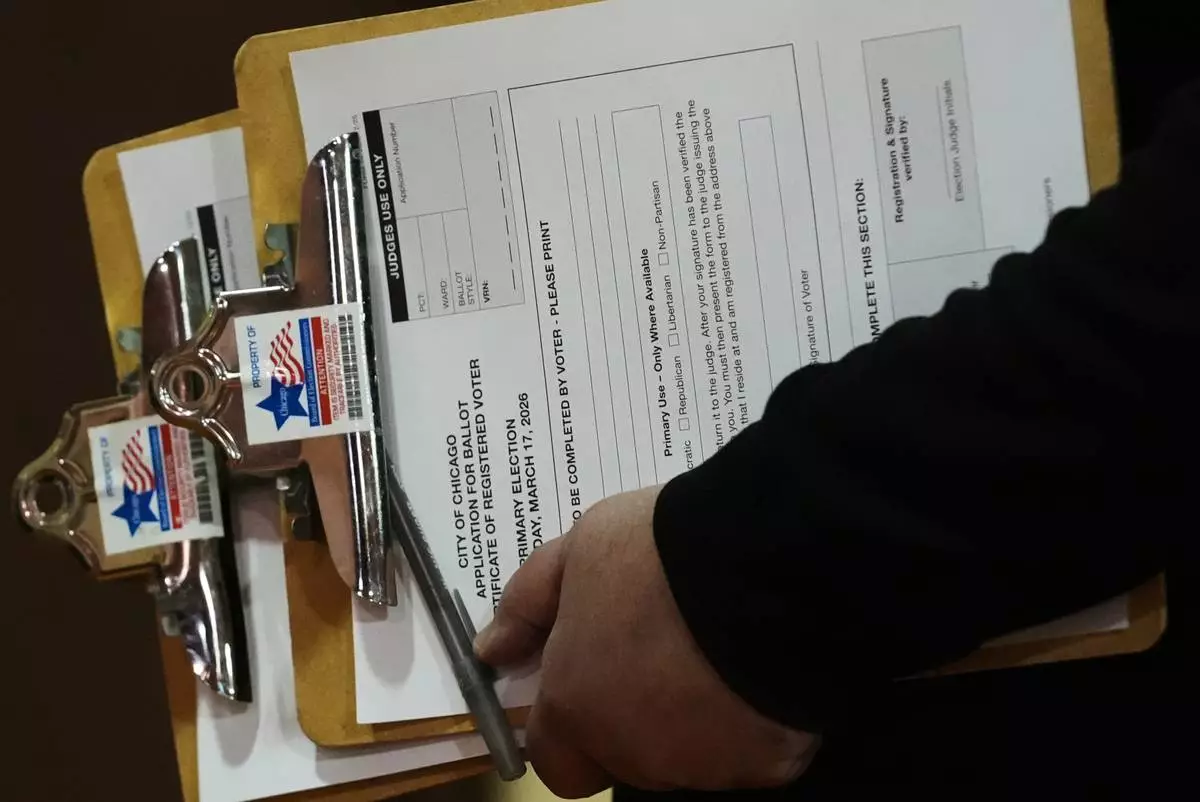
A voting official holds registration forms to vote on Election Day at Chicago Park District Loyola field house in Chicago, Tuesday, March 17, 2026. (AP Photo/Nam Y. Huh)
A voting official holds registration forms to vote on Election Day at Chicago Park District Loyola field house in Chicago, Tuesday, March 17, 2026. (AP Photo/Nam Y. Huh)

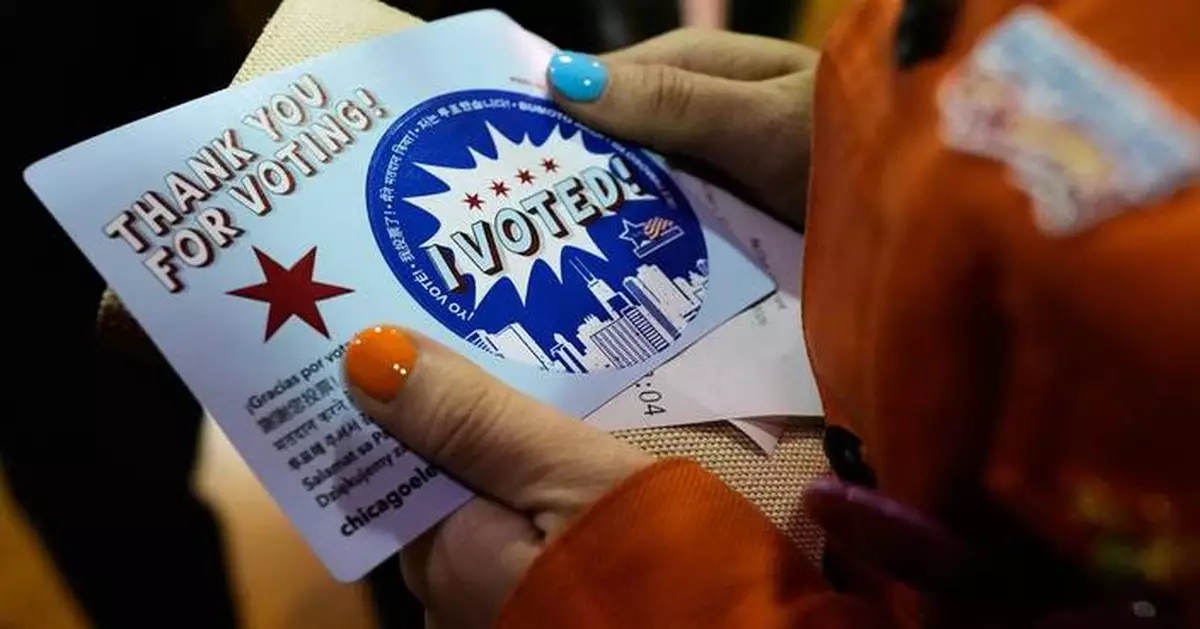
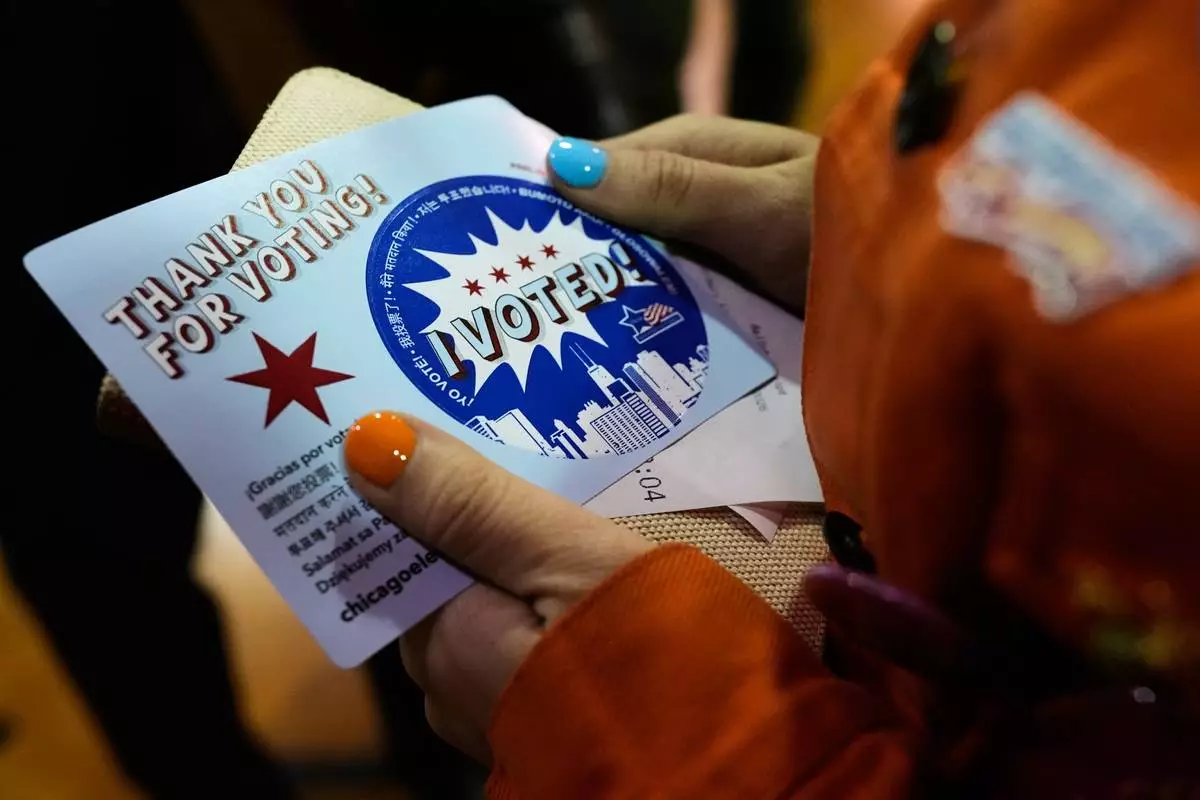
Democratic candidate for Congress, Kat Abughazaleh, holds a "Thank you for voting" sticker after voting in the Illinois primary election for the upcoming midterms, in Chicago, Tuesday, March 17, 2026. (AP Photo/Nam Y. Huh)

Democratic candidate for Congress, Kat Abughazaleh, holds a "Thank you for voting" sticker after voting in the Illinois primary election for the upcoming midterms, in Chicago, Tuesday, March 17, 2026. (AP Photo/Nam Y. Huh)
Dual jury verdicts this week have validated longstanding concerns about the dangers of social media for young people. But the U.S. lacks federal regulation that meaningfully addresses these harms.

On Wednesday, a Los Angeles jury found both Meta and YouTube liable for harms to children using their services. A day earlier in New Mexico, a jury determined that Meta knowingly harmed children’s mental health and concealed what it knew about child sexual exploitation on its platforms.

Although parents and children's advocates cheered the decisions, they argue that without federal regulation to rein in the companies, platforms like Instagram, YouTube and TikTok are unlikely to implement any meaningful change. Many are pinning their hopes on the Kids Online Safety Act, a bill aimed at protecting kids from the harms of social media, gaming sites and other online platforms. It won Senate approval in 2024 but has lingered since.

Other countries, meanwhile, have implemented — or are planning — a bevy of restrictions on children's online activities, ranging from social media bans to requiring younger teens to link their accounts to a parent's. Here's a look at how countries outside the United States are regulating kids and technology.

In 2024, Australia became the first country to kick kids under 16 off social media. The law makes platforms — including TikTok, Facebook, Snapchat, Reddit, X and Instagram — liable for fines of up to 50 million Australian dollars ($34 million) if they fail to prevent children younger than 16 from holding accounts. While many parents have cheered the move, some experts have questioned the efficacy of their age estimation methods (the platforms are not required to ask users for government-issued IDs) and their effects on young people's free speech, social connections and privacy. Critics also fear that the ban will impact the privacy of all users who must prove they are older than 16.

A Brazilian law that seeks to shield minors from addictive, violent and pornographic online content took effect this month, with experts calling it a milestone in the protection of children and adolescents.

Under the new law, children under 16 are required to link their social media accounts to a legal guardian to ensure supervision. The legislation also prohibits platforms from using addictive features, such as infinite scroll and the automatic play of videos. Digital services are also required to implement an effective age verification mechanism that goes beyond self-declaration.

Following in Australia's footsteps Indonesia will ban social media for children under 16 beginning this month.

The regulation that will mean children under the age of 16 can no longer have accounts on “high-risk” digital platforms, including YouTube, TikTok, Facebook, Instagram, Threads, X, Bigo Live and Roblox.

The implementation will start gradually from March 28 until all platforms comply.

Indonesia will be the first country in Southeast Asia to restrict the access of children to social media.

Since January 2025, major social media and messaging platforms with at least 8 million users in Malaysia are required to obtain a license as part of a broader tightening of state oversight over digital platforms. Licensed platforms must implement age verification, content-safety measures and transparency rules, reflecting the government’s push for a safer digital space. The country also plans to ban kids under 16 from social media beginning this year.

Spain's prime minister, Pedro Sánchez, announced in February that the country plans to limit social media access for children under 16, in a move designed to shield young people from the harms of online content.

In January, France approved a bill banning social media for children under 15, paving the way for the measure to take effect at the start of the next school year in September. The bill would also ban the use of mobile phones in high schools. The French government had previously passed a law banning the use of phones in all primary and middle schools.

Denmark has introduced similar legislation to ban access to social media for users under 15, while the United Kingdom said last month it would consider banning young teenagers from social media, as it tightens laws designed to protect children from harmful content and excessive screen time.

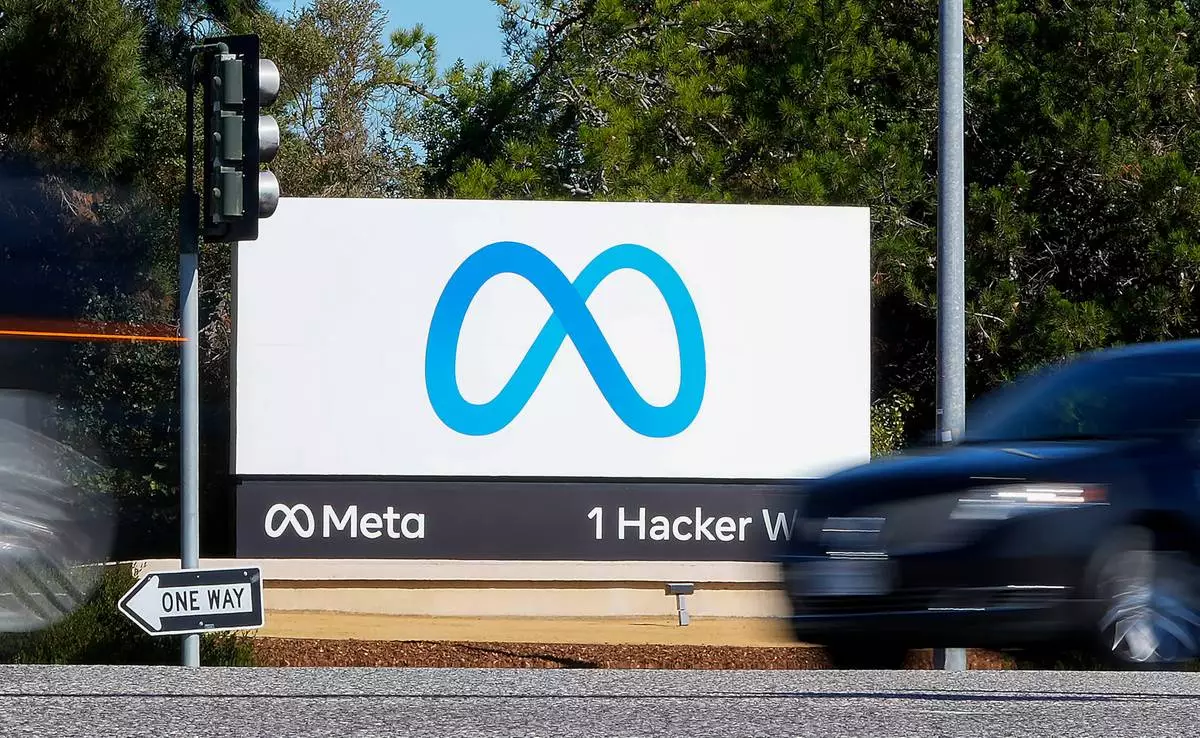
FILE - A car passes Facebook's new Meta logo on a sign at the company headquarters on Oct. 28, 2021, in Menlo Park, Calif. (AP Photo/Tony Avelar, File)

FILE - A car passes Facebook's new Meta logo on a sign at the company headquarters on Oct. 28, 2021, in Menlo Park, Calif. (AP Photo/Tony Avelar, File)

Parents of children who they say were victims of social media platforms hug outside Los Superior Courthouse after to listening to closing arguments Thursday, March 12, 2026. (AP Photo/Damian Dovarganes) ADDITION: to clarify opinion.

Parents of children who they say were victims of social media platforms hug outside Los Superior Courthouse after to listening to closing arguments Thursday, March 12, 2026. (AP Photo/Damian Dovarganes) ADDITION: to clarify opinion.

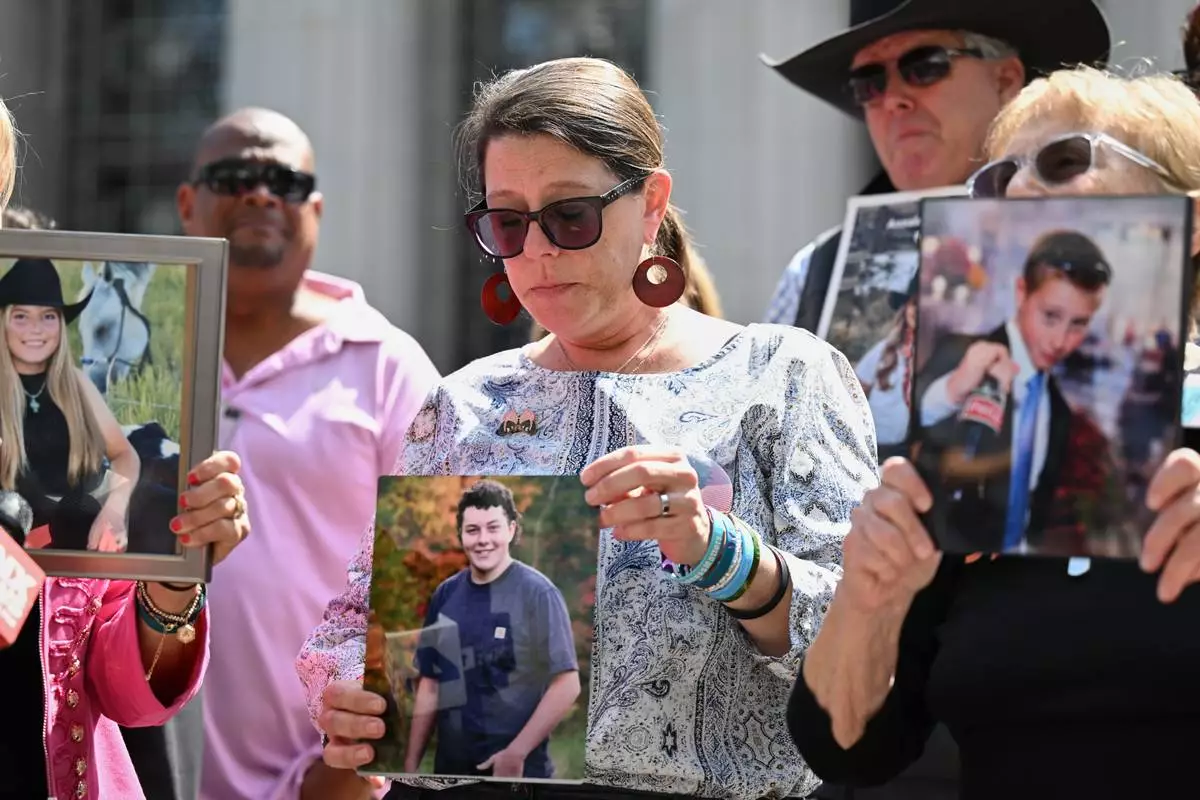
Mary Rodee holds a photo of her son Riley after the verdict in a landmark trial over whether social media platforms deliberately addict and harm children at Los Angeles Superior Court, Wednesday, March 25, 2026, in Los Angeles. (AP Photo/William Liang)

Mary Rodee holds a photo of her son Riley after the verdict in a landmark trial over whether social media platforms deliberately addict and harm children at Los Angeles Superior Court, Wednesday, March 25, 2026, in Los Angeles. (AP Photo/William Liang)

Recommended Articles