Dual jury verdicts this week have validated longstanding concerns about the dangers of social media for young people. But the U.S. lacks federal regulation that meaningfully addresses these harms.
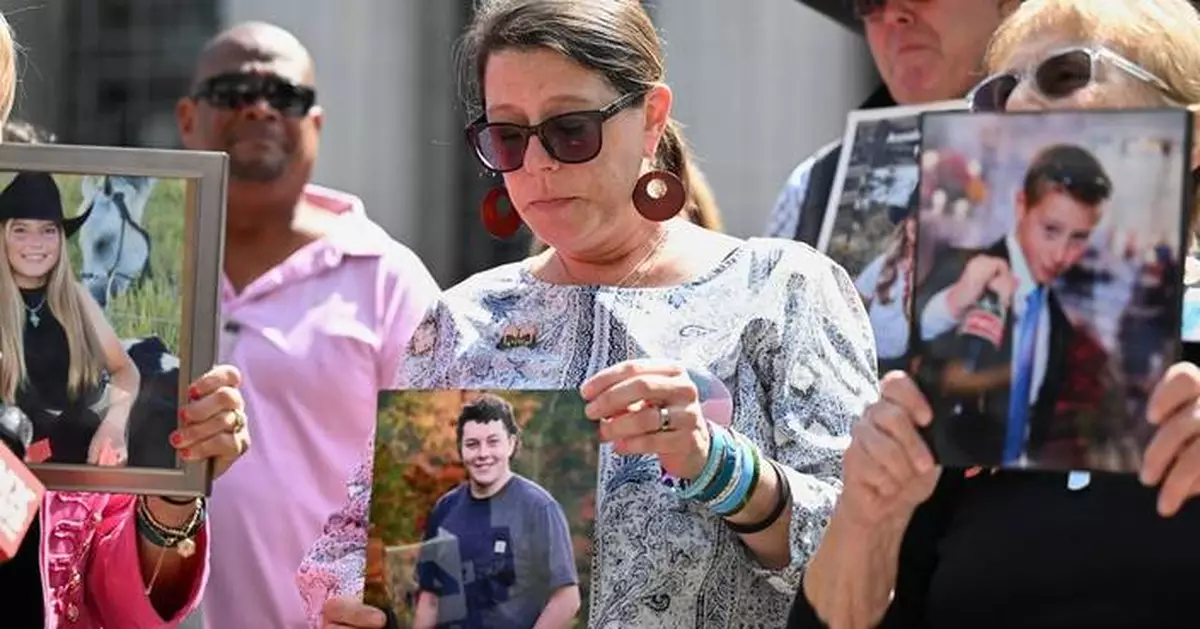
On Wednesday, a Los Angeles jury found both Meta and YouTube liable for harms to children using their services. A day earlier in New Mexico, a jury determined that Meta knowingly harmed children’s mental health and concealed what it knew about child sexual exploitation on its platforms.
Although parents and children's advocates cheered the decisions, they argue that without federal regulation to rein in the companies, platforms like Instagram, YouTube and TikTok are unlikely to implement any meaningful change. Many are pinning their hopes on the Kids Online Safety Act, a bill aimed at protecting kids from the harms of social media, gaming sites and other online platforms. It won Senate approval in 2024 but has lingered since.
Other countries, meanwhile, have implemented — or are planning — a bevy of restrictions on children's online activities, ranging from social media bans to requiring younger teens to link their accounts to a parent's. Here's a look at how countries outside the United States are regulating kids and technology.
In 2024, Australia became the first country to kick kids under 16 off social media. The law makes platforms — including TikTok, Facebook, Snapchat, Reddit, X and Instagram — liable for fines of up to 50 million Australian dollars ($34 million) if they fail to prevent children younger than 16 from holding accounts. While many parents have cheered the move, some experts have questioned the efficacy of their age estimation methods (the platforms are not required to ask users for government-issued IDs) and their effects on young people's free speech, social connections and privacy. Critics also fear that the ban will impact the privacy of all users who must prove they are older than 16.
A Brazilian law that seeks to shield minors from addictive, violent and pornographic online content took effect this month, with experts calling it a milestone in the protection of children and adolescents.
Under the new law, children under 16 are required to link their social media accounts to a legal guardian to ensure supervision. The legislation also prohibits platforms from using addictive features, such as infinite scroll and the automatic play of videos. Digital services are also required to implement an effective age verification mechanism that goes beyond self-declaration.
Following in Australia's footsteps Indonesia will ban social media for children under 16 beginning this month.
The regulation that will mean children under the age of 16 can no longer have accounts on “high-risk” digital platforms, including YouTube, TikTok, Facebook, Instagram, Threads, X, Bigo Live and Roblox.
The implementation will start gradually from March 28 until all platforms comply.
Indonesia will be the first country in Southeast Asia to restrict the access of children to social media.
Since January 2025, major social media and messaging platforms with at least 8 million users in Malaysia are required to obtain a license as part of a broader tightening of state oversight over digital platforms. Licensed platforms must implement age verification, content-safety measures and transparency rules, reflecting the government’s push for a safer digital space. The country also plans to ban kids under 16 from social media beginning this year.
Spain's prime minister, Pedro Sánchez, announced in February that the country plans to limit social media access for children under 16, in a move designed to shield young people from the harms of online content.
In January, France approved a bill banning social media for children under 15, paving the way for the measure to take effect at the start of the next school year in September. The bill would also ban the use of mobile phones in high schools. The French government had previously passed a law banning the use of phones in all primary and middle schools.
Denmark has introduced similar legislation to ban access to social media for users under 15, while the United Kingdom said last month it would consider banning young teenagers from social media, as it tightens laws designed to protect children from harmful content and excessive screen time.

FILE - A car passes Facebook's new Meta logo on a sign at the company headquarters on Oct. 28, 2021, in Menlo Park, Calif. (AP Photo/Tony Avelar, File)

Parents of children who they say were victims of social media platforms hug outside Los Superior Courthouse after to listening to closing arguments Thursday, March 12, 2026. (AP Photo/Damian Dovarganes) ADDITION: to clarify opinion.
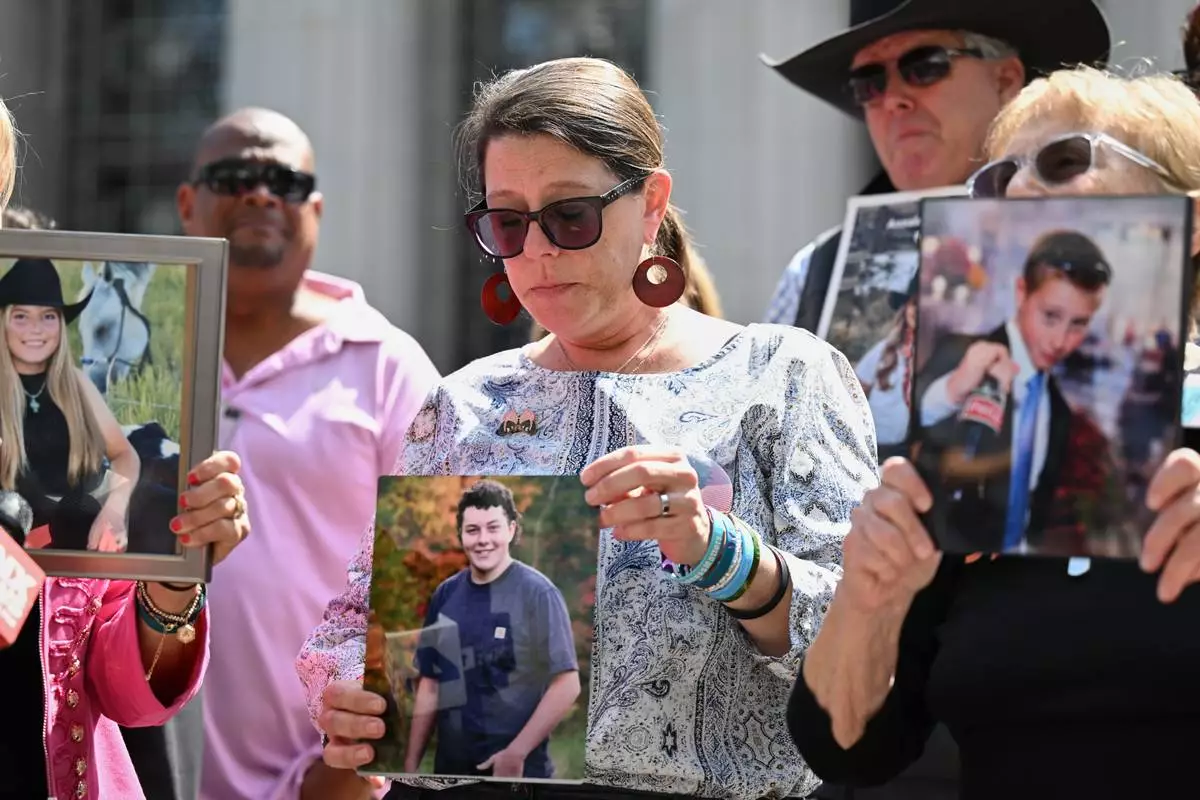
Mary Rodee holds a photo of her son Riley after the verdict in a landmark trial over whether social media platforms deliberately addict and harm children at Los Angeles Superior Court, Wednesday, March 25, 2026, in Los Angeles. (AP Photo/William Liang)
LOLA YA BONOBO, Congo (AP) — Micheline Nzonzi cradled a small and sleepy bonobo, an orphan whose life she will try to save over the next three years or so.
The 1-year-old's chances are good, with motherly affection, milk from a bottle and frequent play with other babies.
“Without me, without us, these bonobos cannot survive,” said Nzonzi, who has been a bonobo foster mother for 24 years. “They survive thanks to human affection.”
This primate nursery on the forested outskirts of the Congolese capital of Kinshasa is the world’s only sanctuary for orphaned bonobos, usually rescued from poachers or found trapped in the homes of locals who raise them for their meat.
Although great apes like the endangered bonobos are legally protected from hunters, they are still targeted to satisfy demand for bushmeat in areas far beyond the Congo Basin, an expansive rain forest that is sometimes called Earth’s second lung. The bushmeat trade ranges from rodents to antelopes, but a totemic ape like the bonobo may fetch a higher price.
“The bonobos are in danger. We are educating people to not kill the bonobos,” said Arsène Madimba, an educator with the Lola ya Bonobo sanctuary. “We can’t kill them, we can’t put them at home as pets, we can’t eat them. Because of poaching, we can find big trading of orphaned bonobos across the country.”
Bonobos raise their babies for four to five years. Their low reproductive cycle means they are vulnerable to environmental disturbances. To protect them and their habitat, Congolese authorities last year broached the idea of issuing “bonobo credits,” similar to carbon credits, to reward communities for preserving forests. The program is yet to take off.
“There is a cultural difference” between Congo and neighboring Uganda, where apes are not hunted for meat, said primatologist Gladys Kalema-Zikusoka, founder of the Uganda-based Conservation Through Public Health group. “In Congo, they believe that you can become as strong as (the primate eaten)."
There are dozens of grown bonobos at Lola ya Bonobo. Some have lived there since 2002, when this sanctuary opened under the sponsorship of a conservation nonprofit known by its French name of Les Amis des Bonobos du Congo.
The nursery also has 11 young bonobos, with the most recent arriving earlier this year. Each baby is paired with a foster mother who will look after it for years before it can be transferred to bonobo groups open to visitors.
On rare occasions, an animal at Lola ya Bonobo eventually returns to the wild, which can take years of preparation.
Bonobos share nearly 99% of their DNA with humans and, along with chimpanzees, are our closest living relatives.
In the 1980s, primatologists estimated about 100,000 bonobos were left in the wild. The number is now estimated at roughly 20,000, an astonishing decline. The bonobo is threatened primarily by the commercial bushmeat trade, according to the International Union for Conservation of Nature.
The bonobo’s natural habitat is an area of dense equatorial forest south of the Congo River. Bonobos are rarely studied in the wild, and much of what is known about them emerged from studies in foreign zoos and by foreign researchers drawn to a fascinating creature.
The bonobo was first identified as a possibly separate species in 1929, when German anatomist Ernst Schwarz noticed a difference in the skull of a specimen believed to be a grown chimpanzee with an unusually small head. Schwarz’s rival, an American zoologist named Harold Coolidge, later provided detailed descriptions that made it possible in 1933 to classify the bonobo as a separate species.
The bonobo is relatively well-known among Americans, due in part to its reputation as one of the most intelligent, peaceful and empathetic animals. They may even have a capacity for imagination, according to a study published in 2025 by Johns Hopkins University.
Bonobos are led by females and distinguished by their apparent lack of sexual jealousy. When two groups meet, females may switch sides without provoking a fight, unlike chimpanzees and gorillas. They may initiate casual mating, which happens so frequently, so intensely, and with such variety of style that bonobos are described as the “hippie apes.”
In Kinshasa, the trade in primate meat has gone underground. Traders need permits to hunt antelopes and other species, but trading in “les macaques” is prohibited in part to prevent the spread of zoonotic diseases such as Ebola.
“I used to sell monkeys before, but now we cannot sell monkeys, any type of monkeys,” said Charles Ntanga, a vendor at Masina market.
Ntanga wielded a flywhisk to swat flies that settled on the rancid carcass of a giant rodent before him, with a kilogram going for about $17. Guyva Mputu, the vendor next to him, was selling python, whose frozen flesh started to steam in the humid weather.
Baby bonobos captured by poachers are used to lure grown bonobos, which are shot when they come to investigate the noise, said Madimba of Lola ya Bonobo.
Orphaned bonobos build bonds with their caregivers, who often can identify each by name, said zookeeper Frank Lutete, whose role is to feed the animals. He paddled across the water to distribute papaya as the bonobos made a racket, coming down trees to collect his offerings.
Some bonobos thank him, he said, tapping their chests in a gesture of gratitude.
For more on Africa and development: https://apnews.com/hub/africa-pulse
The Associated Press receives financial support for global health and development coverage in Africa from the Gates Foundation. The AP is solely responsible for all content. Find AP’s standards for working with philanthropies, a list of supporters and funded coverage areas at AP.org.
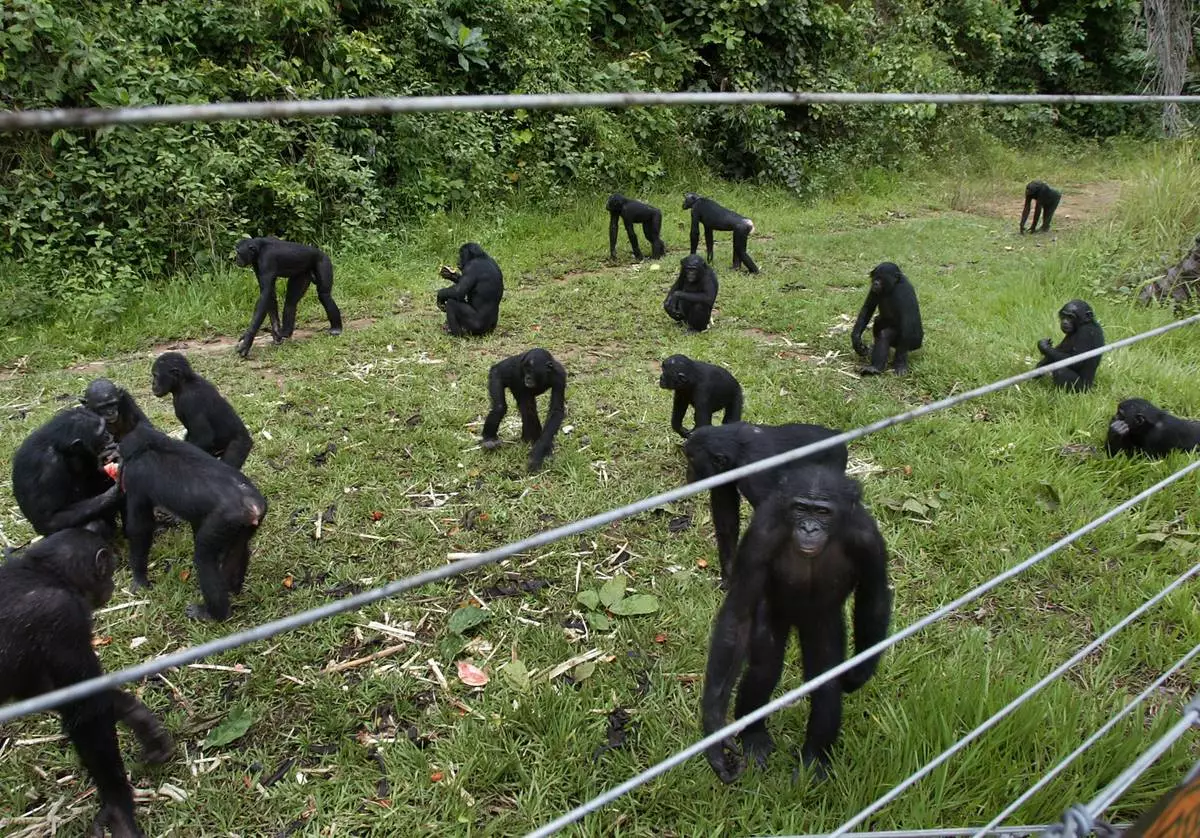
FILE - A group of Bonobo stand around behind an electric fence at the Lola Ya Bonobo Sanctuary outside of Kinshasa, Democratic Republic of Congo on April 30, 2005. (AP Photo/Schalk van Zuydam, File)