Skip to Content Facebook Feature Image

Price shocks from the Iran war power solar sales in energy-hungry Asia

News

Price shocks from the Iran war power solar sales in energy-hungry Asia
News

News

Price shocks from the Iran war power solar sales in energy-hungry Asia

2026-05-13 13:52 Last Updated At:14:00

MANILA, Philippines (AP) — Soaring costs for fuel due to the Iran war are leading panicked consumers in hard-hit Asia toward rooftop solar power, a likely windfall for China as the world's largest provider of solar technology.

In the Philippines, which is in a national energy emergency, a survey of 20 local solar companies found a 70% increase in weekly installations and a six-fold jump in customer inquirers since the conflict began.

More Images
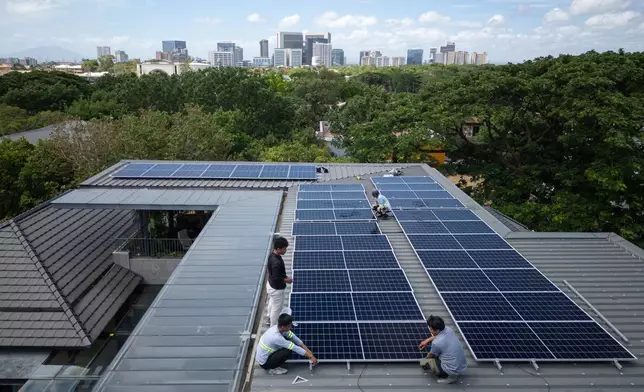
A team of solar installers set up a new rooftop solar system at a home in Manila, Philippines, on May 1, 2026. (AP Photo/Anton L. Delgado)
A team of solar installers set up a new rooftop solar system at a home in Manila, Philippines, on May 1, 2026. (AP Photo/Anton L. Delgado)

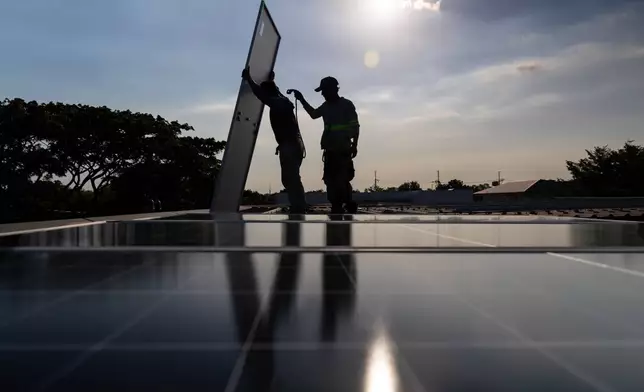
A pair of solar installers haul a solar panel onto the roof of a home in Manila, Philippines, on April 30, 2026. (AP Photo/Anton L. Delgado)
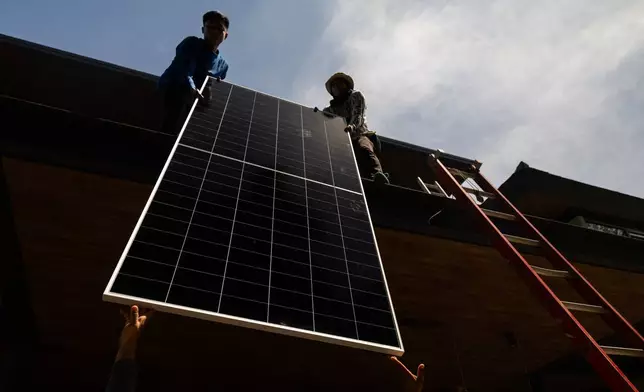
A pair of solar installers haul a solar panel onto the roof of a home in Manila, Philippines, on April 30, 2026. (AP Photo/Anton L. Delgado)
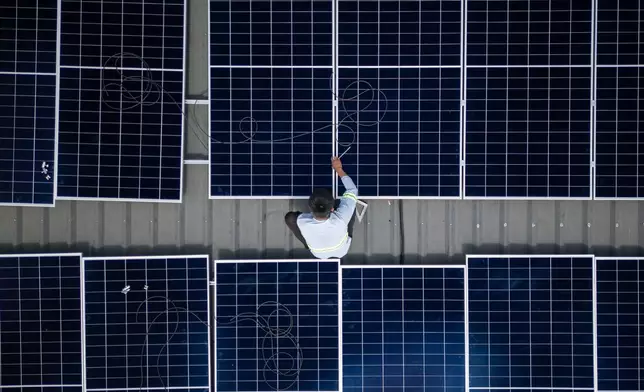
A team of solar installers haul a solar panel onto the roof of a home in Manila, Philippines, on April 30, 2026. (AP Photo/Anton L. Delgado)

A team of solar installers haul a solar panel onto the roof of a home in Manila, Philippines, on April 30, 2026. (AP Photo/Anton L. Delgado)

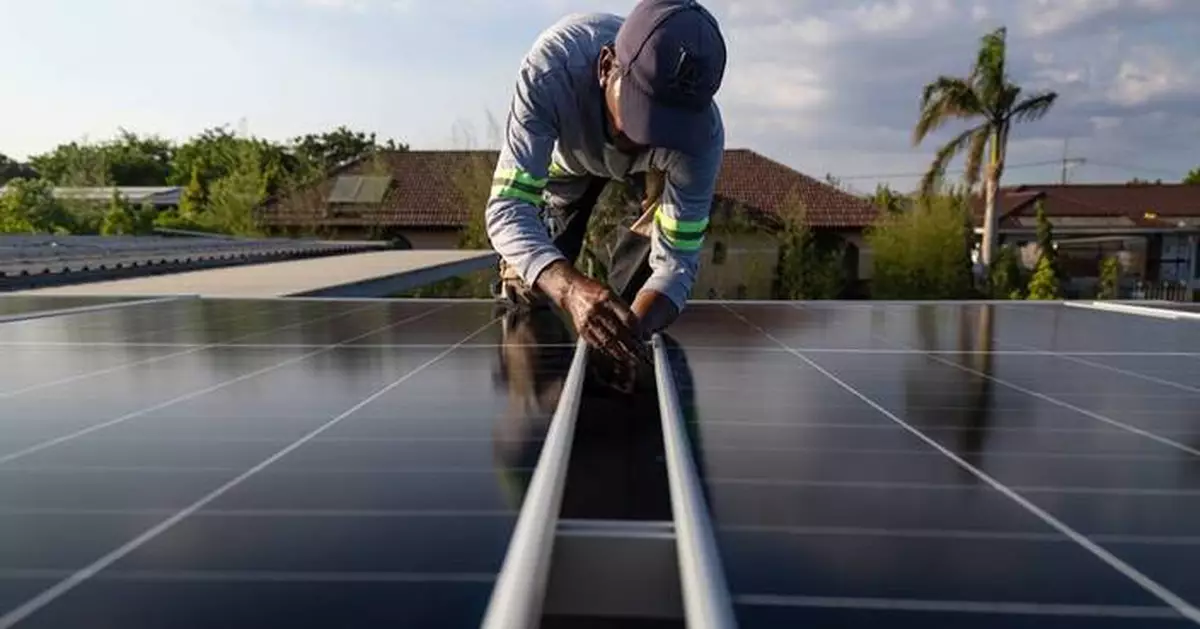
A solar installer secures a solar panel onto the roof of a home in Manila, Philippines, on May 1, 2026. (AP Photo/Anton L. Delgado)
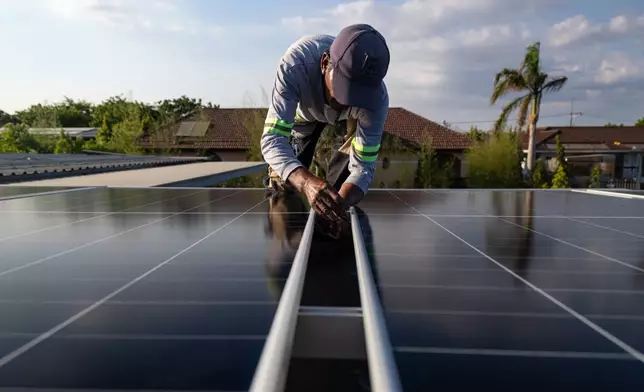
A solar installer secures a solar panel onto the roof of a home in Manila, Philippines, on May 1, 2026. (AP Photo/Anton L. Delgado)

A solar installer secures a solar panel onto the roof of a home in Manila, Philippines, on April 30, 2026. (AP Photo/Anton L. Delgado)

A solar installer secures a solar panel onto the roof of a home in Manila, Philippines, on April 30, 2026. (AP Photo/Anton L. Delgado)

“This crisis is a driving force for solar,” said Brenda Valerio of the nonprofit New Energy Nexus, which ran the survey. “People want solar and people want solar now.”

China is poised to profit from demand caused by the war. Chinese clean technology equipment exports hit a record high in March, according to energy think tank Ember, and worldwide interest in solar is increasing.

“China really is, by far, leading this race,” said Li Shuo, director of the Asia Society Policy Institute’s China Climate Hub, who called the renewable industry “a one-man show.”

The Philippines, which relies heavily on Middle Eastern crude oil and liquefied natural gas, is among the most impacted Southeast Asian nations by the closure of the Strait of Hormuz.

Local airlines are weighing fuel rationing. Public transport workers are receiving cash handouts. Gas and diesel prices also have shot up. To conserve energy, government offices have shifted to a four-day work week and been told to keep air conditioning no lower than 24 degrees Celsius (75 degrees Fahrenheit).

Oil and gas spikes during the first 60 days of the Iran war cost Filipino consumers, businesses and public institutions more than $600 million, the climate nonprofit 350.org estimates.

“When we got our energy bill after the Iran war broke out, we were very shocked. It was wow. It was a significant increase,” said Jaime Quemado, who recently bought a rooftop solar system in Manila.

There also have been growing concerns about potential power outages, Quemado said, which led him to look for an alternative energy source like “solar, which is very abundant here in the Philippines.”

Customer interest in rooftop solar jumped from around 115 inquiries in February, before the start of the Iran war on Feb. 28, to more than 450 by mid-April, according to the New Energy Nexus survey.

Solar groups must “ride this wave and take advantage of this momentum,” Valerio said.

On two blisteringly hot days in Manila, EcoSolutions installers sweated through the set up of an 18-kilowatt rooftop solar system, which included 28 panels from major Chinese manufacturer LONGi and four batteries from Suzhou-based battery group Dyness.

The war has “helped the solar industry really get its footing,” EcoSolutions president Richmond Reyes said.

Joel Remegio of the Association of Solar Installers of the Philippines said the energy crisis is a “game changer” for the nation's nascent solar industry.

Clean technology, like rooftop solar, is quickly scalable because it is “accessible to all of us,” according to Marissa Cerezo of the Department of Energy’s Renewable Energy Management Bureau.

This “gives us the power to choose them,” she said.

Solar is being embraced across Southeast Asia.

Indonesia set an ambitious target to install 100 gigawatts of rooftop solar by 2034, a leap from its current 1.3 gigawatts. Vietnam wants to install rooftop solar on at least 10% of public offices and homes nationwide by 2030. Thailand is considering new policies to give rooftop solar users a bigger bang for their buck by increasing the amount of surplus energy the national grid can buy.

The energy crisis is incentivizing these decisions, according to Yu Sun Chin of the research group Zero Carbon Analytics.

“It totally makes sense for policymakers to take another look at rooftop solar and see ways that they can save costs,” she said.

Online marketplaces and utility companies in the U.S. and across Europe also have recorded jumps in solar sales and inquiries since the Iran war began.

“Solar is definitely one of the easiest things people can do” to cut monthly electricity bills, said Jan Rosenow, a professor of energy and climate policy at Oxford University.

The availability and affordability of rooftop solar make it the easiest clean technology solution given the higher expense for buying an electric vehicle or installing a heat pump, Rosenow said.

Ember, the energy think tank, noted China exported 68 gigawatts worth of clean technology products in March, equivalent to Spain’s entire solar capacity and double its February output. The Iran war is accelerating the world’s energy transition, Ember found.

Exports to Africa hit 10 gigawatts, a 176% jump from February, with rapid growth in Nigeria, Kenya and Ethiopia. Exports to other Asian nations doubled to 39 gigawatts, including major increases to India, Malaysia and Laos.

Ramnath Iyer of the U.S.-based Institute for Energy Economics and Financial Analysis said the speed of the transition depends on if world leaders “decide to go ahead with electrification and move away from fossil fuels.”

Li of the China Climate Hub said Chinese companies had an oversupply of solar panels and other equipment before the war, putting them in a prime position to capitalize on current demand.

“When it comes to the clean tech sector, China at this point in time is already so far ahead,” Li said. “The current situation in Iran will help China cement its dominance.”

The Associated Press’ climate and environmental coverage receives financial support from multiple private foundations. The AP is solely responsible for all content. Find the AP’s standards for working with philanthropies, a list of supporters and funded coverage areas at AP.org.
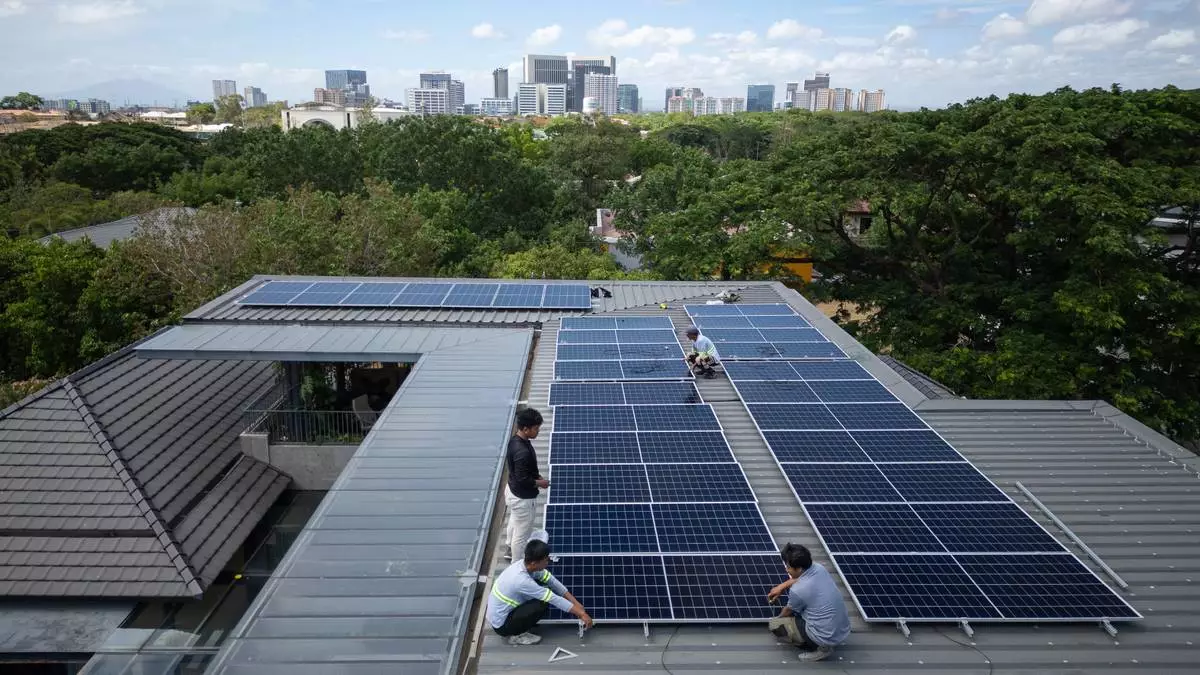
A team of solar installers set up a new rooftop solar system at a home in Manila, Philippines, on May 1, 2026. (AP Photo/Anton L. Delgado)
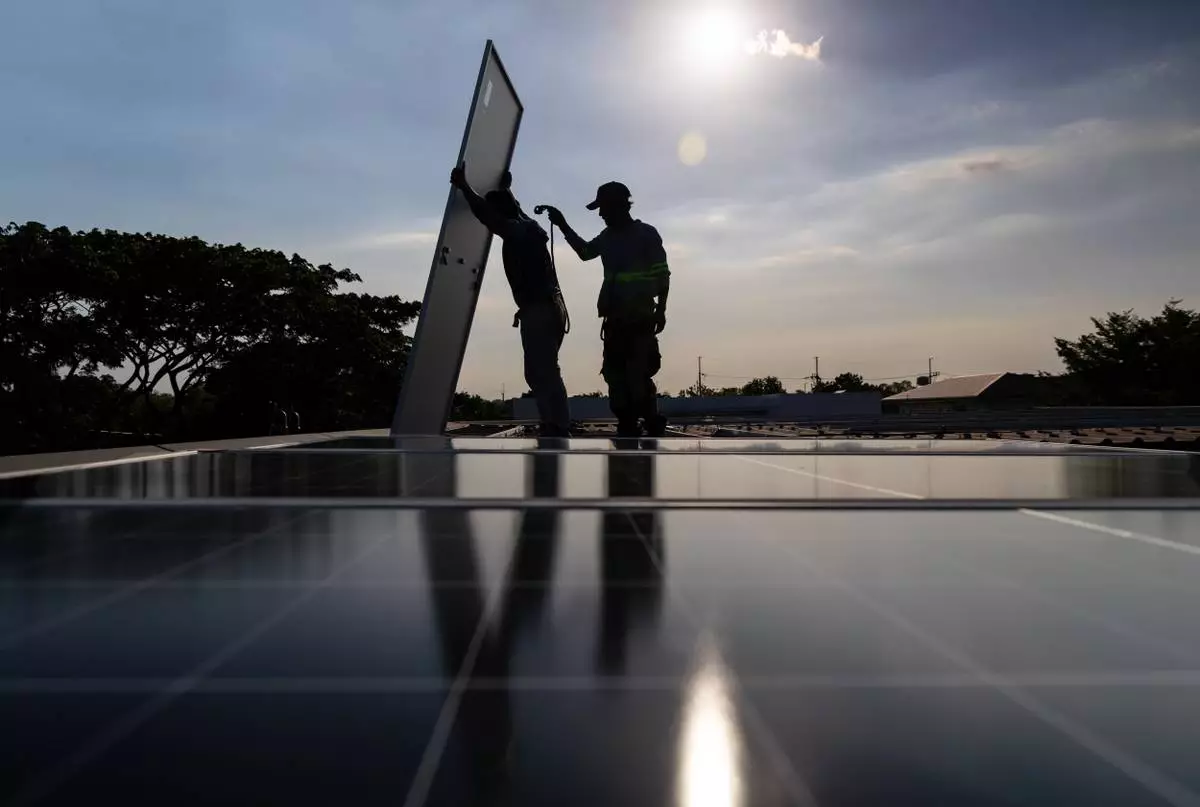
A team of solar installers set up a new rooftop solar system at a home in Manila, Philippines, on May 1, 2026. (AP Photo/Anton L. Delgado)

A pair of solar installers haul a solar panel onto the roof of a home in Manila, Philippines, on April 30, 2026. (AP Photo/Anton L. Delgado)
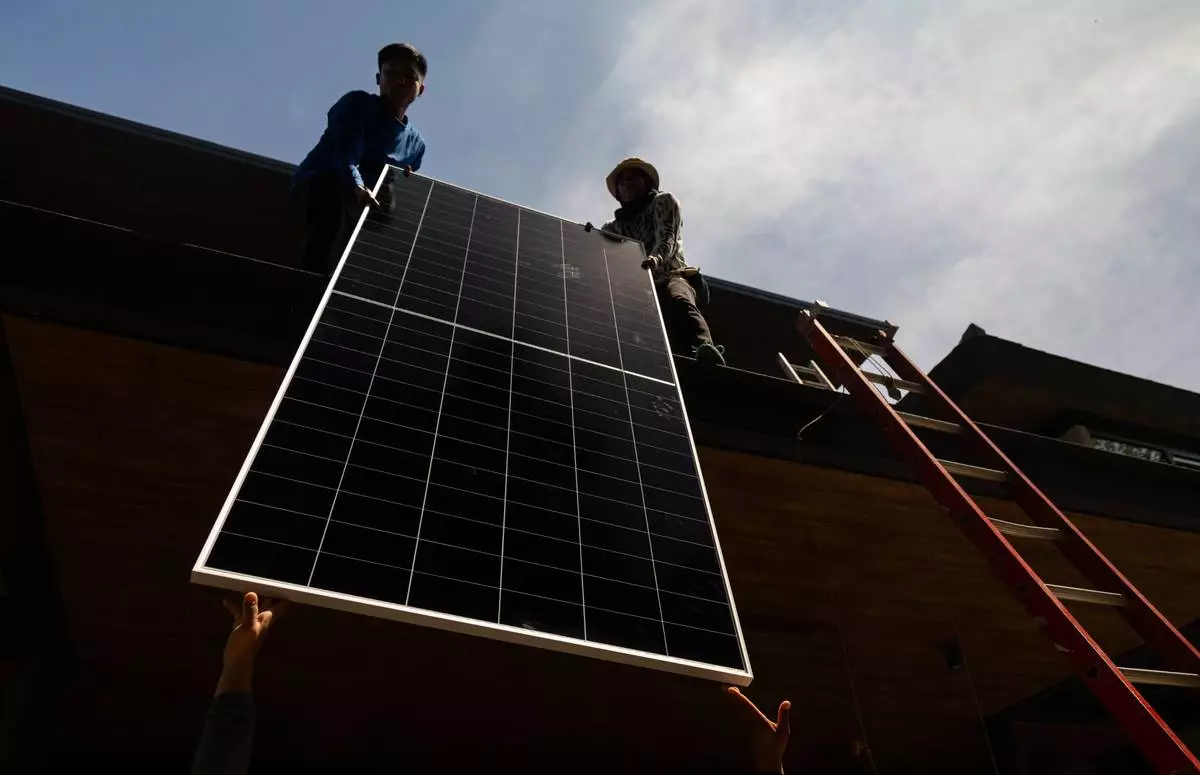
A pair of solar installers haul a solar panel onto the roof of a home in Manila, Philippines, on April 30, 2026. (AP Photo/Anton L. Delgado)
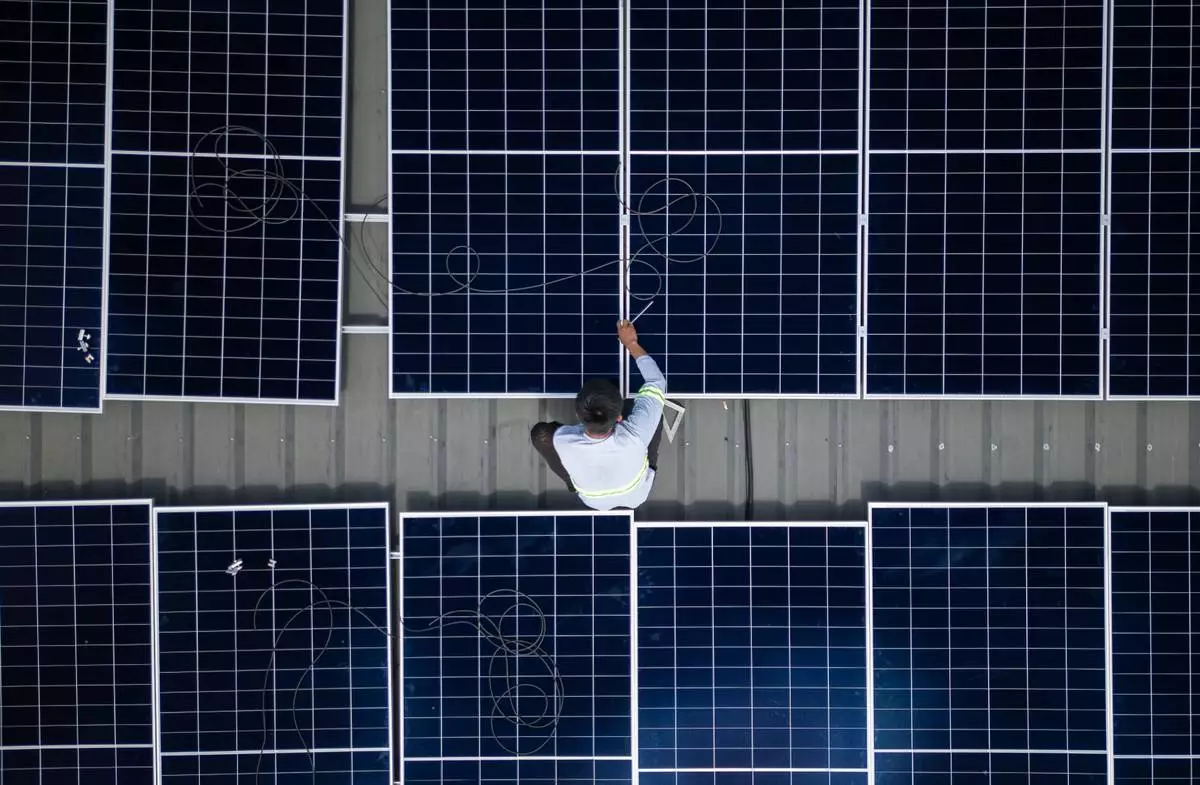
A team of solar installers haul a solar panel onto the roof of a home in Manila, Philippines, on April 30, 2026. (AP Photo/Anton L. Delgado)

A team of solar installers haul a solar panel onto the roof of a home in Manila, Philippines, on April 30, 2026. (AP Photo/Anton L. Delgado)

A solar installer secures a solar panel onto the roof of a home in Manila, Philippines, on May 1, 2026. (AP Photo/Anton L. Delgado)
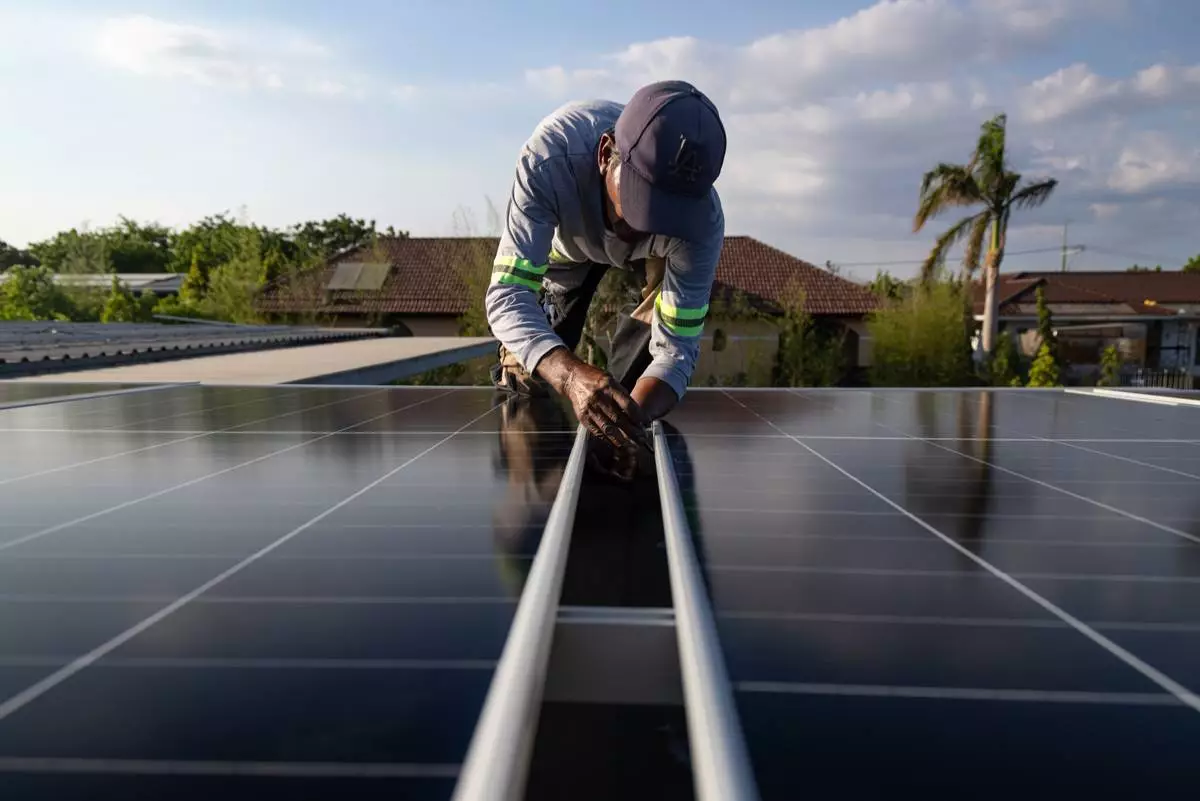
A solar installer secures a solar panel onto the roof of a home in Manila, Philippines, on May 1, 2026. (AP Photo/Anton L. Delgado)

A solar installer secures a solar panel onto the roof of a home in Manila, Philippines, on April 30, 2026. (AP Photo/Anton L. Delgado)


A solar installer secures a solar panel onto the roof of a home in Manila, Philippines, on April 30, 2026. (AP Photo/Anton L. Delgado)

LOS ANGELES (AP) — Shohei Ohtani is getting a break from the batter's box for two days.

The struggling Los Angeles Dodgers superstar hit just his second home run in his last 24 games — an opposite field solo shot to left-center in a 6-2 loss to the San Francisco Giants on Tuesday night. It ended an 11-game homerless streak, which tied his longest as a Dodger.

Ohtani looked skyward as he crossed the plate.

“Relief, he smiled, he laughed,” manager Dave Roberts said. “He's going to feel good about the offensive side tonight to then refocus for tomorrow to pitch and now he's got something to build on come Friday.”

Ohtani finished the game going 2 for 4 with two runs, an RBI and a walk. The rest of the team was 2 for 25 with four walks. He has seven home runs on the season and is batting .240.

“I thought tonight was a really good night,” Roberts said. “He can hopefully take that momentum from tonight and then be building on that through Anaheim and San Diego.”

Roberts said after the game that Ohtani won't be in the lineup as the designated hitter Wednesday when he also starts against the Giants. Earlier, Roberts said he was giving Ohtani a day from hitting Thursday, although he would be available late if the outcome hangs in the balance.

“It might just be a good thing to take a little bit of a load off of his plate offensively,” Roberts said before the game. “I just can’t take for granted what’s on his plate and so I’m trying to be sensitive.”

As Ohtani goes, so have the Dodgers (24-18). They remained a half-game behind NL West-leading San Diego despite their fourth loss in a row. Andy Pages (.318 average) and Max Muncy (.272) have been LA's best hitters so far, while the rest of the lineup is struggling, including Freddie Freeman (.276) and Kyle Tucker (.253).

“When your best player is doing what he's capable of doing, it just adds that energy into the dugout, frees guys up a little bit to do something too,” Roberts said. “When he's doing well, he's slugging, so those are runs.”

Ohtani is in his first full season as a two-way player for the Dodgers. Coming off two major right elbow surgeries, he was limited to the DH role in 2024, when he created the 50/50 club, with 54 home runs and 59 stolen bases, was named NL MVP and the Dodgers won the World Series.

Last year, Ohtani didn't return to the mound until midseason. He wasn't built up to pitching six innings until September and offensively, he hit 55 home runs and had 20 stolen bases. He repeated as NL MVP and the Dodgers won the World Series again.

This season, he has had no innings restrictions on the mound, where he's been dominant. The right-hander is 2-2 with a 0.97 ERA to go with 42 strikeouts and 37 innings pitched over six starts. He's allowed just four earned runs and 21 hits.

“He's still calibrating on this kind of newfound two-way player,” Roberts said.

Roberts has said Ohtani is willing to do whatever the team needs, but at the same time, the manager knows the team's most valuable asset needs to be protected from himself.

“He’s always going to want to do more,” Roberts said. “He has that sense of responsibility to his teammates that he wants to be out there on both ways. I've learned that I have to be proactive and take it out of his hands.”

Roberts has seen enough to decide that taking the bat out of Ohtani's hands might help him reset.

“When the quality of at-bats starts to go down consistently, I think that’s a sign that there needs to be a break because you’re just not able to stay within your game plan and then the chase starts to spike,” he said. “The fatigue is bleeding into the mechanics. Most players get that towards the end of the summer. Now I'm learning managing Shohei it’s probably showing itself a little earlier as far as the tax on pitching and all that comes with it to the hitting, too.”

Ohtani isn't used to not hitting; he's had just three games so far this season in which he wasn't the DH. Roberts suggested he show up late on Thursday.

The Dodgers knew in spring training that having Ohtani return to being a full-time two-way player for the first time since 2023 with the Los Angeles Angels would be challenging.

“It definitely feels sustainable,” Roberts said. “I wouldn’t say it’s more difficult. I think that we all came in knowing that we had to read and react, it was going to be fluid. It should be. It’s very unique.”

AP MLB: https://apnews.com/MLB

Los Angeles Dodgers designated hitter Shohei Ohtani leans back to avoid getting hit with the ball while at bat during the first inning of a baseball game against the Atlanta Braves, Saturday, May 9, 2026, in Los Angeles. (AP Photo/Caroline Brehman)

Los Angeles Dodgers designated hitter Shohei Ohtani leans back to avoid getting hit with the ball while at bat during the first inning of a baseball game against the Atlanta Braves, Saturday, May 9, 2026, in Los Angeles. (AP Photo/Caroline Brehman)

Los Angeles Dodgers' Shohei Ohtani walks back to the dugout after striking out during the fifth inning of a baseball game against the San Francisco Giants in Los Angeles, Monday, May 11, 2026. (AP Photo/Kyusung Gong)

Los Angeles Dodgers' Shohei Ohtani walks back to the dugout after striking out during the fifth inning of a baseball game against the San Francisco Giants in Los Angeles, Monday, May 11, 2026. (AP Photo/Kyusung Gong)

Los Angeles Dodgers' Shohei Ohtani walks back to the dugout after striking out during the ninth inning of a baseball game against the San Francisco Giants in Los Angeles, Monday, May 11, 2026. (AP Photo/Kyusung Gong)

Los Angeles Dodgers' Shohei Ohtani walks back to the dugout after striking out during the ninth inning of a baseball game against the San Francisco Giants in Los Angeles, Monday, May 11, 2026. (AP Photo/Kyusung Gong)

Recommended Articles