OMAHA, Neb. (AP) — The Democratic primary for a key U.S. House seat in Nebraska was too early to call late Tuesday, as two candidates were separated by a narrow margin in a contest that could decide the fate of the state's “blue dot" — a small, but significant factor in presidential politics.
Political activist Denise Powell had a lead of about 2 percentage points over state Sen. John Cavanaugh, out of more than 51,000 votes counted.
Click to Gallery
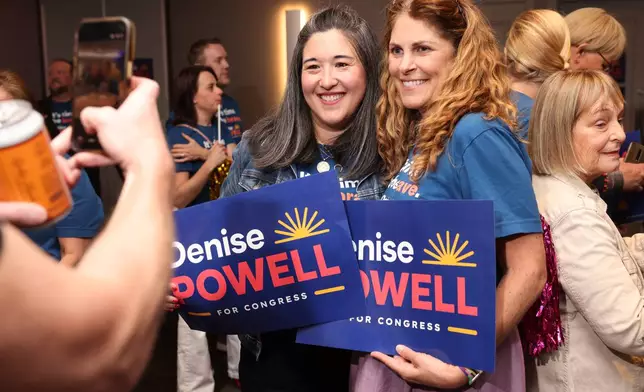
Supporters Shannon Gilroy, left, and Emily Moody pose for a photo during an election night watch party for Denise Powell, candidate for the Democratic nomination to the House of Representatives in Nebraska's second district, Tuesday, May 12, 2026, in Omaha, Neb. (AP Photo/Rebecca S. Gratz)
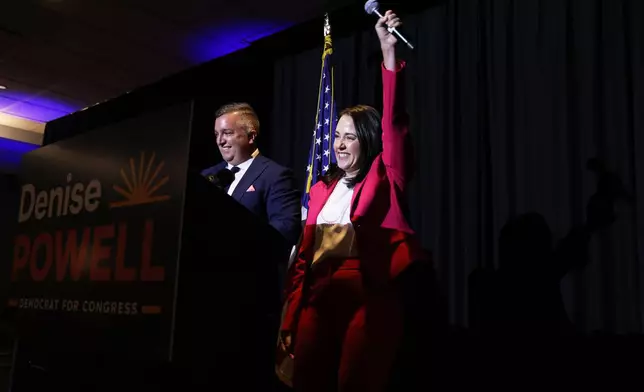
Denise Powell, right, candidate for the Democratic nomination to the House of Representatives in Nebraska's second district, cheers during an election night watch party Tuesday, May 12, 2026, in Omaha, Neb. (AP Photo/Rebecca S. Gratz)
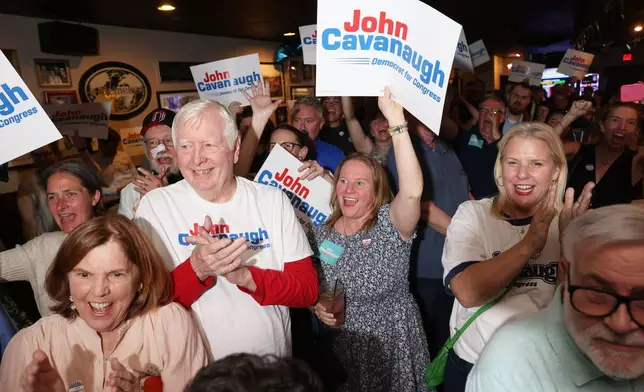
From front left, parents Kate and John Cavanaugh, sister-in-law Audra Cavanaugh and friend Michelle Sullivan cheer for State Sen. John Cavanaugh, candidate for the Democratic nomination to the House of Representatives in Nebraska's second district, during an election night watch party Tuesday, May 12, 2026, in Omaha, Neb. (AP Photo/Rebecca S. Gratz) ADDS NAMES
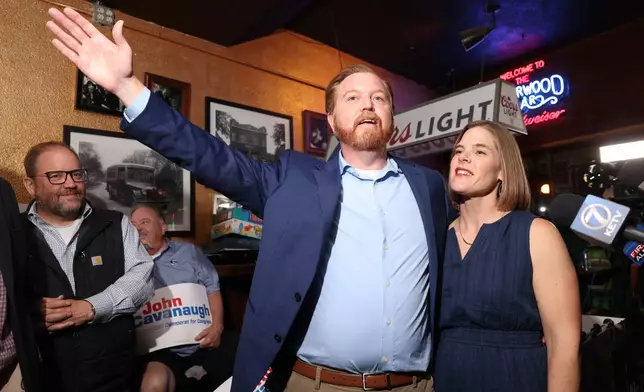
State Sen. John Cavanaugh, candidate for the Democratic nomination to the House of Representatives in Nebraska's second district, left, stands with his wife, Kakie McGill, during an election night watch party Tuesday, May 12, 2026, in Omaha, Neb. (AP Photo/Rebecca S. Gratz)
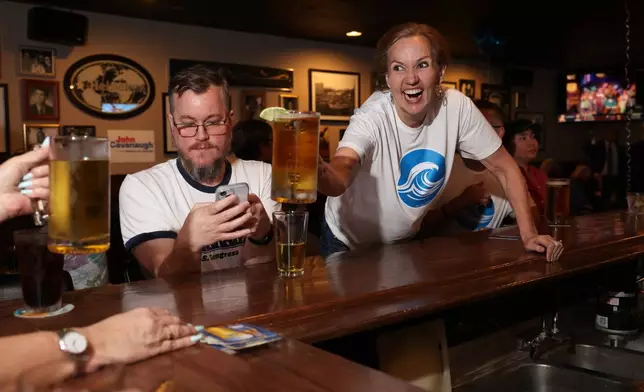
Ruth Hiebner-Brown, right, toasts a fellow supporter as election results are tallied during an election night watch party for State Sen. John Cavanaugh, candidate for the Democratic nomination to the House of Representatives in Nebraska's second district, Tuesday, May 12, 2026, in Omaha, Neb. (AP Photo/Rebecca S. Gratz)
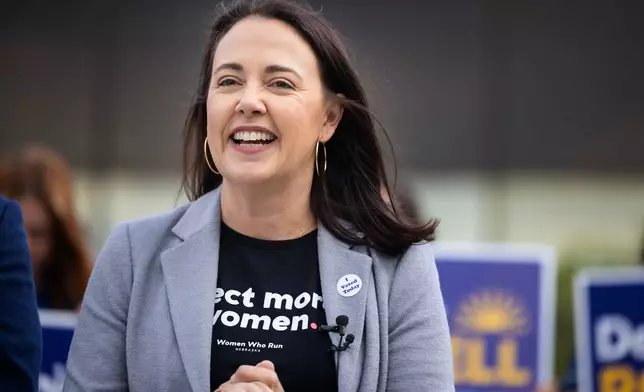
Denise Powell, candidate for the Democratic nomination to the House of Representatives in Nebraska's second district, speaks to the media after casting her ballot in the Nebraska Primary Election at Omaha Community Playhouse Tuesday, May 12, 2026, in Omaha, Neb. (AP Photo/Rebecca S. Gratz)
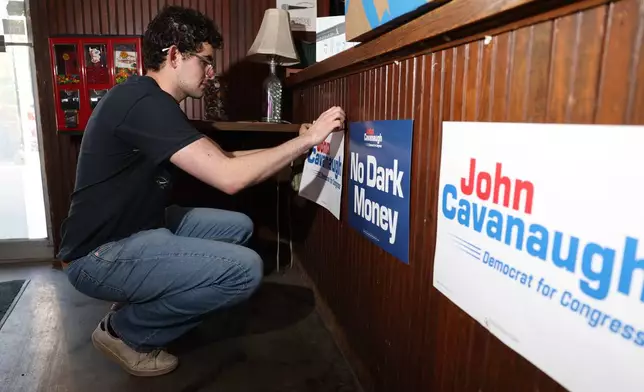
Gabe Kaplan, deputy finance director for State Sen. John Cavanaugh's campaign, posts signs in Underwood Bar ahead the election night watch party for the Democratic nomination to the House of Representatives in Nebraska's second district, Tuesday, May 12, 2026, in Omaha, Neb. (AP Photo/Rebecca S. Gratz)
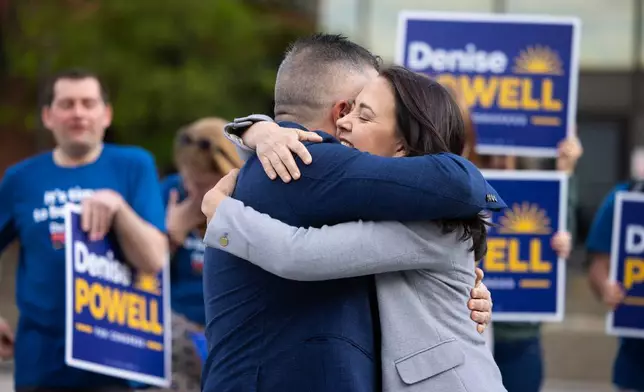
Denise Powell hugs her husband, Hobson, after voting in the Nebraska Primary Election at Omaha Community Playhouse Tuesday, May 12, 2026, in Omaha, Neb. Powell is a candidate for the Democratic nomination to the House of Representatives in Nebraska's second district. (AP Photo/Rebecca S. Gratz)
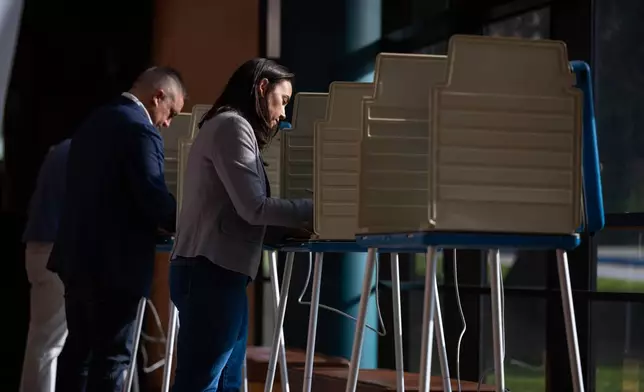
Denise Powell, candidate for the Democratic nomination to the House of Representatives in Nebraska's second district, votes in the Nebraska Primary Election at Omaha Community Playhouse Tuesday, May 12, 2026, in Omaha, Neb. (AP Photo/Rebecca S. Gratz)
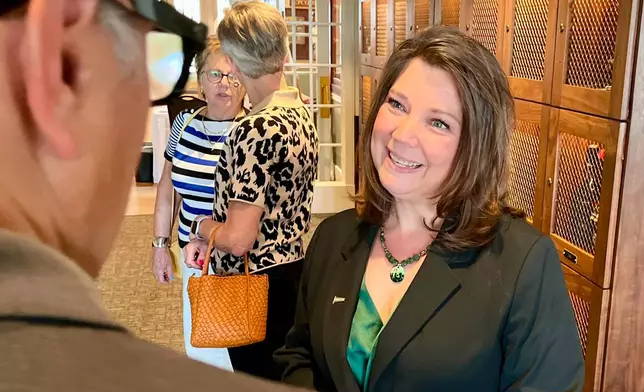
District county clerk Crystal Rhoades speaks at a fundraising event Thursday, April 16, 2026, in Omaha, Neb. (AP Photo/Margery A. Beck)
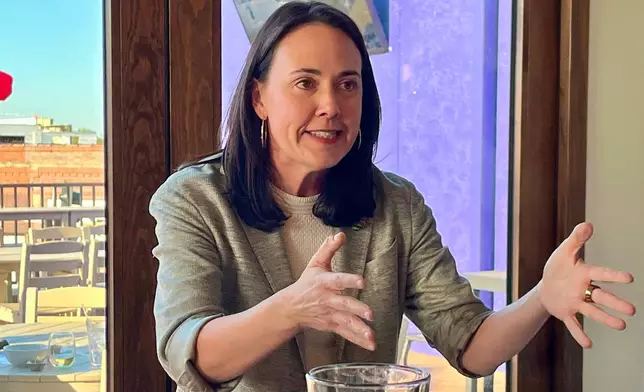
Political activist Denise Powell speaks at a fundraising event Thursday, April 16, 2026, in Omaha, Neb. (AP Photo/Margery A. Beck)
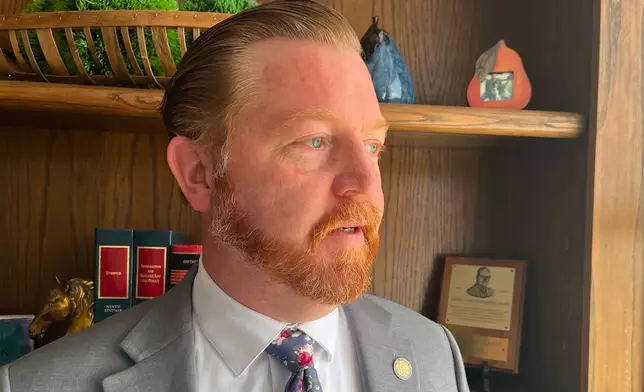
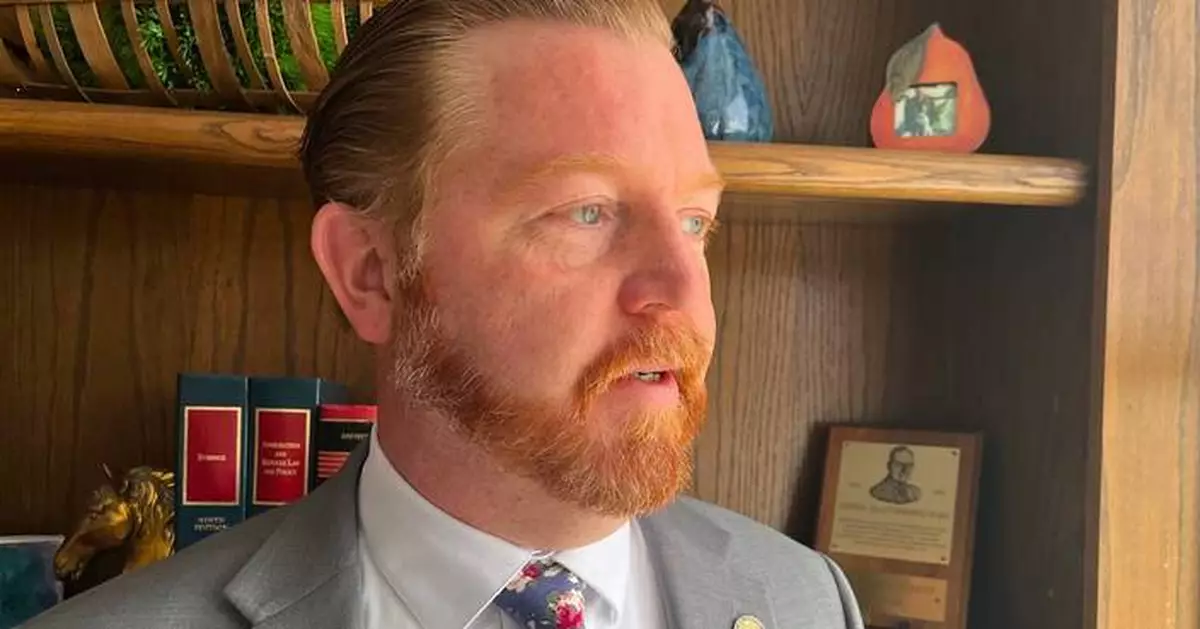
State Sen. John Cavanaugh speaks at an office in Lincoln, Neb., Friday, April 10, 2026. (AP Photo/Margery A. Beck)
Douglas County, which accounts for more than 90% of the district, has a history of counting a significant number of votes after election day, and county officials were unable to provide an estimate of the number of outstanding ballots late Tuesday. The county expects to provide additional information about outstanding ballots on Wednesday afternoon.
The winner of the Democratic primary will face Republican Brinkner Harding, who was endorsed by President Donald Trump, in what will be one of the Democrats' top targets in the November general election. The seat has been held for much of the last decade by U.S. Rep. Don Bacon, a Republican who is retiring.
"Hopefully, we wake up tomorrow morning to some good news," Powell said at her election night party. “I think people are ready for that fired up mom. I think that they’re looking for change, and hopefully they see me as the person to help Nebraska to bring it."
The district draws national attention because Nebraska is one of just two states that splits its electoral votes in presidential elections. The 2nd District has gone to Democratic presidential candidates three out of five times since 2008 — a “blue dot” in an otherwise sea of red.
Some Democrats contended that the very survival of the “blue dot,” a point of intense local pride, was at stake on Tuesday.
Powell's supporters argued that a Cavanaugh primary victory would jeopardize the district's special status because he'd be leaving his valuable state legislative seat, making it easier for Republicans in the Nebraska Legislature to change the law that allows the state to split its electoral votes.
The issue has defined the primary contest, where the leading candidates have much in common ideologically, perhaps more than any other.
Outside an Omaha polling place, Beth Pepitone said she voted for Powell because she wanted someone who would stand up to Trump.
“I just think we’re going in the wrong direction and it’s very sad,” said Pepitone. “I want to preserve the ‘blue dot.’”
A key Senate contest also got clarity on Tuesday night, as U.S. Sen. Pete Ricketts easily won the GOP primary in his bid to seek his first full term. Ricketts was appointed to replace former Sen. Ben Sasse in 2023 and then won a 2024 special election.
Ricketts' real test will come in the November general election against independent candidate Dan Osborn, an industrial mechanic and military veteran who came within 7 points of defeating Republican U.S. Sen. Deb Fischer in her 2024 reelection bid.
Democrats are not expected to promote their own competitor in the general election, even after Cindy Burbank won the party's primary. Burbank has said she plans to drop out of the race and rally behind Osborn as part of her party's broader strategy to defeat Ricketts this fall. On her website, Burbank says Osborn “deserves a fair shot against Ricketts.”
The Nebraska Democratic Party said it would support the independent Osborn for the general election as well.
Meanwhile, in the race for governor, incumbent Republican Gov. Jim Pillen won his party’s primary, while former state Sen. Lynne Walz won the Democratic nomination.
In the 2nd District, the Democratic argument against Cavanaugh has little to do with his politics or policies.
His opponents and groups backing them have flooded mailboxes, airwaves and social media warning that if he wins the congressional primary, Nebraska's Republican governor would appoint a conservative Republican to replace him in the Legislature.
That move, they say, could give state Republicans enough votes to enact a conservative wish list that includes stricter limitations on abortion and transgender rights.
It could also empower Republicans to enact midcycle redistricting or change the state's unusual system of splitting presidential electoral votes, some Democrats argue. Republicans failed in 2024 to pass a bill that would have made Nebraska the 49th state to award its Electoral College votes on a winner-take-all basis.
“Our Blue Dot. We fought hard for it. But if John Cavanaugh goes to Congress, it could all fall down,” cautions one TV ad by the super PAC New Democrat Majority.
EMILY’s List, a national group that supports women running for office, has put its reach and money behind Powell, calling Cavanaugh’s candidacy “a gift to MAGA Republicans.”
While all the Democratic contenders cite affordability and opposition to Trump administration policies — from immigration and healthcare to military actions — the top contenders began attacking one another more aggressively in the days leading up to the primary.
Powell, who is Latina, co-founded Women Who Run Nebraska, a political action committee that supports progressive female candidates, and she has a decade of Democratic political activism. She's never held office but said her deep connections have helped her with independents and third-party voters who make up nearly 30% of the district's electorate.
Cavanaugh talked up his support for labor unions, specifically the Teamsters, as he addressed supporters Tuesday night.
“This campaign is fueled by working people,” he said. “We stand in solidarity with those working people.”
The winner of Tuesday's primary will head to a highly competitive general election.
Trump won the district in 2016, and the retiring Bacon, who has clashed with Trump, has held the House seat for five terms.
At an Omaha polling place, independent Hayden Kephart said her biggest concern is inflation.
“Obviously the price of everything has really gone up,” she said. “And the price of oil can be a factor in everyday life and travel plans.”
Peoples reported from New York. Josh Funk in Omaha, Nebraska, contributed to this report.
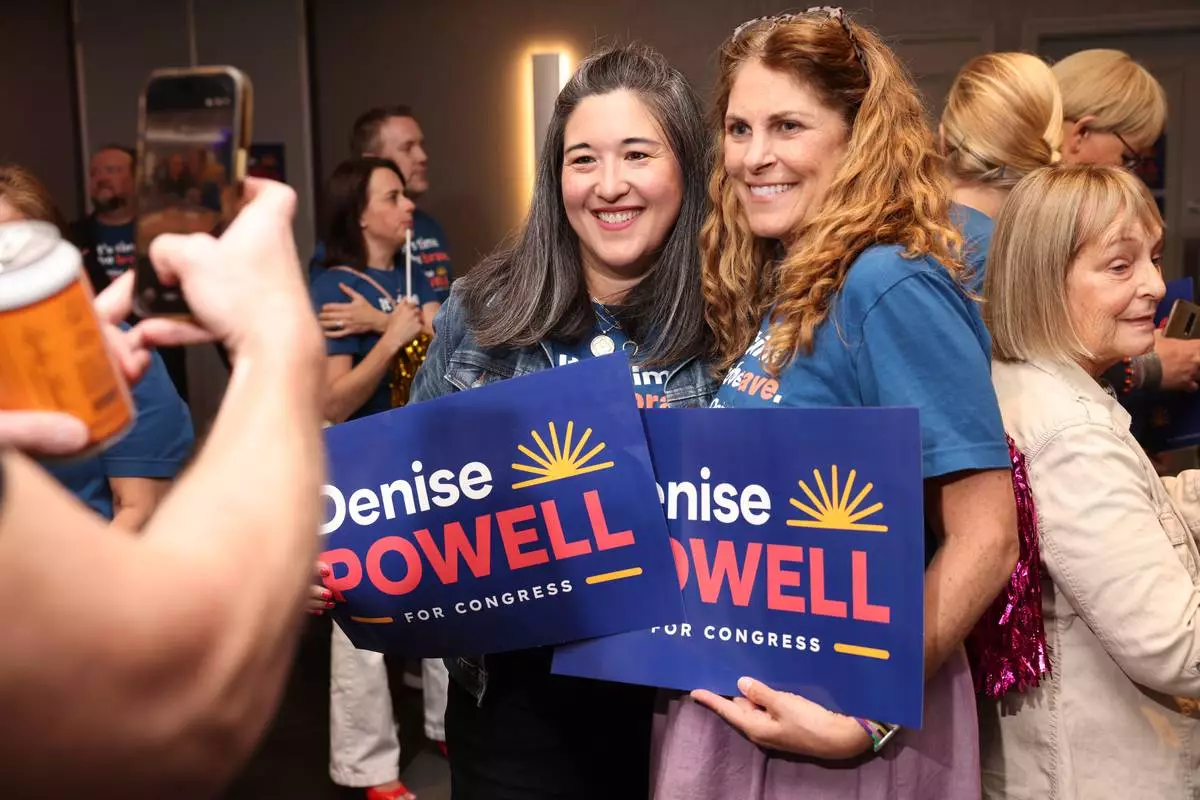
Supporters Shannon Gilroy, left, and Emily Moody pose for a photo during an election night watch party for Denise Powell, candidate for the Democratic nomination to the House of Representatives in Nebraska's second district, Tuesday, May 12, 2026, in Omaha, Neb. (AP Photo/Rebecca S. Gratz)
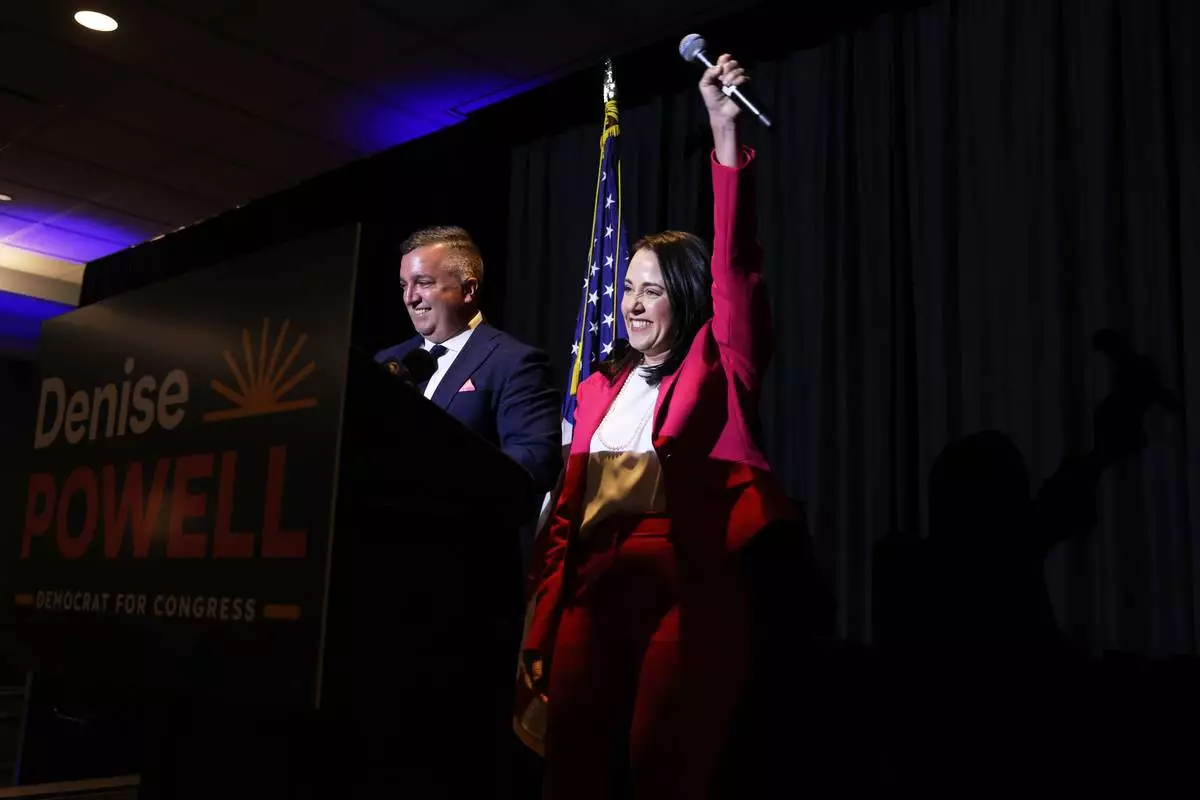
Denise Powell, right, candidate for the Democratic nomination to the House of Representatives in Nebraska's second district, cheers during an election night watch party Tuesday, May 12, 2026, in Omaha, Neb. (AP Photo/Rebecca S. Gratz)
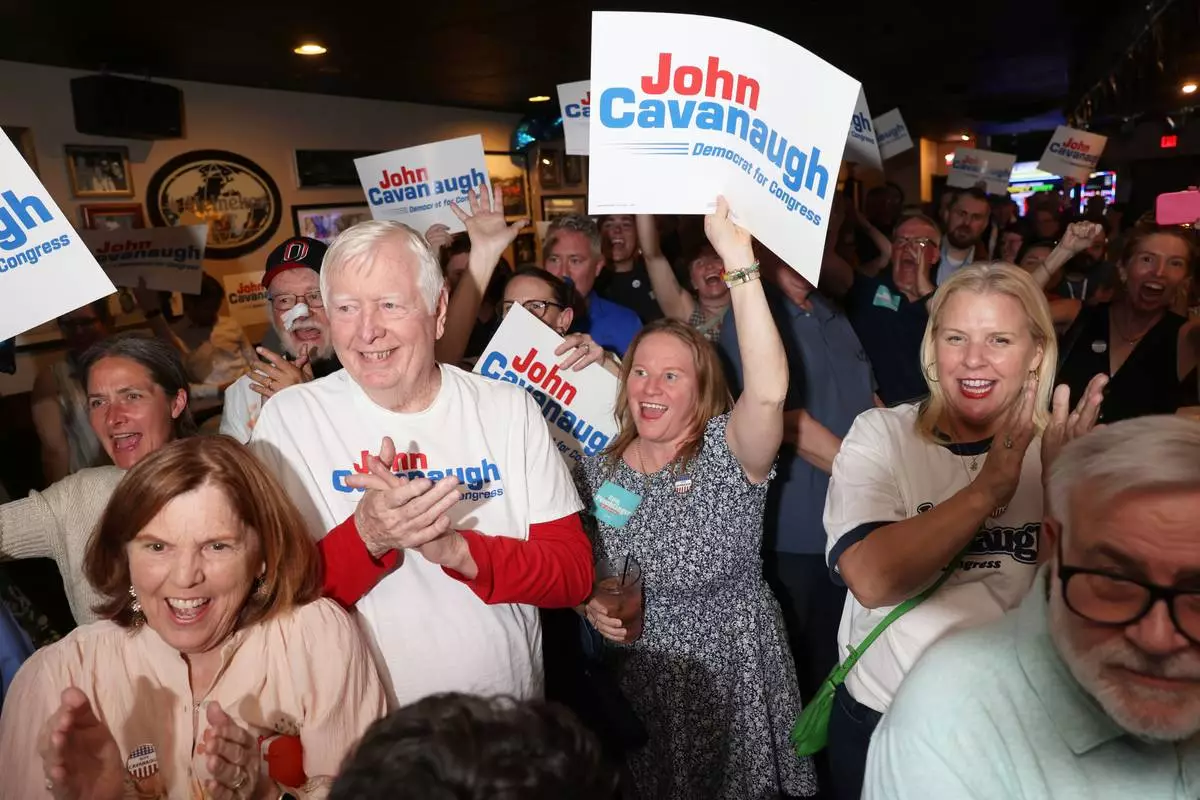
From front left, parents Kate and John Cavanaugh, sister-in-law Audra Cavanaugh and friend Michelle Sullivan cheer for State Sen. John Cavanaugh, candidate for the Democratic nomination to the House of Representatives in Nebraska's second district, during an election night watch party Tuesday, May 12, 2026, in Omaha, Neb. (AP Photo/Rebecca S. Gratz) ADDS NAMES
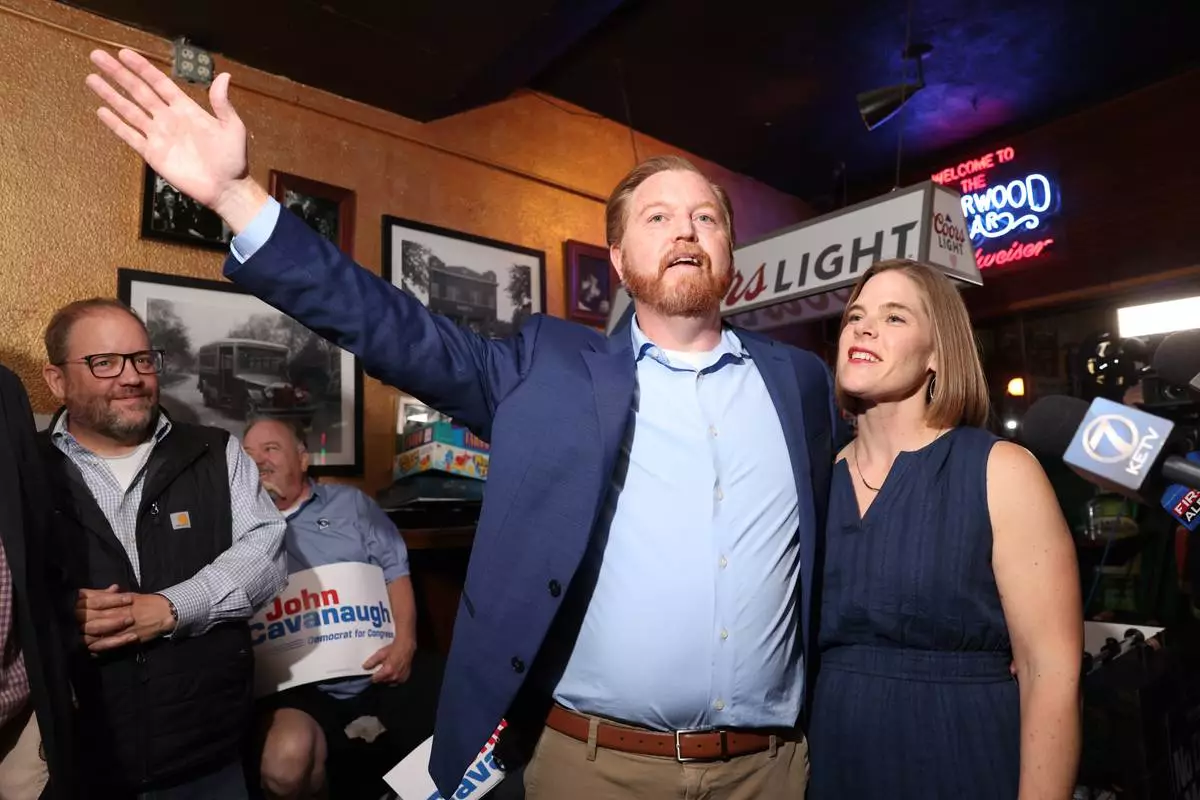
State Sen. John Cavanaugh, candidate for the Democratic nomination to the House of Representatives in Nebraska's second district, left, stands with his wife, Kakie McGill, during an election night watch party Tuesday, May 12, 2026, in Omaha, Neb. (AP Photo/Rebecca S. Gratz)

Ruth Hiebner-Brown, right, toasts a fellow supporter as election results are tallied during an election night watch party for State Sen. John Cavanaugh, candidate for the Democratic nomination to the House of Representatives in Nebraska's second district, Tuesday, May 12, 2026, in Omaha, Neb. (AP Photo/Rebecca S. Gratz)
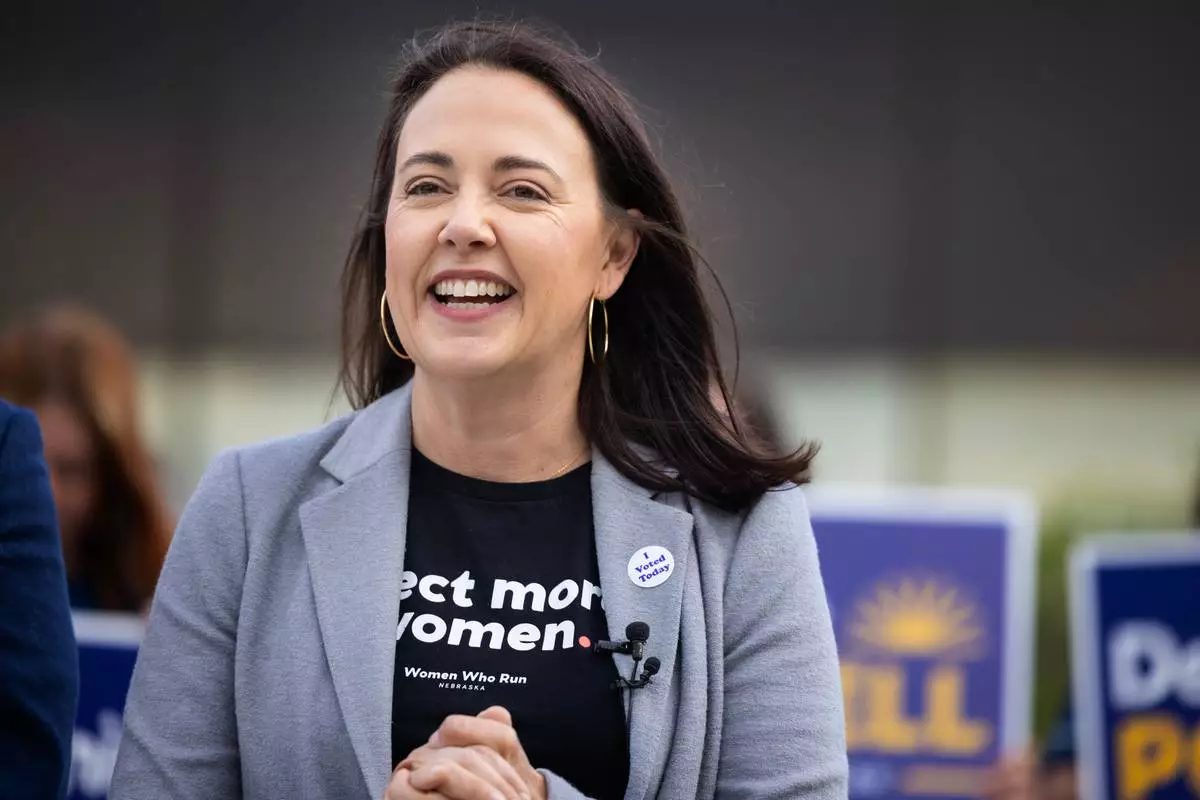
Denise Powell, candidate for the Democratic nomination to the House of Representatives in Nebraska's second district, speaks to the media after casting her ballot in the Nebraska Primary Election at Omaha Community Playhouse Tuesday, May 12, 2026, in Omaha, Neb. (AP Photo/Rebecca S. Gratz)
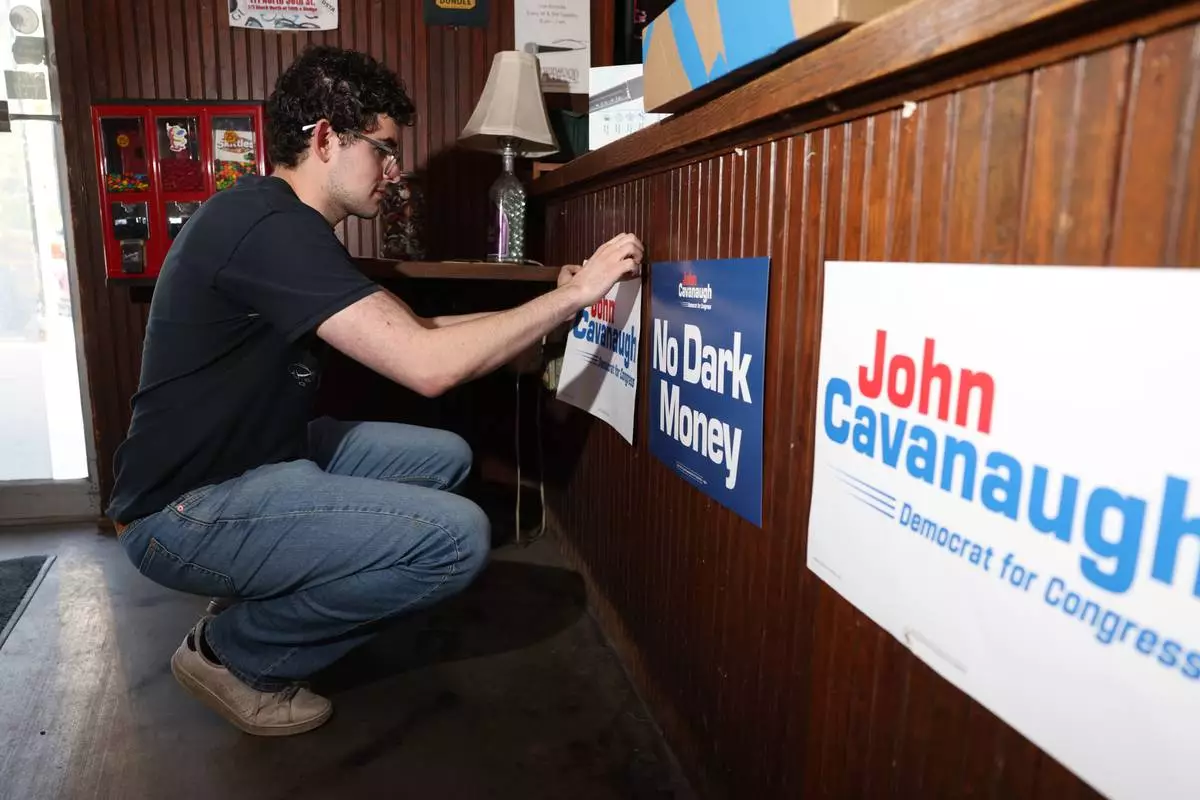
Gabe Kaplan, deputy finance director for State Sen. John Cavanaugh's campaign, posts signs in Underwood Bar ahead the election night watch party for the Democratic nomination to the House of Representatives in Nebraska's second district, Tuesday, May 12, 2026, in Omaha, Neb. (AP Photo/Rebecca S. Gratz)
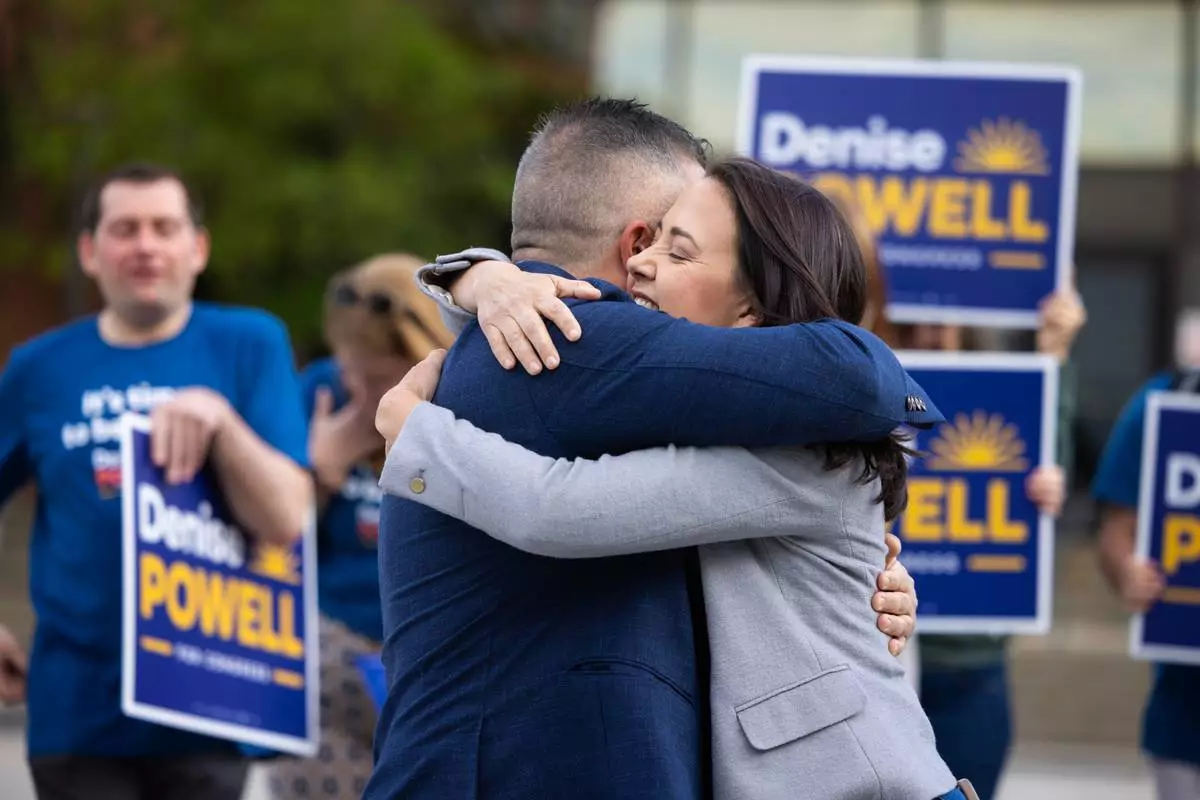
Denise Powell hugs her husband, Hobson, after voting in the Nebraska Primary Election at Omaha Community Playhouse Tuesday, May 12, 2026, in Omaha, Neb. Powell is a candidate for the Democratic nomination to the House of Representatives in Nebraska's second district. (AP Photo/Rebecca S. Gratz)
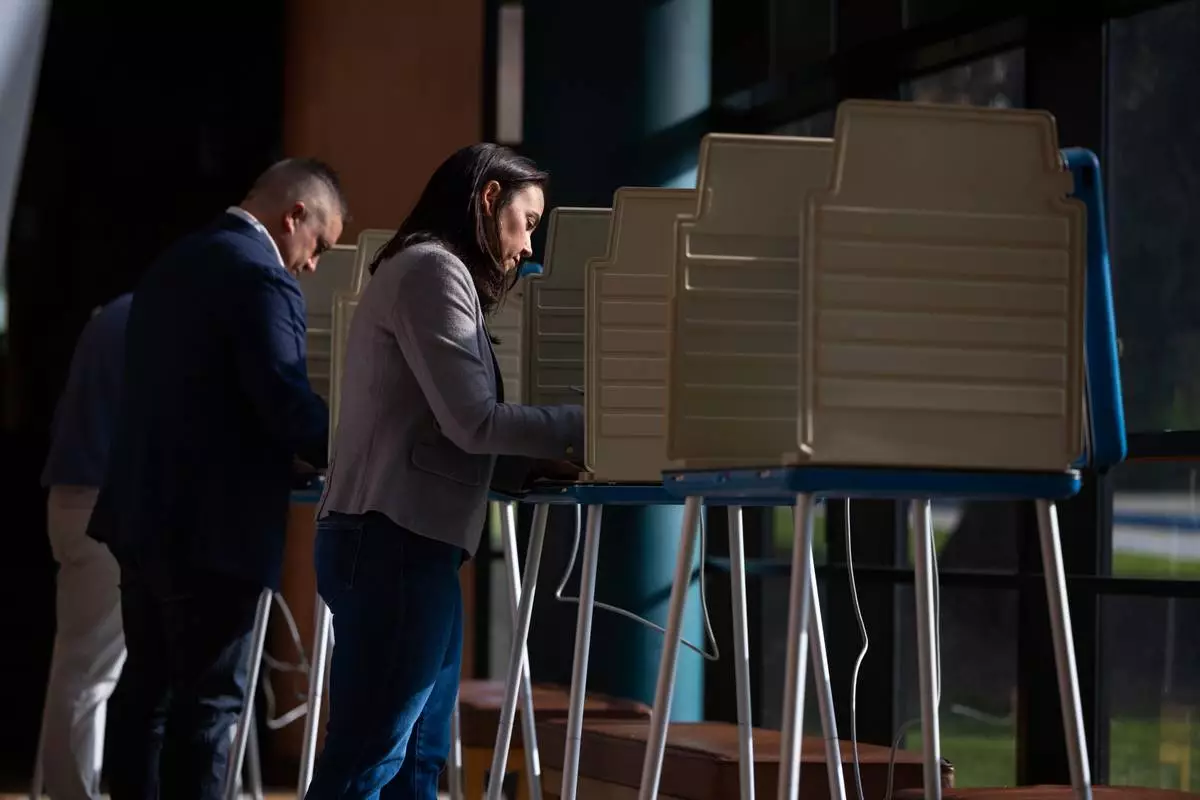
Denise Powell, candidate for the Democratic nomination to the House of Representatives in Nebraska's second district, votes in the Nebraska Primary Election at Omaha Community Playhouse Tuesday, May 12, 2026, in Omaha, Neb. (AP Photo/Rebecca S. Gratz)
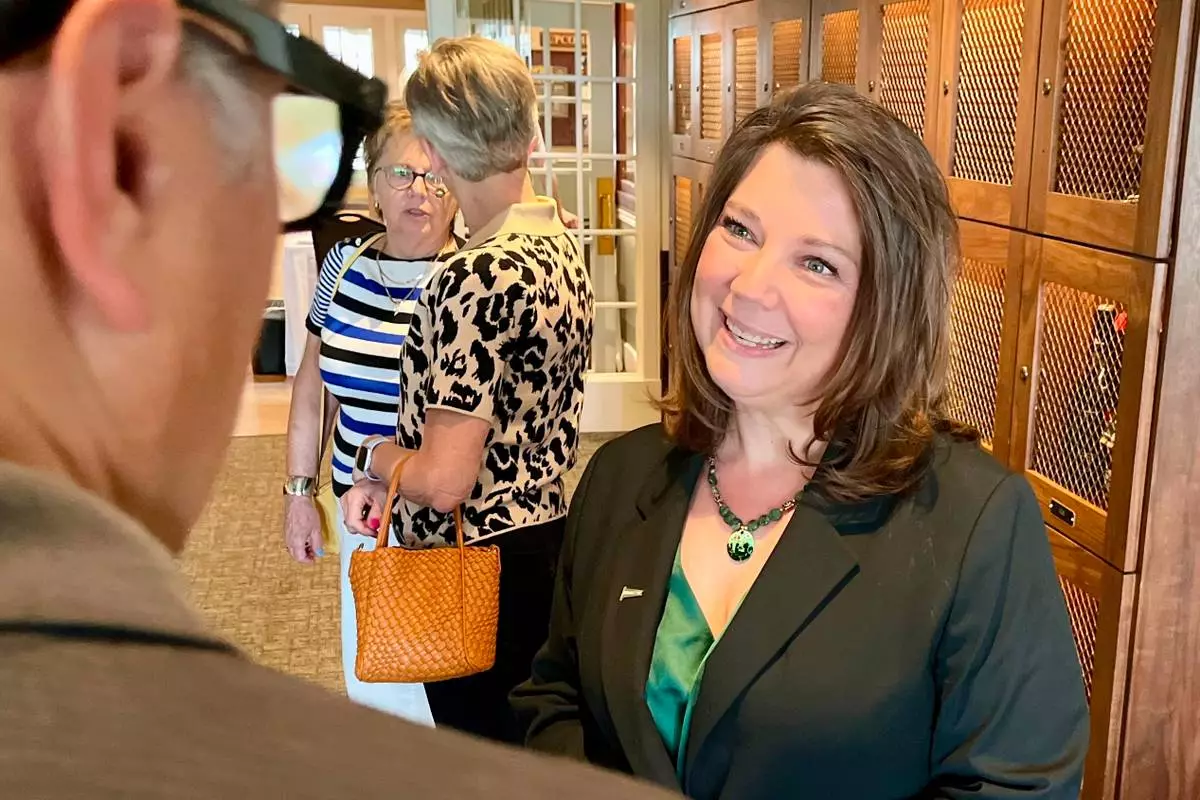
District county clerk Crystal Rhoades speaks at a fundraising event Thursday, April 16, 2026, in Omaha, Neb. (AP Photo/Margery A. Beck)
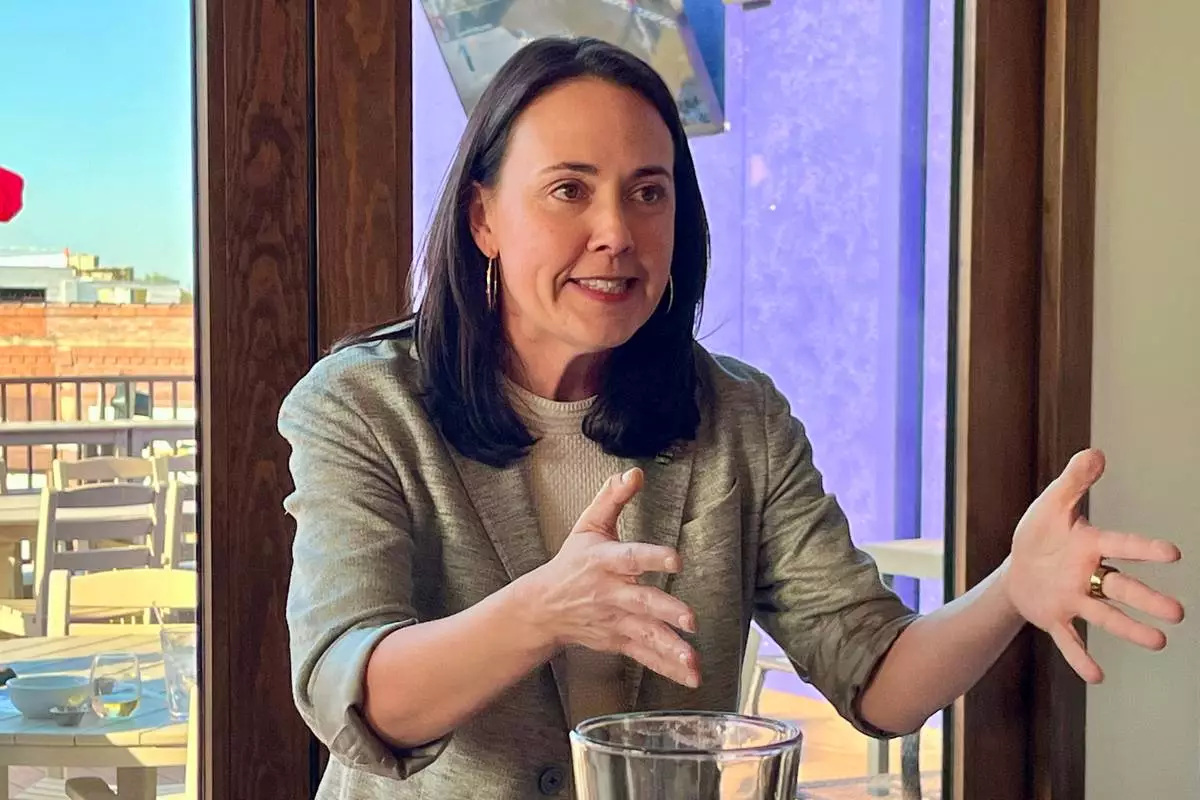
Political activist Denise Powell speaks at a fundraising event Thursday, April 16, 2026, in Omaha, Neb. (AP Photo/Margery A. Beck)
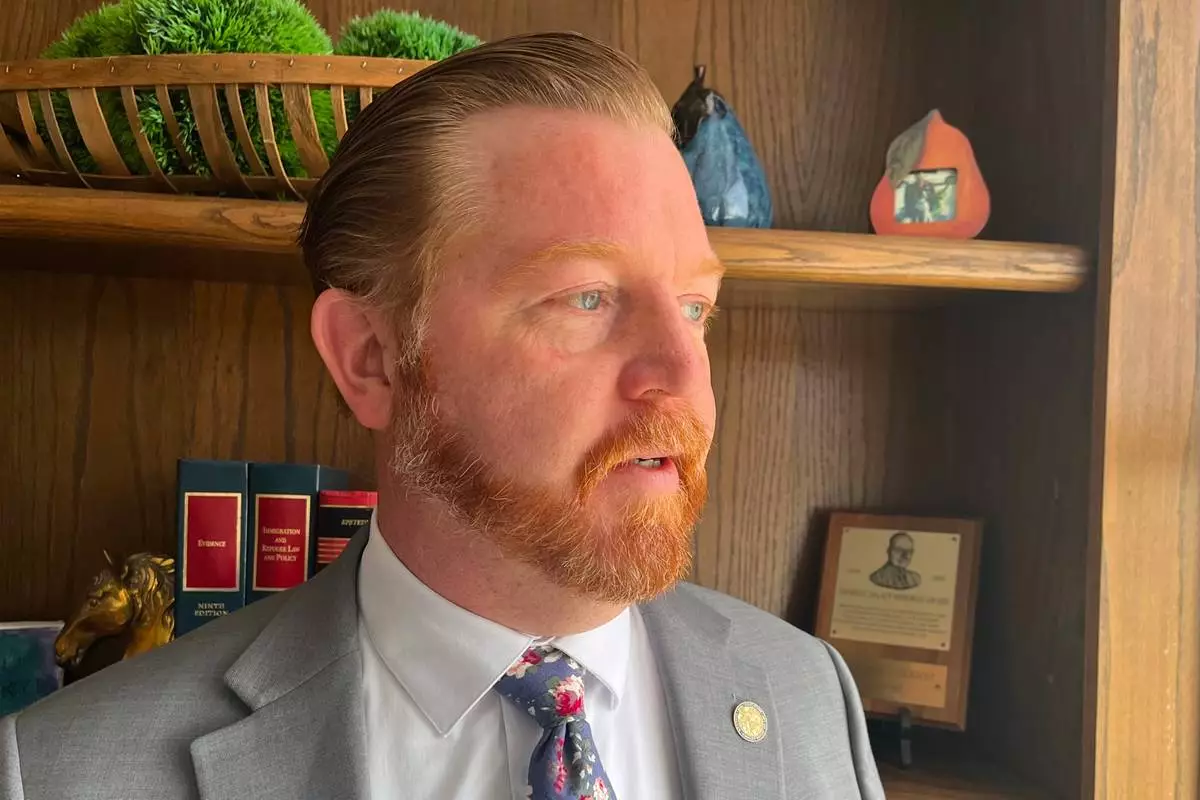
State Sen. John Cavanaugh speaks at an office in Lincoln, Neb., Friday, April 10, 2026. (AP Photo/Margery A. Beck)