Skip to Content Facebook Feature Image

Missouri's new US House map goes to court while Louisiana and South Carolina consider redistricting

News

Missouri's new US House map goes to court while Louisiana and  South Carolina consider redistricting
News

News

Missouri's new US House map goes to court while Louisiana and South Carolina consider redistricting

2026-05-12 12:02 Last Updated At:12:21

Missouri's top court is hearing an important legal challenge Tuesday to one of President Donald Trump's earliest redistricting successes while lawmakers in Louisiana and South Carolina weigh whether to become the most recent Republican states to redraw U.S. House districts ahead of the midterm elections.

Rather than waning, a national redistricting battle that began 10 months ago has intensified as the November elections draw nearer — inflamed by a recent U.S. Supreme Court ruling that weakened the federal Voting Rights Act and provided grounds for states to try to eliminate voting districts with large minority populations.

Missouri was the second Republican state after Texas to heed Trump's call last year to redraw congressional districts to help the GOP win additional seats in the midterms. At issue before the Missouri Supreme Court is whether the new districts violate a state constitutional requirement to be compact, and whether they can remain in place for this year's elections despite an initiative petition seeking to force a public referendum.

In South Carolina, the issue facing Republican lawmakers is whether redrawing the state's lone Democratic-held seat could open the door to a clean sweep for Republicans or backfire with additional losses by making more districts competitive for Democrats. State senators must decide whether to allow consideration of a redistricting plan put forth in the House after the legislature's regular work ends Thursday.

Congressional redistricting also is under consideration in Louisiana, where the Supreme Court's recent ruling invalidated a majority-Black district as an illegal racial gerrymander. The state's May 16 congressional primaries already have been postponed. What remains undecided is how many seats Republicans will try to pick up while redrawing the districts.

Alabama also is poised to switch its congressional districts for this year's elections, after the U.S. Supreme Court on Monday overturned an order for it to use a map with two largely Black districts.

Republicans think they could gain as many as 14 seats from new House maps enacted so far in Texas, Missouri, North Carolina, Ohio, Florida and Tennessee. Democrats, meanwhile, think they could gain six seats from new maps in California and Utah. The Virginia Supreme Court last week struck down a redistricting effort that could have yielded four more winnable seats for Democrats.

A South Carolina House committee is to consider Tuesday whether to send a congressional redistricting plan to the full chamber for debate. The House also appears poised to pass legislation that could delay the June 9 congressional primaries until August to allow time for new districts to be enacted. That comes even as some absentee and overseas military ballots already have been cast.

But any redistricting effort also must clear the Senate, where support is less certain. Two-thirds of senators have to agree before the regular General Assembly session ends Thursday to let the legislature take up redistricting later.

Trump said on social media Monday that he was closely watching the redistricting vote, urging South Carolina senators to “be bold and courageous" and to delay the House primaries so new districts can be drawn.

Although Republicans have a supermajority in the chamber, several senators aren’t sure the proposed map guarantees the GOP will win seat held by long-serving Democratic U.S. Rep. Jim Clyburn. And they think enough Democratic voters could be pushed into other districts that the plan could backfire, resulting in a 5-2 or even a 4-3 Republican split.

Some also question whether it is fair for Republicans to get all the seats in a state where the Democratic presidential candidate has gotten at least 40% of the vote every election this century, even if Trump is asking for the new map.

State Sen. Caleb Kleinpeter, a Republican who oversees the Louisiana Senate committee tasked with redistricting, said his panel plans to vote Tuesday on a U.S. House map, with a full Senate vote expected Thursday.

The committee has several options, including versions that would leave Democrats favored in only one district or none. Kleinpeter said a map eliminating all majority-Black districts would be difficult to hold up in court.

Last Friday, dozens of people urged lawmakers to retain two majority-Black districts during a grueling nine-hour hearing that featured civil rights activists and the only four Black congressmen elected to represent the state since the end of the Reconstruction era.

Missouri currently is represented in the U.S. House by six Republicans and two Democrats under a map passed by the Republican-led legislature after the 2020 census. But with Trump's backing, Republican state officials adopted a new map last September that improves their chances of winning an additional seat by targeting a Kansas City district held by longtime Democratic U.S. Rep. Emanuel Cleaver, who previously was the city's first Black mayor.

The new House map places portions of Kansas City in neighboring Republican districts and stretches the remainder of Cleaver's 5th District far eastward into Republican-heavy rural areas. A state judge in March rejected an assertion that the map violates a constitutional compactness requirement, finding that the new districts on average are more compact — even if the 5th District is not. That was appealed to the state Supreme Court.

A separate case also being argued Tuesday at the state Supreme Court contends the new districts should have been automatically suspended in December when opponents submitted more than 300,000 petition signatures seeking to force a statewide referendum.

But Republican Attorney General Catherine Hanaway and Republican Secretary of State Denny Hoskins contend the new districts can be suspended only if — and after — Hoskins determines the petition meets constitutional requirements and has enough valid signatures. Hoskins has until Aug. 4, the day of Missouri's primary elections, to make that determination.

A state judge in March agreed with the Republicans' position while also ruling that the plaintiffs lacked grounds to sue and had done so too soon.

Brook reported from Baton Rouge, Louisiana, Collins from Columbia, South Carolina, and Lieb from Jefferson City, Missouri.
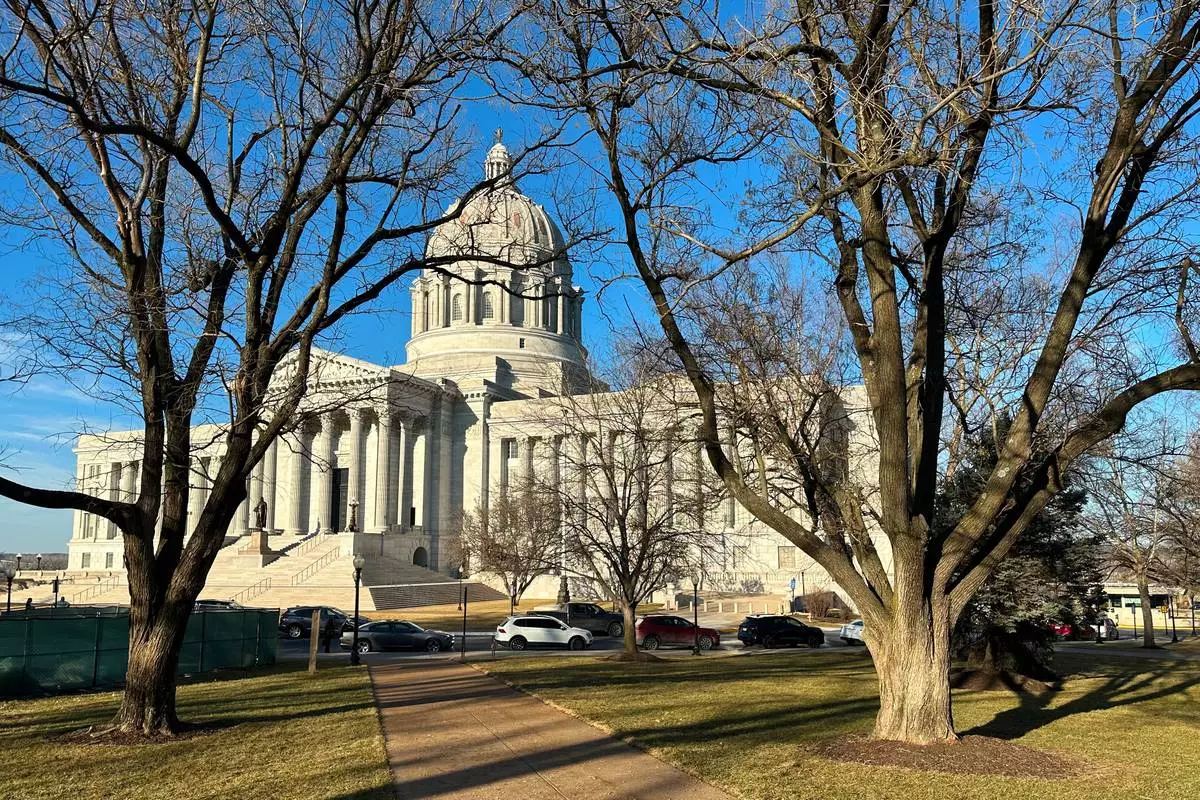
The Missouri Capitol is seen Monday, Feb. 9, 2026, in Jefferson City, Mo. (AP Photo/David A. Lieb)
The Missouri Capitol is seen Monday, Feb. 9, 2026, in Jefferson City, Mo. (AP Photo/David A. Lieb)

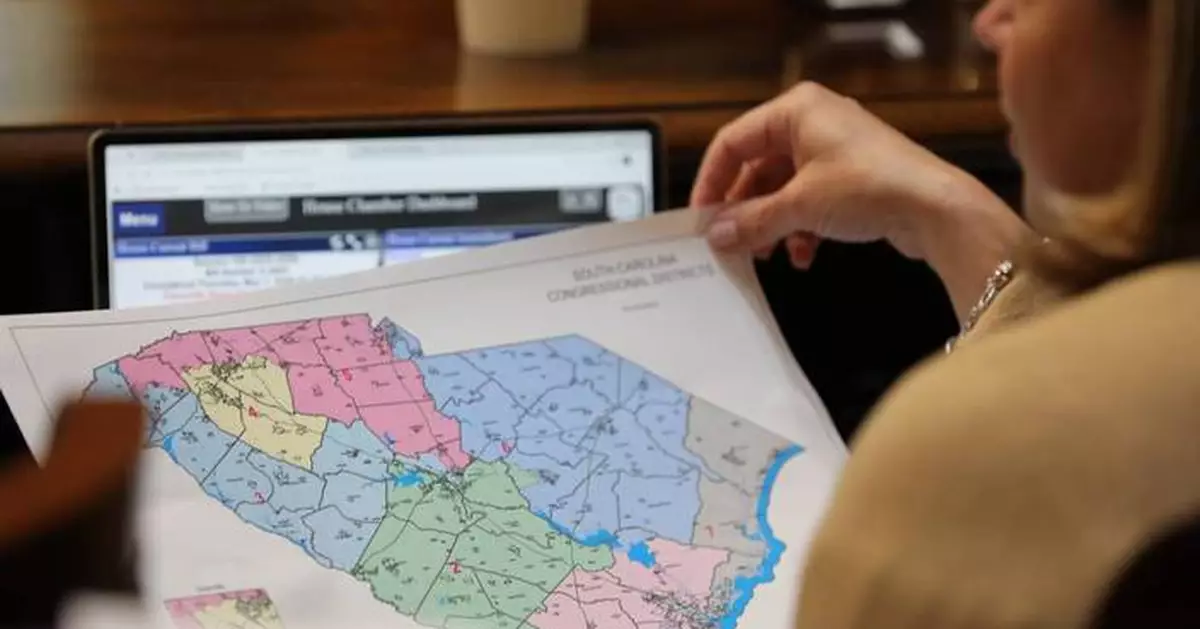
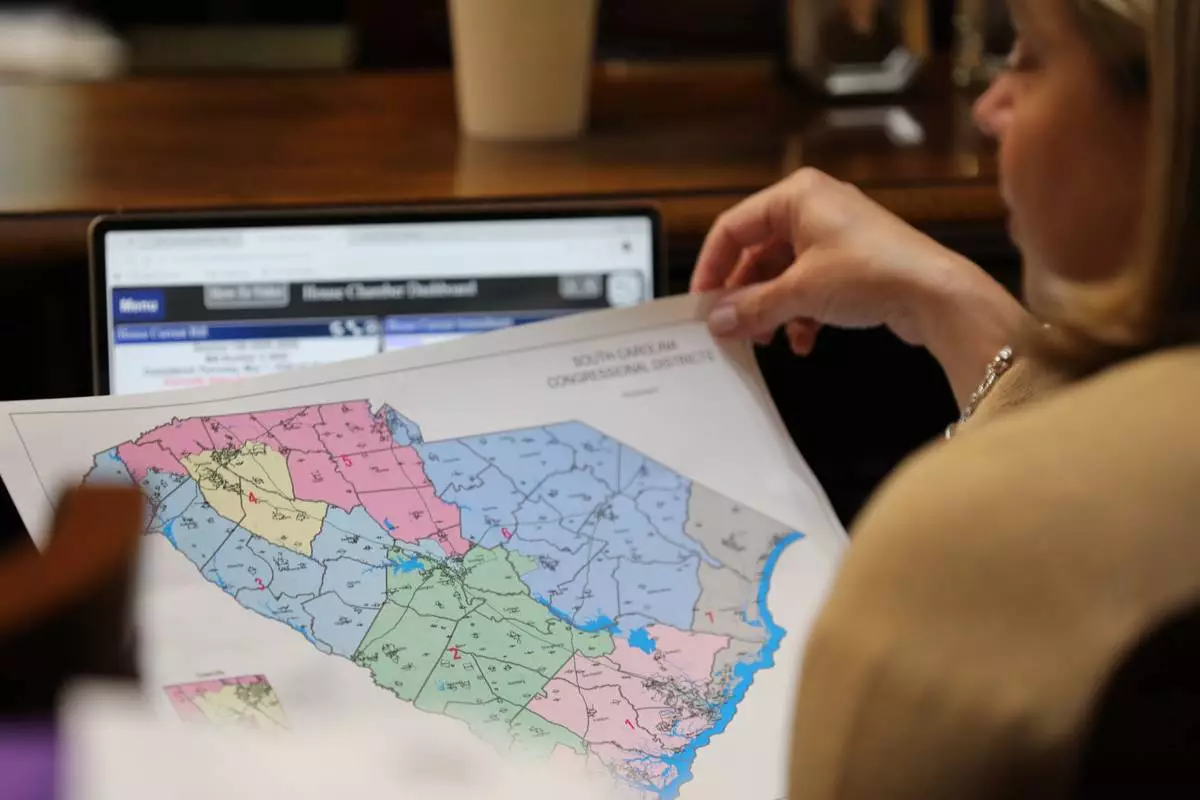
Republican South Carolina Rep. Jackie Terribile looks at a proposed map of new U.S. House districts for South Carolina on Thursday, May 7, 2026, in Columbia, S.C. (AP Photo/Jeffrey Collins)

Republican South Carolina Rep. Jackie Terribile looks at a proposed map of new U.S. House districts for South Carolina on Thursday, May 7, 2026, in Columbia, S.C. (AP Photo/Jeffrey Collins)
OAKLAND, Calif. (AP) — In a trial featuring a clash between Elon Musk and OpenAI CEO Sam Altman, neither of the tech titans has emerged as an overly sympathetic character. But nobody has more to lose than Altman, who is expected to take the stand this week to defend himself.

Already, testimony about Altman's turbulent tenure at the ChatGPT maker has become prime fodder for internet jokes. One piece of evidence that has inspired countless memes was a text exchange between Altman and a company officer, Mira Murati, in 2023 during his short-lived ouster as CEO, when Altman asked if things were moving “directionally good or bad” and she wrote back: "Sam this is very bad."

Musk, the world's richest man, is seeking Altman's second ouster from the company leadership as part of a civil lawsuit accusing him of betraying their shared vision for OpenAI. Since its start as a nonprofit funded primarily by Musk, Open AI has evolved into a capitalistic venture now valued at $852 billion.

Even if Musk loses, the trial has invited further scrutiny of Altman’s leadership at a pivotal time for the company and its competition with Musk’s own AI firm and another rival, Anthropic, formed by a group of seven ex-OpenAI leaders. All three firms are moving toward planned initial public offerings that are expected to be some of the largest ever.

A jury that’s already heard about Altman’s character from a parade of his former allies and adversaries will ultimately decide the verdict. But the repercussions could reverberate widely.

“This is not looking good for any of them and I think that that’s a little bit unfortunate for the AI industry at a time when the public perception of AI is quite negative and seems to be getting worse,” said Sarah Kreps, director of Cornell University’s Tech Policy Institute.

The lawsuit accuses Altman and his top lieutenant, Greg Brockman, of double-crossing Musk by straying from the San Francisco company’s founding mission to be an altruistic steward of a revolutionary technology. The lawsuit alleges they shifted into a moneymaking mode behind his back.

Shortly before the trial began, Musk abandoned a bid for damages for himself and instead is seeking an unspecified amount of money to be paid to fund the altruistic efforts of OpenAI’s charitable arm. In a text exchange with Brockman proposing a possible settlement, Musk warned that Brockman and Altman “will be the most hated men in America” as a result of the trial.

While Musk, the head of SpaceX, Tesla and a slew of other companies, was well known by the San Francisco Bay Area jury pool, fewer knew who Altman was before the start of the trial, even if they were familiar with ChatGPT.

As the trial has played out in a federal courtroom in Oakland, California over the last two weeks, jurors have heard from witnesses including OpenAI ex-board members Helen Toner and Tasha McCauley, who spoke about the decision to fire Altman in 2023 before they were themselves ousted from the board of directors when Altman returned to his role.

In video testimony last week, Toner said a starting point for the decision to oust Altman was when OpenAI co-founder Ilya Sutskever, a respected AI scientist, reached out to confide some of his own concerns.

“A phrase we used was ‘a pattern of behavior,’ so no one single cause,” Toner said. “The pattern of behavior related to his honesty and candor, his resistance of board oversight.”

Sutskever was instrumental in the unsuccessful attempt to oust Altman but later said he regretted his role in the shakeup. In his own testimony Monday, Sutskever confirmed that he wrote a 2023 memo to OpenAI’s board that characterized Altman as pitting his executives against one another and exhibiting a “consistent pattern of lying” that was causing a loss of trust and productivity.

Sutskever said Altman’s behavior contributed to an environment that was “not conducive” to the company's goals, including its mission to safely build artificial general intelligence. He said he later backtracked and supported Altman’s reinstatement because he was concerned about what would happen to a company he worked hard to create and “cared very much about.”

“I felt that, had I not done this, the company would have been destroyed, and I felt that this was a Hail Mary,” he testified.

The trial has carried risks also for Musk, who is pursuing an initial public offering this summer for his rocket ship maker, SpaceX, which could make him the world's first trillionaire. Among the witnesses has been Shivon Zilis, a former OpenAI board member who served as a conduit between Musk and OpenAI's leaders and also didn't disclose that Musk was the father of her two young twins, according to trial testimony.

Not until midday Monday, on the third week of the trial, did OpenAI begin calling its own witnesses, starting with Bret Taylor, the current chair of OpenAI’s board who painted a more positive portrait of Altman’s leadership.

“I think Sam has done a great job as CEO,” Taylor said. “He’s been forthright with me and the other board members.”

Syracuse University professor Shubha Ghosh, an expert in business and technology law, said regardless of the outcome of the case, he has doubts about Altman staying on as CEO of OpenAI in the long run.

“A lot this of might depend upon a testimony,” he said. “And I don’t know what he’s going to say or how he’s gonna say it. But even like the best case, movie theater type performance, with all the music playing and the angels descending or whatnot, I don’t see him coming off as a fairly strong leader, especially (since) this case has gone this far."

O'Brien contributed from Providence, R.I.

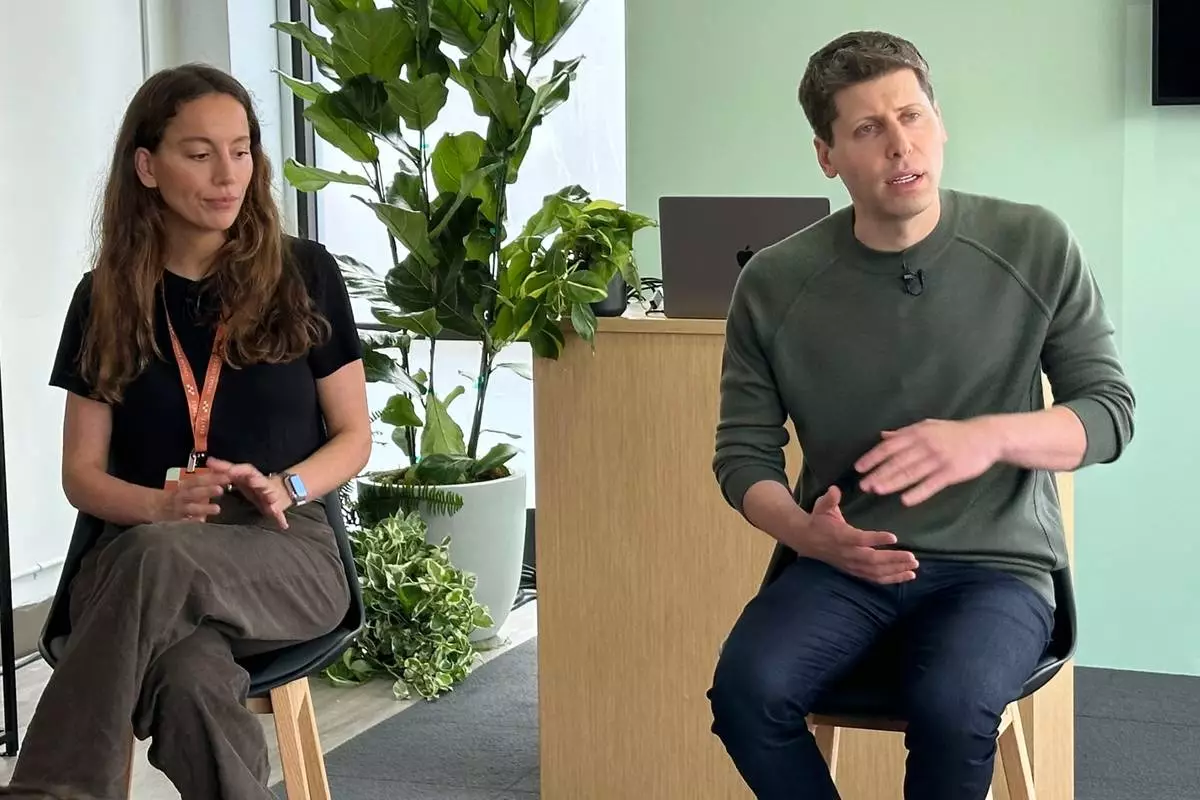
FILE - Sam Altman, right, CEO of ChatGPT maker OpenAI, and Mira Murati, chief technology officer, appear at OpenAI DevDay, OpenAI's first developer conference, on Nov. 6, 2023 in San Francisco. (AP Photo/Barbara Ortutay, File)

FILE - Sam Altman, right, CEO of ChatGPT maker OpenAI, and Mira Murati, chief technology officer, appear at OpenAI DevDay, OpenAI's first developer conference, on Nov. 6, 2023 in San Francisco. (AP Photo/Barbara Ortutay, File)

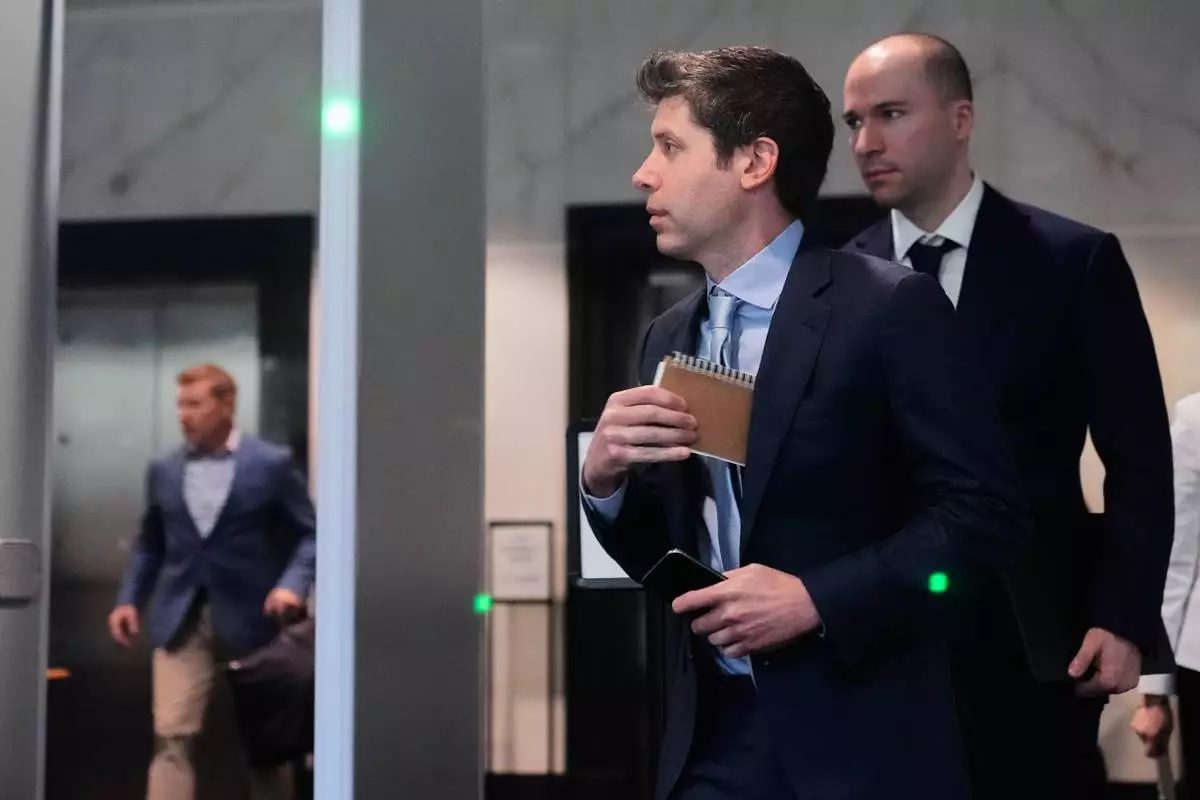
Sam Altman, center, and OpenAI president Greg Brockman, right, arrive at the U.S. District Court in Oakland, Calif., Thursday, April 30, 2026. (AP Photo/Godofredo A. Vásquez)

Sam Altman, center, and OpenAI president Greg Brockman, right, arrive at the U.S. District Court in Oakland, Calif., Thursday, April 30, 2026. (AP Photo/Godofredo A. Vásquez)

Recommended Articles