Skip to Content Facebook Feature Image

Political tug of war over Iranian women's soccer team prompts criticism in Australia

News

Political tug of war over Iranian women's soccer team prompts criticism in Australia
News

News

Political tug of war over Iranian women's soccer team prompts criticism in Australia

2026-03-20 13:09 Last Updated At:15:07

MELBOURNE, Australia (AP) — The United States and Australia’s political tug of war against Iran over the fates of seven members of the Iranian women’s soccer squad appears to have ended with the depleted team returning home minus the two players who defected last week.

Critics now say politics trumped concern for the women’s best interests as the drama played out. The evidence is that of seven Iranian women who initially accepted asylum in Australia, five changed their minds within days and returned to the team for reasons undisclosed.

More Images
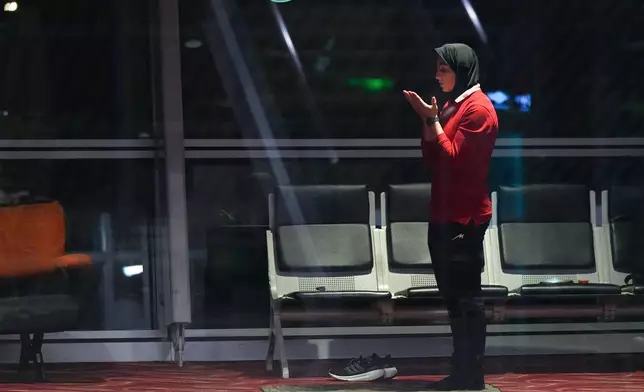
A member of Iran's women's soccer team prays at the Kuala Lumpur International Airport in Sepang, Malaysia, Monday, March 16, 2026. (AP Photo/Azneal Ishak)
A member of Iran's women's soccer team prays at the Kuala Lumpur International Airport in Sepang, Malaysia, Monday, March 16, 2026. (AP Photo/Azneal Ishak)

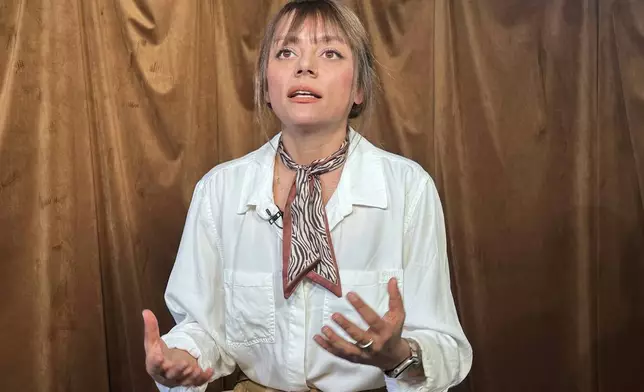
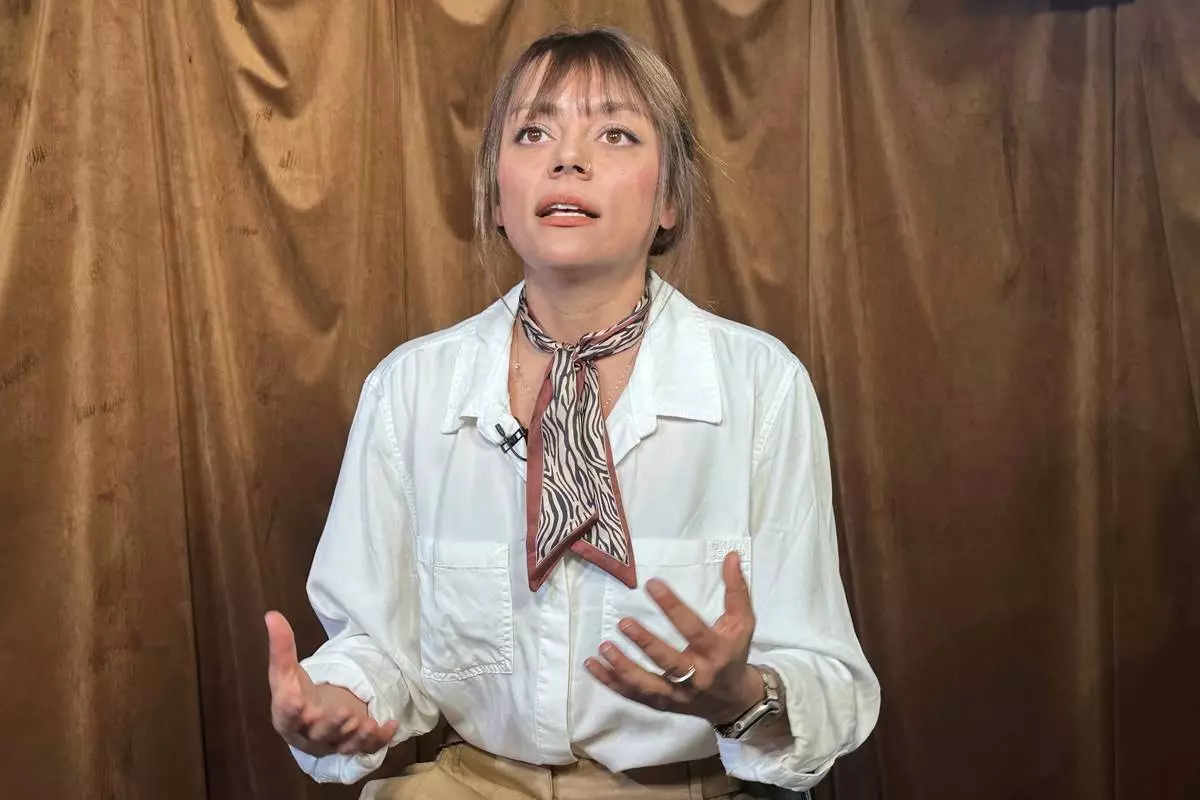
Shiva Amini, a former Iranian women's soccer player, speaks while giving an interview at The Associated Press office in New York, Tuesday, March 17, 2026. (AP Photo/Philip Marcelo)
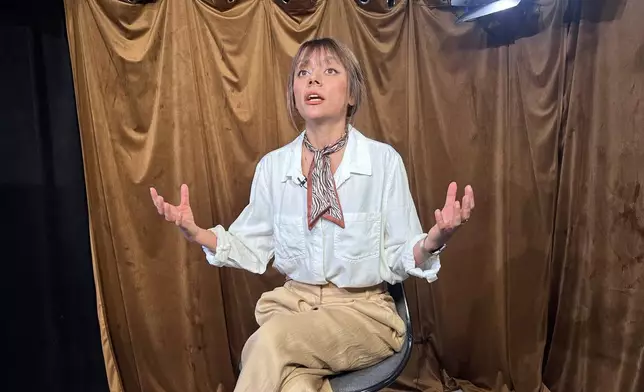
Shiva Amini, a former Iranian women's soccer player, speaks while giving an interview at The Associated Press office in New York, Tuesday, March 17, 2026. (AP Photo/Philip Marcelo)
Shiva Amini, a former Iranian women's soccer player, speaks while giving an interview at The Associated Press office in New York, Tuesday, March 17, 2026. (AP Photo/Philip Marcelo)

Shiva Amini, a former Iranian women's soccer player, speaks while giving an interview at The Associated Press office in New York, Tuesday, March 17, 2026. (AP Photo/Philip Marcelo)

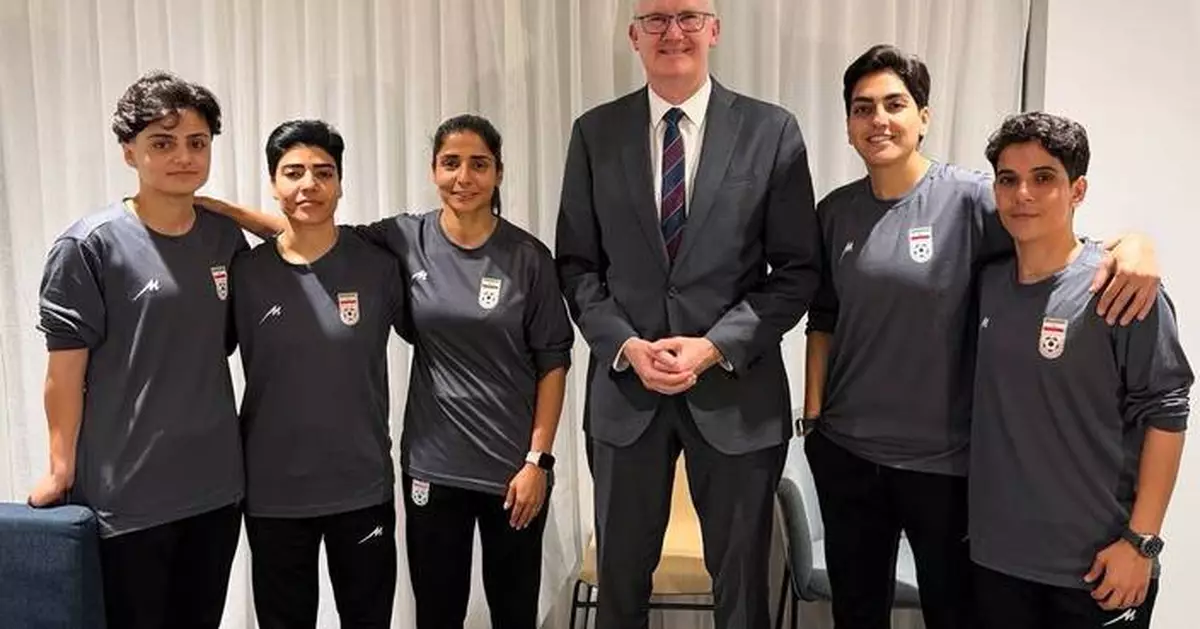
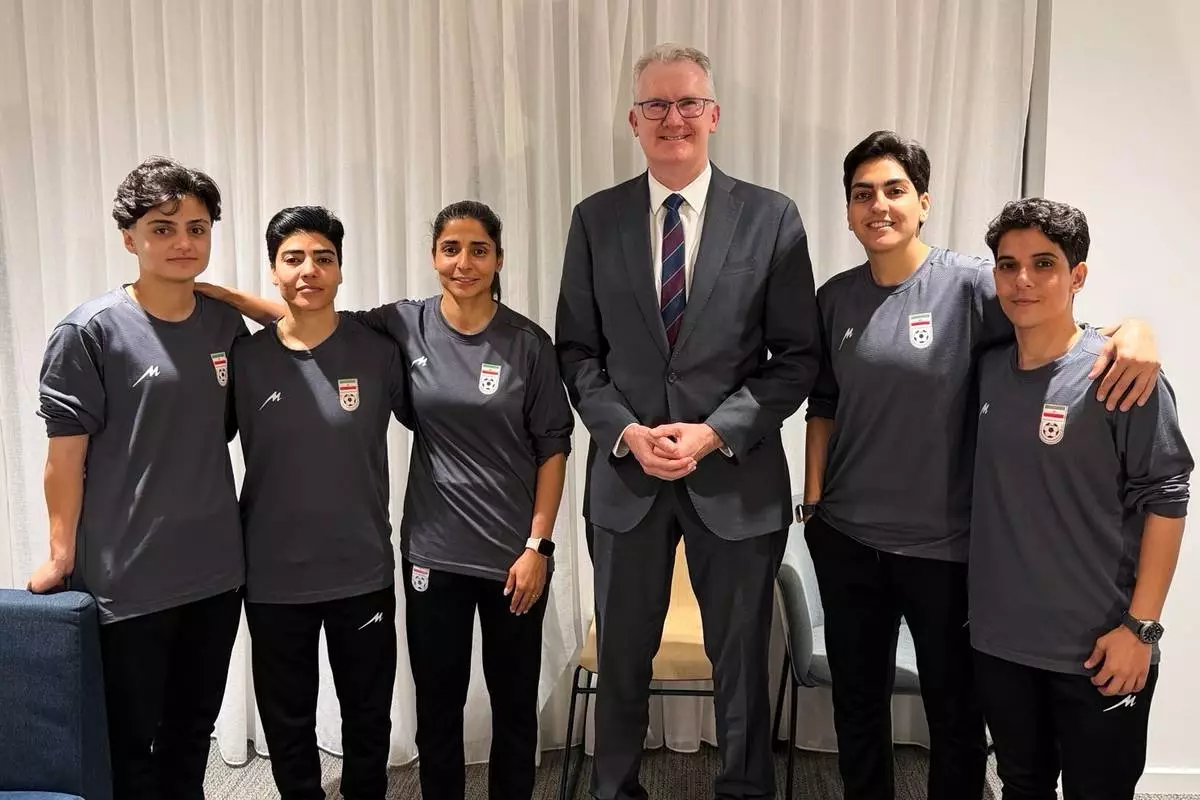
In this photo supplied by Australia's Minister for Home Affairs Tony Burke's office, the Minister Tony Burke, center, poses in an undisclosed location with five Iranian women soccer players who have been granted asylum in Australia, Tuesday, March 10, 2026. (Australia Ministry of Home Affairs via AP)

In this photo supplied by Australia's Minister for Home Affairs Tony Burke's office, the Minister Tony Burke, center, poses in an undisclosed location with five Iranian women soccer players who have been granted asylum in Australia, Tuesday, March 10, 2026. (Australia Ministry of Home Affairs via AP)

Critics argue the outcome might have been different had the women been provided with independent legal advice earlier and the process not been so rushed.

“We ended up with an outcome that is certainly far from ideal,” said Graham Thom, advocacy coordinator for the Refugee Council of Australia, a non-profit umbrella organization representing asylum seekers.

“Hopefully the two who are remaining get the protection they need, but we just hope that those who have returned are also safe,” he added.

Iran has claimed victory in the extraordinary public relations battle that played out since Immigration Minister Tony Burke released to the media on March 10 a photo of him posing with five women who had accepted protection visas.

He said the women, who all appeared without head coverings, were happy for their names and images to be released to the media.

Refugee advocates were alarmed, asking if women raised under an oppressive regime could be expected to question the Australian government’s media strategy.

Kylie Moore-Gilbert, a political scientist at Sydney’s Macquarie University who spent more than two years in Iranian prisons on spying charges from 2018 to 2020, said “winning the propaganda war” had overshadowed the women’s welfare.

“Had these women quietly sought asylum without that publicity around them, it’s possible that the Islamic Republic officials might have, as they have in the cases of other Iranian sportspeople in the past who’ve defected ... simply allowed that to happen,” Moore-Gilbert told Australian Broadcasting Corp. this week.

Australia has traditionally handled asylum negotiations behind closed doors, conscious that the public spotlight can ramp up pressure and bring dangers to potential refugees and their families.

Concerns for the team’s welfare were raised when players decided against singing the Iranian national anthem before their first match of the Women's Asian Cup on the Gold Coast on March 2.

Iranian sports commentator Mohammad Reza Shahbazi calling the women “wartime traitors” in a television broadcast was widely cited by protesters demanding asylum for the team.

The gesture attracted global attention and was not repeated at the women's next match, at which they sang the anthem.

Shahram Akbarzadeh, professor of Middle East politics at Deakin University in Geelong, suspects the team hadn’t thought through the consequences of “expressing a political opinion” on the Iranian regime.

“Sometimes frustration overrides fear of consequences,” Akbarzadeh said.

“Unfortunately for these players, their act of defiance turned into a symbol of resistance against the regime and basically a cause to be played by the United States and the Iranian diaspora who were anti-regime to humiliate and embarrass the regime and to basically gain a political score from the situation,” he added.

The stakes were raised when U.S. President Donald Trump used social media to call for the team to be granted asylum and telephoned Australian Prime Minister Anthony Albanese on the issue.

Albanese told the Trump that the first five, a four players and a team manager, had recently accepted offers of humanitarian visas.

Another two squad members chose to stay before the rest of the team flew from Sydney to Malaysia on March 10 after being knocked out of the competition.

“It quickly turned into a political dispute and political theater between Iran and the U.S. (and) Australia and of course the Iranians responded accordingly. They couldn’t be seen to be as embarrassed by their failure,” Akbarzadeh said.

All but two women who accepted asylum rejoined the team in Kuala Lumpur before the squad flew to Oman on Monday. Iranian state media reported they had returned to their homeland by bus from Turkey and were met with a welcome ceremony.

“We are so happy to be in Iran, because Iran is our homeland,” midfielder Fatemeh Shaban told a flag-waving crowd.

The reasons why five women changed their minds about creating new lives in Australia have not been made pubic, but there were expectations that the regime would threaten family members.

Shiva Amini, a former Iranian national soccer player who now lives in New York City, said she had been in contact with the two women who had remained in Australia, Fatemeh Pasandideh and Atefeh Ramezanisadeh, and some of those who had decided to return to Iran.

Amini was granted asylum in Switzerland in 2017 after the Iranian government threatened to sanction her for being photographed in the European country playing a casual game of soccer with men while not wearing the mandatory hijab, or headscarf.

“This is beyond sad that they couldn’t stay, because even if you get back to Iran, they’re gonna threaten your family,” Amini told The Associated Press on Tuesday.

Amini declined to elaborate on her conversations with players out of concern for their safety and the safety of their families.

She said the regime put pressure on at least one of the players, whom she declined to name, to return to Iran by threatening to harm her mother.

Iranian foreign ministry spokesman Esmaeil Baghaei said none of the five women who changed their minds about staying in Australia had been pressured by Iran to return home.

“They didn’t seek asylum. They were forced to. They were coerced to. They didn’t do it voluntarily,” Baghaei told ABC on Thursday.

Asked if the two players who remained in Australia were being held against their will, he replied: “I guess so.”

Baghaei said Australian officials had asked the Iranian women to go to a room on the pretext of testing for performance enhancing drugs, and then told the women to sign visa papers and pose with Burke for photos.

“This was a shameful, sham posture,” Baghaei said.

Australia has denied pressuring the women to stay or go.

After the fifth refugee rejoined her team in Kuala Lumpa on Monday, Assistant Immigration Minister Matt Thistlethwaite described the team's plight in Australia as a “very complex situation.”

“These are deeply personal decisions, and the government respects the decisions of those that have chosen to return. And we continue to offer support to the two that are remaining,” Thistlethwaite said.

Associated Press reporter Philip Marcelo in New York contributed to this report.
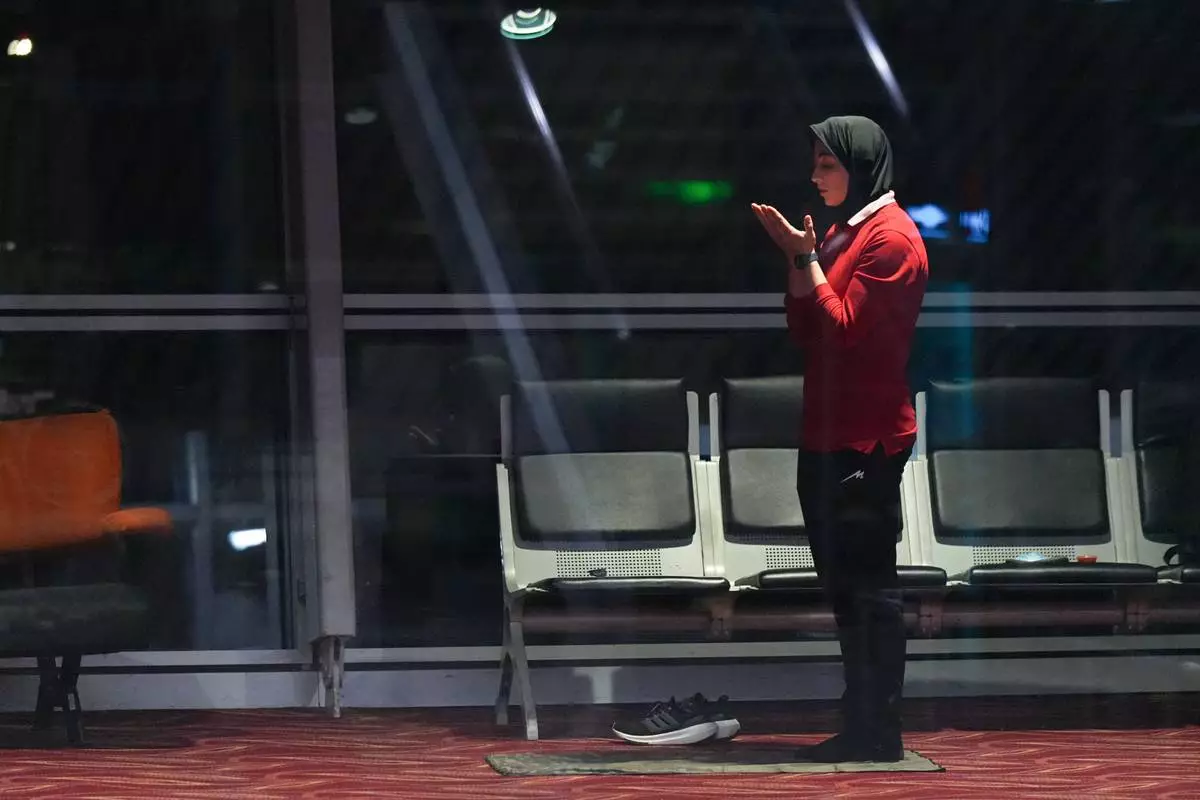
A member of Iran's women's soccer team prays at the Kuala Lumpur International Airport in Sepang, Malaysia, Monday, March 16, 2026. (AP Photo/Azneal Ishak)
A member of Iran's women's soccer team prays at the Kuala Lumpur International Airport in Sepang, Malaysia, Monday, March 16, 2026. (AP Photo/Azneal Ishak)

Shiva Amini, a former Iranian women's soccer player, speaks while giving an interview at The Associated Press office in New York, Tuesday, March 17, 2026. (AP Photo/Philip Marcelo)

Shiva Amini, a former Iranian women's soccer player, speaks while giving an interview at The Associated Press office in New York, Tuesday, March 17, 2026. (AP Photo/Philip Marcelo)
Shiva Amini, a former Iranian women's soccer player, speaks while giving an interview at The Associated Press office in New York, Tuesday, March 17, 2026. (AP Photo/Philip Marcelo)

Shiva Amini, a former Iranian women's soccer player, speaks while giving an interview at The Associated Press office in New York, Tuesday, March 17, 2026. (AP Photo/Philip Marcelo)

In this photo supplied by Australia's Minister for Home Affairs Tony Burke's office, the Minister Tony Burke, center, poses in an undisclosed location with five Iranian women soccer players who have been granted asylum in Australia, Tuesday, March 10, 2026. (Australia Ministry of Home Affairs via AP)
In this photo supplied by Australia's Minister for Home Affairs Tony Burke's office, the Minister Tony Burke, center, poses in an undisclosed location with five Iranian women soccer players who have been granted asylum in Australia, Tuesday, March 10, 2026. (Australia Ministry of Home Affairs via AP)
HELSINGBORG, Sweden (AP) — NATO allies and defense officials expressed bewilderment Friday at U.S. President Donald Trump’s announcement that he would send 5,000 U.S. troops to Poland just weeks after ordering the same number of forces pulled out of Europe.

The apparent change of mind came after weeks of statements from Trump and his administration about reducing — not increasing — the U.S. military footprint in Europe. Trump's initial order set off a flurry of action among military commanders and left allies already doubtful about America's commitment to Europe's security to ponder what forces they might have to backfill on NATO's eastern flank with Russia and Ukraine.

Earlier this month, the Trump administration said it was reducing levels in Europe by about 5,000 troops, and U.S. officials confirmed about 4,000 service members were no longer rotating into Poland from Germany. The dispatch to Germany of U.S. personnel trained to fire long-range missiles was also halted.

But in a post on Truth Social on Thursday, Trump said he would now send "an additional 5,000 Troops to Poland,” citing his strong ties with Polish President Karol Nawrocki, whom Trump endorsed in elections last year.

“It is confusing indeed, and not always easy to navigate,” Swedish Foreign Minister Maria Malmer Stenergard told reporters Friday at a meeting she was hosting of her NATO counterparts, including U.S. Secretary of State Marco Rubio.

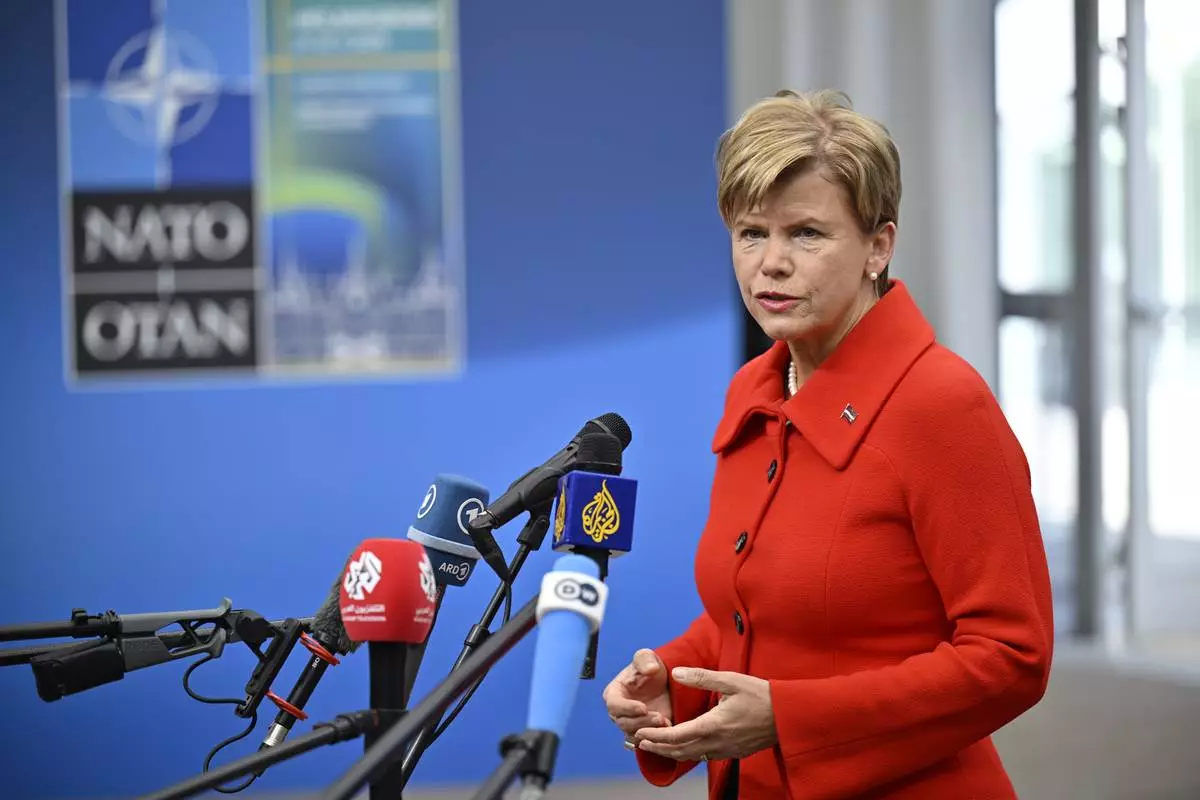
Ministers from the Netherlands and Norway were sanguine about Trump’s latest move, as was Latvian Foreign Minister Baiba Braže, who said allies knew the U.S. troop “posture was being reconsidered, and now there is no change of posture. For now.”

U.S. defense officials also expressed confusion. “We just spent the better part of two weeks reacting to the first announcement. We don’t know what this means either,” said one of two officials who spoke on condition of anonymity to discuss sensitive military matters.

But Rubio said Washington’s allies understand that changes in the U.S. troop presence in Europe will come as the Trump administration reevaluates its force needs. “I think there’s a broad recognition that there are going to be eventually less U.S. troops in Europe than there has historically been for a variety of reasons,” he said.

The latest surprise came despite a U.S. pledge to coordinate troop deployments, including one from NATO’s top military officer, U.S. Lt. Gen. Alex Grynkewich, on Wednesday.

Trump's initial announcement that he would withdraw troops came as he fumed over remarks by German Chancellor Friedrich Merz, who said that the U.S. was being “humiliated” by the Iranian leadership and criticized what he called a lack of strategy in that war.

Trump told reporters that the U.S. would be cutting even more than 5,000 and also announced new tariffs on European cars. Germany is the continent’s biggest auto producer.

Rubio insisted that Trump’s decision “is not a punitive thing. It’s just something that’s ongoing.”

About 80,000 U.S. troops are stationed in Europe. The Pentagon is required to keep at least 76,000 troops and major equipment on the continent unless NATO allies are consulted and there is a determination that such a withdrawal is in U.S. interests.

The withdrawal of 5,000 troops might drop numbers below that limit.

But Trump's latest post suggests that troop numbers in Europe would not change. Polish Foreign Minister Radek Sikorski welcomed the decision to send more forces to his country, saying it ensures that “the presence of American troops in Poland will be maintained more or less at previous levels.”

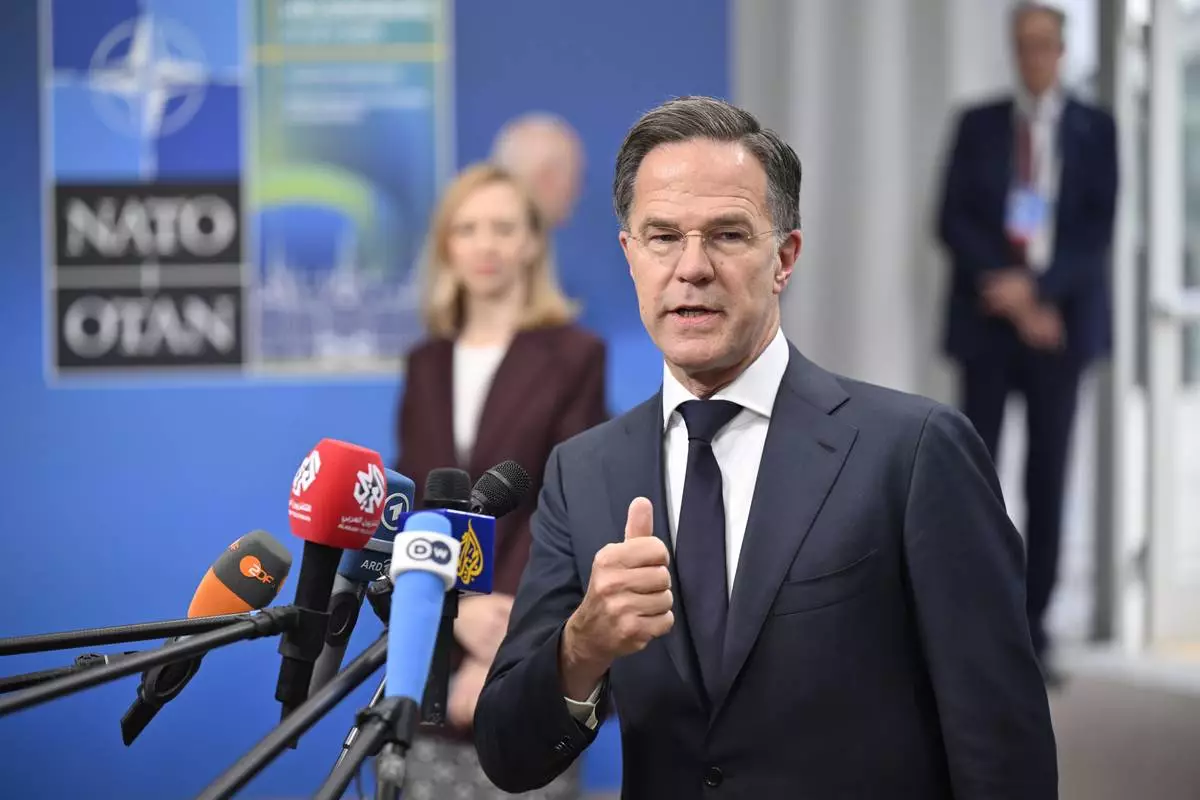
NATO Secretary-General Mark Rutte also welcomed the move. On Thursday, before Trump took to Truth Social again, Rutte had underlined that it was important for Europe to take care of its own security. “We have a process in place. This is normal business,” he told reporters.

At NATO headquarters in Brussels, meanwhile, U.S. officials briefed the allies on the Pentagon's aims for its commitments to the NATO Force Model, which involves contingency planning for Europe’s defense in the event of serious security concerns. It was widely expected that a further reduction of U.S. forces would be coming.

Asked whether any cuts were announced, Rutte said: “I’m afraid it’s much more complicated than that.” He said the procedure “is highly classified” and declined to give details.

Rubio played down concerns about a shift in U.S. force levels in Europe, saying: "Every country has to constantly reevaluate what their needs are, what their commitments are around the world, and how to properly structure that.”

Cook reported from Brussels. Associated Press writer Emma Burrows in London contributed.

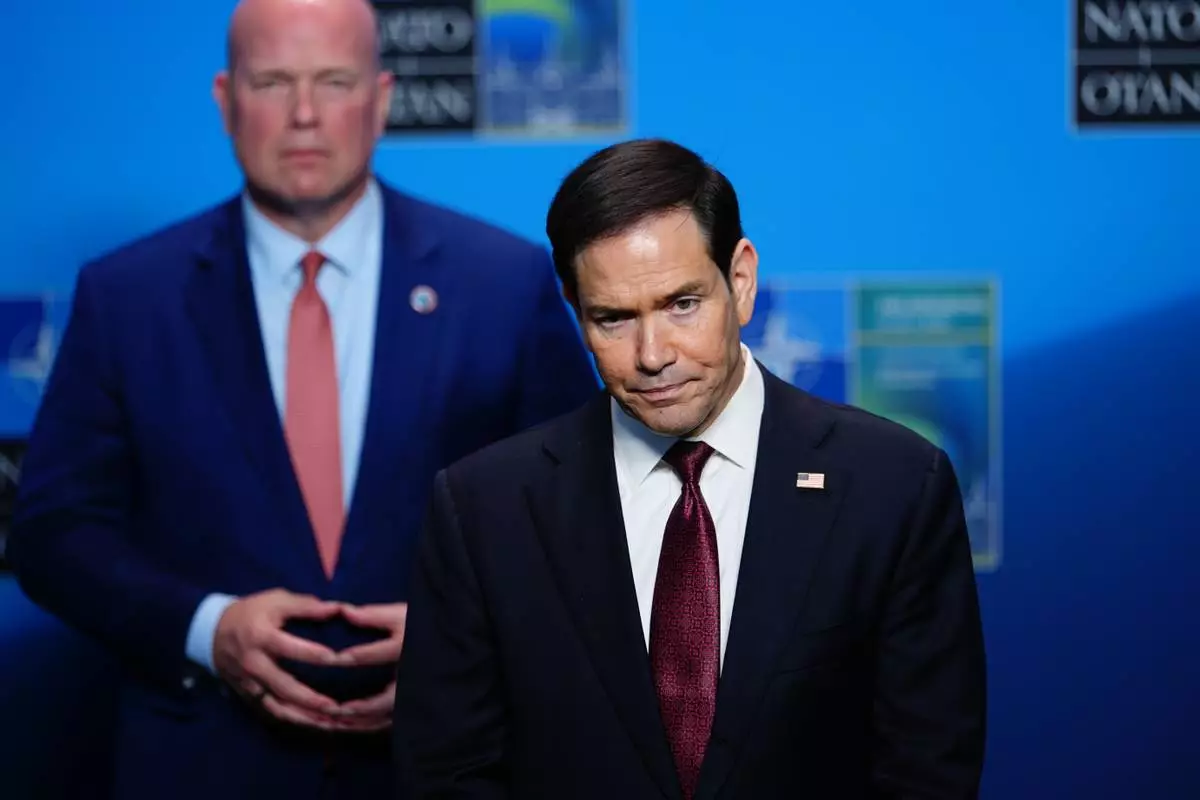
United States Secretary of State Marco Rubio speaks with journalists during a meeting of NATO foreign ministers in Helsingborg, Sweden, Friday, May 22, 2026. (AP Photo/Julia Demaree Nikhinson, Pool)

United States Secretary of State Marco Rubio speaks with journalists during a meeting of NATO foreign ministers in Helsingborg, Sweden, Friday, May 22, 2026. (AP Photo/Julia Demaree Nikhinson, Pool)

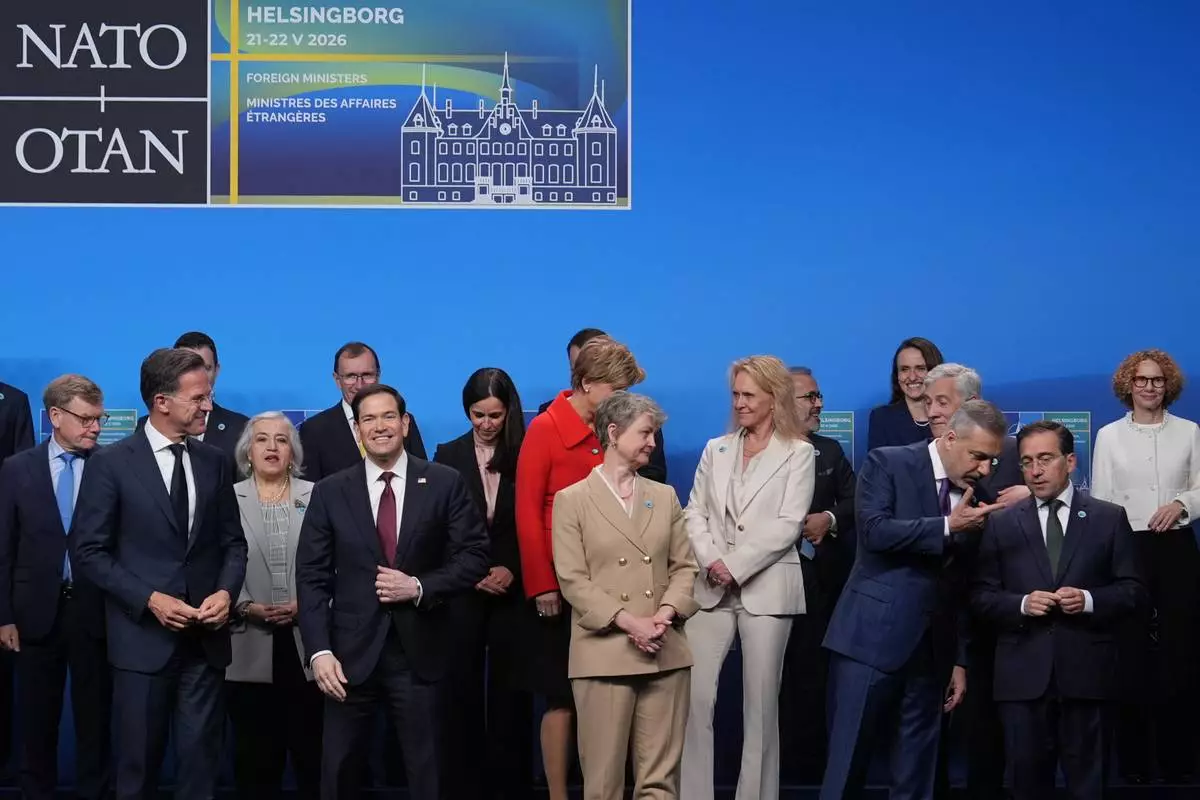
United States Secretary of State Marco Rubio, front second left, and NATO Secretary General Mark Rutte, front left, speak with each other during a group photo at a meeting of NATO foreign ministers in Helsingborg, Sweden, Friday, May 22, 2026. (AP Photo/Julia Demaree Nikhinson, Pool)

United States Secretary of State Marco Rubio, front second left, and NATO Secretary General Mark Rutte, front left, speak with each other during a group photo at a meeting of NATO foreign ministers in Helsingborg, Sweden, Friday, May 22, 2026. (AP Photo/Julia Demaree Nikhinson, Pool)

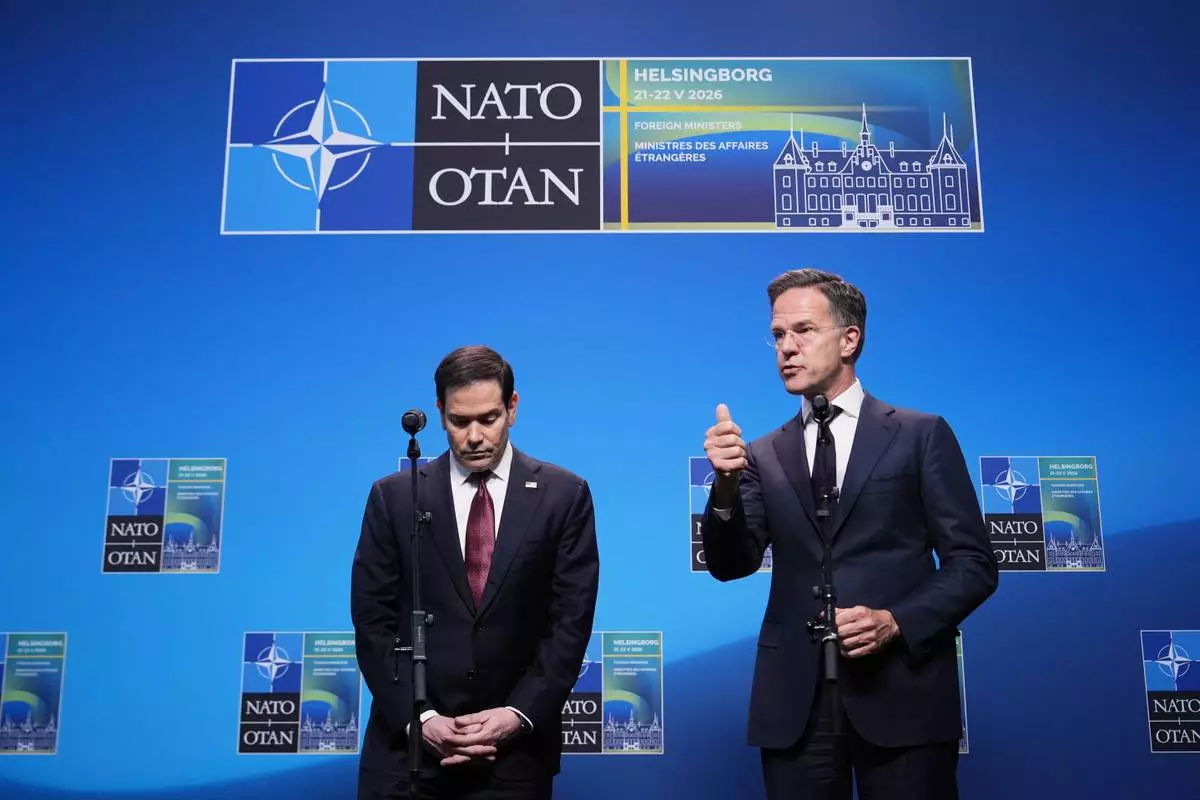
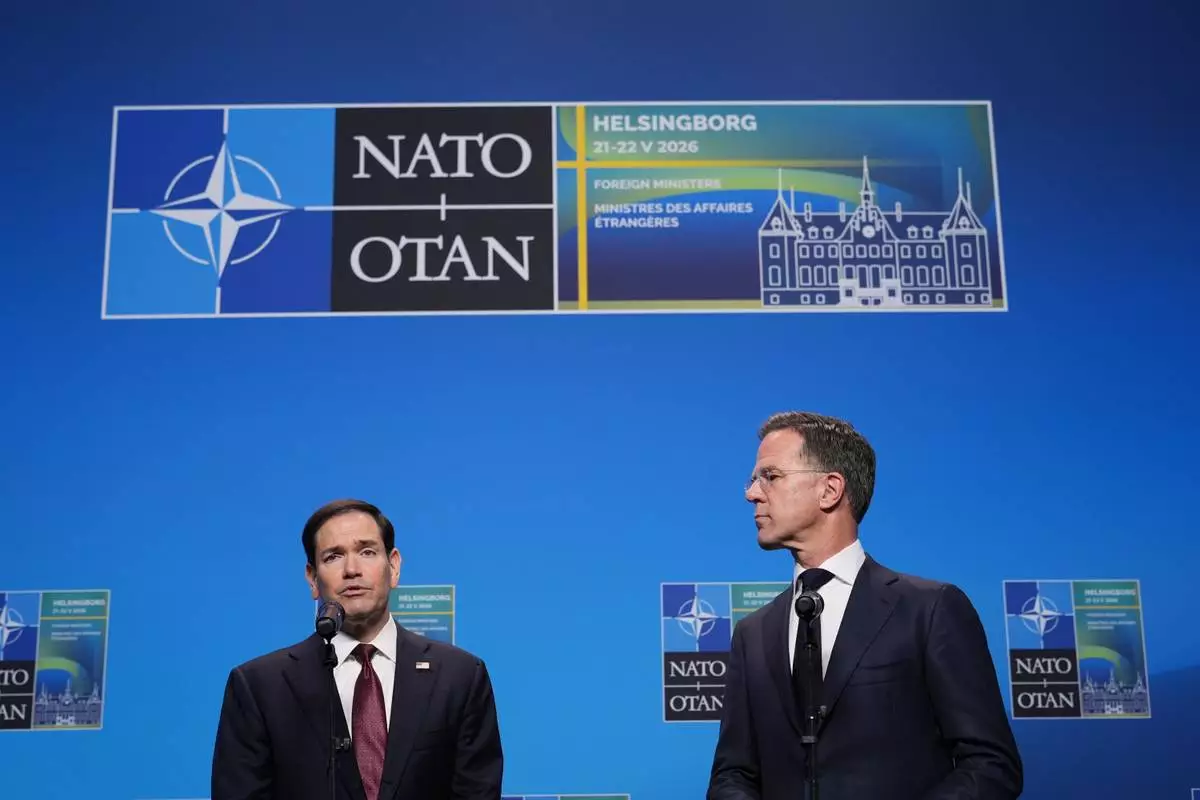
United States Secretary of State Marco Rubio, left, and NATO Secretary General Mark Rutte look at each other as they deliver a statement during a meeting of NATO foreign ministers in Helsingborg, Sweden, Friday, May 22, 2026. (AP Photo/Julia Demaree Nikhinson, Pool)

United States Secretary of State Marco Rubio, left, and NATO Secretary General Mark Rutte look at each other as they deliver a statement during a meeting of NATO foreign ministers in Helsingborg, Sweden, Friday, May 22, 2026. (AP Photo/Julia Demaree Nikhinson, Pool)

Latvian Foreign Minister Baiba Braže speaks at the doorstep of the NATO foreign ministers' meeting at Sea U in Helsingborg, Sweden, Friday, May 22, 2026. (Johan Nilsson/TT News Agency via AP)

Latvian Foreign Minister Baiba Braže speaks at the doorstep of the NATO foreign ministers' meeting at Sea U in Helsingborg, Sweden, Friday, May 22, 2026. (Johan Nilsson/TT News Agency via AP)

United States Secretary of State Marco Rubio, left, and NATO Secretary General Mark Rutte deliver a statement during a meeting of NATO foreign ministers in Helsingborg, Sweden, Friday, May 22, 2026. (AP Photo/Julia Demaree Nikhinson, Pool)

United States Secretary of State Marco Rubio, left, and NATO Secretary General Mark Rutte deliver a statement during a meeting of NATO foreign ministers in Helsingborg, Sweden, Friday, May 22, 2026. (AP Photo/Julia Demaree Nikhinson, Pool)

NATO Secretary General Mark Rutte speaks to media at the NATO Foreign Ministers' meeting in Helsingborg, Sweden, Friday, May 22, 2026. (Johan Nilsson/TT News Agency via AP)

NATO Secretary General Mark Rutte speaks to media at the NATO Foreign Ministers' meeting in Helsingborg, Sweden, Friday, May 22, 2026. (Johan Nilsson/TT News Agency via AP)

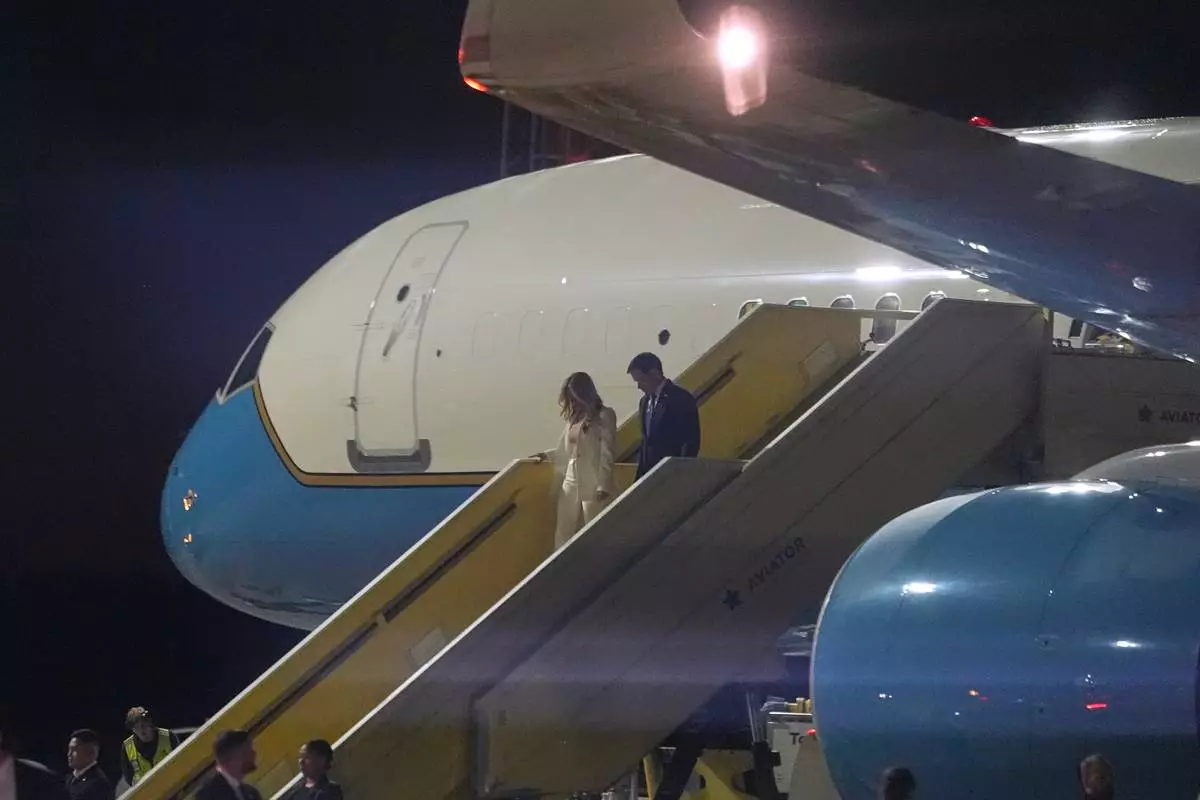
Secretary of State Marco Rubio arrives with his wife Jeanette at Malmo Airport, Friday, May 22, 2026, in Malmo-Sturup, Sweden, ahead of a NATO foreign ministers meeting. (AP Photo/Julia Demaree Nikhinson, Pool)

Secretary of State Marco Rubio arrives with his wife Jeanette at Malmo Airport, Friday, May 22, 2026, in Malmo-Sturup, Sweden, ahead of a NATO foreign ministers meeting. (AP Photo/Julia Demaree Nikhinson, Pool)

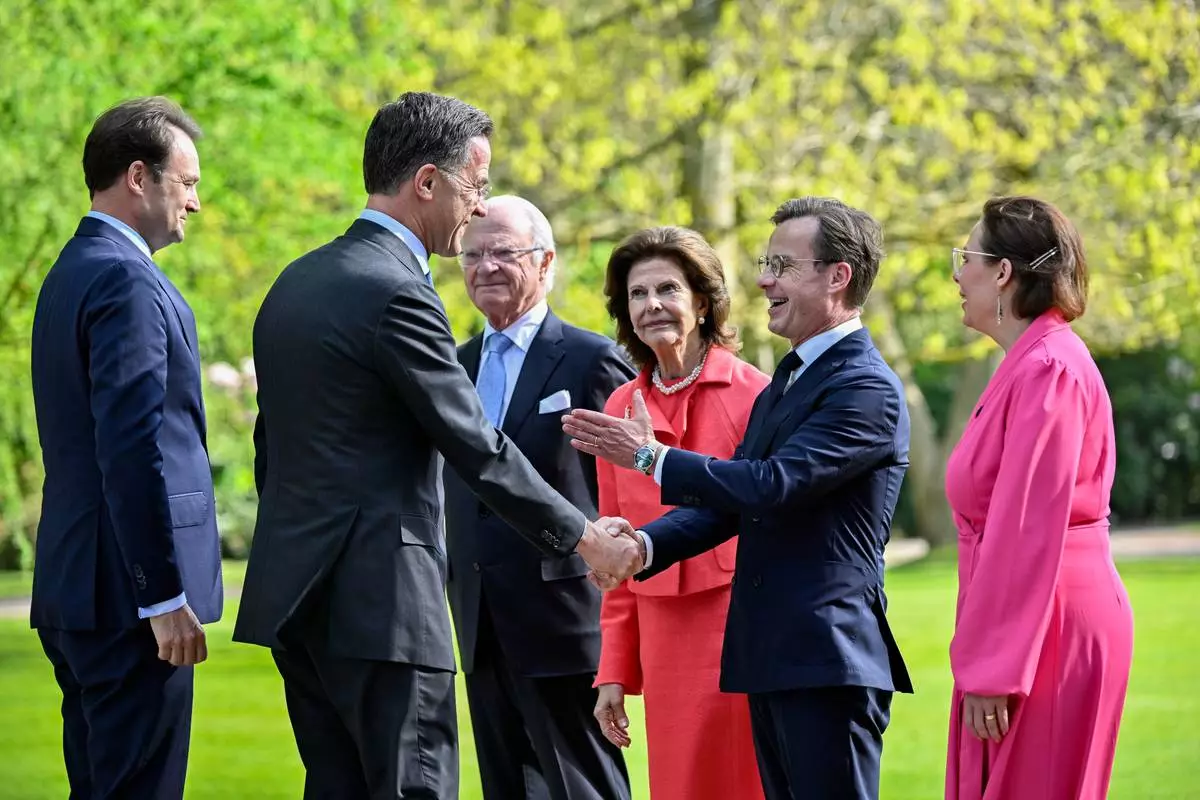
NATO Secretary General Mark Rutte, second from left, shakes hands with Prime Minister of Sweden Ulf Kristersson, as he is greeted by King Carl Gustaf of Sweden, Queen Silvia of Sweden and Minister for Foreign Affairs of Sweden Maria Malmer Stenergard, right, before a dinner at Sofiero Castle in Helsingborg, Sweden, Thursday May 21 2026. (Johan Nilsson/TT News Agency via AP)

NATO Secretary General Mark Rutte, second from left, shakes hands with Prime Minister of Sweden Ulf Kristersson, as he is greeted by King Carl Gustaf of Sweden, Queen Silvia of Sweden and Minister for Foreign Affairs of Sweden Maria Malmer Stenergard, right, before a dinner at Sofiero Castle in Helsingborg, Sweden, Thursday May 21 2026. (Johan Nilsson/TT News Agency via AP)

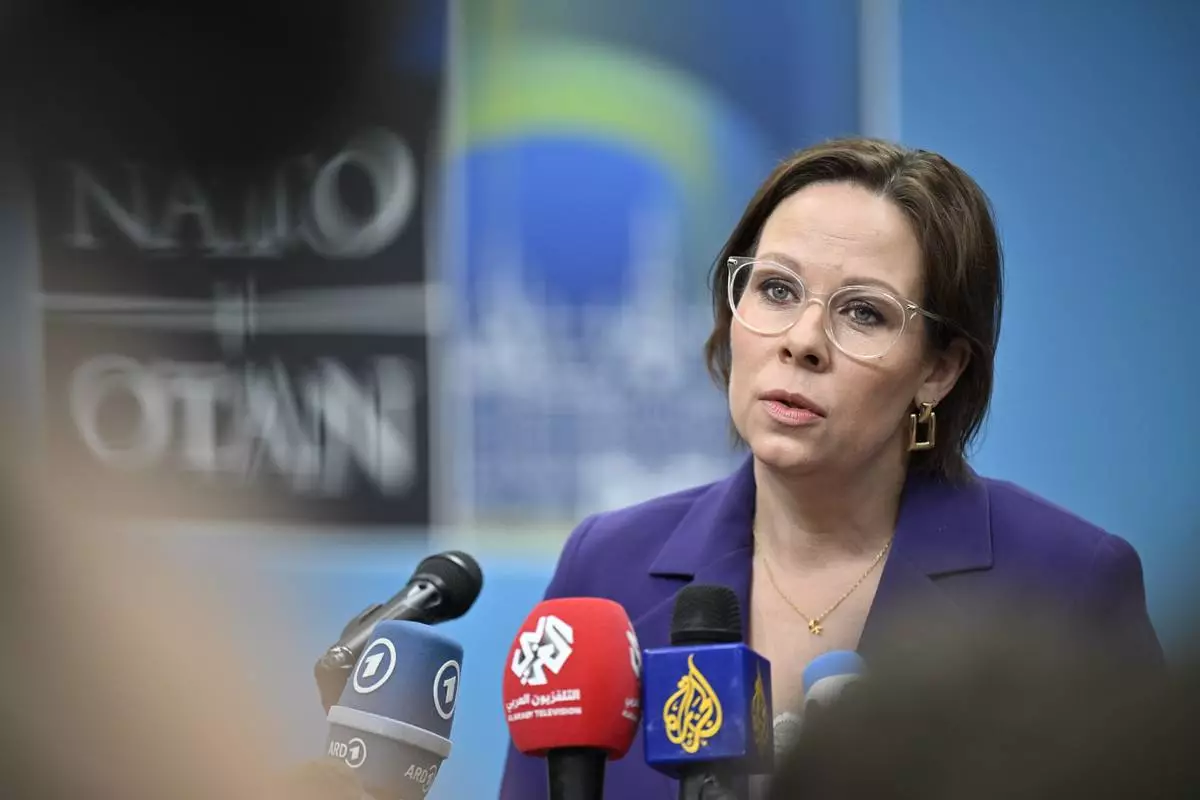
Swedish Foreign Minister Maria Malmer Stenergard speaks to media at the NATO Foreign Ministers' meeting in Helsingborg, Sweden, Friday, May 22, 2026. (Johan Nilsson/TT News Agency via AP)

Swedish Foreign Minister Maria Malmer Stenergard speaks to media at the NATO Foreign Ministers' meeting in Helsingborg, Sweden, Friday, May 22, 2026. (Johan Nilsson/TT News Agency via AP)

Recommended Articles