Skip to Content Facebook Feature Image

EU leaders call for Middle East de-escalation for energy security

HotTV

HotTV

HotTV

EU leaders call for Middle East de-escalation for energy security

2026-03-20 14:19 Last Updated At:15:44

European Union (EU) leaders on Thursday called for de-escalation of the Middle East conflicts that triggered energy security issues and intensified geopolitical tensions.

Thursday's summit is widely regarded as one with the largest number of topics in recent years, with leaders arriving from early morning for multiple rounds of high-level consultations.

The latest draft conclusion of the summit is 24 pages long, covering eight major areas and more than 70 issues. The multitude of topics and the breadth of coverage are rare in recent years.

The Middle East tensions were the summit's focal point. Several diplomats and EU officials highlighted that escalating conflicts in the region have intensified energy market volatility, forcing European countries to confront rising energy costs and complex geopolitical risks that are closely intertwined with energy supplies.

EU leaders' statements reveal a three-pronged strategic focus: de-escalating regional tensions, ensuring the security of shipping lanes through the Strait of Hormuz, and strengthening energy and security independence.

Key figures, including German Chancellor Friedrich Merz and French President Emmanuel Macron, emphasized that military actions by the U.S. and Israel against Iran are not "Europe's war", calling for restraint and urging all parties to cease hostilities promptly to create conditions conducive to renewed negotiations.

Spanish Prime Minister Pedro Sanchez notably expressed opposition to any military intervention against Iran, stating prior to the summit that such actions violate international law.

On the issue of the Strait of Hormuz, the EU reiterated the importance of maintaining freedom of navigation but stopped short of proposing specific further steps. This cautious stance underscores Europe's attempt to balance security concerns with the desire to avoid direct involvement in rising regional conflicts.

Analysts suggest that the EU should mainly rely on diplomatic efforts, economic measures, and limited security investments to address the current dual crises in Ukraine and the Middle East.
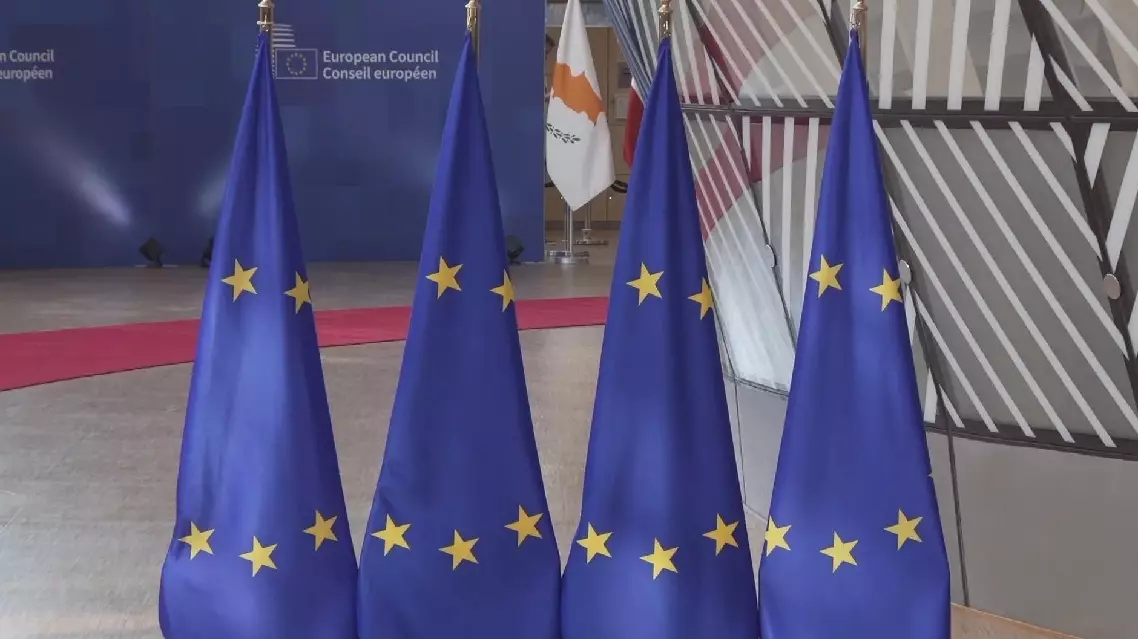
EU leaders call for Middle East de-escalation for energy security


EU leaders call for Middle East de-escalation for energy security
Soaring oil prices triggered by the Middle East conflict are rippling through Japan's economy, which could worsen as summer is approaching, according to a Japanese economist.

Japan relies on the Middle East for more than 90 percent of its crude oil imports, making it highly vulnerable to the effective closure of the Strait of Hormuz following the outbreak of the Middle East conflict at the end of February. The disruption has driven sharp rises in crude oil prices in the country.

In an interview with China Media Group (CMG), Kohei Misunami, associate professor at Teikyo University's Faculty of Economics, expressed concerns about how Japan's policymakers will use existing financial resources to rein in energy costs.

"If the war lasts longer than four weeks and develops into several months, due to the issue of financial resources, how to utilize existing financial resources while suppressing the rise in domestic gasoline prices -- such a balance will become a rather difficult policy operation," he said.

The professor warned that due to the time lag in transmission of prices between energy and electricity, persistently high oil prices will push up electric bills during the upcoming summer -- the peak power consumption season.

"It usually takes about three to four months for fuel price increases to be reflected in electricity prices. It's March now. In three months -- June, July, August, temperatures will be gradually rising, and the demand for power will surge too. The combination of these two factors is worrying," he said.

The Japanese government started an unprecedented oil reserve release on Monday to ease the impact of volatile international oil prices. The release totaled around 80 million barrels, equal to roughly 45 days of Japan's domestic oil consumption, marking the largest-ever drawdown of the country's oil reserves.

Japan feels pain as Middle East crisis drives up fuel prices

Japan feels pain as Middle East crisis drives up fuel prices

Recommended Articles