Cuba's education sector is facing an unprecedentedly severe test due to the energy crisis stemming from U.S. restrictions.
At a public secondary school with more than 900 students in downtown Havana, energy shortages and frequent power outages have forced the school authorities to cancel some courses as well as all schooling hours in the afternoon.
"Because of power outages, physics labs where electrical experiments were conducted, chemistry labs and computer science labs are not functioning, so our study has to stay at the theoretical level. This has affected the students' practices and learning outcomes," said a student named Jorge Carrazana.
While the school has to reschedule classes based on the teachers' travel distances from their residences, the lack of fuel is also disrupting commuting of many students, who thus are not able to reach school on time.
School authorities is encouraging more communications between teachers and students to cover all basic schooling contents, and the teachers are designing new ways to present the courses with as little electricity as possible.
"Although the school's education process is not entirely normal, we are still persisting in advancing it. Though being carried out under very difficult circumstances, education hasn't stopped. Despite numerous difficulties, the students are still happy, full of motivation and eager to continue their studies to be able to take the college entrance examination," said Zaida Lopez, a teacher of the school.
According to data from UNESCO on February 18, fuel shortages have made it necessary to implement temporary adjustments such as blended learning modalities and the reorganization of schedules, affecting more than one million students in Cuba.
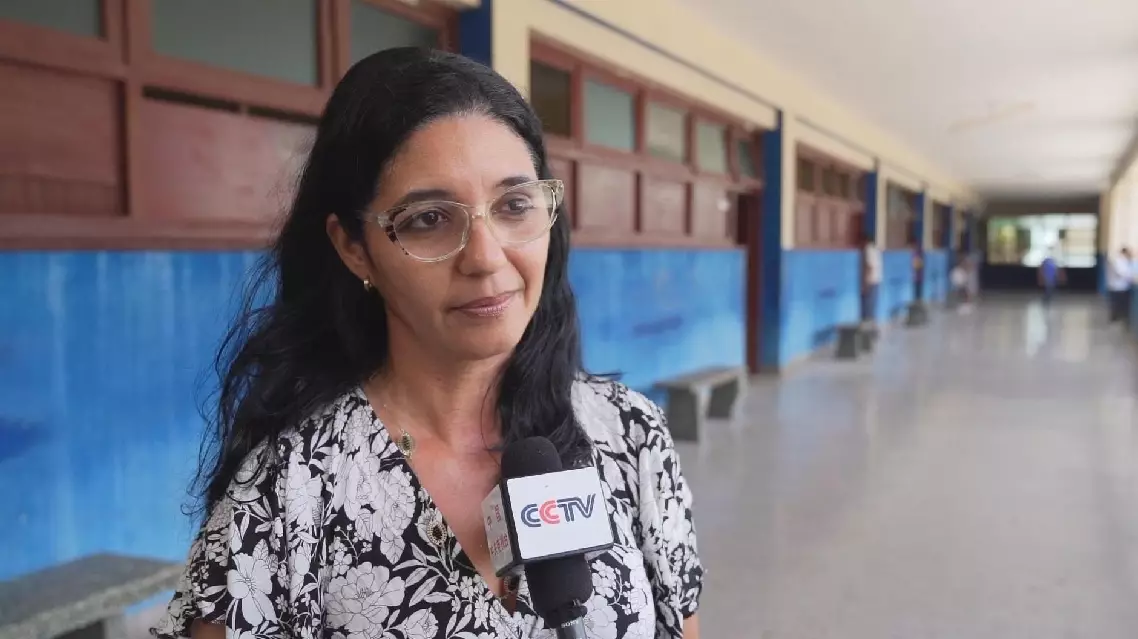
Cuba's education sector under unprecedented test due to energy crisis amid U.S. restrictions
The targeted killings of Iran's top leadership, including security chief Ali Larijani, have significantly narrowed diplomatic options and may push the country toward a more hawkish posture, according to a political analyst.
Tensions between Iran and Israeli-U.S. forces have continued to escalate, as a series of targeted strikes killed several high-ranking Iranian officials in recent days.
Among them were Secretary of the Supreme National Security Council (SNSC) Ali Larijani, Gholam-Reza Soleimani, chief commander of the voluntary Basij force of the Islamic Revolutionary Guard Corps, and Intelligence Minister Esmaeil Khatib.
Larijani was widely seen as a pragmatic and experienced politician who played a central role in nuclear negotiations and was viewed by many as a bridge between Iran and the West.
Iran's Supreme Leader, Mojtaba Khamenei, has vowed that those responsible will soon have to pay.
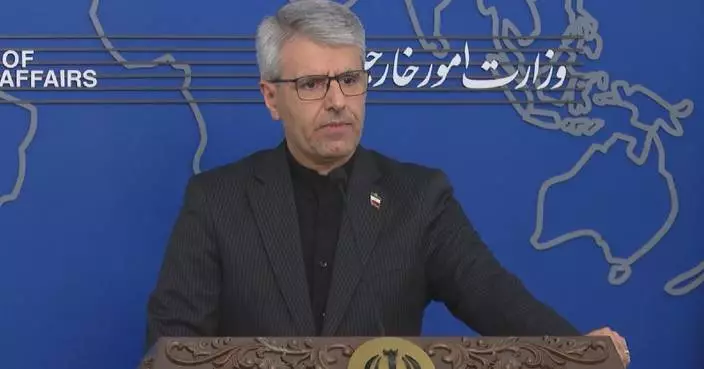
In an interview with China Global Television Network (CGTN), Foad Izadi, a political analyst, suggested that the killing of Ali Larijani may represent an effort to eliminate any remaining hopes for diplomatic engagement between Iran and the United States.
"He was a moderate [politician]. He basically wanted to make sure that Iran and the United States reach a political agreement. And I think the reason Israelis killed him was because Israelis don't want Iran and the United States to reach a political agreement. So, he was one of the people who could manage that between the political establishment here. And this is very logical: if these people are killed, the people who will replace individuals like Mr. Larijani will become more hawkish," Izadi said.
Funerals for Larijani and Basij commander Gholam-Reza Soleimani were held in Tehran, drawing a large number of mourners. They expressed both grief and anger, vowing revenge against the United States and Israel.
On Feb. 28, Israel and the United States launched joint attacks on Tehran and several other Iranian cities, killing the country's supreme leader, senior military commanders and civilians. Iran responded with waves of missile and drone attacks targeting Israel and U.S. assets in the Middle East.
Killing of Iran's top security officials narrows diplomatic path: political analyst