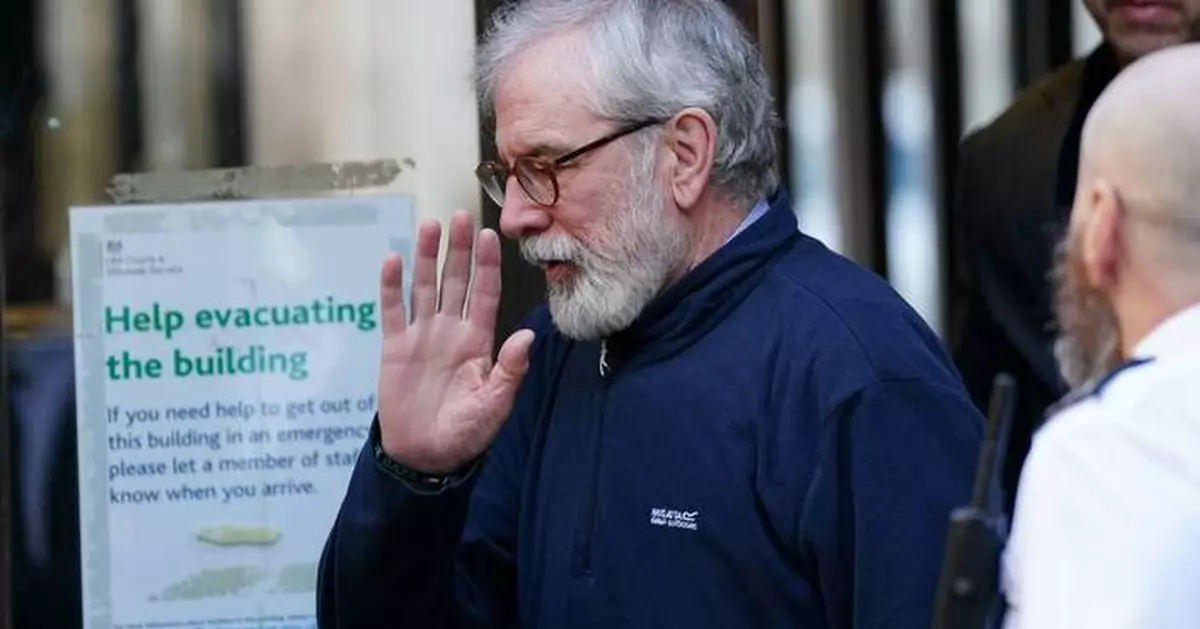
LONDON (AP) — Three victims of bombings in England by the Irish Republican Army brought an end Friday to their damages claim against former Sinn Féin leader Gerry Adams.
On what was to be the last day of the two-week civil trial in the U.K.'s High Court in London, the three men's lawyer Anne Studd said the claim would be discontinued after “proceedings developed overnight."
She said the development was related to an argument around “abuse of process" and that her clients would not be liable for any costs related to Adams.
No further details were provided.
Adams was being sued in London's High Court for allegedly being directly responsible and complicit for decisions by the Provisional IRA to detonate bombs in England in 1973 and 1996. He was being sued for a symbolic 1 pound ($1.34) in damages.
Adams, 77, who gave evidence in the trial but who was not in court Friday, welcomed the decision by the claimants and said he had “nothing but sympathy” for them.
“But at times it verged upon a show trial, anonymous secret agents of the British state hiding behind the screen, others who were up to their necks in the subversion that the British state visited upon people of this part of the island of Ireland," he said in Belfast surrounded by Sinn Fein lawmakers.
Adams is one of the most influential figures of Northern Ireland's decades of conflict. He led the IRA-linked political party Sinn Féin between 1983 and 2018 and helped broker the 1998 Good Friday peace accord. He has always denied being an IRA member, though some former colleagues have said he was one of its leaders.
The trio claimed Adams was a member of the IRA's decision-making Army Council and was as responsible as the men who planted the explosives during “the Troubles,” the three decades of violence involving Irish republican and British loyalist militants and U.K. soldiers. Some 3,600 people were killed, most in Northern Ireland, though the IRA also set off bombs in England.
John Clark, a police officer, had shrapnel lodged in his head and hand from the 1973 Old Bailey courthouse bombing in London. Jonathan Ganesh suffered psychologically from the 1996 London Docklands bombing. Barry Laycock was left disabled and struggled financially after the 1996 Arndale shopping center bombing in Manchester.
Laycock said he is “completely devastated” by the discontinuation of the case but that the “fair trial we sought, getting Mr. Adams into the dock for the first time, was achieved.”
In their evidence, the three men said they had not brought claims earlier because they did not realize they could do so, could not afford it, were suffering from mental or physical injuries and feared violent reprisals.
Adams was never charged with the bombings or arrested on suspicion of being connected to them. He was charged with being an IRA member in 1978, but the case was later dropped because of a lack of evidence.
Adams won a 100,000 ($116,000 at the time) libel verdict last year against the BBC over a claim in a television documentary that he authorized the killing of an informant inside the Irish republican movement.
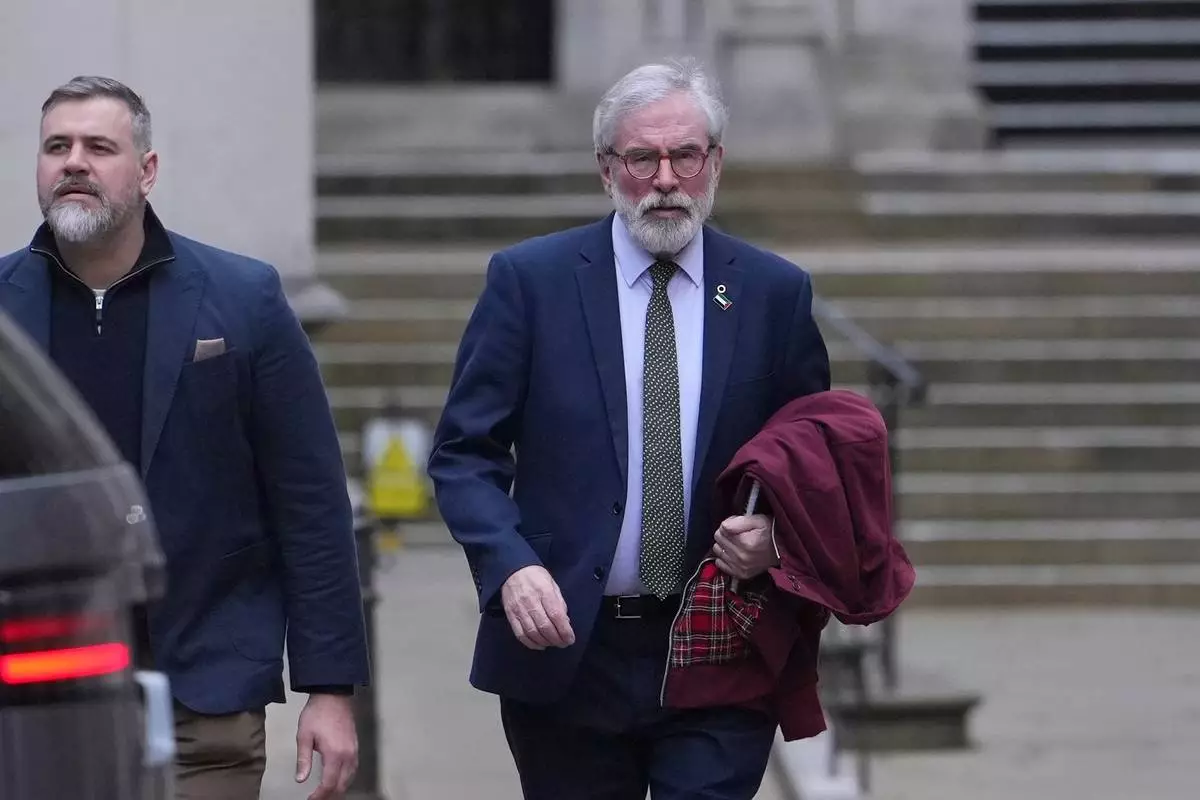
Former Sinn Fein president Gerry Adams leaves the Royal Courts of Justice, in London, Monday, March 16, 2026. (AP Photo/Kin Cheung)
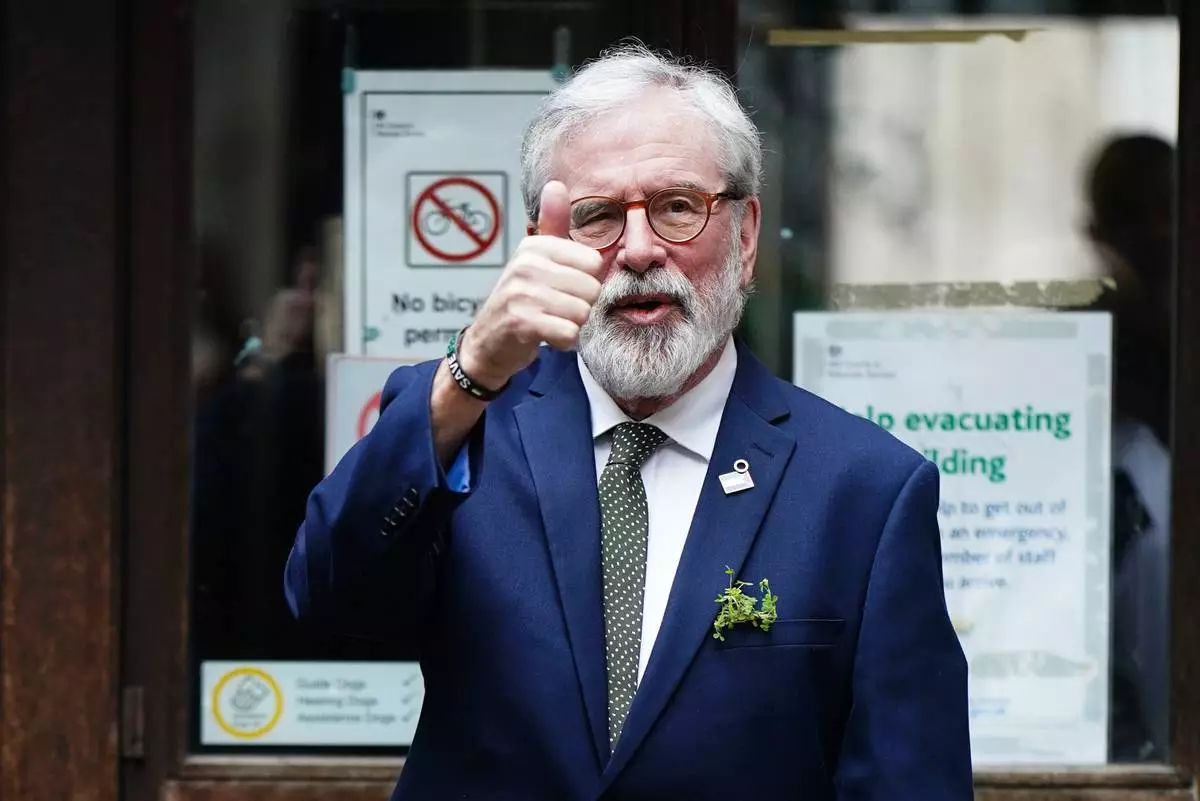
Gerry Adams arrives at the Royal Courts of Justice where a civil claim is being brought against the former Sinn Fein president by three men who were injured in Provisional IRA bombings on the UK mainland in the 1970s and 1990s, in London, Tuesday March 17, 2026. (Aaron Chown/PA via AP)
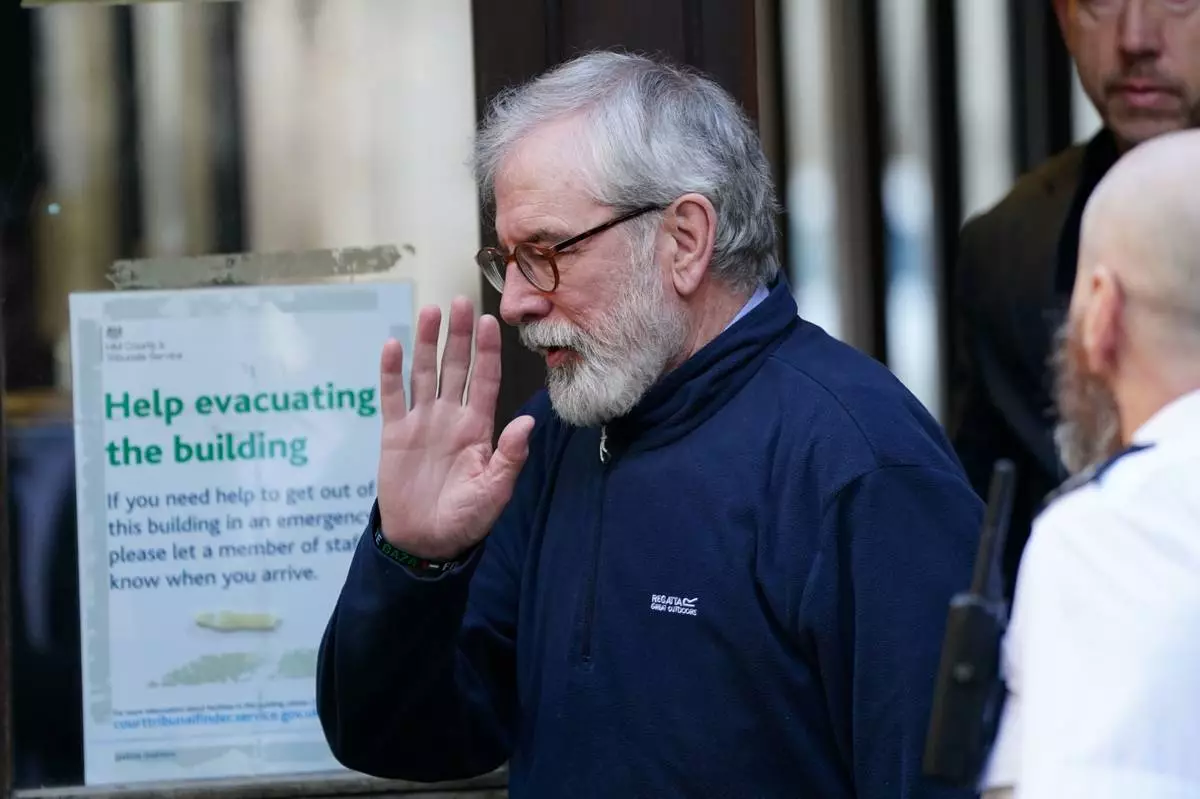
Former Sinn Fein president Gerry Adams arrives at the Royal Courts of Justice, in central London, where a civil claim is being brought against him for just £1 in damages by three men who were injured in Provisional IRA bombings on the UK mainland in the 1970s and 1990s, on Wednesday March 18, 2026. (Ben Whitley/PA via AP)
WASHINGTON (AP) — The Senate on Saturday blocked an amendment that would ban transgender athletes from playing in women’s sports, rejecting one of President Donald Trump’s priorities as he pressures Congress to act on a broad voting bill.
Senators were holding a rare weekend session to debate the voting legislation, which would put in place strict new requirements for voter registration and require photo IDs at the polls in an effort to prevent people in the country illegally from casting ballots.
The House passed the bill earlier this year, but the Republican president has since said he wants additional priorities added to the legislation, including the sports ban for transgender athletes and a ban on all mail-in voting.
Democrats are expected to eventually block the broader legislation, arguing that it would make voting more difficult for large groups of people. Despite Trump's pressure, Republican senators have said repeatedly that they do not have enough support to jettison the legislative filibuster, which triggers a 60-vote threshold in the 100-member Senate, or find another workaround to pass the bill. Republicans hold 53 seats.
Still, Republicans put the legislation — the Safeguard American Voter Eligibility Act, also known as the SAVE America Act or the SAVE Act — on the Senate floor this week for a lengthy debate as Trump has said he will not sign other bills until they pass the voting measure. Senate Majority Leader John Thune, R-S.D, said Saturday morning that Republicans “haven’t made any final decisions about how to conclude this.”
“What we are trying to do is ensure that we are having a fulsome debate,” Thune said, and put everyone on the record “one way or the other.”
The amendment that was blocked by a 49-41 vote would penalize educational institutions that receive federal funding if they permitted individuals assigned male at birth to participate “in an athletic program or activity that is designated for women or girls.”
Trump also wants Congress to block sex reassignment surgeries on some minors as part of the debate on the voting bill. It is unclear whether the Senate will hold a vote on that.
In addition, Trump has said he wants the House-passed bill to include a ban on most mail-in balloting. Trump has criticized mail in ballots for years and used it as a centerpiece of his efforts to overturn his defeat to Democrat Joe Biden in the 2020 presidential election. A ban on mail ballots would likely face strong pushback from lawmakers.
Thune said the Senate will soon vote on an amendment that would force all states to require photo identification at the polls. Democrats blocked a similar bill on the floor last week, but Republicans say they want to put them on the record on that issue with a roll call vote.
“There are no good excuses” not to require photo identification, said Republican Sen. John Husted, a former Secretary of State in Ohio. “This works. It's being implemented all over the country.”
Illegal voting by noncitizens is rare. Still, a poll by the Pew Research Center in August 2025 found that about 8 in 10 US adults said they favor requiring all voters to show government-issued photo identification to vote.
Thirty-six states require some form of identification at the polls, according to the National Conference of State Legislatures, and 23 states require photo identification. The SAVE America Act would require photo identification and could override many forms of ID allowed in states across the country — including fishing and hunting licenses or college IDs. It would also require that people voting by mail include a photocopy of their ID with their ballot.
Democrats say they support some voter ID laws, but argue that the proposed ID requirements in the bill, along with strict new requirements for voter registration, would prevent many people from voting. The bill would also allow the Homeland Security Department to review state voter rolls, which Democrats say could lead to voters being purged.
The new rules would be “a bureaucratic nightmare,” said Senate Minority Leader Chuck Schumer, D-N.Y.
“They want to end vote by mail, end registering online, end registering on college campuses and in churches, and even end registering at the DMV, where of course you have to show ID,” Schumer said.
Trump, backed by an enthusiastic online campaign of his supporters, has made the voting legislation his top congressional priority. He has said it is necessary for Republicans to win the midterm elections - even after Republicans won the White House and Congress without it in 2024.
“THERE IS NOTHING THAT IS MORE IMPORTANT FOR THE U.S.A.,” Trump posted on social media on Friday.
He has pressured Thune to scrap the filibuster, but Thune has stood firm in saying that there isn't enough Republican support to do that. He is expected to eventually end the floor debate and call for a vote to move forward on the legislation, and Democrats would then block the bill.
But it's not clear when that will happen — or if Trump will be satisfied enough with days or weeks of debate to lift his promised blockade on other legislation.
Thune would only say on Saturday that “at some point that’s a that’s a possibility” that Republicans will start the process of ending the debate. The Senate is scheduled to leave town at the end of next week for a two-week spring recess.
Republican senators have largely backed Thune's efforts. But they say the end point is uncertain, for now.
“I don't know,” when it will end, Republican Sen. John Kennedy of Louisiana said. “I don't think anybody does."
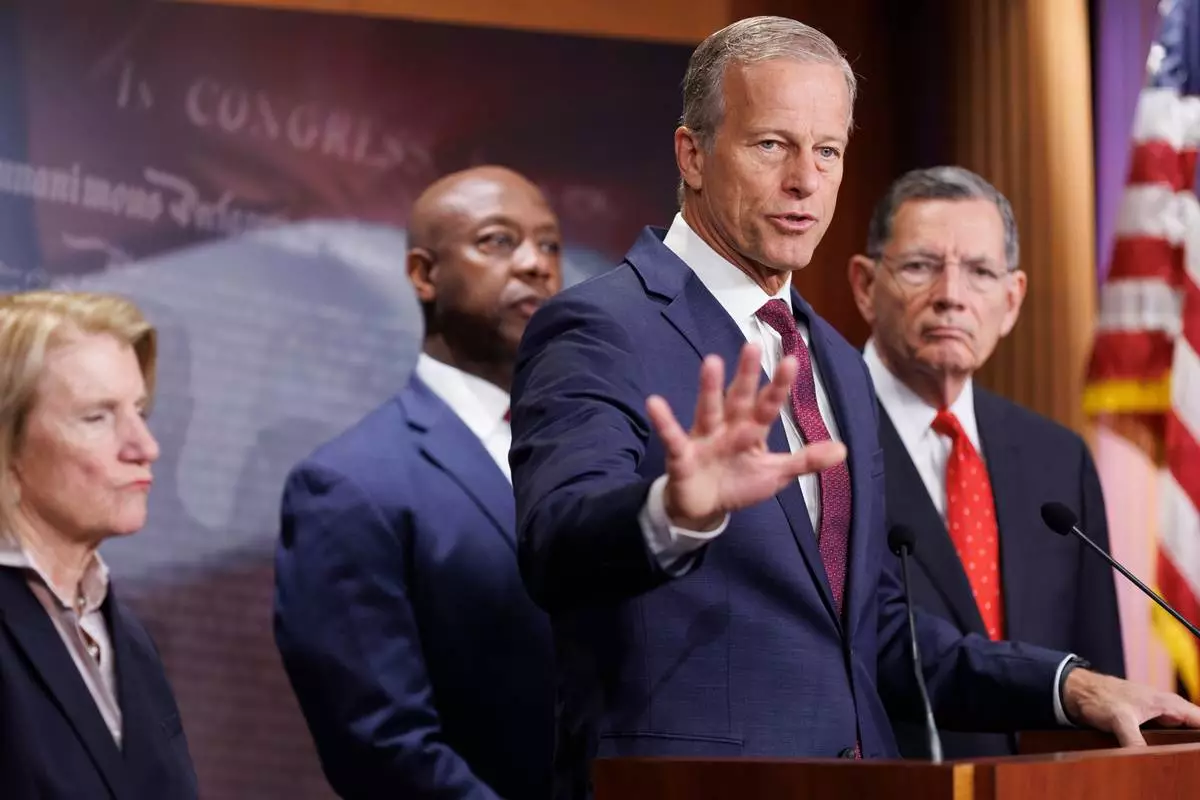
Senate Majority Leader John Thune R-S.D., speaks during a news conference on Capitol Hill on Saturday, March 21, 2026, in Washington. (AP Photo/Tom Brenner)
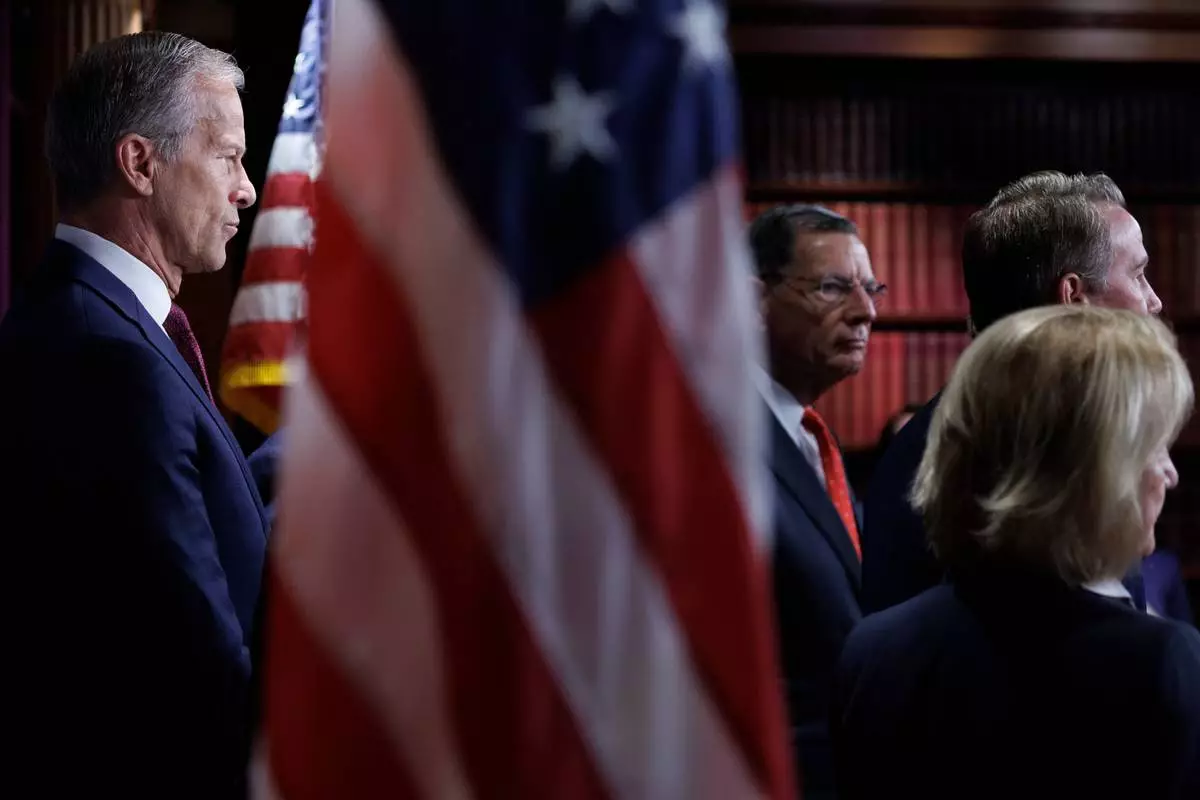
Senate Majority Leader John Thune R-S.D., looks on as fellow Republicans take questions from reporters during a news conference on Capitol Hill on Saturday, March 21, 2026, in Washington. (AP Photo/Tom Brenner)
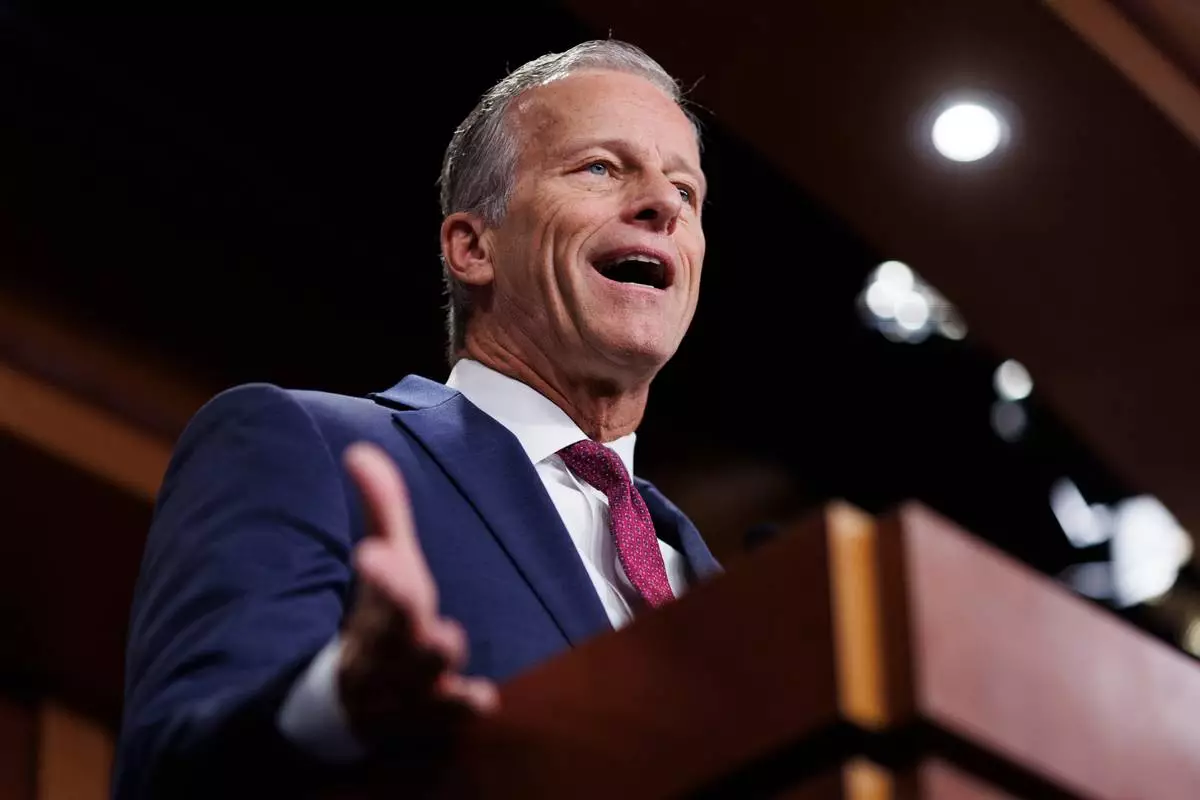
Senate Majority Leader John Thune R-S.D., speaks during a news conference on Capitol Hill on Saturday, March 21, 2026, in Washington. (AP Photo/Tom Brenner)
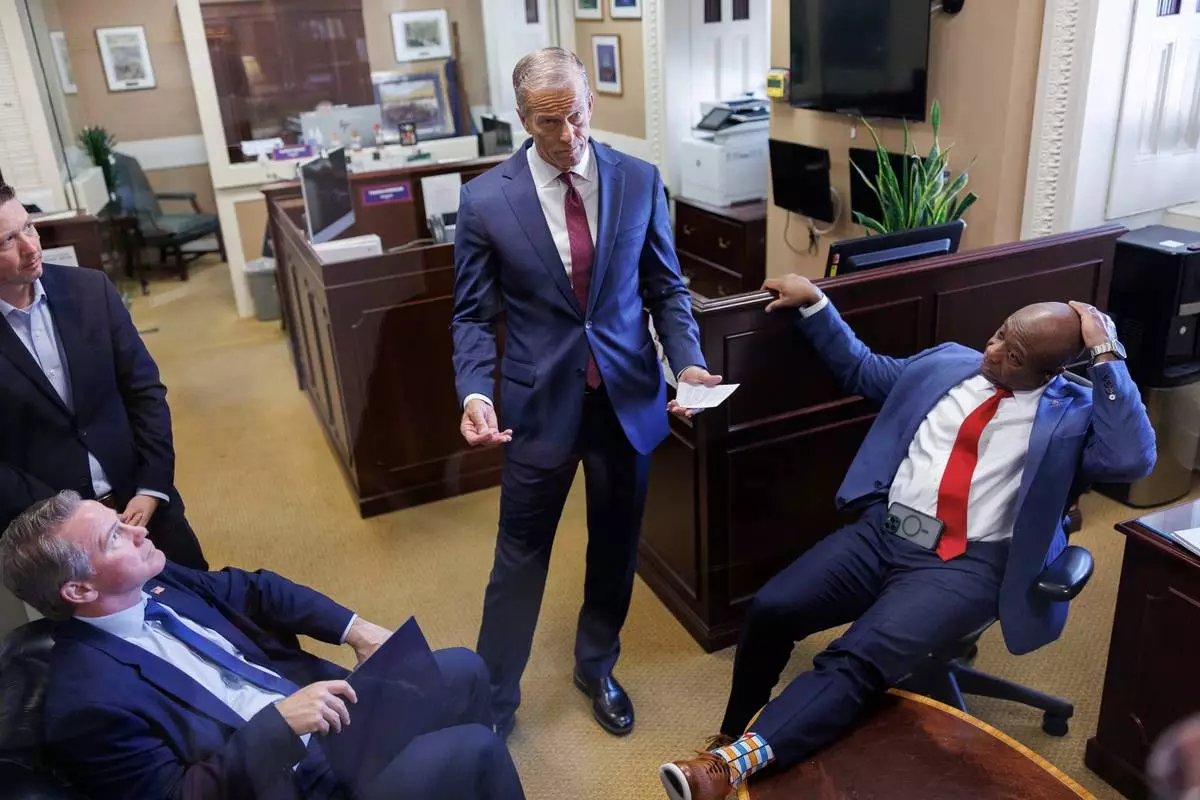
Senate Majority Leader John Thune R-S.D., center, privately speaks to Sen. Jon Husted, R-Ohio, and Sen. Tim Scott, R-S.C., ahead of a news conference on Capitol Hill on Saturday, March 21, 2026, in Washington. (AP Photo/Tom Brenner)