Skip to Content Facebook Feature Image

Senate blocks amendment on transgender athletes during weekend session on voting bill

News

Senate blocks amendment on transgender athletes during weekend session on voting bill
News

News

Senate blocks amendment on transgender athletes during weekend session on voting bill

2026-03-22 04:54 Last Updated At:05:00

WASHINGTON (AP) — The Senate on Saturday blocked an amendment that would ban transgender athletes from playing in women’s sports, rejecting one of President Donald Trump’s priorities as he pressures Congress to act on a broad voting bill.

Senators were holding a rare weekend session to debate the voting legislation, which would put in place strict new requirements for voter registration and require photo IDs at the polls in an effort to prevent people in the country illegally from casting ballots.

More Images
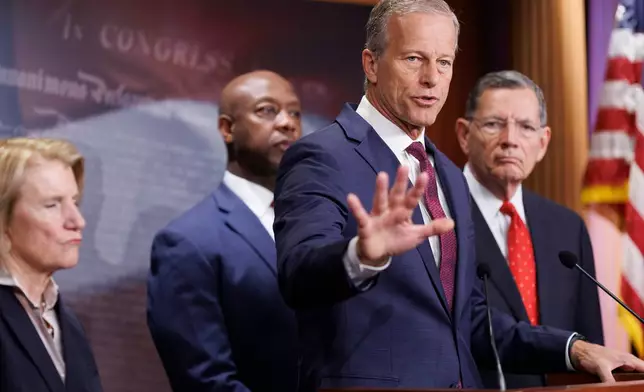
Senate Majority Leader John Thune R-S.D., speaks during a news conference on Capitol Hill on Saturday, March 21, 2026, in Washington. (AP Photo/Tom Brenner)
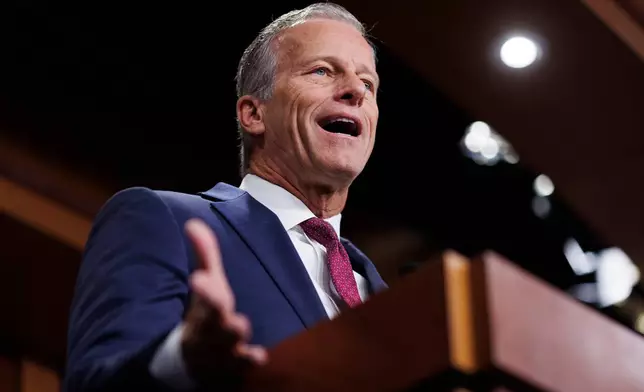
Senate Majority Leader John Thune R-S.D., speaks during a news conference on Capitol Hill on Saturday, March 21, 2026, in Washington. (AP Photo/Tom Brenner)
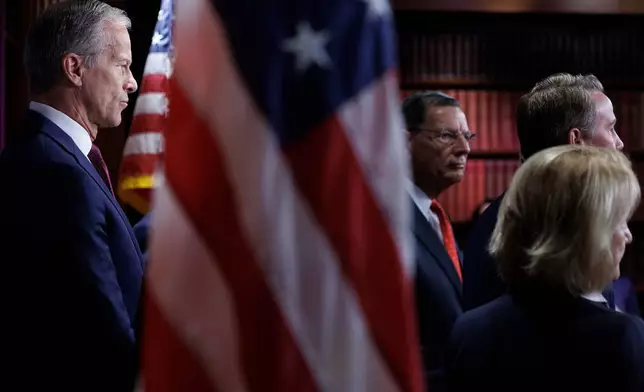
Senate Majority Leader John Thune R-S.D., looks on as fellow Republicans take questions from reporters during a news conference on Capitol Hill on Saturday, March 21, 2026, in Washington. (AP Photo/Tom Brenner)
Senate Majority Leader John Thune R-S.D., looks on as fellow Republicans take questions from reporters during a news conference on Capitol Hill on Saturday, March 21, 2026, in Washington. (AP Photo/Tom Brenner)

Senate Majority Leader John Thune R-S.D., speaks during a news conference on Capitol Hill on Saturday, March 21, 2026, in Washington. (AP Photo/Tom Brenner)

Senate Majority Leader John Thune R-S.D., speaks during a news conference on Capitol Hill on Saturday, March 21, 2026, in Washington. (AP Photo/Tom Brenner)

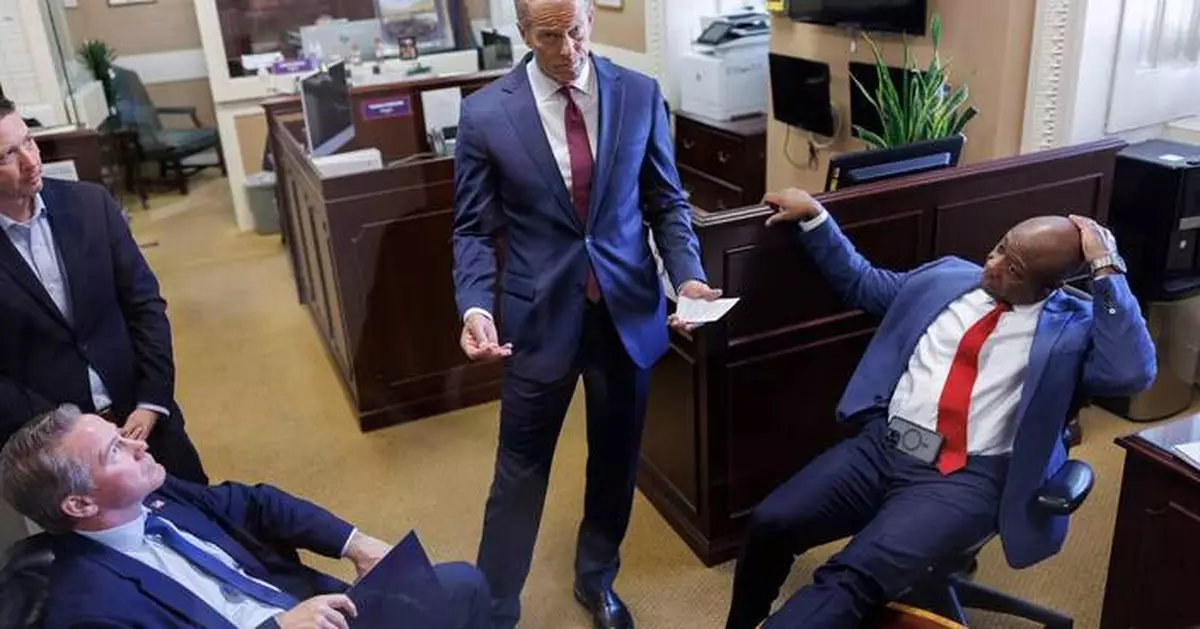
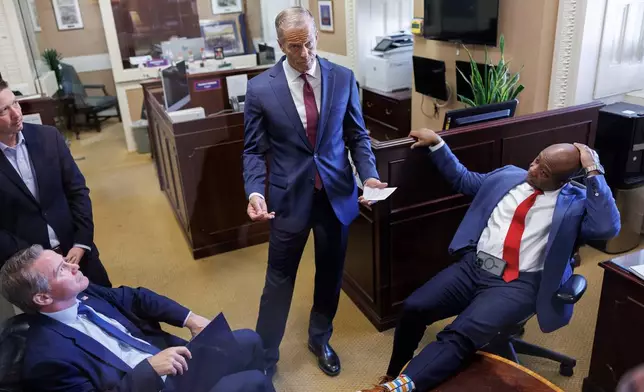
Senate Majority Leader John Thune R-S.D., center, privately speaks to Sen. Jon Husted, R-Ohio, and Sen. Tim Scott, R-S.C., ahead of a news conference on Capitol Hill on Saturday, March 21, 2026, in Washington. (AP Photo/Tom Brenner)

Senate Majority Leader John Thune R-S.D., center, privately speaks to Sen. Jon Husted, R-Ohio, and Sen. Tim Scott, R-S.C., ahead of a news conference on Capitol Hill on Saturday, March 21, 2026, in Washington. (AP Photo/Tom Brenner)

The House passed the bill earlier this year, but the Republican president has since said he wants additional priorities added to the legislation, including the sports ban for transgender athletes and a ban on all mail-in voting.

Democrats are expected to eventually block the broader legislation, arguing that it would make voting more difficult for large groups of people. Despite Trump's pressure, Republican senators have said repeatedly that they do not have enough support to jettison the legislative filibuster, which triggers a 60-vote threshold in the 100-member Senate, or find another workaround to pass the bill. Republicans hold 53 seats.

Still, Republicans put the legislation — the Safeguard American Voter Eligibility Act, also known as the SAVE America Act or the SAVE Act — on the Senate floor this week for a lengthy debate as Trump has said he will not sign other bills until they pass the voting measure. Senate Majority Leader John Thune, R-S.D, said Saturday morning that Republicans “haven’t made any final decisions about how to conclude this.”

“What we are trying to do is ensure that we are having a fulsome debate,” Thune said, and put everyone on the record “one way or the other.”

The amendment that was blocked by a 49-41 vote would penalize educational institutions that receive federal funding if they permitted individuals assigned male at birth to participate “in an athletic program or activity that is designated for women or girls.”

Trump also wants Congress to block sex reassignment surgeries on some minors as part of the debate on the voting bill. It is unclear whether the Senate will hold a vote on that.

In addition, Trump has said he wants the House-passed bill to include a ban on most mail-in balloting. Trump has criticized mail in ballots for years and used it as a centerpiece of his efforts to overturn his defeat to Democrat Joe Biden in the 2020 presidential election. A ban on mail ballots would likely face strong pushback from lawmakers.

Thune said the Senate will soon vote on an amendment that would force all states to require photo identification at the polls. Democrats blocked a similar bill on the floor last week, but Republicans say they want to put them on the record on that issue with a roll call vote.

“There are no good excuses” not to require photo identification, said Republican Sen. John Husted, a former Secretary of State in Ohio. “This works. It's being implemented all over the country.”

Illegal voting by noncitizens is rare. Still, a poll by the Pew Research Center in August 2025 found that about 8 in 10 US adults said they favor requiring all voters to show government-issued photo identification to vote.

Thirty-six states require some form of identification at the polls, according to the National Conference of State Legislatures, and 23 states require photo identification. The SAVE America Act would require photo identification and could override many forms of ID allowed in states across the country — including fishing and hunting licenses or college IDs. It would also require that people voting by mail include a photocopy of their ID with their ballot.

Democrats say they support some voter ID laws, but argue that the proposed ID requirements in the bill, along with strict new requirements for voter registration, would prevent many people from voting. The bill would also allow the Homeland Security Department to review state voter rolls, which Democrats say could lead to voters being purged.

The new rules would be “a bureaucratic nightmare,” said Senate Minority Leader Chuck Schumer, D-N.Y.

“They want to end vote by mail, end registering online, end registering on college campuses and in churches, and even end registering at the DMV, where of course you have to show ID,” Schumer said.

Trump, backed by an enthusiastic online campaign of his supporters, has made the voting legislation his top congressional priority. He has said it is necessary for Republicans to win the midterm elections - even after Republicans won the White House and Congress without it in 2024.

“THERE IS NOTHING THAT IS MORE IMPORTANT FOR THE U.S.A.,” Trump posted on social media on Friday.

He has pressured Thune to scrap the filibuster, but Thune has stood firm in saying that there isn't enough Republican support to do that. He is expected to eventually end the floor debate and call for a vote to move forward on the legislation, and Democrats would then block the bill.

But it's not clear when that will happen — or if Trump will be satisfied enough with days or weeks of debate to lift his promised blockade on other legislation.

Thune would only say on Saturday that “at some point that’s a that’s a possibility” that Republicans will start the process of ending the debate. The Senate is scheduled to leave town at the end of next week for a two-week spring recess.

Republican senators have largely backed Thune's efforts. But they say the end point is uncertain, for now.

“I don't know,” when it will end, Republican Sen. John Kennedy of Louisiana said. “I don't think anybody does."
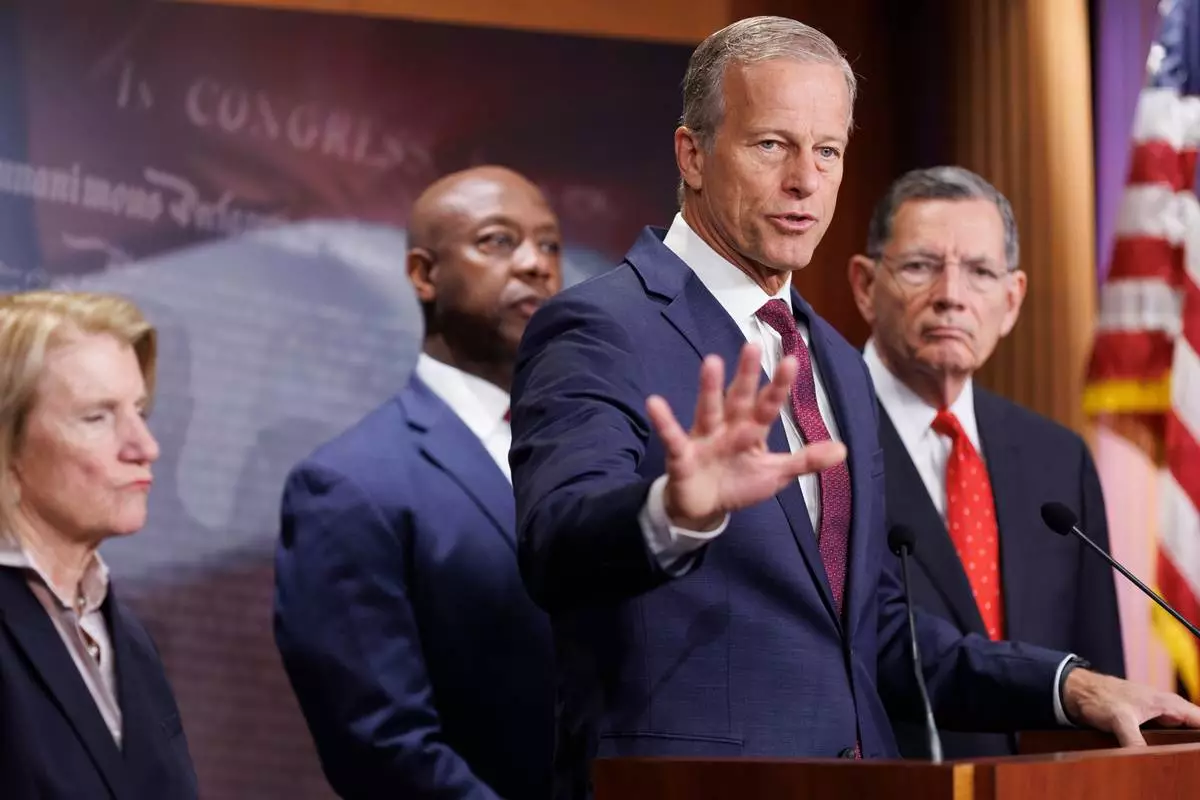
Senate Majority Leader John Thune R-S.D., speaks during a news conference on Capitol Hill on Saturday, March 21, 2026, in Washington. (AP Photo/Tom Brenner)
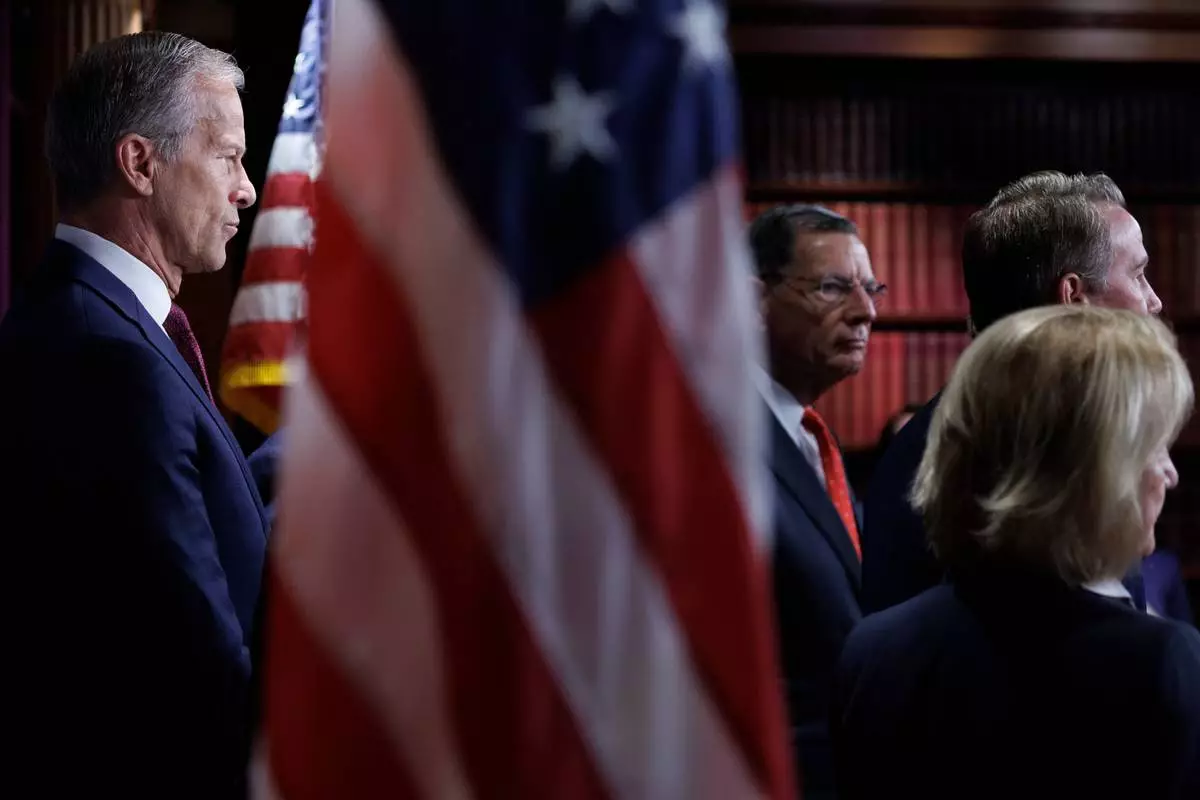
Senate Majority Leader John Thune R-S.D., speaks during a news conference on Capitol Hill on Saturday, March 21, 2026, in Washington. (AP Photo/Tom Brenner)
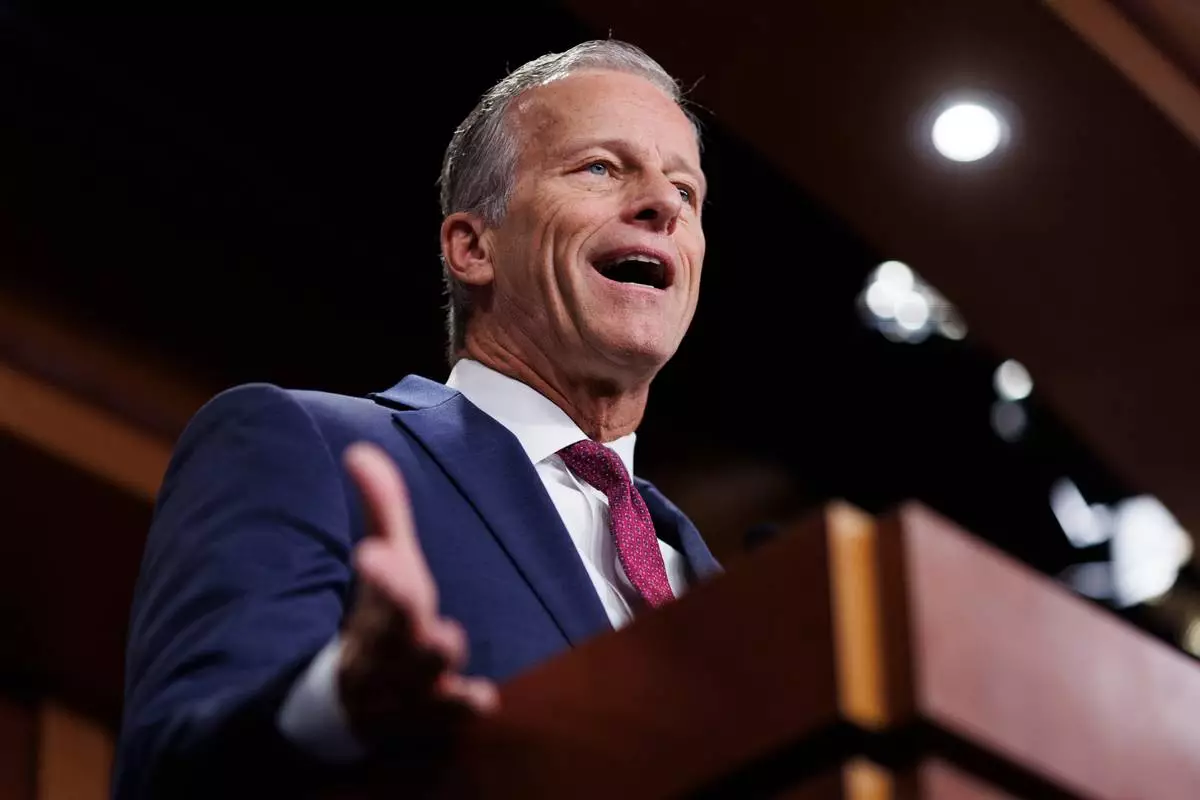
Senate Majority Leader John Thune R-S.D., looks on as fellow Republicans take questions from reporters during a news conference on Capitol Hill on Saturday, March 21, 2026, in Washington. (AP Photo/Tom Brenner)
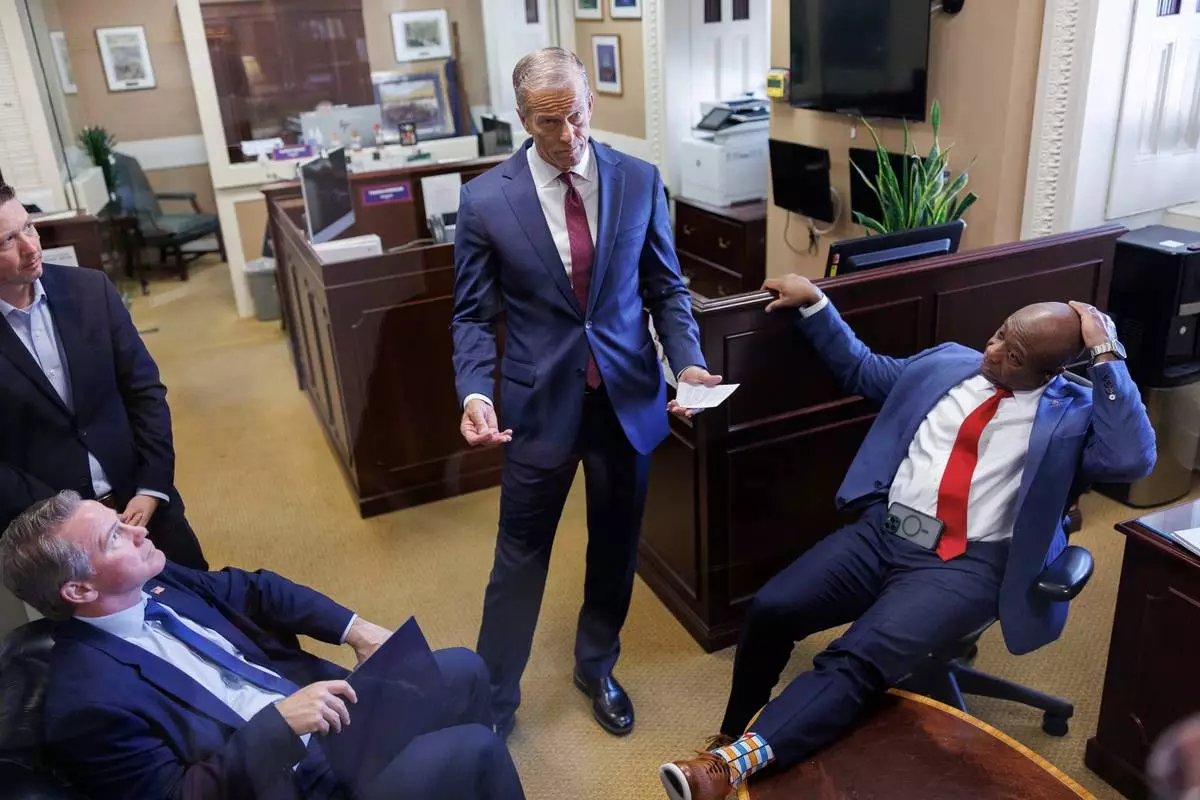
Senate Majority Leader John Thune R-S.D., looks on as fellow Republicans take questions from reporters during a news conference on Capitol Hill on Saturday, March 21, 2026, in Washington. (AP Photo/Tom Brenner)
Senate Majority Leader John Thune R-S.D., speaks during a news conference on Capitol Hill on Saturday, March 21, 2026, in Washington. (AP Photo/Tom Brenner)
Senate Majority Leader John Thune R-S.D., speaks during a news conference on Capitol Hill on Saturday, March 21, 2026, in Washington. (AP Photo/Tom Brenner)
Senate Majority Leader John Thune R-S.D., center, privately speaks to Sen. Jon Husted, R-Ohio, and Sen. Tim Scott, R-S.C., ahead of a news conference on Capitol Hill on Saturday, March 21, 2026, in Washington. (AP Photo/Tom Brenner)

Senate Majority Leader John Thune R-S.D., center, privately speaks to Sen. Jon Husted, R-Ohio, and Sen. Tim Scott, R-S.C., ahead of a news conference on Capitol Hill on Saturday, March 21, 2026, in Washington. (AP Photo/Tom Brenner)

LJUBLJANA, Slovenia (AP) — Voters in Slovenia headed to the polls on Sunday in a highly contested parliamentary election that pits the governing liberals against right-wing populists in a vote that will decide whether the small European Union nation stays on its liberal course or sways toward the right.

The race is expected to be tight and follows a campaign rocked by allegations of foreign interference that stunned the traditionally moderate EU country.

The vote comes down to two main players: Prime Minister Robert Golob's Freedom Movement and the right-wing Slovenian Democratic Party, or SDS, led by three-time premier Janez Jansa, a populist-style politician and an admirer of U.S. President Donald Trump.

Who wins will resonate wider in the 27-member EU bloc.

Golob's government has been a strong liberal voice in the bloc while a victory of Jansa — also a close ally of nationalist Hungarian Prime Minister Viktor Orbán — would strengthen Europe's surging populist groups.

“Although Slovenia is a small Balkan country, the elections taking place there could be seen as another sign of the rise of illiberal tendencies in Europe,” Helen Levy, a researcher at the Robert Schuman Foundation, wrote in an analysis last month.

Slovenian sociologist Samo Uhan told The Associated Press that “the biggest differences between the government and the opposition are reflected in their understanding of global developments.”

Slovenia's top two parties have been running neck and neck in recent polls and analysts predict that no party would have a clear majority in the 90-member parliament, which would turn smaller parties into kingmakers.

The outcome “is completely uncertain, which is nothing unusual for Slovenia as the electorate has always been polarized,” Uhan said.

Further whipping up the divisions have been claims, first made by a group of activists and journalists, that a string of secret video recordings showing alleged, government-tied corruption, aimed to sway the voters.

The allegations further claimed Jansa's party and a private, foreign agency were linked to the recordings, based on gathered intelligence. Jansa has acknowledged having contacts with a Black Cube adviser, but denied the allegations of election interference.

An investigation by authorities so far has said that representatives of the private Black Cube intelligence agency visited Slovenia four times in the past several months, including a street in the capital, Ljubljana, that hosts Jansa's party headquarters.

Speaking to reporters at an EU summit in Brussels on Thursday, Golob urged an EU investigation.

“It is so important not to act now on behalf of Slovenia, but to act now to protect every other state that will come into election process in the next months,” Golob said. “I am absolutely confident that Slovenian voters will be able to recognize that foreign interference is something that shall never be allowed.”

Black Cube didn't immediately respond to requests for comment.

The company, run by two former Israeli intelligence agents, has been involved in a number of controversies over the years, including an undercover operation on behalf of the film mogul Harvey Weinstein to discredit his accusers. It has said that all of its activities are legal and ethical.

Jansa has faced accusations of clamping down on media freedoms and undermining the rule of law in Slovenia during his latest term in office in 2020-22. He has lashed out at Golob's government as a “crime syndicate” and pledged to “take back” a captured state.

A former energy company manager, 59-year-old Golob and his party were seen back in 2022 as a new hope for disillusioned voters. The government, however, has since been shaken by a series of reshuffles, problems with health care reform and frequent changes in tax policy that reflected an air of inconsistency.

Internationally, Golob’s government has taken a strongly pro-Palestinian stance, recognizing a Palestinian state in 2024 and banning top Israeli officials from entry. Jansa, on the other hand, is pro-Israel and has strongly criticized Palestinian recognition.

Slovenia routinely has switched between the two blocks since it broke away from the former, Communist-run Yugoslavia in 1991. The Alpine nation of 2 million people became a member of NATO and the EU in 2004.

Jovana Gec in Belgrade, Serbia, Josef Federman in Jerusalem, and Lorne Cook in Brussels, contributed to this report.

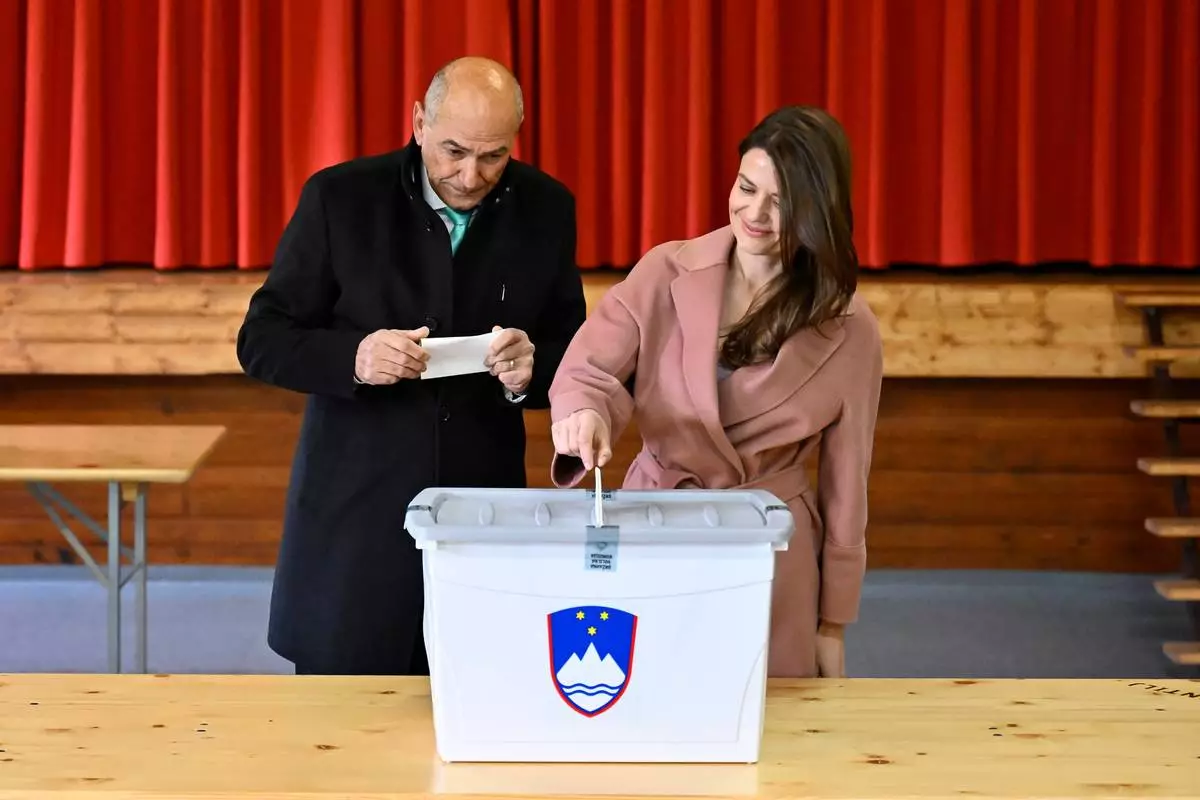
Former Slovenian Prime Minister Janez Jansa, left, and his wife Urska Bacovnik Jansa cast their vote at a polling station for parliamentary elections in Arnace, Slovenia, Sunday, March 22, 2026. (AP Photo/Denes Erdos)

Former Slovenian Prime Minister Janez Jansa, left, and his wife Urska Bacovnik Jansa cast their vote at a polling station for parliamentary elections in Arnace, Slovenia, Sunday, March 22, 2026. (AP Photo/Denes Erdos)

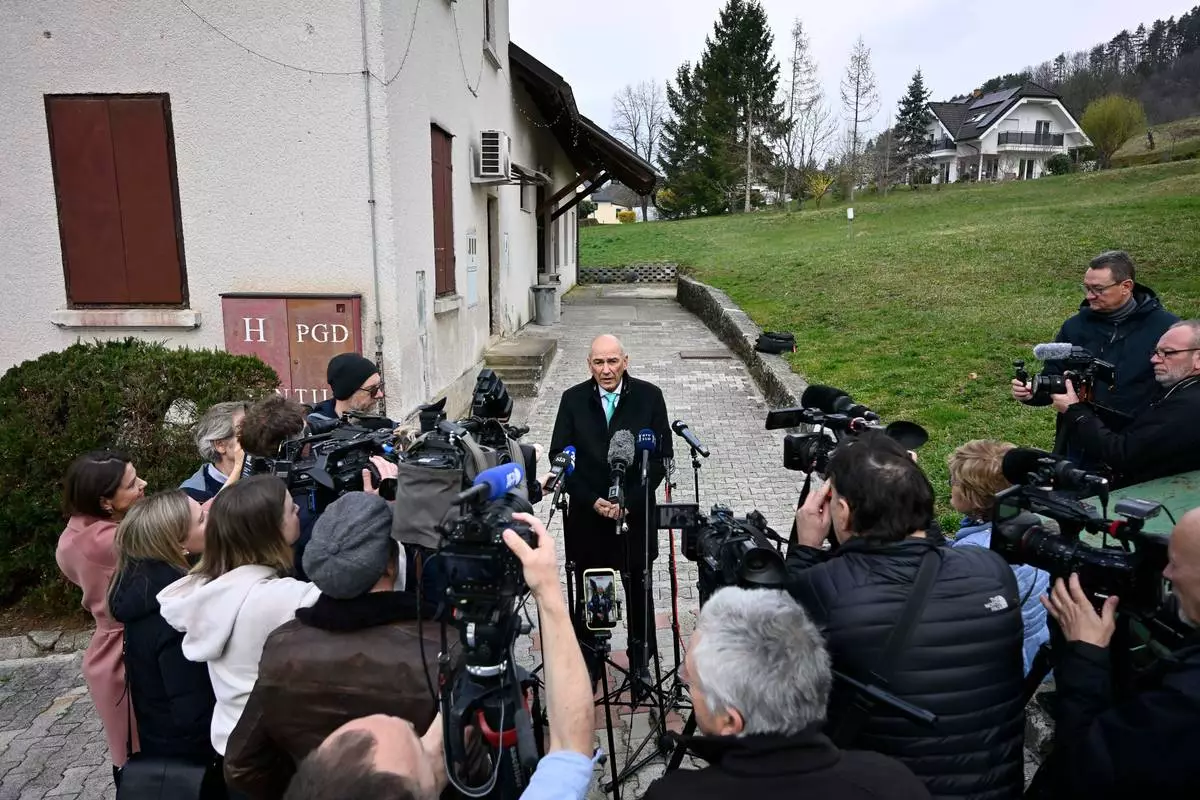
Former Slovenian Prime Minister Janez Jansa, center, speaks to the media outside a polling station for parliamentary elections in Arnace, Slovenia, Sunday, March 22, 2026. (AP Photo/Denes Erdos)

Former Slovenian Prime Minister Janez Jansa, center, speaks to the media outside a polling station for parliamentary elections in Arnace, Slovenia, Sunday, March 22, 2026. (AP Photo/Denes Erdos)

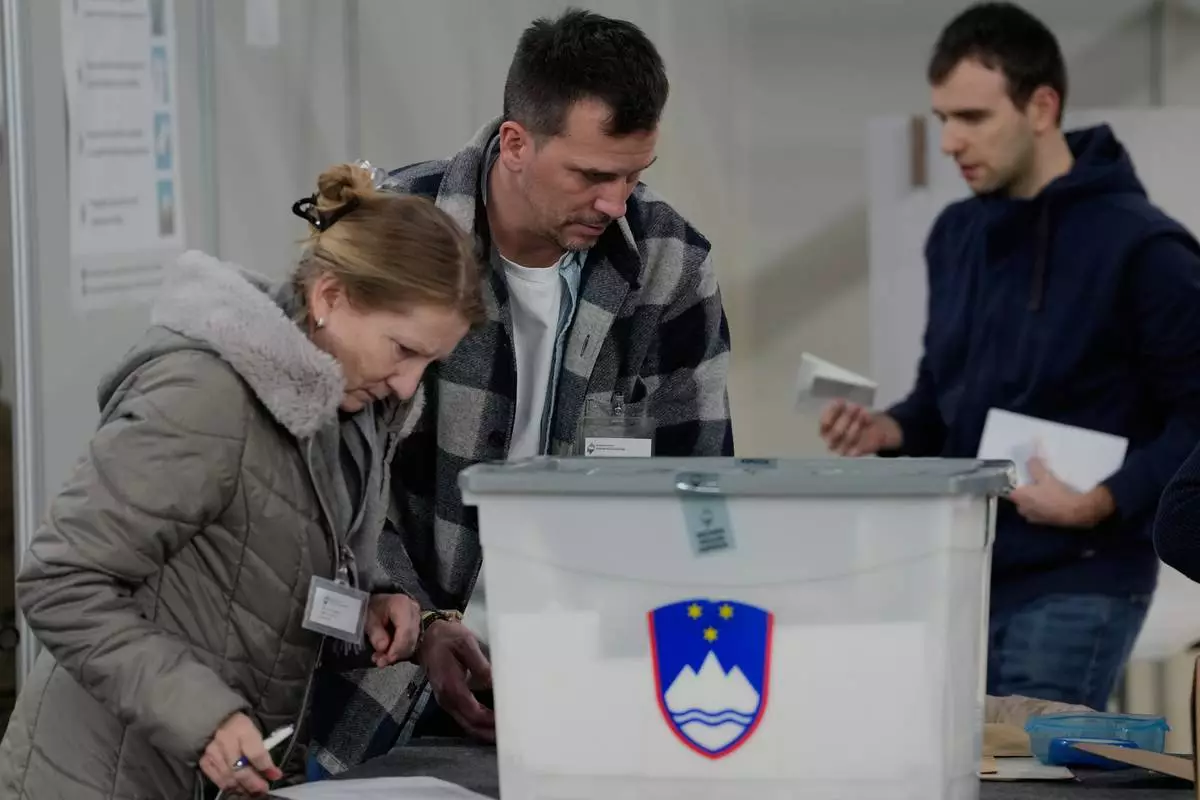
Members of the electoral commission handle ballots at a sports hall turned polling station for early vote in Ljubljana, Slovenia, Wednesday, March 18, 2026. (AP Photo/Darko Bandic)

Members of the electoral commission handle ballots at a sports hall turned polling station for early vote in Ljubljana, Slovenia, Wednesday, March 18, 2026. (AP Photo/Darko Bandic)

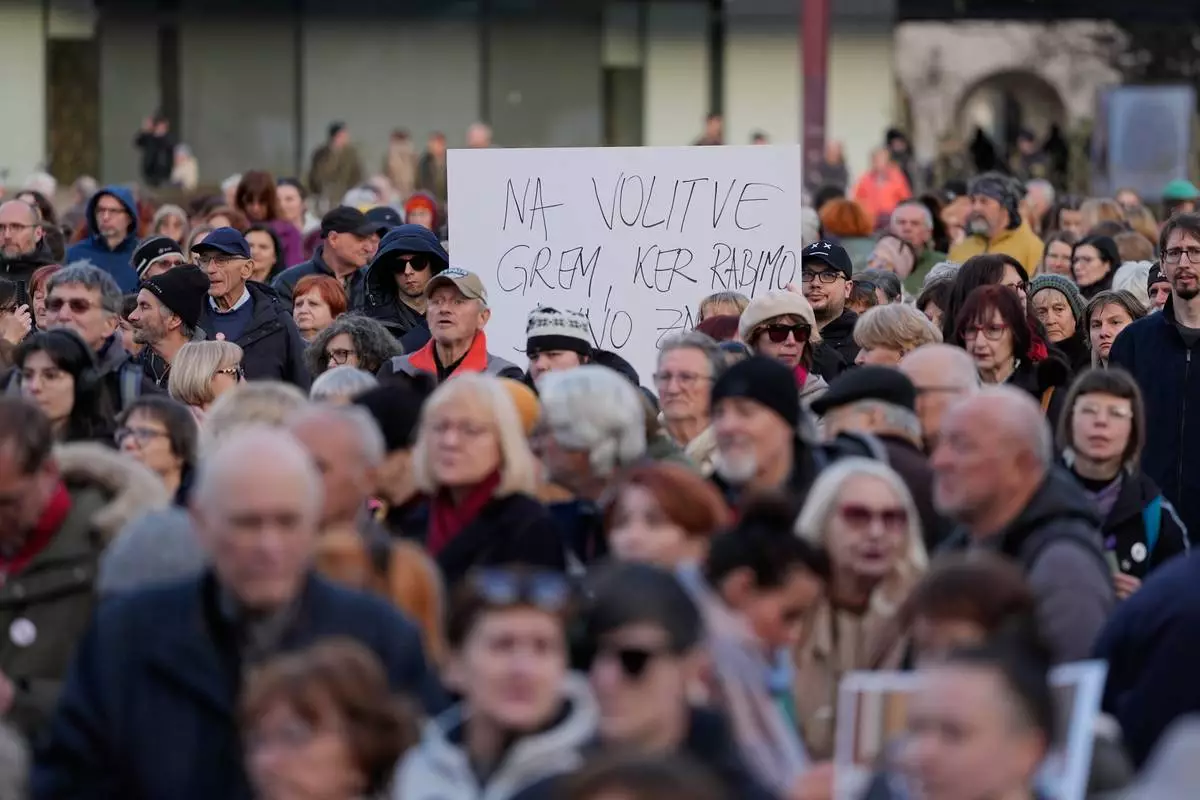
Left wing protesters denouncing foreign interference in Slovenian elections gather around a banner urging people to vote, in Ljubljana, Slovenia, Friday, March 20, 2026. (AP Photo/Darko Bandic)

Left wing protesters denouncing foreign interference in Slovenian elections gather around a banner urging people to vote, in Ljubljana, Slovenia, Friday, March 20, 2026. (AP Photo/Darko Bandic)

A cyclist rides past electoral posters in Ljubljana, Slovenia, Wednesday, March 18, 2026. (AP Photo/Darko Bandic)

A cyclist rides past electoral posters in Ljubljana, Slovenia, Wednesday, March 18, 2026. (AP Photo/Darko Bandic)

A pedestrian walks past a electoral poster in Ljubljana, Slovenia, Wednesday, March 18, 2026. (AP Photo/Darko Bandic)

A pedestrian walks past a electoral poster in Ljubljana, Slovenia, Wednesday, March 18, 2026. (AP Photo/Darko Bandic)

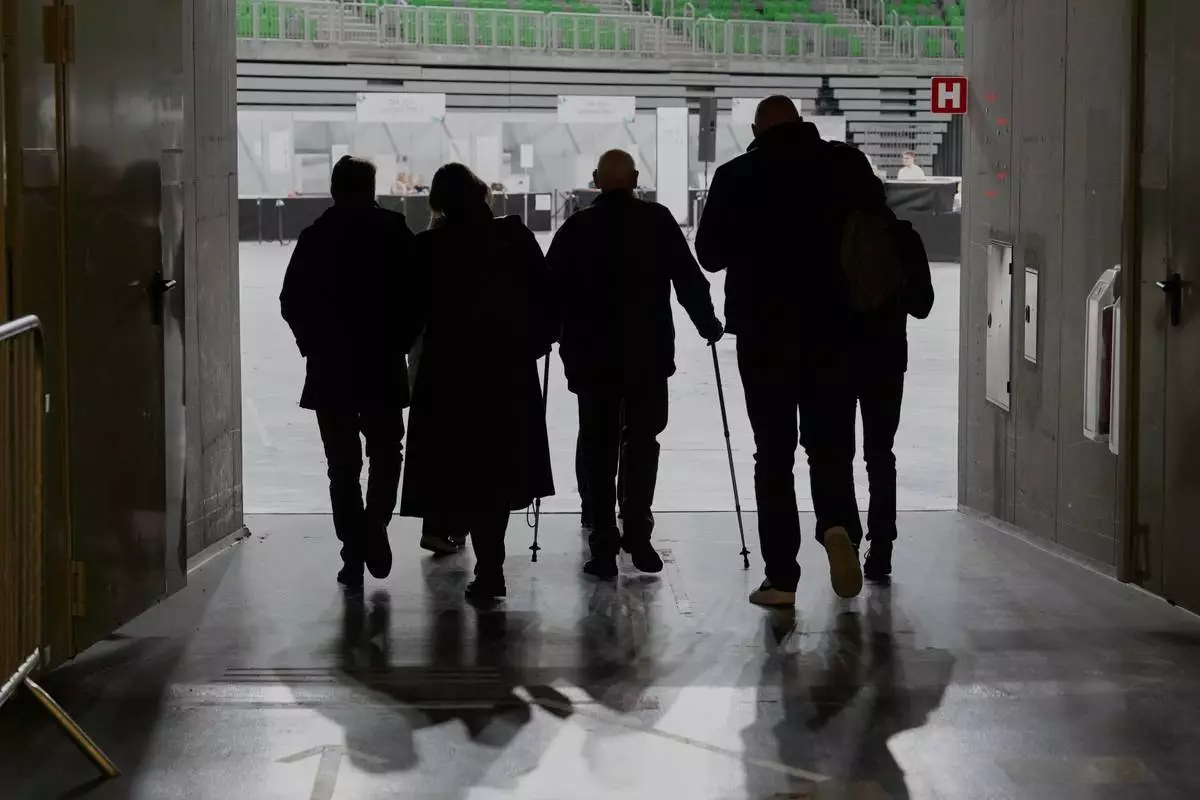
Voters arrive to a sports hall turned polling station for early vote in Ljubljana, Slovenia, Wednesday, March 18, 2026. (AP Photo/Darko Bandic)

Voters arrive to a sports hall turned polling station for early vote in Ljubljana, Slovenia, Wednesday, March 18, 2026. (AP Photo/Darko Bandic)

Recommended Articles