The success of China's rural revitalization efforts have transformed livelihoods and may serve as a model for other developing countries, according to officials at the primary level from southwest China's Sichuan Province.
With plans to modernize villages, improve food security, and increase farmers' incomes, China's rural revitalization is gaining global attention as China prepares to advance to the next phase of its rural revitalization under of the 15th Five-Year (2026-2030) Plan, which was adopted at this years "two sessions."
The "two sessions" are a key event on China's political calendar, gathering thousands of lawmakers from the national legislature and political advisors from the country's top political advisory body in Beijing.
The plan comes after years of efforts that have improved local living standards and economic viability by bringing basic modern amenities, including better sanitation, waste management, logistics, and internet connectivity, to rural areas.
China is home to about 489,000 administrative villages, along with millions of natural villages and settlements. In February 2021, China announced a "complete victory" in its fight against poverty.
"I believe the future of rural revitalization is prosperous living standards for the people. We have basically achieved this now. Some villages have already realized lighting, road paving and greening projects," said Liu Yanying, a deputy of the 14th NPC and head of village committee and secretary of Party committee of Long'en Village, Anyue County.
Recognized as the "lemon capital" of China, Anyue is China's only county with a lemon production base and one of the world's five major lemon-producing areas, where the planting area, output, and market share of lemons all account for over 70 percent of China's total.
From selling fresh fruits to processing, and from a single planting model to an integrated development approach of agriculture and tourism, Anyue has successfully developed over 200 types of products, including lemon jam, lemon tea, lemon essential oil, and daily chemical products.
Meanwhile, the idyllic Gulu Village in Ya'an City, with lush mountains and peaceful rural scenery has witnessed a story of remarkable transformation. The village head Zheng Wangchun is also a deputy to the 14th National People's Congress (NPC), the national legislature.
"We are not only about getting out of poverty, but now we are getting rich, from poor to rich, from rich to strong, and finally we will enter the best stage," said Zheng.
Creating new economic opportunities is another focus. China encourages young people to become "agricultural entrepreneurs," blending farming with industries such as e-commerce, tourism and food processing.
Ousman Jatta, a Gambian journalist covering the "two sessions" earlier in March in Beijing, said that for Africa, where millions depend on agriculture, the approach of diversifying rural economies and fostering entrepreneurship offers valuable lessons.
"China started from a long place and today they have been able to achieve a lot of things. So, when they can achieve that, I believe we can achieve that as a continent. So, all it needs is the willingness and the readiness to take up such programs. Once we start it, we can achieve a lot," he said.
On Africa's development goals, Zheng pointed out that effective rural development depends on long-term planning, community participation and grassroots implementation.
"If there's anything Africa can learn, learn from our top-level design to local implementation. First, you can learn our mechanism, that is, our assistance mechanism, how to establish this mechanism," said Zheng.
"Our policy formulation is not just about making data and frameworks from the top level, but more importantly, our grassroots front line must implement it effectively, and we must treat this work as a primary political task of our country and our Party, which we must take seriously," he added.
China's rural revitalization strategy, launched at the 19th National Congress of the Communist Party of China in 2017, aims to achieve basic modernization of agriculture and rural areas by 2035.
Since the launch of its reform and opening-up policy over 40 years ago, China has lifted 770 million rural residents out of poverty, accounting for more than 70 percent of the global total based on the World Bank's international poverty line.
Building on these achievements, rural revitalization now focuses on developing industries, attracting professional talents, promoting culture, improving ecological health and strengthening local organizations.
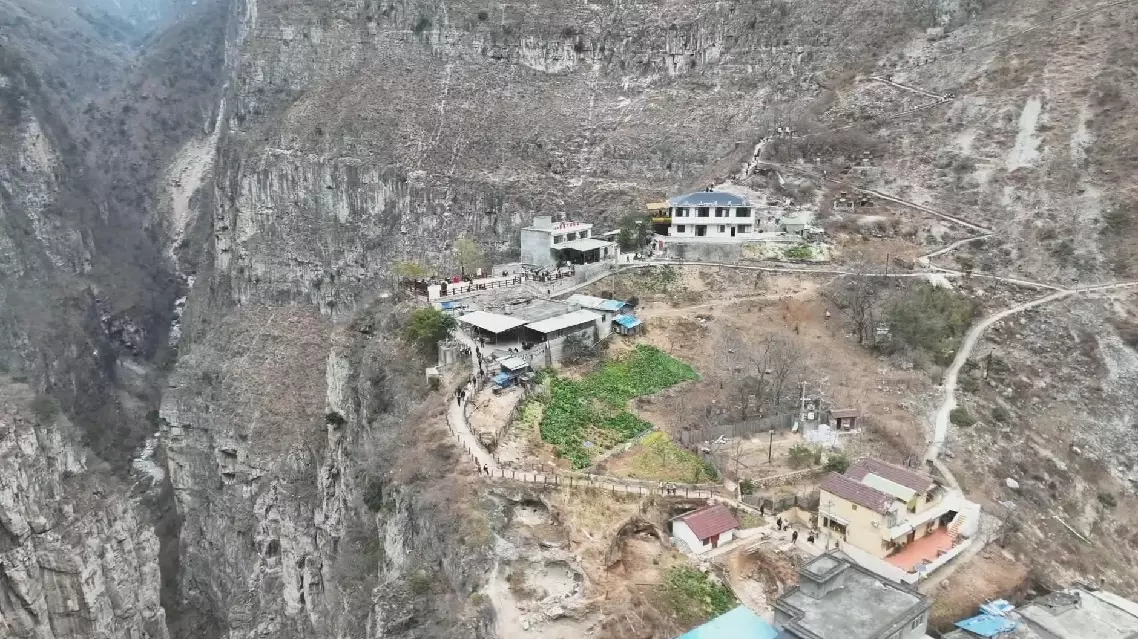
Grassroots implementation makes China's rural revitalization an effective model: local officials