Skip to Content Facebook Feature Image

Footage shows China's first missile destroyer hitting all targets in first live-fire mission

China

China

China

Footage shows China's first missile destroyer hitting all targets in first live-fire mission

2026-03-21 17:35 Last Updated At:03-22 14:47

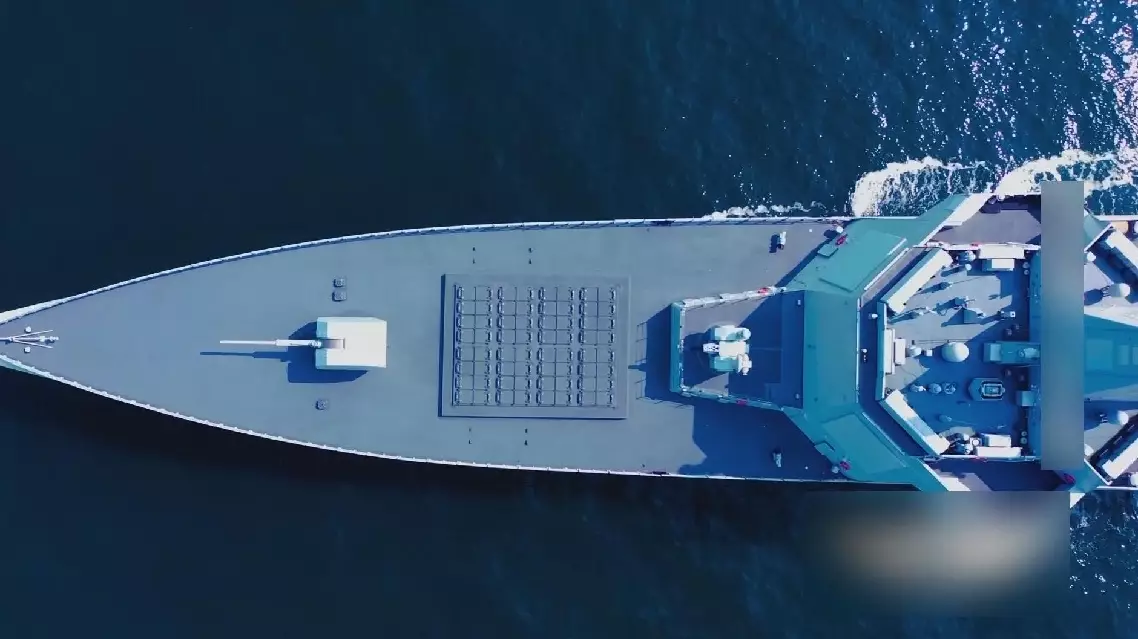
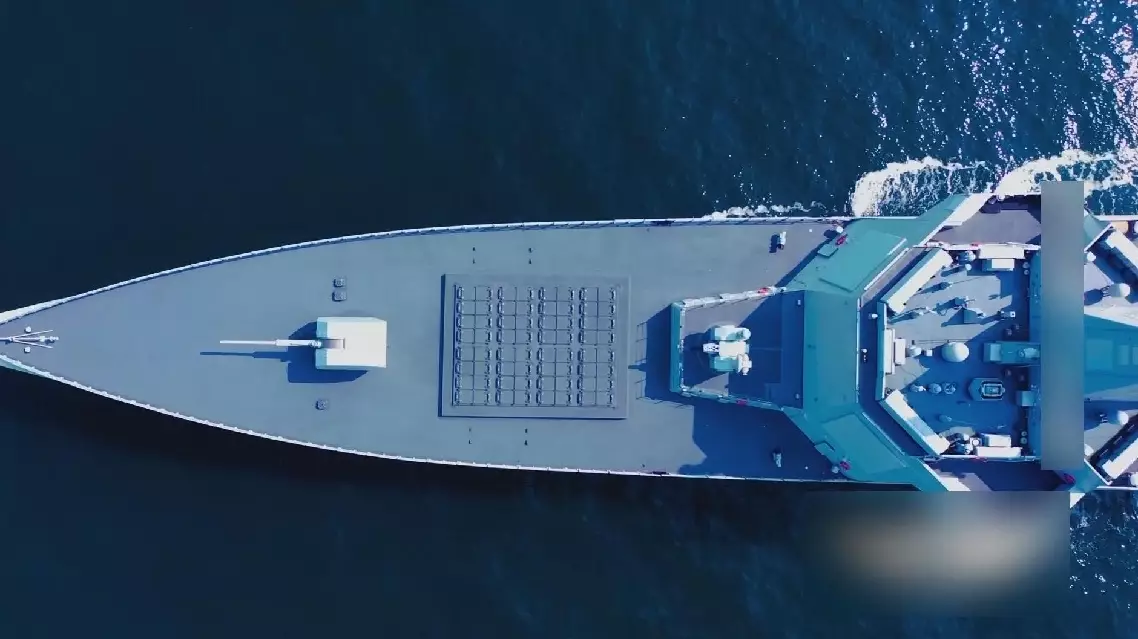
A newly released footage has shown that China's first Type 055 guided-missile destroyer the Nanchang successfully hit all the targets in its first live-fire exercise.

The Nanchang entered service with the Chinese People's Liberation Army Navy in January 2020, as the first of domestically developed Type 055 10,000 tonne-class destroyers.

Fourteen months after its commissioning, it undertook its first air defense and anti-missile mission under realistic combat scenarios.

Crew members of the Nanchang said that the mission difficulty was equivalent to a world-class air defense challenge at that time.

The air defense mission's complexity makes it a thorny challenge for all naval forces around the world. We were yet to experience live-fire exercises, so the whole squad, the whole crew were quite stressful said Qiao Peng.

"I was both nervous and excited. I was nervous because I was afraid of spoiling our record, since it was [China's] first Type 055 [guided-missile] destroyer. What if it had a record of missing the target? That would be really embarrassing," said Shi Ronghao.

The young soldiers, averaging just 23 years old, felt a mixture of nervousness and excitement.

"There is no way for us to predict when the target aircraft would come—whether they would attack simultaneously or separately. We also had to track more than a dozen shifting data points within seconds. Time was our greatest enemy; we had to be fast and accurate," said Qiao.

During the task, the Nanchang fired five missiles, and all of them hit their targets, demonstrating the combat capacity of the destroyer.

"Our entire squad bounced from chairs to cheer. Missiles serve as our warship's first line of defense. After this live-fire exercise, our morale will be greatly boosted when operating in the far seas," said Qiao.
Footage shows China's first missile destroyer hitting all targets in first live-fire mission
Footage shows China's first missile destroyer hitting all targets in first live-fire mission


Footage shows China's first missile destroyer hitting all targets in first live-fire mission

Footage shows China's first missile destroyer hitting all targets in first live-fire mission
A new entrepreneurial model called the "one-person company" (OPC) is taking root across China, where individual founders use artificial intelligence (AI) to manage everything from product development to market launch, easing the burden of rising startup costs and talent shortages.

In east China's Hangzhou, Chen Yunfei illustrates the shift as he built an AI-assisted selfie enhancement app that climbed to the top of China's paid app charts with nothing more than a laptop and a cup of coffee. Despite having no coding skills, he turned an idea into a market success by relying entirely on AI.

"I don't know how to write code. AI generates the complete code for me. I just need to describe my ideas," said Chen.

Chen is part of a growing trend of "super individuals" across China who are turning concepts into market-ready products with minimal human resources but maximum technological support.

Recognizing this shift, local governments are racing to cultivate ecosystems where individual founders can thrive.

In Hangzhou's Shangcheng District, authorities have allocated 100 million yuan (about 14.52 million U.S. dollars) annually to build a dedicated "one-person startup hub", designed to help young entrepreneurs arrive with an idea and leave with a product.

Meanwhile, the Liangzhu Digital Habitat Bay in Hangzhou's Yuhang District has already connected with 700 "super individuals" like Chen and incubated over 80 projects, 90 percent of which operate as one-person ventures.

Further west in Chengdu City of Sichuan Province, government staff assist startups with resource matching. In February, the Tianfu Software Park launched its first One-Person Company Community.

The community recently held its inaugural project review session on which proposals were evaluated on team capability, creativity feasibility, and industry alignment, with tailored support offered to promising ventures.

"It provides centralized professional guidance, including resource matching, distribution partnerships, investment connections, and peer industry exchanges, all concentrated in one place," said Shi Bingcheng, founder of the startup Linggui Studio.

As a designated national pilot zone for next-generation AI innovation, Chengdu's AI industry has already surpassed 140 billion yuan (about 20.33 billion U.S. dollars) in scale, creating a robust foundation for solo entrepreneurs to access cutting-edge tools and infrastructure.

The trend extends far beyond these two cities. Suzhou City in east China's Jiangsu Province has introduced full-cycle startup support services, aiming to nurture over 1,000 one-person companies by 2028.

Shenzhen City in south China's Guangdong Province is leveraging the hardware innovation ecosystem of the Huaqiangbei Electronics Market, the beating heart of global consumer electronics, to foster tech-driven solo ventures.

Qingdao City of Shandong Province, positioning itself as a hub for OPC development in northern China, has rolled out "computing vouchers", "AI model vouchers", and startup loan guarantees to lower barriers for one-person ventures.

To date, more than a dozen Chinese cities have launched targeted initiatives to support one-person companies, each tailoring policies to local AI strengths and industrial priorities.

"One-person companies" gain traction in China as AI fuels individual entrepreneurship

"One-person companies" gain traction in China as AI fuels individual entrepreneurship

Recommended Articles