Spring is in full bloom, offering people a captivating floral experience across the city. During the spring flowering season, 60 pink trumpet trees burst into bloom in Sha Tin Park. The sea of beautiful flowers attracts residents and photographers alike to stop and take pictures.

Floral hotspot: The sea of beautiful flowers in Sha Tin Park attracts residents and tourists alike to stop and take pictures. Image source: www.news.gov.hk
Floral oasis
Click to Gallery
Floral hotspot: The sea of beautiful flowers in Sha Tin Park attracts residents and tourists alike to stop and take pictures. Image source: www.news.gov.hk
Capturing memories: The pink trumpet trees provide a romantic backdrop for wedding photos. Image source: www.news.gov.hk
Eco harmony: Leisure & Cultural Services Department Sha Tin District Leisure Services Office Manager (Sha Tin Park) Sherry Lau notes that the pink trumpet tree suits Hong Kong’s climate, attracts insects for pollination and supports biodiversity. Image source: www.news.gov.hk
Synergistic effect: Shing Fung Road Park has not only increased green space and beautified the waterfront landscape, but also attracts residents and visitors for leisure and recreation. Image source: www.news.gov.hk
Careful curation: Civil Engineering & Development Department East Development Office Senior Engineer Jason Wong says that as Shing Fung Road Park is located by the waterfront, the trees chosen must be wind-resistant and salt-tolerant. Image source: www.news.gov.hk
Urban beautification: During the spring flowering season, 60 pink trumpet trees burst into bloom in Sha Tin Park. Image source: www.news.gov.hk
To beautify the cityscape, the Task Force on District Governance has co-ordinated various departments to implement thematic planting projects across Hong Kong. These include thematically planting a single type of tree or shrub in selected locations to create a visual impact.
The improvement project in Sha Tin Park was completed earlier this year, with pink trumpet trees as the main feature. It has since become a photo-taking hotspot in the district.

Capturing memories: The pink trumpet trees provide a romantic backdrop for wedding photos. Image source: www.news.gov.hk
One local resident had seen the project on social media and was inspired to visit in person.
“It is actually beautiful and stunning, and caught my eye.”
The pink trumpet trees also create the perfect romantic backdrop and are popular among couples for taking their wedding photos.

Eco harmony: Leisure & Cultural Services Department Sha Tin District Leisure Services Office Manager (Sha Tin Park) Sherry Lau notes that the pink trumpet tree suits Hong Kong’s climate, attracts insects for pollination and supports biodiversity. Image source: www.news.gov.hk
Careful selection
Leisure & Cultural Services Department Sha Tin District Leisure Services Office Manager (Sha Tin Park) Sherry Lau noted that the department had enhanced the beautification works in Sha Tin Park to improve its overall landscape.
“When selecting the plants, we followed the principle of ‘Right plant, Right place’, considering its suitability to the environment, visual appeal and harmony with the surroundings, as well as maintenance needs and resilience.”
She explained that the pink trumpet tree suits Hong Kong’s climate, attracts insects for pollination and supports biodiversity. Together with the surrounding greenery, it adds colour and seasonal interest to the park.

Synergistic effect: Shing Fung Road Park has not only increased green space and beautified the waterfront landscape, but also attracts residents and visitors for leisure and recreation. Image source: www.news.gov.hk
Citywide enhancement
Besides Sha Tin Park, various beautification projects in different districts have been completed. These include planting 40 rosy trumpet trees along Lung Hop Street in Wan Chai, as well as flowering plants along Lung Wo Road and near Golden Bauhinia Square to enhance the area’s appearance.
The projects also cover Shing Fung Road Park in Kai Tak where rosy trumpet trees, pink trumpet trees and Indian almonds provide year-round seasonal interest. Along the greenway, sweet gums turn red in autumn, creating a stunning autumnal vibe.

Careful curation: Civil Engineering & Development Department East Development Office Senior Engineer Jason Wong says that as Shing Fung Road Park is located by the waterfront, the trees chosen must be wind-resistant and salt-tolerant. Image source: www.news.gov.hk
Civil Engineering & Development Department East Development Office Senior Engineer Jason Wong said: “Since Shing Fung Road Park is located by the waterfront, we chose trees that are both wind-resistant and salt-tolerant."
Infusing joy
Mr Wong emphasised that Shing Fung Road Park not only provides quality public space but also creates synergy with the adjacent Kai Tak Sports Park. In terms of improving environmental quality, Shing Fung Road Park has not only increased green space and beautified the waterfront landscape, but also attracts residents and visitors for leisure and recreation.

Urban beautification: During the spring flowering season, 60 pink trumpet trees burst into bloom in Sha Tin Park. Image source: www.news.gov.hk
The park can also host various events, promote cultural exchanges, and offer visitors an opportunity to experience Hong Kong's local culture. Altogether, it enhances quality of life, a sense of happiness and sense of fulfilment, he added.
Since both the Chinese New Year and Valentine's Day are getting closer, the festive atmosphere prevails in the city. The Mong Kok Flower Market has turned into a sea of flowers. Many residents have begun to buy New Year flowers and decorate their homes. Moreover, some also came to pick a bouquet to give to their loved ones. Even on weekdays, the flower market remained bustling with people.
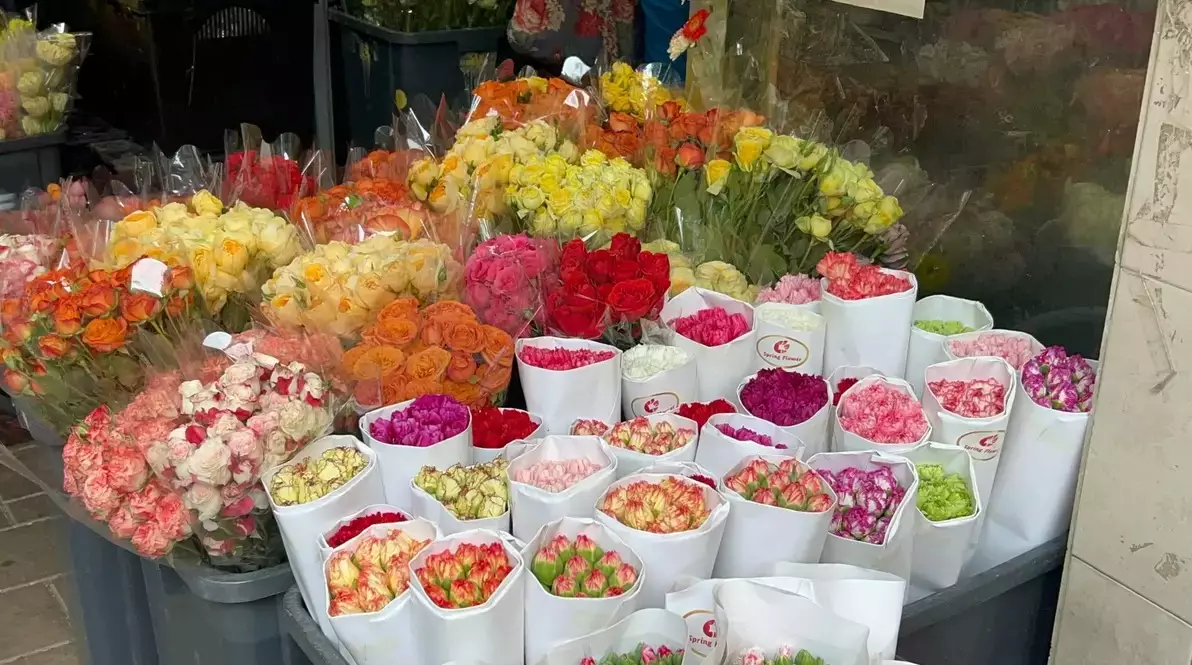
Photo by Bastille Post
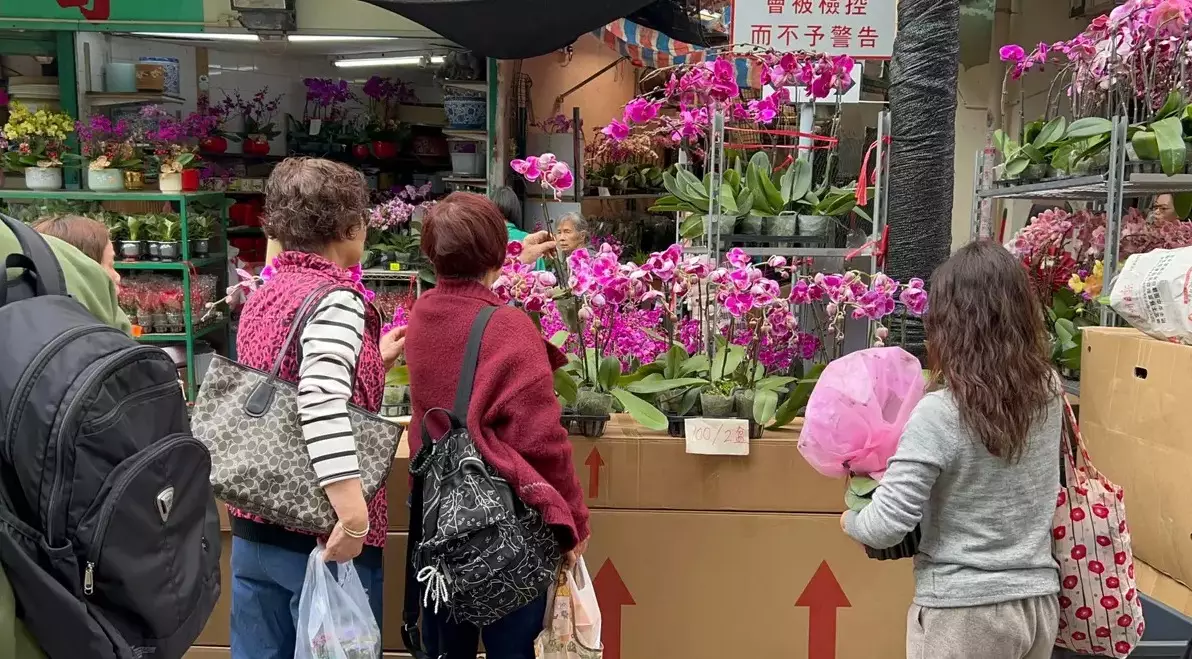
Photo by Bastille Post
On the site, residents tended to purchase orchids, winter jasmine, etc., implying auspicious fortune. Some residents even spent over HKD $1,000 in buying flowers, hoping to achieve good luck at the start of the year by putting beautiful flowers at home. Some florists have launched new varieties of orchids, saying that this year's stock is more plentiful, and the buyers have increased since two weeks ago.
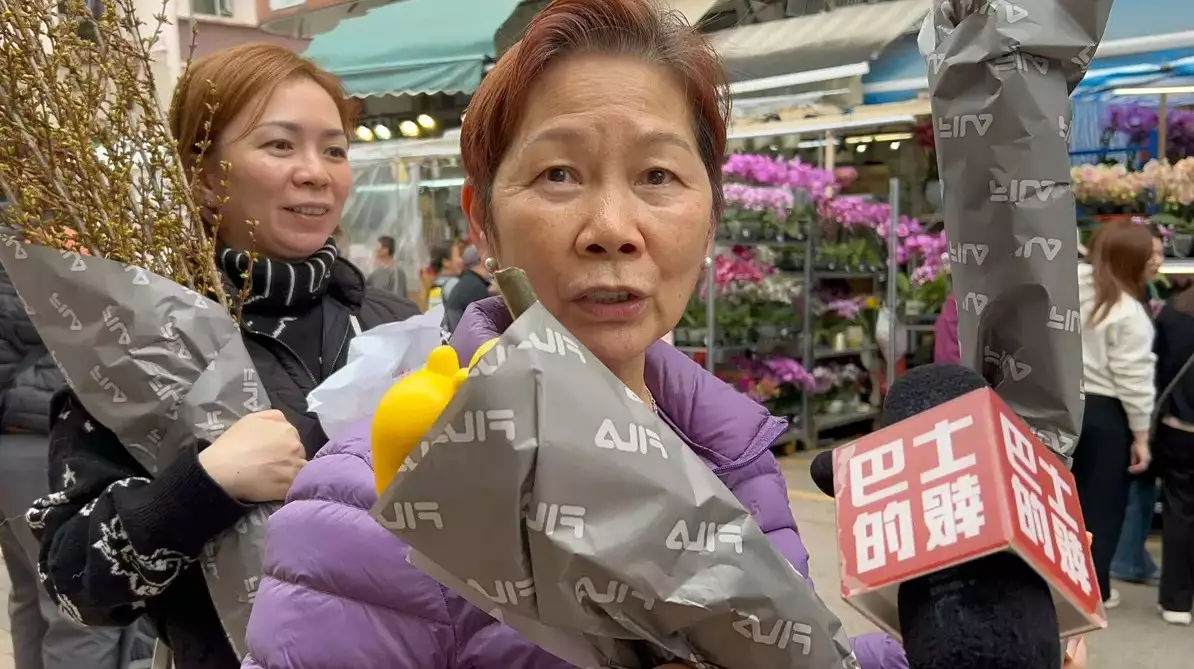
Mrs. Chan, Photo by Bastille Post
Mrs. Chan said it's not too early to buy flowers for the time being, "I would buy New Year flowers almost at this period every year, since the flower market would be crowded after a few days." She spent HKD $1,090 to buy pussy willow, winter jasmine, etc., believing that the price of flowers depends on what variety they are and what country they come from. "I won't care about price when buying flowers. The most important thing is that they can let my home become more beautiful."
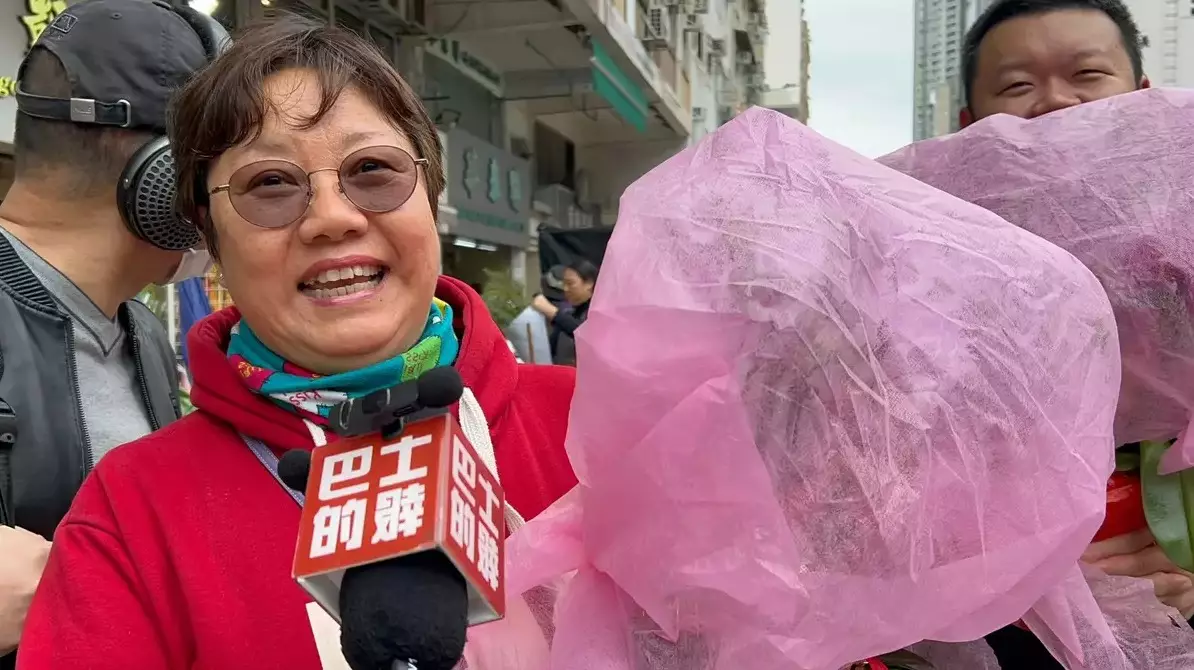
Mrs. Chiong and her son, Photo by Bastille Post
Mrs. Chiong and her son came to buy New Year flowers together. They spent over a thousand HKD merely on buying orchids. "If we come to the flower market earlier to choose, the goods will be more beautiful." Ms. Chiong said she would also buy some other flowers. "I expect to buy a money tree and lucky bamboo." In her eyes, the price of the flowers is similar to the previous one, with no obvious increase.
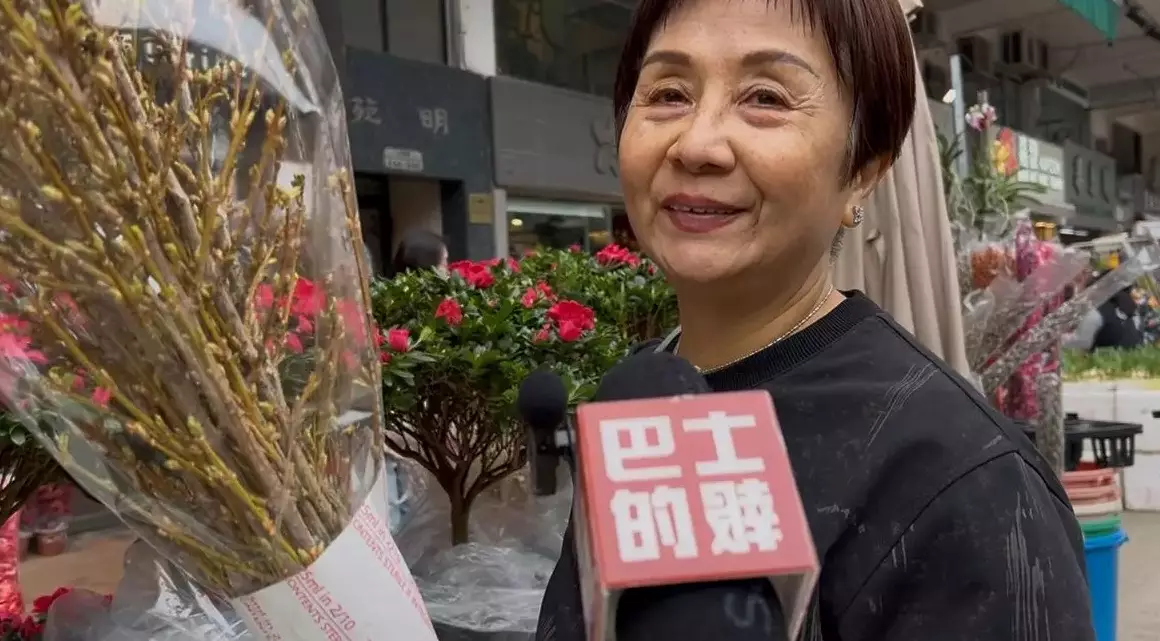
Another Mrs. Chan, Photo by Bastille Post
Another Mrs. Chan bought flowers worth more than a thousand HKD. "It doesn't matter how much you spend. If the flowers can match my decoration requirements, I would buy without hesitation. To avoid too many people on the site, I decided to visit the flower market earlier." She thought the atmosphere of the flower market was great this year, with cheaper flower prices. "It's cheaper than in previous years, about 20% cheaper."
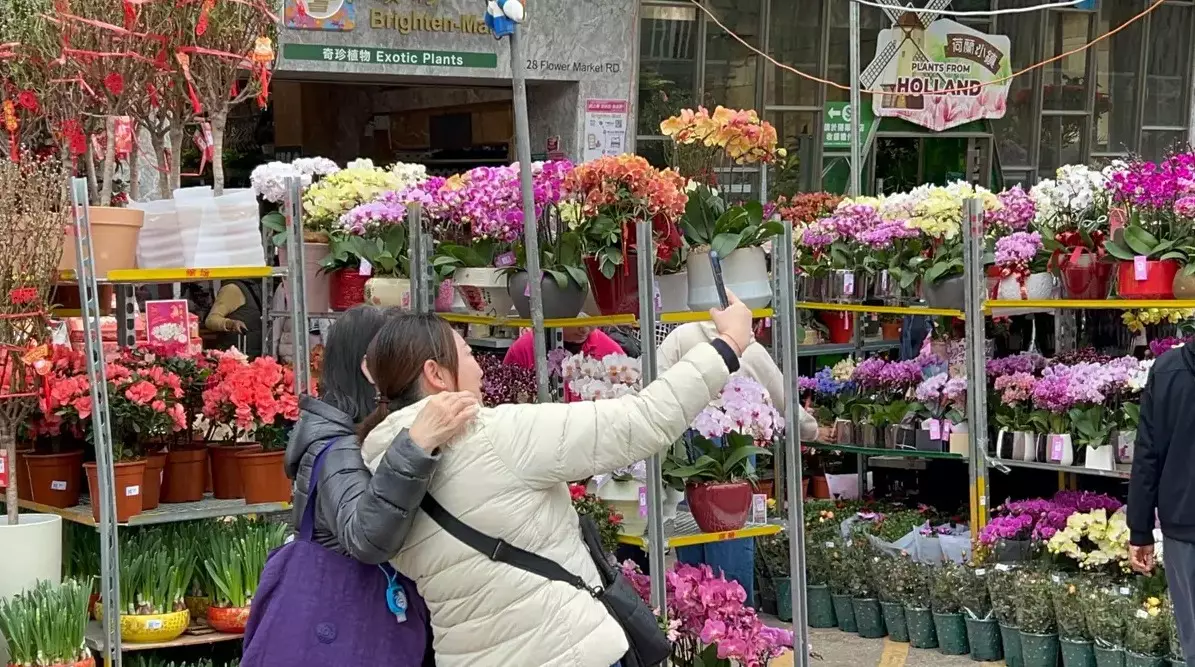
Photo by Bastille Post
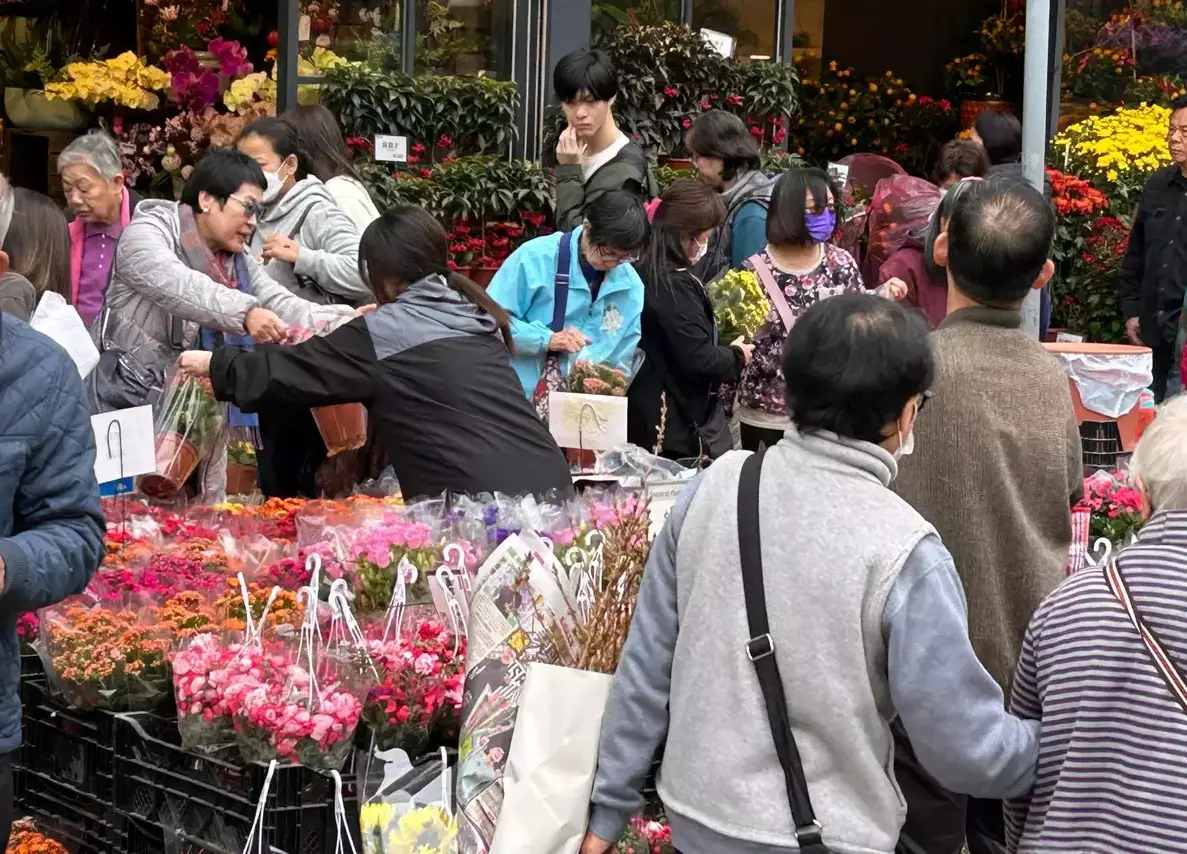
Photo by Bastille Post
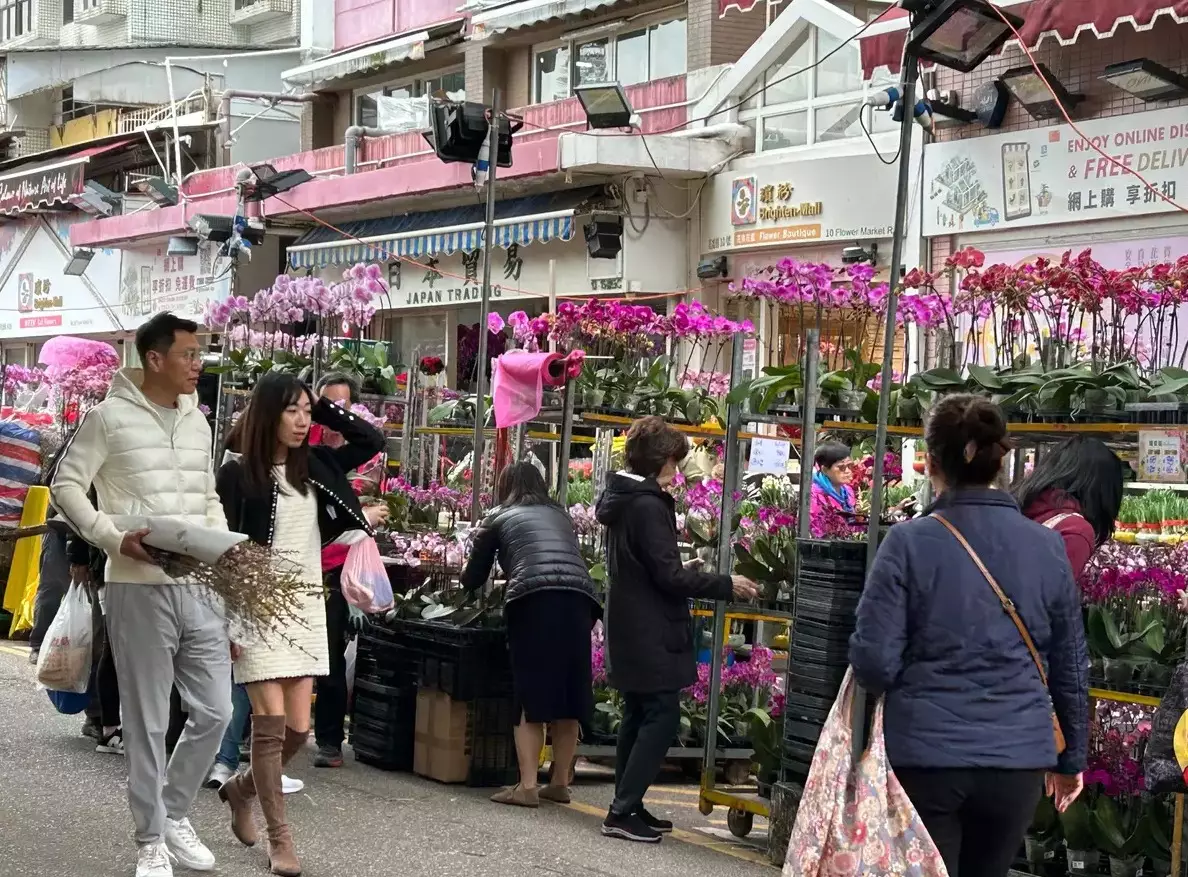
Photo by Bastille Post
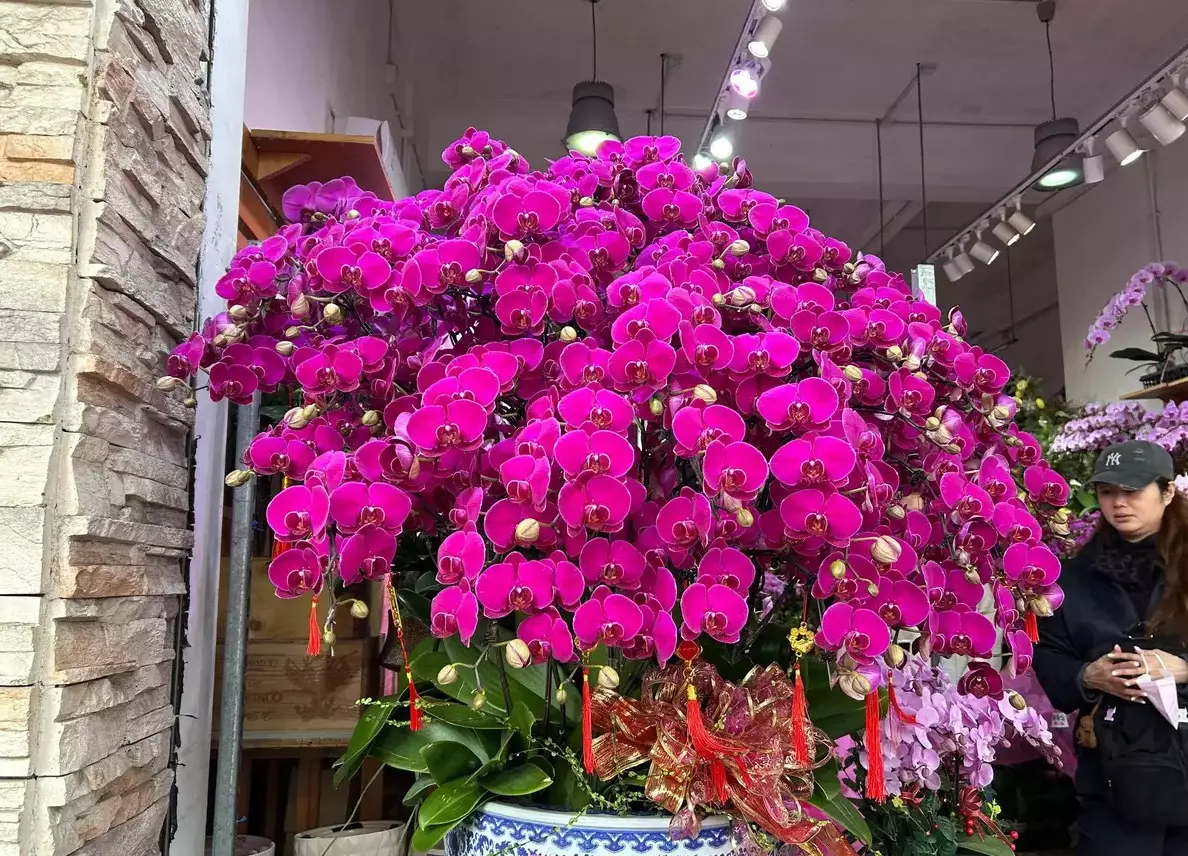
Photo by Bastille Post
Some florists have launched wide new varieties of orchids. Anna, a person in charge of a flower stall, said that she couldn't predict the sales for the time being, though she has stocked up with plenty of flowers this year. "The entire flower market is filled with flowers on every corner. I couldn't count how many there were in total." Anna also said that the orchid sales for this year are okay. About two weeks ago, multiple buyers came to her stall to buy orchids since they could be kept at home for a long time. "Most of the residents would buy orchids at the end of the year to create a festive atmosphere at home. Their prices haven't changed much. As for the ones with the price around HKD $200-400, they have become hot among buyers. Asked whether the consumption boom of Hong Kong residents in Shenzhen would have an impact on her stall, Anna said the impact was not significant. "Because the flowers are heavy and difficult to move up and down, and there are also controls on the border crossing of orchids, there is no impact."
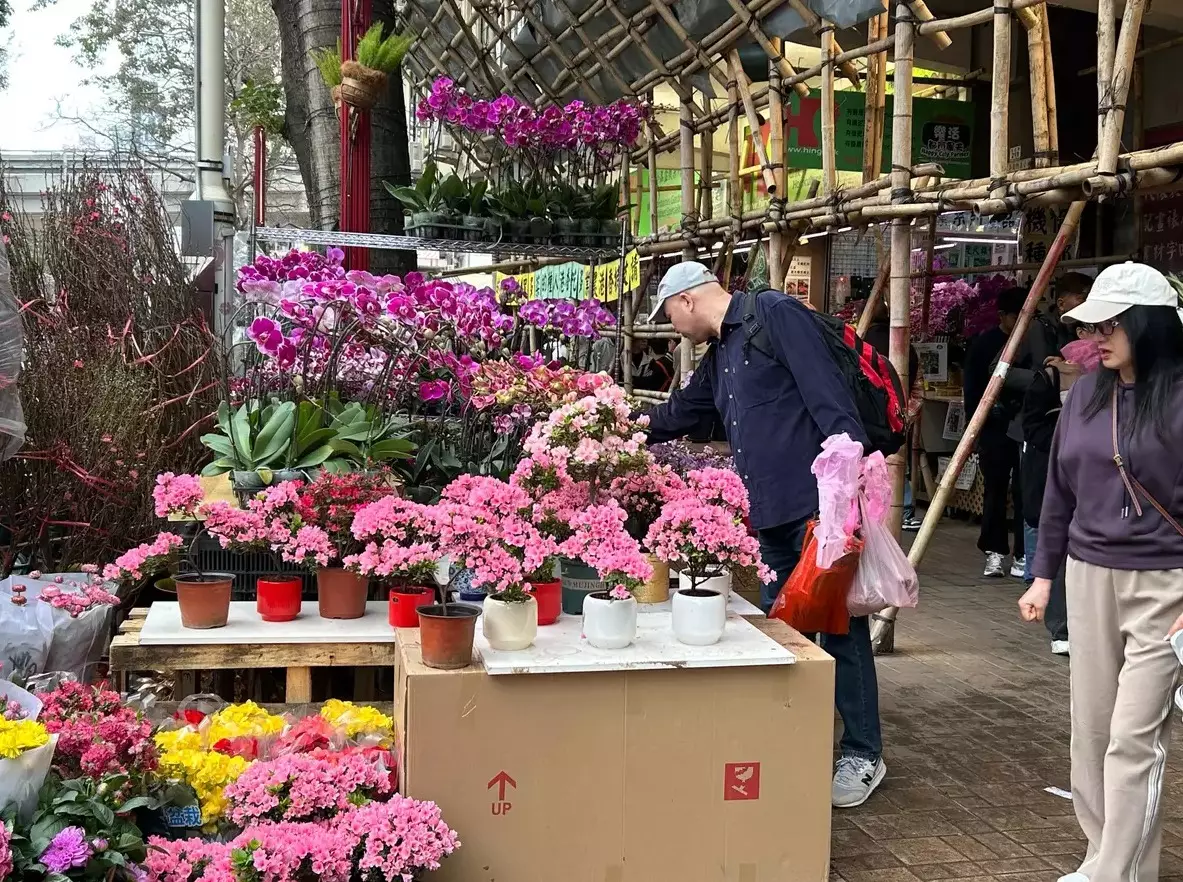
Photo by Bastille Post
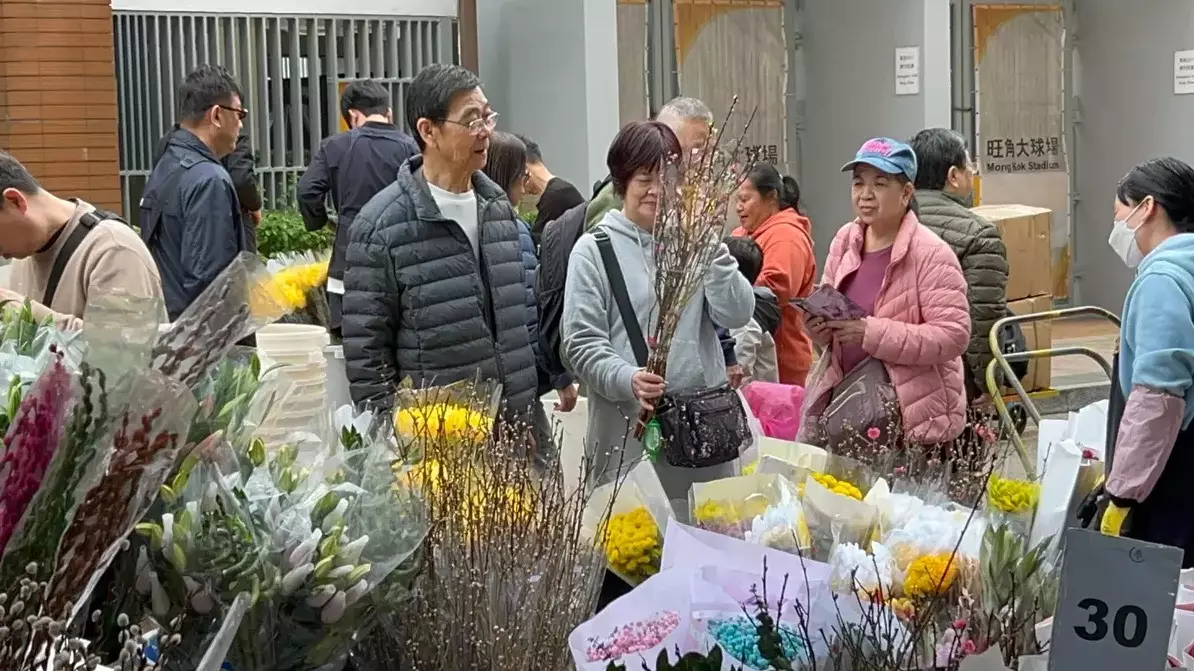
Photo by Bastille Post
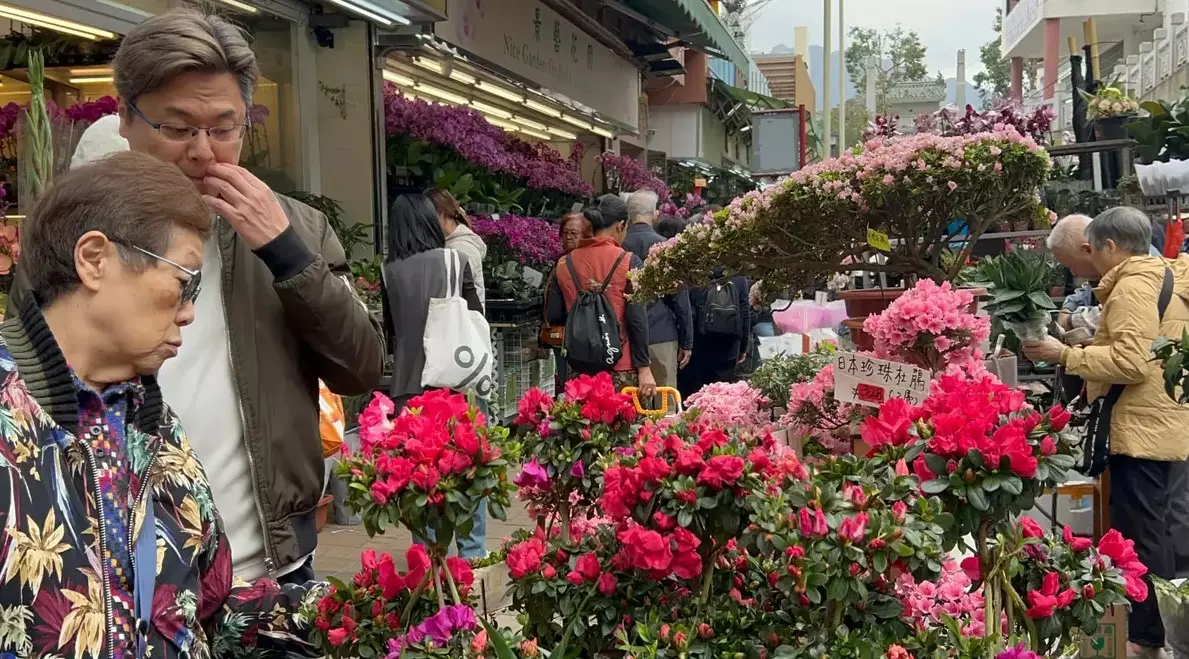
Photo by Bastille Post
Since Valentine's Day falls on Saturday this year, with the approach of the Chinese New Year, there were not many stalls primarily selling Valentine's Day bouquets. Cherry, a flower stall owner, pointed out that the sales of Valentine's Day flowers in the stall were cut in half at least. "Since that day falls on Saturday, many companies are on holiday, the orders from offices are two-thirds less, but the delivery service to home or to the celebration locations on the evening of February 13 is still in demand."
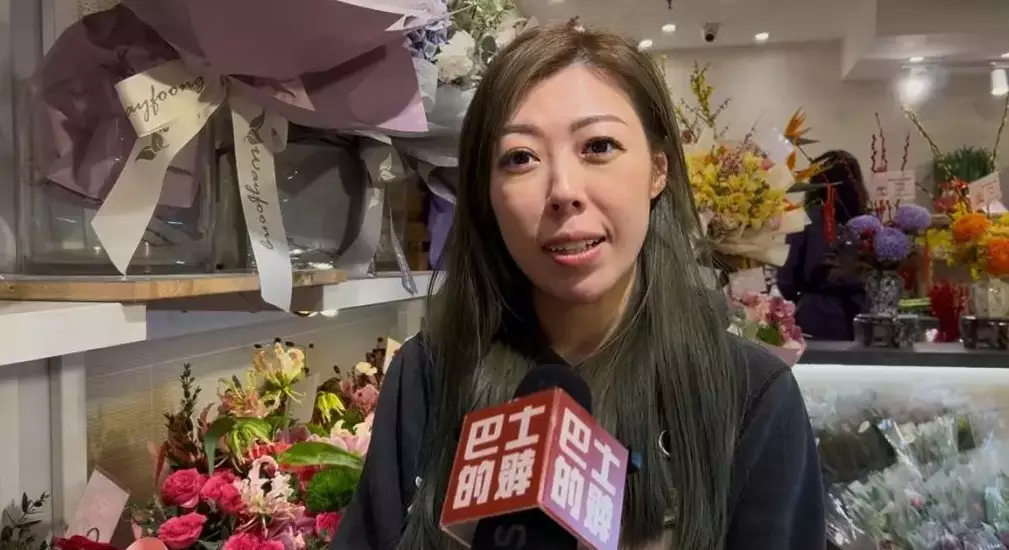
Cherry, Photo by Bastille Post
Cherry also said that she would stock up on orchids a month before the Chinese New Year, and flowers from all over the world ten days before the New Year, such as the winter jasmine and coral berry from the Taiwan region, cherry blossoms from Japan, etc. Among her flowers, the Japanese cherry blossoms have been bought by many people in recent years because they look more special and attractive. She added that since the road would be closed from the 7th to the 17th of this month, she needed to accept the fact that some decrease in sales would happen. "The traffic would be controlled outside the flower market, which meant I couldn't stock up on plenty of flowers in the following days. Besides, the number of my stall‘s staff is limited, but we will try our best to sell the flowers out."
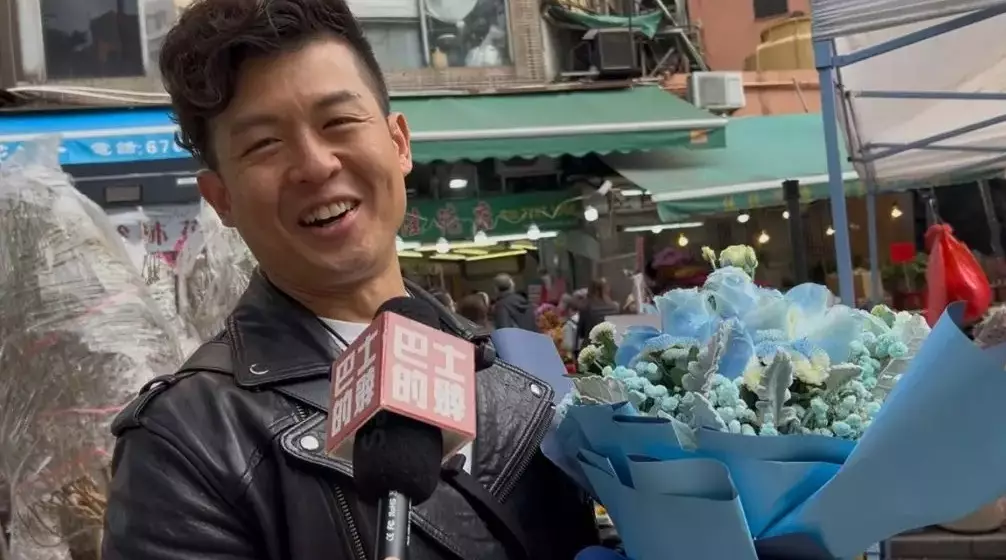
Mr. Wong, Photo by Bastille Post
Mr. Wong took advantage of his free time to buy flowers for his girlfriend. The bouquet he bought was HKD $580. "The price is not cheap, but it is acceptable." He noticed that there were fewer flowers for Valentine's Day this year. "Maybe since the festival is close to the Chinese New Year." he said.
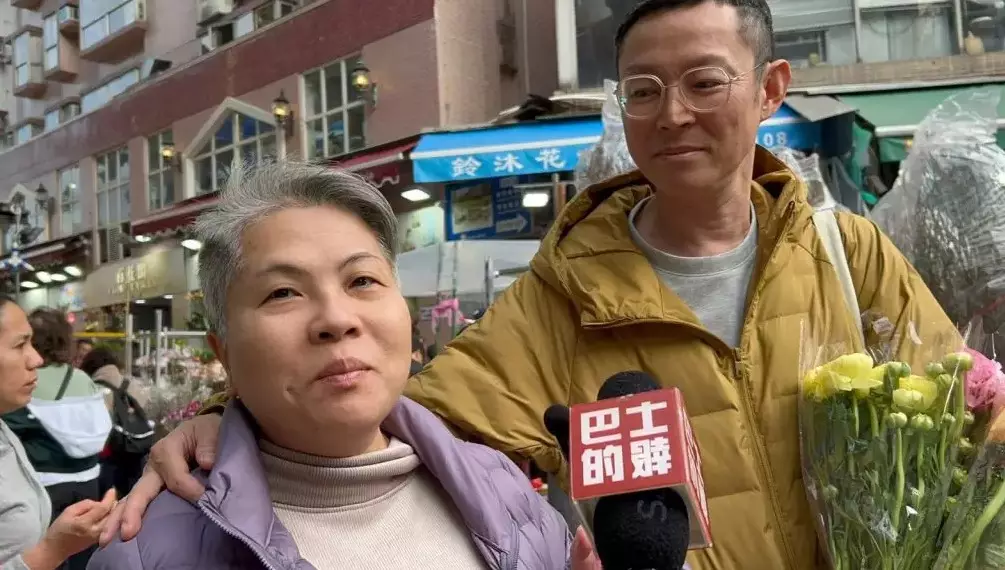
Ms. Lee, Photo by Bastille Post
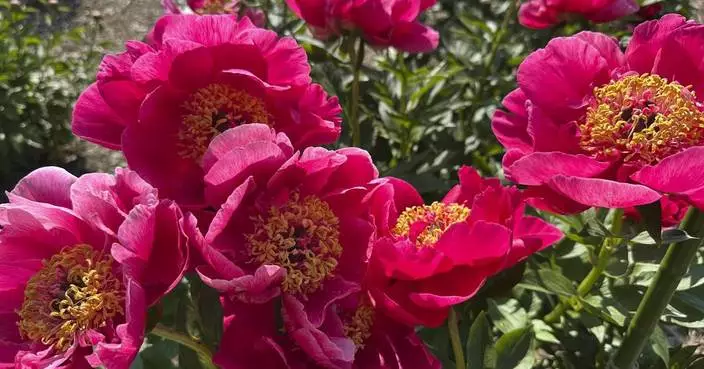
As for Ms. Lee, she bought peonies this year since she didn't like dark-colored flowers. She favored peonies because they are light-colored and can be kept at home for a period of time. She didn't especially buy the Valentine's Day flowers. "In my eyes, every day can be Valentine's Day." She thought the Valentine's Day flowers weren't few at the flower market this year. "But the flower types that can be chosen are limited since Valentine's Day and the Chinese New Year are close to each other." She pointed out, "Maybe some lovers can try to buy some daffodils as the Valentine's Day flower to take an innovative attempt."
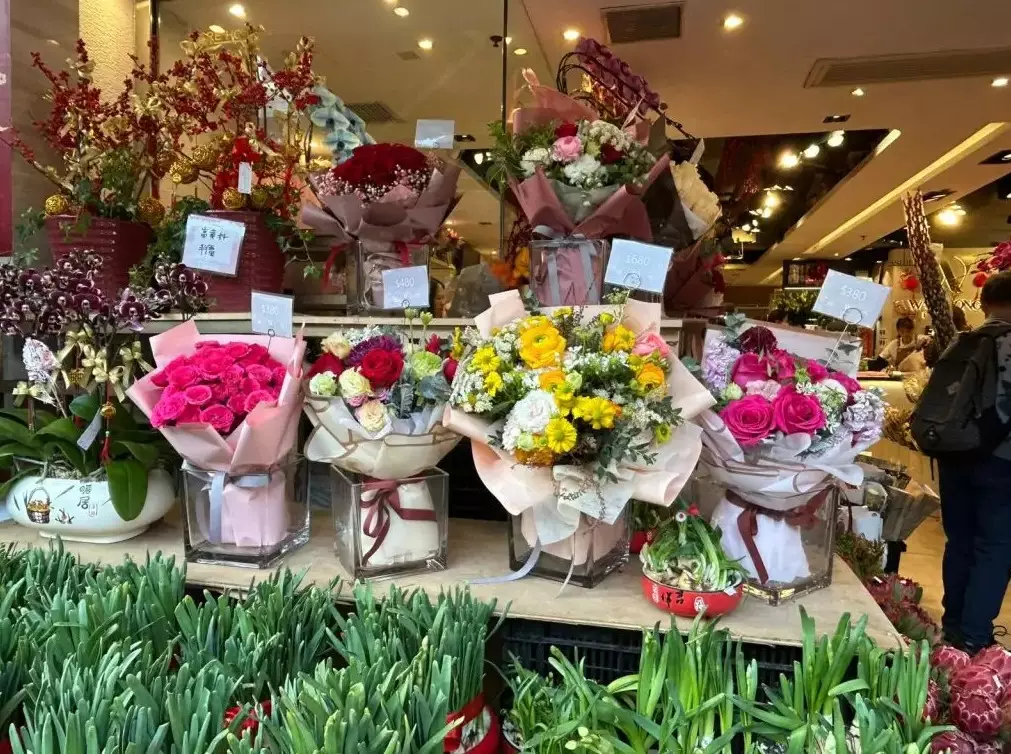
Photo by Bastille Post
Some florists said that since Valentine's Day is the 27th of the 12th lunar month, many citizens are expected to buy peonies, butterfly orchids, and other New Year flowers symbolizing love to their lovers to celebrate Valentine's Day and the Chinese New Year together.