Technological innovation is reshaping China's film industry, expanding filmmakers' creative horizons and giving actors new performing tools as virtual production and AI are built directly into the set.
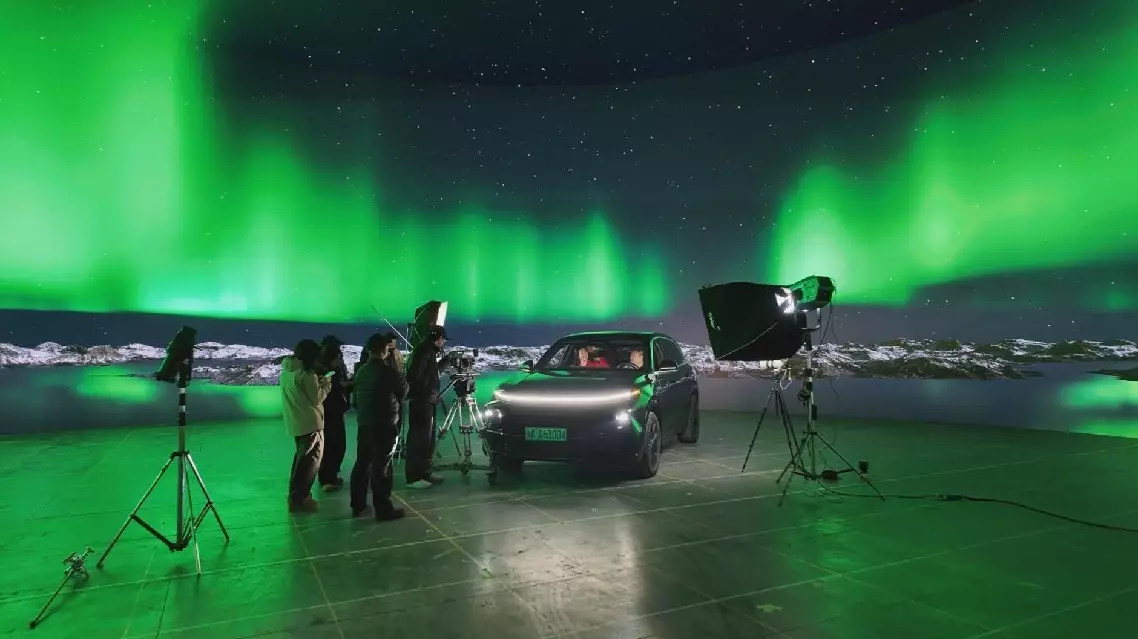
Today, filming on location is becoming increasingly costly for filmmakers; they need a facility like the Deqing film production base in Zhejiang province, which features one of the world's largest LED screens.
Under those screens, scenes -- from rural countryside to the Arctic aurora -- are brought to life.
"This setting recreates an immersive aurora experience. In the past, shooting car scenes meant going out on real roads or relying on green screens and fixing it in post. With virtual production, directors and actors are fully immersed. It puts creative control back in the director's hands and helps cut costs by reducing the need for physical sets," said Leo Lee, founder and CEO of Versatile Media.
Technological innovation is fueling rapid growth across China's cultural sectors. In the film industry, the adoption of virtual production has surged from 15 percent in 2023 to nearly 45 percent in 2025, reshaping how films are made.
But Lee emphasized that this goes far beyond just hardware or LED screens.
According to the filmmaker, it's a systematic approach that transforms the entire workflow -- from script to final frame -- allowing directors to see scenes come to life even before the cameras start rolling.
Using a single tablet-like device that captures multiple angles at once, directors can adjust actors' performances in real time.
The advantages are clear: shorter production cycles, lower costs, and greater creative freedom.
"In the past, we directors relied on hand-drawn storyboards. Now we can preview scenes in a virtual space and adjust scripts, camera movements and performances instantly. It cut production time by about a third and gave directors a highly flexible environment to create," said Frank Liu, a director of Versatile Media.
These innovations are catching the eye of filmmakers worldwide and drawing overseas companies to join in the ecosystem.
"Our company features physical effects. Combined with virtual production and real-time rendering, we believe we could set a whole new standard for filmmaking," said Do Kwangil, CEO of Dong Nian Da (Huzhou) Film and Television Technology Company.
This international appeal is underpinned by a broader national strategy.
China's 15th Five-Year Plan (2026-2030) calls for deeper integration of culture and technology. Digital and intelligent tools are driving innovation and new cultural businesses, from the world's highest-grossing animated film Nezha 2 and the hit video game Black Myth: Wukong to the record-watched Chinese Spring Festival Gala, where robots performed Chinese kung fu, and virtual worlds blended with traditional stagecraft.
The goal is not only to innovate production tools, but also to unlock cultural creativity.
"The integration isn't just about adding tech to culture -- it's about fundamentally reshaping how culture is created, experienced, and passed on. On the one hand, China is becoming a key testing ground for this transformation, built on its strong manufacturing base and on the exploration of new models for the global cultural market. On the other hand, technology is turning cultural resources into richer, more lasting forms of cultural value -- enhancing people's intellectual and cultural lives while stimulating creativity across society," said Han Fei, deputy director of the Audiovisual Communication Department of the School of Television under the Communication University of China.
And Lee sees the real "superpower" not just lying in technology.
"Imagination is the 'superpower' of a nation. Technology expands our imagination. When the world can see that imagination, they can better understand China," said Lee.
As innovation gathers pace across China, the fusion of culture and technology could become one of the defining stories of China's next chapter of development.
Technological innovation fuels "superpower" in China's film industry