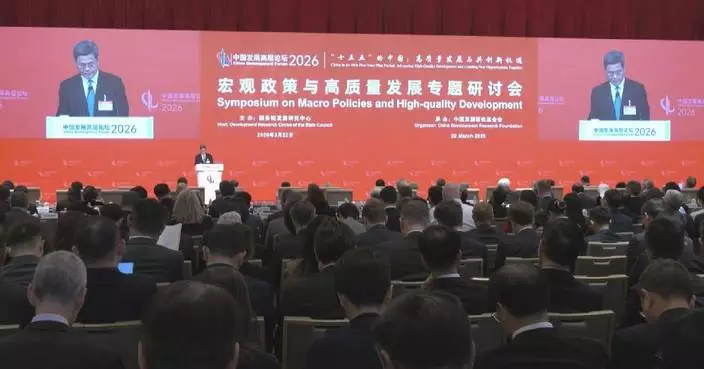
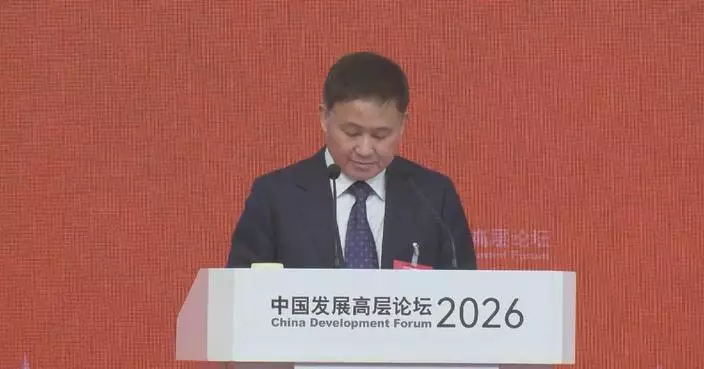
China's self reliance in innovation capacity has now reached a point where external forces cannot reverse, said a senior official at the ongoing China Development Forum in Beijing on Sunday.
Addressing guests from across the world at the forum, Han Wenxiu, executive deputy director of the Office of the Central Committee for Financial and Economic Affairs, said the integration of tech and industrial innovations is a key to achieve the nation's tech self reliance, which has been elevated to unprecedented strategic prominence in the 15th Five-Year Plan (2026-2030).
"China's innovation capacity has already crossed a certain inflection point, and external forces can hardly reverse our development. Going forward, we will continue to redouble our efforts to catch up in upstream areas where we lag behind, while move from parity to superiority in fields where we have advantages, striving to achieve higher level of self-reliance and strength in science and technology," he said.
Han said that in the coming period, to increase consumption's contribution to economic growth will be a top priority for promoting balanced and coordinated economic development. The goal is to foster an economic development model driven by domestic demand and propelled by consumption.
"We will formulate and carry out a plan to increase urban and rural residents' incomes and promote noticeable increase in the household consumption rate. We will focus on both investment in physical assets and investment in human capital, and boost investment in developing human resources and individuals' all-rounded development so that the growth potential of a large economy can be fully unleashed," he said.
According to Han, China has already abolished all market access restrictions on foreign investment in manufacturing and will focus on expanding market access and opening up more areas in the services sector.
"We will further open up telecommunications, internet, education, culture, medical service, and other sectors in an orderly manner, and facilitate the efficient, convenient, and safe cross-border flow of data," he said.
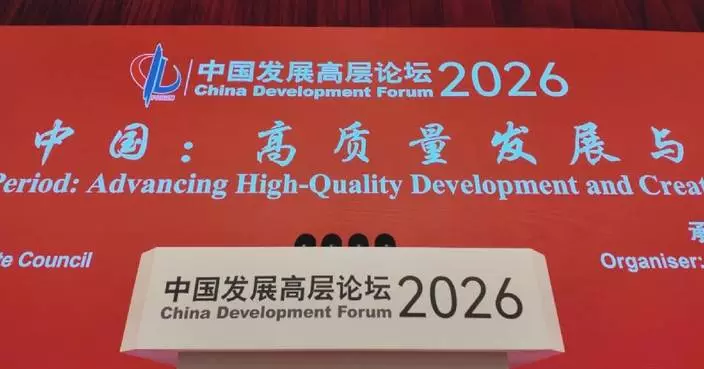
Themed "China in its 15th Five-Year Plan period: advancing high-quality development and creating new opportunities together," the China Development Forum opened on Sunday, attracting global business leaders and scholars to explore shared opportunities emerging from China's pursuit of high-quality growth.
Since its inception in 2000, the forum has become one of the country's major platforms for dialog among Chinese government officials, global business leaders, international organizations, and scholars.
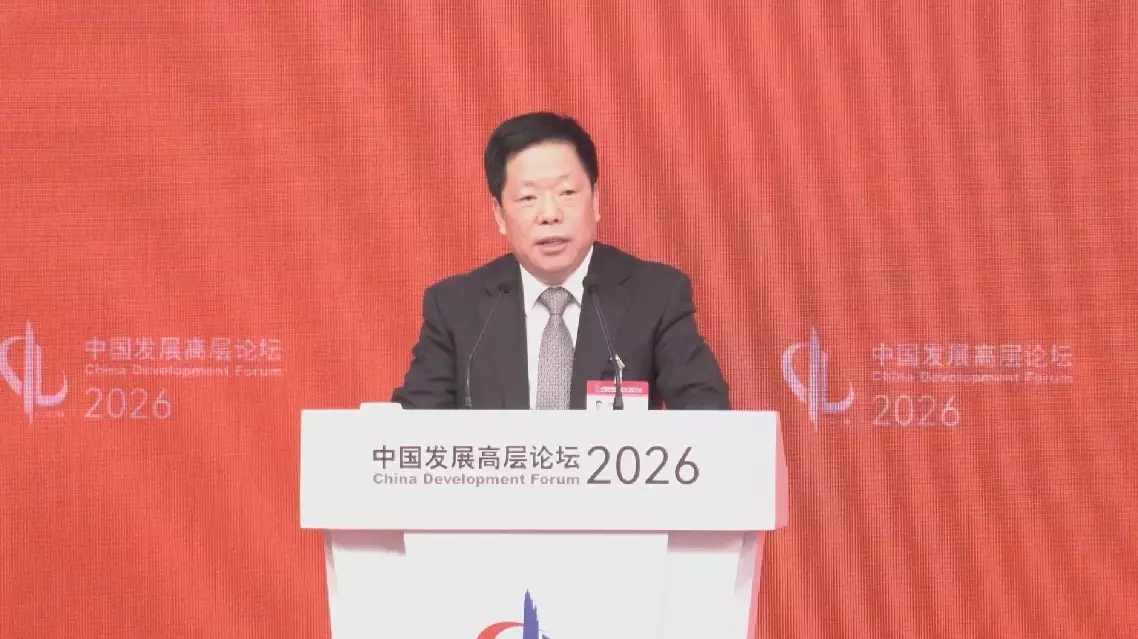
China's self reliance in innovation capacity now irreversible: senior official
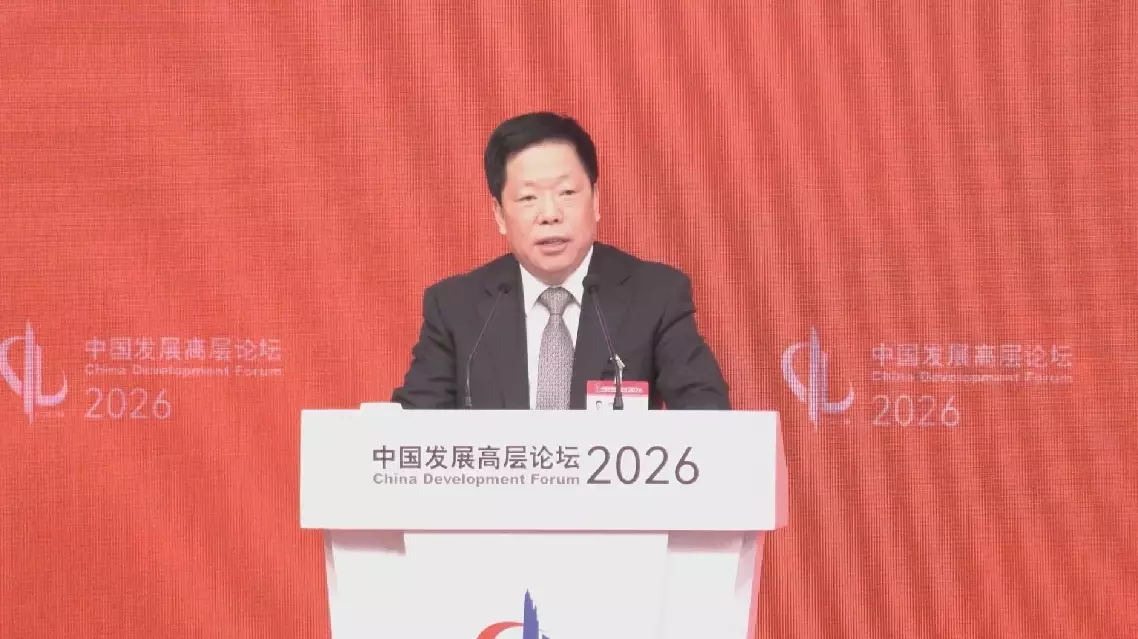
China's self reliance in innovation capacity now irreversible: senior official
Beijing's "rocket street" project is evolving into a national-level scientific research and production hub, helping to support China's commercial space development.
The project is located in Beijing E-Town, an economic and technological development area in the southeast of the capital city, with a total floor space of 140,000 square meters, roughly the size of 20 football fields. The complex features a common technological platform, a high-end manufacturing center, and an innovation research and development hub as its core facilities.
Previously, it was the more established launch sites and their surrounding "space cities" that featured streets and roads that were totally space themed -- such as Wenchang's Road of Starlight and Jiuquan's Road to Space.
Beijing's "rocket street," which is really a complex dedicated to commercial space development, was only completed earlier this year. At the "rocket street," efforts to advance reusable rocket technology -- featuring cost-effectiveness, repeatability, flexibility, and ultimately global competitiveness -- is receiving major support, and several companies have announced their plans for 2026.
LandSpace has scheduled a recovery test for its Zhuque-3 reusable rocket in the second quarter of this year.
Galactic Energy plans to launch its first reusable liquid-fueled rocket, Pallas 1, in less than three months. It also aims to launch the more powerful, reusable Pallas 2, before the end of the year.
The "Rocket Street" itself also plans to break into new stratospheres in the coming years with reusable rockets.
"We aim to rank among the best in the world. We will promote 'airline-style' launches of large reusable rockets, fully reusable rockets, and fully reusable heavy-lift rockets. We will accelerate the development and mass production of new internet satellites, plan the building of new space infrastructure, and develop full-industrial-chain capabilities to launch 1,000 satellites," said Ma Zhao, Deputy Director of Beijing E-Town's Robotics, Intelligent Manufacturing Industry Bureau.
Galactic Energy is also working on the rocket's final stage -- an on-orbit service platform designed to perform multiple tasks, including cleaning up space by extending its "hands" and removing space debris.
The company believes now is the right moment to carry out these missions, relying on its own technical capabilities and supportive policies.
"In recent years, we have deeply felt the concerted support from policy, capital, and talent. Areas such as Beijing Economic-Technological Development Area have provided targeted support for core technology breakthroughs. Patient capital at both national and local levels has accelerated its convergence," said Wu Yue, Director of Public Relations at Galactic Energy.
China has included the commercial space sector among 109 major projects in the coming years, expecting the industry to become a key driver of new quality productive forces.
"Development opportunities for the commercial space industry are unprecedented, and there is no time to waste. During the 15th Five-Year Plan period, Beijing E-Town will support the commercial space industry cluster with 1,000 enterprises working together, 1,000 satellites in orbit, and over 100 billion yuan in revenue," said Ma.
Opened to private investment in 2015, the sector now comprises over 600 commercial space companies, with annual financing reaching more than 18 billion yuan (about 2.62 billion U.S. dollars) in 2025.
China's 15th Five-Year Plan, which outlines national economic and social development goals for the next five years, sets a goal of building the country into a "space power" by 2030, as well as identifies the aerospace industry as "an emerging pillar." Against this backdrop, commercial space launches are taking on growing importance.
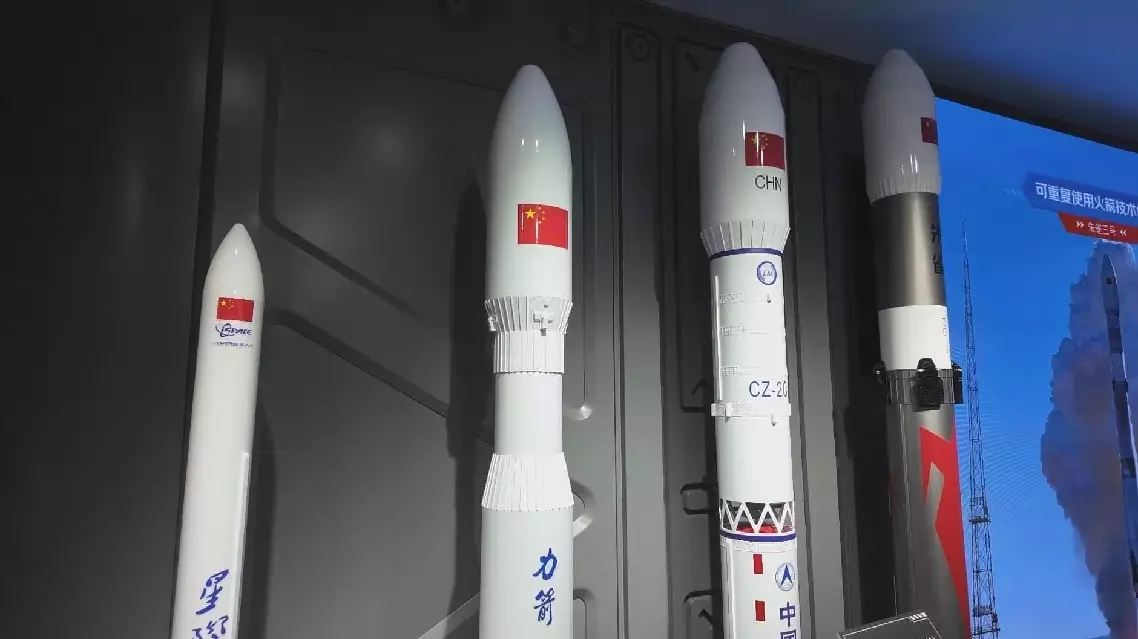
Beijing's "rocket street" project advances commercial space development